Latest News and Comment from Education

Wednesday, June 28, 2023

BREAKING NEWS: SCHOOL SUSPENSIONS PROVEN TO TURN BLACK AND HISPANIC STUDENTS INTO CRIMINALS


BREAKING NEWS: SCHOOL SUSPENSIONS PROVEN TO TURN BLACK AND HISPANIC STUDENTS INTO CRIMINALS 

In a shocking report published in Criminology in June 2023, Benjamin W. Fisher and Alex O. Widdowson have found that school suspensions are turning Black and Hispanic students into criminals. That's right, folks, the very act of suspending a student from school is amplifying their risk of later arrest! Who knew detention could be so dangerous?

According to the report, White students are immune to the criminalizing effects of suspension. In fact, some White students have even reported feeling rejuvenated after a suspension, like they've been given a new lease on life. It's almost like they've been to a spa instead of being punished for bad behavior.

But for Black and Hispanic students, the story is very different. The label of "suspended student" is consistent with stereotypes that link Blackness to criminality and Hispanic people to illegality. It's like the school is saying, "Hey, you're already a criminal, might as well lean into it." And that's not fair.

So what can schools do to avoid turning their students into hardened criminals? The report suggests alternatives to suspension, like restorative chats, counseling, problem solving/contracting, co-learning, and school service. But let's be real, those all sound like boring alternatives. Here are some more exciting options:

1. Dance Party: Instead of suspending a student, throw them a dance party. It's hard to be a criminal when you're doing the cha-cha slide.

2. Karaoke Competition: Give the suspended student a chance to show off their pipes. Who knows, they might be the next American Idol.

3. Paintball Tournament: Nothing says "let's work out our issues" like shooting paint at each other.

4. Escape Room Challenge: Put the suspended student's problem-solving skills to the test with an escape room challenge. If they can escape the room, they can escape a life of crime.

5. Celebrity Chef Showdown: Have the suspended student compete in a cooking competition judged by celebrity chefs. If they can make a mean risotto, they can make something of themselves.

These alternatives may seem unconventional, but they're sure to be more effective than simply sending a student home for a few days. Plus, it'll make school a lot more fun for everyone involved.

In all seriousness, school policies need to address the racial and ethnic disparities in the use of suspension and other forms of exclusionary discipline. The labeling process has different effects by race and ethnicity, and it's not fair that some students are being set up for a life of crime while others get off scot-free.

Let's make school a place where all students can thrive, regardless of their race or ethnicity. And let's do it without turning them into criminals in the process.

Education Research Report: School suspensions amplify Black, Hispanic students’ risk of later arrest https://educationresearchreport.blogspot.com/2023/06/school-suspensions-amplify-black.html 

Big Education Ape: HAVING 'THE MAN' ON CAMPUS ARE SCHOOL RESOURCE OFFICERS (SROs) AND/OR CAMPUS POLICE NECESSARY http://bigeducationape.blogspot.com/2023/06/having-man-on-campus-are-school.html 

THE DEFT DIVE

According to the report by Benjamin W. Fisher and Alex O. Widdowson, published in Criminology in June 2023², the major finding is that **school suspension amplifies Black and Hispanic students' risk of later arrest relative to White students**, whose risk of arrest is not amplified by suspension and in some cases is even diminished³. The authors used data from the National Longitudinal Study of Youth 1997 (N = 8,634) and found that the link between suspension and subsequent arrest was strongest for Black and Hispanic students because the label conferred by schools’ suspension of students is consistent with prevailing stereotypes that link Blackness to criminality and Hispanic people to illegality¹. The authors suggest that suspension is particularly harmful for Black and Hispanic relative to White students and that the labeling process has different effects by race and ethnicity².

Bing, 6/28/2023

(1) Racial and ethnic differences in the consequences of school suspension .... https://onlinelibrary.wiley.com/doi/abs/10.1111/1745-9125.12344.

(2) School suspensions amplify Black, Hispanic students' risk of later .... https://phys.org/news/2023-06-school-suspensions-amplify-black-hispanic.html.

(3) School suspensions amplify Black, Hispanic st | EurekAlert!. https://www.eurekalert.org/news-releases/993717.

(4) Ethnic identity tied to disparities in school suspensions among Florida .... https://phys.org/news/2022-09-ethnic-identity-tied-disparities-school.html.

(5) School Suspension in Florida: The Interactive Effects of Race .... https://www.researchgate.net/publication/336879237_School_Suspension_in_Florida_The_Interactive_Effects_of_Race_Ethnicity_Gender_and_Academic_Achievement.

Some possible implications of this finding for school policies are:

  • - School policies should consider **alternatives to suspension** where possible to avoid the negative effects of labeling and stigmatizing students, especially Black and Hispanic students²³.
  • - School policies should adopt **restorative approaches** following a suspension experience to reintegrate students into prosocial communities and reduce their exposure to deviant peers².
  • - School policies should address the **racial and ethnic disparities** in the use of suspension and other forms of exclusionary discipline, and examine how they may reflect and reinforce prevailing stereotypes¹⁴.
  • - School policies should evaluate the **effectiveness and consequences** of suspension as a behavioral management tactic, and consider how it may impact students' academic achievement, dropout rates, and college attendance¹³.

 Bing, 6/28/2023

(1) Collateral Consequences of School Suspension: Examining the ‘Knifing .... https://link.springer.com/article/10.1007/s12103-020-09579-5.

(2) Student Suspensions Have Negative Consequences, According to NYC Study .... https://nij.ojp.gov/topics/articles/student-suspensions-have-negative-consequences-according-nyc-study.

(3) School Discipline Linked to Later Consequences. https://www.gse.harvard.edu/news/uk/19/09/school-discipline-linked-later-consequences.

(4) School suspensions amplify Black, Hispanic students' risk of later .... https://phys.org/news/2023-06-school-suspensions-amplify-black-hispanic.html.

Some examples of alternatives to suspension are:

  • - **Restorative chat**: A strategy that helps the student understand the harm done by their actions and allows them an opportunity to repair this harm, such as by apologizing, making amends, or participating in a mediation process⁴.
  • - **Counseling**: A strategy that provides the student with access to mental health care and support, and helps them address the underlying causes of their behavior, such as trauma, substance misuse, or emotional issues¹³.
  • - **Problem solving/contracting**: A strategy that involves the student in identifying the problem behavior, its consequences, and possible solutions, and then creating a written agreement or contract that specifies the expectations, goals, and rewards for changing the behavior¹.
  • - **Co-learning**: A strategy that engages the student in academic activities that are relevant, meaningful, and challenging, and that foster positive relationships with peers and teachers¹.
  • - **School service**: A strategy that assigns the student to perform tasks that benefit the school community, such as assisting custodial staff, tutoring younger students, or organizing school events¹².

Bing, 6/28/2023

(1) Alternatives to Suspension: Three effective strategies for ... - NASSP. https://www.nassp.org/publication/principal-leadership/volume-16-2015-2016/principal-leadership-october-2015/alternatives-to-suspension-three-effective-strategies-for-changing-student-behavior/.

(2) Creative Alternative Strategies to School Suspensions. https://www.kickboardforschools.com/classroom-behavior-management/creative-alternative-strategies-to-school-suspensions/.

(3) Alternatives To Suspension | PBIS World. https://www.pbisworld.com/tier-2/alternatives-to-suspension/.

(4) Suspension Alternatives: It's Time To Reconsider Them - WeAreTeachers. https://www.weareteachers.com/suspension-alternatives/.

(5) PPT - Alternatives to Suspension PowerPoint Presentation ... - SlideServe. https://www.slideserve.com/harvey/alternatives-to-suspension.

(6) Alternatives to Suspension - [PPT Powerpoint] - vdocuments.net. https://vdocuments.net/alternatives-to-suspension-56baa6fc1ef1d.html.

WILL PUBLIC EDUCATION SURVIVE THE BILLIONAIRE'S CHARTER SCHOOL AND VOUCHER ASSAULT

WILL PUBLIC EDUCATION SURVIVE THE BILLIONAIRE'S CHARTER SCHOOL AND VOUCHER ASSAULT  

If you thought the future of public education in America was all doom and gloom, think again! There's a movement afoot by billionaires to privatize public education and turn it into a profit center for capitalism. And if that doesn't make you laugh, we don't know what will!

But seriously, folks, there are pros and cons to this whole privatization thing. On the one hand, it could lead to more competition and innovation in education. On the other hand, it could mean the end of public education as we know it. So let's take a closer look.

First off, let's talk about the billionaires. These guys are all about making money, and they see education as a ripe opportunity to do just that. They're pouring millions into charter schools, which are privately run but publicly funded. And they're pushing for vouchers, which would allow parents to use public funds to send their kids to private schools.

Now, some people think this is a great idea. They say it will give parents more choice and force public schools to up their game. But others worry that it will lead to a two-tiered education system, where only the rich can afford a decent education.

And then there's technology. Some folks think that online schools and other tech-based alternatives will revolutionize education. They say it will make learning more accessible and personalized. But others worry that it will lead to even more screen time for kids and less face-to-face interaction.

So what's the verdict? Honestly, we don't know. But we do know that there are plenty of alternatives to public education out there already. You've got your charter schools, your magnet schools, your military academies, your boarding schools, your private schools, and your tutoring services. And let's not forget homeschooling!

Of course, each of these alternatives has its own pros and cons. Charter schools may offer more freedom and flexibility, but they also have less oversight. Private schools may offer better resources and smaller class sizes, but they also come with a hefty price tag.

And then there's homeschooling. We won't lie, folks, this one can be a bit of a wild card. On the one hand, you get to be your kid's teacher and customize their education to their needs and interests. On the other hand, you have to be your kid's teacher and customize their education to their needs and interests.

So what's the bottom line? Well, we're not here to tell you what to do with your kids' education. But we do think it's important to remember that public education is a cornerstone of our democracy. It's where kids from all walks of life come together to learn and grow. And while it may not be perfect, we think it's worth fighting for.

So whether you're a billionaire looking to make a buck or a parent looking for the best education for your child, remember this: education is not a commodity. It's a right. And it's up to all of us to make sure that right is protected and upheld for generations to come.

In conclusion, the future of public education in America is uncertain, but one thing is clear: we need to continue to invest in our public schools. While alternatives like charter schools, vouchers, and technology may provide some benefits, they are not a panacea for the challenges facing our education system. We need to work together to ensure that all children have access to a high-quality education, regardless of their background or zip code. 

I say please don't let the billionaires turn our public schools to The Hunger Games with their charter schools and voucher schemes. 

The Destruction Of Education And Democracy In The US - MintPress News. https://www.mintpressnews.com/education-and-democracy/37712/.

The Republican Plan To Devastate Public Education in America. https://newrepublic.com/article/167375/republican-plan-devastate-public-education-america.

Public education is facing a crisis of epic proportions. https://www.washingtonpost.com/education/2022/01/30/public-education-crisis-enrollment-violence/.

History and Evolution of Public Education in the US. https://files.eric.ed.gov/fulltext/ED606970.pdf.

The War on Public Schools - The Atlantic. https://www.theatlantic.com/magazine/archive/2017/10/the-war-on-public-schools/537903/.

There are many opinions on the state of public education in America. Some believe that public education is being commodified into another profit center¹. Others believe that American public education is in poor shape today because of cultural and social trends, most beginning in the 1960s, which destroyed classroom discipline, the moral basis for education, and a national consensus on what students should learn². Some believe that cutting public education spending by more than half would destroy public schools for millions of students³. 

What Parents Need to Know About School Vouchers - U.S. News & World Report. https://www.usnews.com/education/k12/articles/what-parents-need-to-know-about-school-vouchers.

What Do We Know About Vouchers and Charter Schools? - RAND Corporation. https://www.rand.org/pubs/research_briefs/RB8018.html.

The current landscape of school choice in the United States. https://kappanonline.org/current-landscape-school-choice-united-states-vouchers-charter-schools-berends/.

Vouchers May Be The Next Big Education Reform. Have Charter Schools .... https://www.forbes.com/sites/petergreene/2021/03/07/vouchers-may-be-the-next-big-education-reform-have-charter-schools-been-left-behind/.

HOUSTON ISD: FIRST MONTH OF THE HOSTILE STATE TAKEOVER AND OCCUPATION BY MEATAXE MIKE MILES

HOUSTON ISD: FIRST MONTH OF THE HOSTILE STATE TAKEOVER AND OCCUPATION BY MEATAXE MIKE MILES

Ladies and gentlemen, hold onto your hats because we have a wild story for you today. It's a tale of hostile takeovers, meat axes, and yes men. That's right, we're talking about the recent occupation of the Houston Independent School District by the state of Texas.

The state decided to install their own guy, a certain MeatAxe Mike Miles, as the czar of the district. Now, if you're not familiar with ole MeatAxe Mike , let us fill you in. He's the same guy who used a meat axe to chop up the Dallas Independent School District. And by meat axe, we mean he made some pretty drastic changes that left a lot of people unhappy.

But Mike Miles is back, and he's badder than ever. He's promised to replace all the principals in Houston with his own "yes men." We're not sure what qualifications these yes men have, but we're guessing they're pretty good at nodding their heads and saying "yes, boss."

But that's not all. Mike Miles is also planning to install a two-tier salary system to screw with the union and divide the teachers. Because, you know, nothing brings people together like a good old-fashioned salary divide.

Now, we don't want to be too negative here, but we should mention that state takeovers of school districts seldom produce any positive changes in school operations. In fact, they often lead to more privatization and division in the district.

But hey, who needs positive changes when you've got a meat axe-wielding czar and his army of yes men? We're sure they'll figure it all out eventually. Or not.

In conclusion, we hope this story has entertained you and maybe even made you chuckle a bit. We'll be keeping an eye on the situation in Houston and we'll let you know if anything else wild and crazy happens. Until then, stay tuned and keep laughing.

Houston ISD's new superintendent wants to use same polarizing approach he applied in Dallas schools https://abc13.com/houston-isd-state-takeover-of-hisd-largest-district-in-texas-mike-miles/13410708/ 

HISD says termination messages were mistakenly sent to employees in 'communications system failure' https://abc13.com/houston-isd-employees-fired-communications-system-failure-hisd-statement-employment-termination-messages/13433046/ 

New HISD superintendent announces new principals, says more staffing changes to come https://abc13.com/new-education-system-hisd-takeover-texas-takes-over-houston-isd-tea/13434806/ 

Former DISD Superintendent's Past Scrutinized https://dallasexpress.com/education/former-disd-superintendents-past-scrutinized/ 

Big Education Ape: BREAKING NEWS: TEA TAKES OVER HISD, PLANS TO RENAME IT THE 'MIKE DISTRICT' https://bigeducationape.blogspot.com/2023/06/breaking-news-tea-takes-over-hids-plans.html 


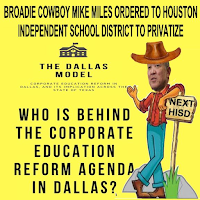
Big Education Ape: BROADIE COWBOY MIKE MILES ORDERED TO HOUSTON INDEPENDENT SCHOOL DISTRICT TO PRIVATIZE https://bigeducationape.blogspot.com/2023/06/broadie-cowboy-mike-miles-ordered-to.html


Big Education Ape: HOUSTON, WE HAVE A PROBLEM: THE RACIST HOSTILE TAKEOVER OF HISD https://bigeducationape.blogspot.com/2023/06/houston-we-have-problem-racist-hostile.html 


Big Education Ape: HISD MILES FIRST MOVE: BRING IN THE BILLIONAIRES' PRIVATIZER ATTACK DOGS https://bigeducationape.blogspot.com/2023/06/hisd-miles-first-move-bring-in.html 


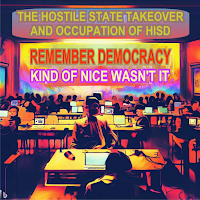
Big Education Ape: THE HOSTILE STATE TAKEOVER AND OCCUPATION OF HISD: REMEMBER DEMOCRACY...KIND OF NICE WASN'T IT https://bigeducationape.blogspot.com/2023/06/the-hostile-state-takeover-and.html 


Big Education Ape: CHAPTER 3 BILLIONAIRES PLAYBOOK: MIKE MILES DOES DALLAS NOW HUMPING HOUSTON https://bigeducationape.blogspot.com/2023/06/chapter-3-billionaires-playbook-mike.html


Tuesday, June 27, 2023

HAVING 'THE MAN' ON CAMPUS ARE SCHOOL RESOURCE OFFICERS (SROs) AND/OR CAMPUS POLICE NECESSARY

HAVING 'THE MAN' ON CAMPUS

ARE SCHOOL RESOURCE OFFICERS (SROs) AND/OR CAMPUS POLICE NECESSARY 

Are you ready to hear about the latest craze in school security? That's right folks, it's the one, the only, campus police! 

Now, I know what you're thinking. "But wait, won't having police officers on campus make our kids safer?" Well, hold onto your hats because we're about to dive into the pros and cons of having these law enforcement officials patrolling our schools.

First up, let's talk about the pro's. Having police on campus can deter crime and make students feel safer. Plus, if there were to be an active shooter situation, having trained professionals on hand could potentially save lives. 

But, as with anything in life, there are also some cons to consider. One major issue is the criminalization of kids. We all know that teenagers can make some questionable decisions, but is it really necessary to have them arrested for minor offenses? And let's not forget about the controversies surrounding School Resource Officers (SROs) and cops on campus. Some argue that their presence can actually make students feel more anxious and targeted.

But here's the kicker - having police on campus might not even be helpful in an active shooter situation. In fact, some studies have shown that the presence of armed officers can actually escalate the violence. So, what's the solution? Maybe we should focus on implementing better mental health resources and conflict resolution programs instead of relying solely on law enforcement.

Overall, it's clear that there are both pros and cons to having police on campus. But one thing is for sure - we need to have a serious conversation about school safety and come up with solutions that prioritize the well-being of our students. And who knows, maybe one day we'll look back on this trend and laugh about how we thought having police officers in schools was a good idea.

Denver Public Schools appeals judge's order to release recording of secret meeting about SROs: "An embarrassment" - CBS Colorado https://www.cbsnews.com/colorado/news/denver-public-schools-appeals-judges-order-release-recording-secret-meeting/ 


THE DEFT DIVE


Here are some of the pros and cons of having police officers in K-12 schools, based on the web search results:

Pros:

  • - Police officers can provide a sense of security and deterrence for students and staff, especially in the case of an active shooter or other violent incident¹³.
  • - Police officers can foster positive relationships with students and staff, and act as mentors, role models, and educators³.
  • - Police officers can assist with emergency response, crime prevention, and law enforcement on campus, and coordinate with other agencies when needed³.

Cons:

  • - Police officers can create a hostile and intimidating environment for students and staff, especially for those of color, who may face racial profiling, excessive force, improper surveillance, and criminalization¹².
  • - Police officers can contribute to the school-to-prison pipeline, by arresting and referring students to the juvenile justice system for minor or nonviolent offenses that could be handled by school staff¹².
  • - Police officers can interfere with students' rights to free speech and assembly, by blocking or clashing with protesters during student walkouts or demonstrations¹.


There are also some controversies surrounding the role and effectiveness of police officers on campus, such as:

  • - The lack of clear policies and guidelines for the use of force, arrest, and referral by police officers on campus¹².
  • - The lack of adequate training and supervision for police officers on campus, especially on issues such as cultural diversity, mental health, trauma-informed practices, and restorative justice¹².
  • - The lack of accountability and transparency for police officers on campus, especially when they are involved in misconduct or abuse of power¹².
  • - The cost and funding of police officers on campus, which may divert resources from other educational or social services that could benefit students and staff¹².

Bing, 6/27/2023

(1) Do Police Officers Make Schools Safer or More Dangerous?. https://www.nytimes.com/2020/06/12/us/schools-police-resource-officers.html.

(2) Campus Police VS. City Police - Law Enforcement Today. https://www.lawenforcementtoday.com/campus-police-vs-city-police/.

(3) 5 issues that could affect the future of campus police. https://theconversation.com/5-issues-that-could-affect-the-future-of-campus-police-163327.

(4) 14 Arming Teachers Pros and Cons – Should Teachers Be Armed?. https://futureofworking.com/14-arming-teachers-pros-and-cons-should-teachers-be-armed/.


The school-to-prison pipeline is a term that describes how some students, especially those from disadvantaged backgrounds, are pushed out of school and into the criminal justice system because of harsh school policies and practices. According to Wikipedia¹, the school-to-prison pipeline is:

  • > The disproportionate tendency of minors and young adults from disadvantaged backgrounds to become incarcerated because of increasingly harsh school and municipal policies. Additionally, this is due to educational inequality in the US. Many experts have credited factors such as school disturbance laws, zero-tolerance policies and practices, and an increase in police in schools in creating the "pipeline".


Some of the factors that contribute to the school-to-prison pipeline are:

  • - Zero-tolerance policies that impose severe punishments for minor or nonviolent offenses, such as dress code violations, tardiness, or talking back to teachers¹².
  • - School resource officers (SROs) or police officers who are assigned to schools and have the authority to arrest and refer students to the juvenile justice system¹².
  • - Racial and ethnic disparities in school discipline, as students of color, especially Black and Hispanic boys, are more likely to be suspended, expelled, arrested, or referred than white students for similar or less serious offenses¹²³.
  • - Lack of access to quality education, counseling, mental health services, and other supports that could help students stay in school and address their academic or behavioral needs¹²⁴.

The school-to-prison pipeline has negative consequences for students, schools, and society, such as:

  • - Increased dropout rates, lower academic achievement, and reduced future opportunities for students who are pushed out of school¹²⁴.
  • - Increased violence, disruption, and fear in schools that rely on punitive and exclusionary discipline measures¹²⁴.
  • - Increased costs and burdens for the juvenile and criminal justice systems that have to deal with more cases of youth incarceration¹²⁴.
  • - Increased social inequality, racial injustice, and human rights violations for communities that are disproportionately affected by the school-to-prison pipeline¹²⁴.

Bing, 6/27/2023

(1) School-to-prison pipeline - Wikipedia. https://en.wikipedia.org/wiki/School-to-prison_pipeline.

(2) Study Confirms School-to-Prison Pipeline - U.S. News & World Report. https://www.usnews.com/news/education-news/articles/2021-07-27/study-confirms-school-to-prison-pipeline.

(3) Shutting Down the School-to-Prison Pipeline - American Bar Association. https://www.americanbar.org/groups/crsj/publications/human_rights_magazine_home/empowering-youth-at-risk/shutting-down-the-school-to-prison-pipeline/.

(4) What is the School-to-Prison Pipeline? | ADL. https://www.adl.org/resources/lesson-plan/what-school-prison-pipeline.


Some alternatives to zero-tolerance policies are:

  • - **School Wide Positive Behavior Support (SWPBS)**: This is a framework that promotes positive and proactive school discipline, by teaching and reinforcing expected behaviors, providing differentiated support for students with different needs, and using data to monitor and evaluate outcomes⁴.
  • - **Monarch Room**: This is a program that provides a safe and supportive space for students who are experiencing emotional or behavioral difficulties, where they can receive counseling, conflict resolution, and restorative practices⁴.
  • - **Inclusive Skill-Building Learning Approach (ISLA)**: This is an approach that integrates social-emotional learning and academic instruction, by using cooperative learning, project-based learning, and culturally responsive pedagogy⁴.
  • - **Restorative Discipline**: This is an approach that focuses on repairing the harm caused by misconduct, rather than punishing the offender, by involving the affected parties in a dialogue, identifying the needs and obligations of each party, and reaching a mutually agreeable resolution⁵.
  • - **Virginia Student Threat Assessment**: This is a model that helps schools identify and respond to students who pose a threat of violence, by using a multidisciplinary team, conducting a standardized assessment, and providing appropriate interventions¹.

These alternatives are based on the principles of prevention, intervention, support, and accountability, rather than exclusion, punishment, and criminalization. They aim to address the root causes of student misbehavior, such as trauma, stress, or unmet needs, and to help students develop the skills and competencies they need to succeed in school and life. They also seek to foster a positive school climate and culture, where students feel safe, respected, and valued. Research has shown that these alternatives can reduce disciplinary referrals, suspensions, expulsions, arrests, and dropout rates, as well as improve academic achievement, attendance, engagement, and social-emotional outcomes¹²⁴⁶.

Bing, 6/27/2023

(1) How Non-Zero Tolerance Policies Better Support Our Students: Part II. https://www.shankerinstitute.org/blog/how-non-zero-tolerance-policies-better-support-our-students-part-ii.

(2) An Alternative to “Zero Tolerance” Disciplinary Policies for Texas .... https://research.utexas.edu/showcase/articles/view/an-alternative-to-zero-tolerance-disciplinary-policies-for-texas-schools.

(3) 4 alternatives to zero tolerance discipline | K-12 Dive. https://www.k12dive.com/news/4-alternatives-to-zero-tolerance-discipline/403832/.

(4) Zero Tolerance and Alternative Strategies: A Fact Sheet for Educators .... https://naspcenter.org/factsheets/zero-tolerance-and-alternative-strategies/.

(5) Alternatives to Zero Tolerance Policies Affecting Students of Color: A .... https://sophia.stkate.edu/cgi/viewcontent.cgi?article=1506&context=msw_papers.

(6) Zero Tolerance and Aggressive Policing (And Why to Avoid It) in Depth. https://www.rand.org/pubs/tools/TL261/better-policing-toolkit/all-strategies/zero-tolerance/in-depth.html.


There are different ways that schools can implement alternatives to zero-tolerance policies, depending on their needs, resources, and goals. Based on the web search results, here are some general steps that schools can take to adopt more effective and equitable discipline practices:


  • - **Review and revise existing policies and practices**: Schools should examine their current discipline data and policies, and identify any areas of concern, such as high rates of exclusionary discipline, racial disparities, or student dissatisfaction. Schools should also consult with stakeholders, such as students, parents, teachers, administrators, and community members, to gather their input and feedback on the current situation and possible solutions²⁴.
  • - **Select and adopt alternative approaches**: Schools should research and evaluate different alternative approaches to school discipline, such as those mentioned in the previous answer, and choose the ones that best fit their context and objectives. Schools should also consider how to integrate these approaches with their existing curriculum, instruction, and assessment systems²⁴.
  • - **Provide training and support for staff and students**: Schools should ensure that all staff and students are familiar with the new approaches and understand their roles and responsibilities. Schools should also provide ongoing training and coaching for staff and students on how to implement the new approaches effectively and consistently. Schools should also create a positive school climate and culture that supports the new approaches²⁴.
  • - **Monitor and evaluate outcomes**: Schools should collect and analyze data on the implementation and impact of the new approaches, such as changes in discipline rates, academic achievement, attendance, engagement, social-emotional skills, and school safety. Schools should also solicit feedback from stakeholders on their satisfaction and challenges with the new approaches. Schools should use this information to identify strengths and weaknesses, and make adjustments as needed²⁴.


These steps are not exhaustive or prescriptive, but rather indicative of some common elements that schools can follow to implement alternatives to zero-tolerance policies. Each school may have its own unique process and challenges, depending on its specific situation and needs. However, by following these steps, schools can move toward more effective and equitable discipline practices that benefit all students and staff.

Bing, 6/27/2023

(1) Zero Tolerance and Alternative Strategies: A Fact Sheet for Educators .... https://naspcenter.org/factsheets/zero-tolerance-and-alternative-strategies/.

(2) School-based restorative justice as an alternative to zero-tolerance .... https://www.law.berkeley.edu/files/thcsj/10-2010_School-based_Restorative_Justice_As_an_Alternative_to_Zero-Tolerance_Policies.pdf.

(3) Zero Tolerance Policy in Schools: Rationale, Consequences, and Alternatives. https://www.researchgate.net/publication/249400404_Zero_Tolerance_Policy_in_Schools_Rationale_Consequences_and_Alternatives.

(4) Survey: Understanding how U.S. public schools approach ... - Brookings. https://www.brookings.edu/blog/brown-center-chalkboard/2023/01/19/survey-understanding-how-us-public-schools-approach-school-discipline/.

(5) What Are Zero Tolerance Policies in Schools? | Lawyers.com. https://www.lawyers.com/legal-info/research/education-law/whats-a-zero-tolerance-policy.html.


There are many examples of schools that have successfully implemented alternatives to zero-tolerance policies, such as the ones I mentioned in the previous answer. Here are some of them, based on the web search results:

  • - **Cole Middle School** in Oakland, California, implemented a **school-based restorative justice** program in 2007, which involved using circles, conferences, and peer mediation to resolve conflicts and repair harm. The program reduced suspensions by 87%, expulsions by 100%, and referrals to law enforcement by 75%. The program also improved school climate, academic achievement, and student-teacher relationships⁵.
  • - **Denver Public Schools** in Colorado adopted a **discipline matrix** in 2008, which provided a range of interventions and consequences for different types of infractions, based on their severity and frequency. The matrix also emphasized the use of restorative practices, prevention programs, and positive behavior support. The matrix reduced suspensions by 40%, expulsions by 60%, and referrals to law enforcement by 50%. The matrix also reduced racial disparities in discipline and increased graduation rates².
  • - **Lincoln High School** in Walla Walla, Washington, implemented a **trauma-informed approach** in 2010, which recognized that many students had experienced adverse childhood experiences (ACEs) that affected their behavior and learning. The approach involved training staff on how to respond to students' emotional and behavioral needs, providing counseling and support services, and using positive reinforcement and problem-solving strategies. The approach reduced suspensions by 85%, expulsions by 40%, and office referrals by 75%. The approach also improved attendance, academic performance, and student-teacher relationships⁴.
  • - **Baltimore City Public Schools** in Maryland revised their **code of conduct** in 2008, which eliminated zero-tolerance policies and mandated the use of alternatives to suspension for minor offenses. The code of conduct also encouraged the use of restorative practices, social-emotional learning, and positive behavior support. The code of conduct reduced suspensions by 64%, expulsions by 40%, and arrests by 54%. The code of conduct also improved school climate, student engagement, and academic achievement¹.

These are just some examples of schools that have successfully implemented alternatives to zero-tolerance policies. There are many more schools across the country that are making similar efforts to improve their discipline practices and outcomes.

Bing, 6/27/2023

(1) School-based restorative justice as an alternative to zero-tolerance .... https://www.law.berkeley.edu/files/thcsj/10-2010_School-based_Restorative_Justice_As_an_Alternative_to_Zero-Tolerance_Policies.pdf.

(2) Alternative to Zero Tolerance Policies and Out-of-School ... - IUPUI. https://scholarworks.iupui.edu/bitstream/handle/1805/18971/Kyere_2018_alternative.pdf;sequence=1.

(3) 4 alternatives to zero tolerance discipline | K-12 Dive. https://www.k12dive.com/news/4-alternatives-to-zero-tolerance-discipline/403832/.

(4) Zero Tolerance and Alternative Strategies: A Fact Sheet for Educators .... https://naspcenter.org/factsheets/zero-tolerance-and-alternative-strategies/.

(5) Best Practices Alternatives to Zero Tolerance | CDE. https://www.cde.state.co.us/dropoutprevention/bestpracticesalternativestozerotolerance.


CELL PHONES IN THE CLASSROOM: TO BAN OR NOT TO BAN THAT IS THE QUESTION


CELL PHONES IN THE CLASSROOM

TO BAN OR NOT TO BAN THAT IS THE QUESTION

Ah, the age-old debate of whether to allow cell phones in the classroom. It's a topic that has been discussed by educators, parents, and students alike for years. Some say that cell phones are a valuable tool for learning, while others argue that they are a distraction and should be banned altogether. So, what's the verdict? Let's take a look at the pros and cons of cell phone policies in the classroom.

Pro: Cell phones can be a valuable learning tool in the classroom.

Let's start with the positives. Cell phones can provide access to educational resources, such as videos, podcasts, online courses, and apps. They can also enhance communication and collaboration among students and teachers, such as through group chats, polls, quizzes, and feedback. And let's not forget about the life skills that students can develop by managing their screen time and balancing their online and offline activities. So, maybe we shouldn't be so quick to ban them altogether.

Con: Cell phones can be a distraction in the classroom.

On the other hand, cell phones can also be a major distraction in the classroom. Research suggests that students who use their phones during class are more likely to miss instruction and distract others. Teachers who allow cell phones in the classroom report an increase in emotional challenges among students, and excessive cell phone use has been linked to higher risks of suicide and depression. Not to mention the fact that cell phones can facilitate cheating, cyberbullying, theft, and inappropriate behavior.

Pro: The history of cell phones in schools is complex and evolving.

The history of cell phones in schools is a fascinating one. In the late 1980s and early 1990s, many school systems and states passed policies or laws prohibiting students from using cell phones or pagers in school because of the devices' association with drug dealers. The ringing and beeping from the phones and pagers, sometimes in class, were also disruptive. But in 2002, the ban of cell phones was relaxed due to safety concerns in schools. Parents and students wanted to have a way to communicate in case of emergencies.

Con: Students have different opinions on cell phone policies in schools.

Of course, students have their own opinions on cell phone policies in schools. Some are in favor of allowing cell phones in school, while others are against it. And then there are those who have mixed feelings about it. It's impossible to please everyone, but we should strive to find a balance that works for everyone.

Pro: Parents and teachers can work together to enforce cell phone policies in schools.

The good news is that parents and teachers can work together to enforce cell phone policies in schools. By communicating the rationale and expectations of the policy to all stakeholders, involving parents and teachers in the development and revision of the policy, modeling appropriate and responsible use of cell phones in school, monitoring and enforcing the policy consistently and fairly, and supporting and rewarding students who follow the policy, we can create a safe and productive learning environment for everyone.

Con: But let's be real, enforcing a cell phone policy is easier said than done.

Let's face it, enforcing a cell phone policy is easier said than done. Students will always find ways to sneak their phones into class or use them when they're not supposed to. And let's not forget about the parents who insist on texting their kids during class. It's a never-ending battle.

Pro: But hey, at least we can laugh about it.

But you know what they say, laughter is the best medicine. So let's take a moment to appreciate some of the funniest moments that have happened because of cell phones in the classroom. Like that time when a student accidentally called their teacher "mom" in front of the entire class. Or when a teacher's phone went off during a test and they had to do 20 push-ups as punishment. Or when a student tried to cheat on a test by writing notes on their phone, but accidentally sent a text message to their crush instead. Ah, good times.

Con: Okay fine, maybe it's not that funny.

Okay fine, maybe it's not that funny when you're actually trying to teach a class and everyone is distracted by their phones. But hey, we can still try to find humor in the situation. After all, laughter is better than tears.

In conclusion, the debate over cell phone policies in schools will continue for years to come. But instead of getting bogged down by the pros and cons, let's try to find a balance that works for everyone. Let's embrace the positives of using cell phones as a learning tool while also acknowledging the negatives of excessive use. And most importantly, let's try to find humor in the situation whenever possible. Because at the end of the day, education should be fun.

Akron school phone policy passes https://fox8.com/news/akron-public-schools-pass-controversial-cell-phone-policy/ 

THE DEFT DIVE

CELLPHONES IN THE CLASSROOM

  • - Cell phones can be a distraction in the classroom, leading to disruptions and cyberbullying¹. Research suggests that cell phones can be considered a distraction rather than a learning tool, and that students who use their phones during class are more likely to miss instruction and distract others². Teachers who allow cell phones in the classroom report an increase in emotional challenges among students, and excessive cell phone use has been linked to higher risks of suicide and depression². While some students see benefits to using cell phones in the classroom, such as increased engagement and creativity, others are concerned about disruption, cheating, theft, and illegal photos¹.
  • - Cell phones can also be a valuable learning tool in the classroom, if used appropriately and with proper supervision³. Cell phones can provide access to educational resources, such as videos, podcasts, online courses, and apps⁴. Cell phones can also enhance communication and collaboration among students and teachers, such as through group chats, polls, quizzes, and feedback⁴. Cell phones can also help students develop life skills that will enable them to manage their screen time and balance their online and offline activities⁵.
  • - Cell phone policies in the classroom should consider the pros and cons of allowing or banning cell phones, as well as the needs and preferences of different stakeholders, such as administrators, parents, teachers, and students²³. Some possible options for cell phone policies are: 
    •     - A complete ban on cell phones in school premises or during school hours
    •     - A partial ban on cell phones in certain areas or times of the school day
    •     - A flexible policy that allows cell phones for specific purposes or with teacher permission
    •     - A bring-your-own-device policy that encourages cell phones as learning tools
    •     - A no-policy approach that leaves the decision to individual teachers or students

Bing, 6/27/2023

(1) Should Cell Phones Be Allowed In Classrooms? | Oxford Learning. https://www.oxfordlearning.com/should-cell-phones-be-allowed-classrooms/.

(2) Experts see pros and cons to allowing cellphones in class. https://news.harvard.edu/gazette/story/2023/03/experts-see-pros-and-cons-to-allowing-cellphones-in-class/.

(3) Weighing the Costs and Benefits of Cellphones in Schools. https://www.gse.harvard.edu/news/22/08/weighing-costs-and-benefits-cellphones-schools.

(4) 18 Cell Phones in the Classroom Pros and Cons – ConnectUS. https://connectusfund.org/18-cell-phones-in-the-classroom-pros-and-cons.

(5) What are the pros and cons of cellphones at school? | Kidslox. https://kidslox.com/guide-to/pros-of-cellphones-in-school/.


The history of cell phones in schools is a complex and evolving one

  • - In the late 1980s and early 1990s, many school systems and states passed policies or laws prohibiting students from using cell phones or pagers in school because of the devices' association with drug dealers. The ringing and beeping from the phones and pagers, sometimes in class, also were disruptive⁴.
  • - In 2002, the ban of cell phones was relaxed due to safety concerns in schools, especially after the 9/11 attacks and the Columbine High School shooting. Parents and students wanted to have a way to communicate in case of emergencies¹.
  • - In 2005, the use of phones was allowed but had to be off during the day. Some schools allowed students to use their phones during lunch or breaks, but not in class¹.
  • - In 2007, cell phones became an important part of learning, as teachers started to use them for educational purposes, such as accessing online resources, creating multimedia projects, and conducting surveys. Some schools adopted a bring-your-own-device policy that encouraged cell phones as learning tools¹.
  • - In 2010, schools started integrating the idea of using cell phones in classrooms, only for learning purposes. Some teachers used apps and websites that allowed students to interact with the lesson content, such as Duolingo, Quizlet, Kahoot, and Flipgrid³.
  • - In 2018, some schools and countries reversed their policies and banned cell phones in schools again, citing negative effects on academic performance, attention span, mental health, and social skills. For example, France banned cell phones in all primary and middle schools in 2018².
  • - In 2020, the COVID-19 pandemic forced many schools to shift to virtual learning, and cell phones became a necessity for many students who did not have access to other devices or internet connection. Cell phones also helped students stay connected with their peers and teachers during isolation².
  • - In 2022-2023, as schools reopened for in-person learning, some districts reinstated stricter guidelines on cell phone use, while others maintained flexible policies that allowed cell phones for specific purposes or with teacher permission. The debate over the pros and cons of cell phones in schools continued among educators, parents, students, and policymakers².

Bing, 6/27/2023

(1) Schools, States Review Cell Phone Bans | Education World. https://www.educationworld.com/a_issues/issues270.shtml.

(2) Timeline of phones used in classrooms | Timetoast timelines. https://www.timetoast.com/timelines/timeline-of-phones-used-in-classrooms.

(3) Cellphones in Schools: A Huge Nuisance and a Powerful Teaching Tool. https://www.edweek.org/technology/cellphones-in-schools-a-huge-nuisance-and-a-powerful-teaching-tool/2022/03.

(4) Cellphones in School: What to Know | High Schools | U.S. News. https://www.usnews.com/education/best-high-schools/articles/cellphones-in-school-what-to-know.


Students have different opinions on cell phone policies in schools, depending on their personal experiences, preferences, and perspectives

  • - Some students are in favor of allowing cell phones in school, because they see them as useful tools for learning, communication, and entertainment. They argue that cell phones can help them access online resources, collaborate with peers and teachers, express their creativity, and stay connected with their families and friends. They also say that cell phones can provide a sense of security and comfort in case of emergencies or personal issues¹²³.
  • - Some students are against allowing cell phones in school, because they see them as a distraction, a temptation, and a source of stress. They admit that cell phones can interfere with their attention, concentration, and academic performance. They also acknowledge that cell phones can facilitate cheating, cyberbullying, theft, and inappropriate behavior. They also say that cell phones can affect their mental health, social skills, and self-esteem¹²⁴.
  • - Some students have mixed feelings about cell phone policies in school, because they recognize the pros and cons of using cell phones in different situations. They suggest that cell phone policies should be flexible and reasonable, allowing cell phones for specific purposes or with teacher permission. They also propose that cell phone policies should be consistent and fair, applying to all students and staff equally. They also recommend that cell phone policies should be respectful and supportive, taking into account the needs and rights of students¹²³.

Bing, 6/27/2023

(1) Experts see pros and cons to allowing cellphones in class. https://news.harvard.edu/gazette/story/2023/03/experts-see-pros-and-cons-to-allowing-cellphones-in-class/.

(2) Cellphones in School: What to Know | High Schools | U.S. News. https://www.usnews.com/education/best-high-schools/articles/cellphones-in-school-what-to-know.

(3) Should Cellphones Be Allowed in School? (16 Pros and Cons). https://honestproscons.com/pros-and-cons-of-allowing-cellphones-in-schools/.

(4) Should Cell Phones Be Allowed in School? | American University. https://soeonline.american.edu/blog/cell-phones-in-school/.


Parents and teachers can work together to enforce cell phone policies in schools by following these steps:

  • - Communicate the rationale and expectations of the cell phone policy to all stakeholders, including students, parents, teachers, and administrators. Explain the benefits and challenges of using cell phones in school, and how the policy aims to balance them¹².
  • - Involve parents and teachers in the development and revision of the cell phone policy. Seek their input and feedback on the rules, consequences, and exceptions of the policy. Address their concerns and suggestions, and make sure they understand and agree with the policy¹³.
  • - Model appropriate and responsible use of cell phones in school. Parents and teachers should follow the same rules as students, and avoid using their phones for personal or non-educational purposes during school hours. They should also demonstrate how to use cell phones as learning tools, such as by accessing online resources, creating multimedia projects, and conducting surveys²⁴.
  • - Monitor and enforce the cell phone policy consistently and fairly. Parents and teachers should check that students are complying with the policy, and report any violations or issues to the appropriate authority. They should also apply the same consequences to all students who break the rules, regardless of their background or relationship²⁵.
  • - Support and reward students who follow the cell phone policy. Parents and teachers should praise and acknowledge students who use their phones appropriately and responsibly in school. They should also provide incentives and opportunities for students to use their phones for educational purposes, such as by allowing them to choose their own apps, topics, or formats²⁴.

Bing, 6/27/2023

(1) Policies. — Away for the Day. https://www.awayfortheday.org/policies/.

(2) Cell Phone Policy at School — 9 Rules & 6 Tips for Teachers. https://scienceandliteracy.org/cell-phone-policy-at-school/.

(3) Cell Phones and Instruction: Classroom Policies That Work. https://www.thedaringenglishteacher.com/2019/07/cell-phones-and-instruction-classroom.html.

(4) Cell Phones, Student Rights, and School Safety: Finding the Right ... - ed. https://files.eric.ed.gov/fulltext/EJ1287931.pdf.

(5) On Schools and Cell Phones - Medium. https://medium.com/teachers-on-fire/on-schools-and-cell-phones-35e2178102f0.


The legal implications of cell phone policies in schools depend on the country or state, but generally, they involve the following issues:

  • - The right to privacy and the protection against unreasonable search and seizure. Students have a reasonable expectation of privacy in their cell phones and other personal devices, and school officials need to have a reasonable suspicion that the search will reveal evidence of misconduct before they can confiscate or search a student's phone. The extent of the search must also be related to its purpose and not excessively intrusive¹²³.
  • - The right to free speech and expression. Students have a right to express their opinions and beliefs through their cell phones and other personal devices, as long as they do not disrupt the educational process, violate school rules, or infringe on the rights of others. School officials need to have a legitimate educational reason to restrict or regulate student speech or expression on their phones⁴⁵.
  • - The right to due process and equal protection. Students have a right to be treated fairly and equally by school officials when it comes to cell phone policies and consequences. School officials need to communicate the rules and expectations clearly and consistently, apply them uniformly and impartially, and provide students with an opportunity to appeal or challenge any disciplinary actions⁴⁵.

Bing, 6/27/2023

(1) Mobile phone use in schools - Wikipedia. https://en.wikipedia.org/wiki/Mobile_phone_use_in_schools.

(2) Cell Phones, Student Rights, and School Safety: Finding the Right ... - ed. https://files.eric.ed.gov/fulltext/EJ1287931.pdf.

(3) Cell Phone Use in Schools: When Can Teachers Confiscate or Search .... https://www.lawyers.com/legal-info/research/education-law/how-do-search-and-seizure-rules-apply-to-students-phones-and-other-electronic-devices.html.

(4) Schools Have Options When Penning a Cell Phone Policy - ThoughtCo. https://www.thoughtco.com/cell-phone-policy-3194510.

(5) Cell Phone Policy at School — 9 Rules & 6 Tips for Teachers. https://scienceandliteracy.org/cell-phone-policy-at-school/.

(6) School Cell Phone Policies: 7 Common Rules - FindLaw. https://www.findlaw.com/legalblogs/law-and-life/school-cell-phone-policies-7-common-rules/.


There are some examples of court cases related to cell phone policies in schools that you can find online. Here are some of the most relevant ones that I found from my web search:

  • - In G.C. v. Owensboro Public Schools (2013), the Sixth Circuit Court of Appeals held that school officials violated a student's Fourth Amendment rights by reading all the text messages on his phone after confiscating it for texting during class. The court found that the school had no reasonable suspicion that the student was involved in other misconduct, and that the search was excessively intrusive¹.
  • - In Gallimore v. Henrico County School Board (2014), a federal judge ruled that school officials violated a student's privacy rights by searching his phone after receiving a report that he may have been smoking marijuana on the school bus. The judge found that the phone was not related to the search for marijuana, and that the school had no reasonable suspicion that the phone contained evidence of wrongdoing².
  • - In Klump v. Nazareth Area School District (2006), the Third Circuit Court of Appeals upheld a school district's policy of banning cell phones on school premises, rejecting a student's claim that it violated his First Amendment rights. The court found that the policy was reasonably related to legitimate pedagogical concerns, such as preventing disruption, cheating, and theft³.
  • - In J.W. v. Desoto County School District (2012), the Fifth Circuit Court of Appeals affirmed a lower court's decision that school officials did not violate a student's due process rights by suspending him for three days for possessing a cell phone in violation of school policy. The court found that the student was given adequate notice and opportunity to be heard, and that the suspension was not arbitrary or capricious⁴.
  • - In Riley v. California (2014), the U.S. Supreme Court unanimously ruled that police have no right to search a person's cell phone without a warrant, unless there is an exigent circumstance. The court recognized that cell phones contain vast amounts of personal and private information, and that searching them without a warrant would violate the Fourth Amendment. Although this case did not involve schools, it could have implications for how school officials handle cell phone searches in the future⁵.

Bing, 6/27/2023

(1) Cell Phone Use in Schools: When Can Teachers Confiscate or Search .... https://www.lawyers.com/legal-info/research/education-law/how-do-search-and-seizure-rules-apply-to-students-phones-and-other-electronic-devices.html.

(2) Cell Phones, Student Rights, and School Safety: Finding the Right ... - ed. https://files.eric.ed.gov/fulltext/EJ1287931.pdf.

(3) Supreme Court Cell Phone Ruling Could Impact School Policy. https://www.edweek.org/policy-politics/opinion-supreme-court-cell-phone-ruling-could-impact-school-policy/2014/08.

(4) You can’t take my phone! Legal issues related to policies ... - AASB. https://aasb.org/you-cant-take-my-phone-legal-issues-related-to-policies-restricting-students-mobile-devices/.

(5) Supreme Court cellphone-search ruling sends a cautionary message to schools. https://splc.org/2014/06/supreme-court-cellphone-search-ruling-sends-a-cautionary-message-to-schools/.


There are many international examples of cell phone policies in schools, ranging from complete bans to flexible guidelines. Here are some of the countries that have different approaches to this issue:

  • - **France**: In 2018, France banned cell phones in all primary and middle schools, except for educational purposes or emergencies. The law was passed to reduce distractions, improve learning outcomes, and promote social interactions among students¹.
  • - **China**: In 2021, China announced that children would be banned from using cell phones in schools unless they have written parental consent. The policy was aimed to prevent addiction, protect eyesight, and ensure safety of students¹.
  • - **Australia**: In Australia, cell phone policies vary by state and school. Some states, such as Victoria and Western Australia, have banned cell phones in public schools during school hours, while others, such as New South Wales and Queensland, have left the decision to individual schools. The policies are based on the benefits and challenges of using cell phones for learning, communication, and well-being².
  • - **United States**: In the United States, there is no federal policy on cell phone use in schools, and each state or district can make its own rules. Some schools have banned cell phones completely, while others have allowed them for specific purposes or with teacher permission. The policies are influenced by factors such as safety concerns, academic performance, student rights, and teacher preferences³⁴.

 Bing, 6/27/2023

(1) Mobile phone use in schools - Wikipedia. https://en.wikipedia.org/wiki/Mobile_phone_use_in_schools.

(2) Cellphone Use Policy in Schools around the World - Tnuda. https://www.tnuda.org.il/en/policy-and-legislation/mobile-phones/use-mobile-phones-children-and-adolescents/cellphone-use-policy.

(3) Banning mobile phones in schools can improve students' academic performance. https://phys.org/news/2021-03-mobile-schools-students-academic.html.

(4) Schools Have Options When Penning a Cell Phone Policy - ThoughtCo. https://www.thoughtco.com/cell-phone-policy-3194510.


AMERICA'S FAMILY SECRETS: REUTERS ASK WHAT'S IN YOUR WOODPILE


AMERICA'S FAMILY SECRETS

REUTERS ASK WHAT'S IN YOUR WOODPILE

Ladies and gentlemen, gather around! Do you know what's hiding in your woodpile? No, it's not just termites and spiders. It's something much more sinister - slavery's descendants.

Yes, you heard that right. According to a recent investigation by Reuters, over 100 of America's leaders - lawmakers, presidents, governors, and justices - have ancestors who owned slaves. And they're keeping it a secret!

You might be thinking, "Why would they keep something like that a secret?" Well, my dear readers, it's because slavery is America's "original sin." It's a dark chapter in our history that we'd rather sweep under the rug than confront head-on.

But come on, let's be real. If we can't laugh about our past mistakes, what can we do? So, let's take a deep dive into America's family secret and see what's really in our woodpile.

First up, let's talk about the lawmakers. These are the people who make the laws that govern our country. But did you know that some of them are descendants of slave owners? It's true! And yet, they're the first ones to preach about equality and justice for all.

I mean, how can we take them seriously when they come from a lineage of oppressors? It's like having a fox guard the henhouse. But hey, at least they're not trying to pass laws that bring back slavery, right? (I hope not.)

Next on the list are the presidents. Oh boy, where do we even begin? From George Washington to Thomas Jefferson, many of our founding fathers owned slaves. And yet, we put them on a pedestal and celebrate their achievements.

I mean, sure, they helped create this great nation of ours, but let's not forget the fact that they also owned human beings. It's like praising a chef for making a delicious meal while ignoring the fact that he used rotten ingredients.

Moving on to the governors. These are the people who run our states and make decisions that affect our daily lives. But did you know that some of them have ancestors who owned slaves? It's true! And yet, they're the ones who claim to represent all of their constituents.

I mean, how can they truly understand the struggles of their black constituents when their own ancestors were part of the problem? It's like having a blind person lead a sightseeing tour.

And finally, we have the justices. These are the people who interpret the laws and ensure that justice is served. But did you know that some of them have ancestors who owned slaves? It's true! And yet, they're the ones who are supposed to be impartial and fair.

I mean, how can we trust them to make unbiased decisions when their own family history is tainted by slavery? It's like having a referee who's secretly rooting for one team.

So there you have it, folks. America's family secret is out in the open. We can choose to ignore it or we can confront it with humor and honesty. After all, laughter is the best medicine. And if we can't laugh at ourselves, then what's the point?

Top U.S. leaders and their unexplored family connections to slavery https://www.reuters.com/investigates/special-report/usa-slavery/ 

Slavery's descendants: America's family secret https://www.nbcnews.com/news/us-news/slaverys-descendants-americas-family-secret-rcna90826 via @nbcnews 

FLORIDA SCHOOL SAFETY: GOOD NEWS AND BAD NEWS


FLORIDA SCHOOL SAFETY

GOOD NEWS AND BAD NEWS

Attention all Floridians! As of July 1st, permitless carry will be the law of the land. That's right, no permit and no training needed to legally carry a concealed weapon. Because who needs safety training when you can just wing it, am I right?

But fear not, dear citizens. The good news is that there will be fewer active shooter drills in schools. Because apparently, the solution to gun violence is to just stop practicing for it. Genius.

Now, let's take a deep dive into the state of school safety in Florida. On one hand, we have the good news that there will be fewer active shooter drills. This means less time spent hiding under desks and more time spent...well, doing whatever it is kids do these days. TikTok dances, perhaps?

But on the other hand, we have the bad news that permitless carry is now the law in Florida. So while we may be spending less time practicing for a potential school shooting, we'll also be living in a state where anyone can legally carry a concealed weapon without any sort of training or background check. Yikes.

But hey, at least we can all rest easy knowing that our lawmakers have our best interests at heart. Because clearly, the best way to keep our schools safe is to make it easier for anyone and everyone to carry a gun. It's like the Wild West, but with more textbooks.

In all seriousness though, school safety is no laughing matter. It's important that we take steps to ensure the safety of our students and teachers. And while fewer active shooter drills may seem like a good thing on the surface, we need to make sure that we're still adequately prepared for any potential threats.

So let's all take a moment to reflect on the state of school safety in Florida. And maybe, just maybe, let's consider that there might be better ways to keep our schools safe than by arming everyone and hoping for the best.

Florida's new permitless carry law requires fewer active shooter drills in schools https://www.wptv.com/news/education/floridas-new-permitless-carry-law-requires-fewer-active-shooter-drills-in-schools