Latest News and Comment from Education

Wednesday, May 13, 2020

How Can I Keep from Singing? | Teacher in a strange land

How Can I Keep from Singing? | Teacher in a strange land

How Can I Keep from Singing?


The second wave of school change is now bearing down on teachers, students, and parents. You remember March, right? When Mommy-needs-vodka types were posting hilarious blogs thanking teachers and telling them to go right ahead and teach in their jammies? Because holy cow, teachers were the light of the world.
There were those teacher car parades, and funny Zoom memes, before Zoom bombing and low average attendance figures revealed that this was going to be a long, depressing slog. And now? We’re talking about the drop-forge model of school cuts and how unnecessary classrooms are, anyway.
I’m a music teacher. I know what this means. I’ve been through several cut-to-the-bone-and-beyond school reductions. Several of my music teacher friends and social media acquaintances have been dreading the decisions they fear are coming.
Because it’s not just ‘trimming the extras,’ the evergreen but erroneous argument that music, art, physical education, and other active, non-Big Four subjects are somehow less important than the others. It’s acknowledging that some disciplines—in the ways they’re traditionally taught– are currently more dangerous than others.
We’re not going to be singing in groups, as usual, this fall, or rehearsing the band, or learning how to play the euphonium in a beginners’ class.
I sing in a community chorus and play in two community bands, and we’re out of business for months, perhaps a full year. There is no way that students will be allowed CONTINUE READING: How Can I Keep from Singing? | Teacher in a strange land

2020 Medley #10: Thoughts on Reimagining Public Schools | Live Long and Prosper

2020 Medley #10: Thoughts on Reimagining Public Schools | Live Long and Prosper


2020 Medley #10: Thoughts on Reimagining Public Schools
Thoughts on Reimagining Public Schools
GOV. CUOMO CALLS ON BILLIONAIRES
When it’s time to fix society’s problems — with established ideas or innovations — politicians call on billionaires even if they have no training or experience in the area needing help: economics, education, government, whatever.
Andrew Cuomo has handled the coronavirus pandemic in his state of New York with what many people believe to be high-quality governance. He’s helped his state through the toughest parts of the pandemic with poise and confidence. Now it’s time to plan for the future…so what does he do? He calls on billionaires.
One of the billionaires is Bill Gates. Cuomo has asked Gates to help develop a “smarter education system.” This directive assumes that Gates and his foundation have the ability to create such a system. Unfortunately, Gates’s ideas for school reform haven’t worked in the past, and there’s no indication that they will work on the other side of the pandemic. Gates has no experience in public CONTINUE READING: 2020 Medley #10: Thoughts on Reimagining Public Schools | Live Long and Prosper

Leonie Haimson: Yes, NYC Can Pay for Smaller Classes: Here Is How | Diane Ravitch's blog

Leonie Haimson: Yes, NYC Can Pay for Smaller Classes: Here Is How | Diane Ravitch's blog

Leonie Haimson: Yes, NYC Can Pay for Smaller Classes: Here Is How


Leonie Haimson is a tireless advocate for small class size. At the drop of a hat, she will recite the research showing the value of small classes, especially for the neediest children.
She just published an article showing how New York City can afford to reduce class sizes.
She identifies the specific ways that the city can shift funds to reduce class sizes.
She begins:
The New York City Department of Education has lost 74 employees to the novel coronavirus, including 30 teachers and 28 paraprofessionals who have died as of May 8. Evidence has also emerged that children can develop serious illnesses after being infected with the virus, and even those who are asymptomatic are often effective transmitters.
Now that both Mayor de Blasio and Governor Cuomo have wisely decided that our public schools will be closed through the end of June, it is time to start thinking about how they will be reopened in the fall to maximize the health and safety of students and staff, and strengthen the academic and emotional support that our students will need to make up for the myriad losses they have suffered this year.


As Mayor de Blasio has said, “Next school year will have to be the greatest academic school year New York City CONTINUE READING: Leonie Haimson: Yes, NYC Can Pay for Smaller Classes: Here Is How | Diane Ravitch's blog

Mitchell Robinson: "The reports of the death of higher education are greatly exaggerated." | Eclectablog

"The reports of the death of higher education are greatly exaggerated." | Eclectablog

“The reports of the death of higher education are greatly exaggerated.”


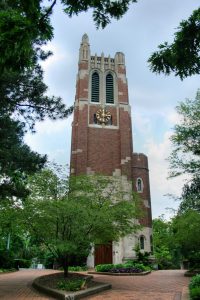
A photograph of the Beaumont Tower located on the Michigan State University campus in East Lansing, Michigan.
A recent article in New York Magazine predicting the demise of higher education is causing a great deal of anxiety in the professoriate, and for good reason. The author is making some pretty audacious prognostications, and none of them bode well for our profession…
  • enrollments will crater
  • hundreds of colleges will go out of business
  • only a few “elite cyborg universities” will remain standing
  • most instruction will go online
  • colleges will be forced to partner with big tech corporations to remain viable
  • schools will fire thousands of faculty members in a last ditch effort to cut costs
  • tuition will be reduced for online classes, offering a rare silver lining: a college education will become more affordable for the masses
We’ve been seeing versions of this “doom & gloom” prediction about higher education for years–ever since the birth of the Internet, various sages have been predicting the death of our current system of higher education. And with powerful friends in Washington, like Secretary of Education, Betsy DeVos, we would be foolish to ignore their ideas.
But this prediction is predicated on a particular and very limited way of thinking about higher education as a business, and the only metric worth considering being money/profit. It’s a way of thinking about education as a commodity, and of students and parents as customers. It’s a belief that the “value”, such as it may be, in education, has to do with information–and it relies on a “banking model” of learning that treats knowledge as bits and bytes of content that can be “deposited” in a student’s “brain account”. A simple transaction between teacher and learner; a transaction that can be accomplished just as easily via Zoom as in an ivy-covered building on a CONTINUE READING: "The reports of the death of higher education are greatly exaggerated." | Eclectablog

Celebrating Our Heroes - NEA Today

Celebrating Our Heroes - NEA Today

Celebrating Our Heroes


As COVID-19 brought our nation—and the world— to a screeching halt, our communities needed educators more than ever. Even from a social distance, NEA members found creative, inspiring, and selfless ways to educate, feed, and tend to the well-being of their students and colleagues.
Your stories have made us smile and moved us to tears. And while just a very few of those experiences can fit on these pages, NEA salutes all 3 million of you—our members.
Each of you has touched the lives of your students and helped your community—offering strength, love, and optimism in these darkest of times. United, we will make it through.

Educator Finds FREE Wi-Fi for Rural Students

So many teachers hustled this spring to put their lessons online and connect virtually with students. But what happens when students can’t reach them? About one in seven students don’t have internet access.
When schools closed in North Carolina, Margaret Powell, a data manager at West Cary Middle School, near Raleigh, knew a lack of highspeed access would be a problem for students in rural communities. She sprang into action, calling association leaders and church leaders in rural areas around the state.
“Churches have big spaces that sit empty during the week,” she explains, “and they have Wi-Fi access to service hotspots for students in rural areas.”
Immediately, five pastors from decent-sized churches said yes, offering space for CONTINUE READING: Celebrating Our Heroes - NEA Today

The weird things Rand Paul said about reopening schools - The Washington Post

The weird things Rand Paul said about reopening schools - The Washington Post

The weird things Sen. Rand Paul said about reopening schools


What was Sen. Rand Paul (R-Ky.) talking about Tuesday when he was arguing with leading public health expert Anthony S. Fauci about reopening schools during the coronavirus pandemic?
Paul aggressively questioned Fauci during a hearing of the Senate Committee for Health, Education, Labor and Pensions about coronavirus-related issues. Fauci, director of the National Institute of Allergy and Infectious Diseases, defended himself in his usual measured tone.
During the exchange about schools, Paul, an ophthalmologist, offered his opinion on medical details, disagreeing with many researchers on the novel coronavirus, which has killed more than 80,000 Americans in the past few months. Paul is the only senator to contract covid-19, the disease the virus causes, but has since recovered.
Paul said that U.S. schools — virtually all of which closed in the spring when the coronavirus began to spread around this country — should open in the fall, and that it would be “ridiculous” if they don’t. He challenged predictions by Fauci and other experts in infectious diseases that there will be a spike in cases when America starts to reopen.
He also raised the issue of how the disease affects children. The number of coronavirus-related deaths among children has been extremely low, according to the Centers for Disease Control and Prevention, though experts do not know why children are not affected as much as adults. A preliminary ongoing count of coronavirus deaths by the CDC shows that between Feb. 1 and May 6, four children under the age of 1 died of the coronavirus; two children between the ages of 1 and 4 died; four children between the ages of 5 and 14 died; and 48 people between the ages of 15 and 24 died. (The data did not specify how many of those 48 were 18 or under.)
Experts are investigating a dangerous inflammatory syndrome in young people that may be related to covid-19. In New York alone, at least 93 children have been diagnosed with it, and three are known to have died as a result.
“Shouldn’t we at least be discussing what the mortality of children is?” Paul asked Fauci and then said CONTINUE READING: The weird things Rand Paul said about reopening schools - The Washington Post

Biden And Sanders Announce Education Unity Task Force

Biden And Sanders Announce Education Unity Task Force

Biden And Sanders Announce Education Unity Task Force


Today, former Vice President and presumptive Democratic presidential nominee Joe Biden announced six Unity Task Forces to cover the issues of education, climate change, criminal justice reform, the economy, health care, and immigration. These task forces will advise the Democratic National Committee Platform and Biden himself and were put together with former 2020 presidential candidate Bernie Sanders.
The education task force is co-chaired by Representative Marcia Fudge (D-OH) and Heather Gautney, Ph.D. Fudge serves on the House Committee on Education and Labor and is a member of the Congressional Black Caucus and the Congressional Progressive Caucus. Dr. Gautney is a professor at Fordham University and was a senior policy advisor to Sanders’s presidential campaign. She previously served as an advisor in Sanders’s Senate office.
The other members of the task force are:
  • Alejandro Adler, Ph.D. — a professor at Columbia University who focuses on student well-being.
  • Lily Eskelsen Garcia — president of the influential teachers’ union, the National Education Association.
  • Maggie Thompson — former executive director of Generation Progress, who focuses on student debt.
  • Christina Vilsack — a librarian, a literacy advocate, and former First Lady of Iowa.
  • Randi Weingarten — president of the influential teachers’ union, the American Federation of Teachers.
  • Hirokazu Yoshikawa — a professor at New York University who studies the impact of policy on immigration, early childhood, and poverty reduction on children’s development.
Biden has already announced a series of education policy proposals, including adopting a version of free college put forth by Sanders. This group of advisors will play an important role in shaping the Democratic platform and any new education policies in the coming months. Their role is likely to only be made more important by the fallout from the coronavirus.
Biden And Sanders Announce Education Unity Task Force

NY Times Editorial: Together We Are Responsible for Equalizing Educational Opportunity Between Cities and Suburbs | janresseger

NY Times Editorial: Together We Are Responsible for Equalizing Educational Opportunity Between Cities and Suburbs | janresseger

NY Times Editorial: Together We Are Responsible for Equalizing Educational Opportunity Between Cities and Suburbs


This week, the New York Times editorial board published a stunning analysis of unequal educational opportunity among the children of America’s metropolitan areas. The facts are not new, but the effects of the coronavirus have so exposed economic and racial inequality that someone at the newspaper was motivated to pen a sort of manifesto for justice in the nation’s public schools. This piece is ground breaking because it names a reality that has remained invisible to many Americans:
“Our urban areas are laced by invisible but increasingly impermeable boundaries separating enclaves of wealth and privilege from the gaptoothed blocks of aging buildings and vacant lots where jobs are scarce and where life is hard and, all too often short.  Cities continue to create vast amounts of wealth, but the distribution of those gains resembles the New York skyline: A handful of super-tall buildings, and everyone else in the shade… Our cities are broken because affluent Americans have been segregating themselves from the poor, and our best hope for building a fairer, stronger nation is to break down those barriers.”
Here is the data: “Most poor whites live in mixed-income neighborhoods.  In the nation’s 100 largest metropolitan areas, about a third of low-income whites—3.4 million people—lived in high-poverty urban neighborhoods in 2014, according to a Brookings Institution analysis.  By contrast, 72 percent of low-income blacks, or 5.2 million people, lived in high-poverty urban neighborhoods, as well as 68 percent of low-income Hispanics, or 6.7 million people.”
What has caused the current level of economic and racial segregation? The newspaper’s CONTINUE READING: NY Times Editorial: Together We Are Responsible for Equalizing Educational Opportunity Between Cities and Suburbs | janresseger

CURMUDGUCATION: The Why Of Opening Schools Matters As Much As The When

CURMUDGUCATION: The Why Of Opening Schools Matters As Much As The When

The Why Of Opening Schools Matters As Much As The When


Originally posted about three weeks ago. Not much has changed; only become more so.

At some point, schools are going to open again. Figuring out when will require some complicated medical and political calculus, and while lots of folks are hoping it will be just as easy as life going back to normal sometime over the summer, nobody is ready to bet the farm, or even a few select outbuildings, on that simple scenario.

The “when”of re-opening schools will matter, whether it’s early, late, or right on time. But it will be equally important to talk about the “why.”


It would be great if the “why” was something along the lines of “We want to get back to making good on the promise of a full and free education for every child” or even “We want children to get back to learning and planning for their futures.”

There are, unfortunately, less useful arguments in play.

Some of the battle over re-opening the US has become starkly political, with GOP lawmakers joining protestors on the steps of state capitols. Perhaps the very worst reason for re-opening US schools (or not) would be in order to score a political victory for one team or the other.

Another common pressure for re-opening comes from the desire to re-open the economy. It will be that much harder to get workers back on the job if they have nobody to watch the kids, and so the desire to get workers back on the line will go hand in hand with the push to get students back in the classroom. 

One may ask, “What difference does it make why we’re re-opening schools, as long as we’re getting CONTINUE READING: 
CURMUDGUCATION: The Why Of Opening Schools Matters As Much As The When

Bain And Company Arrive At LAUSD – Los Angeles Education Examiner

Bain And Company Arrive At LAUSD – Los Angeles Education Examiner

Bain And Company Arrive At LAUSD


While families have been scrambling to homeschool and accessorize their 20 million+ LAUSD GrabNGo meals, the District’s Superintendent and improbably employed former investment-banker, Austin Beutner, has sought guidance from his own comfort-sector, the world of corporate management consulting.
Last Wednesday, May 6 2020, LAUSD announced that Bain & Company will work on a pro bono basis “to evaluate and implement strategies to help teachers, students and families in remote, online learning.” Meanwhile the firm of Bain & Company itself announced a very different mandate to “identify and prioritize potential initiatives [based on research and insights by education experts, key district stakeholders and Los Angeles Unified personnel…] that have a tangible impact, are fiscally responsible and can be implemented quickly. Based on agreed-upon priorities, Bain will then design a high-level plan of action for Los Angeles Unified to consider. … At Bain we are committed to investing in high impact education initiatives.”
That is, notwithstanding direct authorization from LAUSD’s elected, policy-setting schoolboard, the Superintendent has invited activist, business management consultants to filter LA’s Unified School District through a sieve of market efficiency – not educational –strategies.
The management consulting firm of Bain & Company is far from a CONTINUE READING: Bain And Company Arrive At LAUSD – Los Angeles Education Examiner

NYCDoE did not protect us in March – How can we trust them in September? | JD2718

NYCDoE did not protect us in March – How can we trust them in September? | JD2718

NYCDoE did not protect us in March – How can we trust them in September?


In March the NYC Department of Education violated protocols by not shutting schools with COVID-19 and cleaning them. They stifled reporting. They hid what was going on.
We knew that the NYC Department of Education unconscionably delayed closing schools – that was really bill de blasio. That’s not what I am writing about. That’s a policy disagreement (they were wrong).
I am writing about teachers reporting that they had confirmed COVID-19, and the DoE making up rules so they could pretend that the case was not properly confirmed, and keeping the schools open. They broke their own rules. And while an ultimate investigation might serve up a fall guy, that’s not what I care about right now. No, I care about September.
Because in September it is possible that our schools will, in one form or another, reopen. In September there will be rules in place to keep us safe. But how do we trust the DoE, who just two months ago broke rules and put lives at risk?
It’s not just here. The NEA just shared out this article from Texas:  what do we do if they tell us to go in, but we are not safe?
Now, there is a UFT Delegate Assembly tomorrow. It is virtual, which will be weird. I don’t know if I would get called on if it were a live DA. But I am going to try.
I think, to help keep us safe, the Department of Education should have to show up, a real person – at a school where the staff/chapter think they are at risk. No more burying safety reports. No remote bureaucrat sending us in to get sick. Come in, explain that it is safe. We can use the UFT to monitor that CONTINUE READING: NYCDoE did not protect us in March – How can we trust them in September? | JD2718

One More Question….. | The Merrow Report

One More Question….. | The Merrow Report

One More Question…..


“Dr. Merrow, I have just one more question for you.  We’re pretty conservative here, pretty slow to change.  If we hire you to be our School Superintendent, what’s the biggest change you would want to make in our schools?”
“That’s a great question, sir,” I replied, my brain whirling and spinning and searching for a suitable answer.
His question feels as fresh today as it did in 1973 when  I was living on Nantucket, a small island off the coast of Massachusetts. I had just received my doctorate from Harvard, I was unemployed, the schools were looking for a superintendent, and the minister at our church happened to be on the school board.  Thus I was asked to apply, which culminated in that great question….which proved to be my downfall.
I settled on an answer, which went something like this.  “I strongly believe that reading competently with understanding is the foundation of almost all learning. Therefore, I would institute a clear policy: no one advances to fourth grade until everyone can read.”
To my surprise my questioner, an elderly white gentleman, expressed his support.  “That’s not radical, Dr. Merrow.  That’s just common sense.”  He paused.  “After all, nobody should be promoted to fourth grade until he can read. 
“With all respect, sir, that’s not what I said. Under this policy, NOBODY goes to fourth grade until EVERYONE can read.  Your neighbor’s son isn’t promoted until YOUR daughter is reading, or vice-versa.”
I still remember the stunned looks on the faces of the School Board members.  As I recall, I qualified my position with some loopholes for children with disabling conditions, but that didn’t matter.  The interview was essentially over, and I wasn’t asked back for the second round of interviews.
So, 47 years later and in the midst of a pandemic, how would I answer that question?  
Actually, I would ask for even bigger changes, starting with these eight: CONTINUE READING: One More Question….. | The Merrow Report

Tuesday, May 12, 2020

What might MLK Jr. say to educators about COVID-19? | Cloaking Inequity

What might MLK Jr. say to educators about COVID-19? | Cloaking Inequity

WHAT MIGHT MLK JR. SAY TO EDUCATORS ABOUT COVID-19?


This is what I think Martin Luther King Jr. might have said about the pursuit of principles of justice and inclusion by educators in our current environment.
I have used his words almost verbatim with some modest embellishment.
In the midst of COVID 19, the world is a different place. Our nation, our state and communities are different.
 
It almost seems as if the world has been put on pause.
 
But we can’t wait to make a difference…
 
We are a special army, with no supplies but its sincerity, no uniform but its determination, no arsenal except its faith, no currency but its conscience
 
The words ‘bad timing’ come to be ghosts haunting our every move …Yet people who use this argument are ignorant of the background of our planning…they did not realize that it was ridiculous to speak of timing when the clock of history showed that communicates of color have already suffered one hundred years of delay
 
We can’t wait to make a difference in our community… In our state… In our nation… In our world…
 
The time is always ripe to do right.
 
Time itself is neutral; it can be used either destructively or constructively…Human progress never rolls in on wheels of inevitability; it comes through the tireless efforts of [people] willing to work…and without this hard work, time itself becomes an ally of the forces of social stagnation. We must use time creatively, in the knowledge that the time is always ripe to do right.
 
So, you have my commitment to do right today and in the future. And in the words of Martin Luther King Jr:
 
We need a powerful sense of determination to banish… the narcotics of delay that could dull the pain of progress.
 
As we emerge from COVID 19 I hope that our communities become healthier, more just, more impactful and more united.
 
We can’t wait to make a difference. The time is always ripe to do what is right.
Please Facebook Like, Tweet, etc below and/or reblog to share this discussion with others.
Check out and follow my YouTube channel here.
Twitter: @ProfessorJVH
Click here for Vitae.

Russ on Reading: Why Johnny Can't Read, Part 4: Brain-Based Reading Disorders

Russ on Reading: Why Johnny Can't Read, Part 4: Brain-Based Reading Disorders

Why Johnny Can't Read, Part 4: Brain-Based Reading Disorders


The 4th in a series on vulnerable readers

Some children's brains have difficulty processing written words and text. Such children may have difficulty decoding words, reading fluently, and comprehending what they read. These reading difficulties are not related to level of  intelligence or creativity, and indeed, these reading disorders are often discovered when children's performance in reading is below expectation for their age and grade level. The estimates of the incidence of these brain-based disorders varies widely from about 2% to 20% of the student population, depending on what source you read. The International Dyslexia Association sets the number at between 15 and 20% of the population having "symptoms of dyslexia", which may include "slow or inaccurate reading, poor spelling, and poor writing."

The label many give these reading disorders is dyslexia. The label may be comforting to some, but according to the International Literacy Association, (ILA) the nature and causes of the difficulty, and even whether or not the label itself is helpful, are still matters that are under investigation. One problem with the dyslexia label is that there are many mythologies and misleading concepts surrounding the term. For example characteristics such as clumsiness, attention deficit, fine motor problems, creativity, or CONTINUE READING: 
Russ on Reading: Why Johnny Can't Read, Part 4: Brain-Based Reading Disorders


Sacramento City Unified School District teachers fired | abc10.com

Sacramento City Unified School District teachers fired | abc10.com

Sacramento city teachers fired, program ended as district works to avoid state takeover amid pandemic
Preschool teachers in the Sacramento City Unified School District were among 12 people fired last week as the district continues to address a $27 million deficit.


SACRAMENTO, Calif — Tamara Toby was laid off last week.
The preschool teacher in the Sacramento City Unified School District was one of 12 fired as the district continues to address a $27 million deficit that predates the coronavirus pandemic.
Of the 12 let go were Toby and two other teachers who were part of the Parent Participation Preschool program (PPP) a 72-year-old hybrid program that combines early childhood education with parenting classes.

“It's unique, and I would hope the district would want to continue something like our program,” said Toby, who worked in the program for 10 years. “And if not continue it, grow it.”
Unfortunately, that’s not likely to happen.
The adult education program costs about $440,000 annually to run but only collects about $160,000 in fees every year. Plus, despite caring for about 200 preschoolers, the program is considered an adult education program and is not eligible for supplemental funding from the district.
A district spokesperson told ABC10 in a statement that while it’s a “wonderful program,” it’s not one that the district has resources to sustain.
“Without a fee structure that would make it self-sustaining, we are unable to continue funding this adult education program,” the district said. “We are actively working with families to explore a fee structure for participants that would make the program self-sustaining in light of the district’s budget situation.”

Avoiding a state takeover amid a pandemic

In 2018, state officials announced SCUSD had a high risk of being taken over by the state. Since then, the district has worked to find ways to cut cost and reduce spending in an effort to avoid what seemed inevitable.
Last year, a state auditor’s report said that the district had financially failed in three main areas — teacher salaries, employee benefits and special education. The state auditor warned that if CONTINUE READING: Sacramento City Unified School District teachers fired | abc10.com

Free Internet Available To SCUSD Students

Free Internet Available To SCUSD Students

Free Internet Available To SCUSD Students


SACRAMENTO – Sacramento City Unified School District, the City of Sacramento, and Comcast announced a new effort to provide Sac City Unified families with free internet access. The new initiative, called Sac City Kids Connect, provides Comcast’s Internet Essentials program to qualifying low income families with internet access, provided they live in a Comcast service area. As part of the Sac City Kids Connect program, eligible families will be provided with a special code to access six months of free internet. The access codes will be provided in the coming weeks.
More information including eligibility requirements and instructions about how to sign up for the program can be found at www.scusd.edu/kidsconnect. The site is designed for use with mobile phones or tablets.
“Our mission to meet our students’ academic, social and emotional needs didn’t end when schools closed,” said Sac City Unified Superintendent Jorge Aguilar. “Lack of internet access is a barrier, even during normal times. In these extraordinary times, this barrier becomes all the more evident for many of our students, but especially our most vulnerable. We continue to work tirelessly to remove every obstacle that might prevent our students from reaching their educational goals.”
“The reality is that even in our Capital City many kids can’t connect to online learning because they lack access to the internet,” said Sac City Unified Board President Jessie Ryan. “An inability to access the internet should never prevent learning. This is why we are proud to launch this public-private partnership with Comcast and the City of Sacramento which will connect our kids to internet access and the opportunities they deserve. There are many uncertainties in this crisis, but what remains consistent is our commitment to supporting student success.”
“Here at the city one of our top concerns is making sure young people growing up in all of our CONTINUE READING: Free Internet Available To SCUSD Students