Latest News and Comment from Education

Tuesday, October 22, 2019

It's Larry Ferlazzo's Websites of the Day... A VERY BUSY DAY | The latest news and resources in education since 2007

Larry Ferlazzo's Websites of the Day... | The latest news and resources in education since 2007

It's Larry Ferlazzo's Websites of the Day... A VERY BUSY DAY | The latest news and resources in education since 2007


TODAY
Daylight Saving Time Ends On Nov. 3rd – Here Are Related Teaching & Learning Resources

Free-Photos / Pixabay Yup, it’s that time again. You might be interested in The Best Sites For Learning About Daylight Saving Time.

YESTERDAY

NPR Announces They’re Doing Another Year Of Their Student Podcast Contest

Clker-Free-Vector-Images / Pixabay NPR has just announced that they are going to have a second year of their student podcast challenge (see The NPR Student Podcast Challenge Is Back! ). It’s actually a bit of a strange announcement – they say it will start in January, but they aren’t ready to announce its rules or share supporting resources yet. I don’t really understand why they wouldn’t have ju
SEL Weekly Update

I’ve recently begun this weekly post where I’ll be sharing resources I’m adding to The Best Social Emotional Learning (SEL) Resources or other related “Best” lists. You might also be interested in THE BEST SOCIAL EMOTIONAL LEARNING RESOURCES OF 2019 – PART TWO Finally, check out “Best” Lists Of The Week: Social Emotional Learning Resources . Here are this week’s picks: Why Aren’t We Curious About
Day Three Of The Chicago Teacher’s Strike – Here’s What’s Happening

OpenClipart-Vectors / Pixabay Here are new additions to THE BEST ARTICLES & VIDEOS FOR LEARNING ABOUT THE 2019 CHICAGO TEACHERS’ STRIKE: Live updates from Day 3 of the Chicago teachers strike: A quick settlement ‘not likely,’ union says is from Chalkbeat. Chicago teacher strike continues as negotiations grind on is from The Washington Post.
Video: “Why wildfires in the western U.S. are only going to get worse”

skeeze / Pixabay Wildfires are a big concern here in California. I’m adding this new USA Today video to The Best Sites For Learning About Forest Fires :
The Best Up-To-Date Teaching Resources About Brexit

Elionas2 / Pixabay Brexit may be coming to head. Here are the best up-to-date resources I can find for use in a U.S. classroom. You might also be interested in TWO DECENT VIDEOS ABOUT THE EUROPEAN UNION. Reader suggestions are welcome! What Is Brexit? A Simple Guide to Why It Matters and What Happens Next is from The NY Times. Brexit: All you need to know about the UK leaving the EU is from The B
New TED-Ed Video: “The Mayan myth of the morning star”

Connectingdots / Pixabay The new TED-Ed video and lesson is on “The Mayan myth of the morning star.” I’m adding it to The Best Resources For Learning About The Maya .
“Ways to Support Student Agency”

Ways to Support Student Agency is the headline of my latest Education Week Teacher column – part two in a series. In it, Adeyemi Stembridge, Mary Beth Nicklaus, Alycia Owen, and Dr. Laura Greenstein discuss the value of student agency and how to promote it in schools. Here are some excerpts:


Leonardo Da Vinci Died 500 Years Ago – Here Are Related Teaching & Learning Resources

WikiImages / Pixabay Leonardo Da Vinci died 500 years ago . You might be interested in The Best Sites For Learning About Leonardo Da Vinci .
Larry Ferlazzo's Websites of the Day... | The latest news and resources in education since 2007

Teaching in Hostile Times | radical eyes for equity

Teaching in Hostile Times | radical eyes for equity

Teaching in Hostile Times


There is a long-time joke at my university that has far more than a grain of truth in it—the campus and the university environment captured in a metaphor, the bubble. Referring to the bubble elicits smiles and even laughter, until the bubble bursts.
Over three M-W-F morning courses this fall, I teach 40 students—39 are first-year students, and 39 are white. Most, as is typical of my university are women, and most are significantly privileged in a number of ways.
During fall break this year, vandalism and theft invaded the bubble, including Swastikas and sexually hostile language written on young women’s dormitory doors and marker boards.
So far the university response has been a mostly silent investigation and one official email from the Chief Diversity Officer and University Chaplain. When I engaged one class in a conversation about the incident, I heard the following concerns from students, which I shared with the President, Provost, Academic Dean, and CDO:
  • Students are concerned with a lack of information, and that only one email from two FU admins has been sent [1]. Some mentioned that email was in their spam folder.
  • Students expressed concern that almost no professors have addressed these events in class.
  • Students openly wondered if this is being “swept under the rug,” and fear that if/when people responsible are discovered, what the consequences will be.
  • More broadly, students expressed some trepidation about the open-campus nature, and seemed unsure how to alert and who to alert with specific concerns.
The second point stands out to me because a couple students directly noted that in one class the discussion planned for a class session was CONTINUE READING: Teaching in Hostile Times | radical eyes for equity

Carl J. Petersen: Can An Ethically Challenged School Board Member Pass Judgement On Others?

Can An Ethically Challenged School Board Member Pass Judgement On Others?

Can An Ethically Challenged School Board Member Pass Judgement On Others?

Included on the agenda for the morning meeting of the Los Angeles Unified School District’s (LAUSD) Board was an item described as “Employee Discipline/Dismissal/Release.” For grassroots activists fighting against the privatization of public education, it was ironic that Board Member Nick Melvoin would participate in this conversation given the ethics violations that were revealed by the publication of confidential California Charter School Association (CCSA) documents by Michael Kohlhaas dot org. Before the board retreated into closed session, these parents and grandparents of students enrolled in the district expressed their concerns by reading portions of these charter industry documents into the public record:
Regarding employee dismissals, item number two: should an attorney who is potentially in violation of California Bar Association professional and ethical codes be deciding on the CONTINUE READING: Can An Ethically Challenged School Board Member Pass Judgement On Others?

PETER GREENE: The Classroom Connectivity Gap Is Closed. How Did That Happen?

The Classroom Connectivity Gap Is Closed. How Did That Happen?

The Classroom Connectivity Gap Is Closed. How Did That Happen?
EducationSuperHighway has only been around since 2012, but this morning they issued a report with a simple message: the classroom connectivity gap has been closed.
That’s not entirely a surprise; last year’s annual report from the non-profit reported that 98% of US schools had high-speed internet access. This year the number is squeaking past 99%, with the vast majority also meeting the FCC 1 Mbps per student standard. Along the way, EducationSuperHighway managed to involve around 80 governors from all 50 states, recast some federal regulations, and approach an unheard-of milestone–become a non-profit organization that will close up shop because it did what it set out to do.
How did they manage all that? I talked to founder Evan Marwell about the secrets of his success.
Marwell had been an entrepreneur four times, successful enough to live comfortably (Marwell takes no salary as CEO of the organization). He had set his sights on the non-profit world, but hadn’t identified his “bold endeavor” of choice until his daughter told him they were unable to stream videos at her school–a private school in Silicon Valley. The second part of his non-profit epiphany came in a DC conversation with a top US tech officer, who explained, “We’re the government. We don’t fix problems.” What he meant was that the government has money, some leverage, and a bully pulpit, but not the human capital to pull off something large scale. And Marwell identified the biggest non-profit problem as getting solutions to scale.
It would be easy for those of us invested in classroom teaching in public education to view Marwell with suspicion; after all, the CONTINUE READING: The Classroom Connectivity Gap Is Closed. How Did That Happen?

Kentucky: Don’t Be Fooled! Charters and Vouchers Harm Children. | Diane Ravitch's blog

Kentucky: Don’t Be Fooled! Charters and Vouchers Harm Children. | Diane Ravitch's blog

Kentucky: Don’t Be Fooled! Charters and Vouchers Harm Children

Rev. Sharon Felton, coordinator of Pastors for Kentucky Children, warns parents and other members of the public not to be fooled by the rhetoric. Charters, vouchers, and tax credits are not good for children, and they drain resources from the public schools that educate most children.
She writes:
Educating our children is the most important thing we do in the commonwealth. Educating all of our children no matter their family’s economic status, their address, the color of their skin, is so critical to our society and our future that our constitution requires it!
Section 183 of the Kentucky Constitution states, “The General Assembly shall, by appropriate legislation, provide for an efficient system of common schools throughout the State.”
People are pouring money and rhetoric into our state to convince us all that privatization, school choice, scholarship tax credits (vouchers), and charter schools CONTINUE READING: Kentucky: Don’t Be Fooled! Charters and Vouchers Harm Children. | Diane Ravitch's blog


CURMUDGUCATION: Vouchers And Federally-Supported Discrimination

CURMUDGUCATION: Vouchers And Federally-Supported Discrimination

Vouchers And Federally-Supported Discrimination
School voucher programs are becoming one of the major fronts in a federal battle to safeguard discrimination by religious organizations.
Some flaps created by private religious schools seem minor, like the pastor at a Catholic school who banned Harry Potter books because he believes the books contain “actual curses and spells.” But earlier this year, the Catholic Archdiocese of Indianapolis touched off a flurry of excitement by requiring Catholics schools in the archdiocese to fire all gay teachers. Brebeuf Jesuit Preparatory School refused, and was stripped of its Catholic identity. To avoid a similar fate, Cathedral High School terminated a teacher in a decision it called “agonizing.” The teacher settled with the school, but has since sued the archdiocese. 
This might be a matter of Catholic internal business, except that in Indianapolis, as in many areas around the country, the Catholic school system is now funded in part by school vouchers, a system of using public tax dollars for tuition to private schools. Indiana has been aggressive in pursuing school choice policies, particularly under then-Governor Mike Pence, who in his 2013 inaugural addresssaid, “There’s nothing that ails our schools that can’t be fixed by giving parents more choices.” Indiana’s voucher program directs taxpayer dollars primarily to religious schools, and the CONTINUE READING: CURMUDGUCATION: Vouchers And Federally-Supported Discrimination

NYC Public School Parents: Schools with the biggest shortfalls in matching funds for facility upgrades.

NYC Public School Parents: Schools with the biggest shortfalls in matching funds for facility upgrades.

Schools with the biggest shortfalls in matching funds for facility upgrades.


Here is the list from our reportSpending by NYC on Charter School Facilities: Diverted Resources, Inequities and Anomalies, of the 175 NYC public schools co-located with charter schools with the biggest shortfalls in funds for facility enhancements, totaling $22 million, which were supposed to be provided according to a state law passed in 2010.
NYC Public School Parents: Schools with the biggest shortfalls in matching funds for facility upgrades.

Teachers Quitting In DC | GFBrandenburg's Blog

Teachers Quitting In DC | GFBrandenburg's Blog
Teachers Quitting In DC


Valerie Jablow points out that there is an enormous problem with DC public and charter teachers being so harassed that they quit: around 70% of them quit by their 5th year of employment. (She adds that this is probably not a bug, but a feature of the DC teacher evaluation program.) I am reprinting her entire column, but you should subscribe to it yourself.

Let’s Be Clear: DC Teacher Retention Isn’t Just A Problem. It’s A Crisis.

This Wednesday evening, October 23, at 5:30 pm, the DC state board of education (SBOE), DC’s only elected body with a direct (if relatively powerless) voice on our schools, will take public testimony on teacher retention in DC’s publicly funded schools. (See more information here.)
While public voice is sorely needed in every conversation about our public schools, in this case it’s a bit akin to choosing wallpaper for a burning building.
But that’s hardly SBOE’s fault.
In the wake of years of testimony about horrific treatment of DC teachers, SBOE last year commissioned a study by DC schools expert Mary Levy, which showed terrible attrition of teachers at our publicly funded schools, dwarfing attrition rates nationally.
An update to that 2018 study was just made available by SBOE and will be discussed at the meeting this week.
The update shows that while DCPS teacher and principal attrition rates have dropped slightly recently, they remain very high, with CONTINUE READING: Teachers Quitting In DC | GFBrandenburg's Blog

Mike Klonsky's Blog: Sun-Times' phony support for CPS sports teams

Mike Klonsky's Blog: Sun-Times' phony support for CPS sports teams

Sun-Times' phony support for CPS sports teams

Sun-Times says, Simeon needs the teachers strike to end sooner than the rest of the Public League 
We have to wonder, if the strike continues through the coming week, how many students this school year will score just a little lower on standardized tests, hurting their chances of getting into a top college or winning a scholarship. -- Sun-Times editorial

I expect anti-union, anti-teacher rants from the likes of Greg Hinz at Crain's or Kristen McQueary (and now Eric Zorn) at the Trib. But I must say, I flipped out after reading today's editorial in the Sun-Times, a paper owned in part by the unions, which hit too close to home.

The editorial calls on striking CTU teachers to return to work immediately or risk hurting CPS sports teams.


If the strike does not end on or before Tuesday, all 78 CPS football teams — some 2,300 kids — will not play their Week 9 games.
It's not just football. Girls tennis teams will miss their scheduled tournament and Class 2A and 3A boys soccer teams had to forfeit every game this weekend.

And the topper...


...if the strike continues through the coming week, how many students this school year will score just a little lower on standardized tests, hurting their chances of getting into a top college or winning a scholarship.
The best solution there is, stop giving them.

First, let me say that as a former CPS basketball coach and IHSA referee, I am sympathetic to CONTINUE READING: 
Mike Klonsky's Blog: Sun-Times' phony support for CPS sports teams

Chicago’s Teachers Are Making History. Again. | The Nation

Chicago’s Teachers Are Making History. Again. | The Nation

Chicago’s Teachers Are Making History. Again.
Rank-and-file workers are finally taking back their unions, and strikes are spreading across the country as a result.

The beginning of a resurgence of strength among America’s unions today can be traced to two seminal events: the September 2012 seven-day strike by Chicago’s teachers, and the less-noticed June 2010 internal union election at the Chicago Teachers Union. That was when a slate of progressive, forward-thinking educators won all the top seats inside their union, ending nearly three decades of do-nothing unionism at the third-largest teacher’s union in the country. Jackson Potter, a teacher and one of the architects of that victory—and the subsequent strike—told me back in the fall of 2013, “Our ability to connect with the community has been key for us. But I worry about our ability to have much success over the long run if there aren’t other worker-led insurrections.”

Potter and 26,000 coworkers helped set the stage for the Chicago strikes, but they couldn’t have predicted the ensuing string of successes toward rebuilding a high-quality public school system, driven by educators from West Virginia to California. The strike that many people regard as the kickoff—the February 2018 West Virginia teacher’s strike—can also be traced back to Chicago. Despite a four-decade general assault against workers and unions, and a specific and especially vicious two-decade attack against America’s teachers, when the Chicago teachers walked in September 2012, the public sided decisively with them—and against Mayor Rahm Emanuel. Suddenly, expectations were raised that workers could fight, even strike—and win. Now with a strike date set for October 17, the focus returns to Chicago’s educators.

Much has changed since 2012, but one factor is refreshingly constant: The teachers’ union remains bottom-up, democratic, resilient and strong. Two other groups of workers in two different units, represented by SEIU local 73, have also voted to authorize strikes on October 17. These additional workers include an important group in the Chicago CONTINUE READING: Chicago’s Teachers Are Making History. Again. | The Nation

Monday, October 21, 2019

SACRAMENTO CITY UNIFIED: WHEN BILLIONAIRES BUY YOUR SCHOOL BOARD


SACRAMENTO CITY UNIFIED: WHEN BILLIONAIRES BUY YOUR SCHOOL BOARD
BILLIONAIRE ENDOR$MENT$

2014 Elections

Sacramento City Unified School District Board of Education
  • Area 1 - Jay Hansen
  • Area 2 - Jeff Cuneo
  • Area 6 - Darrel Woo
  • Area 7 - Jessie Ryan
Sacramento County Board of Education
  • Area 1 - Greg Geeting
  • Area 3 - Jacquelyn Levy

2016 Elections

Sacramento City Unified School District
  • Christina Prichett
  • Michael Minnick
  • Jessie Ryan
Sacramento County Board of Education 
  • Trustee Area 4 - Joanne Ahola
  • Trustee Area 5 - Al Brown
  • Trustee Area 6 - Heather Davis
  • Trustee Area 7 - Roy Grimes, Jr.

2018 Elections

Sacramento County Board of Education
  • Trustee Area 3 - Paul Keefer

$ACRAMENTO COUNTY BOARD OF EDUCATION: WHEN BILLIONAIRE$ BUY YOUR $CHOOL BOARD


PETER GREENE: Warren’s K-12 Plan: All In For Public Education

Warren’s K-12 Plan: All In For Public Education

Warren’s K-12 Plan: All In For Public Education

Many (including this writer) have asked over the past months: where is Elizabeth Warren’s K-12 education plan? Beyond her promise to install a former public school teacher as Secretary of Education, what does plan look like? Well, it’s here, and while it’s not perfect, it contains much of what public education supporters have been hoping to hear.
A Great Public Education for Every Student contains many many proposals that are standard promises for candidates these days–fully fund public ed, fight segregation and discrimination, provide “a warm, safe, and nurturing school climate” for students, treat teachers and staff like professionals. These are safe and common propositions, with the devil firmly situated in the details (we’ll get there in a moment). But the next proposal is a bit more aggressive: “Stop the privatization and corruption of our public education system.”
So how exactly does she propose to accomplish these goals. Which devils lurk here?
Funding.
Warren says that public education funding is a mess. Her proposal includes a four-fold increase in Title I spending (the spending that is supposed to help poorer districts get up to speed), thereby one-upping other candidates who have proposed a three-fold increase. She also wants to working with states and various experts about how they handle funding, and while “working with” can cost nothing and accomplish about the same, she also has some ideas for practical leverage, like linking that increased Title I funding to state’s finding better, fuller funding formulas.
Warren wants to spend $100 billion (roughly $1 million per school) on improvement grants, to build on what works as identified–and CONTINUE READING: Warren’s K-12 Plan: All In For Public Education

Seattle Educators Endorse Liza, Molly, & Chandra for School Board – I AM AN EDUCATOR

Seattle Educators Endorse Liza, Molly, & Chandra for School Board – I AM AN EDUCATOR

Seattle Educators Endorse Liza, Molly, & Chandra for School Board

Seattle Educators Endorse Liza, Molly, & Chandra School Board
Both the Seattle Education Association–the union representing some 5,000 educators in Seattle–and the Social Equity Educators–the social justice rank-and-file caucus–have endorsed a bold and committed slate of candidates for the November 5th School board election.
Molly Mitchell, Liza Rankin, and Chandra Hampson, are longtime community education advocates and all have powerful rerecords of being in the struggle against institutional racism and for equitable schools.
I have had powerful conversations with Molly and Chandra about their vision for opposing corporate education reform, combating institutional racism, and fighting for the schools our children deserve.
I have worked closely with Liza Rankin for many years, ever since she launched the groundbreaking initiative during the 2015 Seattle educator strike, “Soup for Teachers.” Soup for Teachers organized parents to deliver food to the picket-lines at every school in Seattle. This was a vital demonstration of parent solidarity with the strike that was crucial to the success of the strike. That strike resulted in the expansion of the racial equity teams into dozens more buildings around Seattle–something Liza believes deeply in.
Since then she has been an unyielding advocate against the abuses of high-stakes standardized testing, school privatization, and a strong ally in the Black Lives Matter at School movement.
We have a real opportunity to advance the struggle for social justice in the schools by electing this slate of educational leaders.
Below is an expert of the Social Equity Educator newsletter that republished the candidate’s statements CONTINUE READING: Seattle Educators Endorse Liza, Molly, & Chandra for School Board – I AM AN EDUCATOR

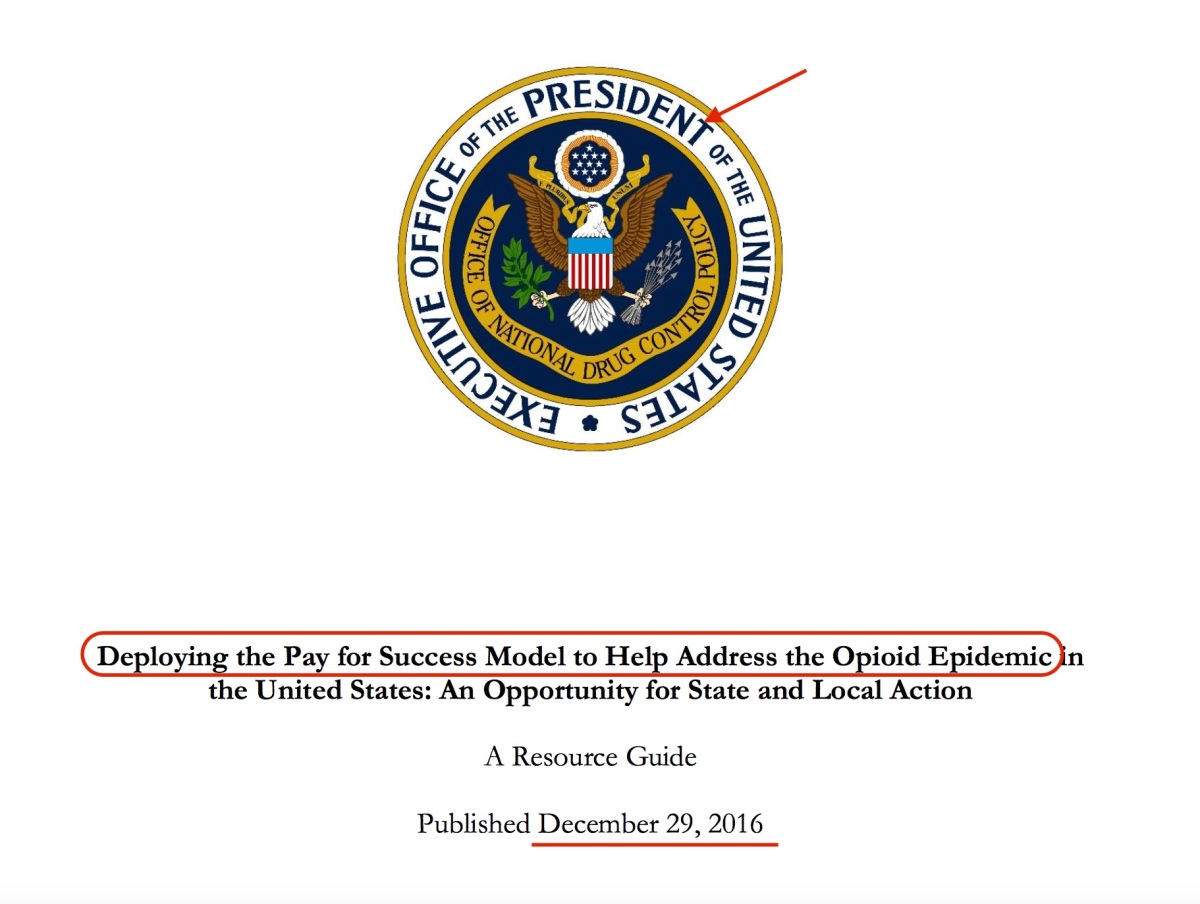
Pay for Success & the Opioid Crisis: Poor Peoples Economic Human Rights Campaign Radical Social Work Breakfast Presentation – Wrench in the Gears

Pay for Success & the Opioid Crisis: Poor Peoples Economic Human Rights Campaign Radical Social Work Breakfast Presentation – Wrench in the Gears

Pay for Success & the Opioid Crisis: Poor Peoples Economic Human Rights Campaign Radical Social Work Breakfast Presentation


The Poor Peoples Economic Human Rights Campaign hosts a monthly breakfast to discuss radical social work and issues relating to the non-profit industrial complex. Follow us on Facebook here. I was invited to participate this month and wanted to post my presentation on pay for success and the opioid crisis, so the information could be shared more widely. Below is a video matching the voice recording to my slideshare, which can be accessed here.

Select resources mentioned in my presentation:

Blog post on the Connecticut Family Stability Project: here.
“Meet Kathy” community care coordinator video: here.
Saving Maine Schools on Tripp Jones, Mentor Network and New Profit: here.
Scottish Named Person legislation: here.

Elizabeth Warren calls for billions of new dollars to reform pre-K-12 schools and fight privatization. Here’s how she plans to pay for it. - The Washington Post

Elizabeth Warren calls for billions of new dollars to reform pre-K-12 schools and fight privatization. Here’s how she plans to pay for it. - The Washington Post

Elizabeth Warren calls for billions of new dollars to reform pre-K-12 schools and fight privatization. Here’s how she plans to pay for it.


Democratic presidential hopeful Sen. Elizabeth Warren (Mass.) unveiled a broad pre-K-12 education plan Monday that calls for spending hundreds of billions of dollars to improve public schools, eliminating use of test scores for high-stakes decisions and ending federal funding for new charter schools. She wants America’s wealthiest people to pay for it.

Warren, who in some recent polls has topped the other 18 candidates running for the Democratic nomination, would steer U.S. education policy away from that of President Trump and Education Secretary Betsy DeVos, who have said their priority is expanding alternatives to traditional public schools.
“To keep our traditional public school systems strong, we must resist efforts to divert public funds out of traditional public schools,” Warren said in the plan. She pointed to charter schools, which are publicly funded but privately operated (and which Warren once supported), and to DeVos-backed voucher and tuition tax-credit programs that use public money for private and religious school education.
“We should fight back against the privatization, corporatization, and profiteering in our nation’s schools,” she said in her plan, which was applauded by the leaders of the two major teachers unions.
Warren, who has touted dozens of plans for the country, said she would pay for her education vision with a proposed “wealth tax.” It would levy a 2 percent tax on wealth above $50 million and a 3 percent tax on wealth above $1 billion. Some economists and other Democratic candidates have said the tax would not raise as much as Warren said it would and could not pay for everything she plans.
A representative of the Warren campaign said Sunday that Warren would use the wealth tax to pay for the new pre-K-12 education plan as well as for previously announced initiatives to provide universal child care and early learning opportunities, cancel most student debt and offer free tuition at public CONTINUE READING: Elizabeth Warren calls for billions of new dollars to reform pre-K-12 schools and fight privatization. Here’s how she plans to pay for it. - The Washington Post