Latest News and Comment from Education

Thursday, October 17, 2019

Please help us purchase a “wondrous” book for children | Cloaking Inequity

Please help us purchase a “wondrous” book for children | Cloaking Inequity

PLEASE HELP US PURCHASE A “WONDROUS” BOOK FOR CHILDREN


A project to enrich learning at two local schools has launched on Big Blue Crowdfunding. It will help the University of Kentucky College of Education’s efforts to support students at Fayette County’s two Promise Academies, Harrison Elementary and William Wells Brown Elementary.
The Fayette county district is taking extra steps to ensure every student’s success within the Promise Academies. UK College of Education students, faculty, and staff will be giving their time and talents at the schools through literacy and the arts. 
We are reaching out to the community to help support the role we will play at the schools. Every contribution will be an investment in helping students use literacy and art to develop an understanding of the values of creativity and tolerance and an appreciation of differences

Dr. Margaret Mohr-Schroeder, associate dean for clinical preparation and partnerships at the UK College of Education.
You can support the effort by making a donation by Oct. 31.
We want to step up in a big way to make a difference and are raising funds to purchase a special book that will allow volunteer mentors to not only engage in literacy promotion and conversation regarding the text’s important themes, but also to lead the students to develop voice and authorship,” said Carolyn Oldham, a doctoral student in Educational Policy Studies and Evaluation at the UK College of Education.
The opening weekend of the campaign saw donations totaling more than $500. To launch the program at full-scale across the two schools, organizers are seeking to raise $3,000.
Contributions to the project will allow organizers to purchase copies of a unique children’s picture+coloring book that provides students with two books in one.  The students will be able to discuss the book with volunteer mentors and take it home to read with their families.
The book, Wondrous Things, was authored by Liz Swanson, an associate professor in the School of Architecture in the UK College of Design. The text prompts children and guides mentors to engage in conversation regarding the values of creativity, tolerance, and the appreciation of differences. It is set in one continuous landscape and printed on accordion-style pages.
“The message of the book is simple,” said Swanson. “We all have gifts and talents to share with the world, and there’s room for each of us to express ourselves.  The goal of Wondrous Things is to give readers a space to draw and express their own ideas and vision of how a new story might unfold.”
The aim of Fayette County Public Schools Promise Academies is to provide enhanced educational opportunities by extending the school day and adding more days to the school year. This structure allows the district to build in more learning time and give students additional enrichment experiences in art, music, technology, physical education, science, and world languages.
To help purchase copies of Wonderous Things for students at William Wells Brown Elementary and Harrison Elementary, visit Big Blue Crowdfunding.
Thank you!
Please help us purchase a “wondrous” book for children | Cloaking Inequity

CURMUDGUCATION: Are State Takeovers A Useful Tool

CURMUDGUCATION: Are State Takeovers A Useful Tool

Are State Takeovers A Useful Tool


Earlier this month, the 74 published an unusual article from  Ashley Jochim and Paul Hill, both of the Center on Reinventing Public Education. Their argument is that state takeovers of school districts "remain a powerful tool."

What's exceptional about the piece is that it is loaded with evidence to the contrary. I mean, ordinarily I would have had to go hunt this stuff down myself, but it's right here in the piece. Tennessee, having pioneered the Achievement School District model for state school takeover and having proven thavte model doesn't actually work, is finally backing away from the whole idea. Ohio's state takeover law has created some real disasters, and the legislatures is wrestling with getting rid of it, but in the meantime, it has hit pause on takeovers. Louisiana, New Jersey, Georgia-- the list of states getting out of the takeover biz is growing.


There's the culprit
The authors acknowledge all of that. They acknowledge some of the criticisms, including those from conservative and even reform-friendly writers like Jay Greene, saying that takeovers are just overreach by distant bureaucrats and have a lousy track record. Plus, folks object to how state takeovers often seem to be part of dismantling public education, which is apparently a lefty position (some say we need to figure out how rejecting a foundational institution in society became a "conservative" idea).

Also, they note that state takeovers "can carry steep political costs," as in the way that takeovers of mostly black districts invariably result in the stifling of black voices. And takeovers can suppress union vices as well, which I'm pretty sure some folks see as a feature and not a bug.

Despite all this, the authors argue that states should keep takeovers in their bag of tricks anyway.

Their evidence? Well, none, really. Their argument is that there were no takeovers in the 1990s and schools were "unable to shake persistent low performance." Well, no. First, we'd need to clear up what exactly their basis for writing off the nineties is, and second, correlation does not equal CONTINUE READING: 
CURMUDGUCATION: Are State Takeovers A Useful Tool


Demanding ‘pay and benefits that give us dignity,’ 25,000 Chicago public school teachers go on strike – Raw Story

Demanding ‘pay and benefits that give us dignity,’ 25,000 Chicago public school teachers go on strike – Raw Story

Demanding ‘pay and benefits that give us dignity,’ 25,000 Chicago public school teachers go on strike


Our children deserve the best that this city has to offer. They do not deserve broken promises.”
Accusing Democratic Mayor Lori Lightfoot of rejecting contract proposals that would create better public school conditions for educators and students, the 25,000-member Chicago Teachers Union went on strike Thursday to push for “pay and benefits that give us dignity and respect.”
In addition to teachers, more than 7,000 teacher aides, security guards, and custodians—members of Service Employees International Union (SEIU) Local 73—will join CTU’s strike.
The goal of the walk-out in the nation’s third-largest school district is “to win—in writing, in an enforceable contract—learning and working conditions that respect educators and provide Chicago’s students with the schools they deserve,” the union said in a statement Wednesday night.


Classes for around 300,000 Chicago Public School students were canceled on Thursday in anticipation of the strike, which follows months of tense contract negotiations. Teachers and school workers CONTINUE READING: Demanding ‘pay and benefits that give us dignity,’ 25,000 Chicago public school teachers go on strike – Raw Story

Seattle Schools Community Forum: New Messaging to Teens: Tell Your Friends NOT to Take Unknown Drugs

Seattle Schools Community Forum: New Messaging to Teens: Tell Your Friends NOT to Take Unknown Drugs

New Messaging to Teens: Tell Your Friends NOT to Take Unknown Drugs


Maybe you have already talked to your teen; if not, please do so.

From The Issaquah Reporter:


“This is a student-to-student problem,” she said. “We can give out as many messages as we want but at the end of the day, what will really help is a face-to-face, heart-to-heart [communication.]”
It's sometimes hard to say out loud for kids but ask them to look their dearest friends in the face and say, "I care so much about you. My life would be so much less if you were not here.  And your parents and siblings. Please don't take any pills from anyone."

Look at those faces in the photograph - so young and full of promise.


From left, Skyline High School juniors Tom Beatty died Aug. 11 and Lucas Beirer died Sept. 30. Ballard High School student Gabriel Lilienthal died Sept. 29. Officials believe the teens most likely ingested what they thought were legitimate opioid tablets when, in fact, they were counterfeit drugs — traced with other toxic drugs, like fentanyl. Photos courtesy of the Beatty, Beirer and Lilienthal families.


Two Skyline High School juniors — Tom Beatty and Lucas Beirer, both 16 — died because of fentanyl overdoses. And Ballard High School student Gabriel Lilienthal, 17, died of the same cause. His death was the most recent and happened on Sept. 29 in Seattle.  

Skyline ASB secretary Alex Singereanu addressed the recent CONTINUE READING: 
Seattle Schools Community Forum: New Messaging to Teens: Tell Your Friends NOT to Take Unknown Drugs

Why NEA Members Are Talking about Racism - NEA Today

Why NEA Members Are Talking about Racism - NEA Today

THE CANCER OF INSTITUTIONALIZED RACISM
It still exists—just more invisibly than ever before


Why do we care about racism in education?
Because we care about children.
Because we care about justice, and equity, and opportunity.
And because, says NEA President Lily Eskelsen García, our calling as public educators and union members is to “build a system where there is a place of honor for all in this diverse and interdependent world, a place where every blessed child has a fair chance to live the lives that will make them happy.”
And because we’re failing—not every child in America today gets a place of honor, or a fair chance, or even the full recognition of his or her humanity.
The problem is institutional racism, or the historic ways of seeing people and doing things in the United States, which our founding fathers entrenched in our public systems, including education, housing, law enforcement, and more. “As a teacher I have done my homework,” said Eskelsen García this spring in Austin, Texas. “Our history is clear: We have never in this country, from the Mayflower to this very moment, ever achieved racial justice in education. Never.”
In 2015, NEA committed the union to fight institutional racism through a “business item” submitted by NEA’s Board of Directors and adopted by NEA Representative Assembly (RA) delegates. It begins, “We, the members of the National Education Association, acknowledge the existence in our country of institutional racism—the societal patterns and practices that have the net effect of imposing oppressive conditions and denying rights, opportunity, and equality based upon race.”

Three years later, RA delegates followed up with a resolution about white supremacy culture, saying, “(NEA) believes that, in order to achieve racial and social justice, educators must acknowledge the existence of white supremacy culture as a primary root cause of CONTINUE READING: Why NEA Members Are Talking about Racism - NEA Today
The History of Institutional Racism in U.S. Public Schools — Garn Press - https://www.garnpress.com/news/the-history-of-institutional-racism-in-us-public-schools
Amazon.com: The History of Institutional Racism in U.S. Public Schools (9781942146728): Susan DuFresne: Books - https://www.amazon.com/History-Institutional-Racism-Public-Schools/dp/1942146728

Storefront School: Excavating A Radical Education Experiment in Harlem – Have You Heard

Storefront School: Excavating A Radical Education Experiment in Harlem – Have You Heard

Storefront School: Excavating A Radical Education Experiment in Harlem

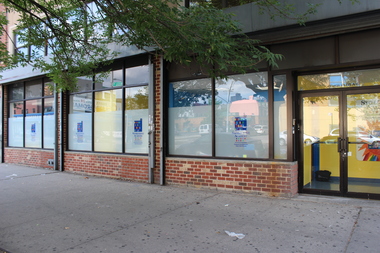
Image result for storefront school harlem

In the latest episode of Have You Heard we climb into the time machine and head to central Harlem in the late 1960’s, home to a radical—and little known—education experiment. For seven years, Harlem Prep, an independent school that was entirely funded by private donations, operated out of a storefront, sending students who’d dropped out or been pushed out of the NYC Public Schools onto college. Education historian Barry Goldenberg, the runner up in our Have You Heard Graduate Student Research Contest, takes us on a tour of a radically alternative school. And speaking of the Have You Heard Graduate Student Research Contest, it’s back! If you’re a grad student and think your research on K-12 or higher education is *pod worthy,* this is your chance! All the info you need is here. And a full transcript of our Harlem Prep episode is here


Mike Klonsky's Blog: On the way to the picket line...

Mike Klonsky's Blog: On the way to the picket line...

On the way to the picket line...

William Estrada, CTU member, Visual Arts teacher, Telpochcalli Elementary School. (Alan Maass)
It's a cold and blustery morning in Chicago. We're heading over to walk the picket line with my teacher/daughter and her colleagues at Telpochcalli Elementary in Little Village. Telpochcalli is one of the few remaining original small schools started by activist teachers, including Jennifer, back in the '90s. Its dual-language curriculum is focused on Mexican culture and the arts. My grandson Oscar, now 19, went there.

As we always do when there's a teacher strike, Susan & I will stop first to pick up a box of coffee and some donuts for the teachers (and me).

The Nation begins its story on the strike by interviewing Telpochcalli art teacher William Estrada.


Estrada teaches visual arts to classes [at several public schools-m.k.] as large as 36 students, and he doesn’t have enough chairs to go around, much less supplies. “The chairs that we have in my classroom, we actually got them out of storage from other schools that closed down because we didn’t have enough money to buy them ourselves,” he says. “We want to make sure we’re given the resources that we need in order for us to do our job and to support the students and the needs that they have.”
Yesterday, CTU Prez Jesse Sharkey told the teachers to prepare for a "short-term strike". I hope so but I'm not so sure. I don't know how he is either. Soon after union leaders had CONTINUE READING: Mike Klonsky's Blog: On the way to the picket line...


Common Core Salesman Michael Petrilli: *Economics Affect NAEP, but Stay the Ed-Reform Course* | deutsch29

Common Core Salesman Michael Petrilli: *Economics Affect NAEP, but Stay the Ed-Reform Course* | deutsch29

Common Core Salesman Michael Petrilli: *Economics Affect NAEP, but Stay the Ed-Reform Course*

On October 15, 2019, I read a report produced by Thomas B. Fordham Institute (TBF) president, Michael Petrilli, entitled, “Fewer Children Left Behind: Lessons from the Dramatic Achievement Gains of the 1990s and 2000s.”
This 2019 report builds on a 2017 report by Petrilli in a TBF commentary piece prior to release of the 2017 National Assessment of Educational Progress [NAEP] scores, in which Petrilli et al. concluded the following:
  • There have been [NAEP score] gains almost across the board since the 1990s.
  • Most of the gains happened in the 1990s and early 2000s.
  • Progress in math has been especially remarkable.
  • Children of color are reading much better in the early grades than before.
Right out of the starting gate, I took issue with the likes of Michael Petrilli issuing such a report because of his history as an ed-reform salesman.
Before proceeding with discussion related to TBF’s “fewer Children Left Behind” report, I’d like to brief readers on what comes to my mind when I think of Petrilli and TBF.
TBF: Common Core Opportunists
Michael Petrilli and former TBF president, Chester “Checker” Finn, accepted $2 million dollars (see here and here) from billionaire Bill Gates to promote the Common Core State Standards (CCSS), and in that position, these two had no qualms about shaping the image of CCSS into a marketable product, despite the fact that TBF itself did not even rate CCSS as better than all other state CONTINUE READING: Common Core Salesman Michael Petrilli: *Economics Affect NAEP, but Stay the Ed-Reform Course* | deutsch29

Maybe Betsy DeVos was a Good Thing | tultican

Maybe Betsy DeVos was a Good Thing | tultican

Maybe Betsy DeVos was a Good Thing

By Thomas Ultican 10/17/2019
It is clear that President Trump selected a billionaire enemy of public education to be in charge of schools. However, Betsy DeVos is so easy to dislike and has shined such a big light on the destroy-public-education (DPE) movement that Democrats are fleeing the school choice agenda. If Hillary Clinton had become President, her policies may have permanently damage universal free public education. When WikiLeaks leaked John Podesta’s emails, Hillary Clinton’s campaign Policy Book and its K-12 public education policy recommendations were made public. Those recommendations were aligned with the DPE playbook supported by neoliberals.

Group Thinks’ Historical Background

In the last two decades of the 20th century, there was a general consensus reached by governing elites that America’s public education system was in dire straits and needed reform. The impetus for this goes back to the Reagan era’s “A Nation at Risk”.  It masqueraded as a research paper, but was actually a polemic based on faulty understanding and a misreading of data. In 1991, researchers at the Sandia Laboratory in New Mexico debunked the main points of “A Nation at Risk,” but their report was barely noticed. A growing consensus based on a century old illusion had developed among policy wonks, politicians and leaders in education philanthropy. They all accepted beltway common knowledge and agreed on a broad outline of what needed to be done to confront the “undeniable failure” of public education:
  • Institute standards
  • Use testing to hold schools accountable
  • Apply business based leadership
  • Create alternate pathways for teacher certification
  • Develop competition
  • Provide school choice
  • Marginalize teachers unions
  • End the federalist system of school governance (i.e. locally elected school boards)
In 1985, the Democratic Leadership Council (DLC) was CONTINUE READING: Maybe Betsy DeVos was a Good Thing | tultican

CURMUDGUCATION: Scorched Earth Education Policy (Charters, Watch Your Flank)

CURMUDGUCATION: Scorched Earth Education Policy (Charters, Watch Your Flank)

Scorched Earth Education Policy (Charters, Watch Your Flank)

This is you should ignore the old admonition to not read the comments.

I converse with plenty of folks that I disagree with, both in the ed policy world and outside of it, and those conversations are largely civil, which sometimes distracts me from the fact that there are people out there who hate, hate, hate public education ("government schools") and the teachers who work there  ("union thugs").


I meet them, some days, on Twitter. On Facebook, there are groups that sprung up in the days of "Let's all get together and fight Common Core" that are now dominated by folks who rail daily against teachers and unions and public schools and how we should just burn it all down until there's nothing left but homeschooling and church schools (Christian ones, of course).

Of course, these days, you don't have to dig so deep to find these virulently anti-public-ed folks. Here's the Attorney General of the Freakin' United States of America, declaring that our country is under assault in an "organized destruction" of the foundational values of our society (by which he means the Judeo-Christian ones). And "ground zero" of the assault is US public schools. Attorney General Barr, the head law enforcement official of the United States of America has called out public schools as everything just short of "enemies of the people."

Meanwhile, the author of a new book about the Koch political empire tells us that what the Kochs want from public education is simple-- they want it to go away. Talking to Jennifer Berkshire and Jack Schneider at the Have You Heard podcast, Christopher Leonard summed it up like this: CONTINUE READING: 
CURMUDGUCATION: Scorched Earth Education Policy (Charters, Watch Your Flank)


Random Numbers | Live Long and Prosper

Random Numbers | Live Long and Prosper

Random Numbers


October 16, 2019

POLITICAL
  • Day 1000 of the current U.S. presidential administration. Time to register to vote!
GENERAL WORLDWIDE
EDUCATION IN THE U.S. AND INDIANA
Testing
Privatization

Wednesday, October 16, 2019

Trump administration blocked consumer watchdog from public service loan forgiveness program: report | TheHill

Trump administration blocked consumer watchdog from public service loan forgiveness program: report | TheHill

Trump administration blocked consumer watchdog from public service loan forgiveness program: report

President Trump's Department of Education reportedly blocked the Consumer Financial Protection Bureau's (CFPB) efforts to investigate high rejection rates among applicants for a student loan forgiveness program meant to aid firefighters, police officers and other public servants.
NPR reported Tuesday that Education Department officials blocked companies that operate student loan call centers from providing information to the CFPB investigators, effectively ending the bureau's efforts to probe why applicants for the Public Service Loan Forgiveness Program are denied at such a high rate. The Education Department reports that just about 1 percent of applicants to the program are accepted.
Several sources familiar with the bureau's investigation efforts told NPR that the Education Department's interference directly contributed to the CFPB failing to adequately address issues with the loan forgiveness program.
"It's 100 percent clear that the Public Service Student Loan Forgiveness Program is badly broken; it needs to be fixed," Christopher Peterson, a CONTINUE READING: Trump administration blocked consumer watchdog from public service loan forgiveness program: report | TheHill

The Other Cost Of School Choice

The Other Cost Of School Choice

The Other Cost Of School Choice
When we discuss the cost of school choice–charters, vouchers, and even homeschooling–we usually focus on the economic impact, the loss of local control, or the policy impact on educational institutions. But on the classroom level, there is another real impact.
Robert Pondiscio touches on it in his new book about Success Academy charters schools, How The Other Half Learns:
“The most common objection to charter schools and publicly financed charter school initiatives is that schools of choice ‘siphon resources away’ from traditional public schools. One such ‘resource’ is engaged and invested parents.” 
And, one might add, engaged and invested students. Every classroom culture is shaped not just by teachers and building administration, but by the students in the classroom. Students can have a huge effect on the tone of the classroom–is there a steady pressure to achieve, or is acting smart just not cool? Particularly in high school, students learn about peer effects, about how to lead and how to elevate leaders. Strong students can raise a class’s achievement level in ways that a teacher can not.
Most of us have stories. I learned to play trombone in high school in large part from trying to keep pace with the upperclassman who was CONTINUE READING: The Other Cost Of School Choice

DeVos to Judge: “Don’t Lock Me Up” | Diane Ravitch's blog

DeVos to Judge: “Don’t Lock Me Up” | Diane Ravitch's blog

DeVos to Judge: “Don’t Lock Me Up”

Politico reports that the Trump administration is apologizing profusely for hounding students whose loans for attending the predatory (now closed) Corinthian Colleges should have been forgiven. The judge in the case had threatened to punish Betsy DeVos for violating her court order. This is a case of “accountability for thee, but not for me.”
MAKING THE CASE AGAINST CONTEMPT FINDING: The Trump administration, in a court filing on Tuesday night, outlined why the Education Department and DeVos shouldn’t be held in contempt or face fines for violating U.S. Magistrate Judge Sallie Kim’s May 2018 order to stop collecting the student loans of former Corinthian Colleges students.
— Justice Department attorneys wrote that the Education Department “has been working diligently and in good faith to correct the errors” that led to the agency collecting on the student loans of thousands of borrowers despite the order. Kim is now deciding whether to hold the department and DeVos in contempt and CONTINUE READING: DeVos to Judge: “Don’t Lock Me Up” | Diane Ravitch's blog

Suicide Attempts Among Black Teens on the Rise, According to New Report

Suicide Attempts Among Black Teens on the Rise, According to New Report

Report: Suicide Attempts Among Black Teens Increased by 73 Percent

According to a new report, attempted suicide is on the rise among a very specific demographic: black teenagers.
From CNN:
From 1991 to 2017, the rate of reported suicide attempts by African-American teens rose, especially the rate among black boys, according to a study published Monday in the medical journal Pediatrics. The rate for black youths grew even as the rate of suicide attempts by teens in other racial and ethnic groups fell.
 These findings were culled from data collected from nearly 199,000 high school students by the US Centers for Disease Control and Prevention’s Youth Risk Behavior Survey.

Additional findings include the following:
  • Suicide is the second-leading cause of death for teens from all demographics, second only to accidents, and the third-leading cause of death among black youth between the ages of 15 to 19 in 2017.
  • In 2017, 2,200 teenagers between the ages of 15 to 19 completed suicide.
  • Among high school students, 1 in 5 admitted to experiencing suicidal ideations and 1 in 10 admitted to devising a plan to carry it out despite intensified efforts to reduce youth suicide throughout the country.
  • While reported suicide attempts among black teens increased between 1991 and 2017, boys were more apt to injuries related to their attempts—inferring that they utilized more lethal means.
“It is urgent that we get to the bottom of why the rate of suicide attempts CONTINUE READING: Suicide Attempts Among Black Teens on the Rise, According to New Report