Latest News and Comment from Education

Tuesday, August 20, 2019

Breaking the Gender Codes of Dress Codes | radical eyes for equity

Breaking the Gender Codes of Dress Codes | radical eyes for equity

Breaking the Gender Codes of Dress Codes

A popular meme in the wake of even more mass shootings makes a powerful, if somewhat hyperbolic, point:

Image result for girls clothing in schools more regulated than guns
DAVID MACK/BUZZFEED NEWS via TeenVogue
With most formal schooling restarting now, the dramatic consequences of gun violence is more likely to overshadow the more subtle negative and disproportionate impact of dress codes, especially on girls and young women as well as black and brown students.
When I raise the topic of dress code early in my foundations of education course, where students are required to tutor in a nearby school once a week, the young women invariably respond in ways that confirms what research has shown about the gender inequity of dress codes and how they are applied.
An early-career high school teacher and I were discussing her school and the new year starting with a different principal; she noted that principal is taking a different approach to the school’s dress code, specifically focusing on applying the existing code uniformly and more strictly.
She is concerned about the strictness, knowing that dress codes and their implementation tend to target girls more harshly than boys and perpetuate slut-shaming culture as well as placing the burden of “proper attire” on those girls instead of addressing toxic masculinity and sexism among the boy students. However, the consistency, she thinks, will be welcomed and much better for the students and the teachers.
Her next comment was important for me since she plans to ask the principal to re-examine the dress code next year, stressing that administrators and teachers need to explore the purposes of that dress CONTINUE READING: Breaking the Gender Codes of Dress Codes | radical eyes for equity


Jersey Jazzman: The Merit Pay Fairy Dies in Newark

Jersey Jazzman: The Merit Pay Fairy Dies in Newark

The Merit Pay Fairy Dies in Newark
Hey, youse bums -- get back to the teachin' already!


One of the long-running characters on this blog is the Merit Pay Fairy.


The Merit Pay Fairy lives in the dreams of right-wing think tanks and labor economists, who are absolutely convinced that our current teacher pay system -- based on seniority and educational attainment -- is keeping teachers from achieving their fullest potential. It matters little that even the most generous readings of the research find practically small effects* of switching to pay-for-performance systems, or that merit pay in other professions is quite rare (especially when it is based on the performance of others; teacher merit pay is, in many contexts, based on student, and not teacher, performance). 

Merit pay advocates also rarely acknowledge that adult developmental theory suggests that rewards later in life, such as higher pay, fulfill a need for older workers, or that messing with pay distributions has the potential to screw up the pool of potential teacher candidates, or that shifting pay from the bottom of the teacher "quality" distribution to the top -- and, really, that's what merit pay does -- still leaves policymakers with the problem of deciding which students get which teachers.

Issues like these, however, are at the core of any merit pay policy. Sure, pay-for-performance sounds great; it comports nicely with key concepts in economic theory. But when it comes time to implement it in an actual, real-world situation, you've got to confront a whole host of realities that theory doesn't address.

Which is what seems to have happened in Newark:
In 2012, Newark teachers agreed to a controversial new contract that linked their pay to student achievement — a stark departure from the way most teachers across the country are paid. 
The idea was to reward teachers for excellent performance, rather CONTINUE READING: Jersey Jazzman: The Merit Pay Fairy Dies in Newark

DeVos-Linked Adoption Agency Exposed Highly Sensitive Children's Medical Data - VICE

DeVos-Linked Adoption Agency Exposed Highly Sensitive Children's Medical Data - VICE

DeVos-Linked Adoption Agency Exposed Highly Sensitive Children's Medical Data
Bethany Christian Services left information about prospective adoptees' "intellectual development" as well as their medical histories and lab results online.

An adoption and foster care non-profit linked to the family of Department of Education Secretary Betsy DeVos exposed highly sensitive personal and medical information of dozens of children, Motherboard has learned.
The charity, called Bethany Christian Services, is one of the nation's largest adoption agencies and helps place children for adoption and foster care. It works with vulnerable children in the U.S. as well as refugees and immigrants.
"Our vision is to find a loving family for every child who needs one—that is where they thrive best," the group says on its website.
The exposed data was stored on PDFs openly available on its website. Some PDFs were called "Children Medical Examination Records" that included the names, dates of birth, the hospital or orphanage they were based in, and extremely sensitive medical information.
This includes a child's HIV status, number of teeth, lab test results, and whether the child has any physical deformities ("Spine: no deformity" "Liver: not palpable under the rib; "Anus: no abnormal findings" are examples of the data contained on the form). Other information exposed includes a "Growth Report" that explains the child's background and "motor skills and intellectual development." One notes that a child arrived "wearing yellow baby clothes and she was placed in a paper box" and that, between the age of 10 and 12 months, "she knows her name, can get biscuits, and feeds herself."
The charity has multiple connections to the DeVos family: Brian DeVos, a cousin of Betsy DeVos' husband, was a senior vice president at the CONTINUE READING: DeVos-Linked Adoption Agency Exposed Highly Sensitive Children's Medical Data - VICE

Q&A Collections: Education Policy Issues - Classroom Q&A With Larry Ferlazzo - Education Week Teacher

Q&A Collections: Education Policy Issues - Classroom Q&A With Larry Ferlazzo - Education Week Teacher

Q&A Collections: Education Policy Issues

During the summer, I will be sharing thematic posts bringing together responses on similar topics from the past eight years. You can see all those collections from the first seven years here.
Here are the ones I've posted so far:
Today's theme is on Education Policy Issues. You can see the list following this excerpt from one ...CONTINUE READING: Q&A Collections: Education Policy Issues - Classroom Q&A With Larry Ferlazzo - Education Week Teacher

Larry Ferlazzo's Websites of the Day... | The latest news and resources in education since 2007 - http://larryferlazzo.edublogs.org/ on @Larryferlazzo

CURMUDGUCATION: KY: Starting the New Year With Threats Against Teachers

CURMUDGUCATION: KY: Starting the New Year With Threats Against Teachers

KY: Starting the New Year With Threats Against Teachers

Sadly, it's not unusual for teachers to start their new school year by being threatened, but even the worst administrators understand that it's useful to at least pretend that they think of teachers are respectable grown-up professionals. But in some districts, bosses go straight to thinly veiled warnings. And then there's those special rare occasions when teachers start the school year by being threatened by their state's governor.

Welcome to Kentucky.

All discussions of teacher upset in Kentucky have to start with one important reminder-- teachers in Kentucky will get absolutely nothing from Social Security when they retire (surprised? There are fourteen other states where that is true).

So when you mess with teacher pensions in Kentucky, you are threatening teachers' entire future.


The recurring strikes in the newly right-to-work state of Kentucky have been about issues related to the teacher pension, an always-tender subject, as it is possibly one of the worst-funded pensions in the country. So, in  2018 it was about a sneaky attempt to kneecap the pension fund. And in 2019, it was about an attempt to strip the Kentucky Education Association of its power on the pension board. This is a logical next step in a right-to-work state that is just flexing its muscles and trying to  disempower the teachers union. Some media dutifully note that KEA "only" represents 43,000 active and retired teachers, without providing the context that there are just under 43,000 teachers are working in Kentucky.

The state wants to give more power to the Kentucky Association of Professional Educators, one of CONTINUE READING: 
CURMUDGUCATION: KY: Starting the New Year With Threats Against Teachers


New Orleans: An Amazing Feat of Spinning Poor Results! | Diane Ravitch's blog

New Orleans: An Amazing Feat of Spinning Poor Results! | Diane Ravitch's blog

New Orleans: An Amazing Feat of Spinning Poor Results!

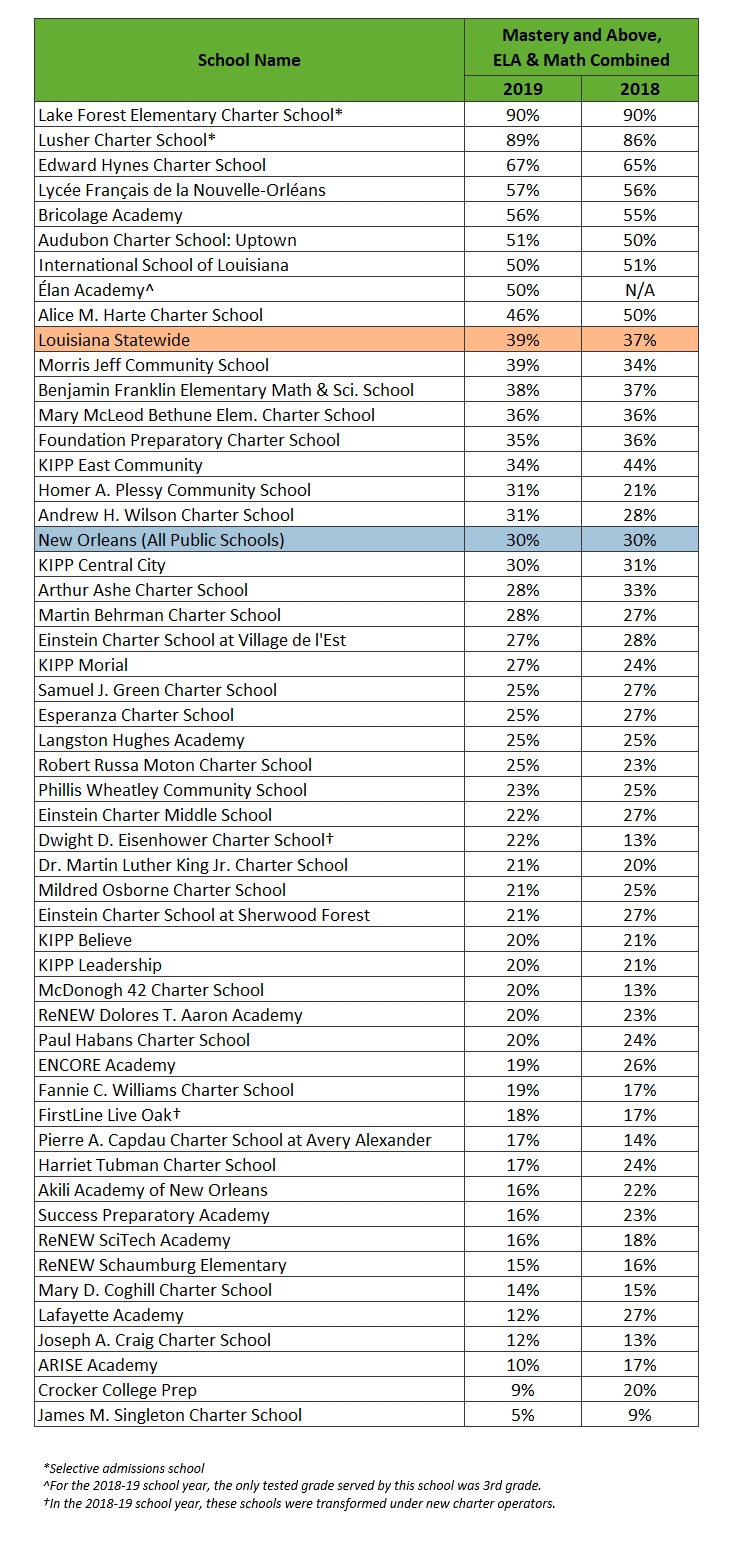
The Education Research Alliance at Tulane University has accomplished a spectacular feat with its latest report about the “academic progress” (or lack thereof) of the all-charter district in New Orleans. The report claims that the disruption strategy of school takeovers and closures is responsible for the academic improvements in the district, but at the same time admits “The average school improved from the first to the second year after it opened, but school performance remained mostly flat afterwards. Schools starting off above the state average saw slightly declining performance in later years.” Furthermore, “quality peaked around 2013 and has either stagnated or started to decline during 2014-2016.”
So, here is the New Orleans model: Close almost all public schools. Replace them with private charters. Fire all the teachers. Replace most of the teachers with inexperienced, ill-trained TFA recruits. Close low-performing charters and replace them with other charters. Keep disrupting and churning. In the first two years, scores will go up, then stall. By year eight, “quality” will stagnate or decline. The schools will be highly stratified and racially segregated. The few high-performing schools will have selective admissions.
New Orleans is one of the lowest performing districts in one of the lowest-performing states.It is a model of how privatization increases stratification and segregation. It should not be copied elsewhere.
But the report claims the success of the venture in school CONTINUE READING: New Orleans: An Amazing Feat of Spinning Poor Results! | Diane Ravitch's blog

Legislators ask 50-plus firms to explain how they use the 'vast amount of data’ they collect on students. (Which ones? Facebook, Google, Blackboard, etc.) - The Washington Post

Legislators ask 50-plus firms to explain how they use the 'vast amount of data’ they collect on students. (Which ones? Facebook, Google, Blackboard, etc.) - The Washington Post

Legislators ask 50-plus firms to explain how they use the 'vast amount of data’ they collect on students. (Which ones? Facebook, Google, Blackboard, etc.)

A year ago, the FBI issued a warning that the rapid expansion of education technology in America’s schools and the collection of student data could “present unique exploitation opportunities for criminals.” Now, U.S. lawmakers are demanding that more than 50 education technology companies and data collectors explain what information they collect and how it is used.
Three Democratic senators — Richard J. Durbin (Ill.), Edward J. Markey (Mass.) and Richard Blumenthal (Conn.) — sent letters to companies such as Google, Facebook, Blackboard, the College Board, ACT, Pearson and McGraw-Hill seeking answers to questions about “the vast amount of data” being amassed on students. The information is collected through online coursework, software and electronic devices. (The College Board, which owns the SAT, and ACT are nonprofit organizations but operate like businesses.)
“We are concerned that schools, parents, and students are at risk of having significant amounts of data stolen, collected, monetized, or sold without their permission or knowledge,” said the letter that went to data analytics firms, which collect information, package it and sell it, usually without the knowledge of consumers.
“Last year, Fordham University Law School’s Center on Law and Information Policy found that data brokers make student lists based on sensitive information ranging from Grade Point Average and ethnicity to religion and affluence, among other categories, commercially available,” it said. “This data could be used for a range of malicious purposes, including discrimination and identity theft.”
The letter that was sent to education technology companies said: “Education technologies (EdTech) can be important learning tools that allow teachers to follow student progress and facilitate collaboration. However, this technology may put students, parents and educational institutions at risk of having massive amounts of personal information stolen, collected, or sold without their permission.”
Student privacy has been a growing concern among parents and privacy activists in the digital age, with online companies collecting mountains of data on users. The FBI warning about education technology said the types of data that can be collected on students include:
  • personally identifiable information;
  • biometric data;
  • academic progress;
  • behavioral, disciplinary and medical information;
  • Web browsing history;
  • students’ geolocation;
  • IP addresses used by students;
  • classroom activities.
In 2014, privacy activists waged a successful campaign to shut down a $100 million student data-collection project funded by the Bill & Melinda Gates Foundation and operated by a specially created nonprofit called inBloom. It was designed to be a massive student database that could make it easier to share information with CONTINUE READING: Legislators ask 50-plus firms to explain how they use the 'vast amount of data’ they collect on students. (Which ones? Facebook, Google, Blackboard, etc.) - The Washington Post

Monday, August 19, 2019

Colorado: Be Afraid. Be Very Afraid. | Diane Ravitch's blog

Colorado: Be Afraid. Be Very Afraid. | Diane Ravitch's blog

Colorado: Be Afraid. Be Very Afraid.

The state board of education in Colorado has decided to turn over schools in three districts to a for-profit management corporation that claims it can turn the schools around, at a cost of millions of dollars. Where there the firm has ever turned any schools around before isin doubt. The political connections of the firm are not.
Read here about the story and a deep dive into the history of MGT Consulting.
In all cases, the state board gave districts the go-ahead to pay millions of school district dollars for MGT Consulting, a for-profit management firm, to virtually take over the schools. The move has elicited hope from some that the company can improve student performance after everything the districts have tried has failed. But the contracts have prompted condemnation from critics who say the firm has a dubious track record and is diverting tax dollars to private profits at a time when every cent should be spent on student needs…
Leaders of the Florida-based MGT say they specialize in allocating public money more effectively while improving teacher effectiveness in the classroom and school CONTINUE READING: Colorado: Be Afraid. Be Very Afraid. | Diane Ravitch's blog

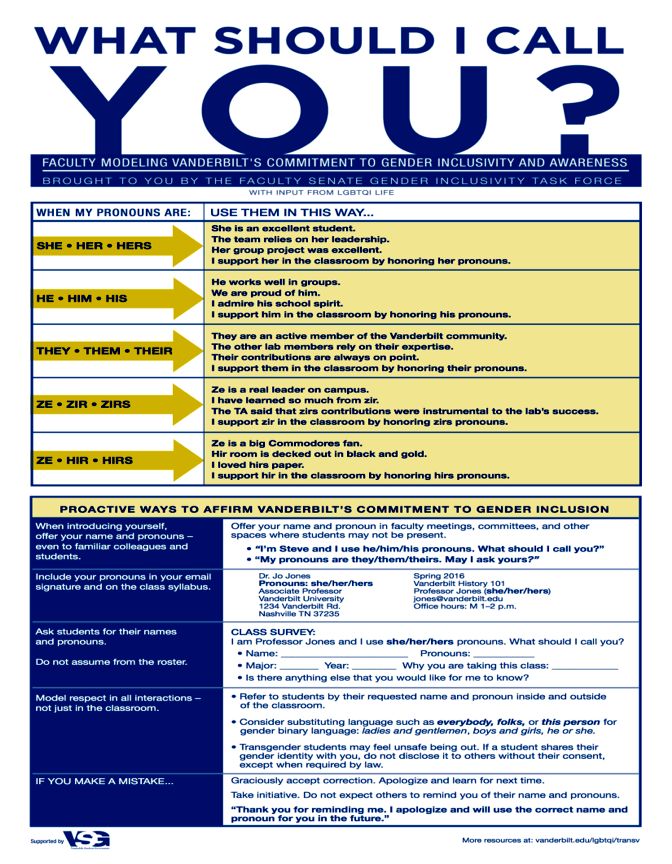
Gender, name changes could be required on California high school diplomas after graduation | EdSource

Gender, name changes could be required on California high school diplomas after graduation | EdSource

Gender, name changes could be required on California high school diplomas after graduation

California school districts could soon be required to update records if graduates have changed their name or gender since leaving high school.
Introduced by Assemblyman David Chiu, D-San Francisco, AB 711 would ensure that transgender and nonbinary individuals who are no longer in school can have their legal name reflected on school documents such as high school diplomas and transcripts. Nonbinary individuals are those whose gender identity is not strictly male or female.
The bill passed the state Legislature on Thursday and now heads to Gov. Gavin Newsom’s desk, who has until Oct. 13 to sign or veto it. Newsom has so far not indicated what his views on the bill are.
Existing California law requires a school district to recognize a student’s name and gender change and update their records. But these protections largely apply to students who are currently enrolled in school. State law does not explicitly provide guidance on updating records for former students who have changed their name or gender after graduating.
Advocates for the bill say it is important that graduates can choose to update their records, which may be used for a range of reasons, including applying for jobs, college or even housing.
“We don’t want to put someone in a position where they are unnecessarily being outed CONTINUE READING: Gender, name changes could be required on California high school diplomas after graduation | EdSource

How Educators Can Help Undocumented Students and Their Families - Informed Immigrant

How Educators Can Help Undocumented Students and Their Families - Informed Immigrant

For Educators: Supporting Undocumented Students & Their Families

Overview

There are many things that you can do to create educational environments in which students of all backgrounds can thrive socially, emotionally, and academically. Teachers, in particular, can create inclusive and safe learning environments for all students by incorporating lesson plans and classroom activities that are designed to cultivate empathy and trusting relationships, create a sense of belonging, and reduce discriminatory stereotypes and actions.
The contents of this guide were provided by our partners at Grantmakers Concerned with Immigrants and Refugees (GCIR) and Californians Together. 

Safety Planning for Immigrant Parents and Caregivers

In the current climate, communities are afraid and unsure of what the future holds. To help students and their families grapple with the stress that comes with this uncertainty, education and preparation can be useful tools to empower immigrants and help them regain some sense of control. Schools, as trusted institutions in immigrant family’s lives, can play a critical role in ensuring that families have access to important information and resources, and that they are prepared for possible immigration arrests and/or detention. This Guidance for Schools from the Immigrant Legal Resource Center provides an excellent overview.

Policies and Protocols Impacting Immigrant Students and Families

Under the Supreme Court’s landmark decision in Plyler v. Doe, all K-12 students in the United States are guaranteed a free public education regardless of immigration status. This right includes other services and programs provided through the public school system, such as free lunches and special education programs. However, how school districts comply with this obligation varies widely, and local policies and practice have a significant impact on creating safe environments for immigrant students.


New pilot program among 9 school districts aims for student success from cradle to career | News | bakersfield.com

New pilot program among 9 school districts aims for student success from cradle to career | News | bakersfield.com

New pilot program among 9 school districts aims for student success from cradle to career

What if a student's academic data could be tracked from their first day of school all the way until they graduate college in a way that was not available before? A Kern County pilot program is on its way to do just that.
Nine local school districts are participating in a two-year Kern Integrated Data System pilot program to share real-time student outcome data to assist in making informed decisions about what is best for students, teachers and schools. Every night data will be uploaded to a "warehouse" to provide the most up-to-date information.
The nine districts selected, which include the Bakersfield City, Buttonwillow Union and Kern High school districts, represent approximately 60 percent of Kern County students, or 115,000 students, according to the KIDS website. After the pilot's end, the county's remaining 38 districts and other educational partners will join the program.
Christian Shannon, support services administrator for the Kern County Superintendent of Schools, said the program formed from the Kern Education Pledge. Kern County's 47 public school districts along with higher education institutions signed a pledge to transform the educational system and ensure education remains a top priority in the community.
"KIDS is ultimately a collaborative effort born from the understanding that no institution can solve barriers in education on their own," he said. "Data plays a critical role to better understand the needs of students. Without access to real-time accurate data, it limits (educators') ability to make positive and effective decisions on behalf of their students."
The nine-person KIDS support team selected Hoonuit as its data warehouse where administrators and other educators will be able to access students' entire attendance, assessment and coursework history. 
Anthony Davis, KCSOS executive director of technology, said he looked for providers that had a proven track record, reliable security and did "things by the books."
The data collected is broken down into four modules: essentials, early warning, student success and operations. The first phase got underway in June, which consists of data management and analytics tools to track and meet federal, state and local accountability requirements.
Though there have been some challenges — extracting data from various student information systems and converting to one database CONTINUE READING: New pilot program among 9 school districts aims for student success from cradle to career | News | bakersfield.com