Latest News and Comment from Education

Thursday, February 28, 2019

Wisconsin Governor Tony Evers Proposes State Budget that Would Slow School Privatization | janresseger

Wisconsin Governor Tony Evers Proposes State Budget that Would Slow School Privatization | janresseger

Wisconsin Governor Tony Evers Proposes State Budget that Would Slow School Privatization


Wisconsin’s new governor, Tony Evers released a budget plan on Tuesday that confronts the school privatization agenda of former Governor Scott Walker and what remains a Republican-dominated Wisconsin Legislature.  Wisconsin has been a leader among the states which have favored the expansion of private school tuition voucher programs and charter schools.
For the Associated PressScott Bauer quotes Republican Senate Majority Leader Scott Fitzgerald: “Republicans in the Legislature have spent years helping build the voucher program… We will not support a budget that includes this proposal.”
Wisconsin’s Milwaukee Voucher Program launched the nation’s experiment with school privatization nearly three decades ago.  Whether or not Evers succeeds in curbing what has been Wisconsin’s persistent expansion of vouchers and charters, his budget proposal names many of the ways Wisconsin’s expansion of school privatization has violated the public interest.
The Milwaukee Journal Sentinel‘s Molly Beck describes Evers’ plan: “About 28,000 students attend 129 private schools using a taxpayer-funded voucher in Milwaukee as of the 2018-19 school year. Evers’ proposal would freeze the number of seats available in the program beginning in the 2021-22 school year, allowing new students to enroll only when others graduate or leave the program… Enrollment also would be frozen in private voucher schools in other parts of the state based on the program’s headcount at the end of the current school year.  As of this school year, about 10,000 students attend private schools using a taxpayer-funded voucher outside of Milwaukee… Evers also proposes to cap enrollment in the state’s newest voucher program for students with disabilities… Under Evers’ proposal, voucher schools also would be banned from charging tuition for students living in poverty under the proposal and would be required to allow students to opt out of religious activities.”
Evers’ plan would also curb the growth of charter schools in Wisconsin: “Evers in his spending plan also would suspend programs created by Republicans in recent years to expand CONTINUE READING: Wisconsin Governor Tony Evers Proposes State Budget that Would Slow School Privatization | janresseger

Betsy DeVos and her allies are trying to redefine ‘public education.' Critics call it ‘absurd.' - The Washington Post

Betsy DeVos and her allies are trying to redefine ‘public education.' Critics call it ‘absurd.' - The Washington Post

Betsy DeVos and her allies are trying to redefine ‘public education.' Critics call it ‘absurd.'
Florida’s new governor is right on board


In September 1875, President Ulysses S. Grant traveled to Des Moines, where he gave a speech that said in part:
"Encourage free schools and resolve that not one dollar of money appropriated to their support no matter how raised, shall be appropriated to the support of any sectarian school. Resolve that either the state or Nation, or both combined shall support institutions of learning sufficient to afford every child growing up in the land the opportunity of a good common school education, unmixed with sectarian, pagan or atheistical tenets. Leave the matter of religion to the family circle, the church and the private school supported entirely by private contributions. Keep the church and state forever separate.”
That was long the consensus of what “public education" means in the United States: common schools open to all and funded, operated and governed by the public through local governments.
Now, Education Secretary Betsy DeVos and her allies are pushing their own definition of public education, as new Florida Gov. Ron DeSantis (R) did this month, to the secretary’s delight. On Feb. 15, DeSantis gave a news conference about his plan for a school voucher-like program that would use public money for private and religious school tuition, an expansion of the “school choice” options already available in the state. He said:
“An important point to make is, you know, we talk about, ‘This is public school, this is charters.' Look, if it’s public dollars, it’s public education. . . . In Florida, public education is going to have a meaning that is directed by the parents, where the parents are the drivers because they know what’s best for their kids."
There it was: “Look, if it’s public dollars, it’s public education.” And DeVos was quick to tweet her support, saying, "Completely agree, @GovRonDesantis.”


To DeVos and those who agree with her, it is wrong to say public education means only traditional public school districts.
Rather, under her definition, it also means charter schools, which are publicly funded but privately run, sometimes by for-profit companies, and which usually operate with far fewer rules of transparency than traditional school systems. And it includes students who attend private and religious schools with publicly CONTINUE READING: Betsy DeVos and her allies are trying to redefine ‘public education.' Critics call it ‘absurd.' - The Washington Post

Cartoons about School and District Leaders | Larry Cuban on School Reform and Classroom Practice

Cartoons about School and District Leaders | Larry Cuban on School Reform and Classroom Practice

Cartoons about School and District Leaders


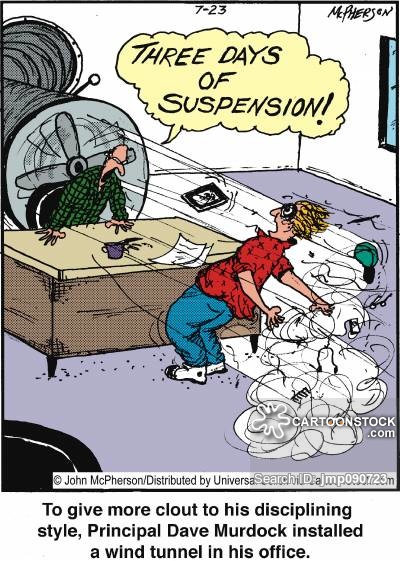
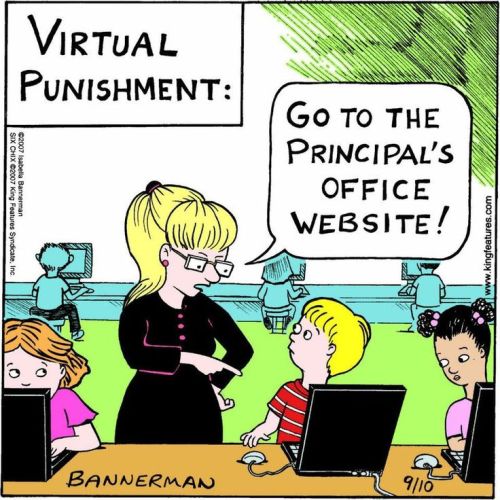
Here are some pokes at principals and superintendents that may get you to smile or grimace, chuckle or frown. Some may even get you to laugh. If so, I have accomplished what I set out to do with this collection. Enjoy!


class-wind_tunnel-principal-head_teacher-clout-authority-jmp090723_low.jpg

076ae3580f8012807f6025c6798532e5.jpeg

cfde66da482407f5fc5df0b2ae50ade9.jpg

cartoon186.jpg

Seattle Schools Community Forum: Cuts Happening Throughout Seattle Schools

Seattle Schools Community Forum: Cuts Happening Throughout Seattle Schools

Cuts Happening Throughout Seattle Schools


From Facebook:

I just learned that my school Franklin will be losing 6 full time teachers next year. Other South Seattle schools are also apparently losing teachers. For a district supposedly committed to equity this is shocking. We'll have to either cut out some of our electives ( we already are pretty limited - 1 ceramics teacher, 1 drawing/painting teacher, 1 music teacher, 1 drama teacher in the arts, for instance, so what do we lose?) Or cram more students into core classes if we lose non-elective teachers. I teach English. 65% of our kids speak a language other than English at home. Around 70% are free or reduced lunch eligible. Let's lose 6 people at the Central Office ( I'd like to see the Director level abolished) and keep teachers in the buildings.
There was some discussion about how Running Start students aren't count and therefore, the school's enrollment count drops.  Maybe Kellie LaRue could give us some insights on this issue.

More comments:


Our principal at Eckstein held back tears at this morning’s staff meeting as she shared next year’s cuts.
Dearborn Park will likely be forced to drop the entire language immersion program if we aren't given another teacher...
But also if they make schools less attractive with fewer electives and/or crowded classes, more people will leave SPS for Charters and Private schools. It's a vicious cycle.
And, I think perhaps it’s on us to pressure our elected school board CONTINUE READING: Seattle Schools Community Forum: Cuts Happening Throughout Seattle Schools

NYC Public School Parents: Requiem for the Renewal schools: What a sad waste of time, money and human lives.

NYC Public School Parents: Requiem for the Renewal schools: What a sad waste of time, money and human lives.

Requiem for the Renewal schools: What a sad waste of time, money and human lives.


Yesterday, the Mayor and the Chancellor Carranza announced an end to the Renewal program, which has cost the city $773 million since 2014. Since that time, of the 94 schools  put on the list by Carmen Farina, nine schools have been merged with other schools, 14 schools have been closed, and 21 schools have improved enough to be renamed “Rise” schools. Fifty schools remain in the program.

While Schools Chancellor Richard Carranza said that the Renewal plan an “absolutely appropriate” attempt to address problems “that no one has solved at 100 percent,” I was quoted in the NY Post this way:

Leonie Haimson, founder of the Class Size Matters advocacy group, said, “I feel like I’m watching the same movie for the 1,000th time,” and added that de Blasio’s “approach is just to continue with the same BS.”

“Unless you address these out-of-control class sizes, nothing is going to change,” she said.

The comments made by the Mayor de Blasio and the Chancellor yesterday, and the report released at the same time, provide contradictory and confusing information about whether the program has been successful or has failed, and what if anything will now be changed.

According to the document's properties, the report was written by Greg Anrig, who was formerly at the Century Foundation and is now a “ Content Strategy Manager” at the DOE, whatever that means, according to his twitter profile.

In a NY Times interview, de Blasio admitted the original Renewal plan had been flawed:

“I’m at peace that with the information we had and the structure we had at the time, it was a sensible approach,” he said. But he added, “I would not do it again that way.”

Yet the report itself claims that the Renewal schools have made significant gains in test scores, suspension, attendance and graduation rates than the average NYC public school.

The new DOE report also asserts that education officials have learned important lessons about the flaws of their previous strategy and now know far better how to address the CONTINUE READING: 
NYC Public School Parents: Requiem for the Renewal schools: What a sad waste of time, money and human lives.


How DeVos & Co. Use Special Ed. to Privatize Public Schools and End Student Services

How DeVos & Co. Use Special Ed. to Privatize Public Schools and End Student Services

How DeVos & Co. Use Special Ed. to Privatize Public Schools and End Student Services

Education Secretary Betsy DeVos and her corporate friends are about dumping civil rights protections regarding IDEA. Special education has become a means to transform public education into choice and charter schools while ending student services.
This is done by defunding special education and convincing parents that services don’t matter. Dismantling services in public schools shouldn’t be allowed. It destroys IDEA protections and drives parents to seek vouchers.
Below I list one of the corporations working to end special education.
It’s important to remember what life was like before IDEA and not go backwards in time to when children did not get the services they deserved due to learning difficulties.
If my son Jonah was ready for school before 1975 our district could have refused to educate him. But he is protected under IDEA and our district has to follow the rules. If at any time during his school years (he just aged out) our district refused to adhere to CONTINUE READING: How DeVos & Co. Use Special Ed. to Privatize Public Schools and End Student Services


Thurmond Statement on the Teachers' Strike in OUSD - Year 2019 (CA Dept of Education)

Thurmond Statement on the Teachers' Strike in OUSD - Year 2019 (CA Dept of Education

State Superintendent Tony Thurmond Statement on the Teachers' Strike in Oakland Unified School District

OAKLAND—State Superintendent of Public Instruction Tony Thurmond participated in two all-day negotiation meetings this week between the Oakland Unified School District and the Oakland Education Association.
Oakland Unified School District teachers went on strike Thursday, February 21, after earlier contract talks stalled. Mediating in a strike is not a typical role for a State Superintendent; however, Thurmond was compelled to take a seat at the bargaining table.
“I have worked with Oakland Unified School District students for close to a decade,” said Thurmond. “When I was asked to help, I did it for the sake of the students. If my assistance is needed to help get the strike resolved quickly and get students and teachers back in the classroom, then I am more than willing to provide that support.”
Discussions between the district and the union have included compensation, class sizes, and expanding support services to students. According to Thurmond, talks regarding the issues presented by the teachers have been constant.
“At this time, both sides are communicating and trying to reach an agreement that each feels is fair,” said Thurmond. “Talks have been moving in a productive direction, and I don’t expect that momentum to stop.”


Thurmond Statement on the Teachers' Strike in OUSD - Year 2019 (CA Dept of Education

Wednesday, February 27, 2019

'Rise' and Shine: ESP National Award Seeks Congressional Approval

'Rise' and Shine: ESP National Award Seeks Congressional Approval

‘Rise’ and Shine: ESP National Award Seeks Congressional Approval


(Update 2/25: By a vote of 387-19, the U.S. House of Representatives overwhelmingly passed H.R. 276. A similar bill was passed more than 10 years ago in the House before it died in the Senate. A bill honoring ESPs has not had a vote since. Known as the Recognizing Inspiring School Employees Award Program bill, it is the first significant education bill to pass the new House assembly this year.)
A bill introduced during the first week of the new Congress directs the Secretary of Education to establish an award that acknowledges the role education support professionals (ESP) play in promoting student achievement, ensuring student safety, and helping to establish a healthy school climate in grades preK-12.
Although the RISE (Recognizing Inspiring School Employees) Award Program bill(H.R. 276) arrives on Capitol Hill amid intense gridlock, strong support from the bill’s sponsor, Democrat Rep. Dina Titus of Nevada, and 21 co-sponsors gives many ESP hope they will finally receive a type of national recognition on par with teachers.
“There are almost 3 million ESP working in our nation’s public schools and colleges who make a difference every day in the lives of their students,” says Sherry Shaw, 2018 NEA ESP of the Year. “They need to be recognized for their above-and-beyond acts of heroism.”
One of every three public school employees is an ESP with more than 75 percent ensuring student and school safety. According to NEA research, almost 50 percent of ESP have an associate’s, bachelor’s, or more advanced college degree. In addition, more than 60 percent have taken college courses, while others (51 percent) have taken job-related classes, or have earned education-related certificates and licenses.
“ESPs choose public education as their career,” says Dan Kivett, a security officer at Citrus Valley High School in Redlands, Calif., and president of the Redlands Education Support Professionals Association (RESPA). “They have to train and attend school in order to maintain a high skill and knowledge level just like those in other professions.”

Above and Beyond the Call

Kivett says many ESPs are also student mentors, athletic coaches, community volunteers and organizers. According to NEA, 35 percent of ESP volunteer to read books to students while 70 percent assist children in their communities with clothing, food and other necessities.
“And all of this is done without much recognition,” says Kivett, a member of the NEA board of directors with 19 years of public education experience. “They are the gears that keep school operations moving.”
More than 65 percent of ESP donate money out of their own pockets to help students purchase classroom materials, field trip tickets, and materials for science and other class projects. The average ESP donation: $217 per year.
“The RISE award would draw some attention to the level of our professional training, mentoring, volunteerism, and how much we love our kids,” says Shaw, a special education paraeducator, coach and mentor at Tanaina Elementary School in Wasilla, Alaska. “Some parents know that ESPs go the extra mile for their kids, but not all administrators acknowledge it for some reason.”
Of NEA’s 3 million members, almost 500,000 are ESP represented in the following nine career categories:
  • Child nutrition services
  • Clerical services
  • Custodial and maintenance services
  • Health and student services
  • Paraeducators
  • Security services
  • Skilled trades
  • Technical services
  • Transportation services
“We don’t necessarily need an award for the work we do, but it would be nice to be recognized for all of the extra effort we put forth on behalf of students,” says Mary Ann Rivera, a paraeducator at Lyons Township High School in Western Springs, Ill.
When Rivera goes shopping, it is a given she will buy gloves, socks, hats and other items for students in need. It is also normal operating procedure in her school district for ESP to organize dozens of care packages for students from low-income families.
“Thank goodness for discount stores,” says Rivera, an NEA board member.
“ESPs work just as hard as all educators, side by side with teachers,” she adds. “In classrooms, paraeducators are an extra set of eyes, trained to help students learn their lessons well. We are not volunteers as in decades past. This is our career.”

Overdue Recognition

In Kentucky, Lakilia Bedeau is director of the Tornado Alley Youth Services Center at Paducah Tilghman High School. She says Congress should acknowledge the essential services that ESPs provide by approving the bill.
“The award is long overdue,” says Bedeau, an executive committee member of the National Council for ESP (NCESP), which advocates for ESP from within NEA assuring that specific ESP issues and interests are integrated in NEA programs.
Like youth services staff across the nation, Bedeau helps students with everything from medical and other referrals for social, physical and mental health services to intervening during family crisis situations and providing hygiene products, school supplies and other daily necessities students would otherwise go without.
More than 65 percent of ESP donate money out of their own pockets to help students purchase classroom materials, field trip tickets, and materials for science and other class projects. The average ESP donation: $217 per year.
“Like the majority of ESP, my team is on the front-line assisting students with everyday needs,” says Bedeau, who has worked in education for 10 years.
By working one-on-one with students, Bedeau says a level of trust and confidence can develop which helps keep students interested enough in school so as not to drop-out.
“We empower students by removing non-academic barriers, encouraging them to explore career opportunities and reach their full potential,” she says. “We build critical relationships that ensure students are safe and successful regardless of their socio-economic status.”
Rivera says though it takes time to gain the trust of students, the reward is “priceless.”
“When they first meet you, they might hate you,” says Rivera, an NCESP executive committee member. “But it’s not personal. You encourage them to do well by showing and telling them that they are valued and smart, and by the end of the year they love you.”
After more than 30 years of working for public schools as a paraeducator and school bus driver, Ernest Jameel Williams is encouraged by the proposed bill despite the divisive state of national politics and past failures by Congress to pass legislation that would acknowledge ESPs same as their colleagues are with the National Teacher of the Year Award.
“People have worked hard over the years advocating for an award like this,” says Williams, the 2011 NEA ESP of the Year. “Congress should once and for all pass this bill that acknowledges the hard work, dedication, skills, and expertise of ESP.”
Williams, who is a Reach Associate at Zeb Vance Elementary School in Kittrell, N.C., says ESP not only help to teach students but “we are in the trenches when an emotional crisis occurs involving a student or their family. They depend on us.”

Different Award, Same Name


In May of 2018, Sherry Shaw and four other ESPs received a national award in a ceremony at the U.S. House of Representatives. The ESP award was created by the National Coalition of Classified Education Support Employee Unions and currently goes by the same name proposed in H.R. 276: Recognizing Inspiring School Employees (RISE). Future distinctions between the two awards will be determined.
The NCCESEU is a coalition of state and national unions that together represent a million school support employees including clerical and administrative staff, custodians, food service workers, health and student services workers, paraeducators, technology services employees, transportation workers, and security and skilled trades staff.
Along with NEA, coalition members include the California School Employees Association, Minnesota School Employees Association, SEIU 284 (Service Employees International Union), and Public School Employees of Washington/SEIU 1948.
Sign up at the NEA Legislative Action Center to support the RISE Award Program bill.
'Rise' and Shine: ESP National Award Seeks Congressional Approval

Editorial | Bay Area must show support for Oakland Teachers Strike #Unite4OaklandKids #WeAreOEA #WeAreCTA #strikeready #REDFORED

Editorial | Bay Area must show support for Oakland Teachers Strike

Show your support for Oakland teachers on strike
BAY AREA AFFAIRS: Community members should stand in solidarity with Oakland teachers’ demands to improve public education

Last Thursday, Oakland teachers went on strike to demand better conditions for both students and employees. Berkeley High School teachers joined the protest to show support for their fellow educators — and you should too.
These teachers are part of a nationwide movement of educators fighting for public education. Just like the teachers who went on strike in Los Angeles, Oakland teachers are advocating for better wages, smaller classroom sizes and funding for classroom supplies — all of which are geared toward improving the livelihood of teachers, counselors and nurses who help ensure that students receive the education they deserve. So now, after nearly two years of negotiations, it’s time for the Oakland Unified School District board to meet its teachers on these important demands.
Oakland teachers are paid a salary that’s significantly lower than that of teachers in other Bay Area school districts — a starting salary of a mere $47,000. These educators deserve to have salaries that will allow them to survive the expensive cost of living in the Bay Area.
Rapidly rising housing prices in the East Bay are an immense burden on educators, often pushing them out of the region they work in. According to Oakland Education Association President Keith Brown, one in five teachers have to leave the district each year because of low pay. Oakland teachers are asking for a 12 percent raise over the next three years, rather than the district’s proposed 7 percent raise, to help offset these costs. It’s ridiculous that teachers must fight to live in the very community they serve.
In addition to living expenses, many teachers are forced to pay out of pocket for classroom supplies. A study conducted by the U.S. Department of Education found that between 2015-16, 94 percent of teachers used their personal finances to buy classroom supplies. It’s admirable that these educators are willing to put their own salary on the line to ensure their students are getting the resources they need. But it goes without saying that this burden should never fall on teachers — it’s on the district to ensure that students have adequate access to educational materials.
It’s true that part of the blame for these poor working conditions falls not just on the district, but on the inadequate CONTINUE READING: Editorial | Bay Area must show support for Oakland Teachers Strike

Report: Every State Now Measures Student Progress in Its Own Fashion -- THE Journal

Report: Every State Now Measures Student Progress in Its Own Fashion -- THE Journal

Report: Every State Now Measures Student Progress in Its Own Fashion


Under the Every Student Succeeds Act, 48 states have signed on to measure student academic progress. What's good about this approach is that it goes beyond the previously used one-time test score comparison. What's not so good is that every single participating state does it in its own way. As a result, according to a new report from the Data Quality Campaign, these student growth measures "are not created equal." While the states may use the same term — "growth" — to describe what they're doing, they're using different methods to calculate it.
As the report explained, state leaders select indicators based on the questions they want to answer, what their state goals are, their capacity, the cost, the ease of implementation and the feedback they receive from stakeholders. They also decide how to calculate growth, summarize and interpret it. As a result of these many differences, growth data can't be used to make comparisons across states, and people who want to consume that data need to be able to understand just what's being communicated.
According to the DQC, most states are working with one or more of five different kinds of measures:
  • Student growth percentile, which uses individual student performance data to show how schools have served students with the same academic starting point (in use by 23 states);
  • Value table, which use individual student performance data to demonstrate what impact adults in the school have on student achievement, to show how the student's school has helped him or her learn compared to other schools working with similar students (in use by 12 states);
  • Growth-to-standard, which uses individual student performance data to show his or her "distance from grade-level learning goals" (in use by 10 states);
  • Value-added, which uses individual student performance data to show student progress, based on the state's cut scores (in use by nine states); or
  • Gain-score, which uses individual student performance data to show progress from one year to the next (in use by three states).
Three other states are using a "less common growth measure" that are unique from these five; and 10 states are using multiple measures, each combining the measures in different ways. Two states — California and Kansas — aren't measuring individual student progress at all, the DQC stated; California measures CONTINUE READING: Report: Every State Now Measures Student Progress in Its Own Fashion -- THE Journal


L.A. school board signals support for an education tax increase this year - Los Angeles Times

L.A. school board signals support for an education tax increase this year - Los Angeles Times

L.A. school board signals support for an education tax increase this year


Hoping to harness the momentum of a six-day teachers' strike that drew broad public sympathy, L.A. schools Supt. Austin Beutner is pushing a measure to raise local taxes for education.
If Board of Education members approve the plan — and all six have said they will — a parcel tax would go on either the June or November ballot. Getting on the June ballot would require board action before the end of next week.
District staff, pollsters and attorneys unveiled the funding plan at a board meeting on Tuesday. When board members expressed enthusiasm, Beutner said he’d come back later this week with a resolution for the ballot they could vote on.
“This will allow for the accelerated improvement in student learning, further reduction in class size and providing more support to students and educators in schools,” Beutner later said in a statement. “It is time to build on the commitment the community has expressed and move forward together.”
Still to be decided are the size of the proposed tax increase and how a new tax would be calculated. The measure would require the approval of two-thirds of voters within the boundaries of the nation’s second-largest school system.
Officials’ new sense of urgency is a contrast to last July when the board split 3 to 3 on a tax measure and Beutner called the idea premature. New to the job then, Beutner wanted to wait until 2020, to give the district time to rebuild credibility and put together a well-coordinated campaign. A teachers’ strike already threatened then, and some thought that made a tax measure’s prospects doubtful.
Those who backed it, however, thought getting additional money might forestall a strike by CONTINUE READING: L.A. school board signals support for an education tax increase this year - Los Angeles Times