Tuesday, February 19, 2019

A Clear Plan: The Revolution in School Policy | The Crucial Voice of the PeopleThe Crucial Voice of the People

A Clear Plan: The Revolution in School Policy | The Crucial Voice of the PeopleThe Crucial Voice of the People
A Clear Plan: The Revolution in School Policy


The National Governor’s Association (NGA), corporate leaders, foundations and other special interest groups advanced a clear plan to use the rise of the Information Age to float the economy. Their vessel? Our public education system.

Necessary or not, the school policy revolution began.

1969 — 75% of parents sampled (PDK/Gallup) said they would like to see one of their children teach in a public school.


1979 — 86% of parents with children 13 years and older had no desire to send their children to a different public school.
1983 — Governor Lamar Alexander created TN’s “Better Schools Program,” which put a merit pay system (pay for performance/career ladder) at the heart of the plan.
The hook: the idea of “flexibility” in exchange for “results.”
The pretense of accountability in an outcome-based (pay-for-results) system was launched ahead of the Reagan administration’s report A Nation at Risk.

6-14-1983 President Reagan participating in a Regional Forum on the National Commission on Excellence in Education Report with Governor Lamar Alexander at the Farragut High School in Knoxville, Tennessee

The Test-Based Accountability Ship Sailed

Demand for testing needed to be created but a couple of barriers stood in the way — local control and an established and effective education system. So a clear plan to take over school policy needed to begin with a strategy to undermine the public’s CONTINUE READING:A Clear Plan: The Revolution in School Policy | The Crucial Voice of the PeopleThe Crucial Voice of the People

Charter schools exploit lucrative loophole that would be easy to close

Charter schools exploit lucrative loophole that would be easy to close

Charter schools exploit lucrative loophole that would be easy to close
Image result for CHARTER SCHOOLS REAL ESTATE SCAM


While critics charge that charter schools are siphoning money away from public schools, a more fundamental issue frequently flies under the radar: the questionable business practices that allow people who own and run charter schools to make large profits.
Charter school supporters are reluctant to acknowledge, much less stop, these practices.
Given that charter schools are growing rapidly – from 1 million students in 2006 to more than 3.1 million students attending approximately 7,000 charter schools now – shining a light on these practices can’t come too soon. The first challenge, however, is simply understanding the complex space in which charters operate – somewhere between public and private.

Unregulated competition

Charters were founded on the theory that market forces and competition would benefit public education. But policy reports and local government studies increasingly reveal that the charter school industry is engaging in the type of business practices that have led to the downfall of other huge industries and companies.
Charter schools regularly sign contracts with little oversight, shuffle money between subsidiaries and cut corners that would never fly in the real world of business or traditional public schools – at least not if the business wanted to stay out of bankruptcy and school officials out of jail. The problem has gotten so bad that a nationwide assessment by the U.S. Department of Education warned in a 2016 audit report that the charter school operations pose a serious “risk of waste, fraud and abuse” and lack “accountability.”

Self-dealing

The biggest problem in charter school operations involves facility leases and land purchases. Like any other business, charters need to pay for space. But unlike other businesses, charters too often pay unreasonably high rates – rates that no one else in the community would pay.
One of the latest examples can be found in a January 2019 report from the Ohio auditor-general, which revealed that in 2016 a Cincinnati charter school paid $867,000 to lease its facilities. This was far more than the going rate for comparable facilities in the area. The year before, a Cleveland charter was paying half a million above market rate, according to the same report.
Why would a charter school do this? Most states require charter schools to be nonprofit. To make money, some of them have simply entered into contracts with separate for-profit companies that they also own. These companies do make money off students.
In other words, some “nonprofit” charter schools take public money and pay their owners with it. When this happens, it creates an enormous incentive to overpay for facilities and supplies and underpay for things like teachers and student services.

Millions of public dollars at stake

The Cincinnati and Cleveland charters are prime examples of this perverse incentive CONTINUE READING: Charter schools exploit lucrative loophole that would be easy to close


Charter Schools: Competition Makes All Schools Losers | Dissident Voice

Charter Schools: Competition Makes All Schools Losers | Dissident Voice

Charter Schools: Competition Makes All Schools Losers


For most individuals, life without competition is inconceivable. Competition seems to be part of  everything we know and do. It saturates everything. Nothing seems to escape its grip. It directs and conditions people at the conscious and subconscious levels. Competition appears natural, inevitable, and normal, as if it has always existed and can never go away.
Generations of conditioning tells us that competition is what motivates us, drives us, and makes us want to improve, excel, and achieve. Competition is supposedly intrinsic to us and makes us break through barriers and reach new heights every day.
Nothing would ever supposedly get done without competition. Everyone would just be lazy and mope around at home all day eating Doritos and playing video games in their pajamas. People would allegedly aspire to nothing without the fear of winning and losing, without a protocol of rewards and punishments to “motivate” them to be productive. Competition is therefore the only way to overcome laziness and lack of productivity so as to get what one earns and deserves. In the final analysis, winning and losing supposedly brings out the best in everyone and everything and is the main way to ensure quality, excellence, and progress.
The Oxford English Dictionary defines competition as: “The action of endeavouring to gain what another endeavours to gain at the same time’; the striving of two or more for the same object; rivalry.”
Synonyms for competition include: “contention, conflict, feuding, battling, fighting, struggling, strife, war.”
Competition, the close cousin of individualism, consumerism, selfishness, greed, and anxiety is based on many long-standing myths. A main one is the myth of scarcity. According to this myth, things acquire their value from being scarce, and when there is not enough to go around, people will necessarily feud, compete, and fight with each other to obtain scarce things.
But there is no reason to compete for something, especially if it is abundant, as CONTINUE READING: Charter Schools: Competition Makes All Schools Losers | Dissident Voice


Report offers ways to fix New York City's segregated schools

Report offers ways to fix New York City's segregated schools
Measuring diversity without holding schools accountable won’t bring about integration
New York City takes the first step towards integrating schools

There’s an adage many researchers and policy wonks live by: What gets measured, gets done. The saying suggests that measuring something enhances your ability to achieve it — except, of course, when you’re talking about integrated schools. We’ve quantified, studied and assessed the importance of diversity in schools, but it’s something we haven’t come close to achieving.
While housing segregation strongly influences the composition of the student body, even in diverse cities, low-income black and brown students are increasingly becoming concentrated in certain schools. This is a result of middle-income, largely white families choosing to cluster (read: segregate) in middle- and upper-income schools and neighborhoods in their pursuit of a good education for their kids. “Income segregation creates districts of concentrated poverty or affluence, but high-income black families may be less likely than high-income white families to live in the affluent districts created by income segregation,” according to 2018 research published by the American Sociological Association.
Herein lies the problem that thwarts efforts to find and create quality schools. Given that students’ test scores rise in conjunction with how much money their parents make, a wealthy school with high test scores is too often automatically deemed good. This assumption is not warranted: Wealthier families are putting more of their discretionary money into educational activities like test prep, which do increase students’ scores but, the wealth inflates what we believe teachers, curriculum and culture from inside the school are adding CONTINUE READING: Report offers ways to fix New York City's segregated schools


Under pressure, LAUSD releases confidential contracts for reform consultants

Under pressure, LAUSD releases confidential contracts for reform consultants

Outside consultants working on a plan to restructure the Los Angeles Unified School District were asked to develop a performance-based rating system for schools and to shift hiring and purchasing of services from the central district office to local campus networks, according to confidential contracts provided to The Times.
The contracts were released last week in response to repeated requests since October from Board of Education member Scott Schmerelson. The consultants’ work was not disclosed, but Schmerelson plans to continue to press to make it public.
District officials had declined requests from the Times and others to make the contracts public as Supt. Austin Beutner developed his reform plan, which he said is meant to save money and improve student success by bringing decision-making and resources closer to the campus level.

The contracts also became an issue in the weeks leading up to the January teachers’ strike, when union leaders and their members expressed concern about where Beutner — a businessman with no background in education management — would take the nation’s second-largest school system.
Beutner and other district officials said that their reform strategy, which must be approved by the Board of Education, is still taking shape and there will be ample and open discussion of it.
“In the coming weeks the superintendent and the district will be talking about their agenda to focus on student learning,” spokeswoman Janelle Erickson said Monday.
The contracts total $3 million so far, with the largest amounts going to Ernst & Young ($1.5 million), which specializes in business services and consulting, and the Kitamba Group ($765,000), whose focus is education. The agreements are being administered by the nonprofit California Community Foundation and paid for by private donors, including the Ballmer Group, the California Community Foundation, the California Endowment, the Eli and Edythe Broad Foundation and the Weingart Foundation.
According to its contract, Ernst & Young’s mission was to analyze how the district can better use resources and cut costs in purchasing, food services, technology and transportation, as well as deal with work-related injuries and adjust its general financial practices. The work was to be completed, with a full report, before the end of November. It is not clear if that timetable was met.

Kitamba was to have developed a working definition of a “great school” and to have designed a “network structure” by the end of 2018. The Times reported in November that Beutner was considering assigning all schools to one of about 32 different networks.
Kitamba’s contract also said the company would help the district develop a way for officials to discuss giving letter grades to schools, ranking them on a 100-point scale or assigning them a color to denote their status. Kitamba was also to have developed measures that could be taken when a school fell short of standards. The triggers for taking action were to be developed in draft form by last September.
By December of 2018, each school was to have a performance rating along with a summary explanation. The goal by mid-February, according to Kitamba’s contract, was to “engage” on the plan with central office and school staff as well as with students and families. A media campaign also was due to roll out, with the new school networks slated to launch next September.
The Kitamba contract also proposed that each school network be allowed to choose or refuse “services” from the central office. The proposal does not specify which services, or say where the services would come from if the networks reject the central district’s offerings.
But the New York City school system tried a similar plan, starting in 2007, allowing local nonprofits to compete against the district to provide services. After about eight years, New York abandoned the plan, which cut costs but did not improve student achievement.
Kitamba, in the contract documents, cited its previous work in Midland, Texas as an exampleof how it would carry out its duties. In Midland and some other Texas school districts, CONTINUE READING: Under pressure, LAUSD releases confidential contracts for reform consultants


W.Va. Teachers Go On Strike Over State Education Bill : NPR

W.Va. Teachers Go On Strike Over State Education Bill : NPR

W.Va. Teachers Go On Strike Over State Education Bill


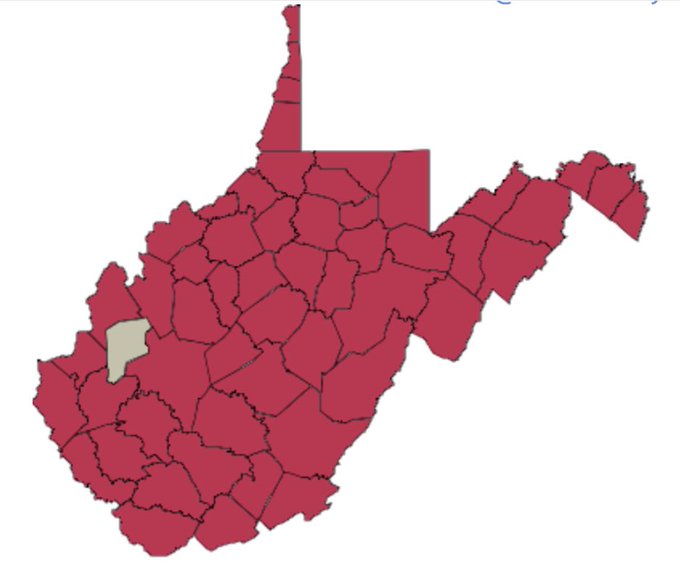
West Virginia public school teachers are striking over a new bill that paves the way for charter schools and private school vouchers in a state that relies primarily on public education.
In anticipation of the strike, almost all of the state's 55 public school systems have canceled classes for Tuesday.
The state's House of Delegates and Senate have been going back and forth on different versions of a bill that would overhaul West Virginia's educational system. According to the Charleston Gazette Mail, the education bill raises pay for teachers and increases funding for public schools, but also permits the creation of charter schools in the state, which currently has none.
The bill also funnels public money into a voucher system, called educational savings accounts, that could be used for private and online schooling. The new proposals are unacceptable to the state's teachers unions, which called for the strike to begin Tuesday.
"We are left with no other choice," said Fred Albert, president of the American Federation of Teachers' West Virginia chapter, according to The Associated Press.
Democrats in the Senate complained Monday that they didn't have a chance to digest details in amendments to the bill, which local media said were revealed just 10 CONTINUE READING: W.Va. Teachers Go On Strike Over State Education Bill : NPR


The good news: Social-emotional learning is hot. The bad news: Some of it is gives cognition a bad name. - The Washington Post

The good news: Social-emotional learning is hot. The bad news: Some of it is gives cognition a bad name. - The Washington Post

The good news: Social-emotional learning is hot. The bad news: Some of it is gives cognition a bad name.


In 2014, I ran a post by veteran educator Larry Ferlazzo about how social and emotional learning (SEL) — and its ancestor, character education — was being manipulated by some in the education world. He wrote then:
I am a big supporter of educators helping students develop many of the qualities highlighted in the concept of Social Emotional Learning (SEL) — perseverance (or “grit”); self-control; personal responsibility, etc.   I apply it regularly in my classroom, write in my blog about practical ideas on implementing SEL lessons in schools, and have even authored two books on the topic (and will have a third one published next year).
At the same time, I am concerned that many proponents of Social Emotional Learning might not be aware of the increasing danger to SEL of being “co-opted” by well-heeled and well-known groups and individuals, ranging from “school reformers” to columnists like The New York Times’ David Brooks,  and converted into a “Let Them Eat Character” strategy.   I fear those “Blame The Victim” efforts may  be used to distract from the importance of supplying needed financial resources to schools, providing  increased support to families by dealing with growing income and wealth inequality, and developing a comprehensive anti-poverty strategy.
“School reformers” in Los Angeles are using SEL terms (they even call their report, True Grit) to justify pushing performance pay for teachers and rewards for students, as well as advocating for an increased emphasis on being data-driven (instead of being data-informed) through the use of  ”dynamic data.”   KIPP schools use the destructive strategy of grading character traits.  And, in a column last month, David Brooks proclaimed that Social Emotional Learning and training “average” parents to become better ones  will take care of everything.
It’s 2019, and as SEL becomes increasingly popular, there are new concerns about the way it is interpreted. The following piece was written by Mike Rose, a highly respected research professor in the University of California at Los Angeles Graduate School of Education and Information Studies. And, interestingly enough, he wrote it after reading a new column by David Brooks of the New York Times about how students learn.
Rose is the author of books that include “The Mind at Work: Valuing the Intelligence of the American Worker,” which demonstrated the heavy cognitive demands of blue-collar and service work and what it takes to do such work well, despite the tendency of many to underestimate and undervalue the intelligence involved in such work. His other books include “Back to School: Why Everyone Deserves a Second Chance at Education,” “Possible Lives: The Promise of Public Education in America” and “Why School? Reclaiming Education for All of Us.”
This post appeared on Rose’s blog, and he gave me permission to publish it.
By Mike Rose
On January 17, 2019, the New York Times, in the person of one of the newspaper’s premier columnists, David Brooks, discovered social and emotional learning. In a column titled “Students Learn from People They Love,” Brooks summarizes some of the research that over the last few decades has gotten us to appreciate the role of emotion in learning and thus the importance of the quality of the relationship between teachers and their students. “We used to have this top-down notion that reason was on a teeter-totter with emotion,” writes Brooks. “If you wanted to be rational and think well, you had to suppress those primitive gremlins, the CONTINUE READING: The good news: Social-emotional learning is hot. The bad news: Some of it is gives cognition a bad name. - The Washington Post


Oakland’s Teachers Will Strike Thursday to Protest Low Salaries, Fiscal Crisis, and School Closures | janresseger l #Unite4OaklandKids #WeAreOEA #WeAreCTA #strikeready #REDFORED

Oakland’s Teachers Will Strike Thursday to Protest Low Salaries, Fiscal Crisis, and School Closures | janresseger

Oakland’s Teachers Will Strike Thursday to Protest Low Salaries, Fiscal Crisis, and School Closures

A predictable and tragic perfect storm is brewing in Oakland, California, where teachers will strike Thursday to protest low salaries and untenable conditions for students. The teachers union also intends its strike to protest the school district’s five year plan to close 24 traditional public schools. Like Los Angeles, Oakland’s financial crisis is related to California’s embrace of charter schools and the school district’s adoption of portfolio school reform, a governance plan by which the district manages traditional public and charter schools as though they are  investments in a stock portfolio. The idea is to launch new schools and close low scoring schools and schools that become under-enrolled. It is imagined that the competition will drive school improvement, but that has not been the result anyplace where this scheme has been launched.

For EdSource, Theresa Harrington describes the district: “About 30 percent of the roughly 50,000 students in Oakland attend charter schools, leaving about 37,000 students enrolled in district schools. That enrollment shift is one of the reasons the district is looking to close 24 of its 86 schools over the next five years. The district has 44 charter schools. The Oakland teachers’ union, the Oakland Education Association, says the district made school closures a bargainable issue by linking its plan to close schools to its ability to meet teachers’ salary demands.  But the district disagrees and does not plan to bargain its closure plan.”
At the end of January, Harrington reported that the school board approved the closure of Roots International Academy, located in East Oakland and serving primarily African American and Latino/Latina students. Oakland’s school superintendent used the same argument to justify the school closures as administrators in Chicago used when that school district closed 50 schools in May of 2013: “Superintendent Kyla Johnson-Trammell and the school board members who voted for the closure said the decision was necessary to ‘right-size the district,’ which has too many schools for the number of students it is currently educating. The district’s enrollment of about 37,000 is expected to continue to drop by 2023.”

The Bay Area News Group‘s Nico Savidge reported last Saturday that Oakland’s teachers have set Thursday, February 21 as a firm strike date: “The Oakland Education Association has been without a contract since July 2017 and is seeking a new one that would deliver a 12 percent pay raise over three years, smaller class sizes and the hiring of additional counselors and CONTINUE READING: Oakland’s Teachers Will Strike Thursday to Protest Low Salaries, Fiscal Crisis, and School Closures | janresseger

For New York City To Love Us Back [Teaching and Living Here] | The Jose Vilson

For New York City To Love Us Back [Teaching and Living Here] | The Jose Vilson

FOR NEW YORK CITY TO LOVE US BACK [TEACHING AND LIVING HERE]
Question of the century: how do we create a profession that we can love and can love us back?
These ideas aren’t diametrically opposed, but they’re worth considering in the largest school district in the nation. The New York City I grew up in has changed in trajectory and culture, but not in its uncanny ability to amplify one’s aspirations. It’s cool to make fun of New York culture now that gentrification and social media have diluted our symbols, but Timberlands and a baseball fitted cap are appropriate uniform for four fierce seasons. And our tongues fire warning shots as barometers for trust.
You can walk 20 blocks in any direction and the empire uncovers a new facet of the body. The same hood glorified in our rap music changes into the architecture that poke its heads to create the preeminent skyline. Citizens discarded the stars for the artificial lights, and the concrete we walk on weathers weather and the economies.
New York City teaches us power lessons at an early age. When I walk through the Upper West Side and Chelsea, I expect their denizens to hold their bags tightly and move swiftly past me. When their sons and daughters run through the Lower East Side and Harlem, I expected rents and condos to rise as well. When I was a teen, I could walk down 14th Street and could see the Twin Towers, the Empire State Building, and Times Square all before heading to school, a scene so normal that I never considered what would happen if any of them fell.
Before the advent of blogs and cell phone cameras, native New Yorkers didn’t gawk much at CONTINUE READING: For New York City To Love Us Back [Teaching and Living Here] | The Jose Vilson

How Little We Know about How Teachers Teach Common Core | Larry Cuban on School Reform and Classroom Practice

How Little We Know about How Teachers Teach Common Core | Larry Cuban on School Reform and Classroom Practice

How Little We Know about How Teachers Teach Common Core
Image result for How Teachers Avoid The Common Core Standards


Peter Greene, a retired teacher in Pennsylvania, had this to say about teaching the Common Core standards:
What happens to a teacher who doesn’t teach to the standards?
Nothing.
Oh, teachers still had (and have) to submit lesson plans that show alignment to standards, based on curriculum that is aligned to the standards. However, the alignment process is simply a piece of bureaucratic paperwork– you can simply write down the lessons and units that your professional judgment considers best, and then just fill in the numbers of various standards in the blanks. Maybe you have an administrator who will hold your feet to the fire (“Mrs. McTeachalot, I believe your use of standard RL.5.2a is not entirely on point”), but mostly, life will go on, your paperwork will be filed, the district’s report to the state will show that teachers are teaching to the standards with fidelity, and you can close your classroom door and do what you know is right. As long as the paperwork is good, reality can take care of itself.
Greene may well be right. For so little is known about how teachers actually teach the Common Core in their daily lessons.
Since 2010, nearly all states have adopted the Common Core standards or a modified version. Surely, those state policymakers and federal officials who championed these standards believed that adopting these reform-driven standards would lead eventually to improved academic performance for all students (see here, here, and here).
In the back-and-forth over the politics of these standards, it was easy for these policymakers to lose the critical, no, essential, connection between adopting a policy and implementing it. Any adopted policy aimed at changing students is put into practice by teachers. And the Common Core standards asked teachers to make major shifts in how they teach. So civic and business leaders and academic experts who pushed such reforms  forgot a simple fact:  teachers are the CONTINUE READING: How Little We Know about How Teachers Teach Common Core | Larry Cuban on School Reform and Classroom Practice