Latest News and Comment from Education

Friday, September 28, 2018

Can the Charter Movement Be Saved? | The Merrow Report

Can the Charter Movement Be Saved? | The Merrow Report

Can the Charter Movement Be Saved?

Can we agree that the charter school ‘movement’ is in big trouble?  Scandals emerge daily, or so it seems.   “Are Charter Schools the New Enron?”, one reputable study asks, for example.  Here’s one awful scandal.   Here’s another.  This is not just smoke; it’s a raging fire that threatens all charter schools, it seems to me.

Everyone knows that charter schools are publicly funded but privately run, supposedly bound by a ‘charter’ that spells out what the school will accomplish.  These licenses, typically for three or five years, are not supposed to be renewed if the school does not deliver. That does happen occasionally, but most often charters are renewed unless and until some awful scandal–usually financial–emerges.  And most charter schools are not financially transparent, meaning that it’s probable that more skullduggery goes unnoticed than is exposed.  That means that public funds–possibly billions of dollars–have been going into private pockets. I write about this at some length in “Addicted to Reform: A 12-Step Program to Rescue Public Education” (which is available at good bookstores and on Amazon).
Charter schools were supposed to allow educators to innovate and improve student learning, and the best of them have done so.  However, academically, the overall results are mixed at best, and in some instances have led to more segregation by race and class. 
Those interested in the history of the movement should turn to Ember Reichgott Junge’s book, Zero Chance of Passage, a compelling read.  For critical analysis of the book and the charter story in Minnesota, go here.
I’ve been interested in this story since I moderated the founding meeting at the Continue reading: Can the Charter Movement Be Saved? | The Merrow Report


Google’s School & Student Data Collection | National Review

Google’s School & Student Data Collection | National Review

How Google Co-opts Our Schools to Collect Kids’ Data
Local school administrators have sold out vulnerable children to Silicon Valley.

No consent. No disclosure. No escape.
For legions of unwitting students and teachers across the country, this is the dangerous, de facto data policy Google has imposed over their school districts. An estimated 80 million students and teachers are now signed up for free “G Suite for Education” accounts (formerly known as Google Apps for Education); more than 25 million students and teachers now use Google Chromebooks. A Google logon is the key to accessing homework, quizzes, tests, group discussions, presentations, spreadsheets, and other “seamless communication.” Without it, students and teachers are locked out of their own virtual classrooms.
Local administrators, dazzled by “digital learning initiatives” and shiny tech toys, have sold out vulnerable children to Silicon Valley. Educators and parents who expose and oppose this alarmingly intrusive regime are mocked and marginalized. And Beltway politicians, who are holding Senate hearings this week on Big Tech’s consumer privacy breaches, remain clueless or complicit in the wholesale hijacking of school-age kids’ personally identifiable information for endless data mining and future profit.
Over the past several years, I’ve reported in my column and on my CRTV.com investigative program on EduTech plundering the personal data and browsing habits of millions of American schoolchildren. Remember: State and federal educational databases provide countless opportunities for private companies exploiting public-school children subjected to annual assessments, which exploded after the adoption of the tech industry–supported Common Core “standards,” tests and aligned texts and curricula. The Every Student Succeeds Act further enshrined government collection of personally identifiable information — including data collected on attitudes, values, beliefs, and dispositions — and allows release of the data to third-party contractors thanks to Obama-era loopholes carved into the federal Family Education Rights and Privacy Act.

The racket includes Facebook’s Digital Promise partnership with the U.S. Department of Education and the social/emotional-behavior tracking system of TS Gold (Teaching Strategies Gold) targeting preschoolers. Yes, preschoolers. The Big Business–driven Project Unicorn promotes “data interoperability” between and among a cornucopia of EduTech products vying for your kid’s clicks and data. And despite getting caught data-mining students’ emails without consent, Google Continue reading: Google’s School & Student Data Collection | National Review


Black Teachers Are Not Enough - The Philadelphia Citizen #educolor

Black Teachers Are Not Enough - The Philadelphia Citizen

BLACK TEACHERS ARE NOT ENOUGH
DO SOMETHING
Support Black Male Educators for Social Justice


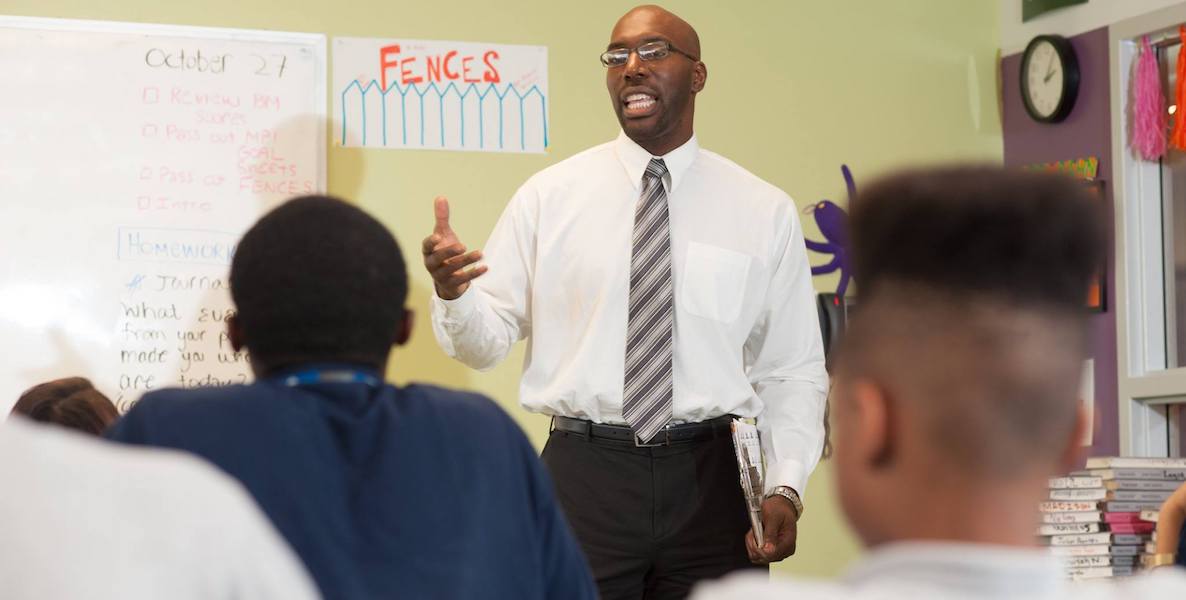
There are six black male teachers in our school. They represent twelve percent of our classroom teachers. That sounds like only a few (and it is) but in a city where black men represent four percent of classroom teachers, it seems like that’s a lot.

Over the course of my career, I have been committed to supporting current and aspiring black male educators. I was one of them and I had the support of black male teachers at John P. Turner Middle School. Teachers like Dr. Blackwell and Mr. Gibbs. I also had the support of other black men when we launched the Association of Black School Administrators (ABSA), a group of black male principals. In 2014, we would launch The Fellowship – Black Male Educators for Social Justice to support current and aspiring black male educators.
I intimately know the power of having black men teach and lead me. I know what my Nidhamu Sasateachers like Baba Changa, Baba Juhudi, Baba Mjenzi, and Baba Chavis meant to my development as an impressionable elementary school student. Their influence is everlasting. I wistfully think about the role my coach and Health/PE teacher, Mr. Jones, played for me in high school. I also recognize that as a nascent teacher, teachers at John P. Turner Middle School like Mr. Rutland, Mr. Gibbs, and Dr. Blackwell, played instrumental roles in my development as a teacher and leader.
We need more black men to teach and lead classrooms, but is that all black kids need?
When all of the responsibility for social justice lenses is placed on the shoulders of a few black people, it can lead to burnout. The responsibility to approach education as a human right and to prepare students in the school-to-activism pipeline is the responsibility of all who have the honor to call themselves educators.

While I readily agree that we need far more black men teaching our students—both black and white students—I am always a little nervous that policy makers, principals, etc. will use our call for immediate diversity and inclusion of black men in schools and classrooms to slow-walk so many other pressing needs.
There is research that demonstrates that black teachers can have a tremendous impact on the trajectory of black students, particularly boys in elementary schools; there is also plenty of research that highlights the need for more robust and comprehensive school improvement planning.

DO SOMETHING


Black teachers not only enter the field in smaller numbers than their white counterparts, black teachers tend to be attracted to the schools with the highest needs. Many black people (teachers are no exception) tend to be communal and the success of the community is more important than the individual which leads these teachers to the lowest performing schools. However, this can lead to added stress and burnout.
Dr. William Hayes, one of the founding members of The Fellowship – Black Male Educators for Social Justice shares that black men (and women) can’t do it alone. When all of the responsibility for social justice lenses is placed on the shoulders of a few black people, it can lead to burnout. The responsibility to approach education as a human right and to prepare students in the school-to-activism pipelinecannot solely be the work of woke and conscientious black teachers—it is the responsibility of all who have the honor to call themselves educators.

READ MORE


One way to prevent minority teacher burnout, Hayes says, is to make sure one or two people aren’t shouldering the social-justice load. At his school, white, black, and Latino/bilingual teachers each make up a third of the staff. The front office workers are Latino. Assistant principals are black, white, male, female. I think it’s important that staff can have a personal connection with Continue reading: Black Teachers Are Not Enough - The Philadelphia Citizen

The best teacher of the week, hands down: Christine Blasey Ford - The Washington Post

The best teacher of the week, hands down: Christine Blasey Ford - The Washington Post
The best teacher of the week, hands down: Christine Blasey Ford
There are too many candidates this week to choose the worst teacher of the week, so I’ll leave that to you. But the best teacher — that one is easy.
The person who used her time at the public pulpit with the most dignity and composure and directness and duty — important lessons all — was Christine Blasey Ford.
She is the California professor who testified Thursday before the Senate Judiciary Committee about what she said Judge Brett M. Kavanaugh, President Trump’s Supreme Court nominee, did to her when they were teenagers more than 35 years ago.
You would have to have your head in the sand not to know the story, so there’s no need to go into details.
But whatever you think of Ford’s accusation that Kavanaugh sexually assaulted her in the 1980s, her disposition Thursday before the committee and millions of people watching live broadcasts was so forthright that even those who support Kavanaugh didn’t believe she was lying; they just said she was confused.
The American Bar Association came out after the hearing and urged a delay in a nomination vote, calling for an FBI investigation into the allegations. The comments are striking because an association committee had unanimously given Kavanaugh its highest rating of “well qualified” for the Supreme Court. It is not a stretch to think that had Ford presented herself in a different way, the ABA may not have made this call.
What Ford did was offer a lesson in public service: first, by coming forward with her concerns about the judge before he was nominated by Trump for a seat on the Supreme Court, and then overcoming deep fears about going public and testifying because she thought it was her duty to her country. She was never belligerent during her testimony but only cooperative and direct, and never manipulative.
That makes her the best teacher of the week, hands down.
Valerie StraussValerie Strauss is an education writer who authors The Answer Sheet blog. She came to The Washington Post as an assistant foreign editor for Asia in 1987 and weekend foreign desk editor after working for Reuters as national security editor and a military/foreign affairs reporter on Capitol Hill. She also previously worked at UPI and the LA Times. 

Should We Teach About Consent In K-12? Brett Kavanaugh's Home State Says Yes : NPR #MeTooK12

Should We Teach About Consent In K-12? Brett Kavanaugh's Home State Says Yes : NPR

Should We Teach About Consent In K-12? Brett Kavanaugh's Home State Says Yes
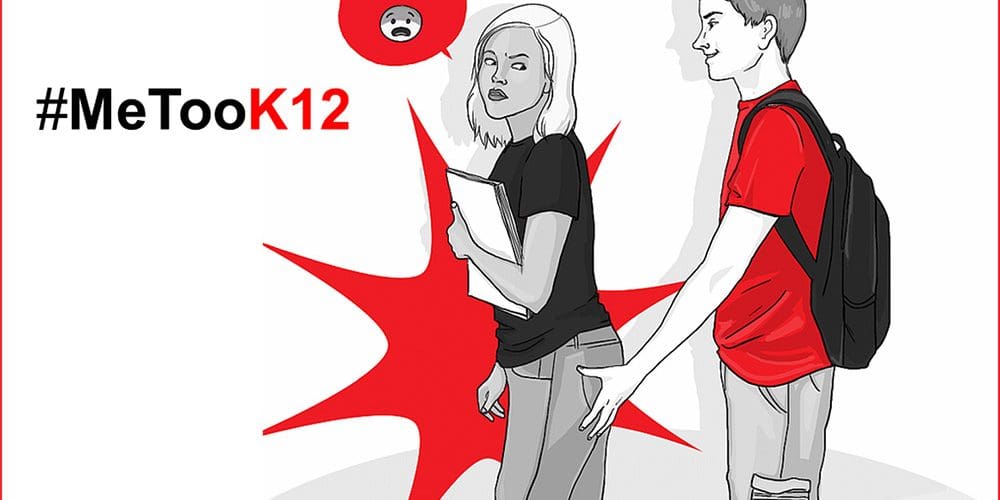
Image result for K-12 sexual assault

When the Access Hollywood tape of Donald Trump, along with sexual assault stories involving Brock Turner and Bill Cosby, hit the news back in 2016, a middle school student in Maryland named Maeve Sanford-Kelly was listening.
"I was frankly really distraught," she recalls. "I felt powerless. I assumed that this was what happened, that sexual harassment and sexual assault was a thing in our society and it wasn't going to change because it was part of the power structure."
Her mother had an idea that might help. Ariana Kelly, a Democrat, is a delegate in the Maryland state legislature, and she introduced a bill that would require the state to include consent in sex ed classes. Maeve and her friends, as well as student groups across the state, campaigned and testified for the bill.
It defines consent as "the unambiguous and voluntary agreement between all participants in each physical act within the course of interpersonal relationships."
Image result for K-12 sexual assault
Before they turn 18, about 8 percent of girls and 0.7 percent of boys experience rape or attempted rape, according to the Centers for Disease Control and Prevention. In the majority of these reported cases, the CDC says, the perpetrator is a peer: either an acquaintance or a current or former intimate partner.
And yet few schools across the country are required to teach about consent or healthy relationships in sex ed classes.
Currently, according to a report in May by the Center for American Progress, under a dozen states mention the terms "healthy relationships," "sexual assault" or "consent" in their sex education programs.


But with the #MeToo movement, that might be changing. Since the beginning of 2018, five states besides Maryland have introduced bills to require the teaching of consent in sex ed.
Amy Tiemann is a neuroscientist and educator and co-author of a new book on child safety, Doing Right By Our Kids. She works with KidPower, a child safety education group. She says the message of respect for others and your own body can be made simple and empowering even for young children.
"They can be 3 years old, they can be 15 years old, they can be in college, and we don't know who might be a potential perpetrator or who might be a potential victim  Continue reading: Should We Teach About Consent In K-12? Brett Kavanaugh's Home State Says Yes : NPR
#MeTooK12 Campaign | Stop Sexual Assault in Schools - https://wp.me/P6aIHy-Q8


Thursday, September 27, 2018

Why A ‘Blue Wave’ May Depend On Changing Education Politics

Why A ‘Blue Wave’ May Depend On Changing Education Politics

Why A ‘Blue Wave’ May Depend On Changing Education Politics


Democratic party strategists and supporters may believe a “blue wave” is coming in the midterm elections because of widespread opposition to President Trump, but they risk their party’s success if they forget that state and local races more often revolve around issues closer to home – like education.
Education, often overlooked during presidential elections because of the federal government’s relatively small footprint on education policy and funding, rises in prominence in off-year political campaigns, because candidates running for state and local offices have to explain how they’ll spend tax dollars on local schools – or not. This year’s contests are not an exception.
“Education is a top issue in the midterms,” declares a headline of an article in TIME that reports on the close contest for governor in Oklahoma, where the Democratic candidate Drew Edmondson is up by a point over his Republican opponent, according to recent polling. The reason for the uncharacteristic advantage the Democratic candidate may have in a deeply red state is “public anger over education funding,” the article contends.
The reporter traces the surprising political turnabout in the Sooner State to “the wave of wildcat teacher strikes” that occurred earlier this year in a number of red-leaning states, including Oklahoma, and finds “a similar dynamic is playing out in” electoral contests elsewhere.
For years, Democrats have more often than not been somewhat agreeablewith their Republican opponents on most education issues. But this Continue reading: Why A ‘Blue Wave’ May Depend On Changing Education Politics


What’s Behind TIME Magazine’s Teacher Hate Turnaround?

What’s Behind TIME Magazine’s Teacher Hate Turnaround?

What’s Behind TIME Magazine’s Teacher Hate Turnaround?


The recent TIME Magazine article about teachers describes beaten-down, courageous individuals, struggling to remain in a profession where they are not honored like they deserve. TIME seems to suddenly love teachers.
It had those of us who support public schools and teachers scratching our heads. TIME hasn’t been kind to teachers in the past. Remember this cover story about rotten apples? Here’s what I wrote about it at the time. I called it “Teacher Hate.”

Or how about this one with the Reform Queen Michelle Rhee sweeping away the “bad teachers”?


TIME is not alone. The media has condemned the teaching profession and public schools for years. They’ve helped to drive corporate school ownership by individuals who know little about children. They’ve made it their business to report unfair high-stakes testing results. They’ve help to foist standards, including Common Core, and strict accountability standards.
They’ve done this all while praising “no excuses” charter schools, like KIPP, or shown off the corporate millions spent on programs like Teach for America. They created an artificial debate that education failed our kids, by pumping up for-private enterprises that were supposed to change the status quo. Remember the bias NBC’s Education Nation, in-part sponsored by the for-profit University of Phoenix?
Scan articles by USA Today, or even the liberal leaning New York Times, and you will Continue reading: What’s Behind TIME Magazine’s Teacher Hate Turnaround?

Diane Ravitch On TIME Magazine's Attack on America's Teachers - https://www.commondreams.org/node/85963 via @commondreams

Rick Hess’s Mistake: Failure of Test-and-Punish Is Not Limited to a Few Districts That Have Disappointed | janresseger

Rick Hess’s Mistake: Failure of Test-and-Punish Is Not Limited to a Few Districts That Have Disappointed | janresseger

Rick Hess’s Mistake: Failure of Test-and-Punish Is Not Limited to a Few Districts That Have Disappointed


Frederick M. Hess, the director of education policy studies at the American Enterprise Institute, has always been a corporate education reform kind of guy. That is why Hess’s honest analysis this week of the ultimate fraud of a succession of school district miracles—Washington, D.C.’s test score and graduation rate miracle under Michelle Rhee and those who followed her, Alonzo Crim’s Atlanta in the 1980s, Houston’s Texas Miracle under Rod Paige, Arne Duncan’s Chicago, and Beverly Hall’s Atlanta—is so refreshingly candid.
In all of these cases, as Hess points out, there was “a remarkable dearth of attention paid to ensuring that the metrics (were) actually valid and reliable.”  Second, it was “tempting for civic leaders and national advocates to accept happy success stories at face value—especially when they (were) fronted by a charismatic superintendent.” And finally “reformers and reporters (made) things worse with their lust for ‘celebrity superintendents’ and ‘model systems.’ Their fascination nurtur(ed) an echo chamber in which a handful of leaders (got) exalted, often for too-good-to-be-true results.”
One must give Hess credit for honestly admitting the failure of so much of what his own kind of school reformers have been exalting for the past quarter century—business school accountability for schools, driven by universal standardized testing, and evaluated by two primary outcomes—standardized test scores and graduation rates. But Hess makes a mistake when he attributes the problem to a few “model” school districts that have disappointed.
Hess’s explanation is inadequate.  Inadequate because the system itself—the whole idea of school reform based on high stakes testing—cannot work.  Daniel Koretz, the Harvard specialist on testing, tells us why in a recent book: The Testing Charade: Pretending to Make Schools Better.
Koretz defines the problem with high-stakes-test-based school accountability by exploring a primary principle of social science research. Forty years ago, Don Campbell, “one of the founders of the science of program evaluation,” articulated a core principle now known as Continue reading: Rick Hess’s Mistake: Failure of Test-and-Punish Is Not Limited to a Few Districts That Have Disappointed | janresseger


Second Draft: A Continuum of Personalized Learning | Larry Cuban on School Reform and Classroom Practice

Second Draft: A Continuum of Personalized Learning | Larry Cuban on School Reform and Classroom Practice

Second Draft: A Continuum of Personalized Learning


A year and a half ago, I published a post that tried to make sense of the spread of “personalized learning” as the “next big thing” in U.S. schooling. To make sense of the heralded innovation in teaching and learning,  I created a continuum of programs self-styled as “personalized learning” based upon my research in Silicon valley districts, schools, and classrooms. I received many comments on the post and continued reading reports from schools and districts after which I revised the continuum. Here is my second draft.
Background
In 2016, when I visited Silicon Valley classrooms, schools and districts, many school administrators and teachers told me that they were personalizing learning. From the Summit network of charter schools to individual teachers at Los Altos and Mountain View High School where Bring Your Own Devices reigned to two Milpitas elementary schools that had upper-grade Learning Labs and rotated students through different stations in all grades, I heard the phrase often (see here).
But I was puzzled by what I saw and heard. When asked what a teacher, principal or district administrator meant by “personalized learning I heard different definitions of the policy.  I heard that PL was an actual program, an instructional application,an academic strategy. Not a surprise since the history of school reform is dotted with the debris of earlier instructional reforms that varied greatly in definition and practice (e.g., New Math, Socratic seminars, mastery learning, individualized instruction). While scores of crisp definitions dot educational journals, social media, and professional organizations, no one definition of “personalized learning” monopolizes the reform terrain.Continue readingSecond Draft: A Continuum of Personalized Learning | Larry Cuban on School Reform and Classroom Practice