Latest News and Comment from Education

Wednesday, September 19, 2018

School Days Start and End Too Early - The Atlantic

School Days Start and End Too Early - The Atlantic

The Curse of America’s Illogical School-Day Schedule

It starts too early for teens’ sleep patterns, and ends too early for working parents. Does the country have to be stuck with it?



The world does not revolve around you, teens are often told. Indeed it doesn’t, as they are reminded every school-day morning when disabling their alarms. The average start time for public high schools, 7:59, requires teens to get up earlier than is ideal for their biological clocks, meaning many teens disrupt their natural sleep patterns every school day.
The world, apparently, does not revolve around parents either. Their lives also tend to be mismatched with school-day schedules, which usually end a good two hours before the typical American workday does. As Kara Voght recently wrote in The Atlantic, that leaves a daily gap of unsupervised time for many children, forcing their parents to find affordable care for their kid or to adjust their own working schedule.
It’s not entirely clear who the school day does revolve around. The schedules that dictate most of American K-12 life descend from times when fewer households had two working parents. The result is a school day that frazzles just about everybody. But a few changes could mitigate that frazzling significantly. “I don’t know about making everyone perfectly happy,” says Catherine Brown, the vice president of education policy at the Center for American Progress, a left-leaning think tank. “But I think that we could get much closer to optimizing for students, parents, teachers.” The school day, Brown says, could be improved in two main ways: It could start later, and it could go longer.
A later start, in both middle and high school, would help with the later sleep cycles that are typical in teenage years. Most teens don’t naturally fall asleep until about 11 p.m., and are supposed to get about nine hours of sleep per night. But when class starts before 8:30—as the most recent federal data indicates it does at 87 percent of American public high schools—waking up in time for school cuts into needed sleep. Postponing the start of the school day, researchers have found, does lead middle and high schoolers to get more rest—they don't just stay up later. And then, once better-rested, studies show that teens do better in schoolget in fewer car crashes, and are less prone to depression.
Half past eight—the target for many start-school-later advocates—is actually still earlier than would be totally ideal. Kyla Wahlstrom, a lecturer at the University of Minnesota who conducted the first study examining the effects of later start times on high schoolers back in the late 1990s, told me that, taking only teens’ sleep needs into account, the best start time would be around 9:00 or 9:30; that would give them the optimal amount of time to sleep and get ready. “8:30,” she says, “is a compromise that allows more sleep, but does not impinge on the after-school activities.”
In the 20-plus years since Wahlstrom conducted that first study, hundreds of schools have moved back their start times, according to the advocacy group Start School Later, which does its best to count in absence of an official Continue reading: School Days Start and End Too Early - The Atlantic

U.S. GAO - Private School Choice: Requirements for Students and Donors Participating in State Tax Credit Scholarship Programs

U.S. GAO - Private School Choice: Requirements for Students and Donors Participating in State Tax Credit Scholarship Programs

PRIVATE SCHOOL CHOICE:
Requirements for Students and Donors Participating in State Tax Credit Scholarship Programs


Additional Materials:

Contact:

Jacqueline M. Nowicki
(617) 788-0580
nowickij@gao.gov


Office of Public Affairs
(202) 512-4800
youngc1@gao.gov

What GAO Found

In 2018, there were 22 tax credit scholarship (TCS) programs authorized across 18 states, which provide state tax credits for individual and business donations that fund scholarships for students to attend elementary and secondary private schools (see figure).
Tax Credit Scholarship Programs by State, Authorized as of January 2018
a  data-cke-saved-name=
Note: Each state has one program, except for Pennsylvania and Arizona, which have two and four programs, respectively. Alaska and Hawaii are not included in the map because neither has a program. Florida authorized a second program which was set to go into effect on July 1, 2018 and that program is outside the scope of GAO's review.
To determine the eligibility of students for these scholarships, most TCS programs use household income and have various approaches to determine scholarship award amounts. Income limits vary widely among programs, ranging from approximately $32,000 to $136,500 per year for students from a four-person household in school year 2017-2018. Programs have different requirements for how students can use their scholarships and different methods for calculating scholarship amounts. More than half of the programs (13 of 22) allow students to use their scholarship money for costs like transportation and books in addition to tuition, whereas the remaining programs (9 of 22) require scholarships funds to be used for tuition only. Average scholarship awards in school year 2016-2017 ranged from $500 to $5,468 per student among the 16 programs that published or provided GAO with such information.
The effect of TCS donations on donors' tax liability depends on program characteristics and donors' financial circumstances. Specifically, half of the 22 programs allow eligible donors to claim 100 percent of their donations as state tax credits, meaning that for each dollar donated, state taxes owed are reduced by a dollar, up to any maximum set by the state. The remaining 11 programs allow donors to claim from 50 to 85 percent of their donations as state tax credits. Programs often specify a maximum tax credit that may be claimed each year by a donor, by all donors combined, or both. Individual donors may also reduce their federal tax liabilities through the federal deduction for charitable contributions, depending on their financial circumstances and applicable tax provisions.

Why GAO Did This Study

TCS programs offer state tax credits to individuals or businesses that donate to scholarship funds for students to attend private elementary and secondary schools. Through these credits, donors may reduce the amount they owe in state taxes by the full or a partial amount of their donation, depending on each program's rules. Designing a TCS program requires that many decisions be made, such as which students will be eligible to receive scholarships and the effect donations will have on donors' state taxes. GAO was asked to review key characteristics of TCS programs.
This report examines (1) state TCS programs' policies regarding student eligibility and scholarship awards, and (2) how donating to a TCS program could affect the amount of state and federal taxes owed by donors.
For both objectives, GAO reviewed publicly-available documents about student eligibility and tax provisions for all 22 programs authorized as of January 2018 and verified the accuracy of the information with state program officials. GAO did not conduct an independent legal review of state laws and regulations. GAO also interviewed federal officials and reviewed relevant federal guidance and policy documents.
For more information, contact Jacqueline M. Nowicki at (617) 788-0580 or nowickij@gao.gov.

U.S. GAO - Private School Choice: Requirements for Students and Donors Participating in State Tax Credit Scholarship Programs

Big Education Ape: U.S. GAO - School Vouchers: Private School Choice Programs Are Growing - http://bigeducationape.blogspot.com/2016/09/us-gao-school-choice-private-school.html

A Layman’s Guide to the Destroy Public Education Movement

A Layman’s Guide to the Destroy Public Education Movement

A Layman’s Guide to the Destroy Public Education Movement


By Thomas Ultican / Tultican
The destroy public education (DPE) movement is the fruit of a relatively small group of billionaires. The movement is financed by several large non-profit organizations. Nearly all of the money spent is free of taxation. Without this spending, there would be no wide-spread public school privatization.
It is generally recognized that the big three foundations driving DPE activities are The Bill and Melinda Gate Foundation (Assets in 2016 = $41 billion), The Walton Family Foundation (Assets in 2016 = $3.8 billion), and The Eli and Edythe Broad Foundation(Assets in 2016 = $1.8 billion).
Last week, the Network for Public Education published “Hijacked by Billionaires: How the Super-Rich Buy Elections to Undermine Public Schools.” This interactive report lists the top ten billionaires spending to drive their DPE agenda with links to case studies for their spending.

A Short Explanation of the Label DPE

The modern education reform apostate, Diane Ravitch, was Assistant Secretary of Education under Lamar Alexander from1991-93. She was an academic who held many research positions including the Brown Chair in Education Studies at the Brookings Institution and served in multiple capacities in different federal education administrations. Like all of her closest allies, she believed in the power of accountability, incentives, and markets for reforming schools.
In 2010, Diane shocked her friends by publishing, The Death and Life of the Great American School System; How Testing and Choice Are Undermining Education.  In chapter 1 she wrote,
“Where once I had been hopeful, even enthusiastic about the potential benefits of testing, accountability, choice, and markets, I now found myself experiencing profound doubts about these same ideas. I was trying to sort through the evidence about what was working and what was not. I was trying to understand why I was increasingly skeptical about these reforms, reforms that I had supported enthusiastically.”
“The short answer is that my views changed as I saw how these ideas were working out in reality. The long answer is what will follow in the rest of this book.” (Ravitch 2)
In the book, Ravitch wrote, “I call it the corporate reform movement not because everyone who supports it is interested in profit but because its ideas derive from business concepts about competition and targets, rewards and punishments, and ‘return on investment.’  (Ravitch 251)
As Ravitch’s “corporate education reform” became more organized and ruthless, the Scheurich team’s Destroy Public Education model became a better descriptor.
Ravitch labled modern education reform “corporate education reform” and the label stuck.
Last year, researchers from the University of Indiana Purdue University Indianapolis (UIPUI) led by professor Jim Scheurich, who coordinates the urban studies program there, perceived a pattern in the destruction of the public schools. That pattern became the “destroy public education” model. As Ravitch’s “corporate education reform” became more organized and ruthless, the Scheurich team’s DPE model became a better descriptor.Continue reading: A Layman’s Guide to the Destroy Public Education Movement

US Schools Hiring Private Companies To Spy On Students' Social Media | PopularResistance.Org

US Schools Hiring Private Companies To Spy On Students' Social Media | PopularResistance.Org

US SCHOOLS HIRING PRIVATE COMPANIES TO SPY ON STUDENTS’ SOCIAL MEDIA


The following article is part of a series of articles dedicated to exposing the militarization of schools and universities. To read more about the issues facing young people and to join the IYSSE, visit iysse.com.
More than 100 school districts and public universities have hired social media monitoring companies over the past five years to spy on students’ social media accounts under the pretext of “school safety” and preventing school shootings, according to a report in the New York Times.
The private companies exploit social tragedy, recruiting more institutions after every mass shooting despite little evidence that the spying programs have any effect on violence.
The customers of these companies include school districts experiencing school shootings, such as the Newton Public Schools in Connecticut, as well as some of the largest school districts in the nation, including in Los Angeles and Chicago. Large universities like Michigan State and Florida State have also contracted services from the companies.

The latest surge of contracts has come in the aftermath of the school shooting in Parkland, in which 17 people were killed, on February 14, 2018.
Monitoring students’ social media accounts is a violation of privacy and another layer in the intimate partnership between the US government and tech companies for mass surveillance and censorship of the internet.
Most of the companies offering spying services hold or have previously held contracts with police departments. In 2016, the American Civil Liberties Union (ACLU) exposed one of the companies, Media Sonar, for recommending police officers follow hashtags like #BlackLivesMatter, #DontShoot, and #ImUnarmed during the Ferguson protests. In late 2015, Media Sonar also worked with the Ferguson-Florissant School District, which asked for alerts on the terms “protest” and “walkout.”
The monitoring companies maintain a high level of secrecy on every aspect of their work. Many have direct ties to the military and intelligence agencies.
One of the early companies to offer spying services, GEOCOP, is perhaps the most ominous. The company’s owner, Bob Dowling, worked for the Naval Criminal Intelligence Service as a civilian special agent for 13 years. He was then assigned to work with the Defense Advanced Research Projects Agency (DARPA), the US military’s technology development branch, and later the FBI’s Joint Terrorism Task Force. GEOCOP was hired initially to monitor various schools in New York, including CUNY. It is unclear how active the company remains today.
Another example is Social Sentinel, run by Gary Margolis, who served as chief of police at the University of Vermont for 11 years. His company’s web site declares, “Don’t miss out on the chance to listen.”
GEO Listening, one of the few companies without a CEO directly connected to the state, is just as secretive about its operations. It lists its address in California, but no operations are conducted at the physical address and the credited Continue reading: US Schools Hiring Private Companies To Spy On Students' Social Media | PopularResistance.Org

Parent Coalition for Student Privacy - 


“Personalized Learning”: The Difference between a Policy and a Strategy | Larry Cuban on School Reform and Classroom Practice

“Personalized Learning”: The Difference between a Policy and a Strategy | Larry Cuban on School Reform and Classroom Practice

“Personalized Learning”: The Difference between a Policy and a Strategy


“Personalized learning”–and whatever it means–has been the mantra for policymakers. technology entrepreneurs, and engaged practitioners for the past few years. Mention the phrase and those whose bent is to alter schooling nod in assent as to its apparent value in teaching and learning.  Mentions of it cascade through media and research reports as if it is the epitome of the finest policy to install in classrooms.
But it is not a policy, “personalized learning” is a strategy.
What’s the difference?
Read what Yale University historian Beverly Gage writes about the crucial distinction between the two concepts:
A strategy, in politics, can be confused with a policy or a vision, but they’re not quite the same thing. Policies address the “what”; they’re prescriptions for the way things might operate in an ideal world. Strategy is about the “how.” How do you move toward a desired end, despite limited means and huge obstacles? We tend to associate strategy with high-level decision makers — generals, presidents, corporate titans — but the basic challenge of, in [Saul] Alinsky’swords, “doing what you can with what you have” applies just as much when working from the bottom up.
While the two are connected, making the distinction between policy and strategy is essential to not only political leaders but military ones as well. Strategies are instruments to achieve policy goals so, for example, in the 17 year-old war in Afghanistan, ambiguous and changing U.S. goals—get rid of Taliban, make Afghanistan democratic, establish an effective Afghan military and police force–influenced greatly what strategies U.S. presidents–three since 2001–have used such as sending special forces, army, and marines into the country—frontal assaults on Taliban strongholds, counter-insurgency, etc. (see here and here).
Without recognizing this distinction between policy and strategy military and political leaders behave as blind-folded leaders  taking one action while devising another plan to implement to achieve ever-changing goals.
09mag-firstwords-image1-jumbo.png
Photo illustration by Derek Brahney. Source image of painting: Bridgeman Images.

But the key distinction that Gage draws between policy and strategy does not only apply to politics or the military, it just as well covers continual reform Continue reading: “Personalized Learning”: The Difference between a Policy and a Strategy | Larry Cuban on School Reform and Classroom Practice

Tuesday, September 18, 2018

CURMUDGUCATION: DeVos, Truth, Free Speech, the Constitution, and Cognitice Dissonance

CURMUDGUCATION: DeVos, Truth, Free Speech, the Constitution, and Cognitice Dissonance

DeVos, Truth, Free Speech, the Constitution, and Cognitice Dissonance

The National Constitution Center is an interesting place. The "nonprofit, nonpartisan institution devoted to the United States Constitution" was signed into existence by Ronald Reagan and the groundbreaking was attended by Bill Clinton. Located in Philadelphia, it houses the Annenberg Center for Education and Outreach; it also includes the Richard and Helen DeVos Exhibition Hall. Monday, it hosted Secretary of Education Betsy DeVos for a speech that reads like one of the more honest-- and seriously conflicted-- speeches she has delivered in office.

The coverage has focused on DeVos's call for freedom of speech, in particular, focusing on the ways that college campuses have restricted such speech, from bureaucratic regulations to crowds of students who exercise the "heckler's veto" (which is a pretty good little phrase). But there are several moments that, if nothing else, may help crystalize where fundamental disagreements with her may lie.

The Founders discussed and debated and proposed "to the states a national government that would restrain itself by empowering its people." Well, the white penis-endowed ones, anyway. But there is that article of faith that the feds were never supposed to have real power.

The freedom to express ourselves-- through our faith, through our speech, through the press, through assembly or petition-- defines much of what it means to be human.

This freedom, preserved in our Declaration of Independence, comes from the truth that our rights are endowed by our Creator, not by any man-made government.


If you've been waiting for DeVos to let her God flag fly, this speech has it waving at the top of the pole. I have mixed feelings about her definition of Being Human. Yes, expression is important. But does that define humanity? And here's her definition of the mission of education:

The fundamental mission of formal learning is to provide a forum for students to discover who they Continue reading: CURMUDGUCATION: DeVos, Truth, Free Speech, the Constitution, and Cognitice Dissonance


Macklemore and Michael Bennett buy “Teaching for Black Lives” book for all Seattle secondary humanities teachers – I AM AN EDUCATOR

Macklemore and Michael Bennett buy “Teaching for Black Lives” book for all Seattle secondary humanities teachers – I AM AN EDUCATOR

Macklemore and Michael Bennett buy “Teaching for Black Lives” book for all Seattle secondary humanities teachers
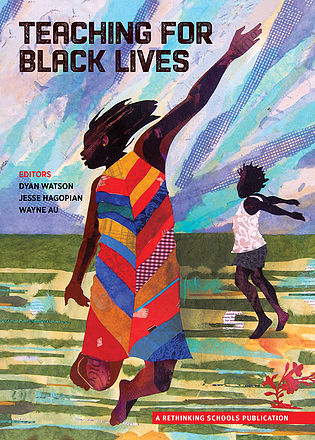
T4BL_BookCover

Grammy award winning artist Macklemore and three time NFL pro bowler Michael Bennett team up to purchase the new critically acclaimed book, Teaching for Black Lives, for distribution to ALL Social Studies & Language Arts Teachers in the Seattle Public Schools

The new book from Rethinking Schools called, “A Handbook for all educators to fight racism” by the Washington Post

Hear from the editors of the book at a Seattle Town Hall event

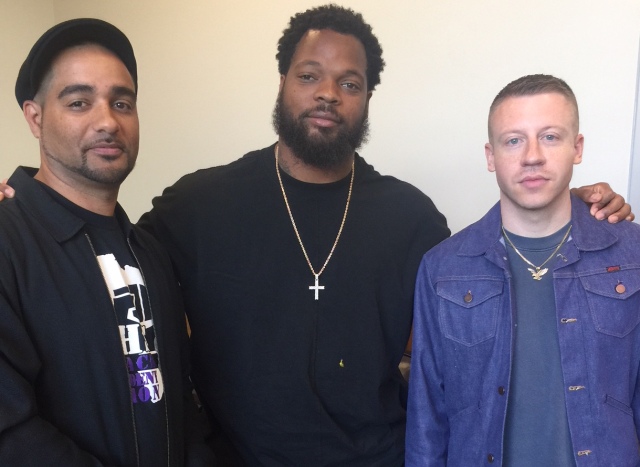
MM&J
From left to right: Jesse Hagopian (co-editor of Teaching for Black Lives), Michael Bennett, Macklemore [Photo Credit: Ben Secord].
Seattle, WA, September, 12, 2018Grammy award winning Seattle-based artist Macklemore and three-time NFL Pro Bowler Michael Bennett have teamed up to purchase and distribute copies of the new critically acclaimed book, Teaching for Black Lives to every middle and high school Social Studies and Language Arts teacher in the Seattle Public Schools. Michael Bennett said, “This is the book I wish I had coming up in school but it never existed. Now we have the opportunity to educate thousands of youth about the Black history that was too often missing from my schooling—from the building of the White House, to the role of Black youth in social movements, to organizing for restorative justice today.”

Macklemore added, “With everything from history, to poetry, to visual art, these lessons will help educators affirm the lives of their Black students and create deeper dialogue in our schools about the struggles and contributions of Black people that all students need to learn.”
Teaching for Black Lives is a collection of teaching activities, role-plays, essays, poems and art designed to help educators humanize Black people in the curriculum. The book demonstrates how teachers can connect the curriculum to young people’s lives and Continue reading: Macklemore and Michael Bennett buy “Teaching for Black Lives” book for all Seattle secondary humanities teachers – I AM AN EDUCATOR


Shaquille O'Neal Joins Communities In Schools National Board of Directors : Communities In Schools

Shaquille O'Neal Joins Communities In Schools National Board of Directors : Communities In Schools

Shaquille O'Neal Joins Communities In Schools National Board of Directors


Arlington, VA—Communities In Schools (CIS), the national organization dedicated to empowering at-risk students to stay in school and on a path to a brighter future, is delighted to welcome NBA Hall of Famer Shaquille O’Nealas the newest member of its national board of directors.  
"Over all the years I’ve known Shaquille, he has always shown himself to be a man of integrity and principle for whom giving back to his community is a top priority,” says Communities In Schools National Board Chair Elaine Wynn. "We are privileged to have him among the volunteer leaders of Communities In Schools.” 
Shaquille O’Neal, former NBA basketball player and Hall of Fame inductee, is currently a sports analyst on the television program,  Inside the NBA, and is considered one of the greatest players in NBA history. O’Neal’s athletic accomplishments include a 19-year NBA career, four NBA championships (three with the Los Angeles Lakers and one with the Miami Heat), and 15 All-Star game selections. He is one of only three players to win NBA MVP, All-Star game MVP, and NBA Finals MVP in the same year. 
Rivaling his athletic accomplishments are O'Neal's off-court undertakings, which include success in acting, music, television and gaming.  Inspired by positive childhood experiences at the Boys and Girls Club in Newark, NJ, O’Neal has a long career of partnering with youth organizations and giving back to his community.   
“Every kid, no matter where they’re from or how much money their parents make, deserves the Continue reading: Shaquille O'Neal Joins Communities In Schools National Board of Directors : Communities In Schools


The voucher program we really need is not for school — it’s for after

The voucher program we really need is not for school — it’s for after

The voucher program we really need is not for school — it’s for after
Betsy DeVos can better serve working parents by supporting their aftercare needs


At 3 p.m. when most schools let out, some kids will stay back to attend an after-school program, some will be picked up by parents, relatives or paid caregivers to be taken home or to a soccer or swim class, and some others will hang out, on a street corner, or in the playground nearby with friends, or in an empty home. If you are a working parent with regular office hours, the group that your child belongs to depends on how much you can afford to pay for after-school care.
Unfortunately, the free, public part of education ends when the bell sounds.
Turns out that most of those who can’t afford to pay private school tuition can’t dole out funds for after-school programs either. In 2016, the online education news outlet Chalkbeat reportedthat only 18 percent of children nationally are served by before- and after-school programs. Many have no choice but to leave children in settings that won’t teach them skills that will help them get to college or snag a high-paying job.
The federal government could help. Students’ social and economic needs don’t end in the afternoon, and neither should the safety net that public schools provide. With the U.S. Secretary of Education Betsy DeVos so eager to pass out school vouchers like Halloween candy, “to choose the learning environment that is right,” why isn’t there a voucher scheme for after-school programs?
The duration of school days is a vestige of a past when women were expected to stay at home, and able to pick their children up from school to take them back home. It’s long past time schools recognized that 61.1 percent of married couples, both parents work, and offered after-school programs that meet their demands. School hours — typically between 8 a.m. and 3 p.m. — simply don’t match a 9 to 5 workday, let alone the more intensive days that come with certain kinds of jobs. What are parents to do with their kids in those in-between hours?
If parents don’t want their child to get after-school lessons from the streets or television, they are forced to pay for quality childcare and afterschool programs. There’s not much wiggle room for parents, and aftercare providers, keenly aware of this, charge accordingly.
According to a 2013 report by the U.S. Census, childcare costs rose 59 percent between 1985 and 2011 while family income stayed constant, meaning families paid a greater share of their income for childcare.
There is wide variability in what parents pay for childcare between Continue reading: The voucher program we really need is not for school — it’s for after