Latest News and Comment from Education

Saturday, September 8, 2018

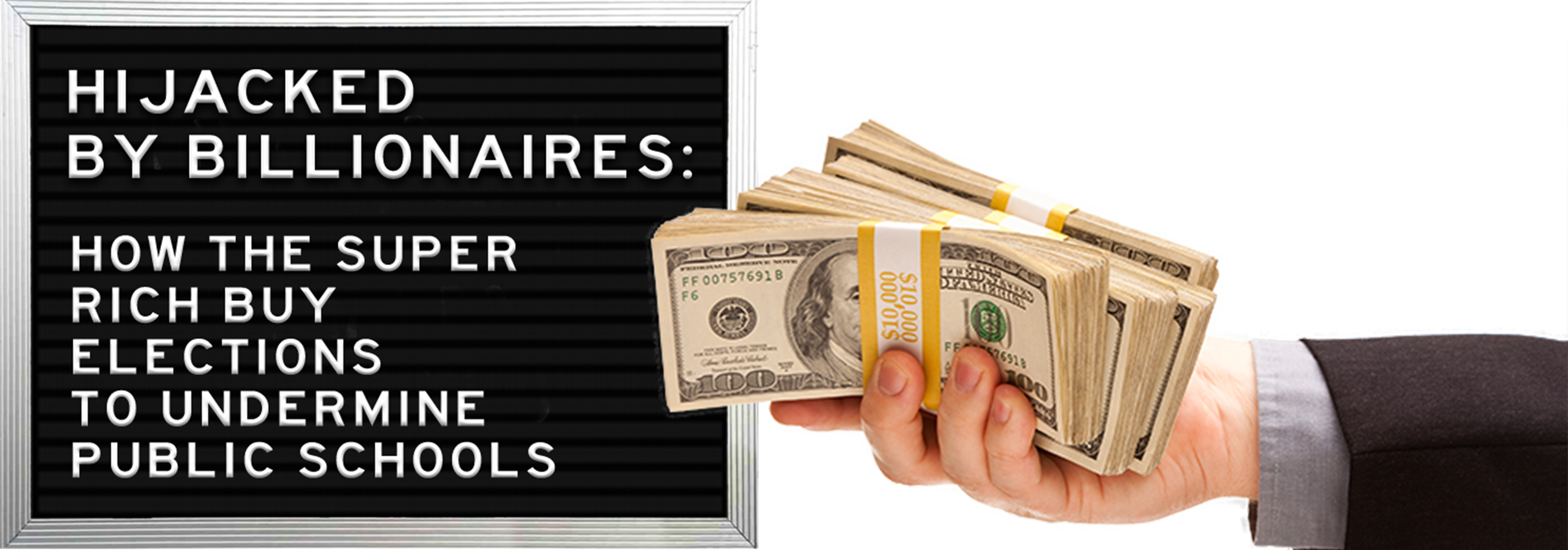
Hijacked by Billionaires: How the Super Rich Buy Elections to Undermine Public Schools - NPE Action

Hijacked by Billionaires: How the Super Rich Buy Elections to Undermine Public Schools - NPE Action

Hijacked by Billionaires: How the Super Rich Buy Elections to Undermine Public Schools


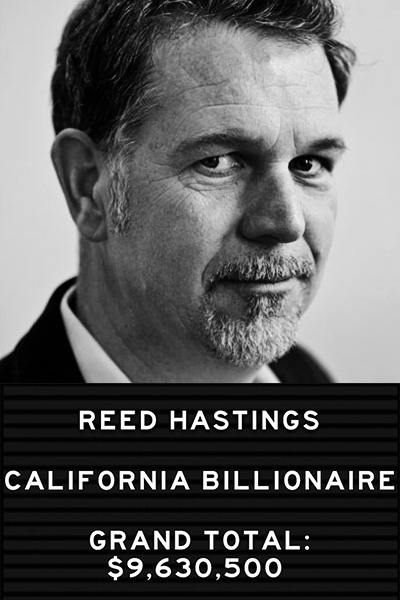
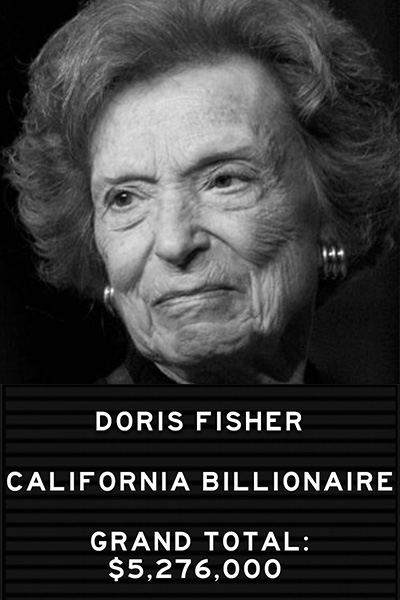
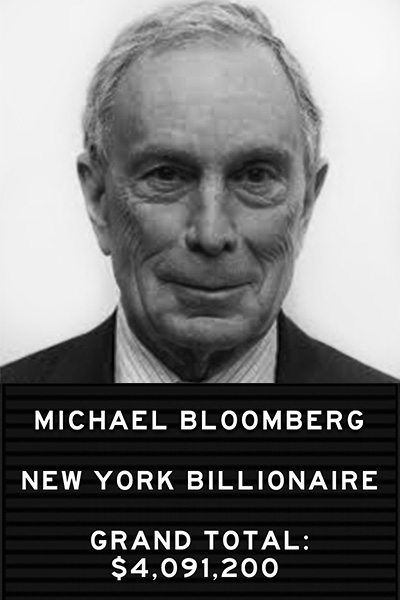
HERE'S HOW MUCH THE TOP TEN BILLIONAIRES SPENT ON RACES IN THIS REPORT

REED HASTINGS APPEARS IN THE FOLLOWING CASE STUDIES:
WASHINGTON
LOS ANGELES, CA
LOUISIANA
DORIS FISHER APPEARS IN THE FOLLOWING CASE STUDIES:
LOS ANGELES, CA
NEWARK, NJ
WASHINGTON
LOUISIANA
MICHAEL BLOOMBERG APPEARS IN THE FOLLOWING CASE STUDIES:
NEWARK, NJ
LOS ANGELES, CA
LOUISIANA
RHODE ISLAND
MINNEAPOLIS, MN
DENVER, CO
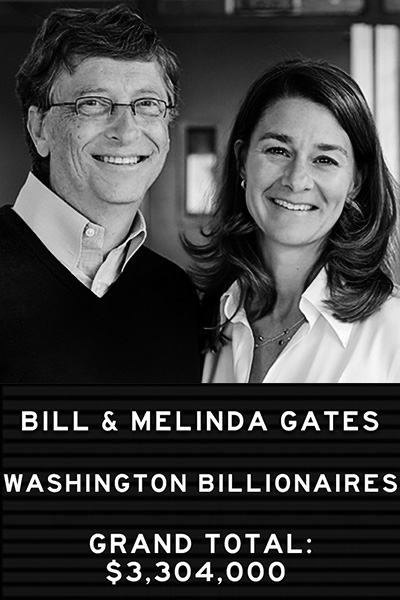
BILL & MELINDA GATES APPEAR IN THE FOLLOWING CASE STUDIES:
WASHINGTON
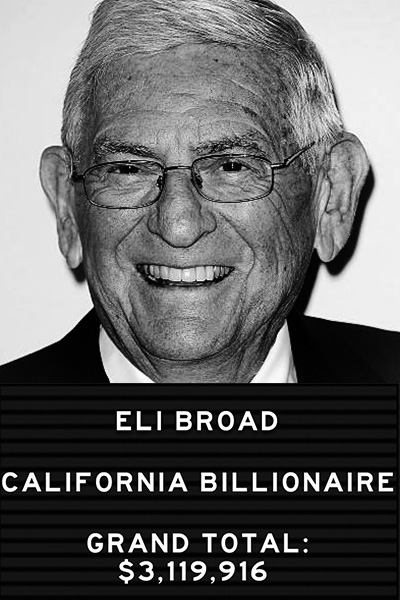
ELI BROAD APPEARS IN THE FOLLOWING CASE STUDIES:
LOS ANGELES, CA
RHODE ISLAND
WASHINGTON
LOUISIANA
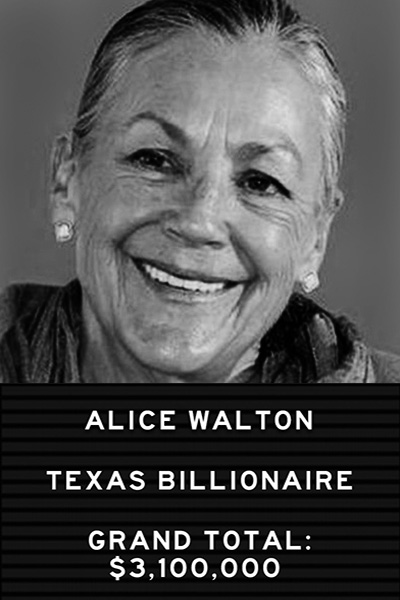
ALICE WALTON APPEARS IN THE FOLLOWING CASE STUDIES:
WASHINGTON
LOS ANGELES, CA
LOUISIANA
DENVER, CO
JOHN & LAURA ARNOLD APPEAR IN THE FOLLOWING CASE STUDIES:
LOS ANGELES, CA
LOUISIANA
RHODE ISLAND
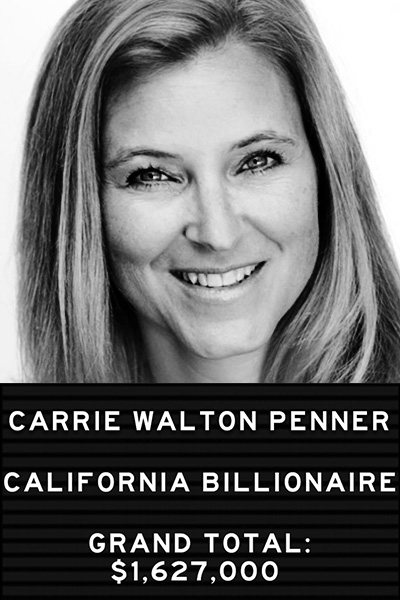
CARRIE WALTON PENNER APPEARS IN THE FOLLOWING CASE STUDIES:
LOS ANGELES, CA
LOUISIANA
RHODE ISLAND
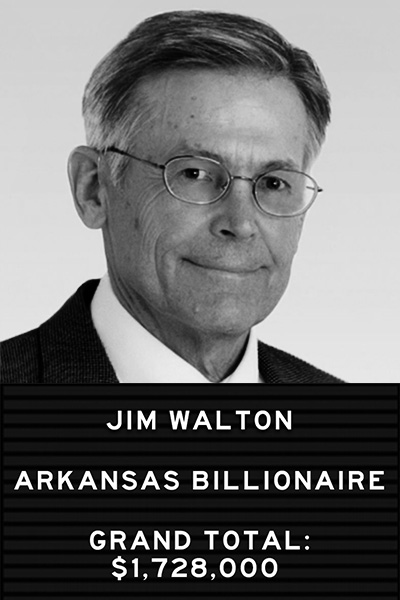
JIM WALTON APPEARS IN THE FOLLOWING CASE STUDIES:
LOS ANGELES, CA
LOUISIANA
DENVER, CO
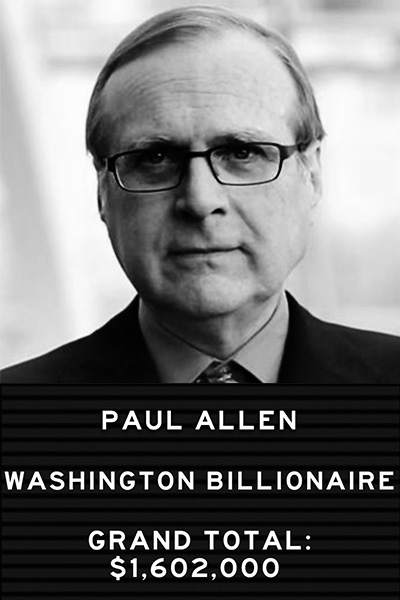
PAUL ALLEN APPEARS IN THE FOLLOWING CASE STUDIES:
WASHINGTON

CLICK ON THE IMAGES BELOW TO VIEW THE INTERACTIVE MAPS THAT ACCOMPANY EACH CASE STUDY

(Maps are best viewed on a laptop or desktop)


NPE Action - Political Endorsements - http://npeaction.org/ on @NPEaction


California Gives For-Profit Charters the Boot, K12 Inc. Largely the Reason | deutsch29

California Gives For-Profit Charters the Boot, K12 Inc. Largely the Reason | deutsch29

California Gives For-Profit Charters the Boot, K12 Inc. Largely the Reason


On September 07, 2018, California Governor Jerry Brown signed into law a bill authored by Assemblyman Kevin McCarthy prohibiting for-profit charter schools in California, effective July 01, 2019. From the bill:
On and after July 1, 2019, a petitioner that submits a charter petition or a charter school that submits a charter renewal or material revision application shall not operate as, or be operated by, a for-profit corporation, a for-profit educational management organization, or a for-profit charter management organization. For purposes of this section, a for-profit educational management organization and a for-profit charter management organization are entities that manage or operate a charter school.
For-profit charter schools currently operating in California must convert to non-profit management prior to each school’s renewal deadline.
For-profit virtual charter operator, K12, has a shady, self-serving history in California, including draining a school of funding and presenting the appearance of no debt (and, therefore, the appearance of a successful school) by washing the school’s books via a creation called a “balanced budget credit.” Though in July 2016, California Attorney General Kamala Harris charged that K12 funneled $168.5M via the “balanced budget credits” game, K12 settled (without admitting guilt) for $8.5M– and was still allowed to operate in California.
McCarthy’s bill prohibiting for-profit charter schools in California was first introduced in February 2017; the first analysis of the bill (California Assembly, May 09, 2017) focuses on K12’s profiteering as justification for the legislation:
Appropriate use of taxpayer dollars? While current law explicitly authorizes a charter school to operate as a nonprofit corporation, statute is silent on whether a charter school is permitted to operate as a for-profit corporation. Because of the permissive nature of the Education Code and absent a clear prohibition, several charter schools are currently operating as for-profit corporations.
The California Charter School Association indicates there are six for-profit charter schools in California. California Virtual Academies (CAVA) is California’s largest provider of online public K-12 education and a public charter school network that exists entirely online. Students take classes Continue reading: California Gives For-Profit Charters the Boot, K12 Inc. Largely the Reason | deutsch29


Friday, September 7, 2018

"We as students get to tell our story" — at the Premiere of "Personal Statement" | Schott Foundation for Public Education

"We as students get to tell our story" — at the Premiere of "Personal Statement" | Schott Foundation for Public Education

"We as students get to tell our story" — at the Premiere of "Personal Statement"


I recently had the honor of attending the premiere of Personal Statement, a film by Julie Dressner and co-directed by Edwin Martinez that follows three high school seniors who were trained to support their peers through the college application process — while applying to college themselves. Listening to the film’s protagonists speak about the power of a youth-led model to address inequity in college access, I could not help but think about all of the youth organizers from the Urban Youth Collaborative. Since 2005, UYC has been fighting to develop and get funding for a youth-led college access model as a part of their College Pathways campaign. More than 13 years ago, those youth organizers explained their motivations:
We realized that, in many of our communities, students were being pushed into GED programs and into the military, rather than being helped to realize their dreams for college. We believe that every NYC high school student has the fundamental right to obtain the counseling and academic support necessary for him or her to succeed in high school and go to college.
They advocated for Student Success Centers*, which would train high school students to work in partnership with adult counselors to support students through the college search, application, and decision-making process. Their efforts resulted in funding for Make the Road NY to open New York City’s first Student Success Center on the Bushwick Campus in November 2007 and then for Cypress Hills LDC to open the second on the Franklin K. Lane Campus in January 2008. Personal Statementfeatures these two Student Success Centers, alongside one of the many others that have been established since then in NYC. College Access: Research & Action (CARA) works with these Student Success Centers, providing 70+ hours of training for youth leaders to develop the knowledge and skills they need to do their work, and supporting their supervisors to establish needed structures and supports for effective programming.
Personal Statement shines a critical light on the complexity and challenges of the college process for low-income students, the gross inequity in available resources, and the power of young people to support their peers in realizing their college Continue reading: "We as students get to tell our story" — at the Premiere of "Personal Statement" | Schott Foundation for Public Education

Teachers Leave For-Profit Charter Schools at Alarming Rates, Report Says

Teachers Leave For-Profit Charter Schools at Alarming Rates, Report Says

Teachers Leave For-Profit Charter Schools at Alarming Rates, Report Says


Students attending many of the nation’s 6,900 public charter schools may see unfamiliar faces as they head back to school this year.
Public schools already experience high levels of turnover among educators, but school teachers are leaving charter schools managed by private, for-profit groups at an “alarming” rate, according to a new study published in The Social Science Journal.
Charter schools run by nonprofit groups also have higher turnover rates than regular charter schools, which tend to be run by local school officials and parents rather than “management organizations” that can operate several schools at once.
Public charter schools are publicly funded, but they are run by private or nonprofit groups under a contract or “charter” with a state government or local school district that holds them accountable to certain standards. From 2000 to 2016, the number of public schools operated under charter agreements nationwide increased from 2 to 7 percent, according to the National Center for Education Statistics.
Previous research has shown that teachers tend to leave their jobs at traditional public schools at lower rates than charters, and the study examines how working conditions at different types of charter schools lead to higher rates of teacher turnover. This matters because the financial cost of turnovers to schools is high, and inconsistency among educators can dampen the quality of the education that students receive.
Christine Roch, an associate professor of public management and co-author of the study, said teachers take their knowledge about students and their families, as well as expertise in working within the school’s curriculum and practices with them when they leave. This means that inconsistency among educators can have negative impacts on academic Continue reading: Teachers Leave For-Profit Charter Schools at Alarming Rates, Report Says


The fight continues: which states will teachers strike in next? | US news | The Guardian

The fight continues: which states will teachers strike in next? | US news | The Guardian

The fight continues: which states will teachers strike in next?
Thousands protest at the Arizona capitol for higher teacher pay and school funding on 26 April.


Last spring, a wave of teachers strikes across the United States helped spur mass support for educators – and wage raises – after decades of cuts and demonization by both Republicans and Democrats alike. As schools start again, teachers are determined to keep fighting.
As a new school year begins, teachers in California, Colorado and Illinois, among other states, are determined to continue the fight for better pay and school funding

One major union is asking its member to strike this fall: the 34,000 members of the United Teachers of Los Angeles (UTLA). On 30 August, 98% of teachers voted to authorize a strike at the nation’s second largest school district.

While the strike in the spring focused on Republican states, a strike in Los Angeles would be the first to target Democrats, who have also promoted schemes to bust teachers’ unions and open non-union charter schools that divert funding away from unionized public schools.
“California is a Democratic state, yet we have the highest number of unregulated charter schools in the nation. And we are 43rd in the nation in terms of per pupil spending when we are the fifth largest economy in the world,” said UTLA bargaining chair Arlene Inouye.
Teachers in Washington state’s Vancouver and Ridgefield have already taken votes to authorize a strike if they can not agree a pay rise. At the end of August, teachers in Longview, Washington, walked out after decisively rejecting a 6.9% average pay raise. More strikes are being considered in Colorado and Winnebago, Illinois.
The teacher action looks sure to spread as the school year marches on. Continue reading: The fight continues: which states will teachers strike in next? | US news | The Guardian

Could Weighted Education Funding Campaigns Be Advancing An ALEC-Backed Agenda? – Wrench in the Gears

Could Weighted Education Funding Campaigns Be Advancing An ALEC-Backed Agenda? – Wrench in the Gears
Could Weighted Education Funding Campaigns Be Advancing An ALEC-Backed Agenda?

Campaigns have been launched across the nation to document and address chronic deficits in state-level education funding. Undoubtedly, the intentional underfunding of our public schools is a serious concern. One such campaign was recently announced in my home state, PA Schools Work. According to their website, the coalition, which includes a number of union and child and education advocacy groups, builds upon previous work done around Pennsylvania’s 2016 Campaign for Fair Education Funding.
What immediately jumped out at me when I received the August 8 email inviting me to join was the use the word “Work” in the campaign name. What I’ve come to realize is that the ed-reform landscape can often be deciphered if you understand the language they’re using. Once you unravel that code, you can figure out where things are headed.
PA Schools Work
There is tremendous pressure now to align curriculum to the needs of industry, and the research I have been conducting around outcomes-based contracting indicates that “Work” often equates to data-driven metrics tied to outsourced public services. See Bloomberg Philanthropies’ “What Works Cities” for example. In education this is increasingly manifested in the adoption of ed-tech “solutions.” So, for me at least, “Work” in this context becomes an extremely loaded term. As a parent, I can think of many other words I’d prefer to see used to describe an optimally funded K12 education. Pennsylvania schools could just as easily empower, nurture, sustain, excite, imagine, or create. Work? There’s plenty of time in post-secondary education, once children are old enough to make informed decisions about their futures, before that word needs to take center stage.
It’s also important to note that since last fall Pennsylvania has been battling legislation aimed at creating Education Savings Accounts. Senate Bill 2, not yet passed, would establish a program run through Pennsylvania’s Department of the Treasury that would award quarterly payments to families of children enrolled in (or in the catchment of if a kindergarten student or first grader) schools documented as “low-achieving.” Schools Continue reading: Could Weighted Education Funding Campaigns Be Advancing An ALEC-Backed Agenda? – Wrench in the Gears


What Spurred a 98% Strike Vote by LA Teachers? Plutocrats Pushing Charter Schools

What Spurred a 98% Strike Vote by LA Teachers? Plutocrats Pushing Charter Schools

What Spurred a 98% Strike Vote by LA Teachers? Plutocrats Pushing Charter Schools


Public school teachers in Los Angeles voted overwhelmingly in late August to authorize a strike over stalled contract negotiations, but the issues really energizing the union membership go far beyond a new contract. Instead, say union leaders and rank-and-file members, the teachers are growing increasingly alarmed at a small clique of billionaires that has won considerable sway over the L.A. school board and is aggressively promoting charter schools as a replacement for public education.
In a stunning display of solidarity, 98 percent of some 28,000 union members voted to authorize strike action. Arlene Inouye, co-chair of the contract bargaining committee of United Teachers of Los Angeles (UTLA) union, tells In These Times that the vote reflects the dismay of the teachers and other education professionals at the actions of the school board.
For many teachers, the focus right now is on Austin Beutner, the new schools superintendent chosen by the board of Los Angeles Unified School District (LAUSD) earlier this year. Beutner is a former investment banker with no experience running public schools who replaced a former teacher as superintendent. The appointment was “a scandal,” says Inouye, at the time tipping the board to a 4-3 majority that favored charter schools over traditional public schools. One of Beutner’s first moves in his new job was to lead the LAUSD into an impasse with the union over the new contract.

The Beutner appointment is merely the tip of the iceberg as far the union is concerned, Inouye continues, noting that teachers and other educators were “outraged” last month to see school board member Ref Rodriguez plead guilty to Continue reading: What Spurred a 98% Strike Vote by LA Teachers? Plutocrats Pushing Charter Schools


Criminalizing Childhood: School Safety Measures Aren’t Making the Schools Any Safer | Dissident Voice

Criminalizing Childhood: School Safety Measures Aren’t Making the Schools Any Safer | Dissident Voice

Criminalizing Childhood: School Safety Measures Aren’t Making the Schools Any Safer


Every day in communities across the United States, children and adolescents spend the majority of their waking hours in schools that have increasingly come to resemble places of detention more than places of learning. From metal detectors to drug tests, from increased policing to all-seeing electronic surveillance, the public schools of the twenty-first century reflect a society that has become fixated on crime, security and violence.
— Annette Fuentes, Investigative Journalist, Lockdown High: When the Schoolhouse becomes a Jailhouse, February 12, 2013
It used to be that if you talked back to a teacher, or played a prank on a classmate, or just failed to do your homework, you might find yourself in detention or doing an extra writing assignment after school.
Of course, that was before school shootings became a part of our national lexicon.
Nowadays, as a result of the government’s profit-driven campaign to keep the nation “safe” from drugs, weapons and terrorism, students are not only punished for minor transgressions such as playing cops and robbers on the playground, bringing LEGOs to school, or having a food fight, but they are being punished with suspension, expulsion, and even arrest.
Welcome to Compliance 101: the police state’s primer in how to churn out compliant citizens and transform the nation’s school’s into quasi-prisons through the use of surveillance cameras, metal detectors, police patrols, zero tolerance policies, lock downs, drug sniffing dogs, strip searches and active shooter drills.
If you were wondering, these police state tactics have not made the schools any safer.
Rather, they’ve turned the schools into authoritarian microcosms of the police state, containing almost every aspect of the militarized, intolerant, senseless, overcriminalized, legalistic, surveillance-riddled, totalitarian landscape that plagues those of us on the “outside.”
If your child is fortunate enough to survive his encounter with the public schools, you should count yourself fortunate.
Most students are not so lucky.
From the moment a child enters one of the nation’s 98,000 public schools to the moment he or she graduates, they will be exposed to a steady diet of draconian zero tolerance policies that criminalize childish behavior, overreaching anti-bullying statutes that criminalize speech, school resource officers (police) tasked with disciplining and/or arresting so-called “disorderly” students, standardized testing that emphasizes rote answers over critical thinking, politically correct mindsets that teach young people to censor themselves and those around them, and extensive biometric and surveillance systems that, coupled with the rest, acclimate young people to a world in which they have no freedom of thought, speech or movement.
By the time the average young person in America finishes their public school education, nearly one out of every three of them will have been arrested.
More than 3 million students are suspended or expelled from schools every year, often for minor misbehavior, such as “disruptive behavior” or “insubordination.”


Support The Student Gun Violence Summit | Guns Down America - https://gunsdownamerica.org/campaign/student_summit/

New Book Defines Neoliberalism, Challenges Elite Charade of Changing the World | janresseger

New Book Defines Neoliberalism, Challenges Elite Charade of Changing the World | janresseger

New Book Defines Neoliberalism, Challenges Elite Charade of Changing the World

Image result for Winners Take All: The Elite Charade of Changing the World,
Betsy DeVos, our current U.S. Secretary of Education, is easy to peg.  She’s an education libertarian who has been known to declare, “Government really sucks.” She believes in the glory of private markets and has an added commitment to religious education and using government money to help parents pay for it.
But how do we accurately name and fully explain to ourselves the thinking of people like Arne Duncan and Barack Obama, Bill and Hillary Clinton, and the people who call themselves Democrats for Education Reform? These Democrats want to divert public tax dollars away from the traditional public schools—which continue to serve over 50 million American children—to unregulated private contractors called charter schools. How did school privatization become bipartisan, with conservative Republicans like DeVos favoring vouchers and Democrats enthusiastically supporting charters? Turning so-called “failing” public schools over to Charter Management Organizations, if you will remember, was one of the “remedies” of the bipartisan, Bush-era No Child Left Behind Act, and of Race to the Top, the project of Obama-era Democrats.
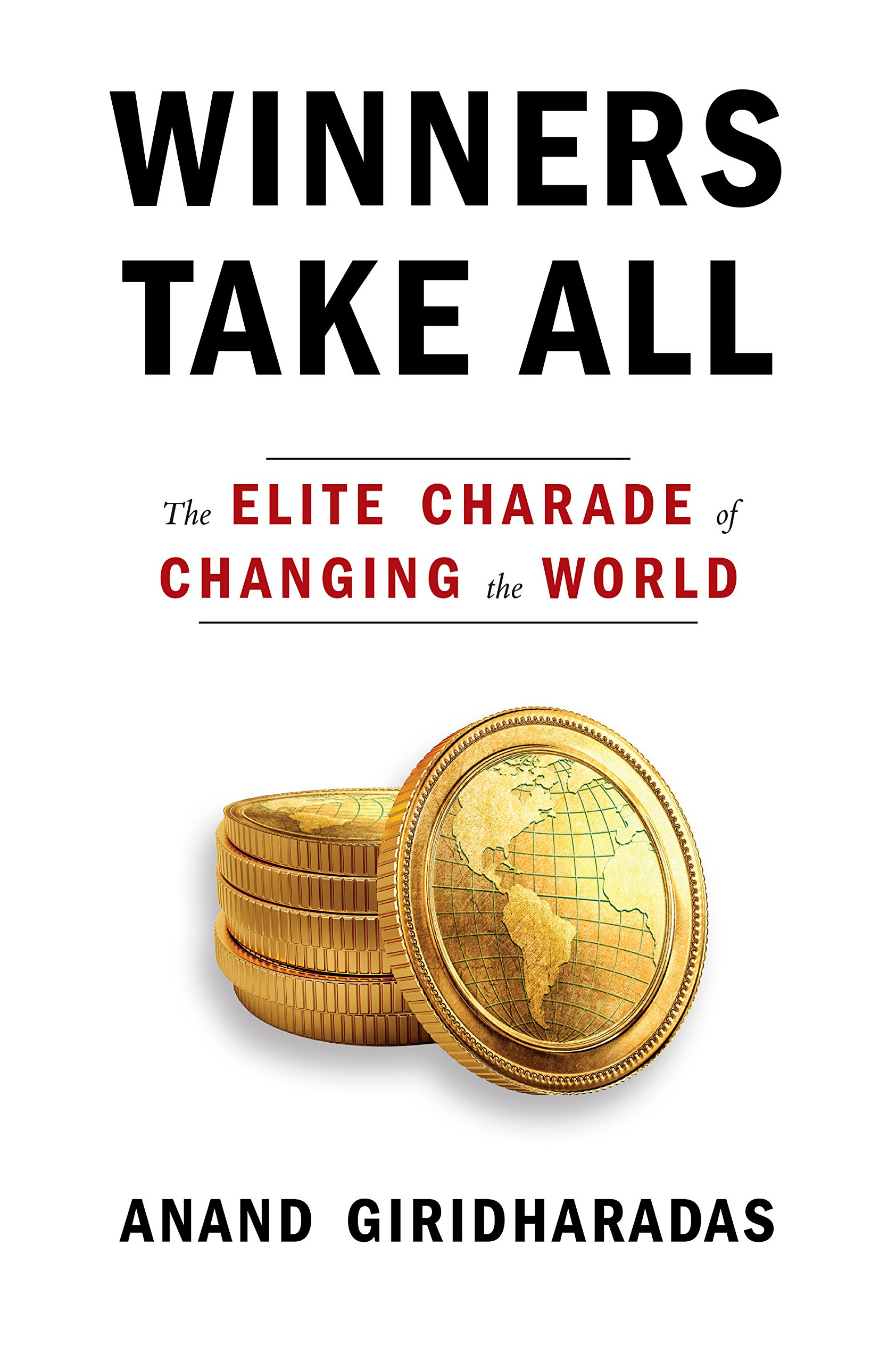
In his new book, Winners Take All: The Elite Charade of Changing the World, Anand Giridharadas helps us out here.  While much of the book focuses on current trends in the philanthropic sector, Giridharadas also defines the values that have become a new kind of conventional wisdom about public policy in our now alarmingly unequal society.  Giridharadas provides the data depicting the incomes of the rest of us next to those in the top One Percent and the top .001 Percent.  He describes the kind of inequality that separates the rich and the poor but leaves the rich with all the power when it comes to framing solutions to unequal healthcare, for example, or a public education system that has, following residential trends, become increasingly segregated by economics as well as race—schools with radically unequal funding that provide radically disparate access to opportunity.  Giridharadas does not explore these social and economic challenges in themselves, nor does he suggest solutions. Instead he chooses to delineate all the ways powerful elites have assigned themselves responsibility for solving the problems—and to describe the injustice that follows when the Continue reading: New Book Defines Neoliberalism, Challenges Elite Charade of Changing the World | janresseger

Thursday, September 6, 2018

Teacher Kim Cook on Andrew Gillum & saving Florida public education | The Edvocate Blog

Teacher Kim Cook on Andrew Gillum & saving Florida public education | The Edvocate Blog

Teacher Kim Cook on Andrew Gillum & saving Florida public education


Florida has been under single party rule for more than 20 years. This complete lack of checks and balances has normalized an unrelenting assault on our most precious asset: public education. With each year, the destructive political intent behind the “school reform” agenda has grown bolder and more extreme. We are at a place where politicians make little attempt to hide their contempt for teachers, students, parents and districts
Alachua teacher, Kim Cook shares her views on just how important the current governors’ race and upcoming 2018 election is to Florida public education
I’ve seen some educators saying on social media that they won’t vote for Andrew Gillum. Here is my response.
For those of you who are saying you won’t vote for Gillum, please consider the following (from a teacher):
The Florida legislature and governor’s office has been Republican for 20+ years. In that 20 years, we have seen nothing but bill after bill with the sole intent of destroying public education. The vast majority of those bills have been signed into law by the governor. Here is a review of the legislation (please add anything I forget):
  1. The Republican legislature and Jeb Bush introduced the FCAT in order to track student “progress” ignoring the fact teachers are entirely capable of assessing their own students.
  2. The Republican legislature and Jeb Bush then started using FCAT results to grade schools, falsely equating low socioeconomic schools with “bad teaching.”
  3. The Republican legislature and Jeb Bush linked passing the third grade FCAT with retention and the 10th grade FCAT with high school graduation–despite research that clearly demonstrated this would be detrimental to students and communities.
  4. The Republican legislature and Jeb Bush linked school grades to money–awarding “A” schools with Continue Reading: Teacher Kim Cook on Andrew Gillum & saving Florida public education | The Edvocate Blog


The teacher pay penalty has hit a new high: Trends in the teacher wage and compensation gaps through 2017 | Economic Policy Institute

The teacher pay penalty has hit a new high: Trends in the teacher wage and compensation gaps through 2017 | Economic Policy Institute

The teacher pay penalty has hit a new high

Trends in the teacher wage and compensation gaps through 2017

Image result for The teacher pay penalty has hit a new high

Summary and key findings

Teacher strikes in West Virginia, Oklahoma, Arizona, North Carolina, Kentucky, and Colorado have raised the profile of deteriorating teacher pay as a critical public policy issue. Teachers and parents are protesting cutbacks in education spending and a squeeze on teacher pay that persist well into the economic recovery from the Great Recession. These spending cuts are not the result of weak state economies. Rather, state legislatures have enacted them to finance tax cuts for the wealthy and corporations. This paper underscores the crisis in teacher pay by updating our data series on the teacher pay penalty—the percent by which public school teachers are paid less than comparable workers.
This report was produced in collaboration with Center on Wage and Employment Dynamicsat the University of California, Berkeley.
Providing teachers with a decent middle-class living commensurate with other professionals with similar education is not simply a matter of fairness. Effective teachers are the most important school-based determinant of student educational performance.1 To ensure a high-quality teaching workforce, schools must retain experienced teachers and recruit high-quality students into the profession. Pay is an important component of retention and recruitment.
As noted in an earlier paper (Allegretto and Mishel 2016), retention and recruitment is a challenge as states struggle to return to pre-recession teacher levels. Every state headed into the 2017–2018 school year with teacher shortages (Strauss 2017) and new EPI research indicates the teacher shortages persist (Garcia forthcoming).
In their study of the teacher shortage in California, Darling-Hammond et al. point to a number of factors limiting the supply of teachers, from layoffs that “left a mark on the public psyche” to frozen salaries, declining working conditions, and increased class sizes. “One sign of the impact is that only 5 percent of the students in a recent survey of college-bound students were interested in pursuing a career in education, a decrease of 16 percent between 2010 and 2014,” the authors noted (Darling-Hammond et al. 2016, iii).
To address teacher shortages, it is necessary to focus on both recruiting and retaining high-quality teachers. Many policies are needed to accomplish this goal, and providing appropriate compensation is a necessary, major tool in addressing shortages:
Even if teachers may be more motivated by altruism than some other workers, teaching must compete with other occupations for talented college and university graduates.… Teachers are more likely to quit when they work in districts with lower wages and when their salaries are low relative to alternative wage opportunities, especially in high-demand fields like math and science. (Darling-Hammond et al. 2016, 18)
As we have shown in our more than a decade and a half of work on the topic, relativeteacher pay—teacher pay compared with the pay of other career opportunities for potential and current teachers—has been eroding for over a half a century. In How Does Teacher Pay Compare (Allegretto, Corcoran, and Mishel 2004), we studied the long-term trends in teacher pay. We followed this up with The Teaching Penalty, published in 2008, and updated our findings in other papers (Allegretto, Corcoran, and Mishel 2011; Allegretto and Tojerow 2014; and Allegretto and Mishel 2016). As noted, this body of work has documented the relative erosion of teacher pay. For instance, female teachers enjoyed a wage premium in 1960, meaning they were paid more than comparably educated and experienced workers. By the early 1980s, the wage premium for female teachers became a penalty. The total compensation penalty (how much less teachers make in wages and benefits relative to comparable workers) has also increased.
Here we extend our analysis through 2017. Our examination of the teacher wage gap begins in 1979.2 Our examination of the teacher compensation penalty (combining wage and benefit data) begins in 1994, the earliest year for which teacher benefit data are available. With this update, we continue to sound the alarm regarding the long-run growth in the pay penalty. We also provide estimates of teacher wage penalties by state. Following are key highlights of the report:
The mid-1990s marks the start of a period of sharply eroding teacher pay and an escalating teacher pay penalty
  • Average weekly wages of public school teachers (adjusted for inflation) decreased $27 from 1996 to 2017, from $1,164 to $1,137 (in 2017 dollars). In contrast, weekly wages of other college graduates rose from $1,339 to $1,476 over this period.
  • For all public-sector teachers, the relative wage gap (regression-adjusted for education, experience, and other factors known to affect earnings) has grown substantially since the mid-1990s. The teacher wage penalty was 1.8 percent in 1994, grew to 4.3 percent in 1996, and reached a record 18.7 percent in 2017.
Wage penalties have grown significantly for both male and female teachers
  • The wage premium that female teachers had in the 1960s and 1970s has long been erased, replaced by a growing wage penalty. Our previous research found that female teachers earned 14.7 percent more in weekly wages than comparable female workers in 1960. This report finds that the teacher weekly wage premiumfor female teachers had fallen to 4.2 percent in 1979. And the wage premium for female teachers largely disappeared in the 1980s and 1990s, replaced by a large and growing wage penalty in the 2000s and 2010s. In 2017, female public school teachers were making 15.6 percent less in wages than comparable female workers.
  • The wage penalty for male teachers is much larger. The weekly wage penalty for male teachers was 22.1 percent in 1979 and improved to 15.1 percent in 1994, but worsened in the late 1990s into the early 2000s. In 2017, male public school teachers were making 26.8 percent less in wages than comparable male workers.
Improvements in benefits relative to professionals have not been enough to offset the growing teacher wage penalty