Latest News and Comment from Education

Monday, July 2, 2018

Randi Weingarten Has 'Hope in the Darkness.' And Also Some Fear.

Randi Weingarten Has 'Hope in the Darkness.' And Also Some Fear.

Randi Weingarten Has 'Hope in the Darkness.' And Also Some Fear.

Our nation’s teachers unions have had a whiplash of a year, from the statewide teachers’ strikes that have swept the country to last week’s Supreme Court ruling in the Janus v. AFSCME case that could severely hurttheir membership. America’s most powerful teachers’ union leader says there is much, much more to come.
For the past decade, Randi Weingarten has led the 1.7 million-member American Federation of Teachers. She has been a prominent voice in battles over public education, organized labor, and national politics. In the dark aftermath of last week’s Janus ruling, which will almost certainly drain members and money from public unions nationwide, she spoke to us about how working class interests can possibly try to survive and thrive in the age of Trump.
SplinterIs it possible that the Janus ruling was even worse than you thought it would be?
Randi Weingarten: No, I expected it. I helped write the amicus brief for both Friedrichs [a nearly identical case on which the court deadlocked] and for Janus, and I had sat through the Janus hearing, which I found to be absolutely worse than the Friedrichs hearing. Gorsuch said nothing, but Alito and Kennedy clearly had their minds made up. Alito has had his mind made up for six years—how to weaponize the First Amendment against working people. And if you think about it, if you go back and read the Citizens United case, which uses the First Amendment to give corporations unfettered right to participate in politics, and now at the same time they’ve used the First Amendment to limit the rights of workers through their unions to have any power. It is the most ideological court that we’ve seen in modern history, and ideological about corporate power and about unfettered markets.
Splinter: What do you think Anthony Kennedy’s retirement means for labor law?
Weingarten: I know Kennedy gets a good rap because of what he did on marriage and what he did on sustaining Roe v. Wade. As a lesbian who just got married this March, I appreciate that. But on economic issues,  continue reading: Randi Weingarten Has 'Hope in the Darkness.' And Also Some Fear.

Sunday, July 1, 2018

Today Is My Birthday | Diane Ravitch's blog

Today Is My Birthday | Diane Ravitch's blog

Today Is My Birthday


I mention this only because it is a milestone. Today I am 80. I can’t believe it. That is so old. I mean really old. I don’t feel 80. I am full of piss and vinegar and spoiling for a fight. I’m angry that the country I love is rolling backward to before the New Deal. I’m angry that people who don’t love America are dissing our allies and showering kisses on tyrants. I want to kick some serious A—.

The year I was born was a bad year. 1938. A very bad year. Chamberlain went to Berlin and returned with a piece of paper promising “peace in our time.” 1938 was also the year of the Evian Conference, where the nation’s of Europe and the U.S. met to consider “the Jewish Problem.” Delegates from 32 countries met and agreed that no one wanted to accept Jewish refugees. Sorry, no room for them. Germany was amazed that no one wanted “the Jews,” and they would have to devise their own solution. They did.
The next seven years were hell for the world. Many of my European relatives disappeared into Hitler’s camps and ovens. Somehow, the world came through. Many millions of people died before this scourge was eliminated.
I hope and pray we will come through this horrible era as well. A fascist in the White House, eager to define people and castigate them for their religion and ethnicity. A man so heartless that he would order border guards to rip children, babies, from their mothers’ arms, then lose them. This can’t continue. It is up to us to save our country.
Don’t send me birthday greetings. Send some money to the Network for Public Education. Anthony Cody and I co-founded it in 2013. We created it to fight the billionaires. They have the money. We have the millions of parents and teachers and graduates of America’s public schools on our side. Believe it or not, we have them on the run. We blog, and no one pays us. They have to pay out millions of dollars to set up bought-and-paid-for-blogs like The 74 and Education Post. We do it for nothing. No one pays me or Mercedes Schneider or Peter Greene or Tom Ultican or Gary Rubinstein or or Julian Vasquez Heilig or Jesse Hagopian or Nancy Bailey or Paul Thomas or dozens of other people who post about kids and teachers and schools and the corporate raiders.

If you want to, say Happy Birthday with a check to:
The Network for Public Education
PO BOX 150266
Kew Gardens, NY 11415-0266
We are a lean, mean organization with a staff of 1.5 people. We make as much noise as possible.
If you have a million, we won’t refuse it. If you have $5, that’s welcome too.
Plan to join us in Indianapolis October 20-21. We can celebrate the collapse of corporate reform together.
I’m angry about the fools in Washington, but right now I’m very happy because I know that DeVos and her wrecking crew will be footnotes in the history books. They will be forgotten, except as the bad people who fought democracy and lost. If they are remembered at all, it will be with contempt.
Courage, my friends, do the right thing, do what is best for children, do what matters most for real education, and you can look at yourself in the mirror every day and find the strength to keep fighting for what is right.
I’m staying around around to cheer you on.

Today Is My Birthday | Diane Ravitch's blog


#Union – Randi Weingarten – Medium

#Union – Randi Weingarten – Medium

#Union – Randi Weingarten

Right-wing groups have been waging war against public sector unions for many years, and, last week, a divided 5–4 conservative majority on the U.S. Supreme Court handed them a win in Janus v. AFSCME Council 31. This case, which overrules decades of precedent, was about stripping unions of resources, with the ultimate aim of eradicating labor unions altogether. Why was this such a prized goal for these right-wing groups? Because unions help level the imbalance between the rich and powerful and everyone else, and help working people get ahead.

Stamping out unions has long been the aim of many wealthy conservatives, because it’s easier for them to win elections, maintain economic dominance, and disempower workers when individuals can’t collectively improve their lives through the strength and solidarity of a union.
Janus’ supporters argued that the “fair share” feesnonmembers pay for union representation violate their First Amendment rights, even though workers have the right not to join a union or pay for any of the union’s political work. Justice Elena Kagan dismissed the majority’s opinion as “weaponizing the First Amendment,” noting that the same argument was raised — and unanimously rejected — 41 years ago in Abood v. Detroit Board of Education, a precedent the Supreme Court has upheld six times. With this reversal, public employees who benefit from a collective bargaining agreement but choose not to join the union can opt to be “free riders” and not contribute anything for the benefits they receive, while the union must still represent them.
While right-wing groups are mobilizing and spending many millions of dollars Continue reading: #Union – Randi Weingarten – Medium


Saturday, June 30, 2018

Teachers receive emails from DeVos-funded Mackinac org post-Janus

Teachers receive emails from DeVos-funded Mackinac org post-Janus

White Plains teachers flooded with emails from DeVos-funded Mackinac org post-Janus

Image result for Mackinac Center devos
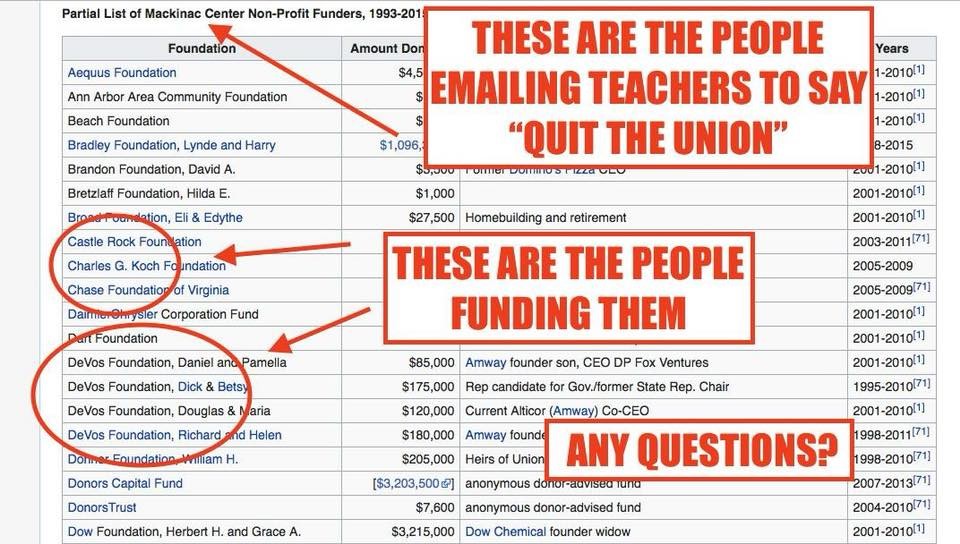
Hours after Wednesday’s U.S. Supreme Court ruling that public employees do not have to pay union fees if they don’t join their labor organization, teachers in the White Plains school district began receiving emails advising them how to opt out of the union.
The emails were sent by the Michigan-based Mackinac Center for Public Policy, a conservative nonprofit that has received hundreds of thousands of dollars in donations in recent years from the foundation started by U.S. Department of Education Secretary Betsy DeVos and her husband.
Mark Stanton, a calculus teacher at White Plains High School, grew up in Michigan and immediately recognized the Mackinac name and its connection to the DeVoses, who are also from that state.
“I was surprised by the speed at which that arrived,” Stanton said. “It’s clearly part of a very obvious, broad effort to chip away at teachers unions, public unions.”
Lindsay Killen, vice president for strategic outreach and communications at the Mackinac Center, said the purpose of the emails and other materials — as part of a $10 million campaign the organization is launching for the rest of the year on this issue — is to educate public employees on the court decision.
“The goal is that every public employee across the country will know and understand what their rights are,” Killen said. “We are reaching out to all public employees Continue reading: Teachers receive emails from DeVos-funded Mackinac org post-Janus
Image result for Mackinac Center devos


Image result for Mackinac Center devos

More States Opting To 'Robo-Grade' Student Essays By Computer : NPR

More States Opting To 'Robo-Grade' Student Essays By Computer : NPR

More States Opting To 'Robo-Grade' Student Essays By Computer


Here's a little pop quiz.
Multiple-choice tests are useful because:
A: They're cheap to score.
B: They can be scored quickly.
C: They score without human bias.
D: All of the above.
It would take a computer about a nano-second to mark "D" as the correct answer. That's easy.

But now, machines are also grading students' essays. Computers are scoring long form answers on anything from the fall of the Roman Empire, to the pros and cons of government regulations.
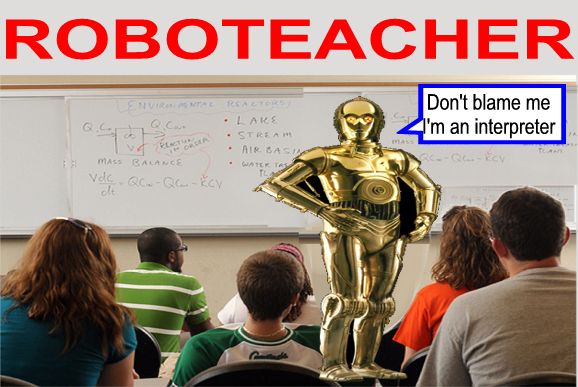
Developers of so-called "robo-graders" say they understand why many students and teachers would be skeptical of the idea. But they insist, with computers already doing jobs as complicated and as fraught as driving cars, detecting cancer, and carrying on conversations, they can certainly handle grading students' essays.
"I've been working on this now for about 25 years, and I feel that ... the time is right and it's really starting to be used now," says Peter Foltz, a research professor at the University of Colorado, Boulder. He's also vice president for research for Pearson, the company whose automated scoring program graded some 34 million student essays on state and national high-stakes tests last year. "There will always be people who don't trust it ... but we're seeing a lot more breakthroughs in areas like content understanding, and AI is now able to do things which they couldn't do really well before."
Foltz says computers "learn" what's considered good writing by analyzing essays graded by humans. Then, the automated programs score essays themselves by scanning for those same features.
"We have artificial intelligence techniques which can judge anywhere from 50 to 100 features," Foltz says. That includes not only basics like spelling and grammar, but also whether a student is on topic, the coherence or the flow of an argument, and the complexity of word choice and sentence structure. "We've done a number of studies to show that the scoring can be highly accurate," he says.
To demonstrate, he takes a not-so-stellar sample essay, rife with spelling mistakes and Continue reading: More States Opting To 'Robo-Grade' Student Essays By Computer : NPR
Image result for Robo-Grade' Student Essays
The Fraud of Computer Scoring on the Common Core Exams - Network For Public Education - https://wp.me/s3bR9v-6488 via @Network4pubEd


Private prison corporations could cash in on Trump’s immigration policy even more than you think

Private prison corporations could cash in on Trump’s immigration policy even more than you think

Private prison corporations could cash in on Trump’s immigration policy even more than you think

Image result for trump caged kids

How Private Prisons Take Tax Dollars Away from Fixing Our Criminal Justice System – In the Public Interest - https://www.inthepublicinterest.org/?p=6994
Buried under all the bad news this week was a glimmer of progress. No, not Alexandria Ocasio-Cortez’s win in New York’s 14th Congressional District — that’s way more than a glimmer. I’m talking about the order from a California judge to reunite separated undocumented immigrant families within 30 days.
Who knows whether and how the Trump administration will implement the order? But one thing’s for sure: if Trump continues to criminalize immigration, the need for detention space will continue to grow.
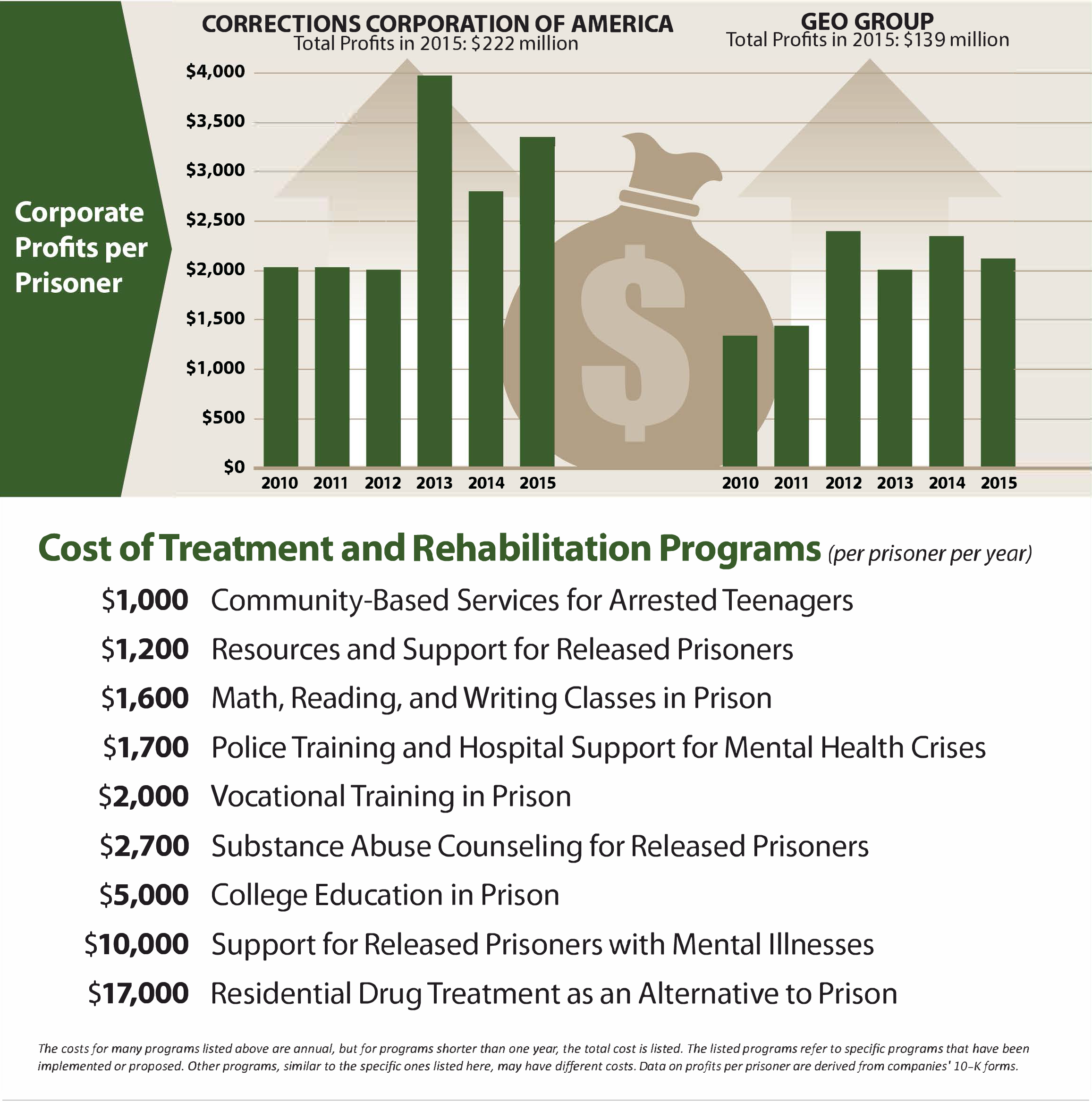
That’s music to the ears of the private prison industry, particularly CoreCivic and GEO Group, two publicly traded corporations that currently detain over two-thirds of undocumented immigrants. It’s music to their investors too — both have seen their stocks skyrocket in recent weeks.
Because this is what they’ve been waiting for. As we document in a new report, CoreCivic and GEO Group both have been getting in the game of offering loans to governments to build jails, prisons, and detention centers. Both have turned private equity financing, also known as “public-private partnerships,” into a central growth strategy after they became Real Estate Investment Trusts (REITs) in 2013. In other words, private prison corporations want to be landlords.
Why? Because REIT status allows them to dodge corporate-level taxation. Last year alone, GEO Group avoided almost $44 million in taxes.
So here comes the federal government desperate for more cages to lock up undocumented immigrants. The Department of Homeland Security is considering adding space for 15,000 more adults and children in family detention centers. The agency already hired GEO Group in 2017 to finance, design, build, operate, and maintain a new 1,000-bed adult detention facility in Texas, which is expected to be up and running later this year.
All of this has the corporations salivating. A couple weeks ago, CoreCivic CEO Damon Hininger told his company’s investors, this is “the most robust kind of sales environment we’ve seen in probably 10 years, not only on the federal side with the dynamics with ICE and [U.S.] Marshals, but also with these activities on the state side.”
GEO Group and CoreCivic now stand more ready than ever to, as they describe it, “partner” with the Trump administration and “understand and Continue reading: Private prison corporations could cash in on Trump’s immigration policy even more than you think


ITPI-ProgramsNotProfits-ProfitsFactsheet-SMALL

Friday, June 29, 2018

Bill Gates spent hundreds of millions of dollars to improve teaching. New report says it was a bust. - The Washington Post

Bill Gates spent hundreds of millions of dollars to improve teaching. New report says it was a bust. - The Washington Post

Bill Gates spent hundreds of millions of dollars to improve teaching. New report says it was a bust.


A major new report concludes that a $575-million project partly underwritten by the Gates Foundation that used student test scores to evaluate teachers failed to achieve its goals of improving student achievement — as in, it didn’t work.
Put this in the “they-were-warned-but-didn’t-listen” category.
The six-year project began in 2009 when the foundation gave millions of dollars to three public school districts — Hillsborough County in Florida (the first to start the work), Memphis and Pittsburgh. The districts supplied matching funds. Four charter management organizations also were involved — Alliance College-Ready Public Schools, Aspire Public Schools, Green Dot Public Schools and Partnerships to Uplift Communities Schools.
The Bill & Melinda Gates Foundation pumped nearly $215 million into the project while the partnering school organizations supplied their own money, for a total cost of $575 million. The aim was to create teacher evaluation systems that depended on student standardized test scores and observations by “peer evaluators.” These systems, it was conjectured, could identify the teachers who were most effective in improving student academic performance.
This, in turn, would help school leaders staff classrooms with the most effective teachers and would lead more low-income minority students to have the best teachers — or so the thinking went. Schools also agreed to boost professional development for teachers, give bonuses to educators evaluated as effective and change their recruitment process.
The 526-page report titled “Improving Teacher Effectiveness: Final Report,” conducted by the Rand Corp. actually says:
Overall, the initiative did not achieve its stated goals for students, particularly LIM [low-income minority] students. By the end of 2014—2015, student outcomes were not dramatically better than outcomes in similar sites that did not participate in the IP [Intensive Partnerships] initiative. Furthermore, in the sites where these analyses could be conducted, we did not find improvement in the effectiveness of newly hired teachers relative to experienced teachers; we found very few  Continue reading: 
Bill Gates spent hundreds of millions of dollars to improve teaching. New report says it was a bust. - The Washington Post


Wednesday, June 27, 2018

Against Philanthropy - The Atlantic

Against Philanthropy - The Atlantic

Against Big Philanthropy
Philanthropy sounds nice, but it’s still a tax-sheltered way that plutocrats exercise power, says Stanford's Rob Reich.


 The world’s tech titans are amassing some of the biggest fortunes ever created. Some, like Mark Zuckerberg and Bill Gates, are giving most of it away. While there have been some dissenters, the general reaction to this kind of philanthropy has been positive. Bill Gates has the highest net favorability of any major political figure not named Colin Powell; he’s seen as warm andcompetent.
But Stanford professor Rob Reich, who directs the university’s Center for Ethics in Society, explores an argument against philanthropy  in a forthcoming book, Just Giving: Why Philanthropy Is Failing Democracy and How It Can Do Better. It can be summarized in a sentence:
“Big Philanthropy is definitionally a plutocratic voice in our democracy,” Reich told me, “an exercise of power by the wealthy that is unaccountable, non-transparent, donor-directed, perpetual, and tax-subsidized.”

This was not previously a minority position. If you look back to the origins of these massive foundations in the Gilded Age fortunes of Andrew Carnegie and John D. Rockefeller, their creation was massively controversial, Reich said, and for good reason.
“100 years ago, there was enormous skepticism that creating a philanthropic entity was either a way to cleanse your hands of the dirty way you’d made your money or, more interestingly, that it was welcome from the standpoint of democracy,” Reich told me at the Aspen Ideas Festival, which is co-hosted by the Aspen Institute and The Atlantic. “Because big philanthropy is an exercise of power, and in a democracy, any form of concentrated power deserves scrutiny, not gratitude.”Continue reading: Against Philanthropy - The Atlantic


Christian Non-Profit Faces Scrutiny Over Government Foster Care Contract for Separated Children

Christian Non-Profit Faces Scrutiny Over Government Foster Care Contract for Separated Children

Christian Non-Profit Faces Scrutiny Over Government Foster Care Contract for Separated Children

Bethany Christian Services, which has links to the family of Education Secretary Betsy DeVos, has fostered out at least 81 children taken from their parents at the U.S. border.


The Trump administration’s “zero tolerance” immigration policy prompted widespread public outrage in the spring and summer of 2018, and the separation of thousands of children from their parents at the United States’ border with Mexico has given rise to a potential future crisis as lawyers and advocates express grave concerns that many separated families may never be reunited. 
Among the approaches taken by the federal government has been to engage foster care providers throughout the country to house children whose parents were forced or coerced into giving them up at the international border.
At the end of June 2018, one foster care provider in particular came under intense scrutiny, and was the subject of speculation over its operations, as well as its links to the Trump administration. On 24 June, the left-wing Facebook page “The Other 98%” posted a widely-shared meme about Bethany Christian Services: 
Bethany Christian Services, an adoption center with financial ties to [Education Secretary] Betsy DeVos, has taken 81 immigrant children who were forcibly separated from their parents at the border. Most have had no contact with their families. They’re charging $700 per child per night. This isn’t foster care, this is state-sponsored kidnapping. 
There were more detailed claims about the links between the DeVos family and Bethany, with The Other 98% writing: “Betsy DeVos donated $300,000 to the group and her husband’s cousin Brian DeVos was a Vice President.”
The links between the extended DeVos family and Bethany are undeniable. Tax filings archived by ProPublica show that between 2001 and 2015, the Dick and Betsy DeVos Foundation (the philanthropic organization run by DeVos and her husband) gave $343,000 in grants to Bethany Christian Services. 
Between 2012 and 2015, Bethany received $750,000 in grants from the Richard and Helen DeVos Foundation, which is run by the Education Secretary’s father-in-law, the billionaire founder of Amway Richard DeVos, and his wife Helen. 
Furthermore, Brian DeVos — a cousin of Betsy DeVos’s husband Dick — was the Senior Vice President for Child and Family Services at Bethany as recently as 2015, and Maria DeVos — who is married to Dick DeVos’s brother Doug — has served on the board of Bethany. 
The DeVos family has for years been a wealthy and influential force in Christian conservatism and Republican politics in their home state of Michigan and beyond. While Betsy and Dick DeVos did oversee the donation of $343,000 in grants to Bethany between 2001 and 2015, it’s worth noting that they also donated millions of dollars to dozens of other recipients, many of them Christian-oriented educational and childcare organizations. 
Bethany Christian Services is a prominent non-profit provider of adoption and foster services, as well Continue reading: Christian Non-Profit Faces Scrutiny Over Government Foster Care Contract for Separated Children

The 2018 Brown Center Report on American Education

The 2018 Brown Center Report on American Education

The 2018 Brown Center Report on American Education


This year’s Brown Center Report (BCR) on American Education is the 17th issue overall since its beginning in 2000. The 2018 edition focuses on the state of social studies and civics education in U.S. schools. Like previous editions, which were authored by Tom Loveless, the report comprises three studies: The first chapter examines student performance on the National Assessment of Educational Progress; the second examines state policy related to civics education; and the third provides a look at the nation’s social studies teachers.

PROLOGUE

American schools find themselves immersed in politics in 2018. A horrific shooting at Marjory Stoneman Douglas High School in Florida sparked a wave of student demonstrations, culminating in hundreds of thousands of students descending on Washington, D.C., for the March for Our Lives. A controversial president and his controversial secretary of education have aroused passions on issues including the deportation of young immigrants, civil rights protections for transgender children, and schools’ handling of bullying and student discipline. Meanwhile, unrest among teachers has yielded rallies and strikes across the country.
This, in other words, is a time of heightened political awareness and activity in schools. It is also a time of heightened concern about the state of U.S. politics and democracy. The 2016 election drew attention to the increasing polarization and divisiveness of our politics, and to the susceptibility of American voters’ beliefs to false or misleading information. These concerns have raised important questions about K-12 education in America. Are schools equipping students with the tools to become engaged, informed, and compassionate citizens? Are they equipping some students, or groups of students, better than others?


The 2018 Brown Center Report on American Education