Trump's executive order
-
The Supreme Court ruled in the case brought by state attorneys general
challenging Trump’s executive order on elections. In this case, the
government ...
Toward Wisdom Rather Than Mere Education
-
It's "fire season" here on the West Coast of the US. Currently, there are
32 active "large" fires burning, not to mention the dozens of smaller fires
or ...
McMahon Doesn't Understand Education
-
McMahon's particular brand of passionless functionary was on display Sunday
morning for a dozen minutes with Dana Bash. The interview kicked around a
few t...
AI Bogus EdTech Scheme
-
By Thomas Ultican 8/24/2026 Big technology oligarchs are pushing their
dangerous not-ready-for-prime-time artificial intelligence (AI) products
into Americ...
This and That, August 24, 2026
-
I meant to post this sooner - this event is tomorrow night, the 25th.
I am hearing that Governor Bob Ferguson and State Superintendent Chris
Reykdal ...
Spider-Man Lands a Punch: Fist to Cheese
-
The classic line from the Spider-Man show was, “Lookout! Here comes the
Spider-Man.” And so, Spider-Man punched a white supremacist. Fist to
cheese. For so...
MNPS and Not-So-Secret Secrets
-
Nashville education blogger TC Weber highlights what some say are
significant challenges around student discipline in MNPS. It is one of the
worst-kept sec...
No Compromise: End the War Now!
-
At this hour, solidarity begins with a clear demand: the United States and
Israel must end their illegal war, and they must retreat.
We Love Billionaires!
-
As a middle school teacher, I spent a fair amount of time talking with
kids—mostly 8th graders, going into high school—about what you might call
their life...
What Is the Far Left ?
-
What is the Far Left ?
The growing visibility of Democratic Socialists of America (DSA) and
victories by some DSA-backed candidates has triggered an upsu...
SPI Welcomes Salinas Students Back to Campus
-
California State Superintendent of Public Instruction Tony Thurmond
welcomes Salinas students back to campus and celebrates community schools.
Under the Lights, the Truth Is Harder to Hide
-
“The problem is that progress stopped making sense. More and more of us
looked up one day and realized that the emperor had no clothes.” ― Anna
Lowenhaupt ...
SQ 844: How is this better?
-
In plain terms, the new language gives the Legislature the authority to
establish both the amount and methodology for distributing ad valorem
reimbursement...
-
It's time to Revise Louisiana's
School Curriculum
Present standards do not allow for individual differences and life goals
For the last 15 years Louisiana'...
Read This If You Want to Learn to Read
-
I want you to experience how a skilled teacher makes certain that her first
graders learn to read. Imagine that you’re sitting in the back of a
classroom...
What’s the Pattern?
-
The Pattern. Is it the thing that holds our raises down? Yup. What
precisely is it? Activists and advocates know it is a problem. That’s good.
They are rig...
Time to change our Nation’s Diaper
-
It’s time to change our nation’s diaper. Our national identity now reeks
due to our inability to clean out the mess caused by the Orange Turd.
Corruption i...
GLP-1 Meds for Kids? Some Info.
-
Like many consumers of television and social media, I have been bombarded
with ads for GLP-1s (short for glucagon-like peptide-1). The ads are
everywhere. ...
By One Dishonest Measure
-
A loaded question that education reformers like to ponder is: Exactly how
many students in the boroughs of New York City are trapped in failing
schools? In...
1776
-
__________
“The fate of unborn millions will now depend, under God, on the courage and
conduct of this army…. We have, therefore, resolved to conquer...
May’s Parent Engagement Resources
-
San Diego Unified Created a System to ‘Empower’ Parents. It Unraveled is
from The Voice of San Diego. Why Those Disengaged Parents in Your School
Deserve a...
Reflections on America, the world, and life
-
I acknowledge that I rarely post here anymore. Folks should remember that I
am approaching my 80th birthday in less than 9 weeks, I am still teaching
ful...
Shutting Down The Site
-
Ten years ago, I ran for a seat on the LAUSD School Board of Education with
the goal to *Change the LAUSD*.
I am proud of the campaign we ran. We achieve...
Blogoversary #19 — Time to Move on
-
Times have changed. I had a nice long run here, but let’s face it, it ended
a while ago. So I’ve moved. I’m not writing much any more, but when I do it
wil...
Il Papa è Morto
-
Francis brought a distinct pastoral outlook to his papacy. A simple man, he
lived in a small apartment in the guesthouse. He sought to make the church
acce...
Mike Shulman the ARISE UFT Judenrat
-
I was surprised to learn that Mike Shulman has aligned himself with ARISE.
I previously supported him, advocating that the Castle Doctrine could have
bee...
AIN’T IT AWFUL
-
As the terrible feelings of dread and angst spread across the world the
great majority of the American people feel powerless before the onslaught
of those ...
Vote NO on the UFT Contract. Here is Why:
-
The best reason to vote no on this contract is this: UFT Unity* lied* to us
in 2018. They misrepresented that contract. It was predicated on deals we
wer...
Testimony to the CPS Truancy Task Force
-
I prepared testimony for one of two public hearings held by the Chicago
Public Schools Truancy Task Force, a body mandated by state legislation.
The meetin...
There Is A Teacher Shortage.Not.
-
THERE IS A TEACHER SHORTAGE. And just to be sure you understand, it’s not
that teachers don’t want to teach. It’s not that there aren’t enough
teachers cer...
Book Banning Turns to Dick and Jane
-
Breaking News: Dateline February 4, 2022 - Parents in Dimwitty, Alabama
have asked the Dimwitty Board of Education to ban the children's primer *Fun
with...
Have You Heard Has a New Website
-
TweetHave You Heard has a new website. Visit us at
www.haveyouheardpodcast.com to find our latest episodes and our entire
archive. And be sure to check out...
Follow me at Substack
-
I've moved. Follow me at Substack
I'm now posting regularly at Substack. You can subscribe for free to my new
Edu/Pol blog at michaelklonsky.substack.com
...
I’ve moved.
-
I’m on Substack now. You can continue to receive periodic posts for free.
Or you can read every post and comment for $5 a month, $60 a year.
fredklonsky.su...
Aspiring Teachers Get New Help Paying For College
-
[image: colorful classroom pattern]
*; Credit: shuoshu/Getty Images*
Cory Turner | NPR
New rules kick in today that will help aspiring teachers pay for c...
Tips Akses Situs Judi Qq Tanpa Perlu Takut Nawala
-
Kegiatan berjudi slot melalui situs judi qq online, sekarang sudah
dilakukan oleh banyak penjudi Indonesia. Tentu, Kamu yang sedang membaca
artikel ini a...
The Threat of Integration
-
I have lived in the same house in the Miracle Mile section of Los Angeles
for over 30 years, where up until now I have had little or no interaction
with th...
We fight for a democracy worthy of us all!
-
The nation stands at a crossroads, said NEA President Lily Eskelsen GarcÃa
in her final keynote address to the 2020 NEA Representative Assembly and
it’s up...
The Passing Of Chaz 1951-2020 Age 69
-
I am the son of Chaz and like to inform you that he passed away this
afternoon from the COVID virus. My father passed in peace beside his loved
ones. We ar...
The Fight For Our Children
-
*The number of suicides among people ages 10 to 24 nationally increased by
56 percent between 2007 and 2017, according to a new federal report showing
the ...
Read to Self: Just a Kid and a Book.
-
Date: Monday, January 5, 2020 Place: My classroom Student: Mrs.Mims, could
we start doing Read to Self again because I got this great book for
Christmas an...
Reminiscences
-
I just finished dumping the rest of my lesson plans. I guess I held on to
the calculus ones for so long because I spent so much time working on them
an...
Just Asking for some Teachers I know.
-
Recently Wisconsin Governor Tony Evers stated, We must … recognize that
part of supporting our kids in the classroom means supporting the educators
who t...
Cara Menang Bermain Judi Bola Online
-
Bermain judi bola online tentu saja memiliki kesenangannya tersendiri baik
itu mendapatkan keuntungan maupun ketika menantikan hasil skor pada sebuah
perta...
A Critique of Standards-Based Grading
-
It first happened to me about ten years ago. I was beginning my third year
of teaching in a new school in Washington, DC. Social studies teachers were
si...
Reduced time for testing? Not so fast.
-
NYSED and Commish Elia continue to say that the NYS Assessments are of
reasonable length, I completely disagree.
Here is what NYSED states are average expe...
The World According to Michelle Rhee
-
The men behind the curtain fashioning the brave new world of corporate run
education in America! Michelle Rhee is the founder of StudentsFirst, The
New T...
Whose Opinions Matter in Education World?
-
It's hard to identify education heroes and sheroes. And perhaps even harder
to pinpoint just whose work is slanted, paid-for and dishonest.
New Local Businesses in Sacramento
-
Starting a new local business in Sacramento is a monumental task, but can
be accomplished with footwork, perseverance and knowledge. One must learn
the loc...
Lesson Plan: Rhyme and Rhythm in Poetry
-
I’ve started a recent unit on poetry with my class. I’m not a poet, and I’m
not a poetry fan (I don’t hate it, but I’m a prose gal), so this makes it
harde...
The Apotheosis of Betsy DeVos
-
Betsy Devos has drawn few headlines in recent months, and that is a good
thing for the Secretary of Education. Her tenure began with Vice President
Mike P...
Education Is a Civic Question
-
In their final post to end Bridging Differences' decade-long run, Deborah
Meier and Harry Boyte urge readers to put the energy, talents, wisdom, and
hard w...
Site News: New Home for Education News & Commentary
-
Quick! Get over there! The daily education news roundup and education
commentaries that you're probably looking for are now being published over
at The Gra...
Should We Be Grateful?
-
In an odd turn of events, and with little explanation, Michigan Governor
Rick Snyder has decided to return the state’s School Reform Office back to
the Dep...
An Open Letter to NC Lawmakers
-
An Open Letter to NC State Lawmakers and NC State Superintendent Mark
Johnson: I am a NC native, voter, and public school teacher. I am
addressing you all ...
The Secret to Fixing Schools (My Next Bestseller)
-
The Secret to Fixing Schools (My next bestseller) Prologue I just finished
watching a fascinating documentary on Netflix entitled, “The Secret”. The
film p...
Farewell, Sleep
-
Today is the official last day of my spring break. I've done a scientific
survey: My natural bedtime is 2 AM, and my natural wake up time is 9:41
AM. Tom...
REPORT: States With the Best and Worst Schools
-
States With the Best (and Worst)Schools
By *Evan Comen, Michael B. Sauter, Samuel Stebbins and Thomas C. Frohlich*
January 20, 2017- http://247wallst.com
...
Test Refusal = People Power
-
In recent months, social media has been ablaze with talk of regular folk
taking action to resist the Trump agenda. Protests are a daily occurrence,
and ev...
Random Musings and Observations. . . .
-
I’ve been gone a while from the blogging scene. Some of my more regular
readers no doubt noticed but did not hassle me about it. Thank you for
that. Sinc...
AB 934: A LEGISLATIVE FIX FOR VERGARA?
-
By Michael Stratford | in the Politco Morning Education Report | via email
05/24/2016 10:00 AM EDT :: Two national education groups are backing a
Califor...
MY NEW BLOG
-
My new blog will consist of fictitious headlines, meant to be a blend of
humor and satire. I apologize ahead of time if any other satirical site has
simila...
Thank you
-
Dear Readers,
Thank you for visiting *The Perimeter Primate*. This blog is being retired
for the time being. Although I no longer post here, I do still s...
I am Retiring
-
I have some news: I am retiring from the PBS NewsHour and Learning Matters.
[[ This is a content summary only. Visit my website for full links, other
conte...
New Beginnings: Kickstarter and EdWeek Teacher
-
Greetings to InterACT readers one and all! If you’ve been following posts
here recently you might recall that I’m moving my blogging activity to
other loca...
Adelaide L. Sanford Charter School
-
*“With Adelaide L. Sanford Charter School closing, Newark families must
move on.”* The Star-Ledger (NJ), 6/25/2013
NEWARK — Bobby and Troy Shanks saw the...
School attendance: A building block of student achievement
Although most schools have daily attendance rates of well over 90 percent, according to the newly released U.S. Department of Education Civil Rights Data Collection (CRDC), about 8 million students in the United States missed more than three weeks of school during the 2015–16 school year (CRDC 2015–16). This represents an increase over the 6.8 million students who missed more than three weeks of school during the 2013–14 school year. These students were chronically absent.
The building block that must be in place to meet student achievement and high school graduation goals is attendance. Physically being present in school is one of the most basic conditions for a student’s success – if students are not in school, they are not learning what is being taught and could be falling behind in earning the course credits needed to graduate.
In a new video, I use building blocks to illustrate the ways in which poor attendance impacts both chronically absent students and their classmates with better attendance.
What should schools focus on to improve student outcomes?
As background, in the past two decades of school accountability, policies have directed schools to improve on key indicators of student success. No Child Left Behind (NCLB; 2002) required schools to improve student achievement on reading and math as well as increase high school graduation rates. The Every Student Succeeds Act (ESSA; 2015) changed the national structure of NCLB by empowering states to design and implement their own accountability systems. In addition to test-based academic metrics, and, for high schools, graduation rates, ESSA requires states to hold schools accountable for at least one measure of “school quality or student success (SQSS).”
In a 2016 Hamilton Project strategy paper, we recommended that states choose to hold schools accountable for reducing rates of chronic absenteeism as a state’s SQSS metric under ESSA. Since then, 36 states, the District of Columbia, and Puerto Rico have chosen to hold schools accountable for reducing rates of chronic absenteeism through their state-led accountability plans.School attendance: A building block of student achievement:
Most Republicans and Democrats agree that American teachers need a raise
And a majority of Americans are even willing to pay more taxes for it.
Teachers across the United States who are protesting years of school funding cuts have the American public on their side.
Most Americans agree that teachers are underpaid, and slightly more than half of adults support striking as astrategy to change that, according to a new AP-NORC poll. Half of Americans also said they are willing to pay more taxes to fund schools and pay teachers more.
Support for raising teachers’ salaries cuts across party lines. Nearly 90 percent of Democrats, 78 percent of independents, and 66 percent of Republicans think teachers don’t get paid enough.
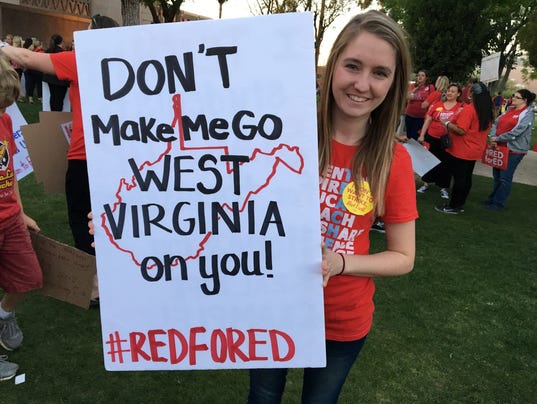
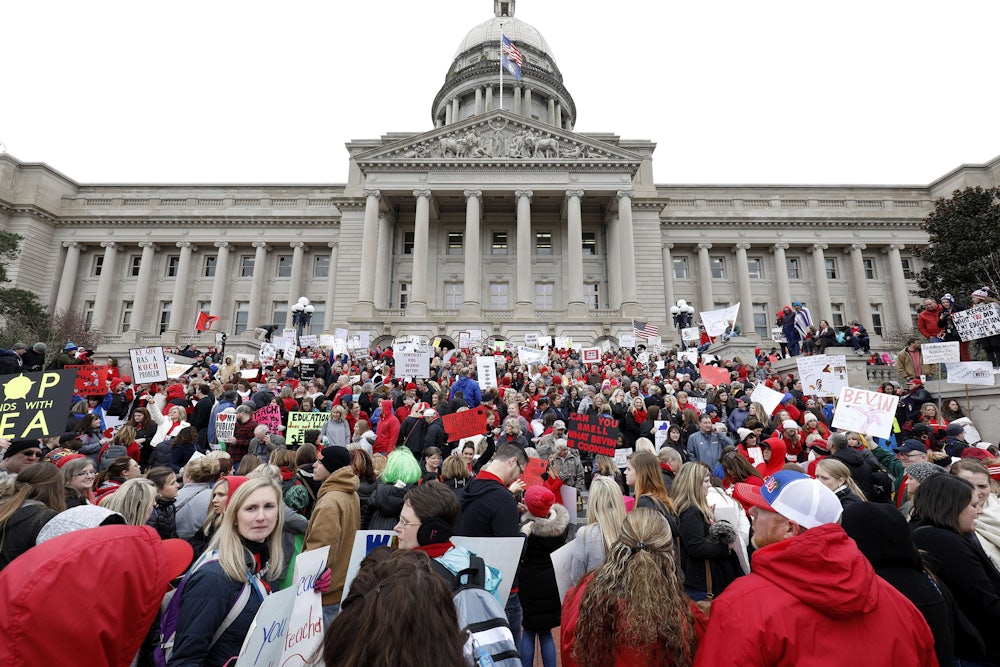
The survey of 1,140 adults, conducted April 11 through 16, gauged public opinion on the wave of teachers strikes sweeping through the nation. Teachers in West Virginia, Oklahoma, and Kentucky all walked out of class in recent months to pressure state lawmakers to spend more money on schools or teachers (or both). Their success has inspired teachers in Arizona and Colorado to prepare their own work stoppage.
The AP-NORC poll shows that these teachers have a lot of support, though not everyone agrees with their strategy. About 78 percent of adults surveyed said schools don’t pay teachers enough, and 52 percent said they support educators who are going on strike to demand higher salaries. (25 percent disapprove of strikes.) Adults who knew about the recent teacher walkouts were more likely to support the idea of teachers striking — 80 percent of them did.
On Thursday, a majority of teachers Arizona plan to go on strike, despite Gov. Doug Ducey’s promise to give them a 20 percent pay raise to avert a shutdown. The teachers group, Arizona Educators United, said they want to see a bill passed, and that it should include more school funding and raises for all school staff.
Teachers in Arizona are among the lowest-paid in the country, and lawmakers have cut education spending per studentmore than any other state since 2008 — by 36.5 percent. Meanwhile, state lawmakers have been on a tax-cutting spree, slashing taxes on a host of businesses in 2016, from insurance companies to charter plane operators. Last year, Ducey signed a bill with more tax breaks for businesses as well as a 1 percent raise for teachers.
Charter schools are booming in California. Here’s where they are growing fastest
California’s charter school enrollment continues to skyrocket, growing by more than 25,000 students during each of the past 10 years.
Almost 630,000 students attended California public charter schools at the start of this school year — about one in every 10 students, according to new data from the California Department of Education. California charter school enrollment has increased 150 percent in the last 10 years.
Charter schools operate independently from public school districts. Proponents of charter schools say this freedom benefits teachers and students by encouraging innovation. Opponents say they take away funds from traditional public schools, increasing educational disparities.
The fight between charter schools and traditional schools is a major issue in California politics. Charter school proponents, for instance, are pouring millions into the gubernatorial campaign of former Los Angeles Mayor Antonio Villaraigosa.
During the past five years, charter school enrollment grew by at least 30 percent in 26 California counties. Among urban counties, growth was fastest in Contra Costa, San Francisco and Los Angeles counties.
Charter school enrollment grew by 34 percent in Sacramento County. Enrollment in Placer and Yolo counties grew by about 27 percent. El Dorado County’s charter school enrollment declined because a statewide charter, Aspire, moved the charter for six schools from there to other counties.
More than one in 10 public school students attends a charter school in 24 California counties. Sonoma, San Diego and Los Angeles have the greatest proportion of charter school students among urban counties.
About 13 percent of public school students in Sacramento County attend charter schools. In neighboring Placer County, that number is 14 percent.
Betsy DeVos Is Making It Easier for Schools to Send Black Kids—Like This 13-Year-Old Girl—to Jail
“They want to give this harsh punishment for something that we could’ve easily resolved at the schoolhouse.”
Beside a highway in Bryan, Texas, tucked between a motorcycle bar and the county jail, stands a low-slung, sprawling complex with tinted windows, sandstone walls, and barbed wire lining parts of its roof. A roadside sign identifies it as the Brazos County Juvenile Justice Center.
One Friday afternoon last October, after an incident at nearby Arthur L. Davila Middle School, a police officer arrested 13-year-old Trah’Vaeziah Jackson and brought her to the juvenile detention facility. She cried as employees patted her down, cut off her hair extensions, and took her photo and fingerprints. She was served dinner—chicken nuggets, mashed potatoes, and an apple in a styrofoam box with a carton of milk—but had no appetite.
In the shower room, guards applied thick anti-lice shampoo to Trah’Vaeziah’s hair. As she washed and combed it, clumps fell out. Afterwards, she reluctantly changed from her school clothes, a T-shirt and jeans, into the detention uniform, an orange shirt with matching shorts. Then she was locked in her cell, which contained a sink, a toilet, and, instead of a bed, a stuffed blue mat atop a brick base. High on the wall was a sliver of a window, but she wasn’t tall enough to see outside.
Only after 8pm was she permitted a phone call. She called her mother, and sobbed into the receiver. How could this accident have turned into a jail sentence?
Three decades ago, schools across the country began bolstering discipline to deter juvenile crime. Zero-tolerance policies were introduced, school law enforcement budgets swelled and suspensions, expulsions, and student arrests multiplied.
These punishments, though, are applied unequally. Across the country, hundreds of thousands of students of color, like Trah’Vaeziah, bear the brunt. Black students are almost four times as likely to receive an out-of-school suspension and twice as likelyto be arrested as their white peers, according to federal data. The pattern starts early: Even black preschool students are more than three times as likely as their white peers to be suspended from school.
Whistleblower: ECOT used software to get more state money
COLUMBUS: Education regulators are reviewing a whistleblower’s claim that Ohio’s then-largest online charter school intentionally inflated attendance figures tied to its state funding using software it purchased after previous allegations of attendance inflation, the Associated Press has learned.
A former technology employee of the now-shuttered Electronic Classroom for Tomorrow said he told the Ohio Department of Education last year that school officials ordered staff to manipulate student data with software obtained following the state’s demand that it return $60 million in overpayments for the 2015-2016 school year.
The employee spoke to the AP on condition of anonymity for fear of professional repercussions for speaking out. His concerns were first raised in an Aug. 3 email to the state a month before it released its 2017 attendance review of ECOT.
The state challenged ECOT over how it claimed student time using the new software, called ActivTrak, after finding that it duplicated learning hours, according to Education Department spokeswoman Brittany Halpin.
Neil Clark, ECOT’s lobbyist and spokesman throughout last year’s review, dismissed the whistleblower’s allegations.
“I think most of this is made-up, ridiculous attempts to abuse a corpse,” he said. Clark said he no longer works for the school that abruptly closed in January.
Marion Little, the school’s attorney, said Monday that he was unaware of the man’s claims or that the Education Department had interviewed him. Messages were left with other school leaders seeking comment.
The whistleblower email and other department records, obtained by the AP through a public records request, show state officials waited until December to meet with the man about his concerns with the ActivTrak software.
Halpin said, “We appreciated hearing from this individual and will be taking into consideration the information for ECOT’s [next attendance] review.” That review will take place this summer.
In an interview, the whistleblower said that before he left the school last July he was in meetings where officials ordered staff to manipulate student data to reach desired outcomes.
Around seven years ago, I had a standard wisecrack to explain the standing of workers in the world’s two dominant economies: “China has strikes but no unions; America has unions but no strikes.”
Seven years later, it’s clear we’re becoming more like China every day.
The remarkable upsurge of teachers in Republic-run, largely non-union states that has swept through West Virginia and is now sweeping through Oklahoma and Kentucky, and is poised to descend on Arizona, has returned the mass strike to the United States after decades of relegation to the history books. In each of these states, the teachers unions have something between limited and no legal rights to bargain collectively, and, correspondingly, represent just a hard core of members whose commitment to their union is more a matter of belief than of anticipated reward. And yet, able to mobilize even in non-union terrains through the use of social media, and outraged at their states’ continued opposition to funding public education, the teachers have leapt beyond law and formal organization to press their case.
Union leaders and members have played a key role in these actions, which have ballooned into statewide strikes. But so have rank-and-file teachers who haven’t been members, some of whom established the Facebook pages that they and their co-workers have used to develop their demands, organize their actions, and mobilize their peers. The fact that West Virginia’s teachers refused to go back to work after a preliminary deal was struck, persuading their leaders and colleagues to stay out until the deal was sealed, and then won their demands has clearly prompted their fellow teachers in other states to turn their righteous indignation at their state government’s decade-long starvation of public education into solidaristic militancy.
These actions signal a sea change in more than just labor relations.
These actions signal a sea change in more than just labor relations. They are of a piece with the revolt of the parents in Kansas, where the regressive tax cuts of the Republican governor and legislature had led to nearly a decade of inadequate funding of the state’s schools. Over the past 18 months, the good Republican parents of Kansas ousted so many trickle-down right-wingers in the legislature that the new legislature, overcoming the governor’s vetoes, raised taxes to restore school funding.
Indeed, what the Republican governors and legislators of Oklahoma, Kentucky, and Arizona are now discovering is that, contra the GOP’s Grover Norquist nostrums, their constituents actually don’t want a government so small it can be drowned in a bathtub. They at least want their kids to get an adequate education and want a government that helps them afford medical care and old age.
That’s why the teachers have found their communities supporting them, scaring the bejesus out of their Republican legislators to the point that those legislators have continue reading: What the Teacher Strikes Mean:
One of the most iconic images of the teacher walkout and the cuts to education funding that drove the movement was of tattered, duct-taped, antiquated textbooks.
There was the viral image of an Ada girl holding a class reader that apparently was once assigned to country music star Blake Shelton, now 41. And the photo of a crumbling history book from Owasso in which George W. Bush is the current president (the district later said that particular book wasn’t in use).
These images grabbed headlines, likes and retweets, but are not the whole story. There are new textbooks in Oklahoma classrooms. There are also old textbooks in Oklahoma classrooms. Some school districts can more readily invest in new textbooks than others.
But statewide, textbooks have become a symbol of teachers’ frustration.
“Textbooks are tangible,” said Steve Lindley, a spokesman for Putnam City Schools in Oklahoma City. “You can take pictures of them. It’s hard to take pictures of things schools no longer have because there’s no longer money for them.”
A two-year hiatus in textbook funding from the state, in the 2016-17 and 2017-18 school years, led many districts to delay buying new textbooks. While lawmakers said the money was still there, state Superintendent of Public Instruction Joy Hofmeister said the funds were eliminated.
“At a time when educators are implementing new, stronger standards for English language arts and mathematics, districts will be scrambling,” she said in a 2016 written statement.
Updating Textbooks
Schools typically follow a six-year adoption cycle for new textbook purchases, which is set by the Oklahoma State Textbook Committee, a group of parents, teachers and community members appointed by the governor.
The committee reviews all materials and approves the ones that align with state standards. Those titles are placed on a centralized list for districts to use. The committee is reviewing math books and will begin updating language arts and instructional technology later this year. Districts aren’t required to update on the schedule.
The state textbook allocation is distributed to districts based on their student counts.
The funds can only be spent on textbooks and instructional materials. The state has allocated $33 million for textbooks each year since at least 2002, except for the last two years when the line item was “zeroed out,” according to the state Education Department.
Overall spending on textbooks dropped significantly in 2016-17, the latest year for which school spending data is available, from $38 million to $22.7 million. But prior to that year, schools received a dedicated $33 million a year to purchase new textbooks and instructional materials. So how can textbooks in the state be in such poor shape?
Let’s look at the math.
Divide $33 million by the nearly 695,000 public school students in Oklahoma, and it’s an average of $47.50 per student. Textbook costs vary, but most are in the $90 to $100 range.
So $33 million is about one new textbook for every other student.
Districts can, and do, spend other dollars on textbooks, but their ability to do so varies. For instance, many districts sought local bonds during the two-year hiatus, and district leaders said that helped keep pace with textbook replacements.
Of the $22.7 million total spent by schools on textbooks in 2016-17, Tulsa Public Schools accounted for nearly a quarter of that, investing $5.6 million on textbooks that year, compared to $1.2 million the year before. That money came from Tulsa’s 2015 bond, which included $12.5 million for textbooks and materials over six years.
That’s $50 per student per year, which still doesn’t buy a new book for every student.
“Fifty dollars is not enough, just like the amount the state gives us is not enough for each child for all the content areas, so we work really hard to be really responsible with those funds,” said Danielle Neves, executive director of teaching and learning for Tulsa Public Schools.
Tulsa high school student Brianna Davis said she purchased five of her own books this year —one as a graded assignment. Using old textbooks in her advanced classes puts students at a disadvantage.
“It’s especially devastating when you’re taking advanced classes, taking International Baccalaureate classes, and you don’t have the newest version of the books,” Davis said. “We’re usually behind, and it hurts our test scores.”
A True Labor of Love Why teachers are adopting a more militant politics
Teachers are expected to do their jobs for the love of it.
For years now, that has meant getting by with tattered, aged textbooks, in buildings that are falling apart, and spending their own money on toilet paper, food, hygiene items, and socks for students, even as their own wages fall and their health insurance premiums spike and pensions are carved away.
It has meant, too, that any action by teachers to improve their working conditions—which, they have stressed since the 2012 Chicago Teachers Union strike, are their students’ learning conditions—is immediately depicted as selfish, uncaring, improper. There is no amount of money that bankers must be happy with, but our culture tells us that workers whose job is not the production of widgets (or toxic financial products) but the care and education of others must accept any sort of misery out of their devotion to their work.
The teacher revolts rippling across the country in the past couple months have seemed out of the blue to many, yet they are only the latest and perhaps unruliest actions taken by educators in the past eight years. What those of us who follow labor closely have been tracking is an ongoing reorientation of teacher unions, away from a myth of professionalism that no longer works when roaches are running over their feet, their students’ bellies are empty, and politicians from both parties are blaming teachers for not being able to be “Superman,” and toward a renewed militancy from the rank-and-file. In doing so, they are turning the myth of the labor of love on its head.
Around the country, reformers have run for office in their unions—most famously in Chicago, with the Caucus of Rank and File Educators (CORE) taking power and precipitating the 2012 strike, but also in Seattle, Los Angeles, Portland, St. Paul, New York, Massachusetts, Puerto Rico, and North Carolina, among others. Teachers have refused to administer standardized tests, built coalitions for street protests and to defeat legislation, held sick-outs, and both threatened to and actually gone on strike. They have pushed back on testing, school closings, charter schools, merit pay, insurance and pension cuts, and won reforms including social services, restorative justice initiatives, and increased funding.
What has been happening in so-called Trump Country—West Virginia, Oklahoma, Kentucky, and Arizona, specifically—in recent months is then deeply connected to the shifts that have come before. Indeed, the visuals of red-clad teachers in capitol continue reading: Why Teachers Are Adopting a More Militant Politics | The New Republic:
Robert DeNiro pens ‘excuse’ letter for students participating in National School Walkout
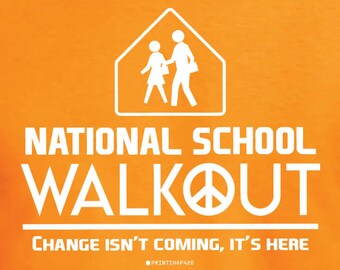
Friday, April 20, is National School Walkout day, when students in schools around the country are expected to walk out to protest what organizers say is inaction by local, state and federal officials to take action to prevent gun violence.
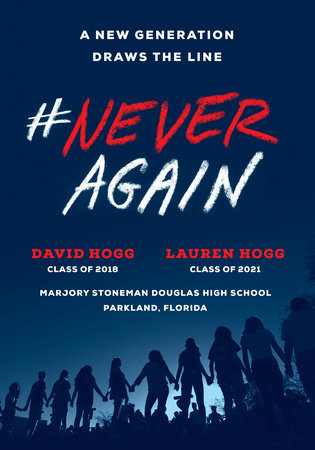
It is the 19th anniversary of the killings of 13 people by two students at Columbine High School in Colorado, and the latest of several massive student-led demonstrations against gun violence since the Feb. 14 killings of 17 people at Marjory Stoneman Douglas High School in Parkland, Fla.
As a gesture to help students who are planning to participate, actor Robert DeNiro has penned an “excuse letter” for anyone in need. CNN confirmed with DeNiro’s representatives that the letter did indeed come from him.
Students in every state are expected to walk out of school at 10 a.m. local time and will gather for 13 seconds of silence to honor the 13 victims at Columbine. After that, students are asked to have discussions about gun violence and solutions, and then participate in events that have been planned by local walkout leaders. Continue reading: Robert DeNiro pens ‘excuse’ letter for students participating in National School Walkout - The Washington Post:
In the aftermath of the deadly shooting at a high school in Parkland, Florida, a majority of American teens say they are very or somewhat worried about the possibility of a shooting happening at their school – and most parents of teens share that concern, according to new Pew Research Center surveys of teens ages 13 to 17 and parents with children in the same age range.
Meanwhile, when it comes to what can be done to prevent this kind of violence, far more teens view proposals focused on mental illness, assault-style weapon bans and the use of metal detectors in schools as potentially effective than say the same about allowing teachers and school officials to carry guns in schools.
The surveys of teens and parents were conducted in March and April 2018, following the Feb. 14 shooting at Marjory Stoneman Douglas High School – one of the deadliest mass school shootings in U.S. history. Seventeen people were killed in the attack and more than a dozen others were injured. The surveys also come as the nation prepares to mark the 19th anniversary of the shooting at Columbine High School in Colorado.
Overall, 57% of teens say they are worried about the possibility of a shooting happening at their school, with one-in-four saying they are very worried. About three-in-ten (29%) say they are not too worried about this, and just 13% say they are not at all worried.
Nonwhite teens express a higher level of concern than their white peers. Roughly two-thirds (64%) of nonwhite teens, including 73% of Hispanics, say they are at least somewhat worried about this, compared with 51% of white teens.
School shooting fears differ by gender as well: 64% of girls say they are very or somewhat worried about a shooting happening at their school, compared with 51% of boys.
Parents of teenagers express similar levels of concern as teens themselves, with 63% saying they are at least somewhat worried about the possibility of a shooting happening at their child’s school. And there are similar patterns when it comes to race and gender, with nonwhite parents and mothers expressing more concern. Lower-income parents are particularly worried – in fact, 82% of parents with annual household incomes under $30,000 say they are at least somewhat worried that a shooting could happen at their teen’s school, compared with 64% of those with incomes between $30,000 and $74,999 and 53% of those with incomes of $75,000 or more.
Some policies seen as more effective than others
Against the backdrop of organized school walkoutsand marches calling for new legislation to address gun violence, teens see more value in some proposed measures than others. Asked to assess how effective various measures would be at preventing school shootings, 86% of teens say that preventing people with mental illnesses from purchasing guns and that improving mental health screening and treatment would be effective, including majorities who say each of these proposals would be very effective. Roughly eight-in-ten teens (79%) say that having Continue reading: Majority of teens worry about school shootings, and so do most parents | Pew Research Center: