Latest News and Comment from Education

Tuesday, April 18, 2017

Familias deben tener cuidado con la elección de la escuela (school choice) “panacea” – Cloaking Inequity

Familias deben tener cuidado con la elección de la escuela (school choice) “panacea” – Cloaking Inequity:

Familias deben tener cuidado con la elección de la escuela (school choice) “panacea”

Los ricos han invertido millones de dólares en causas de “school choice” (elección escolar),  durante la última década. Bajo el mantra de los derechos civiles, los multimillonarios como Eli Broad, Bill Gates, los hermanos Koch y el poderoso grupo de presión financiado por corporaciones, el American Legislative Exchange Council (ALEC) están usando la filantropía y el proceso político para presionar por el neoliberal reformas escolares se centraron en el control privado y la privatización en los Estados Unidos. Recientemente, los hermanos Koch y otros han dirigido sus millones a la comunidad latina a través de Libre.
Libre fue fundada en 2011 y afirma ser una “organización de base sin fines de lucro  que avanza los principios y valores de la libertad económica para empoderar a la comunidad hispana de los EE.UU.” Media Matters informó que los altos funcionarios de Libre son casi todos campaña del Partido Republicano y ha sido respaldado por más de $ 10 millones en fondos de Koch, lo que sugiere que Libre no es ni partidista ni de base.
En sus artículos de opinión publicados en los periódicos de estados donde la población latina es sustancial, los representantes de Libre hacen afirmaciones simplistas, pero convincentes, sobre los beneficios de la “elección” escolar para las comunidades de color carentes de servicios. El predominio de la literatura revisada por pares no apoya las reivindicaciones grandiosas que hace Libre y en su lugar demuestra que la elección de la escuela, en promedio, no produce la equidad, la justicia social o el éxito del estudiante que los proponentes giran.
Nadie está diciendo que no hay ejemplos de escuelas charter de alta calidad o escuelas tradicionales de vecindario. Sin embargo, varias décadas de estudios de escuelas chárter revisadas por pares y comprobantes han demostrado que la elección no es una panacea. De hecho, la elección de la escuela ha mejorado en muchos aspectos el desafortunado y problemático sistema de escuelas desiguales y problemáticas de muchos estudiantes vulnerables, a menudo fallando en servir adecuadamente a estudiantes con necesidades especiales e intensificando la segregación.
El mantra de elección debe librarse de Libre y de los multimillonarios financiadores de las “reformas” educativas neoliberales. En vez de políticas que promuevan la elección a través del control privado de arriba hacia abajo y la privatización, debemos ofrecer enfoques basados en la comunidad y controlados democráticamente. Debemos responsabilizar a los legisladores para financiar lo que las encuestas nacionales han demostrado que los padres quieren elegir en sus escuelas públicas vecinales: mayor participación de los padres, menos pruebas, clases con menos estudiantes, maestros de calidad y menos hambre.
El elefante en la habitación de nuestro país es la desafortunada y consistente elección hecha por los políticos para hablar incesantemente sobre la elección de la escuela, al tiempo que falla en entregar los recursos para proveer las opciones de los padres en las escuelas ricas y pobres.Familias deben tener cuidado con la elección de la escuela (school choice) “panacea” – Cloaking Inequity:

EFF Releases Spying on Students Ed Tech Report | Electronic Frontier Foundation

EFF Releases Spying on Students Ed Tech Report | Electronic Frontier Foundation:

EFF Releases Spying on Students Ed Tech Report

EFF Survey Reveals Gaps in Protecting the Privacy of K-12 Students Using School-Issued Devices and Cloud Apps


 “They are collecting and storing data to be used against my child in the future, creating a profile before he can intellectually understand the consequences of his searches and digital behavior."

This was the response of one parent to an online survey EFF conducted to learn more about the use of mobile devices and cloud services in K-12 classrooms across the country—so called education technology or “ed tech.” Today, EFF released a report entitled “Spying on Students: School-Issued Devices and Student Privacy” that summarizes the results of this survey.
While there are educational advantages to incorporating technology into the classroom experience, the survey results reflect an overarching concern that children as young as kindergartners are being conditioned to accept a culture of surveillance. EFF maintains that children should not be taught that using the Internet or technology requires sacrificing personal privacy.
The survey, launched in December 2015, elicited responses from over 1000 students, parents, teachers, librarians, school administrators, system administrators, and community members.
We organized the survey results into eight themes:
  1. Lack of transparency: Schools and districts do not provide adequate notice and disclosures to parents about what technology their children use in the classroom, including devices and online applications that require transferring student information to private companies.
  2. Investigative burden: Parents and even students themselves put in significant effort, sometimes over many months, to get information from both schools/districts and ed tech companies, about technology use in the classroom and its implications for student privacy. 
  3. Data collection and use: Parents are concerned about the specific data about their children that ed tech companies collect, and what companies do with that data, particularly for non-educational, commercial purposes and without written notice to and consent from parents.
  4. Lack of standard privacy precautions: Survey participants reported 152 apps, software programs, and digital services being used in classrooms. Only 118 of these have published privacy policies online. And far fewer address important privacy issues such as data retention, encryption, and data de-identification and aggregation.
  5. Barriers to opt-out: Many schools and districts do not provide the ability for parents to opt their children out of using certain technologies. Or if administrators are open to providing an opt-out option, many parents and students have found it difficult to make alternative technologies and teaching methods a reality.
  6. Shortcomings of “Privacy by Policy”: Survey participants expressed doubt that the privacy policies of both schools/districts and ed tech companies actually protect student privacy in practice.
  7. Inadequate technology and privacy training for teachers: Survey participants emphatically reported that teachers, those who interface most directly with ed tech and students, lack adequate training to move from “privacy by policy” to “privacy by practice.”
  8. Digital literacy for students: Survey results revealed that there is a ripe opportunity and need to educate students about how to protect their privacy online, operate safely online, and generally be savvy users of technology, which are skills that they should carry into adulthood.
A goal of the “Spying on Students” survey was to highlight the struggles of average people trying to navigate the student privacy issue. So throughout the discussion of the survey results, we present the case studies of a parent, technology director, system administrator, and school librarian.
In addition to summarizing the survey results, the “Spying on Students” report includes an overview of relevant student privacy laws, including the federal laws FERPA and COPPA, and a sampling of state laws from California, Colorado, and Connecticut.  
The report also discusses the inadequacy of the leading ed tech industry self-regulatory effort, the Student Privacy Pledge.
Finally, the report includes privacy recommendations and best practices for school/district administrators, teachers, librarians, system administrators, parents, students, and—of course—ed tech companies.
Today’s report is part of our larger student privacy campaign, which aims to educate students, parents, and school officials about digital privacy—and to encourage ed tech companies to institute better privacy policies and practices that actually protect the privacy of minor students, while enabling them to benefit from technology in the classroom.
With the right awareness and will—particularly from an $8 billion dollar industry—technology can be both educationally beneficial and privacy protective.EFF Releases Spying on Students Ed Tech Report | Electronic Frontier Foundation:

Randi Weingarten: An indecent budget proposal | American Federation of Teachers

An indecent budget proposal | American Federation of Teachers:

An indecent budget proposal


Weingarten at a rally organized by the Alliance to Reclaim Our Schools held at the U.S. Supreme Court. Photo by Michael Campbell.
Donald Trump’s first budget proposal is a nightmare for children. Ironically named “America First: A Budget Blueprint to Make America Great Again,” it contains $9 billion in cuts to education and forecloses on the federal government’s long-standing commitment to reduce educational inequalities. The budget would take a meat cleaver to public schools, and children with the greatest needs would suffer the greatest harm. Trump and Education Secretary Betsy DeVos plan to slash programs that help low-income children—like after-school and summer programs, class-size reduction efforts, mentoring for early-career teachers, child nutrition programs and community schools.
Trump’s budget director said the administration “went looking for the most wasteful, most indefensible programs” in order to increase defense spending and build the infamous “wall.” Apparently, the wealthiest Cabinet in U.S. history considers Meals on Wheels for seniors and programs to alleviate child hunger to be wasteful.
Half of all children in America’s public schools live in poverty. Rather than make a specious claim that the budget blueprint protects “the nation’s most vulnerable populations,” DeVos should have fought for the programs that would actually do that. For example, in McDowell County, W.Va., formerly coal country and now the seventh-poorest county in the nation, 900 children could lose after-school programs that provide tutoring, technology, healthcare, counseling, recreational activities and, for some children, their only reliable meal of the day. Parents—like Irma Castanon, whose son Juan attends the after-school program at Hart Elementary School in Austin, Texas, while she is at work—have peace of mind knowing their children are safe, supported and engaged after school. And kids like Juan can experience things that, Irma says, “all children should be able to,” like being on a soccer team, joining Boy or Girl Scouts and getting help with homework. 
More than 80 House of Representatives members—including Trump supporters—and nearly 1,500 organizations are calling on Congress to maintain federal funding for after-school programs.
Trump’s budget proposal also targets funding for community learning centers, like the Community Health Academy of the Heights in New York City, that wrap services for children and families around the school. CHAH offers a full-service health clinic, mental health services, free eyeglasses for students who need them, a parent resource center and a food pantry. Far from wasteful, these resources are life-changing, as nearly all of the school’s 650 students live below the poverty line. Aside from the obvious benefits to their well-being, CHAH students are making the grade; the number of students reading at the lowest level fell by 37 percent between 2013 and 2016. Dozens of other communities have taken similar approaches with similar results. 
Compare this with school voucher programs, which get a windfall in the budget despite reams of research showing their ineffectiveness. The Louisiana voucher program has led to large reductions in kids’ reading and math scores. Even a study by a pro-voucher group, the Fordham Institute, found that students in Ohio’s voucher program did worse than children in public schools.
The proposal also targets initiatives that help teachers teach. In Toledo, Ohio, for example, teachers receive training in an intensive reading program for students who are not reading proficiently by third grade—which research shows puts them at greatly increased risk of not graduating from high school. Classes that have implemented the program have shown a 50 percent increase in reading proficiency. Escambia County, Fla., could lose a peer mentoring and assistance program that pairs accomplished teachers with first-year and struggling teachers. In addition to improving teaching quality, the high level of support has been an effective recruiting tool. All this is on the chopping block.
DeVos often says she wants parents to have more choices. Ask parents what they want, and most often you will hear they want things like a school that is safe, with well-prepared teachers and class sizes small enough that their child can get personal attention; a school that meets children where they are and helps them thrive. The Trump-DeVos budget does just the opposite. Indeed, it seems intended to do what DeVos did in Michigan: defund and destabilize public schools so parents feel the need to look elsewhere.
I have invited the education secretary to visit public schools with me so she can see that they are far from being a “dead end,” as she called them, but rather are foundational to our communities and our democracy. That is as true in deep-blue places as it is in places that are ruby red—like Van Wert, Ohio, the rural district we will visit next week. Van Wert’s public schools focus on children’s well-being, engage in project-based learning and anchor the community. They—like so many others—need federal investment in these programs, not a budget that takes a hatchet to public schools, which 86 percent of American children attend.
- See more at: http://www.aft.org/column/indecent-budget-proposal#new_tab


A gun is discharged in a US school about once a week: advocacy group analysis - ABC News

A gun is discharged in a US school about once a week: advocacy group analysis - ABC News:

A gun is discharged in a US school about once a week: advocacy group analysis


The gun violence at a California elementary school last week is hardly uncommon in the U.S., which has seen an estimated 220 shootings -- including suicides and accidents -- in schools and colleges since the start of 2013, according to Everytown for Gun Safety, a nonprofit that advocates for gun control and against gun violence.
The advocacy organization began tracking shootings in schools, including colleges and universities, after the December 2012 massacre at a Newtown, Connecticut, elementary school that killed 26.
The group's analysis doesn't go back far enough to include the deadliest school shooting in history, which occurred 10 years ago today, on April 16, 2007, when Virginia Tech student Seung-Hui Cho killed 32 students and faculty.
But Everytown's figures, unlike some other tallies of gun violence, include shootings even if they are accidental or don't result in any injuries or fatalities.
The list tracks “any time a firearm discharges a live round inside a school building or on a school campus or grounds,” which could include suicides, accidental discharges, and criminal activity, such as gunfire related to an armed robbery, according to the website of Everytown, which is backed by billionaire and former New York City Mayor Michael Bloomberg.
This broad definition of school shootings has led to some criticism from gun rights advocates who argue that the Everytown's statistics present gun violence in schools as more common than it is.
But Everytown says on its website that its definition of school firearms incidents is “straightforward, fair, and comprehensive." It covers "any time a firearm discharges a live round inside a school building or on a school campus or grounds, as documented by the press and, when necessary, confirmed through further inquiries with law enforcement of school officials."
Politifact analyzed Everytown's figures in 2014 in response to the criticism and found that the group is open about its methodology and its broad definition of shootings in schools.
Politifact's conclusion? By grouping mass shootings in schools with suicides or accidental A gun is discharged in a US school about once a week: advocacy group analysis - ABC News:

SB 808 Scares the Hell Out of CCSA and Of Course It Was Pulled | EdSource

California bill that would restrict charter school approvals stalls in Sacramento | EdSource:

California bill that would restrict charter school approvals stalls in Sacramento

Charter school supporters are applauding a state senator’s decision to table a bill that would have allowed only school districts to approve new charter petitions.
The bill’s author, State Sen. Tony Mendoza, D-Artesia, said Monday he will not ask the Senate Education Committee to vote on the bill next week when it was due to come up for consideration.
Mendoza said he remains behind the concept of the bill, which would greatly restrict how charters appeal district-level refusals to their county offices of education and remove the state Board of Education from the process altogether.
Mendoza made his decision following a rally and meeting with charter supporters at his Los Angeles-area office this past week.
“I’ve taken the concerns expressed about this bill and its impact on existing charters, and I am working to address them,” Mendoza told EdSource. “However, due to timing, I may present the bill in the Senate Education committee and not ask for a vote. This will allow us more time to find the best way to address the serious issues of charter school authorizations and petitioners.”
The setback for the bill reflects the growing clout of the California Charter School Association as it moves aggressively to expand charter school enrollments in the state. The association has called on its members to rally against the bill, including asking supporters to rally at Mendoza’s district office on April 13.
The bill was backed by the California Teachers Association, which argued that allowing school districts to approve charter schools was consistent with the “local control” approach espoused by Gov. Jerry Brown and adopted by the state Legislature.
“SB 808 is not dead,” said Claudia Briggs, spokeswoman for the California Teachers Association. “There is a lot of important testimony that needs to be shared and myriad facts presented, therefore more time is needed to show the drastic and negative impacts the lack of regulations on corporate charter schools is having on our students and communities.”
The union wrote on its website that the ability of county offices of education to overrule some district decisions on charters “is undermining the practice of local control, wherein districts develop priorities and plans with input from all California bill that would restrict charter school approvals stalls in Sacramento | EdSource:
Big Education Ape: California Charter Schools and REAL Local Control - http://bigeducationape.blogspot.com/2017/04/california-charter-schools-and-real.html
Big Education Ape: New Legislative Push for Charter School Accountability | UTLA - http://bigeducationape.blogspot.com/2017/04/new-legislative-push-for-charter-school.html

New Head of Office for Civil Rights Signals Entirely Newly Direction - Education Law Prof Blog

Education Law Prof Blog:

New Head of Office for Civil Rights Signals Entirely Newly Direction

Image result for sign to hell

The past four years of the U.S. Department of Education' Office for Civil Rights may have been its strongest in decades.  Under Catherine Lhamon, the Office's work expanded substantially.  The Office published a number of new guidance documents that made it clear that it would enforce the law, including disparate impact.  The symbolism of these documents, along with growing faith in the Office, likely explains increases in complaints to the Department.  Unfortunately, the new Acting Assistant Secretary for the Department, Candice Jackson, signals that the coming years may look far different.  Jackson was formally named the Deputy Assistant Secretary, which does not require Senate confirmation, and will serve as acting Assistant Secretary until the administration formally nominates someone to that position and the person is confirmed by the Senate.
Pro Publica has published an article on Jackson's background.  It appears that the administration is following the game plan we saw with DeVos, appointing someone with limited experience, but strong ideological leanings.  Pro Publica describes her background this way:
Although her limited background in civil rights law makes it difficult to infer her positions on specific issues, Jackson’s writings during and after college suggest she’s likely to steer one of the Education Department’s Education Law Prof Blog:


How to Bring Finnish-Style Teaching and Learning to Your Classroom

How to Bring Finnish-Style Teaching and Learning to Your Classroom:

How to Bring Finnish-Style Teaching and Learning to Your Classroom

teach like finland

Like many other U.S. educators, Timothy D. Walker thought the schools in Finland sounded almost “mythical.” The rejection of high-stakes testing, a curriculum based on critical thinking and problem-solving, smaller classes, the time reserved for collaboration between teachers – these are just few of the pillars of a system that has been heralded around the world. In 2013, Walker moved to Finland and was soon teaching fifth grade at a public school in Helsinki. He began documenting his experiences on his blog, Taught by Finland, and in a series of articles for The Atlantic. Being a teacher in Finland, Walker says, has “challenged my thinking about good teaching and learning,” and, as it turns out, a lot of what works in a classroom in Helsinki can work in anywhere in the United States. In his just-released book, Teach Like Finland: 33 Simple Strategies for Joyful Classrooms, Walker offers U.S. educators a lively and practical guide on implementing Finland’s best practices in their own classroom.
The discussion about the differences between Finland and the the U.S. is usually centered around major systemic differences, so what’s unique and innovative about Finnish schools seems out-of-reach to most U.S. educators. Did you want your book to serve as a sort of a bridge that teachers can use to bring at least a little bit of Finland into their classrooms?
Timothy D. Walker: Yes, that is exactly what I’ve tried to do in my book! Most U.S. teachers encounter a much different teaching context than Finland’s educators. For several years, I’ve kept a blog about Finnish education where I’ve highlighted lessons I’ve learned in Finland, but I admit that I’ve rarely blogged about what American teachers could actually implement in their classrooms.
In “Teach Like Finland,” I pushed myself to move beyond simply describing great practices in Finnish schools — I focused on suggesting strategies that can be easily wielded by U.S. teachers.
While I agree that transplanting the entire Finnish model is unsuitable for America, I think it’s misguided to think we need to have all or nothing. In my book, I’m focused on the little, practical things we can learn from Finland’s approach to education, in spite of the major differences.
When you live abroad, you encounter another culture. Your thinking is stretched and, naturally, you start reflecting on your own culture of origin. Something similar happened when I started teaching in Helsinki. I encountered a different school system. I began noticing subtle, sensible things that my Finnish colleagues were doing in their work. In short, they challenged my thinking about good teaching and learning.
What did you think about the strengths and weaknesses of American schools before you encountered the Finnish system?
TW: Before moving to Finland, I confess that I did very little thinking about how U.S. schools might compare to other schools around the world. I suspected that AmericaHow to Bring Finnish-Style Teaching and Learning to Your Classroom: 

Ideology Drives School Privatization without Much Attention to the Real Consequences | janresseger

Ideology Drives School Privatization without Much Attention to the Real Consequences | janresseger:

Ideology Drives School Privatization without Much Attention to the Real Consequences


Whether school privatization involves expansion of various kinds of vouchers or the proliferation of largely unregulated charter schools, the policy tends to be driven by its proponents’ ideology, not careful policy analysis. That is, promoters believe in an idea—They usually call it the expansion of parents’ choice rather than naming the privatization that is happening.—and they push that idea without describing, or worse without even examining, the side effects on individuals and institutions. Economists call these other implications externalities, and they may be positive or negative. In the area of education, because the expansion of the privatized education marketplace has implications, budgetary and otherwise, for the public school system that is expected to continue to serve the mass of children in any locality, the externalities are too often negative.
Members of the Texas House of Representatives recently defeated a bill for statewide education savings accounts, a far-right proposal from the American Legislative Exchange Council. (Education savings account vouchers are explained here in the Network for Public Education’s new toolkit, School Privatization Explained.) The Texas bill to establish education savings account vouchers had passed the state senate and been declared by the state’s lieutenant governor as “the civil rights issue of our time.” But then the Texas House began considering the negative externalities for schools in Texas’s hundreds of small towns and rural areas.
Reporters for the Austin American-Statesman describe what happened: “An effort to redirect state money to help students pay for private school tuition—a favorite cause of conservative education activists in Texas and nationally—seemed to have momentum at the beginning of this year’s legislative session… But after sailing through the Texas Senate, the effort has run aground in the House, thanks to pushback from rural Republicans and Democrats… The Ideology Drives School Privatization without Much Attention to the Real Consequences | janresseger:

Corporal Punishment Does Not Belong in Our Profession by Dr. Michael Flanagan Badass Teachers Association:

Badass Teachers Association: Corporal Punishment Does Not Belong in Our Profession by Dr. Michael Flanagan:

Corporal Punishment Does Not Belong in Our Profession 

by Dr. Michael Flanagan


Last year a video of a five-year-old boy being paddled by Georgia school administrators went viral, renewing the debate about corporal punishment. Corporal punishment is defined as “any time physical punishment is intended to cause pain or discomfort”. Watch this video of this child, pleading not to be spanked because he had missed too many days of school, while his mother is forced to watch and threatened with arrest if she intercedes. Beside the revulsion most of us feel witnessing the actual act of paddling, we also know that this action will only result in that child hating school, probably forever.

Yet, there are those who still adhere to the old adage “spare the rod, spoil the child”, believing that corporal punishment is an important means for maintaining a positive school tone.They not only practice it, but still cling to it as a viable means of discipline. Students learn best from respect and encouragement, not fear and pain. Corporal punishment has no place in our profession. When an educator is in a position of power over children, our greatest tool is compassion.


Georgia principal paddles 5 year old

Defeating the DeVos Agenda | The Merrow Report

Defeating the DeVos Agenda | The Merrow Report:

Defeating the DeVos Agenda


Progressives everywhere are in agreement that Secretary of Education Betsy DeVos is no friend of public education. Her agenda is straightforward: 1) educational vouchers that can be ‘cashed in’ at any school, including religious ones; 2) for-profit charter schools, including on-line ones; and 3) minimal oversight by government.  She is pushing this agenda despite overwhelming evidence that vouchers have failed, that the public does not want vouchers, and that the for-profit education world is full of crooks and charlatans.
However, it’s not enough for progressives to simply be against DeVos’s radical agenda. They must stand strongly and clearly FOR an agenda that makes sense…and not just to parents but also–most importantly–to the general public.
Because, while most parents, year after year, give their children’s schools a grade of either A or B, according to the Phi Delta Kappan poll, parents are a small fraction of the voting population.   Progressives need to connect positively with those without a direct connection to public education, the group I call ‘the outsiders.’
You see, the problem with the truism “It Takes a Village to Raise a Child” is that most villagers have no direct connection to children or to the schools they go to. Only about 25 percent of homes have school age children, and in some communities that number drops into the teens. Even if you include households with grandparents, the percentage probably won’t reach 40.
And it is the people in those households with no strong connection to public education who hold the future of public schools in their hands.  They vote on school budgets, and so their opinions of schools, teachers and students matter.  Not only do Defeating the DeVos Agenda | The Merrow Report:

Above the Law?

Above the Law?:

Above the Law?


-Granada Hills Charter High School
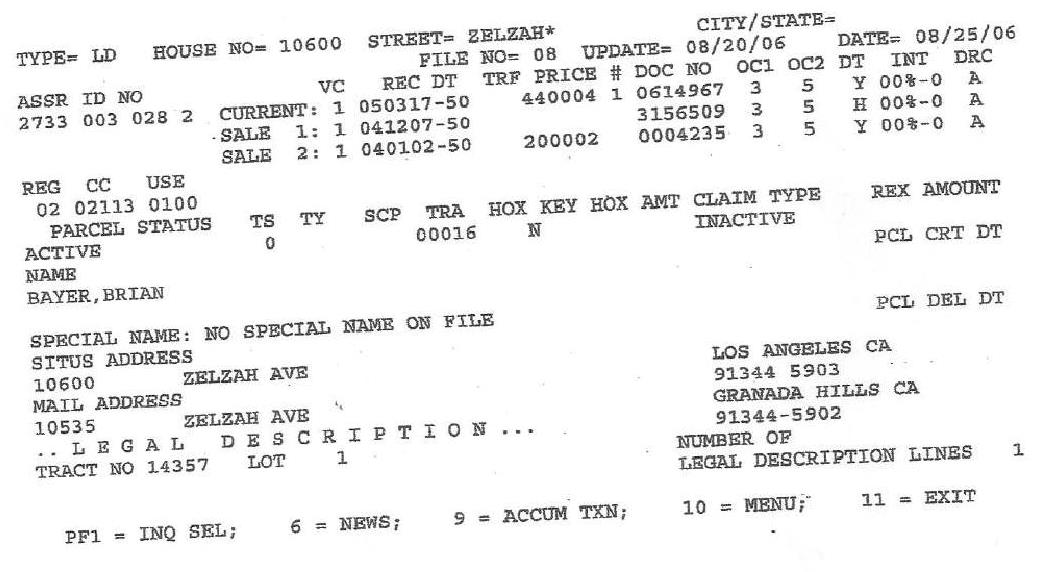
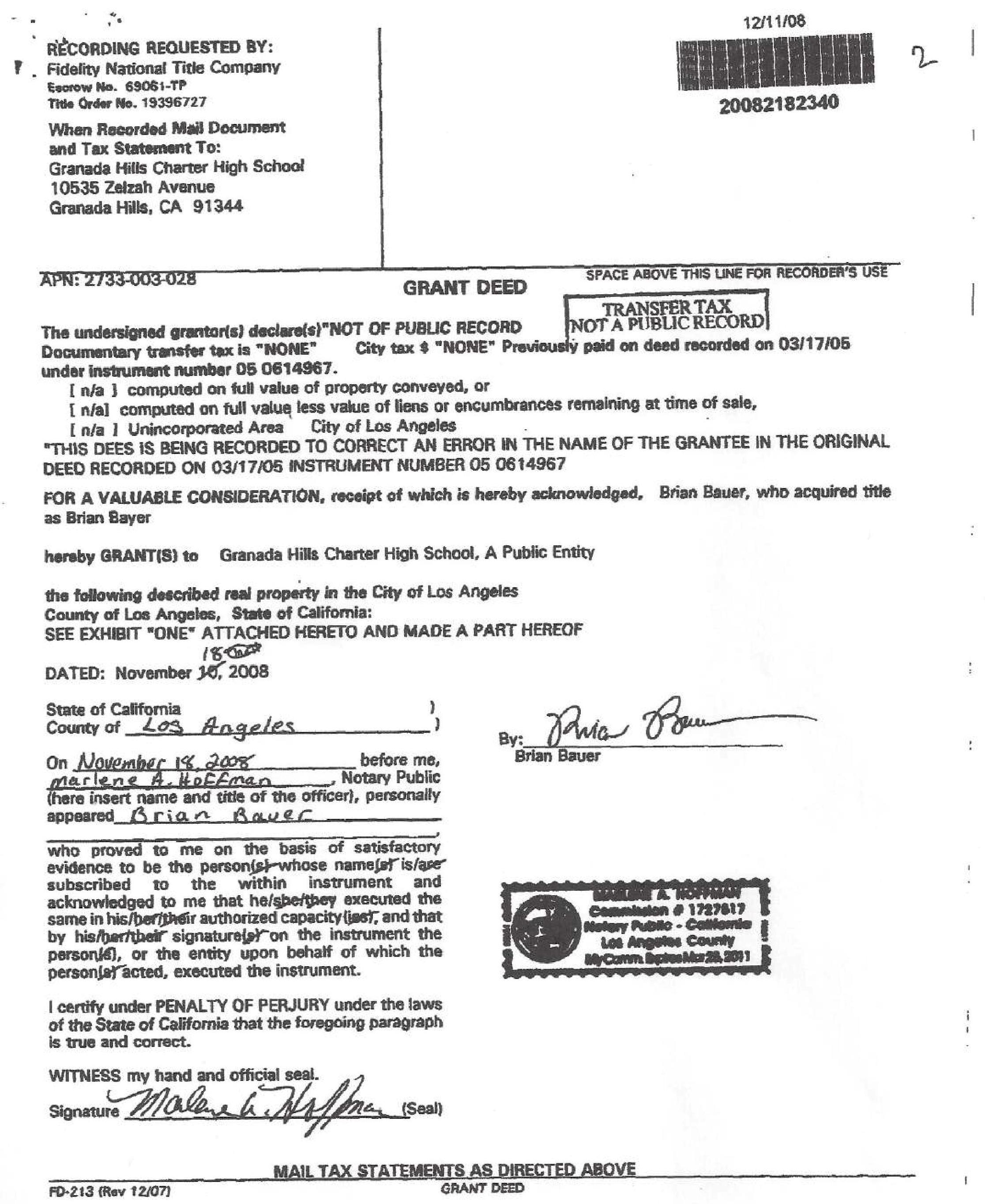
Real estate records show that on March 17, 2005, a “Bayer, Brian” whose address was “11141 Tampa Ave” purchased a property at 10600 Zelzah Ave., across the street from Granada Hills Charter High School (GHCHS). According to tax records, this house was still owned by “Bayer, Brian” on August 20, 2016. However, on December 11, 2008, a Grant Deed was filed stating that there was “an error in the name of the grantee in the original deed recorded on March 17, 2005.” At that point, GHCHS became the registered owner of the property.
If it is true that Brian Bauer, aka Brian Bayer, was accidentally recorded as the owner of the house on Zelzah, it is unclear why it took three and a half years to correct the mistake. The Governing Board is responsible for the $440,000 spent on the property and should have immediately noticed that the deed to the property had “accidentally” been given to their Executive Director. The charter is subject to a Above the Law?:

Schools Matter: Indianapolis (and a few other places), Meet John Arnold

Schools Matter: Indianapolis (and a few other places), Meet John Arnold:

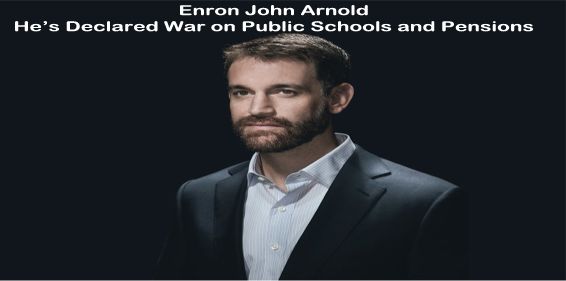
Indianapolis (and a few other places), Meet John Arnold


By Doug Martin 

With the Michael and Susan Dell Foundation, Bloomberg Philanthropies, the Walton Foundation, and others, the Laura and John Arnold Foundation is pumping millions of dollars into Indianapolis, and former Mind Trust executive vice president Ken Bubp now is the Arnold Foundation’s director of education.  For the 2016-2019 years, the Arnold Foundation plans to hand the Mind Trust $11,075,000 and the Indianapolis Public Schools Education Foundation, Inc. $1,256,250 for the “expansion and replication of high-quality schools.” 

As Lindsey Erdody and Hayleigh Colombo noted a few days ago, Arnold, the Texan and former Enron millionaire turned hedge fund billionaire, in a YouTube video says “If Indianapolis is successful in doubling the number of kids that are attending high-quality schools, it will be one of the best investments that the Arnold Foundation has made.” Arnold continues “Indianapolis has this great chance and opportunity to show the nation what can be done.”


It’s no surprise that Arnold is terming up with the Dell Foundation in Indianapolis, for promoting edtech is one of his many favorite pastimes.  In 2012, the Arnold Foundation handed $10,000 to Innosight Institute, Inc. to promote digital learning, almost $600,000 to the North American Council for Online Learning Ltd. in 2011 and 2012, $6 million in 2012 to the PowerMyLearning, Inc. (Computers for Youth Foundation, Inc.) to support blended learning, $3.5 million to the American Institutes for Research in the Behavioral Sciences to “advance evidence-based policymaking and promote the use of longitudinal data in education research,” $60,000 in 2016-2017 to the Data Quality Campaign, Inc. to “support the development and distribution of materials that capture the growth of the current data systems in education and share lessons for other sectors,” and over $8 million to the edtech charter school investors NewSchools Venture Fund, whose CEO Ted Mitchell later went to become Obama’s undersecretary of education, just to name a few.  The Arnold Foundation stresses so-called personalized learning, recently giving a $2.7 million grant to the personalized learning OpenStax College project that Rice University researchers are working on.  The Arnold Foundation is Schools Matter: Indianapolis (and a few other places), Meet John Arnold: