Latest News and Comment from Education

Saturday, March 4, 2017

Deportation inc | Ingles o español

Deportation inc | Deportation inc:

Deportation inc


Conservative journalist Ann Coulter enjoyed each and every word she used to describe the satisfaction she would derive from watching undocumented people running along the U.S.-Mexico border in response to the threat of a drone that is pursuing them.
“I like the idea of the Great Wall of Trump,” commented Coulter in August of last year during the presentation by Republican candidate Donald Trump during a tour through Iowa. “I want to have a two drink minimum. Make it a big world-wide tourist attraction, and every day, live drone shows whenever anyone tries to cross the border,” she added.
This contemporary version of the Roman circus is but a sample of the relatively unknown turn being taken by the electoral rhetoric in the United States, based on what many would agree in identifying as the strategy of fear.
“I believe Mr. Trump is a spokesman for the discourse of fear. I believe he is a perfect example of how to instill fear in a community with some purpose that isn’t clearly visible for the population as a whole,” stated psychologist María Basualdo who works with agricultural immigrants in south Florida.
The rhetoric has been shown to be very effective in matters of politics and business. Trump has forced the rest of the Republican candidates to harden their anti-immigrant discourse, which is being reflected in greater contributions and more campaign followers. But fear mongering has also multiplied the earnings of an entire industry that profits from immigration control: companies providing protective services and border security, private detention centers, providers of bail bonds, as well as sellers of electronic ankle bracelets, immigration lawyers and charter airlines used to deport undocumented persons.
In the name of confronting the threat of illegal immigration, the federal government has also managed to increase the size of the bureaucratic machinery at such a rate that today federal agencies and programs dedicated to the matter of immigration have a budget that is greater than that of all other law enforcement agencies combined, according to a study by the Migration Policy Institute.
“There is a mythology that the government is not doing anything to control immigration and that it’s not a priority, that nothing has changed in recent decades for better control of the border,” explained Marc Rosenblum, an analyst at the Migration Policy Institute. “And the truth is that there has been a priority and very strong measures are being taken along the border and inside the country in order to control this and find undocumented people within.”
Smitten by the same discourse, states are beginning to try to see if, by citing the fearsome encroachment by the undocumented, it will also work for seeking budgetary allocations for the local governments. In this way, Texas has managed to have a total of 900 million dollars approved for operations that include patrol officers who now show very little activity because the flow of immigrants has diminished, and they end up just issuing traffic tickets. The disproportion between the expenditure and the operations is such that an arrest may end up having a cost of a little under half a million dollars.
“The rhetoric is working because, unfortunately, many times people react when a message is based on fear and not because one always feels insecure in life,” states Tania Galloni, director of the Southern Poverty Law Center in Florida. “And it’s much easier if I can blame another person for the insecurity I feel in my life.”
At the Federation for American Immigration Reform (FAIR), a conservative organization, the situation has apocalyptic inklings. “When the public becomes fearful that we have lost control of our borders and have lost our ability of self-determination as a nation, you have planted the seeds of the convulsion, the political convulsion,” Dan Stein said to Univision. He is the director of the institution that has been challenged for allegedly inspiring theories of white race supremacy.

For several weeks reporters from Univision Investiga travelled throughout the United States and Mexico in order to gain an understanding of how the business of fear mongering operates. They followed the path of an undocumented Guatemalan family through the labyrinth of this industry; they spoke with representatives from organizations belonging to both extremes of this controversy; they consulted with members of Congress, economists and other experts, in addition to reviewing hundreds of legal and accounting documents.Deportation inc | Deportation inc:
US-Mexico border

Teachers, Parents Struggle To Comfort Children Of Color Fearful Of Targeted Raids : Code Switch : NPR

Teachers, Parents Struggle To Comfort Children Of Color Fearful Of Targeted Raids : Code Switch : NPR:

Teachers, Parents Struggle To Comfort Children Of Color Fearful Of Targeted Raids

Image result for separating families for deportation and detention purposes


In early December, Joann Lee and her family were crossing the street in front of The Los Angeles County Museum of Art. A white van was stopped at the light. Out of nowhere, Lee says, the driver of the van, a white woman, said to Lee's 7-year-old daughter, "You are the most disgusting girl in the whole world. Your family killed my family so you could enjoy a day at the museum."
Lee was shocked. Her daughter Terin was confused. "It wasn't overtly racist, but there were overtones. ... We were clearly a large group of Asians crossing the street," Lee said. Bystanders chastised the woman and unsuccessfully tried to snap a photo of her license plate. Meanwhile, Lee wasn't sure what to tell her daughter.
"I think at that point it hit me," Lee said. "My kids were born during the Obama administration. It was nice for them to have an African American president. And I was looking forward to them having a female president. ... It kind of made me sad. It made me realize I really have to prepare myself for how to explain things like that to them without becoming bitter and hateful of certain types of people."
In the wake of the presidential election, parents, guardians, and educators are grappling with how the political climate affects children and youth. In November, the Southern Poverty Law Center released a report that found "the results of the election are having a profoundly negative impact on schools and students." Ninety percent of Teachers, Parents Struggle To Comfort Children Of Color Fearful Of Targeted Raids : Code Switch : NPR:


Betsy DeVos and Donald Trump made news on school vouchers, charter schools and race this week. : NPR Ed : NPR

Betsy DeVos and Donald Trump made news on school vouchers, charter schools and race this week. : NPR Ed : NPR:

Betsy DeVos' 'School Choice' Controversy; Historically Black Colleges And More


It was another big week for national education news. Here's our take on the top stories of the week.
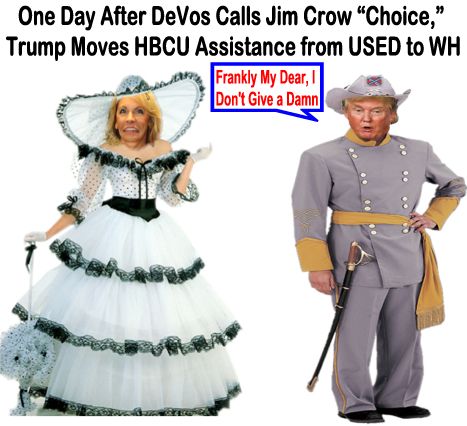
Betsy DeVos, Donald Trump meet with HBCU leaders
The Education Secretary seems to be racking up controversies at the rate of about one per week.
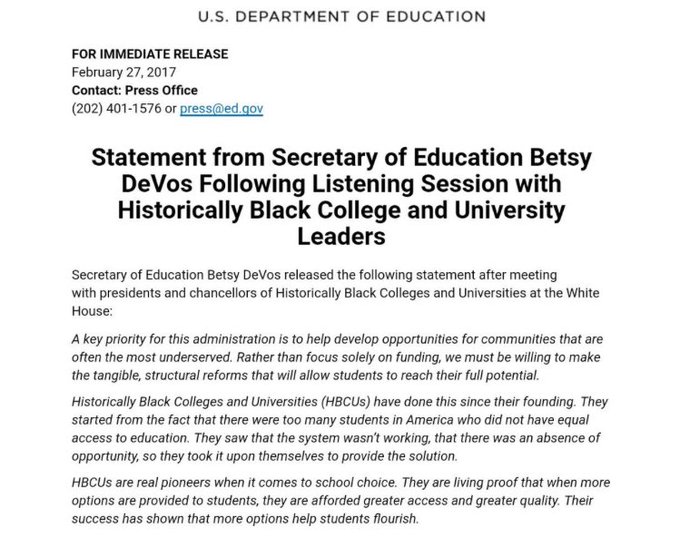
This week, it was for remarks she made Monday on the occasion of a "listening session" with presidents of historically black colleges and universities, or HBCUs. She tied them to her favorite cause: school choice.
"HBCUs are real pioneers when it comes to school choice," she said in a statement after the meeting. "They are living proof that when more options are provided to students, they are afforded greater access and greater quality. Their success has shown that more options help students flourish."
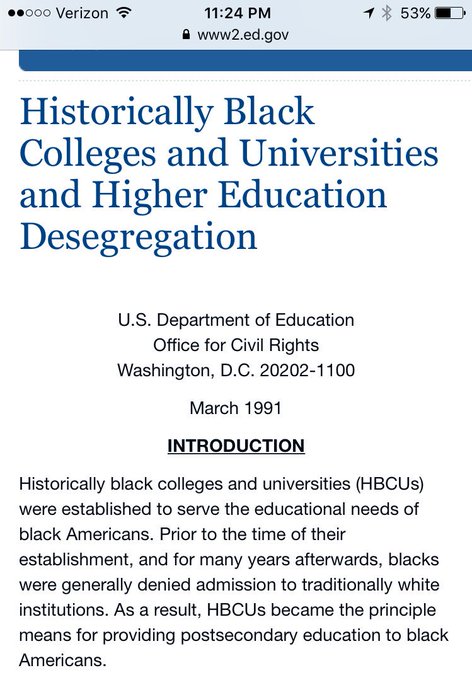
The comments drew immediate and sharp criticism from those who pointed out that HBCUs were created in response to widespread racial segregation. They weren't just another choice, critics pointed out, they were often the only educational avenue for black students.
When DeVos addressed HBCU leaders directly the next day, she struck a different tone, saying: "Your history was born, not out of mere choice, but out of necessity, in the face of racism, and in the aftermath of the Civil War."
That listening session, meanwhile? It was cut short in favor of an Oval Office meet-and-greet between the college leaders and the president, as one of the invited guests, Dillard University President Walter Kimbrough, wrote on Medium:
"There was very little listening to HBCU presidents today — we were only given about 2 minutes each, and that was cut to one minute, so only about 7 of maybe 15 or so speakers were given an opportunity today."
(That meeting should have been a routine photo op, but it happened to feature White House aide Kellyanne Conway kneeling on a couch, a pose that some saw as too casual.)
Kimbrough told NPR's Ari Shapiro later that day that he's "waiting for the budget," and specifically funding for Pell Grants for low-income students, before he decides whether Trump's and DeVos' interest in HBCUs is genuine.
Meanwhile on HBCU campuses ...
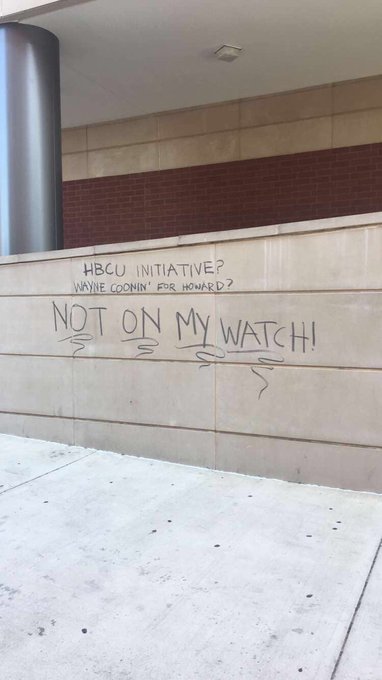
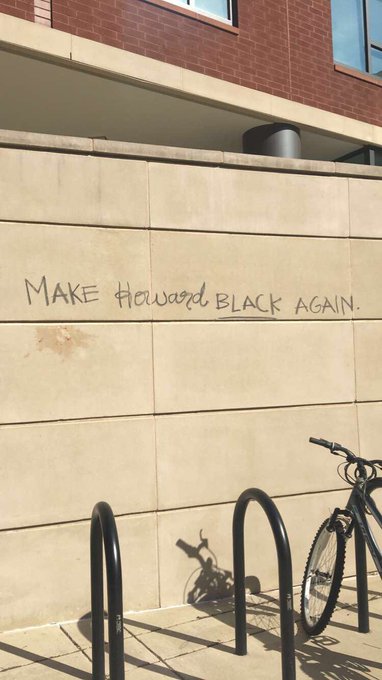
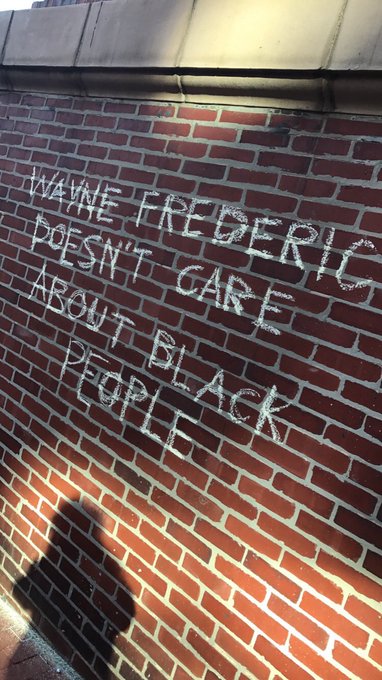
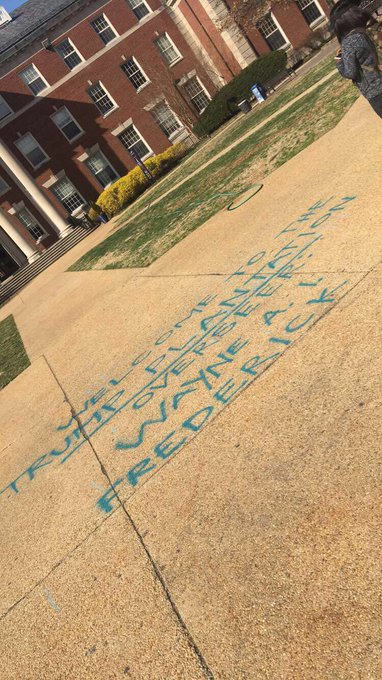
At Howard University in Washington, D.C., graffiti was found throughout campus denouncing the Trump meeting, with phrases like "Welcome to Trump plantation," and "Wayne Frederick [the university president] doesn't care about black people."
Trump hints at his school choice plans
On Tuesday, President Trump delivered his first speech to a joint session of Congress. On education, he returned to a line he'd used on the campaign trail: "Education is the civil rights issue of our time."
He continued, "I am calling upon members of both parties to pass an education bill Betsy DeVos and Donald Trump made news on school vouchers, charter schools and race this week. : NPR Ed : NPR:
 

Ethics violator Riordan weighs in: Lanches a Smear Campaign Against Steve Zimmer - LA Times

Ethics violator Riordan weighs in: Lanches a Smear Campaign Against Steve Zimmer

Former LA Mayor Richard Riordan fined $11,250 for ethics violation - http://www.dailynews.com/government-and-politics/20160621/former-la-mayor-richard-riordan-fined-11250-for-ethics-violation

Former Los Angeles Mayor Richard Riordan, a major presence in Tuesday’s elections, has strong opinions about local schools and options for helping the homeless.

As for education, he said the L.A. school system continues to fail students. He’s putting his money on charters and board members who support them, although he’d also like to help teachers find affordable housing.Election heavy hitter Riordan weighs in: more charter schools and more tents for homeless - LA Times:

Riordan has donated $1 million to a political action committee whose sole purpose is to defeat school board President Steve Zimmer, part of a strategy to get a board majority allied with supporters of charter schools. He also gave $1 million to a charter advocacy group. It’s funneling money into the three contests for L.A. school board seats, including Zimmer’s District 4, which includes the Westside and part of the west San Fernando Valley.Election heavy hitter Riordan weighs in: more charter schools and more tents for homeless - LA Times:

In the Zimmer race, Riordan is endorsing Nick Melvoin, the son of friend, Brentwood neighbor and Hollywood producer Jeff Melvoin. In his 2014 autobiography, Riordan recounts hearing about challenges the younger Melvoin faced during a two-year stint as a teacher in Watts, including being laid off — along with other young teachers without seniority — and later hired back.
The tale inspired Riordan to help launch a lawsuit, in which Melvoin participated, to limit the impact of seniority-based layoffs at an individual school. It eventually led to a settlement.
Riordan said he also likes the other charter-endorsed candidate in District 4, Allison Holdorff Polhill. But he subtracts a few points because the charter she helped run, Palisades Charter High School, has a union contract. Riordan said the contract makes it too difficult to fire teachers, although he said the school appears to be performing better than L.A. Unified-run campuses.Election heavy hitter Riordan weighs in: more charter schools and more tents for homeless - LA Times:


An hour with Chicago Teachers Union President Karen Lewis. Hitting Left with the Klonsky Brothers: The downloadable podcast. | Fred Klonsky

An hour with Chicago Teachers Union President Karen Lewis. Hitting Left with the Klonsky Brothers: The downloadable podcast. | Fred Klonsky:

An hour with Chicago Teachers Union President Karen Lewis. Hitting Left with the Klonsky Brothers: The downloadable podcast.


hitting-left
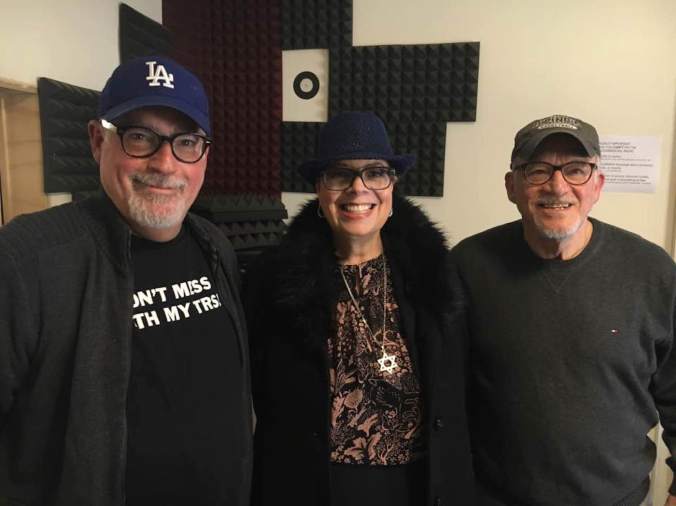
This morning we spent an hour with Chicago Teachers Union President Karen Lewis on episode #5 of our radio show: Hitting Left with the Klonsky Brothers on lumpenradio.com 105.5FM in Chicago and live streamed.
Now our podcasts are being hosted on iTunes. Episode #4 is already there.
Karen is a friend and a hero of ours, so we couldn’t have had more fun and had a better conversation.
Karen started by declaring firmly she has had no contact with the Russian Ambassador.
She may be the only one.
We spent a good amount of time in the first half hour talking about classroom stuff since Ms Lewis was a Chicago public school chemistry teacher for over two decades.
The second half hour included more of the political stuff: Rahm, Rauner and the Grand Bargain, school funding, social justice unionism plus a break with a too short sample of the band, Jackass Magnets.An hour with Chicago Teachers Union President Karen Lewis. Hitting Left with the Klonsky Brothers: The downloadable podcast. | Fred Klonsky:

Who knew it could be so complicated?: DeVos edition | Eclectablog

Who knew it could be so complicated?: DeVos edition | Eclectablog:

Who knew it could be so complicated?: DeVos edition


Donald Trump, in a moment of rich irony, appears to have been caught just a bit off guard with just how complex the American health care system really was last week.
“Now, I have to tell you, it’s an unbelievably complex subject,” he added. “Nobody knew health care could be so complicated.”
Notwithstanding the fact that nearly every American who has been paying attention to the Obamacare/ACA debate (spoiler alert: they are the same thing!) could have let Donald know the situation was a little trickier than he seems to have thought it was, you’ve got to give credit where it’s due–yes, Mr. President; the health care system is both complex and complicated, and a lot of very smart persons have been working on it for a very long time. It took those very smart people quite a while to come up with a policy solution that has reduced the number of uninsured to historic lows, provide coverage for those with preexisting conditions, and extend coverage to children under 27 years of age. And even though I know these words I’m typing will fall on deaf ears, please don’t screw it up by repealing it only to replace it with…a nonexistent “plan” that the members of your own party can’t even seem to find.
Now, in another not-so-surprising bit of irony, it’s looking like Mr. Trump’s new Secretary of Education, Betsy DeVos, has also been laboring under the misconception that this education thing is actually pretty simple–and is about to receive a similarly rude awakening.
Ms. DeVos, who as it has been widely reported, never attended a public school, never sent her children to a public school, and has never taught anyone anything, now finds herself in charge of the American education system–which includes nearly 100,000 public schools educating over 50 million children. It should go without saying that such a huuuge system would be, by definition, extremely complicated and complex–and yet by all accounts, Ms. DeVos appears to believe that our nation’s educational system can be described as the somewhat simple interaction of three things: children, parents, and schools.
[The complete and utter lack of any mention of teachers in the rhetoric of Mr. Trump and Ms. DeVos has been conspicuous by its absence, especially to the nation’s teachers. Even worse, Ms. Devos’ frequent mentions of the virtues of online learning and virtual schools hint at her preferred vision of the future of education–a world of public school classrooms populated by huge numbers Who knew it could be so complicated?: DeVos edition | Eclectablog:


The Testing of States’ Blaine Amendments– No Public Funding of Religious Schools | deutsch29

The Testing of States’ Blaine Amendments– No Public Funding of Religious Schools | deutsch29:

The Testing of States’ Blaine Amendments– No Public Funding of Religious Schools


Given that President Trump and US Secretary of Education Betsy DeVos are poised to offer states financial incentives for instituting/expanding school vouchers, the issue becomes whether state constitutions allow public money to be used to fund private schools, particularly religious schools.
Time for a bit of history.
The commonly-used term to refer to state constitutional amendments that either prohibit or limit the use of public money in funding religious education is “Blaine amendment.”
Interestingly, the original Blaine Amendment was not a state issue but a national issue. The amendment was proposed in 1875 by Representative James G. Blaine (R-ME) at the urging of President Ulysses S. Grant in his final Congressional address, as Jay Bybee of the University of Nevada Las Vegas noted in his 2002 article on the subject. From Bybee’s abstract:
In December 1875, President Ulysses S. Grant delivered his last annual message to Congress. He warned of “the dangers threatening us” and the “importance that all [men] should be possessed of education and intelligence,” lest “ignorant men . . . sink into acquiescence to the will of intelligence, whether directed by the demagogue or by priestcraft.” He recommended as “the primary step” a constitutional amendment “making it the duty of each of the several States to establish and forever maintain free public schools adequate to the education of all of the children” and “prohibiting the granting of any school funds, or school taxes . . . for the benefit of or in aid . . . of any religious sect or denomination.” There was no mistaking what President Grant referred to when he mentioned “demagogue,” “priestcraft,” and “religious sect” in connection with public education. Since the Civil War, the political influence of Catholics had become an important force in America, and in many states Catholics had sought public funding for their schools and charities.
Congress responded promptly. Within a week, Representative James Blaine, the powerful former Speaker of the House, introduced an amendment that would become known as “the Blaine Amendment,” which provided that “no money raised by taxation in any State for the support of public schools . . . shall ever be under the control of any religious sect.” In August 1876, the House of Representatives approved the bill with the necessary two-thirds vote. The proposal, however, received a majority but not a two-thirds vote in the Senate and failed.
Although Congress never sent the Blaine Amendment to the states for ratification, the states reacted to the national attention paid to the question of public financing of sectarian schools by adopting their own “Little Blaine Amendments.” Between 1840 and 1875, nineteen states adopted some form of constitutional restriction on sectarian institutions receiving state funds; by 1900, sixteen more states, plus the District of Columbia, had added such provisions.
President Grant also said the following in a September 1975 speech at a Society of the Army of the Tennessee convention in Iowa:
Now, the centennial year of our national existence, I believe, is a good time to begin the work of strengthening the foundations of the structure commenced 
The Testing of States’ Blaine Amendments– No Public Funding of Religious Schools | deutsch29:


Allowing Guns in Schools is a Bad Idea by Steven Singer - Badass Teachers Association:

Badass Teachers Association: Allowing Guns in Schools is a Bad Idea by Steven Singer:

Allowing Guns in Schools is a Bad Idea

 by Steven Singer

Image result for Allowing Guns in Schools is a Bad Idea
With all the tweeting about crowd size, he didn’t get around to it. But he may – soon.
Before running for Chief Executive, Trump had been much more moderate on guns. But since then he has echoed the NRA’s official position several times, saying that there are fewer shootings in areas where guns are permitted and that killers target areas prohibiting them.
However, it’s not true. From 2000 to 2013, only one shooting was stopped by an armed civilian. However, during that time, 21 shootings were stopped by unarmed bystanders. Moreover, from January 2009 to July 2015, only 13 percent of mass shootings took place in gun-free zones
The law prohibiting guns in schools (with the exception of mostly law enforcement officers) was signed by Republican President George H. W. Bush in 1990. The law was upheld in 1995 by the U.S. Supreme Court
So for now, it is illegal for unauthorized people to posses firearms inside or around a school