Friday, March 3, 2017

Vicki Cobb: I Attended the Great Debate About Charter Schools (VIDEO) at Intelligence Squared | Diane Ravitch's blog

Vicki Cobb: I Attended the Great Debate About Charter Schools at Intelligence Squared | Diane Ravitch's blog:

Vicki Cobb: I Attended the Great Debate About Charter Schools at Intelligence Squared

Image result for CHARTER SCHOOLS ARE OVERRATED


On March 1, there was a heated debate around the proposition “Charter Schools Are Overrated,” hosted by Intelligence Squared. The room in New York City was packed. Two academics–Gary Miron of Western Michigan University and Julian Vasquez Heilig of Sacramento State–debated two charter advocates–Jeanne Allen of the Center for Education Reform and Gerard Robinson of the American Enterprise Institute in D.C.
Education Week covered the debate here.
Vicki Cobb, a celebrated writer of science books for children, attended the debate and reports on it here. Cobb notes that she previously served on the board of a charter school, so was not anti-charter. Apparently the audience was evenly divided or undecided before the debate.
Cobb describes the major issues: the question of democracy and control; the question of teacher turnover. On the matter of data, charter schools on the whole perform no better or worse than public schools. Some get higher scores, some get lower scores. It is a wash. But as the anti-charter side pointed out, test scores are not everything.
As Julian Vasquez Heilig argued for the motion: “Charter schools, if they don’t have public accountability, direct public accountability, are antidemocratic. So, saying that publicly elected school boards and districts and unions, which are also democratic organizations are an old idea — I don’t think democracy is an old idea. In fact, I think we need excessive democracy when it comes to our thinking about education reform. We need to avoid education reform that is top down and concentrates power in the hands of just a few people.”
Cobb writes, “By the way, the team for the proposition “Charter Schools Are Overrated,” won the debate.
According to Education Week, The debate’s winner was determined by the percentage of audience members who changed their minds. In the first vote of live audience members, 33 percent cast votes for the motion and 31 percent against. In the final vote, 54 percent were for the motion and 40 percent were against. The rest were undecided.Vicki Cobb: I Attended the Great Debate About Charter Schools at Intelligence Squared | Diane Ravitch's blog:


Oklahoma: School Vouchers Dead for This Legislative Session
Vouchers died in the Oklahoma legislature, for now. The sponsor of voucher legislation pulled the bill , saying he didn’t want it to squeak through. Probably, he didn’t have the votes. No reference was made, apparently, to the research showing that vouchers don’t improve academic performance and often depress it. “A divisive school-choice proposal that would create state-funded education savings
Kansas Supreme Court Rules that School Spending Is Unconstitutionally Low
For the second time in the past year, the Kansas Supreme Court ruled that the state is not spending enough on public schools. Governor Sam Brownback has tried to prove that he could be the nation’s leading tax-cutter, but his tax cuts have generated large budget deficits. Now that he is under court order to raise education spending, his response is not to come up with new money but to offer schoo
Vicki Cobb: I Attended the Great Debate About Charter Schools at Intelligence Squared
On March 1, there was a heated debate around the proposition “Charter Schools Are Overrated,” hosted by Intelligence Squared. The room in New York City was packed. Two academics–Gary Miron of Western Michigan University and Julian Vasquez Heilig of Sacramento State–debated two charter advocates–Jeanne Allen of the Center for Education Reform and Gerard Robinson of the American Enterprise Institut

YESTERDAY

As Governor of Indiana, Mike Pence Used a Personal Email Account for State Business–and Was Hacked
The IndyStar reports that former Governor Mike Pence used a personal AOL account to conduct state business, and that his account included sensitive information about security. Vice President Mike Pence routinely used a private email account to conduct public business as governor of Indiana, at times discussing sensitive matters and homeland security issues. Emails released to IndyStar in response
Jeff Bryant: Trump and DeVos Want Vouchers to Promote Religious Fundamentalism
This is an alarming post. Read at your own peril. Trump gave a shout out to the glories of vouchers when he spoke to Congress. DeVos, a religious zealot, smiled with gratification as her 30-year crusade to transfer public funds to religious schools now appears near accomplishment. Trump pointed to a young woman who had achieved success because of receiving a voucher funded by a tax credit in Flor
Georgia: Governor Wants to Take Money from Public Schools for Vouchers
Governor Nathan Deal never gives up in his effort to defund the state’s public schools. Last November, the voters soundly rejected his proposal to create a district where he could gather low-scoring schools, eliminate local control, and give them to charter operators. Now he is back with tax credits to funnel money into vouchers. Here is an analysis by the Georgia Budget and Policy Institute, whi
Head of DeVos’s Anti-Public School Group in Michigan Testifies that He Likes to “Shake” Indecisive Women, Like His Wife
This just gets weirder by the minute. Are we living in the same world with these people? Eclectablog reports: Gary Naeraert is the Executive Director of the Great Lakes Education Project (GLEP). GLEP was founded and largely funded by U.S. Secretary of Education Betsy DeVos to influence policy and law in Michigan with the aim of promoting charter schools and the elimination of traditional public s
Peter Greene: Claudio Sanchez of NPR Sends a Love Note to the Charter Industry
Peter Greene reports on an NPR program explaining charter schools. Perhaps you thought the program would give equal time to charter advocates and charter critics. Perhaps you thought you thought the program might explain why charters are controversial. Perhaps you thought that NPR–supposedly a bastion of liberalism–might explain why Trump, DeVos, the Koch brothers, the Waltons, and every red-stat
Los Angeles: Billionaires Huddle to Take Down Steve Zimmer
Steve Zimmer is the president of the Los Angeles Unified School District board. I know Steve. He is a good guy. He is smart and thoughtful. He started in education as a TFA teacher and stayed for 17 years. He ran for School Board and against the odds, was elected. His critics on the left complain that he has not fought charters as hard as he should. He has tried to keep the district focused on im
What Changes Do the People of Texas Want in Their Schools?
The University of Texas and the Texas Tribune conducted a statewide poll of public opinion about the direction of education reform. Here are the results. The public makes more sense than their elected officials, who waste their energy and breath advocating for school choice. But the public wants less testing and more 


Bridgeport Board of Education Member Maria Pereira speaks out against Malloy Education Cuts - Wait What?

Bridgeport Board of Education Member Maria Pereira speaks out against Malloy Education Cuts - Wait What?:

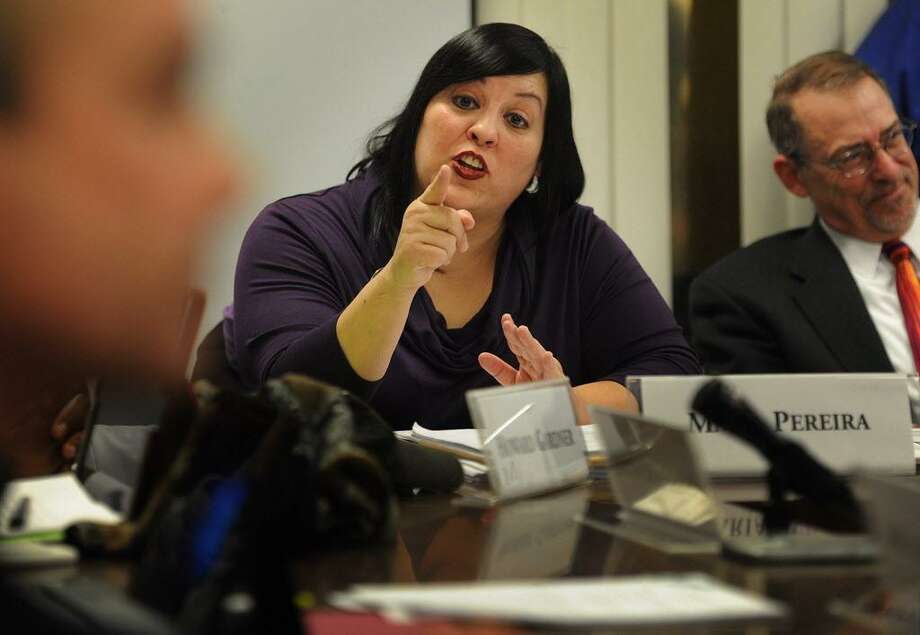
Bridgeport Board of Education Member Maria Pereira speaks out against Malloy Education Cuts

Image result for maria pereira bridgeport

Maria Pereira is a public education advocate and member of the Bridgeport Board of Education.  She recently testified before the General Assembly’s Appropriations Committee on Governor Dannel Malloy’s proposal to slash state support for Connecticut’s public schools. In her testimony Pereira highlights the devastating impact Malloy’s budget would have on Bridgeport.
Pereira explained;
I write to you today as a Bridgeport Public School (BPS) graduate, parent, Board of Education member (BOE), and staunch defender of true public education.
I and my five siblings were born and raised in Bridgeport and we all graduated from the Bridgeport Public Schools. When I look back on the education I received I often come to the conclusion that I received a good education administrated by amazing Bridgeport Public School Teachers.
I have been a staunch and vocal proponent of our true public schools since 2009, which is when I discovered my 12 year old daughter was on her 9th seventh grade math teacher as of March that school year. I often believe something good comes out of everything bad. My good was that this was my catalyst for becoming involved in the state of public education in the City that I love, Bridgeport.
I have witnessed public education deteriorate in Bridgeport 
Bridgeport Board of Education Member Maria Pereira speaks out against Malloy Education Cuts - Wait What?:

DeVos and Tax Credit Vouchers: Arizona Shows What Can Go Wrong - The New York Times

DeVos and Tax Credit Vouchers: Arizona Shows What Can Go Wrong - The New York Times:

DeVos and Tax Credit Vouchers: Arizona Shows What Can Go Wrong

Image result for Vouchers: What Can Go Wrong

Steve Yarbrough is one of the most powerful men in Arizona. As president of the State Senate, he has promoted a range of conservative policies, including a tuition tax credit system that provides over $100 million per year to finance vouchers for private schools.


In his speech to Congress this week, President Trump singled out a young woman who attended private school using a tax credit-financed voucher. The president urged Congress to pass legislation that would provide similar benefits to millions of students.
But Mr. Yarbrough is not just a champion of tax credit vouchers. He also profits from them personally. The story of how that happened raises questions about President Trump’s campaign promise to spend $20 billion to increase school choice. There’s a strong chance that he’ll do that through tax credit vouchers — a mechanism that Betsy DeVos actively campaigned for before she became Mr. Trump’s education secretary.
State tax credit voucher programs have grown rapidly in recent years. The number of students receiving them increased to 256,000 this year, from about 50,000 in 2005. Arizona has one of the oldest and largest programs. It allows taxpayers who donate money to nonprofit voucher-granting organizations to claim a 100 percent, dollar-for-dollar credit against their state taxes (up to a certain limit). In other words, if a married couple donates $1,000 to a voucher-granting nonprofit, their tax bill is reduced by $1,000. The nonprofit then gives the money to families who use it to pay tuition at private schools.DeVos and Tax Credit Vouchers: Arizona Shows What Can Go Wrong - The New York Times:


Schools Matter: Dem Epiphany: Public Education Under Siege

Schools Matter: Dem Epiphany: Public Education Under Siege:

Dem Epiphany: Public Education Under Siege


In 2001, Democrats joined Republicans to create a massive school privatization corporate welfare plan known as No Child Left Behind.  With fanciful performance targets and unbending rules, which everyeducation policy person knew would detonate thousands of the poorest public schools over the coming years, NCLB ushered in the charter school era in a way that allowed the gradual ramping up of the paternalistic "no excuses" corporate reform school industry.

It wasn't until 2008, however, that privatization via charter school really took off.  When Obama was first inaugurated, U. S. schools had about 1.4 million students in charters.  By the time Obama left office in 2017, the charter population had more than doubled to 3.1 million students, and the federal commitment, alone, to charters was over $250,000,000 per year.


During the steady build-up of the charter industry before and during the Obama Era, the corporate teachers' unions continued to lend support for segregated charter expansion and discredited value-added evaluation schemes.  

The strategy of gradual privatization was cemented by the bipartisan reauthorization of Elementary and 
Schools Matter: Dem Epiphany: Public Education Under Siege:

Proposal would keep California schools from denying lunch over unpaid fees | Firstcoastnews.com

Proposal would keep California schools from denying lunch over unpaid fees | Firstcoastnews.com:

Proposal would keep California schools from denying lunch over unpaid fees

Image result for Proposal would keep California schools from denying lunch over unpaid fees


A new bill proposal wants to make sure no student goes hungry at school even if their lunch bills are unpaid.
Democratic state Sen. Bob Hertzberg introduced the proposal in February in an attempt to end lunch shaming at California schools. 
Denying a child food in front of their peers can bring shame and embarrassment, especially if they're too young to understand why it's happening to them.
Additionally, children who are hungry are more likely to have trouble learning, according to the American Psychological Association. 
While school districts work with the United States Department of Agriculture (USDA) to provide free and discounted meals to students who qualify, many schools use the 'cheese sandwich' meal as an alternative meal when a child's parents owe money.
This is where a child receives a cold cheese and bread sandwich instead of a hot meal. The practice receives backlash from parents and educators, claiming it's not a satisfying meal and can make a child feel ashamed for being singled out.
Hertzberg's bill would ban the process of lunch shaming by making sure schools provide lunch to needy kids and students with unpaid bills without making them feel different. Schools would also be required to notify guardians when unpaid lunch fees exceed five full-priced lunches.
However, the senator's office said the bill doesn't prescribe what kind of lunches schools can offer. It only states local schools must come up with a plan for eliminating lunch shaming to be approved by the California Department of Education. 
The bill directs districts to exhaust all options in finding a way to fund the meals through free or reduced-priced meals or reimbursement. 
Hertzberg's office said there are "all sorts of ways" for a school district to fund unpaid lunches.
But many schools already struggle to afford healthy foods to students which is the reason behind the cheese and bread alternative, according to the American Federation of Teachers.
In Sacramento, lunch shaming doesn't seem to be prevalent.
In Sept. 2016, Gabe Ross, a spokesperson for the Sacramento City Unified School District (SCUSD), told ABC10, about two-thirds of the students in the district qualify for a free lunch by federal guideline. 
He said he'd never heard of a child having a meal taken from them since the majority qualify for free lunch.
The Elk Grove Unified School District's alternative lunch does consist of a cheese sandwich but also includes fruit and either milk or juice, according to EGUSD spokesperson, Xanthi Pinkerton.
 
Some EGUSD schools also offer breakfast. Students with exhausted funds receive cereal, fruit and milk.
Copyright 2017 KXTV
Proposal would keep California schools from denying lunch over unpaid fees | Firstcoastnews.com:

Betsy DeVos called it: Bear puts Connecticut schools on lockdown

Betsy DeVos called it: Bear puts Connecticut schools on lockdown:

Betsy DeVos called it: Bear puts Connecticut schools on lockdown


DETROIT — For those who ridiculed Education Secretary Betsy DeVos for mentioning "potential grizzlies" as a reason for keeping a gun in schools for safety, it may be time to start lining up to apologize: A bear put a pair of Connecticut schools on lockdown this week.
Two schools in Southington, Conn., were placed in "Secure School Mode" when a black bear was spotted nearby Tuesday morning, according to WFSB.com.
Though the bear eventually moved away from the schools and the "Secure School Mode" was only brief, the report says emails were sent out to parents and the schools took precautions to keep schoolchildren safe.
The timing of this incident is uncanny.
A few weeks ago, DeVos — a West Michigan native and Detroit charter schools advocate — was widely mocked when she suggested during her confirmation hearing that educators may need "a gun in the school to protect from potential grizzlies."
Her point was whether the issue of guns in American schools is "best left to locales and states to decide." But social media went off the rails after the "grizzlies" comment, with most people saying it's preposterous to suggest a gun should be in a school, around schoolchildren, due to a threat of bears.
Even though a gun wasn't needed in this situation, a bear was found near a school — in Connecticut, not in Wapiti, Wyo., the school DeVos was referring to when she made the "grizzlies" comment.
DeVos was narrowly confirmed as secretary of education in a historic 51-50 vote, with Vice President Mike Pence casting the tie-breaking vote.Betsy DeVos called it: Bear puts Connecticut schools on lockdown:

Caterpiller raided by feds. Tax cheats. | Fred Klonsky

Caterpiller raided by feds. Tax cheats. | Fred Klonsky:
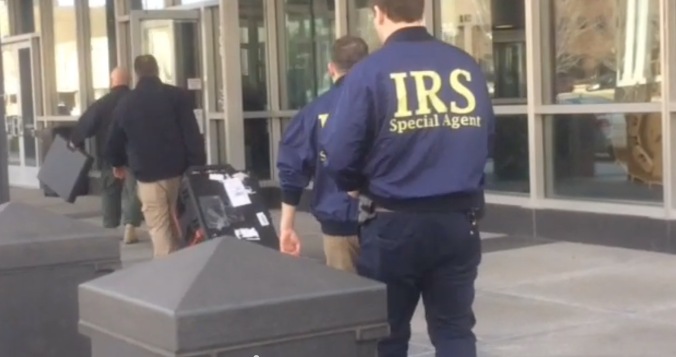
Caterpiller raided by feds. Tax cheats

When Caterpiller announced it was joining other big corporations like Boeing and moving its headquarters to downtown Chicago, Crain’s reported that it took some analysts by surprise.
screen-shot-2017-03-03-at-6-39-38-am
Aides to Gov. Bruce Rauner say they heard about the move “this morning” and the administration was “not involved” in the decision. With Cat apparently moving existing jobs to Chicago rather than creating new ones, the company would be ineligible for Edge payroll tax credits under changes to the incentive program adopted by Rauner.
City Hall isn’t yet commenting on whether it was aware of the decision, but companies almost always notify the city when they’re setting up shop in town.
Mayor Rahm Emanuel did release a statement, saying:
“Chicago’s unparalleled talent and status as a global transportation hub give a global company like Caterpillar the tools they need to thrive for generations to come. Chicago’s strengths benefit companies throughout the region, and we look forward to working with Caterpillar as they prepare to make this move towards their future.”
The city’s main incentive program is tax-increment financing. But most of the downtown area no longer is included in a TIF district, and giving tax breaks to a company that already has publicly announced its intention to move would be politically difficult.
The Edge payroll tax credit allows giant corporations in Illinois to keep the state income tax it collects. But it is supposed to be contingent on so-called job creation.
Moving 300 executive jobs form Peoria to Chicago doesn’t qualify.
Lot of major corporations are moving their headquarters to downtown Chicago. The execs like the lakefront condos and city restaurants and bars.
Peoria doesn’t provide that.
Caterpiller wasn’t worried about losing that tax benefit. It had other plans to Caterpiller raided by feds. Tax cheats. | Fred Klonsky:

Stanford Researcher Presents the Evidence Against Trump-DeVos Voucher Plans | janresseger

Stanford Researcher Presents the Evidence Against Trump-DeVos Voucher Plans | janresseger:

Stanford Researcher Presents the Evidence Against Trump-DeVos Voucher Plans


It seems that President Donald Trump and his education secretary, Betsy DeVos are looking to tuition tax credits, a form of school vouchers, to fulfill Trump’s campaign promise to expand school choice.  (This blog has covered Trump and DeVos’s interest in tuition tax credits here, here, and here.)
Martin Carnoy, a professor of education and economics at Stanford University, published a report on Tuesday for the Economic Policy Institute that questions the expansion of school tuition vouchers. The driving motivation for promoters of vouchers, writes Carnoy, is ideological and is not based on any evidence that vouchers improve educational outcomes overall: “The lack of evidence that vouchers significantly improve student achievement (test scores), coupled with the evidence of a modest, at best, impact on educational attainment (graduation rates), suggests that an ideological preference for education markets over equity and public accountability is what is driving the push to expand voucher programs.”
Carnoy explains that voucher programs have met neither of two promises of their proponents— that recipients of vouchers will do better in private schools and that vouchers will drive public schools to improve when competition is introduced: “Voucher proponents argue that offering students the opportunity, through public financing, to attend private rather than public schools produces significant gains at two levels: that individual students gain from attending a more effective (private) school, and that students remaining in public schools gain because increasing private school competition for public school students pushes public schools to improve.”  Summarizing a number of research evaluations of  a range of voucher programs—in Washington, D.C.; Dayton, Ohio; Indiana; Louisiana; Milwaukee; Florida; and internationally in Chile and India, Carnoy concludes:
“Studies of voucher programs in several U.S. cities, the states of Florida, Indiana, Louisiana, and in Chile and India, find limited improvements at best in student achievement and school district performance from even large-scale programs. In the few cases in which test scores increased, other factors, namely increased public accountability, not private school competition, seem to be more likely drivers. And high rates of attrition from private schools among voucher users in several studies raise concerns. The second largest and longest-standing U.S. voucher program, in Milwaukee, offers no solid evidence of student gains in either private or public schools.  In the only area in which there is evidence of small improvements in voucher schools—in high school graduation and college enrollment rates—there are no data to show whether the gains are the result of schools shedding lower-performing students or engaging in positive practices.”
Carnoy believes that voucher programs introduce serious risks to our system of public Stanford Researcher Presents the Evidence Against Trump-DeVos Voucher Plans | janresseger:

Mike Klonsky's SmallTalk Blog: Karen Lewis is our guest today on Hitting Left.

Mike Klonsky's SmallTalk Blog: Karen Lewis is our guest today on Hitting Left.:

Karen Lewis is our guest today on Hitting Left.

CTU Pres. Karen Lewis will be our in-studio guest this morning on Hitting Left. Be sure and tune-in at 11 a.m. (CST) to Lumpen Radio, WLPN 105.5 FM to listen live. You can download the app here. 

My brother Fred and I will be talking to Karen about (what else?) teaching and politics. Our two favorite subjects.

Karen knows a thing or two about teaching and learning. She taught high school chemistry in the Chicago Public Schools for 22 years. She is a product of Chicago Public Schools, having attended Kozminski Elementary School and Kenwood High School, until accepting early admission at Mount Holyoke College. She later transferred to Dartmouth College, where she earned the distinction of being the only African American woman in the class of 1974. Mrs. Lewis comes from a family of educators — her father, mother and husband, John Lewis, who is now retired, all were CPS teachers.

As for politics, if health issues hadn't stopped her from running, she'd likely be Mayor of Chicago right now. I'm not sure if she considers that a curse or a blessing. I'll ask.
Mike Klonsky's SmallTalk Blog: Karen Lewis is our guest today on Hitting Left.:


The Heroism of Incremental Change (Part 2) | Larry Cuban on School Reform and Classroom Practice

The Heroism of Incremental Change (Part 2) | Larry Cuban on School Reform and Classroom Practice:

The Heroism of Incremental Change (Part 2)

“Heroism of Incremental Change.” Part 1 | Larry Cuban on School Reform and Classroom Practice

In a recent  podcast, economists Ed Glaeser and Stephen Dubner were discussing “big bang” solutions, big leaders who make dramatic changes, and the folly of looking for such “solutions” and leaders. Here is their exchange on civil rights between the 1940s and 1980s.
DUBNER: So civil-rights reform strikes me as one where, incrementally, there have been massive improvements, and yet it seems as though the appetite for an overnight  solution to every civil-rights issue is kind of expected. And when that doesn’t happen, there’s massive hue and cry — even though, overall, the trend has been moving in the right direction. You see that as well, or do you think I’m wrong on that?
GLAESER: No, no I agree totally with that. And it required people who — the NAACP for example, which worked for decades before the Civil Rights Act, right, to move the ball forward. Often in, you know, ways that were important, but seem today quite modest. I mean fighting up to the Supreme Court. Fighting the attempts to zone by race, for example, which it did in the teens. Right? You know, American segregation would’ve been even worse if cities could explicitly zoned by, by race, but they couldn’t. Fighting restrictive covenants as it did in the 40s. Fighting segregation in American schools as it did in the 50s. Decade by decade, increment by increment. And once we start thinking that there’s a silver bullet, we lose that, we lose the fact that we need to be working day by day, over decades, to affect change.
In short, important changes in our individual lives and our society simply don’t happen out of the blue. Small changes aimed toward a larger goal accumulate and make a huge difference when considering a longer time frame. And that is the The Heroism of Incremental Change (Part 2) | Larry Cuban on School Reform and Classroom Practice:

Seattle Schools Community Forum: OSPI and Lt Governor's Office Get It Done

Seattle Schools Community Forum: OSPI and Lt Governor's Office Get It Done:

OSPI and Lt Governor's Office Get It Done

From OSPI (bold mine):

The Office of Superintendent of Public Instruction announced today that, thanks to a public-private partnership initiated by Lt. Governor Cyrus Habib, low-income students in Washington state will be able to take Advanced Placement (AP) and International Baccalaureate (IB) exams for free this year. 

Since 1999, a federal grant called the Advanced Placement Test Fee Program has provided funding for low-income students to take AP exams—which this year will cost $93 per test—at reduced rates. However, changes made during passage of the Every Student Succeeds Act in December 2015 moved the federal program into a block grant, to which Congress then failed to appropriate funds in time for the 2017 test-takers. 

Last month, Lt. Gov. Habib announced the creation of a coalition of private partners including Microsoft, The Boeing Company, and the Schultz Family Foundation. They, along with other individual, nonprofit, and corporate donors, committed emergency resources to help cover the loss of federal funds. 

“Students shouldn’t have to face uncertainty when it comes to whether or not they can afford to take these exams,” said Habib. “Fundamentally, this is a question of equity in our education system, but it is also a wise and critical investment in our future. Students who take Advanced Placement exams are 
Seattle Schools Community Forum: OSPI and Lt Governor's Office Get It Done:

Odd questions on the latest TFA alumni survey | Gary Rubinstein's Blog

Odd questions on the latest TFA alumni survey | Gary Rubinstein's Blog:
Odd questions on the latest TFA alumni survey


As a TFA alum, each year I get invited to fill out the annual alumni survey.  Sometimes I boycott the survey, knowing that TFA is likely to misrepresent the results of this survey.  Whether it is the claim that two-thirds of alumni are still teachers or that 80 percent of alumni are still working in education or are otherwise impacting low income communities, TFA is never very transparent with the raw data they use to generate these numbers.
This year I decided to take the survey anyway.  Maybe it would give some insights into what TFA is thinking nowadays DeVos and everything.  They’ve actually been pretty quiet lately.
I’ve always wondered about that statistic about how 80 percent of alumni are either working in schools or otherwise in low-income communities.  It seemed like there would have to be some staffer at TFA who would make a judgement call if, for example, someone working as an admissions officer at a college would count as being ‘in education’ or if someone who is a lawyer and from time to time has clients who are low-income if they would count as ‘impacting low-income communities.’  It turns out that it is much simpler than that:
tfasurvey2

So the person doing the survey gets to make the judgement.  I’m not sure if this is a statistically valid way of doing this.
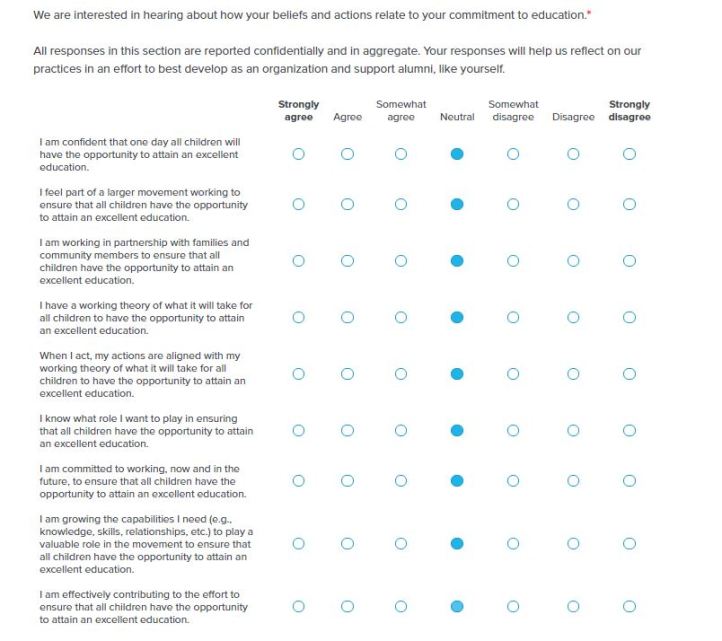
Near the end of of the survey I encountered a series of questions that I would best describe as ‘creepy.’  Everyone in TFA can recite Wendy’s famous mission statement “One day, all children in this nation will have the opportunity to attain an excellent education.”  That was the motto back in 1991 when I was a corps member and that is still it today.  It is an optimistic mission statement and I wonder, since TFA is all about data, if they know what percent of students had this opportunity to attain an excellent education back in 1990 when TFA started and what percent of students have an opportunity to attain an excellent education today, so see how we are doing on that goal.
So here are the series of questions I’m referring to:
tfasurvey-all-children
I find the questions to be very odd.  The fact that someone on staff, maybe a team of people, wrote these questions and edited them and then looked them over again before Odd questions on the latest TFA alumni survey | Gary Rubinstein's Blog: