Latest News and Comment from Education

Thursday, February 23, 2017

March 2017 Election Voter Guide: L.A. Board of Education Pits Pro-Charter Forces Against Unions | L.A. Weekly

March 2017 Election Voter Guide: L.A. Board of Education Pits Pro-Charter Forces Against Unions | L.A. Weekly:

L.A. Voter Guide: In Board of Education Races, Follow the Money

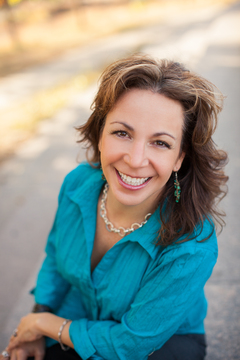
Clockwise from top left: Nick Melvoin is one of three challengers to Steve Zimmer in District 4; Lisa Alva, an English teacher at Bravo Medical Magnet School, is the challenger endorsed by the L.A. Times to replace Monica GarcĆ­a in District 2; Garcia and Zimmer are the two longest-serving incumbents on the board.
Clockwise from top left: Nick Melvoin is one of three challengers to Steve Zimmer in District 4; Lisa Alva, an English teacher at Bravo Medical Magnet School, is the challenger endorsed by the L.A. Times to replace Monica GarcĆ­a in District 2; Garcia and Zimmer are the two longest-serving incumbents on the board.

It is no secret that the big money in the March 7 Los Angeles city election is going to the three races for the school board. This is the outside money, the "dark money," the "independent expenditures," the donations from third-party groups for or against a particular candidate, funds that are limitless and anonymous so long as they are not in the control of the candidate's campaign.
This year the amount of outside money going to races for the Los Angeles Board of Education is on pace to make the March 7 election the most expensive LAUSD school board election yet. Nowhere near the amount of outside money in the school board contests is going to the other city races — which include the mayor, city controller, city attorney and eight seats on the City Council.
A reported 81 cents of every dollar contributed to the L.A. city election has been spent on supporting or opposing one candidate or another for school boardaccording to the L.A. City Ethics Commission. Most of it is coming from backers of public charter schools. So far this year, charter backers are outspending labor unions there by a ratio of 2-to-1.
Former L.A. Mayor Richard Riordan upped the ante by donating $1 million in January to a group called L.A. Students for Change, which opposes the re-election of school board president Steve Zimmer in District 4, covering the Westside and west San Fernando Valley. The group is one of a few connected to the California Charter Schools Association.
The CCSA and its financial backers have spared no expense in targeting Zimmer, who has shown increasing support for more stringent fiscal and operational oversight of charters. As of Feb. 20, more than $1.2 million from charter-backed groups has gone to opposing Zimmer.
In addition, the Parent Teacher Alliance, closely tied to the CCSA, has donated more than $260,000 to support the campaign of Zimmer challenger Nick Melvoin, an attorney and private adviser to charter advocates, and more than $184,000 to support Allison Holdorff Polhill, an attorney and member of the board of trustees of Palisades Charter High School.
Meanwhile, independent expenditures from groups tied to unions representing district employees, most notably United Teachers of L.A., have totaled $705,000 to support Zimmer and another $137,000 to oppose Melvoin and Polhill.
Sixty percent of all outside spending on the school board elections has gone to the District 4 race, according to data from the L.A. Ethics Commission.
In 2015, Melvoin was the policy director and legal counsel to Great Public Schools: Los Angeles, a group working to elect charter-friendly candidates to the school board. He defended the plan for aggressive charter expansion that came to light after a memo from the Eli and Edythe Broad Foundation was leaked to the press.
Arguing from the premise that the public charter-school sector was outperforming traditional schools, the Broad Foundation projected a plan to enroll half the students in the district in public charters by the year 2023. It estimated that 260 new charter schools could be created (at a price tag of $490 million), enrolling at least 130,000 new students and creating a model of "high-March 2017 Election Voter Guide: L.A. Board of Education Pits Pro-Charter Forces Against Unions | L.A. Weekly:


Teachers At A D.C. Charter School Want To Try Something New: Unionizing | WAMU

Teachers At A D.C. Charter School Want To Try Something New: Unionizing | WAMU:

Teachers At A D.C. Charter School Want To Try Something New: Unionizing


Advocates for public charter schools often argue they’re a better alternative to traditional public schools because charters aren’t weighed down by a central administration, school boards and a unionized workforce. But teachers at one D.C. charter school are now looking to do something that’s commonplace among their colleagues in D.C. Public Schools: form a union.
Teachers at Paul Public Charter School in the Brightwood neighborhood of Northwest D.C. have submitted a petition to the school’s management asking that they be permitted to create a union, the District of Columbia Alliance of Charter Teachers and Staff. It would be associated with the American Federation of Teachers, which represents teachers and staff at 229 charter schools in 15 states.
If they succeed, it would become the first union in D.C.’s charter sector, which educates close to half of the city’s 90,000 students. Paul converted from a traditional public school to a charter school in 1999. It now serves close to 700 students in middle and high school.
“The motivation for all of us is to try to make our school better, because we feel like there’s been way too much instability in our staff, too many good people leaving year after year, and we want people to be happier and have a more stable place to work and have a stronger voice in making the school a good place,” says David Koenig, chair of the social studies department and a high school teacher.
Koenig, who’s in his fourth year at the school and 13th year overall teaching, says that he reached out to AFT late last year, and started sounding out his colleagues at the start of this school year. Of the 80 teachers, instructional aides and counselors that would qualify to join the union, Koenig says 58 signed the petition that was delivered to the school’s chief executive officer today.
But any move towards unionization could face a number of challenges, both political and Teachers At A D.C. Charter School Want To Try Something New: Unionizing | WAMU:


School integration in 2017: the politics of PTA takeovers, P.E. programs, and parents who know the system | 89.3 KPCC

School integration in 2017: the politics of PTA takeovers, P.E. programs, and parents who know the system | 89.3 KPCC:

School integration in 2017: the politics of PTA takeovers, P.E. programs, and parents who know the system

152225 full


Last fall, Susan Savitt Schwartz, program director at the Pasadena Education Network, gave a presentation at the Caltech Children's Center about Pasadena’s public schools, noting their STEM (science, technology, engineering, and math) and arts magnets, rich linguistic offerings (dual language programs in SpanishMandarin, and, soon, French), and recent honors (U.S. News & World Report awarded silver medals to both Blair and Marshall in 2015).


Afterwards, a mother approached her, and said she’d appreciated the talk.
“But I have to admit,” she told Savitt Schwartz. “I’m just kind of scared that my kid is going to get hurt in the public schools. Is that weird?”
“You know, it’s not weird,” Savitt Schwartz said back to her. “But it’s also not a valid fear.”
Since PEN incorporated in 2006 as an advocacy organization for public education, this has been one of its most central activities: assuaging the anxieties of middle class parents, cautious of a public school system in which their children would be in the minority.
These anxieties are not new. In fact, they are at least part of the reason white families are the minority in Pasadena's public schools in the first place.
In 1970, just before a federal judge ordered the district to desegregate, white students made up a little more than half of total enrollment. After the court order, many white, middle-class families left—some the city, but more the district. Private school enrollment surged. Now only 17 percent of the district is white, a third of eligible students who live within the Pasadena Unified School District do not attend public schools, and Pasadena has the highest per capita rate of private schools of any city its size in the country.
But Savitt Schwartz and PEN Executive Director Nancy Rose Dufford report that – conversations with concerned moms at the Caltech Children's Center notwithstanding – they’re now seeing “a lot more interest in the community in coming back to the public schools.”
Furthermore, many of the families who are enrolling in Pasadena’s public schools are doing so, at least in part, for the very same reason so many parents in the past pulled their kids out: integration.
“It’s very diverse here, and that’s important—that’s what the real world is like,” Rose Dufford said. “So it gives children an opportunity not just to learn academically, but also how to deal with different kinds of people, so they can be successful when they get out of school.”
With this interest comes new challenges, because getting young children enrolled in School integration in 2017: the politics of PTA takeovers, P.E. programs, and parents who know the system | 89.3 KPCC:

NYC Educator: Teacher as Savior

NYC Educator: Teacher as Savior:

Teacher as Savior


Yesterday I spoke of a forum I attended in the Bronx. An interesting conversation ensued between audience and panel about recruitment for TFA and Moskowitz Academies. Evidently the pitch is that children of color must be saved and only you, the students, can get it done. Oh, and also we can give you a job after you graduate up to your neck in debt.

There are a number of striking points you could make about this particular argument. One is that there are plenty of public schools right there in the Bronx, and if you wish to branch out there are four more boroughs nearby with kids who could use your assistance. Another is that working in an NYC public school still beats the hell out of doing test prep for Eva and watching your hapless kids pee their pants rather than pause one moment from studying. She treats those kids a lot worse than I treat my dog (and in fact I love my dog, treat him well, and take him out whenever he asks).

Then, as one of the panelists pointed out, it's not exactly within our means to change everything. You know, there's poverty, there are learning disabilities, there is environment, and there are newcomers who speak no English. And make no mistake, Eva talks a big ballgame, but she doesn't take the same kids we do. 100% of the students I teach are beginners. They are most definitely not ready for intensive bathroom-free test prep, and that's not to suggest that anyone else is. If Eva takes ELLs, they are certainly on a higher level. Special education runs the gamut as well. Just because someone has an IEP doesn't mean she's alternate assessment, like a group of kids at my school. Alternate assessment kids are not expected to graduate. We take them to worksites and train them for jobs, and their stats count against us at year's end. And, of course, self-purported savior Moskowitz has a reputation for dumping kids that don't help her test-score-based bottom line.

As for TFA, sure you can have them pack you off to anyplace in the country. Sure you can help poor students whether or not you've got training NYC Educator: Teacher as Savior:


States’ Rights and Wrongs – Have You Heard

States’ Rights and Wrongs – Have You Heard:

States’ Rights and Wrongs


The rollback of civil rights enforcement in education is underway, says law professor Derek Black…
Jennifer Berkshire: The Trump Administration has just rescinded guidelines to schools banning discrimination against transgender students. There’s a lot of speculation about just how *joint* the joint letter from Secretary of Education Betsy DeVos and Attorney General Jeff Sessions actually was. But you seem unconvinced by the portrayals of DeVos as a fierce protector of civil rights.
Image result for transgender bathroomDerek BlackThe stream of bad news over the past few months has been steady. The Trump transition team said the administration would scale back the civil rights work in education.  At her confirmation hearing, Betsy DeVos was reluctant to take an affirmative stance on enforcing students’ disability rights.  Since taking the post, she has remarked that she could not *think of any* current pressing civil rights issues where the federal government has a role to play; things like racial segregation and exclusion of females were things of the past in her opinion.  
Now reports are coming out that Gail Heriot is likely to be the next head of the Department’s Office for Civil Rights. Heroit has been critical of the Office’s aggressive civil rights stance in recent years. With these individuals in place, it is hard to imagine much good happening at the federal level. Even if they do not rescind other Department positions on integration, school discipline, English Language Learners, and school resources, they are very unlikely to enforce existing regulations and policy guidance. Disparate impact enforcement, for instance, will be non-existent.  Rather than take on traditional civil rights concerns, I would expect they will identify fringe issues to pursue. 
Berkshire: OK—forget about *much good happening at the federal level.* Is there anything we can feel hopeful about? That was only the first question of our interview and I’m not sure how much more of this I can take…
Black: We have been here before. Disparate impact was not enforced during the Bush era either.  And it focused on more marginal issues like Boy Scouts of America Equal States’ Rights and Wrongs – Have You Heard:

Civil Rights Rollbacks, the Federal Role in Education, and the Need for Judicial Intervention: An Interview with Jennifer Berkshire

Jennifer Berkshire was nice enough to talk with me the the future of civil rights enforcement under this new administration, as well as several of the ideas I raise in Ending Zero Tolerance.  Her questions consistently go to the heart of the matter.  I am sure many of you follow her work more than mine, but I highly recommend it.  Her pieces go deeper than mine--more in the vein of investigative journalism at times.  She also has a great podcast series.  
Her interview with opens:
Jennifer Berkshire: The Trump Administration has just rescinded guidelines to schools banning discrimination against transgender students. There’s a lot of speculation about just how the joint letter from Secretary of Education Betsy DeVos and Attorney General Jeff Sessions actually was. But you seem unconvinced by the portrayals of DeVos as a fierce protector of civil rights.
Derek Black: The stream of bad news over the past few months has been steady. The Trump transition team said the administration would scale back the civil rights work in education. At her confirmation hearing, Betsy DeVos was reluctant to take an affirmative stance on enforcing students’ disability rights. Since taking the post, she has remarked that she could not *think of any* current pressing civil rights issues where the federal government has a role to play; things like racial segregation and exclusion of females were things of the past in her opinion.
Now reports are coming out that Gail Heriot is likely to be the next head of the Department’s Office for Civil Rights. Heroit has been critical of the Office’s aggressive civil rights stance in recent years. With these 

Civil Rights Rollbacks, the Federal Role in Education, and the Need for Judicial Intervention: An Interview with Jennifer Berkshire


Why Do Public School Supporters Struggle to Create and Sustain a Strong Unified Message? | janresseger

Why Do Public School Supporters Struggle to Create and Sustain a Strong Unified Message? | janresseger:
Why Do Public School Supporters Struggle to Create and Sustain a Strong Unified Message?

Bob Braun, the retired education reporter for the Newark Star Ledger and an avid blogger in Newark, NJ, has articulated a big worry.  Commenting on a recent conference of public education supporters and advocates in New Jersey, he writes:
“A few days after the United States Senate confirmed the appointment of an avowed enemy of public education—Betsy DeVos—to be the nation’s education secretary, advocates of public education held a conference in New Brunswick to search for some reason for hope… What was not inspirational, however, was the response of the New Jersey advocates—good, right-thinking people all, with whom I have little argument. Except one—why can’t they be as aggressive in promoting a system of free, inclusive, integrated, fully-funded independent public schools as Trump is in destroying it?”
Braun continues: “Don’t forget these were the activists, the advocates, the good guys, at the conference. But they argued against tinkering with the school aid formula, wrung their hands about seeking an end to charter schools completely, held out little hope about seriously integrating the public schools of the state…. (P)ublic education in New Jersey—and throughout the nation—is in serious trouble. It is underfunded. It is racially segregated. It is in danger of being swept away by charters. Its employees are demoralized. It has been targeted for destruction by a national administration unlike any other in the history of the republic. In short, without aggressive action to restore the promise of public education, it will continue to lose support among those who will turn to nuts like Trump and DeVos to find answers in alternatives like vouchers, private schooling, and home-schooling.”
Taking a more positive approach in a recent NY Times commentary, Nikole Hannah-Jones expresses the very same concern. “Even when they (public schools) fail, the guiding values of public institutions, of the public good, are equality and justice. The guiding value of the free market is profit. The for-profit charters DeVos helped expand have not provided an Why Do Public School Supporters Struggle to Create and Sustain a Strong Unified Message? | janresseger:


A win for Illinois special education students. We’re not done yet. Contact your Illinois legislators now. | Fred Klonsky

A win for Illinois special education students. We’re not done yet. Contact your Illinois legislators now. | Fred Klonsky:

A win for Illinois special education students. We’re not done yet. Contact your Illinois legislators now

ar-170119889
Illinois State Representative Linda Chapa LaVia.
– From Bev Johns
State Representative Linda Chapa LaVia has drafted the Amendment to House Bill 2808 to maintain in Illinois law Special Education Personnel Reimbursement.
Please thank her (see below), and urge her to work to get her Amendment actually added to HB 2808.
————————–
Please call/email with this message:
SPECIAL EDUCATION FUNDING SHOULD BE RELATED TO THE NEED FOR SPECIAL EDUCATION,
NOT BASED ON THE NUMBER OF GENERAL EDUCATION STUDENTS.
Say to State Representatives: HOUSE BILL 2808 NEEDS TO BE AMENDED TO MAINTAIN THE CURRENT SPECIAL EDUCATION PERSONNEL REIMBURSEMENT OF $9,000 FOR EACH SPECIAL ED TEACHER (and other specialized personnel).
Say to State Senators: FOR SENATE BILL 1 (NOW AN EMPTY SHELL BILL), THE AMENDMENT NOW BEING NEGOTIATED SHOULD NOT CONTAIN THE ELMINATION OF SPECIAL EDUCATION PERSONNEL REIMBURSEMENT.
(1) Immediately contact the Sponsors of House Bill 2808. 
State Representative Will Davis: 217-782-8197 708-799-7300
States Representative Robert Pritchard: 217-782-0425815-748-3494 bob@pritchardstaterep.com
State Representative Linda Chapa LaVia: 217-558-1002 630-264-6855
(2) Please send an email to the Governor’s Secretary of Education, Beth Purvis, with a copy to Sara Shaw. beth.purvis@illinois.gov  Sara.Shaw@illinois.gov
An easy way to get the telephone numbers of your State Senator and State Representative is to send a TEXT message to 520-200-2223 (you will also get those for your U.S. Senators and Representative).(3) Call your own State Senator and State Representative.
The TEXT message must state ONLY your Zip Code (nothing else) such as 62650-2479 OR 62650.


Cartoons on the Politics of Schooling | Larry Cuban on School Reform and Classroom Practice

Cartoons on the Politics of Schooling | Larry Cuban on School Reform and Classroom Practice:

Cartoons on the Politics of Schooling


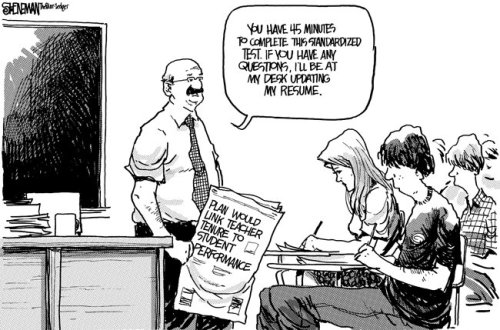
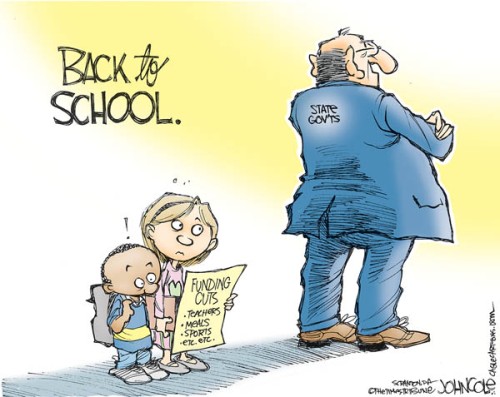
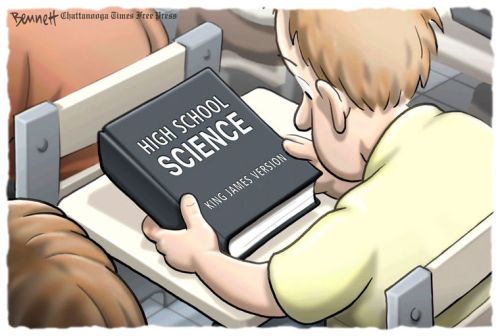
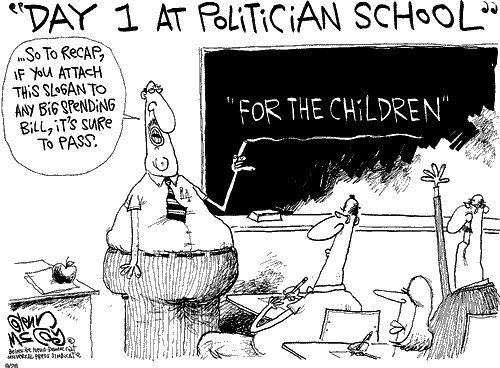
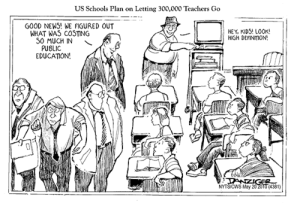
For this month, I have gathered a bunch of cartoons that get at the fact that schools are political institutions. They are wholly dependent upon taxpayers and voters for resources to operate schools. Thus, parents, lobbyists, civic and business leaders, the courts, media, and community groups push, shove, and caress school board members, district administrators and faculties to cut costs while maintaining academic excellence, and embracing the changes they seek. Furthermore, because schools are political, shifts in government, social, and economic changes inexorably spill over to classroom. Enjoy!
059fadb6078709b86b11d8665623b6f0.jpg
090110coletoon.jpg
57050151e72fd.image.jpg
f6cf9-polschool.jpg
cartoon-9.png
See More Great Cartoons: Cartoons on the Politics of Schooling | Larry Cuban on School Reform and Classroom Practice:

DeVos defends rollback of protection for transgender students. Critics blast her: ‘You rolled over like a puppy.’ - The Washington Post

DeVos defends rollback of protection for transgender students. Critics blast her: ‘You rolled over like a puppy.’ - The Washington Post:

DeVos defends rollback of protection for transgender students. Critics blast her: ‘You rolled over like a puppy.’


Education Secretary Betsy DeVos is reported to have been initially opposed to the Trump administration’s decision to roll back federal guidelines specifying that transgender students have the right to use public school restrooms that match their gender identity — but that isn’t what she said in a statement she issued defending it.
Administration officials said late Wednesday that they are ordering the nation’s public schools to disregard guidance issued by the Obama administration saying that prohibiting transgender students from using facilities that align with their gender identity violates federal anti-discrimination laws.
Earlier Wednesday, there were reports that DeVos had opposed the move. The Washington Post said she was at odds with Attorney General Jeff Sessions, who was intent on reversing the guidance. The New York Times reported that Sessions went to President Trump about the dispute, and he told DeVos he wanted her to go along.  And in her first big policy move, she did.
During the day, White House press secretary Sean Spicer denied that DeVos and Sessions were at odds over the decision, saying:
“There’s no daylight between anybody — between the president, between any of the secretaries. I think there’s been some discussion between the timing of the issuance and recommendations — or between the exact wording. But as far as the conclusions go, I’ve made this clear and the president’s made it clear throughout the campaign that he is a firm believer of states’ rights and that certain issues like this are not best dealt with at the federal level.”
Asked specifically about whether DeVos agreed with the decision, he said, “Yes, 100 percent.”
Later DeVos issued a statement (see text in full below) defending the administration’s action, saying:
“This is an issue best solved at the state and local level. Schools, communities, and families can find — and in many cases have found — solutions that protect all students.”
She began the statement with an apparent effort to express concern for the safety of all students, presumably including transgender students, the majority of whom feel unsafe at school, according to surveys. She said:
“We have a responsibility to protect every student in America and ensure that they have the freedom to learn and thrive in a safe and trusted environment. This 
DeVos defends rollback of protection for transgender students. Critics blast her: ‘You rolled over like a puppy.’ - The Washington Post:


Wednesday, February 22, 2017

I’m a Public School teacher. Hands Off My Trans Students! | gadflyonthewallblog

I’m a Public School teacher. Hands Off My Trans Students! | gadflyonthewallblog:

I’m a Public School teacher. Hands Off My Trans Students!

ct-transgender-students-met-20150425
I’m a public school teacher.
I have a lot of different girls and boys in my classes.
In fact, some of them are neither girls nor boys.
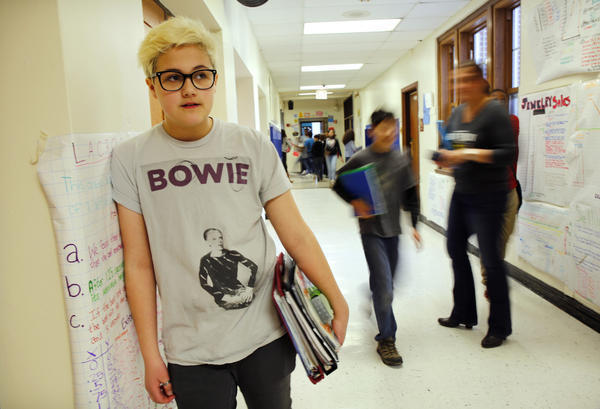
Does that mean they should be discriminated against? Does it mean we should judge them, tell them they’re somehow less valuable than the other kids? Tell them who they are by telling them where to pee?
Heck, No!
Some kids don’t feel comfortable with a traditional gender identity. And it’s more common than you’d think.
It’s certainly more widespread than I ever would have thought until a little girl taught me a lesson… well, not a little girl, really.
A few months ago, I would have said she’s the cutest little girl in the lunch line.I’m a Public School teacher. Hands Off My Trans Students! | gadflyonthewallblog:


State Law Protects Transgender Students’ Rights - Year 2017 (CA Dept of Education)

State Law Protects Transgender Students’ Rights - Year 2017 (CA Dept of Education):

State Schools Chief Tom Torlakson Reminds Californians that State Law Protects Transgender Students’ Rights


SACRAMENTO—State Superintendent of Public Instruction Tom Torlakson today reiterated his strong support for the rights of transgender students and reminded all Californians that state law requires public schools to allow students access to the restroom or locker room consistent with their gender identity.
“All students deserve a safe and supportive school environment. California will continue to work to provide that environment for our lesbian, gay, bisexual, and transgender students regardless of any misguided directives by the federal government and the Trump administration,” Torlakson said.
Joint action by the U.S. Department of Education and the U.S. Department of Justice is expected to revoke federal guidelines adopted by the Obama administration in May 2016 to protect the rights of transgender students at schools by allowing them to use the bathrooms and locker rooms matching their chosen gender identity.
In 2013, California became the first state in the nation to enshrine certain rights for transgender K–12 students in state law, including the right to choose the bathroom or locker room consistent with their gender identity.
Torlakson said action announced by the White House does not roll back protections for California students and educators.
“California students will continue to have their civil rights protected,” he said. “In California we move forward, not backward.”
Governor Brown signed AB 1266 in 2013 and created protections for transgender students. The California Department of Education has information on this CDE Frequently Asked Questions Web page.

# # # #
Tom Torlakson — State Superintendent of Public Instruction
Communications Division, Room 5206, 916-319-0818, Fax 916-319-0100
State Law Protects Transgender Students’ Rights - Year 2017 (CA Dept of Education):

Episode 28: Are you a "Reformer" or an "Innovator?" | BustED Pencils

Episode 28: Are you a "Reformer" or an "Innovator?" | BustED Pencils:

Episode 28: Are you a "Reformer" or an "Innovator?"

Feature Interview: Angela Engel joins us to discuss the difference between reform and innovation in public schools.
Matt Damon’s Mom explores the possibility that Donald Trump might make education great again.
Blogger of the Week: Ron Giordan talks about his new blog democracydestroyed.com and his take on Betsy DeVos and IDEA.
Troy Laraviere on the Schools Our Children Deserve.
Trending News If Trump makes punk rock great again what can we expect for education?
And of course a Moment of Zinn.
Let’s BUST some Pencils!


Episode 28: Are you a "Reformer" or an "Innovator?" | BustED Pencils:


 BustED Pencils