Latest News and Comment from Education

Monday, January 23, 2017

Educational Justice in the Next Four Years: Post-Election Reflections | Voices in Urban Education

Educational Justice in the Next Four Years: Post-Election Reflections | Voices in Urban Education:

Educational Justice in the Next Four Years: Post-Election Reflections


2017, NO.45
This special post-election, online-only issue of VUE features interviews with a wide range of thought leaders in the field of educational justice – including practitioners, policy and foundation leaders, youth and adult activists, and academic researchers – reflecting on what lies ahead in the aftermath of the 2016 election.

by
Keith C. Catone
“I call what we were experiencing after the election a moment of ‘anxious apprehension,’ which can also be a moment of activist birth that sets the stage for a new level of consciousness to be awakened.”
by
Deborah Jewell-Sherman
“After the election I wrote to all of my students – past and present – and said, ‘We were born for a moment such as this. And we will do what is necessary to secure the future for all children.’”
by
José Luis Vilson
“We need to give students the ability to activate their own voice, to speak up, and create spaces for them to solve problems that we may not be able to see as adults.”
by
Licelot (Lee) Caraballo, Aidan Donahue, and Thaina Merlain
“You still have your voice. You still have people power. Continue to fight for what you believe in.”
by
Linda Darling-Hammond
“The onus now is on educators, community organizations, civil rights organizations, and others in the states to engage with state agencies to build new approaches to educational improvement.”
by
Kent McGuire
“We’re going to advance a narrative about what needs to change and see if we can grow a group of new leaders who will be courageous but also smart enough to push in that direction.”
by
Keron Blair
“I think people see this as a call to really stand up, and say, ‘Our schools will be safe places. Our schools will be sanctuaries. We will have good public schools in our communities, and we will fight for them.’”
by
Audrey M. Hutchinson
“Municipal officials know that education is tied to quality of life and public safety; cities are better off when more people are well-educated.”
by
Kenneth Wong
“Charter schools and traditional public schools should not be avoiding one another, but instead I think we need to convene as soon as we can to explore common ground. We are all serving similar students, similar needs, and we are facing similar challenges.” 
Educational Justice in the Next Four Years: Post-Election Reflections | Voices in Urban Education:

President Trump, Betsy DeVos, and the Elitist Drive to End Public Schooling

President Trump, Betsy DeVos, and the Elitist Drive to End Public Schooling:

President Trump, Betsy DeVos, and the Elitist Drive to End Public Schooling

door-green-closed-lock

Education then, beyond all other devices of human origin, is the great equalizer of the conditions of men, the balance-wheel of social machinery.
—Horace Mann
President Trump, a billionaire, has demonstrated elitist hatred for our most public democratic institution and its teachers. It is the institution, despite its problems, that has the greatest chance of taking a poor person and lifting them to a better place in society.
President Trump, if allowed, will put a lock on public schooling for good.
President Trump and his choice for education secretary, Betsy DeVos, another billionaire, also displays a lack of connection with the middle class, those who struggle to make ends meet. They do not seem to understand the need for good public schools for all children.
And public school teachers who struggle against all odds to give our students hope and President Trump, Betsy DeVos, and the Elitist Drive to End Public Schooling:


The Education Buzzwords That Will Persevere Under Trump - The Atlantic

The Education Buzzwords That Will Persevere Under Trump - The Atlantic:

Will These Education Buzzwords Persevere Under Trump?

Ten concepts that gained lots of traction under the Obama administration

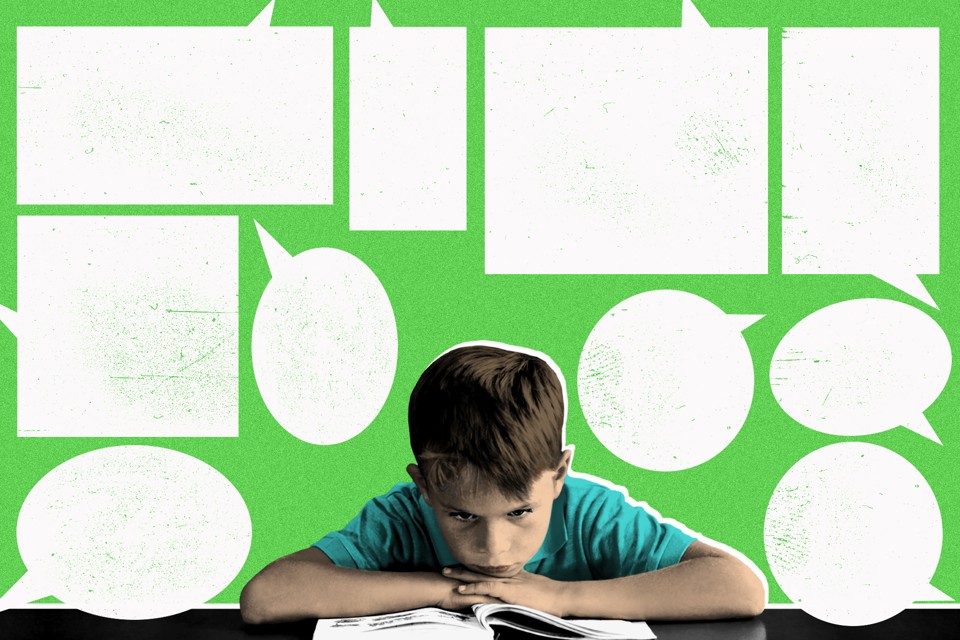
A custom illustration featuring a kid reading a book and empty thought bubbles


School choice may be the popular kid in the education-jargon lunchroom right now, but it’s certainly not the only term that’s gotten a lot of buzz. Education Secretary-nominee Betsy DeVos will almost certainly bring with her a new set of vocabulary terms, but that doesn’t mean the U.S. Education Department will sharply depart from the education concepts the Obama administration either popularized or helped propagate. Education-related vocabulary tends to be needlessly clunky, but these 10 terms from the past eight years may—or may not—have some staying power.

Achievement Gap
Definition: When there is a statistically significant difference in two groups of students’ test scores, that difference is known as the achievement gap. Simply put, there is hard evidence of disparities in performance based on factors like race, gender, and socioeconomic status. One of the most mainstream of the buzzwords on this list, the existence of the achievement gap is oftentimes used as a catch-all to explain the failures of the education system to act as an engine of upward mobility.
Background: The National Center for Education Statistics has studied the achievement gaps between white and Hispanic students as well as white and black students, and one goal of President Obama’s My Brother’s Keeper initiative was to help close these disparities. Some research shows charter schools—for which DeVos has strongly advocated—are effective in shrinking the achievement gap, though other research asserts the opposite. Ultimately, it would seem difficult for the new administration to shy away from referencing the phenomenon completely. The civil-rights issues exemplified by the achievement gap are, to a large extent, at the heart of the Department of Education’s existential purpose.
Here’s what former President Barack Obama said about achievement gaps in 2007:
Blacks are less likely in their schools to have adequate funding. We have less-qualified teachers in those schools. We have fewer textbooks in those schools. We got in some schools rats outnumbering computers. That's called the achievement gap. You've got a health care gap and you've got an achievement gap.
Links to some of The Atlantic’s past coverage:
The Challenge of Educational Inequality | Ronald Brownstein

In Wealthier School Districts, Students Are Farther Apart | Emily DeRuy

The Ignored Science That Could Help Close the Achievement Gap | Hayley Glatter

In Pursuit of Integration | Alia Wong
How School Suspensions Push Black Students Behind | Alia Wong


Data-Driven Instruction
Definition: This model is a deliberate and systematic measurement approach to student improvement. Many explanations of data-driven instruction include a cyclical element: Students take some form of assessment, the results from that assessment are collected and considered, and action is taken in response to those results. Then the process begins again.
Background: Data-driven instruction seems antithetical to many of the other terms on this list. It feels sterile and narrow-minded in context with a “whole child” approach emphasizing soft skills and emotional growth. Libraries could be filled with the novels written about the short- and long-term problems with teaching to a test; standardized testing is an imperfect measurement, but data-driven instruction can go beyond Scantron tests and operate as a results-oriented model.

Links to some of The Atlantic’s past coverage:

What Happened to the Common Core Debate? | Priscilla Alvarez

The Data-Driven Parent | Mya Frazier

What Happens When Students Control Their Own Education? | Emily Richmond

The Disproportionate Stress Plaguing American Teachers | Timothy Walker


Failure
Definition: No, this isn’t a trick question. Failure is the opposite of success. A child fails when they have not adequately done something required, desired, or The Education Buzzwords That Will Persevere Under Trump - The Atlantic:
Image result for lies that my father told me

How Did the Idea of Education Privatization Become Normalized? | janresseger

How Did the Idea of Education Privatization Become Normalized? | janresseger:

How Did the Idea of Education Privatization Become Normalized?


After the Office of Government Ethics released Betsy DeVos’s financial disclosure information on Friday, Senator Lamar Alexander has again delayed—until January 31st—the Senate HELP Committee’s vote on whether to recommend Betsy DeVos’s nomination for a vote on the Senate floor.  The extra week gives those of us who worry about DeVos’s nomination more time to learn about Betsy DeVos and her ideas and also more time to try to keep up the pressure on our Senators to oppose her.  Please continue to call your Senators and encourage your friends to do so.
In the meantime, Valerie Strauss has written an absolutely essential article to ensure that everybody is better informed.  It is a history of the normalization of the idea of school privatization.  As you know, privatization of education is also Betsy DeVos’s one preferred idea. Many of us remember a time when most Americans simply accepted that the public schools, paid for by the public and responsible for educating each and every student, were the best institution for meeting the needs and protecting the rights of our children.
In Democrats Reject Her, but They Helped Pave the Road to Education Nominee DeVos, Strauss explains: “Democrats have in recent years sounded—and acted—a lot like Republicans in advancing corporate education reform, which seeks to operate public schools as if they were businesses, not civic institutions…  By embracing many of the tenets of corporate reform—including the notion of ‘school choice’ and targeting of teachers and their unions as being blind to the needs of children—they helped make DeVos’s education views, once seen as extreme, seem less so.”
Strauss quotes the ideas Richard Devos, Betsy’s husband, presented in a speech at the Heritage How Did the Idea of Education Privatization Become Normalized? | janresseger:


Mike Klonsky's SmallTalk Blog: WEEKEND QUOTABLES

Mike Klonsky's SmallTalk Blog: WEEKEND QUOTABLES:

WEEKEND QUOTABLES


Quarter-million marched in Chicago
Donald Trump

Mentioned education only once in his inauguration speech, referring to, "...an education system flush with cash, but which leaves our young and beautiful students deprived of all knowledge." -- Transcript
 Elizabeth Warren

We Can Whimper, We Can Whine, Or We Can Fight Back. -- Huffington
Conway 
KellyAnn Conway on Alt-facts

"You're saying it's a falsehood and Sean Spicer, our press secretary, gave alternative facts to that," she told NBC's Chuck Todd. -- NBC News
Dan Rather

These are not normal times. These are extraordinary times. And extraordinary times call for extraordinary measures. -- Facebook post on Alt-facts
Valerie Strauss

But the record shows that Democrats can’t just blame Republicans for her ascension. It was actually Democrats who helped pave the road for DeVos to take Mike Klonsky's SmallTalk Blog: WEEKEND QUOTABLES:


Kids Deserve a Quality Education – not the PURSUIT of a Quality Education | gadflyonthewallblog

Kids Deserve a Quality Education – not the PURSUIT of a Quality Education | gadflyonthewallblog:

Kids Deserve a Quality Education – not the PURSUIT of a Quality Education

On Tuesday, Dannah Wilson, a 17-year-old student in Detroit came to Washington, D.C., with a message for Betsy DeVos, the current nominee for Education Secretary.
She said:
“My four siblings and I have attended 22 schools in search of satisfaction. … A satisfaction that our eyes haven’t seen. A satisfaction that our hearts can only hope for. A satisfaction that has been stolen from me for way too long because of the naive and narrow policies pushed by Betsy DeVos. That Detroit students are denied daily due to the privately institutional lies by Betsy DeVos and her duplicates.”
After three hours of confirmation hearings, DeVos was nowhere to be seen.
Running on only 3 hours of sleep and after waiting for 7 hours to speak with DeVos, Wilson spoke, instead, to people who would listen – a gathering of members of the AFL-CIO.
Her powerful statement was recorded by the members of the American Federation of Teachers (AFT) and posted to their Facebook page where it has gone viral.
As with anything involving unions, skeptics will dismiss the whole thing as a publicity stunt. That the AFT decided to add an annoying musical score to the video will only heighten that skepticism.
However, there is one thing that can’t be denied – Wilson’s sincerity. Her eyes tear up and her voice chokes as she tries to get the words out. You may discount her as a Kids Deserve a Quality Education – not the PURSUIT of a Quality Education | gadflyonthewallblog:


GET WOKE, White People! | Bill Ayers

GET WOKE, White People! | Bill Ayers:

GET WOKE, White People!

Image result for GET WOKE, White People

The world-wide outpouring of rage immediately following the inauguration of Donald Trump was dazzling and heartening. Women in the lead, connections and intersectionality in the air, humor, art, determination, solidarity—the people rising, the popular opposition on display. I loved so many signs waving in the streets of Washington: “Fight like a girl!”; “If my uterus shot bullets it would have more protection than it does now;” “If it’s not intersectional, it’s not my feminism;” “I love my nasty mom.”
 
We can and we must build a broad social movement in fierce and effective opposition to Trumpism, and for a world in balance.
 
It’s time to organize a powerful resistance.
 
And that means in part getting smart, paying attention, waking up in new ways.
 
White folks need to get over the illusion of innocence.
 
I remember years ago watching a sequence from the documentary, “Shoah.” The film maker was standing in a public square in formerly occupied France within sight of a station where Jews were loaded onto trains and transported to death camps. interviewing a villager. The film maker kept asking what the villager thought at the time. We didn’t know, he said. We didn’t know about the camps. But you knew they were rounded up. Yes, but we didn’t know why. Well, you could see them packed into box cars. Yes, but we didn’t know…
 
The question is, what do you need to know in order to know? Or, from another angle of regard, when is the claim of innocence simply a fraud and a lie?
 
Here in the US, if you look you’ll see that the criminal justice system and the prison industrial complex are institutions of congealed violent white GET WOKE, White People! | Bill Ayers:

A must read. Women’s March: January, 21, 2017. Pensacola, Florida. | Fred Klonsky

A must read. Women’s March: January, 21, 2017. Pensacola, Florida. | Fred Klonsky:

A must read. Women’s March: January, 21, 2017. Pensacola, Florida.

13112833_10201528208282738_7683590378885854849_o

-By Bob Zellner from his Facebook page. Bob Zellner is the organizer of the Ella Baker Organizing School South BOSS at North Carolina NAACP and former Field Secretary at SNCC.
The worst weather in the United States erupted this morning as our small band suited up to drive from Daphne, Alabama, my hometown, to Pensacola for the Women’s March. Tornado alarms screamed as we drove through rain and wind toward Morning Joe’s hometown.
Four women organizers in our crowded SUV talked to driver Kent about not hydroplaning. “Warning,” someone reminded us, “means there’s a twister on the ground somewhere nearby.” Another declared that if there were only a dozen people at the march, at least we would be there.
Nearing the end of Palafox at Luna Plaza in Pensacola we could make out rainbows of bright umbrellas and rain slickers, as small groups with dripping signs surged toward the troubled waters of the bay. The lightening cracking above raised signs and umbrellas ignited my moderate to severe PTSD. Dark clouds hovered just above the water while Kent eased the BMW into a miraculously open parking place smack in front of a café awning shielding a few huddled marchers. Being the only man in the car, I was soon ordered to jump out for updated news of the march and rally. Smiling folks said the platform speaking was postposed till 12:30 pm due to the lightening. Thinking we might relax, we breathed relief but seconds later a huge army of shouting women, men, young people, and children came barreling down the flooded street. Sally Pat suddenly bailed out, disappearing in a sea of soaked but happy folks.
Michele grabbed her “Keep Abortion Legal” sign along with one of the two available A must read. Women’s March: January, 21, 2017. Pensacola, Florida. | Fred Klonsky:


The 7 stages of white people getting woke | Complex

The 7 stages of white people getting woke | Complex:

The 7 stages of white people getting woke

Image result for The 7 stages of white people getting woke animated gif
We all watched as Matt McGorry went from the cute prison guard in Orange is the New Black to that woke white guy who’s using his celebrity influence to raise awareness around injustice and inequality. Thanks to the Internet and the removal of media gatekeepers, we’ve seen a growing number of prominent celebrities (what up, Penn Badgley!) wake up to the harsh realities that people of color face. Anyone who can access the web has a voice now, and while the Internet can be a breeding ground for hatred, it's also a place where we can learn from each others' experiences. 
I know I'm not alone in waking up to the subtle and insidious ways that racism permeates the lives of so many Americans. Although I doubt most white people believe we're living in a "post-racial America," hearing stories from POCs about their experiences with racism is eye-opening. From rampant police brutality and heightened incarceration rates to socioeconomic inequality and job discrimination, there's an entire segment of America that many white people are unaware of. 
At least, that's until they wake the hell up, and see what's going on around them. When white people go from oblivious to activist, there’s a certain pattern that emerges. Here are the seven stages of getting "woke":

Stage 1: Recognition

Image result for Recognition animated gif
Maybe the seed was planted by the execution of Trayvon Martin. Maybe the videos of Tamir Rice or Michael Brown or Freddie Gray or Eric Garner made you recognize that something is not right, here—that there is a very real, very serious problem with the way people of color are treated in America. That recognition, like a light bulb above the head, changed everything. You knew you'd never be the same again. You knew something you couldn’t un-know.
So yeah, you feel guilty. And frustrated. And helpless. And then a little more guilty. But then you realize that your feelings are really not as important as decades of injustice, so you just sit back, listen, and then listen some more. Because white people's feelings about racism <  people of color's actual racist reality. ¯\_(ツ)_/¯ 

Stage 2: Research

Image result for research animated gif
After recognition, it becomes all about research: reading books that may be uncomfortable to read; reading about privilege and the ways the world has opened doors for you based on your skin color—but closed doors on others for theirs. You go down the rabbit hole of information, and the more you read, the angrier you become. You start thinking: How did I not notice any of this before? How is this still the reality we're living in? This is all super messed up
So, you fill your Amazon cart with books. You read novels by people of color. You click on essays by people of color. You want to know, to learn more, to be awake. You're done sticking your head in the sand, and pretending everything is fine. 

Stage 3: Feel

Image result for feel animated gif
Although knowledge is power, all the knowledge you now have makes you feel helpless. What should you do with your privilege? How can you help? How do you do your part to make things more equal? You're only one person, so you feel horrible that you can’t do anything to help except pay attention. 
You try hard not to slip into feeling guilty, which will only lead you to feeling resentful and angry. The world does not need more resentful people. The world needs hopeful people, so you start to have hope—or at least, you try. 


Stage 4: Connect POST CONTINUES The 7 stages of white people getting woke | Complex:

Don't Blame The Kids (On The Women's March and Getting "Woke") | The Jose Vilson

Don't Blame The Kids (On The Women's March and Getting "Woke") | The Jose Vilson:

Don’t Blame The Kids (On The Women’s March and Getting “Woke”)

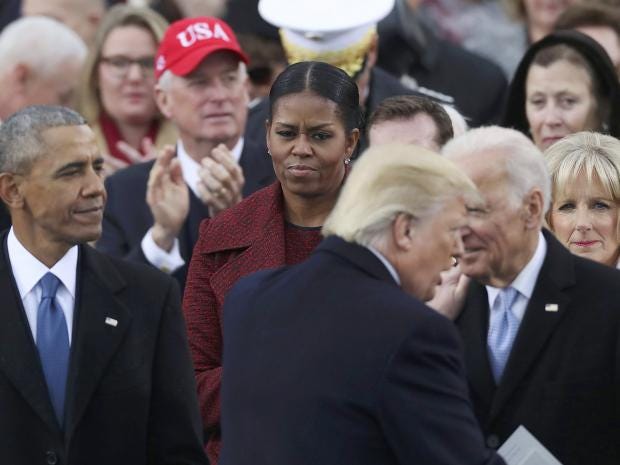
Image result for michelle obama at trump inauguration
I wore black on the day the Thief-In-Chief was inaugurated, swearing up and down my apartment as he swore up and down to protect his constituents. The image on my shirt, a picture of Martin Luther King Jr. and Malcolm X shaking hands, was the only thing beaming on my apparel. Only one of my co-workers had discussed any plans to discuss the proceedings. I wanted to abstain from what was sure to be malarkey. This was the first inauguration I had no intention of watching live. Yes, I even saw both Dubya’s inaugurations for critical analysis. I hate that people keep saying “Don’t worry; we’ve survived worse” because some people don’t survive the “tough times.” Only those that get to tell the stories of how we survived. I needed a visible form of protest on January 20th, 2017, as is my right.
This inauguration redrew the lines from “left vs. right” to “human vs. inhumane,” and too many of us are caught in the crosshairs.
For those who’ve followed me for some time, you know the types of discussions I’ve had with prior classes. I’ve spoken about the merciless killing of black children at the hands of the state, the deportation of millions of children, mostly Latino / Chicano, and the unfair state of standardized testing on my students. Sometimes, I’ll do it through a professional veneer, and other times, I just go off. Each time, I hoped to elicit some form of response, to plant a seed within the listeners that would last them long after they graduated from my classroom. This year, I thought I had the words for my students because I had done it so many times before.
After my presumed readiness, on January 20th, 2017, while the small-handed fool placed his nails on Bibles, all I could muster was “if you’d like to talk about the events of today, let me know.” Their response was the biggest thud I’ve felt in a Don't Blame The Kids (On The Women's March and Getting "Woke") | The Jose Vilson:


Trump Time Capsule #5: He knew nothing about immigration. |

Trump Time Capsule #5: He knew nothing about immigration. |:

Trump Time Capsule #5: He knew nothing about immigration.


Editor’s Note: In the spring of 2016, James Fallows, the senior editor of The Atlantic Monthly magazine, began what he called a series of “time capsules” that could, in the future, provide a key as to what Americans were thinking during the election campaign–as Trump began his march to the presidency. He finished with 152 of the “time capsules” just before the vote. This site will publish one of the capsules every week or so and that should bring us to the doorstep of the 2020 election.
What follows is the fifth “time capsule.” All the material shown, except my introduction, is copyrighted by The Atlantic Monthly and there is no intention here to claim editorial credit for any of it. If you wish to read the entire series in one sitting, go to http://www.theatlantic.com/notes/all/2016/05/the-daily-trump/484064/
——————————————————————-
The most jarring part of Donald Trump’s announcement speech…was what he said about immigrants. In a great story…in Bloomberg Businessweek by Joshua Green — longtime friend of mine, Atlantic and Washington Monthly alumnus — that is about Reince Priebus but includes an interview with Trump. In it Trump discloses that he had not actually thought about the immigration issue, or other issues, before diving in head first. From Green’s story:
“I’m not sure I got there through deep analysis,” he said [speaking of another policy]. “My views are what everybody else’s views are. When I give speeches, sometimes I’ll sign autographs and I’ll get to talk to people and learn a lot about the party.”
He says he learned that voters were disgusted with Republican leaders and channeled their outrage. I asked, given how immigration drove his initial surge of popularity, whether he, like Sessions [Senator Jeff Sessions, of Alabama–soon to be Attorney General], had considered the RNC’s call for immigration reform to be a kick in the teeth. To my surprise, he candidly admitted that he hadn’t known about it or even followed the issue until recently. “When I made my [announcement] speech at Trump Tower, the June 16 speech,” he said, “I didn’t know about the Gang of Eight. … I just knew instinctively that our borders are a mess.”
Everything about the GOP struggle over immigration concerned whether the “Gang of Eight” was a step in the right or the wrong direction. The gang was an informal alliance of four Republican and four Democratic senators. On the Democratic side, Trump Time Capsule #5: He knew nothing about immigration. |: