Latest News and Comment from Education

Monday, January 16, 2017

Teachers have some tough questions for Betsy DeVos - What Mike Pence doesn’t admit about Indiana’s school vouchers

Teachers have some tough questions for Trump’s education nominee, Betsy DeVos - The Washington Post:
Teachers have some tough questions for Trump’s education nominee, Betsy DeVos


Teachers have some tough questions they want Congress to ask Betsy DeVos, the Michigan billionaire and former Michigan Republican Party chairwoman picked by President-elect Donald Trump to be his education secretary.
DeVos’s nomination has sparked significant opposition among public education advocates who oppose her longtime support for school reform that privatizes public schools and who say she has no qualifications for the job.  Russ Walsh, coordinator of College Reading at Rider University, made the latter point about her lack of interaction with the public school system with the first question on his list of 10:
Ms. DeVos, would you please state, concisely, any relevant experience you have had in public education, either as a student, a teacher, a school leader, a public school board member, a parent of a public school child, a PTA member, a volunteer in a traditional public school or as someone who once drove past a public school?
Why, others want to know, does someone who has called the public education a “dead end” want to be in charge of the department that is responsible for federal policy affecting public schools? Does she have plans to improve college access, early childhood education? How will she enforce the new federal education law, the Every Student Succeeds Act? Is she concerned about too much standardized testing? Are teachers fairly evaluated?  Is it her intent to advance the privatization of public schools?
Opposition to DeVos has been unusually strong for an education secretary, and her confirmation hearing this week could be contentious. The Senate Health, Education, Labor and Pensions Committee had originally planned to hold a confirmation hearing Jan. 11, but postponed it until Jan. 17 after Democrats complained that Office of Government Ethics — which is responsible for vetting presidential nominees — was still working through its review of her background and finances. On  Jan. 13, Trump’s transition team acknowledged that she had omitted a $125,000 political donation from disclosures she submitted to the committee, my colleague Emma Brown reported.
Many people and organizations in the education world have been advancing lists of questions Teachers have some tough questions for Trump’s education nominee, Betsy DeVos - The Washington Post:

What Mike Pence doesn’t like to admit about Indiana’s school voucher program - The Washington Post:
What Mike Pence doesn’t like to admit about Indiana’s school voucher program


President-elect Donald Trump says he wants to spend $20 billion for a program to help states expand voucher programs, which use public funds to pay for private school tuition. As it happens, the man he chose as his vice president, Mike Pence, has experience with vouchers as governor of Indiana — and the story is a cautionary tale for anybody interested in making education policy with caution and deliberation.
The program was started as a way to give children from poor and lower-middle-class families a chance to leave public schools they felt were failing their kids. As my colleague Emma Brown explained in this story, it didn’t quite work out that way. For example:
Five years after the program was established, more than half of the state’s voucher recipients have never attended Indiana public schools, meaning that taxpayers are now covering private and religious school tuition for children whose parents had previously footed that bill. Many vouchers also are going to wealthier families, those earning up to $90,000 for a household of four.
Here is a piece by someone who has had direct experience with the program — and with working with (or, rather, against) Pence on education issues. She is Glenda Ritz, who was elected in 2012 by Indiana voters to become the state’s superintendent of public instruction as the only Democrat holding statewide office in the conservative state.
Ritz upset the incumbent, a Republican named Tony Bennett who was a leader of the corporate school reform movement, and she had campaigned against many of Bennett’s key policies, including vouchers. She, in fact, won more votes than Pence did in that election.
Pence didn’t take to that kindly and tried to undermine the power of the position she had won. He created a new education agency in Indiana to help further his own education agenda, with its own dedicated funding from state agencies but later moved to dissolve it even as he sought What Mike Pence doesn’t like to admit about Indiana’s school voucher program - The Washington Post:

CURMUDGUCATION: MLK & Another Christmas

CURMUDGUCATION: MLK & Another Christmas:

MLK & Another Christmas

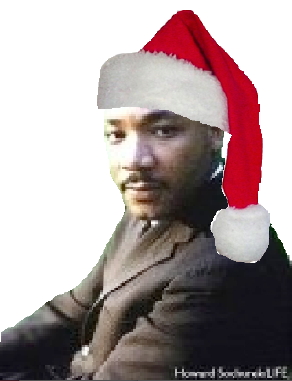
Image result for MLK & Another Christmas

Every year around December 25, a whole bunch of people who aren't actually Christians get all misty about a watered-down version of the original faith, make some generic noise about peace and good will while ignoring all the parts of the message that might be, well, more uncomfortable ("But wouldn't the moneylenders get upset if we threw them out of the temple? That just seems so rude and uncomfortable. Maybe we should do something less confrontational."), and follow it up with some noise about how, really, we should make every day Christmas.

Then on December 26th, they just scrub all of it out of their memory hole and go back to their usual lives.

Martin Luther King Jr Day has become kind of Christmassy. A whole bunch of people who aren't ordinarily black or much concerned about social justice and all the rest of it spend some time conjuring up some warm and misty images of a man who was called a troublemaker, who criticized liberals and moderates for their uninvolved silence, and who did not give his life, but had it stolen by some angry white guy with a gun.

We'll have posts and tweets about how great a man he was, how folks of all colors should just get along, illustrated with photos of King looking noble and stock photos of ethnically diverse hand clutching.  And then on January 17th, we'll go back to arguing that Colin Kaepernick should protest injustice in some less destructive and disruptive manner than kneeling during the anthem.

Perhaps this is marginally better than trying to erase the day entirely so that King's name isn't even spoken, or is tied to a name like Robert E. Lee.

But I know this-- talk is cheap (and stock photos are free). And all this talk about King and the Civil Rights movement as if it was just a bunch of African-Americans sitting politely and lovingly waiting to be recognized so that America would be slightly less rude-- this is fake history, which is even 
CURMUDGUCATION: MLK & Another Christmas:


solidaridad: Los Angeles student groups to protest racism and other right-wing hate

solidaridad: Los Angeles student groups to protest racism and other right-wing hate:

Los Angeles student groups to protest racism and other right-wing hate

A busy week will be upon us. As most of you know, CEJ's campaign-turned-movement for the Schools LA Students Deserve has really grown in the last few years. Many of our chapters (we have 14 now!!) are called Students Deserve and our students, parents and teachers often call us Students Deserve now, although we are still Coalition for Educational Justice as well (CEJ). We have chapters as far west as Venice HS, as far east as Garfield HS, in Hollywood, Koreatown, Silver Lake, North Hollywood and South LA. We're seeing our dream of organizing across our huge city come to life!!
We wanted to share an exciting event  that our students have planned on their own with some support from our two new paid Students Deserve organizers, Maricela (full-time student and parent organizer) and Alfredo (part-time, supports the student organizing piece).
We're very excited to announce:
  • Weds, January 18th: Students United Against Hate, United for the Communities LA Students Deserve 
Event- MacArthur Park 4:30pm
 (PDF Flyer attached below) We want a safe space for students by students as we challenge Trump, his politics, his followers, the systems of oppression that have allowed him to exist, and the damage that he wants to do to us.


    There will be music, art, spoken word and a panel discussion. Our students are AWESOME. Please come to MacArthur Park on Wednesday after school if you are available!! We know that UTLA Chapter Chairs have Area Meetings that afternoon. 
We also will be involved on Thursday: January 19th: UTLA/ROS LA Morning Action. You probably know about the action taking place at schools. Students Deserve students want to support whatever this looks like at your campus to show that we won’t let Trump mess with schools and our communities.
Stay involved. Stay strong. Stay united. We will not be bullied by the incoming president and his right-wing cabinet nominees. WE WILL NOT BACK DOWN!
See you on Wednesday standing strong at MacArthur Park and Thursday standing strong at our schools!!solidaridad: Los Angeles student groups to protest racism and other right-wing hate:


CURMUDGUCATION: MOOCs and the Failure of Innovators

CURMUDGUCATION: MOOCs and the Failure of Innovators:

MOOCs and the Failure of Innovators


Today at IEEE Spectrum, Robert Ubell has a rough and telling explanation of "How the Pioneers of the MOOC Got It Wrong." It includes some important lessons for many of the "innovators" in the education world today.


Massive Open Online Courses took off five years ago, when Sebastian Thrun and Peter Norvig decided to stream the computer lectures from Stanford out across the internet to the world. It seemed like such a winner of an idea that Thrun co-founded Udacity, one of the leading providers of interwebbified education. Thrun was so sure of this idea that he predicted in a 2012 interview at Wired that in fifty years, only ten higher education institutions would still be standing. He and other MOOC launchers were certain that they "had inspired a revolution."

They did not know what the hell they were talking about.

In the beginning, MOOC completion rate was a whopping 7%. Nowadays that has inched up to almost 13% average. These are not impressive numbers. Nor are MOOCs putting universities out of business. As Ubell reports, research shows that people just graze or glance or bounce in for a minute. Those "who did finish a MOOC were accomplished learners, many with advanced degrees." In other words, people who are more than capable of teaching themselves from whatever resource, whether it be a MOOC or, say, a book.

What happened? A common reformster problem-- MOOC-ophiles were trying to disrupt practices that were no longer the norm in education. They figured that a MOOC would be more engaging than a 
CURMUDGUCATION: MOOCs and the Failure of Innovators:


Hoosier political ties run deep for Trump's education secretary pick

Hoosier political ties run deep for Trump's education secretary pick:

Hoosier political ties run deep for Trump's education secretary pick

Image result for devos pence indiana

Donald Trump’s pick for education secretary has deep ties to Indiana’s largest-in-the-nation private school voucher program, having played an influential role in its development and in routing millions of dollars in campaign contributions and school choice support to the state.
Betsy DeVos, a Michigan billionaire and former chair of school choice advocacy group American Federation for Children, has risen on the national scene as a champion of school reform. But many public school advocates view her as a controversial choice to lead the federal education department because of her staunch support for charter schools and vouchers.
That support has roots in Indiana, with DeVos’ organization being a “very active player” in building the state’s voucher program in 2011, said Fred Klipsch, whose school choice network now under the name of Institute for Quality Education and its political arm Hoosiers for Quality Education advocated for the law. Indiana’s program allows nearly 33,000 low- to middle-income families to use taxpayer dollars to attend private school.
DeVos’ family and organizations provided at least $2.5 million in donations to Hoosier politicians since 2004, according to Indiana's campaign finance database. That includes $95,000 last year to Gov. Eric Holcomb’s campaign. Her influence in the state, paired with her selection by Trump, has given new prominence to Indiana’s program that some education observers expect to serve as a national model.
On the nonprofit side, DeVos has poured another $1.7 million into Indiana from 2012-14, according to the most recent numbers available, with the grant money mostly benefiting Klipsch's causes.
The spotlight on Indiana’s program continues to grow as DeVos prepares for her confirmation hearing this week.
In 2011, when former Gov. Mitch Daniels and lawmakers instituted the program, Klipsch said DeVos was as excited about the development as he was.
“What I kept doing was feeding her information about the opportunities that were Hoosier political ties run deep for Trump's education secretary pick:

Big Education Ape: Did Betsy DeVos 'BUY' Donald Trump | Washington Examiner - http://bigeducationape.blogspot.com/2017/01/did-betsy-devos-buy-donald-trump.html


Hoosier School Heist TV is Doug Martin's channel featuring videos of his book tour across Indiana speaking on the corporate takeover of public education. Order Hoosier School Heist at http://hoosierschoolheist.com/.
Follow Hoosier School Heist on Facebook: https://www.facebook.com/HoosierSchoolHeist
Tweet with Doug Martin at: https://twitter.com/DougMartinED

Peter Greene: Six Reasons To Oppose Betsy DeVos As Secretary Of Education | The Huffington Post

Six Reasons To Oppose Betsy DeVos As Secretary Of Education | The Huffington Post:

Six Reasons To Oppose Betsy DeVos As Secretary Of Education


Senate hearings on Herr Trump’s cabinet picks are coming up soon, and you should be calling your Senator. Regardless of your political leanings, there are many good reasons for opposing Betsy DeVos as a Secretary of Education.
1) No experience with public education.
This is not like appointing someone to the post of Attorney General who is not a lawyer — this is like appointing someone Attorney General who has never been to court. DeVos grew up in private school, sent her kids to private school, and has spent her adult life advocating for private schools. She has literally no first hand knowledge of how the public education system works, for better or worse. As Senator Elizabeth Warren put it in her letter to DeVos:

There is no precedent for an Education Department Secretary nominee with your lack of experience in public education. While past nominees for Secretary of Education have served as teachers, school system leaders, and governors, and came to the Department of Education with deep executive experience in public education, you have held no such position.
2) No organizational experience.
DeVos’s experience is strictly in philanthropic advocacy, a sort of checkbook lobbying that has never required her to work with people with whom she disagrees. As Secretary of Education, she will need to work with governors, congresspersons, Six Reasons To Oppose Betsy DeVos As Secretary Of Education | The Huffington Post:


Schools Matter: Understanding KIPP Model Charter Schools: The Media and Research

Schools Matter: Understanding KIPP Model Charter Schools: The Media and Research:

Understanding KIPP Model Charter Schools: The Media and Research

Get 20% Off w/code: RLEGEN16

Marketplace, which has a time slot on most public radio stations, had a piece last week on the replacement of a high-performing community public elementary school in Baltimore by a "no excuses" KIPP school. Most often these community wrecking ball school replacements are justified by low test scores within the targeted school, but the destruction of Langston Hughes Elementary School in Park Heights required other reasons.  Langston Hughes was a high performing community anchor, where parents knew their children would be taught by professional and caring teachers in small classes within a safe and supportive environment.


So the "under-utilized" excuse was used by the elite efficiency zealots who control public schools in Baltimore.  And even though the community had worked effectively to improve enrollment, the school choice had been made for the parents, children, and parents of Langston Hughes.  Their school would be shut down, regardless of their choice to stay open, and buses would be provided to ferry children to a KIPP school a mile away, where 26 children would be taught in a single classroom by a teacher schooled in corporate paternalism and most assuredly lacking in experience, cultural understanding, and empathy.  No Excuses.

This "school choice" story, where corporate interests push in with charter replacements and call it "choice," is never told in the media.  The sympathetic story cited above is the rare exception to the corporate charter cheerleading that has been the position of the New York Times and Washington Post for years.  See Part 17 below from Work Hard, Be Hard . . . .


The Media and KIPP Research
In 2008, Columbia University professor, Jeffrey Henig (2008) examined seven previous KIPP studies, and based on his analysis of previous finding, he offered the following recommendations:
·      Policy makers at all levels of government should pay attention to KIPP and consider it a possible source of information and guidance for their decisions.
·      Although KIPP may yield useful information, policymakers and others should temper their Schools Matter: Understanding KIPP Model Charter Schools: The Media and Research:


How exactly did the Department of Defense end up in my child’s classroom? – Wrench in the Gears

How exactly did the Department of Defense end up in my child’s classroom? – Wrench in the Gears:

How exactly did the Department of Defense end up in my child’s classroom?


You cannot fully understand what is happening with Future Ready school redesign, 1:1 device programs, embedded assessments, gamification, classroom management apps, and the push for students in neighborhood schools to supplement instruction with online courses until you grasp the role the federal government and the Department of Defense more specifically have played in bringing us to where we are today.
In 1999, just as cloud-based computing was coming onto the scene, President Bill Clinton signed Executive Order 13111 and created the Advanced Distributed Learning Initiative or ADL.
Section 5 of that order set up “The Advisory Committee on Expanding Training Opportunities” to advise the president on what should be done to make technology-based education a reality for the ENTIRE country. The intent was not only to prioritize technology for “lifelong learning,” but also shift the focus to developing human capital and in doing so bind education to the needs of industry and the economy.
Representatives of Cisco Systems and Jobs for the Future co-chaired the committee. Others around the table included the e-learning industry, student loan financiers, educational testing companies, human resource managers, labor market analysts, universities, community colleges, chambers of commerce, city government, and a futurist. George Bush incorporated Clinton’s work into Executive Order 13218, the 21st Century Work Force Initiative, the following year giving the effort a bipartisan stamp of approval. The Obama administration continued this push for online learning in the National Broadband Plan, which contained an entire chapter on digital education, as well as through a variety of 21st century How exactly did the Department of Defense end up in my child’s classroom? – Wrench in the Gears:

NYC Educator: MLK Was a Strong Proponent of Union--Let's Honor His Memory

NYC Educator: MLK Was a Strong Proponent of Union--Let's Honor His Memory:

MLK Was a Strong Proponent of Union--Let's Honor His Memory


AFL-CIO has an entire section devoted to Martin Luther King Jr. and his ties to organized labor. Make no mistake, he would be horrified by what's going on in the United States today. While King is largely remembered for his battle for civil rights, it's less widely known that said battle included raising all boats via a unionized work force.

I have a lot of disagreements with union leadership about how the UFT is run, but one thing I hope I have in common is a strong and unyielding belief that we are stronger when we stand together. I look at our enemies, people like Michael Bloomberg and Donald Trump, people who'd have us fend for ourselves against huge corporations, and I know our best bet is to stand strong.

Trump knows it too, which is why he believes in the misleadingly named Right to Work nonsense. He knows human nature often suggests the path of least resistance, which is keeping your union dues in your pocket and letting someone else do the work. In fact, that's a huge part of our own union's issue. Even as we all pay into union, we are plagued by the twin menaces fear and apathy. I understand fear. After all, I've been watching Andrew Cuomo bloviate for years about how awful we are and how he couldn't wait to fire us. I've seen him refer to his own programs as "baloney" because not enough teachers were on the unemployment line. I don't trust anything he's had his paws on, including the state APPR system.

Apathy is something else. We are quite guilty of it, and though though UFT voting has risen to 24 from 17%, we're still nothing less than a disgrace. MLK believed in people taking a stand and so do I. As long as we're hiding in the bushes our voices will not be heard. MLK's fight was not for any one group, but rather for all of us. When some of us are oppressed, all of us are oppressed.

It's pretty sad that we're facing a President, a Senate, a Congress, and soon a Supreme Court that hasn't got our interests at heart. But MLK didn't give up against overwhelming odds and that's why we remember him. We can't allow Trump and his flunkies to move us back without a fight.

Let's honor MLK's memory. Let's not watch the grass grow under our feet. Let's stop being afraid of anything but our own apathy. MLK would want us to stand against the execrable Donald Trump and his band of thugs. Let's do so. Let's honor his memory not only today, but also next Saturday. Find your warmest winter coat and meet me, meet MORE, and meet the UFT at 10:30 AM at 1 Dag Hammarskjold Plaza on 47th Street between 2nd and 3rd Avenue.

In fact, King was in Memphis to address and stand up for the Sanitation Workers when he was assassinated. Let's go to Manhattan, take our own stand, and follow in MLK's footsteps. Let's stop Donald Trump and the morally bankrupt GOP from moving us backward.

Will I see you there?


NYC Educator: MLK Was a Strong Proponent of Union--Let's Honor His Memory:

Schools Matter: Big Data and Small Junkies

Schools Matter: Big Data and Small Junkies:

Big Data and Small Junkies


If you are a reluctant teacher or parent now being inundated with reasons you should embrace more computer screen time for school kids, there are good reasons for your skepticism.  Here's one:

Most people are shocked to hear that a video game can actually be more potent than morphine. While this is a phenomenal advance in pain management medicine and for use with burn victims, it begs the question: Just what effect is this digital drug—a digital drug that’s more powerful than morphine—having on the brains and nervous systems of seven-year-olds who are ingesting very similar digital drugs on their glowing screens?  And, if stimulating screens are indeed more powerful than morphine, can they be just as addicting?

As I discuss in my book, Glow Kids, screen tech can affect the brain just like a digital drug: Gaming raises dopamine levels by 100 percent and activates the H-P-A (the Hypothalmus-Pituatary-Adrenal Axis, otherwise 
Schools Matter: Big Data and Small Junkies:


Martin Luther King Day – As growing inequality sinks our nation - Wait What?

Martin Luther King Day – As growing inequality sinks our nation - Wait What?:

Martin Luther King Day – As growing inequality sinks our nation


Connecticut’s wealthiest residents pay about 5.5% of their income in state and local taxes.  The middle class pay about 10%, while the poor pay about 12% of their income in state and local taxes.
But Governor Dannel Malloy will continue to fight any and all proposals to require the wealthy to pay their fair share in taxes.  In his now infamous speech to the Connecticut legislature in 2011, Malloy said he would fight a tax increase on the wealthy because he didn’t want to punish success?
And even if Connecticut raised the income tax rate significantly on Connecticut’s wealthiest, they would still be paying far less in state and local taxes than they would if they lived in New York, New York City, New Jersey or Massachusetts.
So what is the truth about inequality in the United States?
According to the Institute for Policy Studies,
Income disparities have become so pronounced that America’s top 10 percent now average nearly nine times as much income as the bottom 90 percent. Americans in the top 1 percent tower stunningly higher. They average over 38 times more income than the bottom 90 percent.
In the United States, wealth inequality runs even more pronounced than income inequality
Over the past century, the share of America’s wealth held by the nation’s wealthiest has changed markedly. That share peaked in the late 1920s, right before the Great Depression, 
Martin Luther King Day – As growing inequality sinks our nation - Wait What?:
Image result for Martin Luther King Day

The Big Lie about the Left in the U.S. | radical eyes for equity

The Big Lie about the Left in the U.S. | radical eyes for equity:

The Big Lie about the Left in the U.S.


The Big Lie about the Left in the U.S. is that the Left exists in some substantial and influential way in the country.
The Truth about the Left in the U.S. is that the Left does not exist in some substantial and influential way in the country. Period.
The little lies that feed into the Big Lie include that universities and professors, K-12 public schools, the mainstream media, and Hollywood are all powerful instruments of liberal propaganda.
These little lies have cousins in the annual shouting about the “war on Christmas” and hand wringing by Christians that they are somehow the oppressed peoples of the U.S.
These lies little and Big are a scale problem in that the U.S. is now and has always been a country whose center is well to the right, grounded as we are in capitalism more so than democracy.
The U.S. is a rightwing country that pays lip service to progressivism and democracy; we have a vibrant and powerful Right and an anemic, fawning Middle.
Wealth, corporatism, consumerism, and power are inseparable in the U.S.—pervading the entire culture including every aspect of government and popular culture.
The Left in the U.S. is a fabricated boogeyman, designed and perpetuated by the Right to keep the general public distracted. Written as dark satire, Kurt Vonnegut’s Cat’s Cradle now serves as a manual for understanding how power uses false enemies to maintain power and control.
Notably during the past 30-plus decades, conservative politics have dominated the country, creating for Republicans a huge problem in terms of bashing “big government.”
But dog-whistle politics grounded in race and racism benefitting the Right and Republicans have a long history.


How Mass Incarceration Contributes to the Achievement Gap - The Atlantic

How Mass Incarceration Contributes to the Achievement Gap - The Atlantic:

How Mass Incarceration Pushes Black Children Further Behind in School

A new study shows that the disproportionate imprisonment rates faced by people of color contribute to race-based inequalities in educational attainment.

Image result for How Mass Incarceration Pushes Black Children Further Behind in School

In the summer of 1963, Martin Luther King Jr. delivered the closing remarks at the March on Washington. More than 200,000 people gathered to cast a national spotlight on and mobilize resistance to Jim Crow, racist laws and policies that disenfranchised black Americans and mandated segregated housing, schools, and employment. Today, more than 50 years later, remnants of Jim Crow segregation persist in the form of mass incarceration—the imprisonment of millions of Americans, overwhelmingly and disproportionately black adults, in local, state, and federal prisons.

The U.S. incarceration rate is more than five times higher than that in most of the world’s nations, despite a crime rate that’s comparable to other politically stable, industrialized countries. And among the swelling number of incarcerated men and women is a vast number of parents. In 2015, The Atlantic’s Alia Wong highlighted a study from Child Trends that found that one in nine black children has had a parent in jail or prison, about twice as high as that for white children. For black adolescents ages 12 through 17, it’s nearly one in seven. Predictably, this has implications for America’s classrooms.


In a new report, researchers from the left-leaning Economic Policy Institute (EPI) argue that mass incarceration is a chief contributor to the racial gaps in academic performance between black and white students. The study outlines a wide array of adverse effects for children of incarcerated parents and underscores how criminal-justice policy and education policy are linked.


“Education policymakers and many educators continue to insist that in order to narrow the achievement gap, we must tinker with what is happening in the classroom … improve the way schools are functioning,” said the EPI research associate Leila Morsy, the report’s co-author and a lecturer at the University of New South Wales. “[Yet] making changes to criminal-justice policy can make as much, if not more, of a difference [for children].”

Acknowledging that a significant body of research already exists on the discriminatory system that incarcerates black men at six times the rate of white men, and about 2.5 times the How Mass Incarceration Contributes to the Achievement Gap - The Atlantic:


Five key trends in U.S. student performance: Progress by blacks and Hispanics | Economic Policy Institute

Five key trends in U.S. student performance: Progress by blacks and Hispanics, the takeoff of Asians, the stall of non-English speakers, the persistence of socioeconomic gaps, and the damaging effect of highly segregated schools | Economic Policy Institute:

Five key trends in U.S. student performance

Progress by blacks and Hispanics, the takeoff of Asians, the stall of non-English speakers, the persistence of socioeconomic gaps, and the damaging effect of highly segregated schools

Related image

Overview

In 15 years of increasing average test scores, black-white and Hispanic-white student achievement gaps continue to close, and Asian students are pulling away from whites in both math and reading achievement. For the improving groups, these long-term trends may be a major educational success story.
In stark contrast, Hispanic and Asian students who are English language learners (ELL) are falling further behind white students in mathematics and reading achievement. And gaps between higher- and lower-income students persist, with some changes that vary by subject and grade. Meanwhile, the proportion of low-income students in U.S. schools has increased rapidly, as has the share of minority students in the student population. The chances of ending up in a high-poverty or high-minority school are highly determined by a student’s race/ethnicity and social class. For example, black and Hispanic students—even if they are not poor—are much more likely than white or Asian students to be in high-poverty schools.
These disparities represent a stubborn educational failure story. Attending a high-poverty school lowers math and reading achievement for students in all racial/ethnic groups and this negative effect has not diminished over time. And attending a school in which blacks and Hispanics make up more than 75 percent of the student body lowers achievement of black, Hispanic, and Asian students but does not affect white students (in some of the analyzed years it actually had a small positive influence on math test scores for whites).
These patterns of change (or lack of change) could have important implications for what is happening in American society in general and in U.S. schools in particular. Sustaining our democratic values and improving our education system call for a host of more coordinated and widespread education, economic, and housing policies—including policies to raise curricular standards, tackle insufficient funding for schools with a large share of low-income students, promote access to education resources from early childhood to college, improve dual language programs, provide economic support for families, and create more integrated schools and neighborhoods.

Executive summary

A founding ideal of American democracy is that merit, not accident of birth, should determine individuals’ income and social status. Schools have assumed a major role in judging key elements of merit among young people—namely, academic skills, hard work, self-discipline, and cooperative behavior. Schools do so mainly by evaluating students in a variety of subjects deemed important for success later in life. No one expects outcomes at the end of the schooling process to be the same for every student, since initial ability varies, and some young people are more disciplined and willing to work harder in school than others. Yet, when students’ inherent characteristics—such as race, gender, or parents’ economic and social capital—rather than their innate ability, hard work, and discipline systematically affect their school outcomes, this threatens democratic ideals.
These apparent contradictions between the ideals and reality of U.S. schools have led analysts over the last few decades to study and try to explain persistent gaps in student achievement. Particular attention has been given to the gap between blacks and Hispanics versus whites, across social-class groups, and by gender. Research has provided evidence that race and ethnicity continue to be important factors in explaining achievement differences. However, much of the black-white and Hispanic-white achievement gaps are accounted for by social-class differences. That is, in the United States, race and often ethnicity are closely intertwined with social class. Minority children, particularly African-Americans and Hispanics, are more likely to be poor than white children because of the ways that race and ethnicity shape opportunity and economic outcomes. Black and Hispanic children are also more likely than their white or Asian-American counterparts to live in low-income, racially segregated neighborhoods and to attend schools with high concentrations of low-income, nonwhite students.
Notwithstanding these troubling realities, achievement differences between blacks and whites and between Hispanics and whites have shrunk in recent decades. The bad news is that until recently gaps between the higher and lower social-class groups were increasing, particularly between children in the highest income group and everyone else (Reardon 2011; Reardon, Waldfogel, and Bassok 2016; Putnam 2015).
This paper advances the discussion of these issues by analyzing trends in the influence of race/ethnicity, social class, and gender on students’ academic performance in the United States. It focuses on trends for two different grade levels—eighth and fourth—and two different subjects—mathematics and reading—over the past decade. Trends in eighth-grade mathematics since the mid-1990s are also examined. This paper also explores the ways in which English language ability relates to Hispanics’ and Asian Americans’ academic performance over time (Nores and Barnett 2014). We use individual student microdata gathered from the National Assessment of Educational Progress (NAEP) to estimate the math and reading performance of students in the fourth and eighth grades from 2003 to 2013, and the math performance of eighth-graders from 1996 to 2013.
Our study has six objectives:
  • To describe changes in the racial characteristics and socioeconomic status (SES) of the student population, and in the composition of student bodies in U.S. schools over the past two decades in the periods 1996–2003 and 2003–2013
  • To describe the types of schools (high- and low-poverty, high and low concentrations of blacks plus Hispanics) that black, Hispanic, white, and Asian children attend and how these have changed over the past 10 and 20 years
  • To estimate changes in students’ achievement gaps by social class and race/ethnicity, including gaps for students designated as English language learners (ELLs), over the past 10 and 20 years
  • To estimate changes over the past decade in the influence of school composition—such as concentration of students by poverty, race, and ethnic status—on students’ achievement gaps by social class and race/ethnicity
  • To estimate whether and how much the trajectories of social class and race/ethnicity achievement gaps differed over the past 10 years for male and female students
  • To estimate whether and how much these trajectories differed over the past 10 years for lower-achieving students and higher-achieving students