Latest News and Comment from Education

Monday, January 16, 2017

Dream. | Fred Klonsky

Dream. | Fred Klonsky:

Dream

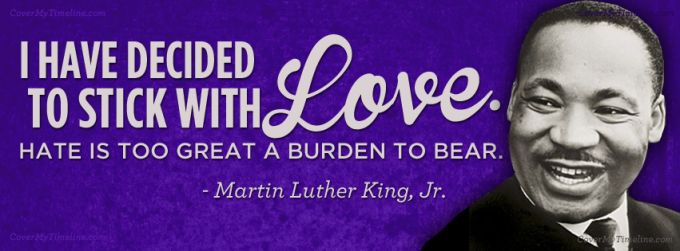
martin_luther_king_1

-Mark Stefanik is a middle school language arts teacher. He writes frequently and poetically for this blog. I try to get him to do it more often.
It’s a weekend for dreamers.
I wonder how many of this readership still dream.
I’m aiming for the Boomers whose freedom to dream was unprecedented in American History.
You know who you are.  Fairy tales did come true and they happened to you.
Civil Rights affirmed and expanded.  
A Great Society that owned the care of the poor, the sick, and the old.  
Ending a war whose victims included not just people, but our moral center.  
Equality for women (at least a start).
Stewardship of the environment.
Not a bad legacy for a decade disparaged. Not a bad reminder for a generation dismayed.
I’m aiming for the Boomers whose chances to dream remain alive in retirement.
Frank Smith once wrote, “Reality is a fantasy that works.” His idea haunts my world view and sustains what little efforts I make.  
Again, as we enter a weekend that celebrates one of our greatest dreamers, as we prepare for the hand-off of one fantasy to another, I wonder how many of us still dream.   As I begin my glide path to retirement this June, I reflect upon what I’ll do with the dream time afforded me by that decision.  
Hope is key(‘ A good thing, maybe the best of things’).  I hope to be purposeful.  I hope to build upon the dreams bestowed upon me for my children and theirs.  I hope that, no Dream. | Fred Klonsky:

We’re on ‘GN tonight with Justin Kaufman.
My brother Mike Klonsky and I join host Justin Kaufmann on WGN radio’s The Downlooad , Monday evening at 8PM Central time. Over the air and live streamed around the world.
John Lewis and Donald Trump.
John Lewis (1965). Donald Trump (1964).

Jersey Jazzman: How To Correctly Compare Charter and Public District Schools

Jersey Jazzman: How To Correctly Compare Charter and Public District Schools:

How To Correctly Compare Charter and Public District Schools

Jersey Jazzman (artist's conception)

Why do states collect education data if they won't use it properly?

I found myself asking this question once again this week as I read through a "Comment/Response Form" put together by the New Jersey Department of Education and released earlier this month. The form was in response to the state Board of Education, which is evaluating a series of changes in charter school regulations. Those changes, as I wrote in my last post, include loosening certification requirements for charter teachers. 

The rationale for this, according to the state's charter cheerleaders, is that charters "do more with less"; in other words, they get better results and spend less money than public district schools. Chris Christie has repeatedly made this case in his push for the disastrous "Fairness Formula," which would rob urban districts, serving many more disadvantaged children, of necessary state aid. Christie points to the alleged efficiency of charter schools to justify these cuts: if they can "do more with less," why can't the district schools?

In their form, the NJDOE included this argument in response to a question from a member of the state BOE (p. 8):
12. COMMENT: The commenter asked for the per pupil cost for charter school students based on a random sampling of 10 percent of charter schools and their districts of residence. The commenter also asked if the proposed amendments to N.J.A.C. 6A:26-7.5 will affect the per pupil cost. (C) 
RESPONSE: The proposed amendments to N.J.A.C. 6A:26-7.5 will not affect per pupil costs for students attending charter schools. 
The 2014-2015 Taxpayers’ Guide to Education Spending was used to determine per pupil costs in charter schools and in districts of residence. The table below provides information on per pupil spending for eight charter schools that were selected randomly. Charter schools are ordered by the size of the difference in per pupil spending between the main sending district and the charter school. Per pupil spending in 2014-2015 in the eight charter schools ranged from $12,845 (compared to $23,466 in the main sending district) to $18,541 (compared to $22,013 in the main sending district). (emphasis mine)
This response is immediately followed by this chartJersey Jazzman: How To Correctly Compare Charter and Public District Schools:


Is government a ‘force for good,’ or does it ‘really suck’? Ed. Dept. at a pivot point between Obama, Trump - The Washington Post

Is government a ‘force for good,’ or does it ‘really suck’? Ed. Dept. at a pivot point between Obama, Trump - The Washington Post:

Is government a ‘force for good,’ or does it ‘really suck’? Ed. Dept. at a pivot point between Obama, Trump


The fiercest critics and most ardent supporters of President Obama’s Education Department — which has arguably wielded more influence and sparked more controversy than any of its predecessors — generally agree that the agency’s efforts were rooted in the faith that government has a critical role to play in improving people’s lives.
Now the agency is poised for a radical shift with Donald Trump’s arrival in Washington, as the businessman-turned-president-elect has often spoken about government as a bumbling failure and an impediment to success.
Education Secretary John B. King Jr. — who says public schools saved his life after he was orphaned young — is preparing to move out of his seventh-floor office suite at the department’s D.C. headquarters. His designated successor, Betsy DeVos — a billionaire political power broker who has said public schools are a dysfunctional monopoly, and who believes in private-school vouchers and the power of the free market — is preparing to move in, her confirmation hearing set for Tuesday.
“Government can be a tremendous force for good,” King said in an interview at his office recently.
“Government really sucks,” DeVos, Trump’s nominee for education secretary, said last year at the South by Southwest educational technology conference in Austin. “And it doesn’t matter which party is in power.”
It is this ideological divide as much as any other that is at the root of what Trump has promised will be a very different approach to the nation’s public schools. He has said he will shrink federal oversight and interference and wants to spend billions of dollars to encourage vouchers — which the Obama administration has vigorously opposed — and charter schools.
Obama administration allies worry that Trump’s approach will overturn much of the work from the past eight years, from its reinvigoration of the civil rights division responsible for investigating complaints of Is government a ‘force for good,’ or does it ‘really suck’? Ed. Dept. at a pivot point between Obama, Trump - The Washington Post:

How The Systemic Segregation Of Schools Is Maintained By 'Individual Choices' : NPR Ed : NPR

How The Systemic Segregation Of Schools Is Maintained By 'Individual Choices' : NPR Ed : NPR:

How The Systemic Segregation Of Schools Is Maintained By 'Individual Choices'

School choice and school segregation

Sixty-three years after the Supreme Court's ruling in Brown v. Board of Education, many schools across the country either remain segregated or have re-segregated.
Journalist Nikole Hannah-Jones tells Fresh Air's Terry Gross that when it comes to school segregation, separate is never truly equal.
"There's never been a moment in the history of this country where black people who have been isolated from white people have gotten the same resources," Hannah-Jones says. "They often don't have the same level of instruction. They often don't have strong principals. They often don't have the same technology."
Still, when it was time for Hannah-Jones' daughter, Najya, to attend kindergarten, the journalist chose the public school near their home in Bedford-Stuyvesant, Brooklyn, even though its students were almost all poor and black or Latino. Hannah-Jones later wrote about that decision in The New York Times Magazine.
Before she joined The New York Times to cover racial injustice, Nikole Hannah-Jones was an award-winning reporter at Propublica.
Kathy Ryan
For Hannah-Jones, sending Najya to the neighborhood school was a moral issue. "It is important to understand that the inequality we see, school segregation, is both structural, it is systemic, but it's also upheld by individual choices," she says. "As long as individual parents continue to make choices that only benefit their own children ... we're not going to see a change."
Hannah-Jones adds that her daughter is thriving at school. "I know she's learning a lot," she says. "I think it is making her a good citizen. ... It is teaching her that children who have less resources than her are not any less intelligent than her or not any less worthy than her."

Interview highlights

On why she chose to send her young daughter to the public school in her neighborhood
One of the things I've done in my work is kind of show the hypocrisy of progressive people who say they believe in inequality, but when it comes to their individual choices about where they're going to live and where they're going to send their children, they make very different decisions, and I just didn't want to do that. So for me it was a matter of needing to live my values, and not being someone who contributed to the inequality that I write about.
On the importance of having students from different races and income levels in the public schools
The original mission of public schools ... is this understanding that no matter where How The Systemic Segregation Of Schools Is Maintained By 'Individual Choices' : NPR Ed : NPR:

Voices of the People: Our Vision for Our Children, Our City, and the Future of Public Education | Parents United for Public Education

Voices of the People: Our Vision for Our Children, Our City, and the Future of Public Education | Parents United for Public Education:

Voices of the People: Our Vision for Our Children, Our City, and the Future of Public Education

Image result for the Future of Public Education

On May 21st, 2016, a group of Philadelphians concerned about the education of our city’s children gathered to envision a better present and future for our communities. Parents, family members, community members, educators, organizers, activists, citizens– no matter the titles we attached to our roles and identities within the schools and communities of our city, each of us was committed to sharing our visions for what education could and should be in the City of Sisterly and Brotherly Love. This document is a product of the sharing of our visions, and the cumulative drive and commitment that fuel them.
We came together due to the many levels of injustice and negligence we observe in our school system. We came together due to our frustration that parents are neither listened to nor heard (and if we don’t act, who will?). We came together to create connections across the School District of Philadelphia and beyond. We came together because we are committed to being a voice for all children. We are a progressive group of individuals who plan to drive positive change through innovative solutions in K12 education.
The educational experience and environment we envision for our children is diverse, dynamic, and democratic. We want our schools and school system to honor children as full human beings. We want schools that honor and support the experiences of our children, including true respect for and understanding of the need for trauma-informed and culturally relevant teaching and learning. We want schools that respect different learning styles and foster inter-generational learning relationships and environments. We want our schools to provide more humane Voices of the People: Our Vision for Our Children, Our City, and the Future of Public Education | Parents United for Public Education:


Mike Klonsky's SmallTalk Blog: WEEKEND QUOTABLES

Mike Klonsky's SmallTalk Blog: WEEKEND QUOTABLES:

WEEKEND QUOTABLES


Congressman John Lewis’s bestselling graphic novel March: Book One was inspired by a 56-year-old comic, Martin Luther King and the Montgomery Story, that helped spawn the Civil Rights Movement. 
Rep. John Lewis

It doesn’t matter how Senator Sessions may smile, how friendly he may be, how he may speak to you... We need someone as attorney general who’s going to look out for all of us, and not just for some of us. -- Democracy Now
Jean-Marie Guehenno, CEO of International Crisis Group

"Regardless of how you view Trump and his positions, his election has led to a deep, deep sense of uncertainty and that will cast a long shadow over Davos." -- Business Insider
Singer Jennifer Holliday not going

“I was honestly just thinking that I wanted my voice to be a healing and unifying force for hope through music to help our deeply polarized country… Regretfully, I did not take into consideration that my performing for the concert would actually instead be taken as a political act against my own personal beliefs and be mistaken for support of Donald Trump and Mike Pence.” -- Raw Story
Dem consultant Robert Shrum: Hillary's going

“She will have a stiff upper lip.” -- Guardian
Mike Klonsky's SmallTalk Blog: WEEKEND QUOTABLES:

Religious Freedom Day, 2017 – Live Long and Prosper

Religious Freedom Day, 2017 – Live Long and Prosper:

Religious Freedom Day, 2017


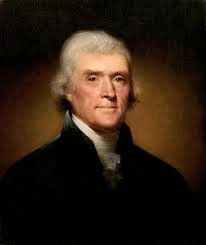
This year, Martin Luther King Day is also Religious Freedom Day, which commemorates the realization of Thomas Jefferson’s vision of an end to the state-established church in Virginia.
[This is an edited version of a post originally published on January 16, 2015]
THE VIRGINIA STATUTE FOR RELIGIOUS FREEDOM
In 1993 President George H. W. Bush declared January 16 to be Religious Freedom Day. January 16 was the date in 1786 when the Virginia House of Delegates passed Thomas Jefferson’s Virginia Statue for Religious Freedom. In 1992, on that date, Virginia Governor L. Douglas Wilder signed the first proclamation to that effect for the Commonwealth of Virginia.
The Virginia Statue for Religious Freedom was a revolutionary document. It ended the state-established church in Virginia and guaranteed religious liberty for all.
Be it enacted by the General Assembly, That no man shall be compelled to frequent or support any religious worship, place, or ministry whatsoever, nor shall be enforced, restrained, molested, or burthened in his body or goods, nor shall otherwise suffer on account of his religious opinions or belief; but that all men shall be free to profess, and by argument to maintain, their opinion in matters of religion, and that the same shall in no wise diminish enlarge, or affect their civil capacities.
“…we do well to acknowledge our debt to Thomas Jefferson and James Madison. These two men were instrumental in establishing the American tradition of religious liberty and tolerance. Thomas Jefferson articulated the idea of religious liberty in his 1777 draft Bill for Establishing Religious Freedom in Virginia…
James Madison later introduced and championed this bill in the Virginia House of Delegates, where it passed in 1786. Following the Federal Constitutional Convention of 1787, James Madison led the way in drafting our Bill of Rights.
THE FIRST AMENDMENT
The Virginia Statute became the basis for the First Amendment protection of religious liberty.
Jefferson understood the impact of his Virginia Statute. He understood that many people were against acknowledging religious liberty for everyone. In a column about Religious Freedom Day, Frederick Clarkson wrote:
Thomas Jefferson was well aware that many did not like the Statute, just as they did not like the Constitution and the First Amendment, both of which sought to expand the rights of citizens Religious Freedom Day, 2017 – Live Long and Prosper:


The Myth of “Failed” School Reform, Part 3 | Larry Cuban on School Reform and Classroom Practice

The Myth of “Failed” School Reform, Part 3 | Larry Cuban on School Reform and Classroom Practice:

The Myth of “Failed” School Reform, Part 3


Practitioner time. If media time (see previous post) often looks like speeded-up Chaplinesque frames from 1920s films, then think of practitioner time as slow motion. One example should suffice.
As computers spilled into schools during the 1980s, news media carried stories of an imminent revolution in teaching and learning. Districts bought machines like popcorn, placing them in classrooms and labs.
In schools saturated with computers, some teachers were using machines for lessons a few hours a week. Even after media predictions of an impending revolution in teaching and learning, however, most teachers remained casual or non-users.
By the early-1990s,  in characteristic hastiness, media had already pronounced the “computer revolution” dead on arrival. That judgment was premature. Over decades, a slow growth in teacher use of computers has registered on the practitioner clock rather than the media’s and policymakers’ faster tick-tock of  months and a few years. With the ubiquity of tablets and laptops, computer devices are in the hands of first graders and Advanced Placement physics students. With the hyped-up push for “personalized learning” and online instruction,  the media clock is ticking as is the policymaker clock when policies for rebuilding district computer infrastructures for school teacher andstudent access. Devices have become part of the unfolding of daily lessons across the nation’s classrooms. “Failure?”
Lag times between different clocks is also evident when student learning is considered.
Student learning time. Reformers want students to learn more, better, and faster. But this student-learning clock doesn’t tick fast. It is a very slow-moving, difficult to read, and the numbers are out of order.
Because school-based learning cannot be separated from home-based learning The Myth of “Failed” School Reform, Part 3 | Larry Cuban on School Reform and Classroom Practice:

Save Martin Luther King from Obsolescence | BustED Pencils

Save Martin Luther King from Obsolescence | BustED Pencils:

Save Martin Luther King from Obsolescence

Image result for martin luther king day

The Real King
Image and ownership of image are a trip. Especially on Martin Luther King Day. What is Dr. King’s image, vs. what he really represented in his life. If we are to believe the dominant institutions, we may think that his main contribution was reconciling with white people or turning the other cheek. Local communities organize a day of service in his name. I want to remember a different King. Not the sanitized, ‘Santa Claused’, market driven version of Martin Luther King. Martin told us that an unjust law is no law at all, he criticized our system as approaching spiritual death for spending more money on war than uplifting the people, he spoke against imperialism and white supremacy, even connected our struggle here at home to the world struggle. Martin fought for justice, he gave the greatest sacrifice one could give for the movement and sacrificed every day until he was cut down prematurely.
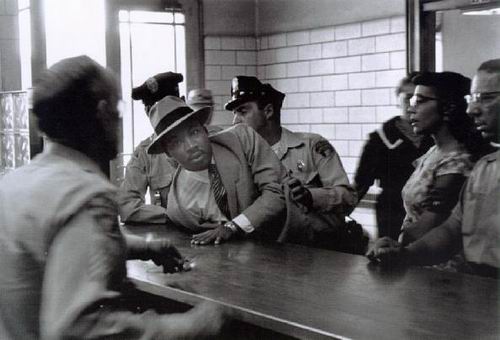
King was no chump. He stood on his principles like no one else i know of. He went to jail, he was stabbed in the chest, his home was blown up, he was slandered in the public and he never budged and it killed him in the end. What sacrifice, what courage. What a savage American government that murdered him. If King’s death teaches us anything, it is that this system has no regard for freedom, justice or equality. We are appealing to a system for justice and freedom that waged a war on freedom fighters. We cannot appeal to a system for justice if it is diametrically opposed to it at its very core.
The Laundering of King’s Image
I never once heard King advise people to plant gardens or pick up trash. Those things are great, but to honor Martin Luther King with a day of such a day of service is laughable. King went up against the system, he advocated civil disobedience, non cooperation even when facing the cops. He even recognized that he could not condemn the rebellions in the ghettos of America without first condemning the violence of the American government, who he called “the greatest purveyors of violence on the earth”.  They want to water his image down to where it means nothing. We have to reclaim his image and portray him as the lion he is. He wouldn’t be asking us to clean up or to provide free labor. He would be more likely to ask us to organize and fight for justice. 
School children recite his words, but why do they never learn anything he wrote after 1965? Why do they not read “Beyond Vietnam” where King eviscerates the actions of this system Save Martin Luther King from Obsolescence | BustED Pencils:

From the Betsy DeVos Archives: Letters to the Editor and Much More | deutsch29

From the Betsy DeVos Archives: Letters to the Editor and Much More | deutsch29:

From the Betsy DeVos Archives: Letters to the Editor and Much More


As a part of her response to “Common Questions for Executive Branch Nominees,” US ed sec nominee Betsy DeVos listed the following 19 entries as her “publications”:
  • Opinion Column, Detroit News, July 31, 1994
  • Letter to the Editor, Detroit News, August 26, 1997
  • Opinion Column, Detroit News, September 05, 1997
  • Opinion Column, Roll Call, September 06, 1997
  • Letter to the Editor, Detroit Free Press, September 21, 1998
  • Opinion Column, Detroit News, May 13, 2001
  • Opinion Column, Grand Rapids Press, June 23, 2001
  • Opinion Column, Traverse City Record Eagle, September 01, 2001
  • Opinion Column, Grand Rapids Press, December 21, 20011 (typo in list)
  • Opinion Column, Macomb Daily, August 07, 2002
  • Opinion Column, Grand Rapids Press, July 22, 2003
  • Opinion Column, Detroit News, February 08, 2004
  • Opinion Column, Grand Rapids Press, March 20, 2004
  • Opinion Column, Grand Rapids Press, May 02, 2004
  • Opinion Column, Detroit News, May 20, 2004
  • Letter to the Editor, Port Huron Times Herald, August 05, 2012
  • “Competition, Creativity and Choice in the Classroom,” SxSWedu, March 11, 2015
  • Press release, American Federation for Children, December 17, 2015
  • Letter to the Editor, Detroit Free Press, September 11, 2016
What one sees above supposedly constitutes the publications of a person nominated for the highly visible, highly influential position of US secretary of education.
I thought I might read DeVos’ dossier of opinion pieces. So, I went in search of them. The ones I located I have linked to in this post.
I have also linked to a number of additional news articles about DeVos and her activities. My search chiefly centered on 1994 to 2004; however, there are a few more recent articles, as well.
Regarding the 19 entries DeVos included as her publications: I located five.
I also located two additional opinion pieces that DeVos did not include on her “publications” list.
About Those 19 “Publications”
DeVos’ March 2015 SxSW paper was the easiest of the 19 to locate. In it, DeVos notes that “government sucks” and that “we don’t fire teachers enough,” which From the Betsy DeVos Archives: Letters to the Editor and Much More | deutsch29:


TFA CEO’s Husband Heads One Of The 73 Lowest Rated Schools In Texas | Gary Rubinstein's Blog

TFA CEO’s Husband Heads One Of The 73 Lowest Rated Schools In Texas | Gary Rubinstein's Blog:

TFA CEO’s Husband Heads One Of The 73 Lowest Rated Schools In Texas


YES Prep is a charter school network of sixteen schools in Houston.  Founded by a TFA alum and staffed by many TFA teachers, it has been hailed as a TFA success story.  Fueled by being the school to invent the invented ‘100% college acceptance rate’*, they received $1 million from Oprah in 2010.
In Wendy Kopp’s book ‘A Chance To Make History,’ she wrote (page 41)
When its fifty campus begins graduating seniors in 2014, YES Prep will be sending roughly the same number of low-income students to college as all of HISD’s other thirty-four high schools combined, unless HISD improves its outcomes (which, as I’ll describe later, it is working hard to do).  In fact, Chris (Barbic) told me that if the YES network can maintain the quality and progress it has demonstrated so far, it will operate thirteen schools and produce nine hundred college graduates each year by 2020 — double the number of low-income college graduates currently generated by all of HISD each year.
Considering that they currently graduate something like 500 seniors a year and that HISD graduates 10,000, these numbers are pretty outrageous.
Elisa Villanueva Beard is the current CEO of Teach For America.  Her husband, Jeremy Beard, is the ‘Head of Schools’ for YES Prep.  I first became aware of Jeremy at the TFA 20 TFA CEO’s Husband Heads One Of The 73 Lowest Rated Schools In Texas | Gary Rubinstein's Blog: