


Special Nite Cap: Catch Up on Today's Post 11/27/16
Featured Post
Betsy DeVos and the Wrong Way to Fix Schools - The New York Times

YESTERDAY
Top Posts This Week


“The policies and rhetoric of President-elect Trump run contrary to the most fundamental values of what it means to be a progressive committed to educating our kids and strengthening our families and communities. He proposes to eliminate accountability standards, cut Title I funding, and to gut support for vital social services that maximize our students’ ability to reach their potential. And, most pernicious, Trump gives both tacit and express endorsement to a dangerous set of racial, ethnic, religious, and gender stereotypes that assault the basic dignity of our children, causing incalculable harm not only to their sense of self, but also to their sense of belonging as accepted members of school communities and neighborhoods.“For these reasons, no Democrat should accept appointment as Secretary of Education, unless and until President-elect Trump disavows his prior statements and commits to educating the whole child and supporting the communities and families they depend on.”
Trump First Offered Jerry Falwell, Jr., US Secretary of Ed Job | deutsch29 - http://wp.me/p36Q2R-29r“DFER congratulates Betsy DeVos on her appointment as Secretary of Education, and we applaud Mrs. DeVos’s commitment to growing the number of high-quality public charter schools.“However, DFER remains deeply concerned by much of the President-elect’s education agenda, which proposes to cut money from Title I and to eliminate the federal role on accountability. These moves would undermine progress made under the Obama administration to ensure all children have access toWhy DFER’s Shavar Jeffries Must Support Ed Sec Betsy DeVos | deutsch29:
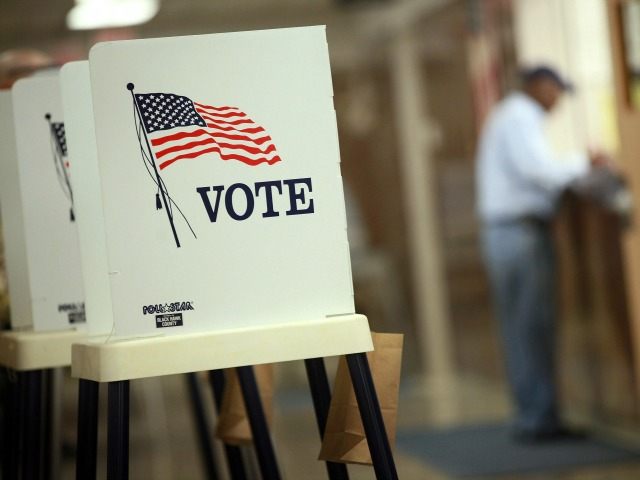
In response to recounts underway in Wisconsin and North Carolina, Lawyers’ Committee for Civil Rights Under Law President and Executive Director Kristen Clarke issued the following statement:
“Current recount efforts do not address the discriminatory impact of voter suppression laws during the 2016 election cycle. Wisconsin and North Carolina are states that were part of a coordinated campaign to make voting more difficult, particularly for African American and other minority voters. Wisconsin’s restrictive photo id law and North Carolina’s sweeping voter suppression law were among the most discriminatory efforts instituted prior to the November 2016 election. The laws in both states were the subject of protracted litigation because of their impact on African American and other minority voters. It is no surprise that these states are places where some now feel a grave injustice has occurred. Yet, none of the recount efforts underway focus on the impact of voter suppression efforts or attempt to account for those who were blocked or deterred from voting as a result of voter suppression laws in those states.
Throughout this election cycle, we received complaints from voters in Wisconsin about the state’s strict photo ID requirement which a federal court found would impair the rights of 300,000 registered voters. It is no surprise that Milwaukee County, Wisconsin shows that 51,554 fewer voters were able to participate in 2016, compared to 2012. In North Carolina, a 4th Circuit found that the state’s voter suppression law was discriminatory in purpose and effect. Yet, after the ruling on the state’s law, party official Dallas Woodhouse issued a directive encouraging local election officials to undermine the 4th Circuit’s ruling by using their discretion to cut early voting locations and hours down to a bare minimum. Officials across North Carolina heeded the call, resulting in long lines in many counties during the early voting period.
The recount efforts underway do not address pervasive discrimination that threatens American democracy. The way to strengthen public confidence in our elections and to promote transparency is to lift barriers that lock out eligible Americans from the process. This requires litigation and advocacy efforts that will uproot ongoing voting discrimination and voter suppression in our country. Among the most pressing needs is work to eliminate strict voter ID requirements, felon disenfranchisement laws that harken back to the Jim Crow era, and intimidation and harassment at the polls. This is also a time to closely analyze the Electoral College, an institution with roots that lie in debates surrounding slavery in our county.The Lawyers' Committee for Civil Rights Under Law remains committed to leading this important work to strengthen our democracy.”


We strongly urge Congress to scrutinize the record of Betsy DeVos, who has been a staunch proponent of school vouchers, a misguided idea that diverts taxpayer dollars into private and parochial schools and perverts the bedrock American value of separation of church and state. She and her husband served as the primary fundraisers and engine for a Michigan ballot initiative — Kids First! Yes! Coalition that voters soundly rejected in 2000.She has ardently supported the unlimited, unregulated growth of charter schools in Michigan, elevating for-profit schools with no consideration of the severe harm done to traditional public schools. She’s done this despite overwhelming evidence that proves that charters do no better at educating children than traditional public schools and serve only to exacerbate funding problems for cash-strapped public districts. We believe that all children have a right to a quality public education, and we fear that Betsy DeVos’ relentless advocacy of charter schools and vouchers betrays these principles.


For years, educators, parents and members of our broader communities were the canaries in the coal mine, crying out that hypertesting was hurting students, demoralizing teachers and frustrating parents. We will continue to be vigilant as work shifts to the states to fix accountability systems and develop teacher evaluation systems that are fair and aimed at improving and supporting good instruction. This new bill promises the creation of better accountability and support systems, and our students, their parents and their educators deserve nothing less.
But “shrinking” doesn’t describe Garcia. She firmly declares that the passage of the Every Student Succeeds Act earlier this year, the major federal education overhaul, opens the way for her members, in partnership with parents and other groups, to reinvent education for the better — this time, with an eye toward equity and educating the whole child. “I think the next big thing is doing the opposite of all the bad things,” she says.


It happened to us overnight, not for anything we did wrong but for what we know is right. Our first task is to stop shaming ourselves and claim our agenda. It may feel rude, unprofessional and risky to break the habit of respecting our government; we never wanted to be enemies of the state. But when that animosity mounts against us, everything we do becomes political: speaking up or not speaking up. Either one will have difficult consequences. That’s the choice we get.
If we’re teachers we explicitly help children of all kinds feel safe in our classrooms under a bullying season that’s already opened in my town and probably yours. Language used by a president may enter this conversation. We say wrong is wrong.
