Latest News and Comment from Education

Thursday, November 17, 2016

Education leaders contemplate what Trump presidency means for California education | EdSource

Education leaders contemplate what Trump presidency means for California education | EdSource:

Education leaders contemplate what Trump presidency means for California education


Education was not a major theme in the Trump for President campaign. Among his few specific proposals: eliminate the Common Core standards in English and math, and establish a $20 billion program to expand school choice for low-income children. Last week, President-elect Trump posted a two-paragraph statement framing his position on education on a new website, greatagain.org. Clearly, many details have yet to be fleshed out.
EdSource asked 16 leaders in their respective fields or organizations in California to anticipate possible change in education during the Donald Trump presidency. Their voices are not intended to be representative of the education community in California, or of all political points of view. EdSource did approach Californians thought to be in touch with the Trump transition team, but they did not wish to express their ideas publicly. We will add other perspectives in the days and weeks ahead.

MICHAEL KIRST

President, State Board of Education

“If Trump wants to change the draft regulations, he would have to reopen the process.”
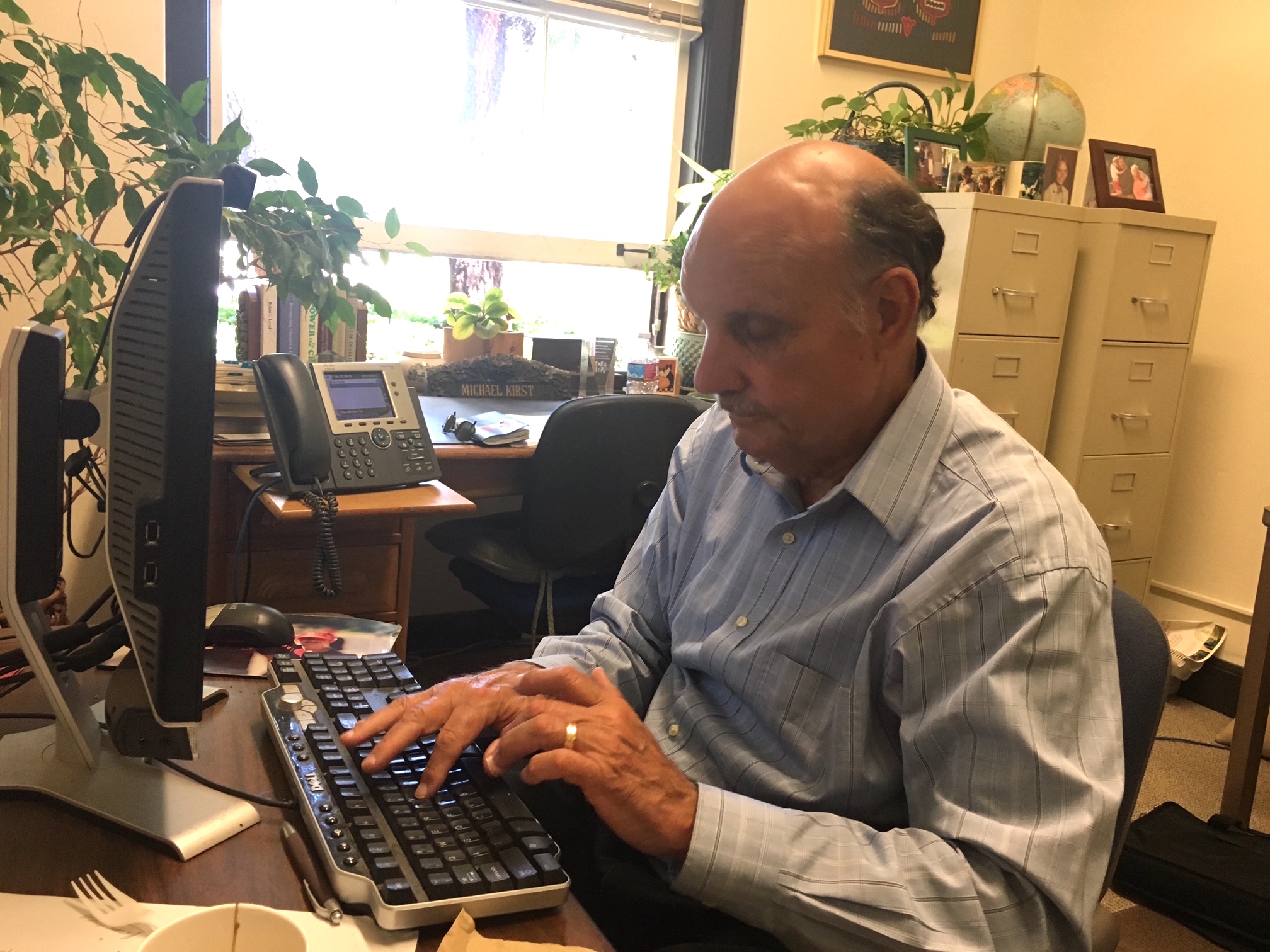
State Board President Michael Kirst in his Stanford office
CREDIT: LOUIS FREEDBERG/EDSOURCE
Michael Kirst
In the short term, K-12 education wouldn’t appear to be a top priority of the Trump administration.
The big thing we are looking for right now is the proposed regulations for ESSA (Every Student Succeeds Act). We are in the middle of the draft regulations, so we are looking for a signal as to the intent and timing. We would expect more flexibility (from the Trump administration) with ESSA, but if the Obama administration promulgates the regulations, as they have a right to do, and Trump wants to change them, he would have to reopen the process, which would take awhile.
My view is Lamar Alexander (Republican senator from Tennessee who was instrumental in the law’s passage) is satisfied with the law he’s got.
This state does not want a voucher program, so a big issue is what Trump would do about that. He could cut federal aid to education to fund his big infrastructure plan.
If he wants to repeal Common Core, this is not something he could do through executive action or regulations. A new law would be needed to say that states cannot teach certain standards. He would have to override the viewpoint (in the Every Student Succeeds Act that says) that the federal government should not get involved in determining academic standards.

ERIN GABEL

Deputy Director, First 5 California

“President-elect Trump has said he believes in family leave and child care.”
Erin Gabel
Erin Gabel
Early childhood advocates had the distinction of having one of the only issues the two candidates agreed on. President-elect Trump has said he believes in family leave and child care.
Those of us in the early childhood world look forward to seizing on that statement. We hope to pave the way for protecting federal investments in that area in partnership with California. We hope to use that support as a bridge to discuss the crucial importance of other safety nets to keep parents working and keep their children in school.
The types of strategies that Trump has mentioned, such as tax credits, have not been consistent with what California has been doing. But we hope we can piece together what Trump is proposing with California’s approach. The patchwork quilt can take a lot of threads, and it’s a good thing to explore.

JOSHUA PECHTHALT

President, California Federation of Teachers

Trump has voiced a national right-to-work agenda. He has the wind at his back.”
Joshua Pechthalt
Joshua Pechthalt
There is an opening (for Trump) to nominate somebody to the Supreme Court who will not be friendly to unions. There had been a reprieve with the death of Justice Antonin Scalia. Now we will go back to preparing for (another Friedrichs case before the court) and other things. Since the Senate and the House are controlled by the GOP, this opens the door to Friedrichs-like efforts across the U.S. labor movement. (Note: Friedrichs v. Californiachallenged the right of public employee unions to collect collective bargaining fees from all workers covered by a contract.)
Trump has voiced a national right-to-work agenda. The Republicans control two branches of government, which gives them the power and the political will to do it. Trump has the wind at his back.
He has expressed support for (federal funding of) vouchers. I’m not sure how that happens, but with the Senate and House (under Republican control), that makes Education leaders contemplate what Trump presidency means for California education | EdSource:

Betsy DeVos under consideration by Donald Trump for U.S. Secretary of Education | MLive.com

Betsy DeVos under consideration by Donald Trump for U.S. Secretary of Education | MLive.com:

Betsy DeVos under consideration by Donald Trump for U.S. Secretary of Education

Image result for big education ape Betsy DeVos


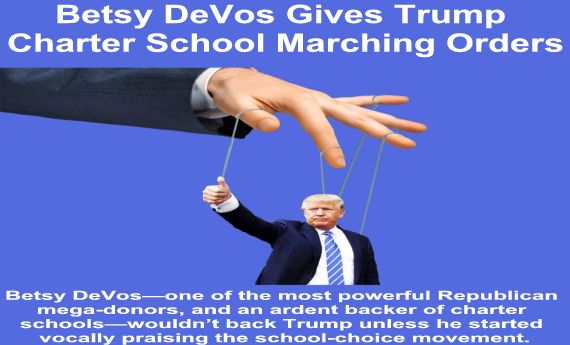
Betsy DeVos, a prominent school choice advocate and GOP supporter, is under consideration by president-elect Donald Trump to serve as U.S. Secretary of Education, according to news reports.
Several news organizations, including the Washington Post and Politico, have said DeVos is among a handful of people under consideration for the position.
Greg McNeilly, a family spokesman, declined to comment Wednesday afternoon.
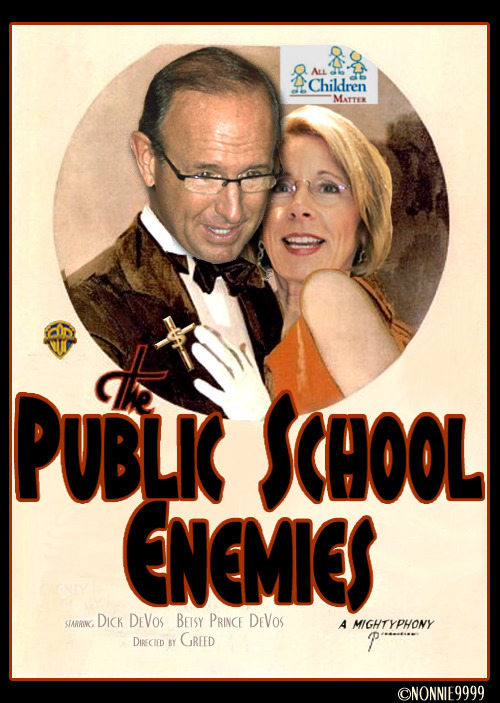
DeVos, whose husband Dick unsuccessfully ran for governor in 2006, is a renowned advocate -- both in Michigan and nationally -- for school choice and charter schools. She serves on the board of the Michigan-based Great Lakes Education Project and the Washington D.C.-based American Federation for Children -- each of which works to expand educational options for children.
Trump, for his part, pushed for greater school choice on the campaign trail, including a proposal to pump $20 billion into expanding options for low-income students.
DeVos, a former chair of the Michigan Republican Party, previously expressed reservations about Trump. At the Republican National Convention in July she cast her vote as an at-large delegate for Ohio Gov. John Kasich, and said she was still hoping to "hear something from our nominee to convince me that I should support him."
Betsy DeVos still looking for a reason to support Donald Trump
Former Michigan Republican Party chair Betsy DeVos is bullish on the future of her party, but she's still not quite sold on the presidential candidate Republicans have now officially chosen.


In addition to DeVos, other people under consideration for the position include Indiana Rep. Luke Messer, as well as William Evers, a research fellow at the Hoover Institution at Stanford University, according to news reports.
The DeVos family has long been staunch supporters of the Republican party, lavishing candidates with donations and supporting conservative causes such as school vouchers and making Michigan a right-to-work state.
DeVos, as quoted on the American Federation for Children website, says she's "part of an education revolution – a revolution that results in parents, especially those who have children trapped in failing schools, having choices."
"And, only through educational choice can we unleash the power of bold innovation to transform the lives of these children and to give them hope for a much brighter future," she said.Betsy DeVos under consideration by Donald Trump for U.S. Secretary of Education | MLive.com:
Image result for big education ape Betsy DeVos

Charter schools enroll more girls, with boys more likely to leave

Charter schools enroll more girls, with boys more likely to leave:

Charter schools enroll more girls, with boys more likely to leave


Charter schools - particularly middle and high schools - enroll a larger share of girls than do traditional public schools, in part because boys are more likely to exit charter schools, finds a new study by New York University researchers.


The study, published in the journal Educational Policy, is the first to examine  in charter school enrollment.
"As the charter school sector has grown, so has the gender gap with traditional public schools," said study author Sean Corcoran, associate professor of economics and education policy at NYU's Steinhardt School of Culture, Education, and Human Development and co-interim director of the NYU Institute for Education and Social Policy. "This gap seems to be a function of both more  choosing to enroll in charter schools and boys being less likely to stay in these schools."
Research has examined whether students in charter schools differ from those in traditional public schools with respect to prior achievement, special education, or English learner status, but until now, it has overlooked gender differences.
In order to study the gender gap in enrollment between charters and non-charter schools, Corcoran and NYU's Jennifer Jennings looked at more than a decade of data for all public schools in the U.S., including charters (from the 1999-2000 school year to 2010-2011).
The researchers found that charter schools enroll a modestly larger share of girls than do traditional public schools serving the same communities - approximately 1.9 percentage points more (50.7 percent in charters versus 48.8 percent in traditional public schools, in 2010-2011). This gap was largest in high school, peaking at 3.1 percentage points in 11th grade. The gender gap also widened over the period studied, more than doubling from 1999-2000 to 2010-2011.
While these gaps appear small, Corcoran noted that they are only slightly smaller than the gaps in English learner and special education status, which have commanded far greater attention from policymakers.
The researchers were unable to fully explain why the gender gap existed between charter and traditional public schools, but highlighted a number of reasons why charter schools might enroll more girls than boys.
"Girls may be more likely to apply to charter schools because of differences in curriculum and program offerings. The finding of larger gaps in middle and high school suggests a student'sown interest in attending charter schools may be an important factor," Corcoran said.
"Gender differences in educational needs and behavior may also play a role," said Jennings, associate professor of sociology at NYU and the study's coauthor. Jennings and Corcoran found the gender gap in charter enrollment was larger in KIPP charter schools, which tend to adhere to strict "no excuses" academic and behavioral expectations, which may present a greater challenge for boys. The gender gap in KIPP schools was nearly 50 percent larger than other charter schools (2.9 versus 1.9 percent).
The researchers also examined whether rates of retention differed between boys and girls and whether this could explain the  they saw in the national data. In order to do this, they looked at data for all students in grades 3 through 12 who attended North Carolina public and charter schools between 2005-2006 and 2010-2011. This statewide dataset followed students across grades and between schools, allowing the researchers to get a better sense of attrition patterns.
Both boys and girls were both more likely to leave charter schools than traditional . However, boys were more likely than girls to exit charters at every grade level, by as much as 1 to 3 percentage points more per year, with larger gaps in the upper grades.
The researchers concluded that the higher attrition among boys was not enough to explain the full gender gap between charter and traditional schools in North Carolina, suggesting that the gap begins when students - more girls - initially enroll in .
"Our study suggests that preferences for certain education environments, combined with the ability to succeed in these environments, may drive gender gaps in charter school enrollment," said Jennings.

Read more at: http://phys.org/news/2016-11-charter-schools-enroll-girls-boys.html#jCp

Let's Privatize American Education Even If There Is Little to No Research to Support School Choice — The Art of Teaching Science

Let's Privatize American Education Even If There Is Little to No Research to Support School Choice — The Art of Teaching Science:

Let’s Privatize American Education Even If There Is Little to No Research to Support School Choice

Image result for Let’s Privatize American Education Even If There Is Little to No Research to Support School Choice

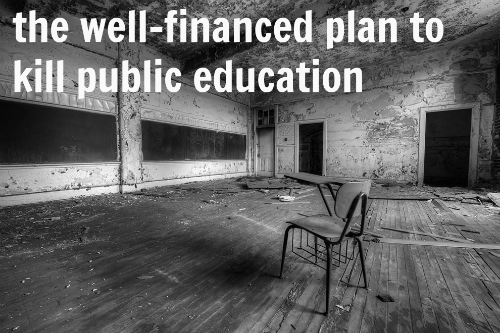
The new administration-elect in Washington has a plan. Take $20 billion from public education, possibly destroying a core idea of democracy, and then distribute it as vouchers that could that could be used at a host of private institutions, especially charter schools.
You might say that this seems like a democratic way to education our youth.
However, its my view that education needs to be in the public domain, and citizens need to fight to make sure that the slow creep of privatization does not turn into an avalanche. The democratic values that are the centerpiece of our society have been under assault, especially with the rise of the extreme conservative movement that began with Barry Goldwater, and continues today with the take over of the Republican party by extreme right-wing ideologues, who took the White House on November 8, 2016.
Although we don’t know if Twimpie* (I’m using George Lakoff’s sound symbolic renaming of the president-elect) will follow through with his campaign ideas (he’s backed off some, but then he hasn’t appointed anyone for his cabinet).
Privatizing public education will be a big push of Twimpie’s administration, even if the research on privatization of education tends either to show that private ventures such as charter schools do not outperform public schools, or that the research is rather limited, such as when we look at virtual schools.
School choice has been around, but accelerated after the 1954 Brown v. Board of Education of Topeka ruling (1954), when white parents wanted to continue with the segregation of schools by sending their children to private schools.
None of these initiatives is as effective or more so than public schools in boosting student achievement on standardized tests. And the research on some forms of choice, such as home schooling and virtual schools is meager.
Research on School Choice
According to G. Miron and J.L. Urschel, research on school choice needs to improve, as well as how it is interpreted. In their chapter on the impact of school choice on school achievement published in Learning From the Federal Market-Based Reforms (Library Copy), they survey the research on the effect of the following types of school choice on student achievement:
  • Vouchers
  • Home schooling
  • Interdistrict, Intradistrict and Magnet schools
  • Charter schools,
  • Virtual schools.
Considering the quality of the research (the authors analyzed each study using a weighting scheme) and effect on achievement, the researchers found that overall, the effect on learning was mixed, and in some cases (virtual schools) almost nonexistent. The the impact Let's Privatize American Education Even If There Is Little to No Research to Support School Choice — The Art of Teaching Science:

When Public Goes Private, as Trump Wants: What Happens? | by Diane Ravitch | The New York Review of Books

When Public Goes Private, as Trump Wants: What Happens? | by Diane Ravitch | The New York Review of Books:

When Public Goes Private, as Trump Wants: What Happens?

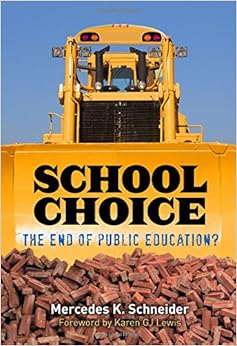
Image result for School Choice: The End of Public Education?


 The New York Times recently published a series of articles about the dangers of privatizing public services, the first of which was called “When You Dial 911 and Wall Street Answers.” Over the years, the Times has published other exposés of privatized services, like hospitals, health care, prisons, ambulances, and preschools for children with disabilities. In some cities and states, even libraries and water have been privatized. No public service is immune from takeover by corporations that say they can provide comparable or better quality at a lower cost. The New York Times said that since the 2008 financial crisis, private equity firms “have increasingly taken over a wide array of civic and financial services that are central to American life.”

Privatization means that a public service is taken over by a for-profit business, whose highest goal is profit. Investors expect a profit when a business moves into a new venture. The new corporation operating the hospital or the prison or the fire department cuts costs by every means to increase profits. When possible it eliminates unions, raises prices to consumers (even charging homeowners for putting out fires), cuts workers’ benefits, expands working hours, and lays off veteran employees who earn the most. The consequences can be dangerous to ordinary citizens. Doctors in privatized hospitals may perform unnecessary surgeries to increase revenues or avoid treating patients whose care may be too expensive.
The Federal Bureau of Prisons recently concluded that privatized prisons were not as safe as those run by the bureau itself and were less likely to provide effective programs for education and job training to reduce recidivism. Consequently, the federal government has begun phasing out privately managed prisons, which hold about 15 percent of federal prisoners. That decision was based on an investigation by the Justice Department’s inspector general, who cited a May 2012 riot at a Mississippi correctional center in which a score of people were injured and a correctional officer was killed. Two hundred and fifty inmates participated in the riot to protest the poor quality of the food and medical care. Since the election, the stock price of for-profit prisons has soared.
There is an ongoing debate about whether the Veterans Administration should privatize health care for military veterans. Republicans have proposed privatizing Social Security and Medicare. President George W. Bush used to point to Chile as a model nation that had successfully privatized Social Security, but The New York Times recently reported that privatization of pensions in Chile was a disaster, leaving many older people impoverished.
For the past fifteen years, the nation’s public schools have been a prime target for privatization. Unbeknownst to the public, those who would privatize the public schools call themselves “reformers” to disguise their goal. Who could be opposed to “reform”? These days, those who call themselves “education reformers” are likely to be hedge fund managers, entrepreneurs, and billionaires, not educators. The “reform” movement loudly proclaims the failure of American public education and seeks to turn public dollars over to entrepreneurs, corporate chains, mom-and-pop operations, religious organizations, and almost anyone else who wants to open a school.
In early September, Donald Trump declared his commitment to privatization of the nation’s public schools. He held a press conference at a low-performing charter school in Cleveland run by a for-profit entrepreneur. He announced that if elected president, he would turn $20 billion in existing federal education expenditures into a block grant to states, which they could use for vouchers for religious schools, charter schools, private schools, or public schools. These are funds that currently subsidize public schools that enroll large numbers of poor students. Like most Republicans, Trump believes that “school choice” and competition produce better education, even though there is no evidence for this belief. As president, Trump will encourage competition among public and private providers of education, which will reduce funding for public schools. No high-performing nation in the world has privatized its schools.
The motives for the privatization movement are various. Some privatizers have an ideological commitment to free-market capitalism; they decry public schools as “government schools,” hobbled by unions and bureaucracy. Some are certain that schools need to be run like businesses, and that people with business experience can manage schools far better than educators. Others have a profit motive, and they hope to make money in the burgeoning “education industry.” The adherents of the business approach oppose unions and tenure, preferring employees without any adequate job protection and merit pay tied to test scores. They never say, “We want to privatize public schools.” They say, “We want to save poor children from failing schools.” Therefore, “We must open privately managed charter schools to give children a choice,” and “We must provide vouchers so that poor families can escape the public schools.”
The privatization movement has a powerful lobby to advance its cause. Most of those who support privatization are political conservatives. Right-wing think tanks regularly produce glowing accounts of charter schools and vouchers along with glowing reports When Public Goes Private, as Trump Wants: What Happens? | by Diane Ravitch | The New York Review of Books:

Public education victories in the 2016 elections: Time to re-double efforts to defeat school privatization - NPE Action

Public education victories in the 2016 elections: Time to re-double efforts to defeat school privatization - NPE Action:

Public education victories in the 2016 elections: Time to re-double efforts to defeat school privatization 

Image result for Public education victories in the 2016 elections

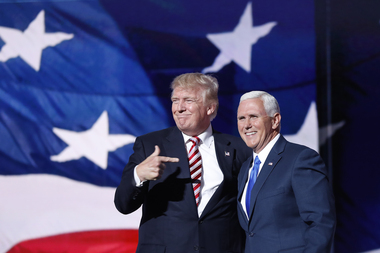
The election of 2016 is over, and we must intensify the fight to save our community public schools. Based on campaign rhetoric, there is no doubt that the Trump/Pence administration will accelerate the movement to privatize our public school system under the guise of “choice.” We will continue to update you and ask you join in that fight.
Even in this dark election, however, there were points of lights found in victories for those of us who believe that public schools are, as Diane often says, the pillar of our democracy. NPE Action endorsed 12 candidates—five of whom were elected or re-elected.
Steve Bullock was re-elected as Governor of Montana. Governor Bullock’s strong, support for public education and democratically governed schools are well known throughout Montana. In 2016, The Network for Public Education’s State Report Card ranked Montana 4th in the nation. Under Governor Bullock’s leadership, the state received a rating of “A” for its resistance to privatization and for its resistance to high-stakes testing. Bullock’s re-election is a major blow to corporate reformers who ran a candidate who wanted to bring charters into the state.
Barbara Madsen was re-elected as Supreme Court Judge in the State of Washington. Madsen authored the court’s 6-3 decision that found that charter schools were not entitled to public monies because they were directed by private boards instead of representatives elected by the community. Stand for Children, Bill Gates, Reed Hastings and other proponents of charters contributed to the campaign to defeat Barbara and her Supreme Court colleagues who voted with her on the charter decision. All were re-elected.
There is more good news in Washington State because it looks like Chris Reykdal will be the new Superintendent of Instruction. Chris is adamant about supporting the Washington State Supreme Court decision that denies public funding to charters. He believes in less testing, smaller class sizes, due process rights for teachers, sufficient and equitable school funding and student data privacy. Although all of the votes are not counted, Chris holds a strong leadand is expected to be the winner.
We also are pleased that two other NPE Action endorsed candidates were victorious. Renitta Shannon won a seat in the Georgia House of Representatives, and Robert Garcia was elected to a California School Board in the Etiwanda District.
We also thank our endorsed candidates who were not successful for their hard fought campaigns: Hillary Clinton, Glenda Ritz, Zephyr Teachout, Larry ProffittKwame Smith, Ardy Kassakhian, and Mandy Wright. We will bring the fight forward in 2018, and we ask for their continued support in the battle to save our public schools.
 Ballot Initiatives
NPE Action strongly endorsed the defeat of two ballot initiatives that would have furthered the undermining of our community public schools. We are delighted to report that despite a huge influx of corporate reform dollars, both were defeated.
Voters in Massachusetts overwhelmingly defeated Question 2, 62%-38%. Question 2 would have lifted the cap off charter schools (a cap that still has not even been reached) and permitted the addition of 12 charter schools each year. A coalition of parents, teachers and students banded together and defeated its proponents who spent at least $22 million. Big out-of-state givers were billionaires and hedge fund managers.
The question was handily defeated in areas where charters have the greatest presence, busting the “charters are a civil rights” myth. “Ultimately, communities of color spoke loudly about our needs to protect public school funding while also expressing an urgency to deliver a quality education for all our students,” said Michael Curry, president of the Boston branch of the NAACP.
Voters in Georgia said, “keep your hands off our public schools.”
Democrats and Republicans joined to defeat Amendment 1, the governor’s plan to change the state constitution to allow him to take over schools with low-test scores and turn them into charters. Civil Rights icon and former mayor, Andrew Young, baseball legend, Hank Aaron, and Georgia PTA President Lisa-Marie Haywood encouraged voters to defeat this ALEC inspired initiative to undermine the democratic control of local schools. The voters of Georgia agreed.
Californians passed Proposition 55 that extended the 2012 personal income tax on incomes over $250,000 for 12 years in order to fund education and healthcare in the state. It overwhelmingly passed.
MORE THAN EVER, WE NEED YOUR HELP
During the election season, we were often asked why we did not endorse more candidates and ballot initiatives. The answer is a simple one—endorsements cost money. We need to do legal research to make sure we abide by state laws, and it costs modest funds to send emails and create memes.
NPE Action needs your financial support. Without that support, we cannot do the work that must be done when election time comes around. Unlike the charter industry, we do not have billionaire donors giving money to support political endorsements and candidates. We depend on you. Please donate to NPE Action today.
Another way to support NPE Action is to attend our December 11 New York City dinner to honor Diane Ravitch. There are a few tickets left, which you can purchase here: http://npeaction.org/2016/09/13/6997/.
Thank you for all that you do. The 2016 election taught us a valuable lesson… we all need to do more.
Carol Burris
Executive Director
NPE Action
NPE Action is a 501 (c)(4). Therefore donations are not tax deductible.
 Public education victories in the 2016 elections: Time to re-double efforts to defeat school privatization - NPE Action:

NPE Action

CACFP Meal Pattern Resources and Trainings - Healthy Eating & Nutrition Education (CA Dept of Education)

CACFP Meal Pattern Resources and Trainings - Healthy Eating & Nutrition Education (CA Dept of Education):

CACFP Meal Pattern Resources and Trainings 

Includes local training schedules and registration instructions, upcoming conference information, Webinar schedules and links, and resources and guidance for Child and Adult Care Food Program (CACFP) sponsors.

Image result for big education ape tom torkelson kiss the cook

On April 25, 2016, the U.S. Department of Agriculture (USDA) published the final rule for the CACFP New Meal Pattern (NMP). The NMP aligns with the new Dietary Guidelines for Americans, reflects evidence-based nutrition science, and includes stakeholder comments to the proposed rule. The NMP standards are effective October 1, 2017.

Local Trainings

Workshops

The California Department of Education (CDE) will conduct face-to-face workshops in 2016–17. As the details of these workshops become available, the CDE will post the information on this Web page. The CDE will continuously update this section as new trainings become available.
Registration will be online using the Child Nutrition Information and Payment System (CNIPS). Please review the instructions below before starting the registration process.
Instructions for child nutrition program participants:
  1. Obtain your agency’s five-digit CNIPS identification (ID) number or personal User ID and password
  2. Access the CDE CNIPS Training Registration Web page External link opens in new window or tab. to connect to the CNIPS and begin the online registration process.

  3. Use your agency’s CNIPS ID or personal User ID and password to register and follow the system prompts as shown below:
    • Program Training Available screen—select all
    • Available Training(s) screen—select preferred course
    • Available Training Location(s) screen—select preferred location
  4. After completing the Attendee Information and selecting the continue button, a confirmation e-mail will be sent to the e-mail address provided upon completion of the registration process.
For assistance with online registration or if you are unable to attend and need to cancel, please contact the CNIPS Help Desk weekdays from 8 a.m. to 4:30 p.m. by phone at 800-952-5609, Option 6, or by e-mail at CNIPS@cde.ca.gov. If possible, please provide your registration confirmation number when cancelling your registration.

Upcoming Conferences

2016 Child Care Food Program Roundtable Conference External link opens in new window or tab. 
This conference will include sessions on planning and implementing the CACFP NMP. The conference is October 17‒19, 2016, in Palm Springs, California. For additional information, including how to register for the conference, please visit the CCFP Roundtable Conference Web page.

Webinars

Food and Research Action Center Webinar External link opens in new window or tab. 
This archived Webinar on the CACFP meal pattern was presented on May 9, 2016, by the Food and Research Action Center. The Webinar provides information on the updated CACFP meal pattern requirements for infants, children, and adults.  
The CDE NMP Recorded Webinar series (Coming Soon) 
This Webinar series is for CACFP agencies and will provide specific requirements of the NMP for each age group. As these Webinars become available, additional information will be provided.

Resources and Guidance

USDA Nutrition Standards for CACFP Meals and Snacks External link opens in new window or tab. 
This Web page includes NMP information, fact sheets, comparison charts of the old and NMP, the final rule, and much more.

Policy Guidance

Early Implementation of the CACFP NMP Requirements External link opens in new window or tab. 
The USDA Policy Memo provides guidance on implementation of the CACFP NMP requirements and the new infant and preschool meal pattern requirements for the National School Lunch Program and the School Breakfast Program.
Optional Best Practices to Further Promote Nutrition in the CACFP Meal Pattern External link opens in new window or tab. 
The policy memo outlines optional best practices for child care centers and day care homes to implement and further promote nutrition in the CACFP.

Contact Us

For more information or if you have any questions, please contact the Nutrition Services Division by e-mail at NMP4CACFP@cde.ca.gov.
Questions:   Nutrition Services Division | NMP4CACFP@cde.ca.gov
Last Reviewed: Thursday, November 17, 2016
CACFP Meal Pattern Resources and Trainings - Healthy Eating & Nutrition Education (CA Dept of Education):

San Fran teachers union lesson plan calls Trump racist, sexist - NY Daily News

San Fran teachers union lesson plan calls Trump racist, sexist - NY Daily News:

San Francisco teachers union lesson plan calls President-elect Donald Trump ‘racist,’ ‘sexist’
San Francisco's public schools have a mouthful for President-elect Donald Trump.


Image result for big education ape Trump

A new lesson plan for San Francisco schools calls U.S. President-elect Donald Trump a racist and a sexist.

 (CARLO ALLEGRI/REUTERS)
The city’s teachers union has offered its members a lesson plan that calls the soon-to-be commander-in-chief a racist and a sexist who rose to power by “pandering” to his equally awful base.
It’s unclear how many teachers plan to teach the sharply-worded lesson, which is meant to teach students about the election and encourage them to fight for equality. It was developed by Fakhra Shah, a Mission High School teacher, who wrote it as a way to help students struggling with the outcome of the election.
“Let us please not sidestep the fact that a racist and sexist man has become the president of our country by pandering to a huge racist and sexist base,” Shah wrote in an open letter to teachers introducing the lesson plan.
"This is an anti-racist, anti-sexist, anti-Islamophobic (and) anti-homophobic philosophy," she continued. "This is a philosophy about upliftment, hope and justice.


The plan — sent out to more than 6,000 union teachers — is optional and not part of the official curriculum, school district spokeswoman Gentle Blythe said.
"Educators are entrusted to create lessons that reflect the California standards, support students' social and emotional well-being and foster inclusive and safe school communities," she said in a statement that neither praised nor rebuked the lesson plan.
But the Republican Party in San Francisco quickly condemned the lesson plan.
"It's inappropriate on every level," said Harmeet Dhillon, an RNC committeewoman from California. She called it "inappropriate propaganda that unfairly demonizes not only the campaign that Donald Trump, the winner, ran, but also all of the people who voted for him."San Fran teachers union lesson plan calls Trump racist, sexist - NY Daily News:

Massachusetts Teachers Union President Barbara Madeloni calls for teachers to organize 'love trumps hate' standouts | masslive.com

Massachusetts Teachers Union President Barbara Madeloni calls for teachers to organize 'love trumps hate' standouts | masslive.com:

Massachusetts Teachers Union President Barbara Madeloni calls for teachers to organize 'love trumps hate' standouts

MTA president

A high-profile Massachusetts educator sent out an email asking teachers unions to "organize standouts across the state next Tuesday" to "let students and parents know that love trumps hate."
Barbara Madeloni of Northampton, president of Massachusetts Teachers Association, called these "dangerous and frightening" times — referring to Donald Trump's election as the 45th U.S. president last week — and encouraged teachers to "act on our duty as educators in public schools and colleges to educate for democracy."
"We must use our power as educators to let all of our students and their families — but especially those who were targeted by the president-elect in his campaign — know that we will provide safe spaces, defend them from attack and be more focused and vigilant in our struggle for justice," Madeloni's email read.
She added, "Our students need to be given the tools and opportunities to name the world, develop and articulate their ideas, and act with courage, empathy and a sense of justice. We need to talk about racism, sexism and the ways in which power can be used to abuse and oppress."
The demonstration requested by Madeloni in her email involves teachers welcoming "students to school with signs of love and support that speak to how we cherish their differences and how we will protect their right to be themselves, to feel safe and in charge of their bodies and identities, and to tell their stories." 
The email urged the creation of "safe spaces" in school buildings and campuses as well. 
"We cannot be shy or cautious in our defense of our students and their families," Madeloni said. "This is a time to push past rules and bureaucracies that limit our ability to show and live our compassion."
The president's email follows a wave of similar requests and actions by school administrators around the country following the election. 
University of Massachusetts Amherst Chancellor Kumble R. Subbaswamy released a statement saying the school "remains wholly committed to the principles of diversity, inclusion and respect for all" while grief counseling Massachusetts Teachers Union President Barbara Madeloni calls for teachers to organize 'love trumps hate' standouts | masslive.com:
Image result for love trumps hate

Children of illegal immigrants make up rising share of K-12 students | Pew Research Center

Children of illegal immigrants make up rising share of K-12 students | Pew Research Center:

Children of unauthorized immigrants represent rising share of K-12 students
BY JEFFREY S. PASSEL AND D’VERA COHN


About 3.9 million kindergarten through 12th-grade students in U.S. public and private schools in 2014 – or 7.3% of the total – were children of unauthorized immigrants, according to new Pew Research Center estimates based on government data. These estimates reflect an increase since the end of the Great Recession in 2009, when such students numbered 3.6 million and accounted for 6.6% of the total.
The rise in K-12 students with at least one parent who is an unauthorized immigrant contrasts with the total number of unauthorized immigrants, which has remained stablesince 2009.
Before 2009, the trends had been similar, with both groups rising in number from 1995 to 2007 (the year the recession began), then declining to a lower level in 2008. The number of students with at least one unauthorized immigrant parent ticked up in 2009. (To learn more, see our interactive map.)
The vast majority of students with at least one unauthorized immigrant parent – 3.2 million, or 5.9% of total enrollment in 2014 – were U.S.-born children and thus U.S. citizens at birth. The rest (about 725,000 students, or 1.3% of total enrollment in 2014) were unauthorized immigrants themselves. In other words, U.S.-born children made up 81% of all children of unauthorized immigrants enrolled in grades K-12 in 2014. (Well under 1% of children of unauthorized immigrants were lawful immigrants in 2014.)
Since the end of the Great Recession, the growth in the number of students with unauthorized immigrant parents has been entirely due to a broader increase in the number of children born in the U.S. The number of students who are unauthorized immigrants themselves (and their share of the total) has declined.
Long-term residents constitute a rising share of the nation’s unauthorized immigrant population, making it more likely for them to have U.S.-born children. In 2014, two-thirds of adult unauthorized immigrants had lived in the U.S. for a decade or more, compared with 41% in 2005.
Pew Research Center estimates that in 2014, 4 million unauthorized immigrant adults, or 39% of the total, lived with their minor or adult U.S.-born children, compared with 2.1 million, or 30%, in 2000. (The total number of unauthorized immigrants with minor or adult children born in the U.S. may well be higher, as these figures do not count those who live separately from their children.)
Separately, the number of births to unauthorized immigrants has declined since 2009, according to other Pew Research Center estimates. There were about 275,000 births to unauthorized immigrants in 2014, compared with about 330,000 in 2009. However, this recent decline is not fully reflected in the Center’s school enrollment estimates because most of these children are not yet of school age.
States in the West and Southwest tend to have the highest shares of K-12 students with unauthorized immigrant parents. In six states, the share is 10% or more: Nevada (17.6%) ranked first, followed by Texas (13.4%), California (12.3%), Arizona (12.2%), Colorado (10.2%) and New Mexico (10.1%). California and Texas had about the same share of students with unauthorized immigrant parents in 2012, but by 2014, California’s share had dropped below that of Texas. At the other end of the spectrum, the share of students with unauthorized immigrant parents was less than 1% in six states, mainly in the Midwest and Northeast.
Estimates for the nation and each state on the share of students with at least one unauthorized immigrant parent can be found in an interactive graphic, which also includes state and national estimates on unauthorized immigrants overall, unauthorized immigrants in the workforce and the share of unauthorized immigrants who are of Mexican origin.Children of illegal immigrants make up rising share of K-12 students | Pew Research Center: