Latest News and Comment from Education

Thursday, October 27, 2016

Lessons from NOLA: Ailing Mississippi district should be wary of charter schools - The Hechinger Report

Lessons from NOLA: Ailing Mississippi district should be wary of charter schools - The Hechinger Report:

Lessons from NOLA: Ailing Mississippi district should be wary of charter schools

"Don’t allow a financial storm to be your Hurricane Katrina, the disaster that led to dismantling the public school system in New Orleans."

Image result for big education ape  New Orleans


CKSON, Miss. — From the outside, Forest Hill High School is a picture of strength and prosperity. A far cry from the one-room schoolhouse that sat at its current location in the 1850s, the contemporary academic and athletic facility sits on more than 47 acres of land, and seems to have all the physical attributes parents and teenagers could want.
Inside, it’s a different story. Forest Hill High is failing students. The public school built in 1989 received an “F” rating on its most recent state evaluation, as did almost a third of the schools in the Jackson school district.
No one understands this struggle better than Sharolyn Miller,chief financial officer for Jackson Public Schools. All summer, Miller struggled to fix a failing HVAC system the high school couldn’t afford — just as JPS found $600,000 for two new charter schools in the city.
“The downside is that half a million dollars that I could have put into HVAC systems in Forest Hill High School is gone,” Miller told me when I visited Jackson to learn more about why some dissatisfied public school parents and state legislators are pushing charter alternatives.
Since that time, the district has run into a slew of new troubles, which could result in the removal of Jackson School Superintendent Cedrick Gray after the school board meets on Friday. Charter schools competing for funding from a skimpy budget may be the least of his worries.
JPS has problems: 21 failing schools, a 67.7 percent graduation rate and an average composite ACT score of 15.6. On Friday, JPS will hold a school board meeting to evaluate Gray — who has not publicly responded to the calls for his resignation that followed the release of the district’s grades — and discuss the administration’s improvement plan. Undoubtedly, there will calls for more charter schools in Mississippi, viewed by many as an alternative to a system that will always fail families.
Gray and JPS are under fire at a time when some are already pushing for an expansion of charter schools — public schools that are Lessons from NOLA: Ailing Mississippi district should be wary of charter schools - The Hechinger Report:
Image result for big education ape   Katrina
 Image result for big education ape   Katrina

We will not demean and stigmatize transgender students - Lily's Blackboard

We will not demean and stigmatize transgender students - Lily's Blackboard:

We will not demean and stigmatize transgender students

The NEA and the North Carolina Association of Educators believe all students deserve the opportunity for a rich and fulfilling education, an opportunity that should begin with walking into a welcoming, safe and accepting space.
That’s why we’ve vehemently opposed H.B. 2, the North Carolina law that eliminates protections for the state’s LGBTQ citizens. Among other requirements, the law prohibits public schools from allowing transgender students to use the restroom that corresponds to the gender with which they identify.
This week, NEA and NCAE proudly stepped up our advocacy by filing an amicus brief urging a federal appeals court to stop North Carolina from enforcing the law.
Earlier this year, at our 2016 Annual Meeting and Representative Assembly, delegates adopted a New Business Item mandating that the NEA take action to stem the tide of discrimination and violence targeting LGBTQ citizens. Part of that plan includes our support of the legal challenge to H.B. 2 and similar laws in other states, including Mississippi.
We’ve also been outspoken supporters of the U.S. Department of Education’s guidance on this issue, offered jointly with the U.S. Department of Justice, emphasizing that schools must treat students consistent with their gender identity. We want all students to experience a sense of belonging and inclusion because it provides a solid foundation for learning and development.
The North Carolina law, however, sends a message of exclusion, disdain and even hatred.
trans2
In a word, H.B. 2 is cruel. It is the most overt stigmatization of transgender students any state has ever passed. It marks transgender students as unworthy of society’s equal respect, making them outcasts and pariahs who should be feared by the larger community.
“The ‘necessary consequence’ of H.B. 2 is to demean and stigmatize transgender students,” our brief states. “These children will forever ‘suffer the stigma of knowing’ that in the eyes of the state, they are ‘somehow lesser.’”
Our brief argues that H.B. 2 signals that intentional discrimination against transgender students is acceptable, promotes bullying and degrades the school climate for all students.
By prohibiting transgender students from using bathrooms and locker rooms consistent with their gender identity, the law forces them to make extremely difficult choices. They skip meals to avoid having to use the bathroom during the day, but of course thirst and hunger make concentrating difficult. Gender-neutral bathrooms are not the answer because they require students to “out” themselves to teachers. This risks further ostracizing them and isolating them from other students.
North Carolina lawmakers justify the law by making a ridiculous claim: that it protects women and children from sexual assault and voyeurism. Their theory is that if transgender people could use the bathrooms that correspond with their gender identity, men would use the law to visit the women’s room and assault women.
That preposterous notion is backed up by zero evidence from the state. In our research, none of the jurisdictions We will not demean and stigmatize transgender students - Lily's Blackboard:


CURMUDGUCATION: The Death of Testing Fantasies

CURMUDGUCATION: The Death of Testing Fantasies:

The Death of Testing Fantasies


It is one of the least surprising research findings ever, confirmed now by at least two studies-- students would do better on the Big Standardized Test if they actually cared about the results.


One of the great fantasies of the testocrats is their belief that the Big Standardized Tests provide useful data. That fantasy is predicated on another fantasy-- that students actually try to do their best on the BS Test. Maybe it's a kind of confirmation bias. Maybe it's a kind of Staring Into Their Own Navels For Too Long bias. But test manufacturers and the policy wonks who love them have so convinced themselves that these tests are super-important and deeply valuable that they tend to believe that students think so, too.
Somehow they imagine a roomful of fourteen-year-olds, faced with a long, tedious standardized test, saying, "Well, this test has absolutely no bearing on any part of my life, but it's really important to me that bureaucrats and policy mavens at the state and federal level have the very CURMUDGUCATION: The Death of Testing Fantasies:


Schools Matter: Surveillance Capitalism and Your Children

Schools Matter: Surveillance Capitalism and Your Children:

Surveillance Capitalism and Your Children


Image result for Surveillance animated gif

There are thousands of rapacious and predatory gatherers of data out there waiting to collect and sell your information and your children's information, whether it is behavioral, economic, intellectual, social, geographic, nutritional, and even emotional in nature.

Follow this link (hat tip to Alison McDowell) to read about this newest form of capitalist predation.  Here is a clip:


There was a time when we laid responsibility for the assault on behavioral data at the door of the state and its security agencies.  Later, we also blamed the cunning practices of a handful of banks, data brokers, and Internet companies. Some attribute the assault to an inevitable  “age of big data,” as if it were possible to conceive of data born pure and blameless, data suspended in some celestial place where facts sublimate into truth.

Capitalism has been hijacked by surveillance

 
I’ve come to a different conclusion:  The assault we face is driven in large measure by the exceptional appetites of a wholly new genus of capitalism, a systemic coherent new logic of accumulation that I call surveillance capitalism. Capitalism has been hijacked by a lucrative surveillance project that subverts the “normal” evolutionary mechanisms associated with its historical success and corrupts the unity of supply and demand that has for centuries, however imperfectly, tethered capitalism to the genuine needs of its populations and societies, thus enabling the fruitful expansion of market democracy.
 And below is an intro to an innocent sounding  Google app called StackUp that collects and stores all your students' internet activity so that students can get "credit" for all their reading. Hey--it even claims to know if they are reading or if the page is just Schools Matter: Surveillance Capitalism and Your Children:

Image result for Surveillance animated gif

Republicans Have a Yuge Logic Problem | the becoming radical

Republicans Have a Yuge Logic Problem | the becoming radical:

Republicans Have a Yuge Logic Problem

Image result for Republicans Have a Yuge Logic Problem

The new (and disgusting) face of the Republican Party, Donald Trump, has anchored his campaign on a foundational slogan he “inherited” from Ronald Reagan (like the millions he squandered from his father): Make America Great Again.
Setting aside that Trump is either a liar (well, is a liar) or is incredibly stupid since he claims he created that slogan, the concept itself creates a yuge logic problem for the Republican Party.
First, the slogan directly states America is now not great.
If this is true, it certainly reads next that whoever is running our state and federal governments must be at least significantly to blame for the lack of greatness, right?
Among Republicans, the anti-government roar has a long and loud history.
So here comes the logic problem: Republicans control the vast majority of state and federal power in the U.S.
That means that if America is now not great, and if government is to blame, then the Republican Party and its candidates are the source of all this not-greatness.
Thus, how in the hell is it logical to vote for Trump or any Republicans?

Disclaimer: I am not now a Democrat, and I have never been a member of any political party. I do not support and will not vote for Hillary Clinton (nor for Green or Libertarian). I am very openly campaigning against anyone voting for Trump because he is uniquely a horrible human and candidate. A reasonable person can argue for Hillary or a third party candidate, but nothing can justify supporting Trump. His brand is so toxic, it likely has damaged any credibility the Republican Party was clinging to for years or decades to come.Republicans Have a Yuge Logic Problem | the becoming radical:

Mike Klonsky's SmallTalk Blog: Bernie has the right line. Keep the heat on Clinton.

Mike Klonsky's SmallTalk Blog: Bernie has the right line. Keep the heat on Clinton.:

Bernie has the right line. Keep the heat on Clinton.


“I will be vigorously in opposition, and I will make that very clear.” -- Sen. Bernie Sanders
Bernie Sanders just gave his millennial supporters (and the rest of us) the best reason not to stay home on election day. He wants us to be part of the movement that defeats Trump and elects Clinton so he and we can become "be the thorn in her side" after Nov. 8th.

It's the thorn that went missing after Obama's historic victory in 2008 when the anti-war and other progressive movements, active during the Bush administration, went to sleep. Many even thought the election of our first African-American president marked the start of the "post-racial" era.

In an interview with the Washington Post on Monday, Sanders made clear that, if she wins the presidency Nov. 8, Clinton will have to contend not only with Republicans who oppose her agenda but also with progressives who were not excited by her campaign and have long feared that she plans to govern as a centrist, in partnership with her new-found friends among the neocons.

“We won 22 states and 46 percent of the pledged delegates, 13.4 million votes . . .and a majority of the younger people, the future of the country. . . . That gives me a lot of leverage, leverage that I intend to use.”
He laid out his post-election strategy and said the he and other senators, including those who Mike Klonsky's SmallTalk Blog: Bernie has the right line. Keep the heat on Clinton.:


California’s Tangled, Corrupt Charter School Sector | janresseger

California’s Tangled, Corrupt Charter School Sector | janresseger:

California’s Tangled, Corrupt Charter School Sector


Charter schools—created to embody the idea of innovation without the constraint of bureaucratic regulations—have been spreading across our cities for twenty years, and it has now become as clear as can be that, if we have to have privatized charter schools, we can’t do without the protection of some rules.  (I myself would prefer to assign responsibility for educating our children to the public schools—publicly owned and operated and accountable to democratic governance.)
Carol Burris, a former, award-winning, New York City high school principal and now the director of the Network for Public Education, just visited California, where she traveled around interviewing people on all sides of the charter school controversy. Valerie Strauss of the Washington Post has published (in four parts hereherehere and here) Burris’ story of “the never-ending stream of charter scandals coming from California.”
Most alarming is the practice of establishing satellite charter “resource centers” or “learning centers”—places in shopping centers or other accessible sites where older students who study online come occasionally to meet with a teacher. These are often sponsored by tiny elementary school districts who have no intention of overseeing the charters they authorize, but who are instead in it to pad their own districts’ budgets with extra cash—per-pupil state fees paid to sponsors.  In part four of her report Burris writes: “Readers who have been following this series on charters are familiar with the storefront charters and not-for profit shells of K12 (the huge online for-profit chain) that are growing in number across the state. Many of these charters have terrible graduation rates—some as low as zero percent. Students rarely check in—some, like Epic, have the requirement of going to a center only once every 20 days.  Their explosive growth has been driven by corporations courting small, rural elementary districts with promises of additional revenue with little to no impact to the school district. The corporation then operates charter ‘learning centers’ or ‘resource centers’ mostly or exclusively to generate revenue for themselves and their authorizer, even though the schools are not in the authorizer’s district and do not serve their residents.”
In part one, we learn: “Of the San Diego charter schools, over one third promote independent learning, which means the student rarely, if ever, has to interact face to face with a teacher or fellow students. One of the largest independent learning charters, The Charter High School of San Diego, had 756 students due to graduate in 2015. Only 32 percent actually made it.  The Diego Valley Charter School, part of the mysterious Learn4Life chain, tells prospective California’s Tangled, Corrupt Charter School Sector | janresseger:


Finland succeeds with no homework and fewer lessons - BBC News

Finland succeeds with no homework and fewer lessons - BBC News:

Finland succeeds with no homework and fewer lessons

"How come Finland has shorter days and no homework for students and yet is achieving more?"
Why are we asking this? Because that's the subject that you've chosen - in an experiment where the readership picks the question.
The question gets to the heart of a lot of parental angst about hard work and too much pressure on children in school.
Parents facing all those kitchen table arguments over homework might wonder about its value if the Finns are getting on just fine without burning the midnight oil.
And how do Finnish youngsters spend less time in school and still come out with some of the best results in the world?
As the OECD think tank says: "One of the most striking facts about Finnish schools is that their students have fewer hours of instruction than students in any other OECD country."

Long summer holidays

It also touches on another tension between schools and families - the increased cost of summer holidays.

finnish backpackImage copyrightTHINKSTOCK
Image captionFinland's school system is high performing, but pupils spend relatively few hours in school

While children in England and Wales are still toiling away in school into the middle of July, the Finns have already been on holiday for six weeks, in a summer break that lasts 10 to 11 weeks.
And completing this picture of less is more, Finnish children do not in theory have to start school until they are seven - although most will have been in classes from an earlier age.
But when it comes to the international Pisa tests, Finland is in sixth place and the UK is 23rd in reading; and Finland is 12th and the UK is 26th in maths.
Another set of OECD global rankings last year put Finland in sixth place for maths and science.
So what's going on? How do the Finns seem to start later, have fewer lessons and then finish ahead?
Finland, as part of its centenary commemorations next year, has a project to share what works in its schools with other countries.
Saku Tuominen, director of this HundrEd project, says parents in Finland don't really want longer hours in school.
He says there is a "holistic" approach to education, with parents wanting a family-friendly approach.Finland succeeds with no homework and fewer lessons - BBC News:


1 in 4 U.S. teachers are chronically absent, missing more than 10 days of school - The Washington Post

1 in 4 U.S. teachers are chronically absent, missing more than 10 days of school - The Washington Post:

1 in 4 U.S. teachers are chronically absent, missing more than 10 days of school


More than 1 in 4 of the nation’s full-time teachers are considered chronically absent from school, according to federal data, missing the equivalent of more than two weeks of classes each academic year in what some districts say has become an educational crisis.
The U.S. Education Department’s Office for Civil Rights estimated this summer that 27 percent of the nation’s teachers are out of school for more than 10 days of regular classes — some missing far more than 10 days — based on self-reported numbers from the nation’s school districts. But some school systems, especially those in poor, rural areas and in some major cities, saw chronic absenteeism among teachers rise above 75 percent in 2014, the last year for which data is available.
In the Alamance-Burlington School System, located between Greensboro and Chapel Hill, N.C., 80 percent of its 1,500 teachers missed more than 10 days of school in the 2013-2014 school year. Cleveland reported that about 84 percent of its 2,700 teachers had excessive absences. Nevada’s Clark County School District, which includes Las Vegas, reported that more than half of its 17,000 teachers were chronically absent — missing a total of at least 85,000 work days, or the equivalent number of hours that nearly 500 teachers would work during an entire 180-day school year.
Although much attention focuses on the 6 million students who miss more than 15 days of school each year, making them much more likely to see low achievement and increasing the chances of not graduating, , teacher absences could be having a similarly negative effect on scholastic success. Superintendents and education policymakers say students need consistency in the classroom and high-quality instruction, noting that a parade of substitutes can seriously 1 in 4 U.S. teachers are chronically absent, missing more than 10 days of school - The Washington 

Bill Gates Dream School - University opens without any teachers - BBC News

University opens without any teachers - BBC News:

University opens without any teachers

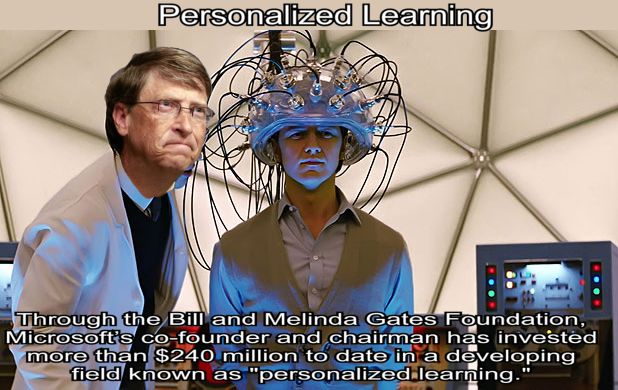
Image result for big education ape personalized learning


Value of teaching
But he thinks 42 has gone too far by removing teachers altogether. His research suggests peer learning is most effective when students are under the supervision of an expert teacher.
"The deep reason for a teacher is to guide students to grapple with exactly the complex, ambiguous, and tough issues that are usually outside of students' self-awareness or capabilities," he says.
Prof Butin says "the whole point of a university" is to challenge a student's prior knowledge and assumptions about the world. A university without teachers could allow students to simply "reinforce and regurgitate" their existing opinions.
42's model might offer an alternative to Moocs (massive open online courses, which let large numbers of students cheaply study a subject online.
Like a Mooc, it provides a more affordable education than a traditional university. But it also gives students the social benefits of coming to a physical building and interacting with others every day.


 A university without any teachers has opened in California this month.

It's called 42 - the name taken from the answer to the meaning of life, from the science fiction series The Hitchhiker's Guide to the Galaxy.
The US college, a branch of an institution in France with the same name, will train about a thousand students a year in coding and software development by getting them to help each other with projects, then mark one another's work.
This might seem like the blind leading the blind - and it's hard to imagine parents at an open day being impressed by a university offering zero contact hours.
But since 42 started in Paris in 2013, applications have been hugely oversubscribed.

No tuition fees

Recent graduates are now working at companies including IBM, Amazon, and Tesla, as well as starting their own firms.
42 was founded by French technology billionaire Xavier Niel, whose backing means there are no tuition fees and accommodation is free.
Mr Niel and his co-founders come from the world of technology and start-ups, and they are trying to do to education what Facebook did to communication and Airbnb to accommodation
They aim to do this by combining an extreme form of "peer-to-peer learning" with project-based learning. Both are popular methods among education researchers, but they usually involve the supervision of a teacher.
Students at 42 are given a choice of projects that they might be set in a job as a software engineer - perhaps to design a website or a computer game.
They complete a project using resources freely available on the internet and by seeking help from their fellow students, who work alongside them in a large open-plan room full of computers. Another student will then be randomly assigned to mark their work.
Like in the computer games the students are asked to design, they go up a level by competing a project. They graduate when they reach level 21, which usually takes three to five years. And at the end there is a certificate but no formal degree.

Self-starters

The founders claim this method of learning makes up for shortcomings in the traditional education system, which they say University opens without any teachers - BBC News:
Image result for big education ape personalized learning

Do California parents want bilingual education? - CSMonitor.com

Do California parents want bilingual education? - CSMonitor.com:

Do California parents want bilingual education?

California's Proposition 58 would make it easier to teach English learners in bilingual programs. Parents now see these programs as a way to retain cultural ties and boost children's success later in life.

Image result for yes California's Proposition 58
Yes on Proposition 58 - (LEARN) | Support Prop 58 - http://supportprop58.com/support

Bilingual education is back on the ballot in California. Do voters feel differently about the issue now than they did in 1998?
At present, the Golden State public schools are required to teach most English learners in English-only programs. In some circumstances, parents can request consideration for bilingual programs. By voting "yes" on Proposition 58, California voters would make it easier for schools to decidehow they teach English learners, according to the Legislative Analyst’s Office, the California legislature’s nonpartisan fiscal and policy advisor.
The reappearance of a proposition about bilingual education – and support for the measure in one poll – may be a sign that attitudes are changing, with parents increasingly seeing these programs as a means to retain cultural ties and guarantee children’s success later in life. 
“Californians know and value and understand the importance of having their students be multilingual, bilingual and multiliterate,” said Ricardo Lara, a state senator from Los Angeles County who sponsored the ballot measure. “And so we’re removing those barriers and ensuring that we … continue to have those dynamic programs in the state.”
An emphasis on the value of bilingual education would be a profound shift from 1998, when Latino parents led the charge calling for English language-only programs. At the time, around two-thirds of the state’s Latino voters supported the proposition, experts told The Christian Science Monitor. Parents wanted their children to learn fluent English, even if it came at the expense of retaining their Spanish skills.
Jorge Amselle, then a spokesman for the Center for Equal Opportunity, a Washington, D.C., think tank that focuses on issues of race and ethnicity, said the 1998 vote also “undermined the argument that immigrants don’t want to assimilate.”
But today, parents report finding that assimilation happens faster, in many cases, than they would like it to. Parents of the 45 percent of California students who speak a second language at home may believe that a "yes" vote on Prop. 58 in November will help their children retain those language skills — and ties to their home culture.
“In the past few decades, the emergence of identity politics has encouraged ethnic Americans to hold on to more than English,” wrote Fariba Nawa for the Monitor in 2011. Nawa, struggling to help her daughter retain her native Farsi once she went to school in the US, observed that many parents have been taking advantage of language-immersion schools to bridge that divide.
Latino families tend to stop speaking Spanish almost completely by the third generation, and speakers of other languages face similar pressures.
One reason for that: school tests that preference English and make bilingual students look less advanced in comparison.
“The avalanche of testing, given predominantly in English, has really pushed all schools to do more in English than I think is pedagogically appropriate,” Robert Petersen, who founded La Escuela Fratney, a bilingual, multicultural public K-5 school in Milwaukee, Wisc., in 1998, told NPR in 2014.
Some of California’s urban school districts have ignored the English-only law from the beginning, responding to growing Latino populations by continuing to teach in both languages. Would Prop. 58 provide a model for bilingual testing across the US, and offer a clearer look at bilingual Do California parents want bilingual education? - CSMonitor.com:
 Image result for yes California's Proposition 58

George W. Bush and Barack Obama made school reform a priority. The next president will look elsewhere| The Economist

Little changes | The Economist:

George W. Bush and Barack Obama made school reform a priority. The next president will look elsewhere

Image result for president hillary
FOR a president, making education policy can be like running a school with thousands of unruly pupils. He can goad states and coax school districts, offering gold stars to those who shape up. But if a class is defiant he can do little. Just 12.7% of the $600bn spent on public education annually is spent by the federal government. The rest is split almost equally between states and the 13,500 school districts. Many presidents end up like forlorn head teachers. America spends more per child than any big rich country but its pupils perform below their peers on international tests.
Despite the constraints, George W. Bush and Barack Obama both used the regulatory power of the federal government to spur reform. Through the No Child Left Behind (NCLB) Act of 2001, the Republican president launched a flurry of standardised tests, sanctioning schools whose pupils failed to progress. Through his “Race to the Top” initiative, announced in 2009, the Democratic one offered cash to states in exchange for reforms such as higher standards and evaluating teachers based on pupils’ results. Similar policies were implemented by 43 states in exchange for federal waivers from the testing mandates of NCLB. Mr Obama has also championed charter schools, the part-publicly funded and independently run schools hated by teachers’ unions.
But the era of regulation-driven school reform is now coming to an end, for two reasons. The Every Student Succeeds Act (ESSA), passed in December as a replacement for NCLB, hands back power to states over standards and tests, making it hard for a future president to seek to micromanage school reform. And in any case, neither Donald Trump nor Hillary Clinton are inclined to imitate the past two presidents. Mr Trump is “totally against” and “may cut” the Department of Education. Declaring that “it is time to have school choice”, in September he pledged to give states $20bn to fund school vouchers for parents of poor children.
Mrs Clinton has also been keen to defer to states. This is partly because she knows ESSA shrinks her room for manoeuvre. But she has also made a political calculation. Unlike Mr Obama, she is backed by teachers’ unions. They oppose tying teacher evaluations to pupils’ results and want to keep the caps on charter schools in place in the 23 out of 43 states that permit them. Mrs Clinton has been studiously ambiguous on such limits, to the regret of reformist Democrats, who note that in most cities charter schools outperform ordinary public schools. Though she has sent Tim Kaine, her vice-presidential nominee, to mollify funders of charters, they are braced for a change of tone. Charters will still expand, but they will receive less federal support. “We reformers have had a big tailwind under Obama, which we’re unlikely to have under Clinton”, says Whitney Tilson, an investor and education philanthropist.
The Democratic candidate’s wish to neutralise the toxic politics of school reform has another, less cynical cause. She wants to focus on what comes before and after school, the “bookends” of pre-school and higher education. America “has fallen off the pace when it comes to early childhood education”, says Steve Barnett of the National Institute for Early Education Research, at Rutgers University. About half of all three- to four-year-olds are enrolled in pre-school, less than in many poor countries (see article) and one of the lowest shares in the OECD. And yet the country is third-highest in the club of mostly rich countries for the share of net income spent on child care. In 31 states a place at a child-care centre is more expensive than at a public university. America is the only country in the OECD without universally guaranteed maternity leave.
Both Mr Trump and Mrs Clinton have pledged to do something about all this. Asked last year about federal funding for pre-school, the Republican said, “well, I don’t like it”. But in September, prodded by his daughter, Ivanka, Mr Trump said he wanted to allow the costs of child care to be deducted from income taxes and to introduce six weeks of paid maternity leave.
Mrs Clinton can point to a longer commitment to early childhood development. As first lady of Arkansas in the 1980s she set up one of the country’s first schemes to help poor parents educate their toddlers at home. Today she says she will introduce 12 weeks of guaranteed paid family leave, and ensure that child care costs no more than 10% of a family’s income, in part by offering a tax credit. She also wants to use federal funds to provide pre-school for Little changes | The Economist:

Close schools because of poor test scores? Michiganders say no

Close schools because of poor test scores? Michiganders say no:

Close schools because of poor test scores? Michiganders say no


Michigan residents who participated in a poll earlier this month overwhelmingly oppose closing schools based solely on test scores, believe there are other ways to fix low-performing schools, and say parents should have input in the school closing process.
The results of the poll — conducted by Public Opinion Strategies and commissioned by the Michigan chapter of PublicSchoolOptions.org — were released today. The public school options group is an advocacy group that promotes the rights of parents to choose their children's schools.
Patrick Lanne of Public Opinion Strategies said opposition to using test scores solely to close schools was strong both among Republicans and Democrats.
"It's a near consensus," he said, and "something that is very rare."
The results confirm what the organization has heard from parents not just in Michigan but across the country, said Tillie Elvrum, president of the group.
"They realize that standardized test scores ... don't tell the whole story about school quality and performance," Elvrum said.
The results come as the state School Reform Office moves forward with controversial plans later this year or next year to identify chronically low-performing schools that would be recommended for closure. The schools identified would have ranked in the bottom 5% academically in the last three school years.
Those rankings are largely based on how schools perform on state exams, how much their scores have improved and on attendance rates for elementary and middle schools and graduation rates for high schools.
The poll of 600 voters was conducted Oct. 6-9. About 60% of the calls were completed via landline, while 40% were conducted over cell phones. The margin of error was plus or minus 4 percentage points.
Lanne said during a media conference call this morning that while voters are concerned about the quality of public education, "closing public schools is really not a part of their prescription for improving schools."
Some key findings:
•Just 2% of the participants said that closing low-performing schools is a potential fix for improving public education. Participants were given a list of eight potential fixes, and 27% said returning the curriculum to the basics of reading, writing and math received the most support. That was followed by the 22% of participants who said spending more money on public schools and the 12% who said increasing teacher salaries are options. Closing low-performing schools ranked dead last.
•82% of Michigan voters agreed with the statement that "a public school should never be closed based solely upon results from statewide standardized testing." Broken down by political party, 75% of Republicans and 85% of Democrats agreed with the statement.
•93% agreed with the statement that "the state should not be allowed to order a public school to close without a formal public hearing, giving parents and teachers the opportunity to discuss the impact of the schools closing on the local community." About 26% of the 600 poll respondents were parents with a child attending a public school in Michigan.
"Parents are very passionate about wanting a seat at the table and having their voices heard, and of course having due process," Elvrum said.
Those parent voices, she said, should be listened to "over special interests."
Officials with the state School Reform Office in August warned that some schools that have been consistently low-performing will be closed by the office — an act allowed by state law. But the office is awaiting rankings being compiled by the Michigan Department of Education, based on the state exams given earlier this year, in order to determine which schools fall in the bottom 5% for 2016.
Once MDE releases that list, the school reform office will double check it and then make decisions about which schools would be slated for closure. Initially, officials from the office said the closure list would be out by the end of the calendar year, but the date will depend on when MDE has finished compiling its data, said Caleb Buhs, a spokesman for the Michigan Department of Technology, Management and Budget, where the school reform office is housed.
Buhs also stressed that the eventual list won't just be about school closures. He said the office will appoint a CEO to take over the academics at some schools, a controversial method that has already spurred a lawsuit in East Detroit Public Schools. And the office might recommend some schools receive more assistance.Close schools because of poor test scores? Michiganders say no:
Contact Lori Higgins: 313-222-6651, lhiggins@freepress.com or @LoriAHigginsClose schools because of poor test scores? Michiganders say no: