Latest News and Comment from Education

Monday, June 27, 2016

Teaching in a Post-Fact World - CURMUDGUCATION

CURMUDGUCATION:

Teaching in a Post-Fact World


Stephen Colbert warned us when he coined the term "truthiness" for those things that feel satisfyingly true, but have no actual basis in fact.

And now we are swimming in it. From a Washington Post piece about brexit:


All of this has come about thanks to a world that is increasingly suspicious of experts. Please, can we choose another category of people to be suspicious of other than experts, which is just another word for “people who have spent their entire lives trying to learn more about complex subjects than the average person, so that they can give us informed advice”? How about “non-experts”? How about “people who know less than we do but assure us that things will probably be fine”?

In our own Presidential race, we have a candidate who lies repeatedly, without reservation, without restraint-- and without consequence. "I support Trump because he singlehandedly fought off the Antarctican Army when it attacked the Fortress of Solitude," someone will say, and even after you point out that virtually nothing in that sentence is actually true, they will simply not care. "Whatever. Trump really tells it like it is."  No, no he doesn't. But his lies don't matter because facts don't matter.

I'm not going to try to explain how or why we're here, living in a world where people believe they are, in fact, entitled to both their own opinions and their own facts. But as a teacher, I think about this a lot.

Never mind adapting teaching to new technology or new standards or stupid tests-- how do we teach in a world where facts don't matter?

Mind you, the US has always been fertile ground for bunk. I am just finishing up a book about the 
CURMUDGUCATION:


Teaching in a Post-Fact World
Stephen Colbert warned us when he coined the term "truthiness" for those things that feel satisfyingly true, but have no actual basis in fact.And now we are swimming in it. From a Washington Post piece about brexit: All of this has come about thanks to a world that is increasingly suspicious of experts. Please, can we choose another category of people to be suspicious of other than exper

YESTERDAY

More News about Crooked Corinthian College
You probably thought the Corinthian story was done. Well, no such luck.Corinthian, you may recall, was a chain of for-profit schools that was doing a pretty good job of the profiting part, but the college part-- not so much.Corinthian was an exemplar of the for-profit school model in which students are not so much the customers as just conduits used to carry grant and loan money from the governmen


Big Education Ape: CURMUDGUCATION: ICYMI: Some Must-Reads for June - http://bigeducationape.blogspot.com/2016/06/curmudgucation-icymi-some-must-reads.html


Ralph Wiley and The Next Level of Education Writing | The Jose Vilson

Ralph Wiley and The Next Level of Education Writing | The Jose Vilson:

Ralph Wiley and The Next Level of Education Writing

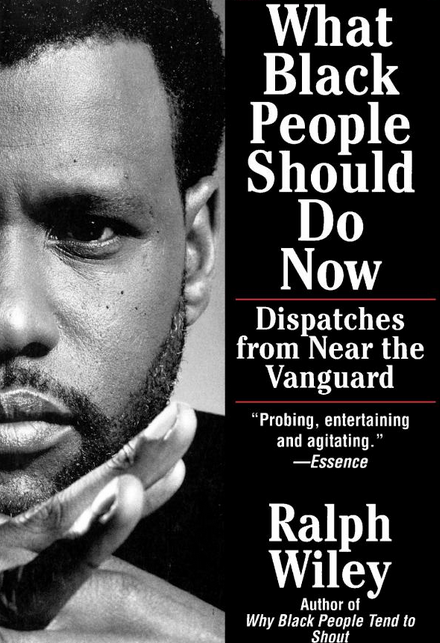
Ralph Wiley What Black People Should Do Now
College was the first time I was exposed to higher-speed Internet. Aside from downloading gigs of music in a matter of seconds, I had the opportunity to read every and any article on the web without worrying whether a phone call would disrupt my access to it. ESPN’s now-defunct Page 2 was always one of those sites. Yes, it had its share of hyperbole, as every post-Y2K moment had to be ranked and re-ranked almost weekly.
But it also gave me Ralph Wiley, one of the best writers I’d ever read in my life.
I didn’t understand the mechanics then, but his blend of fact-based argument with conversational flow read like some of the hood intellectuals I’d heard talk sports all my life. The sentences in his essay would cut through the same points through different angles. Imagine a well-made pizza and the chef using short slices, pushing his forearm into the pie with force and brevity. Observe Wiley’s thoughts on now-retired NBA legend Kobe Bryant:
“So a human thoroughbred starts to think about spitting the bit and running elsewhere, where whips and chains and self-important appraisals are not so often forthcoming, for a man without a temper is not worth his salt. Or, if he’s Kobe the Finisher, he can also become Kobe the Puppet Master, and let people rant or rave or do St. Vitus’ dance however they chose as he pulls the strings and levers of his dominant basketball talents. I’d like to see what Charlie Kaufman could do with this guy’s head. In an Association with at least eight other truly great players, and a good 50 or so who can drop 40 on a given night, Kobe rules. As yours truly pointed out in GQ last summer, days after the Lakes had won a 
Ralph Wiley and The Next Level of Education Writing | The Jose Vilson:

Why does Gov. Deal want to take over schools? Power, control and money. | Get Schooled

Why does Gov. Deal want to take over schools? Power, control and money. | Get Schooled:

Why does Gov. Deal want to take over schools? Power, control and money.

Dr. Allene Magill is executive director of the Professional Association of Georgia Educators, a 91,000 member independent educator association. PAGE is Georgia’s largest educator advocacy group.
A two-time superintendent of the year, Magill served as superintendent in Dalton, Forsyth and Paulding. In this column, she questions why Gov. Nathan Deal wants to change Georgia’s constitution to give the state the power to take over failing schools. She opposes his push to create a state-run Opportunity School District.
Expect to hear more about the Opportunity School District as the November referendum draws nearer. Last week, the Newton County Board of Education unanimously adopted a resolution opposing the Opportunity School District.
By Dr. Allene Magill
Voters go to the polls this November to decide whether the Georgia constitution should be amended to allow Gov. Nathan Deal’s office to create the Opportunity School District. This state takeover of struggling, high poverty schools uses scores from the College and Career Readiness Performance Index to justify the power grab.
The CCRPI derives its scores primarily from student performance on standardized tests. If you’ve been paying attention the past couple of years – and especially the past few months – Georgia’s experience with standardized testing administration earns low marks for reliability. And, low test scores and “failing” schools more clearly reflect the lack of resources in their communities and the poverty level of students and families than the effort of educators.
The Department of Education waived the use of this spring’s Milestones tests in grades 3, 5 and 8 for student promotion and retention decisions by local districts. Districts were also given the flexibility whether to retest students who performed poorly on the tests. Most districts reported they would not take the time or make the effort to retest.
Additionally, due to the adoption of Milestones for the 2014-2015 school year and the problems with the 2015-2016 test administration, scores will not be used to produce a Teacher Effectiveness Measure (TEM) or Leader Effectiveness Measure score for educator evaluations under TKES or LKES until at least the 2019-2020 school year. One has to wonder if the scores cannot be used for student promotion and retention decisions or for educator evaluations, then how can they possibly be valid and reliable enough to seize control of schools from a community and locally elected school board.
Decisions founded in results from standardized test scores increasingly are coming under scrutiny. Test scores – long regarded as objective measures – are losing their status as the cornerstone measurement for all things in education. The problems with testing are many. While many consider issues raised by educators or advocacy groups as “whining” to avoid accountability, the groundswell of testing opt-out proponents from students and parents has gained traction.
The growing movement is based on the negative effects of high stakes testing on students, their instruction and the educators who teach them. The voices aligned against high stakes testing are myriad and diverse. The outcry during the 2016 legislative session came from students, parents, the Georgia PTA, educators and every major education organization in Georgia.
Georgia’s legislators heard the concerns loud and clear. In unusual bipartisan cooperation the General Assembly unanimously passed Senate Bill 364 which significantly reduced the use of standardized tests in educator evaluations and dropped the requirement of using Student Learning Objectives for teachers of non-tested grades and content. Another bill that specifically offered testing opt-out provisions made it to the governor’s desk where it was vetoed.
The desire to further diminish the reliance of important decisions for students, schools, educators and districts and the governor’s vetoes of bills that advanced that cause will fuel even stronger reaction and advocacy in the 2017 session.
The CCRPI was written as a waiver to allow the state Department of Education and Georgia’s schools relief from the overly burdensome and unrealistic expectations of the federal No Child Left Behind Act. Congress finally agreed in December to a rewrite of NCLB called the Every Student Succeeds Act, which provided extensive relief to the most onerous Why does Gov. Deal want to take over schools? Power, control and money. | Get Schooled:


ESSA, evidence, and the role of intermediary organizations | Brookings Institution

ESSA, evidence, and the role of intermediary organizations | Brookings Institution:

ESSA, evidence, and the role of intermediary organizations

 When I am outside the Beltway, I often feel like my job doesn’t meet the “Grandma Test.” I lead an association, Knowledge Alliance, which advocates for the federal investment in evidence and the greater use of evidence in policymaking. When I describe my job, I usually get a quizzical look followed by the question your grandma would ask: “Well, why wouldn’t policymakers already be using evidence? I mean who is against that?”

While it’s true that most policymakers are not “against” the use of evidence, there are many other factors that influence their decisionmaking. Moreover, the research community does not always do a great job of making its work digestible and accessible to policymakers. For this reason, intermediary organizations, like Knowledge Alliance, play an important role. And, the new federal education law, the Every Student Succeeds Act (ESSA), highlights the role of intermediaries in advancing the use of research in our nation’s schools.
As Harvard professor Marty West has previously written, ESSA includes a tiered evidence structure that is widely seen as an improvement on the narrow “scientifically based research” definition of No Child Left Behind. At the same time, he makes clear that the new evidence definition will only have an impact if it is implemented well.  For that to happen, in my view, intermediary organizations are needed.
Vivian Tseng and others have written that it is not sufficient to simply direct stakeholders to the What Works Clearinghouse (WWC) or other resources. Honest brokers are needed who can work with stakeholders—in this case states, districts and schools—to translate evidence into the local context.
In fact, the law’s authors anticipated this concern, which is why they specifically called out the Regional Education Laboratories (RELs) to serve as intermediary organizations to assist states and districts in sort through the available evidence and applying it to their contexts.  Each REL has at least two researchers who are certified as WWC reviewers and have in-depth knowledge of the WWC standards and how the standards are applied.  It’s also worth noting that while many intermediary organizations do not have the capacity to serve rural areas, RELs have historically filled that void.
I believe that increasing evidence use, particularly in the area of school improvement, is one of the strongest theories of change in ESSA. And, as Mark Dynarski proposes in this blog post, ESSA provides the opportunity for research innovations, such as “implementation science,” a model popularized by the Carnegie Institute.
These innovations have the potential to produce better results for schools and, ultimately students.  As I noted in my recent blog post for the WT Grant Foundation, if research isn’t used and doesn’t benefit schools and students, then really, what’s the point? We should all take an interest in putting good research to good use in our schools. That’s something even my grandma would understand.ESSA, evidence, and the role of intermediary organizations | Brookings Institution:

Thousands protest in Mexico City over deadly clashes in Oaxaca - UPI.com

Thousands protest in Mexico City over deadly clashes in Oaxaca - UPI.com:

Thousands protest in Mexico City over deadly teachers union clashes in Oaxaca

Tens of thousands of people took part in a silent march in Mexico City on Sunday. The protest was called to be held one week after deadly clashes in the Oaxaca state that killed at least 10 people. Photo courtesy of Andrés Manuel Lopez Obrador

MEXICO CITY, June 27 (UPI) -- Tens of thousands of people in Mexico City protested on Sunday over recent violent clashes between police and a teachers union in the Oaxaca state that killed at least 10 people.
The protest on Sunday was called by Andrés Manuel Lopez Obrador, a former mayor of Mexico City, one week after the clashes between the National Coordinator of Education Workers union and Mexican state police.
Authorities said more than 4,000 police officers were deployed to central Mexico City as the march occurred Sunday.
The teachers union, social organizations and local residents held protests and disrupted traffic on a major highway connecting Oaxaca to Mexico City for about a week before violence erupted last Sunday when riot police attempted to disperse the crowds. Authorities said 10 people died, but some witnesses said up to 12 people died. Dozens of civilians and police were also injured.
The incident increased criticism against Mexican President Enrique Peña Nieto. Some say forces under the president's command use too harsh of a force against the opposition and protesters. Many in Sunday's protest called for the president's resignation.
"Condolences to relatives of the victims of repression in Oaxaca," Lopez Obrador, leader of the progressive Morena Party, said in a statement. "Enrique Peña Nieto: stop homicidal violence, seize the responsible and open dialogue."
The union has continued battling constitutional reforms passed by Mexico's Ministry of Education that would force teachers to take examinations to be approved for employment, with further tests to maintain jobs.Thousands protest in Mexico City over deadly clashes in Oaxaca - UPI.com:


Unpacking ESSA for the Library Ecosystem | American Libraries Magazine

Unpacking ESSA for the Library Ecosystem | American Libraries Magazine:

Unpacking ESSA for the Library Ecosystem

Program offers background on the Every Student Succeeds Act and tips on how to build effective coalitions


 e Every Student Succeeds Act (ESSA) offers new ways for public, school, and academic libraries to work together. At the June 24 program “Unpacking ESSA for the Ecosystem,” sponsored by the American Association of School Librarians (AASL), attendees received helpful background on the law and real-life examples on forming coalitions and involving community stakeholders to make the most of the new law’s funding opportunities.

AASL President Leslie Preddy opened the program by emphasizing the spectrum from public library to school library to academic library in each learner’s life. Communities with strong libraries have increased student success. Vailey Oehlke, Public Library Association president and director of libraries at Multnomah County (Oreg.) Library, explained how the provisions in ESSA are a victory for all libraries, cultivating a love of reading, inspiring curiosity and lifelong learning. Ann Campion Riley, president of the Association of College and Research Libraries, called the law a victory for school library community and a victory for America, as a more educated populace means more educated voters.
Emily Sheketoff, executive director of ALA’s Washington Office, traced the history of the bill, from being signed into law in 1965 as part of the Elementary and Secondary Education Act, through 2002’s No Child Left Behind Act, which did not mention school librarians at all. According to Sheketoff, that was the reason for that law’s dismal failure.
The theory guiding ESSA, Sheketoff continued, was that the federal government should not be telling states how to do education, which gives states more freedom to design education programs with the block grant. “We need to fit into that theory. We are smart, effective, and have people’s support, but we need to let them know,” she told the crowd. “Everyone loves their school librarian, but love does not pay the bills.”
Within ESSA is the Literacy Education for All, Results for the Nation (LEARN) Act, which specifically lists public and school libraries as eligible entities. Sheketoff compared the process to a banquet table filled with food. Librarians need to come to the table and get their share before someone else does.
State and local officials need to be educated on library issues, which means librarians have to be prepared to tell them about the work being done in schools and libraries. For example, Sheketoff said, “nobody works with children before age 5 better than the library.”
She added that ALA has submitted comments to US Department of Education during every step of the legislative process, and these and other talking points are available for librarians to use and expand with examples from their own experiences. “Nothing is more compelling than a good story, except a good story that’s married to good data,” she said.
Two presenters gave their firsthand accounts of doing the kind of creative relationship-building that AASL, PLA, and ACRL recommend for reaching out to stakeholders to secure ESSA funding. Dorcas Hand is director of libraries for a private school in Houston, but she helped create studentsneedlibrariesinhisd.org to help advocate for libraries in the city’s public school district after the number of librarians in schools and libraries started dropping drastically. The website is organized so that librarians and other advocates can find information and talking points easily. Hand noted that just showing up at school board meetings means a lot. Her group also began providing data to the school board, such as the location of book deserts in the city, which has helped them make their case.
Nashville (Tenn.) Public Library Director Kent Oliver spoke about the Nashville Limitless Libraries project, a collaboration between the city’s public and school libraries. The program began in 2009 and continues to Unpacking ESSA for the Library Ecosystem | American Libraries Magazine:

Teachers Wanted, No Credential Needed | Care2 Causes

Teachers Wanted, No Credential Needed | Care2 Causes:

Teachers Wanted, No Credentials Needed


A school district in Georgia is hiring 450 teachers but they’re not requiring any educational training. A bachelor’s degree will suffice.
More and more students are entering Savannah-Chatham schools, but there are fewer and fewer teachers to meet their needs. As a result, the school district is developing a new program called Alternative Pathways to Teaching, which allows anyone with a Bachelor’s degree in any field to become a teacher. This is a work-as-you-go program that takes one to three years to complete.
This district in Georgia is not alone. At least another five states, Utah, Alabama, North Carolina, Texas and Kansas have decided to allow anyone with a BA to teach.  Across the U.S., there is a huge drop in the number of students pursuing education degrees. So these states have decided that the solution to the teacher shortage is to hire people with no qualifications.
As someone who has dedicated most of her professional life to teaching and education, I am outraged. How many people would want uncertified doctors, lawyers, pilots, or police? Probably not many, so why is it acceptable to hire uncertified teachers?
Why Are Fewer People Choosing The Teaching Profession?
Faced with a shortage of teachers, state education policy makers would do well to examine why fewer people are choosing to become teachers. Could it be the low pay, the poor working conditions, the push to remove teacher job protections, and the lack of good support systems?
Instead of examining these options, these states are declaring that the preparation for a teaching career is unimportant.
The answer to a diminishing number of educators is not to grab a bunch of unqualified people, throw them in the classroom, and call them teachers. This denigrates the profession of teaching and has a terrible and lasting effect on our students.
Instead the answer is to first ask why there is a shortage of teachers and then develop a new model for training teachers.
In other countries, including Finland, China and Singapore, teachers are treated with great respect, receive extensive training and earn decent salaries.
As a result, teachers do well, their students do well, and education is recognized as being extremely important to the success of both the students and the country as a whole.
Teaching Is Not A Highly-Prized Profession In The U.S.
With some exceptions, the U.S. does not respect the profession of teaching. This I know
Read more: http://www.care2.com/causes/teachers-wanted-no-credentials-needed.html#ixzz4Cn5SYppW


What Does the Opt-Out Movement Want?

What Does the Opt-Out Movement Want?:

What Does the Opt-Out Movement Want?


Charging that Governor Andrew Cuomo and the New York State legislature in “Albany failed to act in the best interest of the children of New York,” NYS Allies for Public Education (NYSAPE) has issued a new manifesto for the opt-out movement - A New Framework for Public Education in NYS: Building a Vision that Serves ALL Students.
According to NYSAPE spokesperson Jeanette Deutermann, Nassau County public school parent and founder of Long Island Opt Out, “Grassroots organizations worked feverishly this spring to push for legislation to correct the mistakes made by our legislators and our Governor last year. Once again, the Albany leadership failed to respond to the growing tide of discontent. Parents will respond in kind this November. While others may celebrate this hollow victory of a fleeting reprieve, parent organizations will continue to fight for what is in the best interest of our children and the health of our public schools.  Our message has been loud, clear, direct, and unwavering. The time for excuses are long gone.”
Bianca Tanis, Ulster County public school parent and educator, explained “Until we ensure that our schools have the resources to meet the needs of all children, test scores are meaningless and only serve to widen the opportunity gap, hurting the most vulnerable students. A test driven accountability system allows those in power to distract the public from their refusal to fully fund our schools and denies all but the wealthiest, a well-rounded and child-centered education.”
The NYSAPE framework includes a list of what “NYS Allies for Public Education believes all schools must have in order to foster creative, critically thinking, confident, well-rounded, independent, self-motivated, culturally competent, and well-prepared students who can work cooperatively and excel post-high school, whether they choose to attend college or pursue a vocation.” NYSAPE argues that in the United States today the “misguided focus on test scores distracts from critical conversations about what all students need to be successful and about the goals of public education.” The focus on testing lacks educational validity and “most importantly, hurts students.” 
The NYSAPE Framework is divided into sections on standards, curriculum, assessment, resources, the needs of children who receive special services, and the What Does the Opt-Out Movement Want?:

Big Education Ape: Stop John King's Test and Punish Regulations - Network For Public Education - http://bigeducationape.blogspot.com/2016/06/stop-john-kings-test-and-punish.html

Sunday, June 26, 2016

Newark’s shameful response to Cerf’s charms and lies. |

Newark’s shameful response to Cerf’s charms and lies. |:

Newark’s shameful response to Cerf’s charms and lies.


There was a time–just a year ago–when the way a parent activist like Sharon Smith was treated at Tuesday night’s Newark school board would have caused a storm of protest. But that was before the city’s mayor, Ras Baraka, cut a deal with the governor to allow a national advocate of privately-operated charter schools to become the city’s state-appointed school superintendent. Now Smith–and many others–have been silenced through the charms and lies of one man, Christopher Cerf. Silenced and marginalized.
Not to mention  co-opted and bought out.
Just in time for that governor, Chris Christie, to try to gut the school district by reducing state aid by 70 percent–while increasing state support for public schools in nearby and lily-white Essex Fells by 1,225 percent. Essex Fells–with its $175,000 annual median family income–compared to $39,000 in Newark.
Tearing the heart of the public schools while saving charter schools from reductions.
And did Cerf or anyone on his staff or the Newark school board mention Christie’s class and race war against the people of New Jersey’s cities. Nope.
Cerf just spouted on about the “great progress” Newark has made  “in the last five years”–the years of Cerf and his hireling and protégé, Cami Anderson, now safely ensconced in her own consulting firm.  He called it “building on the progress” since 2011–and not one person raised even an eyebrow to wonder who disasters like Newark’s shameful response to Cerf’s charms and lies. |:


The Brave New World of Student Teacher High-Stakes Evaluation, an update... - Mitchell Robinson: Reforming Reform

The Brave New World of Student Teacher High-Stakes Evaluation, an update... - Mitchell Robinson: Reforming Reform:

The Brave New World of Student Teacher High-Stakes Evaluation, an update...


I read an excellent piece on the status of American education inThe Atlantic recently, and would strongly recommend anyone interested in schools and schooling to click here and take a look at what Jack Schneider has to say about what's really happening in our schools.

On balance, Mr. Schneider offers a very fair and level-headed analysis of American public education, suggesting that the "crisis" in American education has been wildly exaggerated. But the real problem underlying this discussion can be seen in the first 2 paragraphs, in which only 3 persons are identified as “education experts”:

Sal Khan, Campbell Brown, and Michelle Rhee.

To be clear, none of these persons has attended a public school, has a degree in education, has had their children attend a public school, or has ever held teacher certification. And yet they possess the loudest and most strident voices in the education policy arena, dominating conversations on education policy through sheer volume, and absorbing much of the light and heat in the education policy sphere. Aided and abetted by "education publications" like the billionaire-funded Education Post, Brown has become the "moderator du jour" for education reform meetings, conferences, and made-for-TV edu-infomercials.

If the country desired a substantive discussion on health care policy, we wouldn’t turn to “Dr.” Laura, “Dr.” Phil and “Dr." J. 

We would convene task forces of actual physicians and medical researchers, have meaningful discussions on health care policy and practices, and make reasoned, incremental changes in these policies and practices.

But in education, we have allowed edutourists like Rhee and Campbell to be elevated to positions of authority, and technocrats like Khan to be lauded as visionaries, even as the research conducted by actual education experts is ignored, scorned and even repudiated, The Brave New World of Student Teacher High-Stakes Evaluation, an update... - Mitchell Robinson: Reforming Reform:


Disclosing for-profit education reform agenda on 94.1 – Cloaking Inequity

Disclosing for-profit education reform agenda on 94.1 – Cloaking Inequity:

Disclosing for-profit education reform agenda on 94.1 


What do you think the people’s movement should be doing to stop the profit-driven education take-over and create the joyful, engaging schools we all want for our kids?
Julian Vasquez Heilig, Professor and California NAACP Education Chair, speaks with Kitty Kelly Epstein on her Education Today radio show on 94.1 KPFA (6/24) and reveals the complexities and hidden agenda of the corporate education agenda.
Questions Kitty asked:
1. Some people have come in contact with small community based charter schools that are doing some good things. But as you explain the general picture about charters, there is a much more profit driven, anti-education agenda running the national agenda around charters and other parts of education policy. Can you talk about that?
2. I’ve researched and written a lot about the Oakland Public schools, which were the first place eugenics advocate and Stanford Professor Lewis Terman tried out his IQ test to track the Black and Brown kids away from Northern European whites. So public school have not been great for kids of color. How do you respond to that argument when defending public education?
3. During the debate about the new federal law on education, we were given the impression that “civil rights” organizations supported extensive testing. You are the Education chair of the statewide NAACP. Have the organizations you work with taken a different view of testing?
4. What do you think the people’s movement should be doing to stop the profit-driven education take-over and create the joyful, engaging schools we all want for our kids?
I slightly misspoke in a few places. Sometimes you make mistakes when speaking LIVE.:) A couple of clarifications.
  • Community-based charters benefit from the Charter School Association not “School Boards” lobbyists.
  • The worldwide education spending is nearly 7 trillion, not billion.
  • Mayor Rahm Emmanuel closed the traditional public schools in Chicago to build charters.
For all of Cloaking Inequity’s posts on charter schools click here.
Please Facebook Like, Tweet, etc below and/or reblog to share this discussion with others.
Want to know about Cloaking Inequity’s freshly pressed conversations about educational policy? Click the “Follow blog by email” button on the home page.
Twitter: @ProfessorJVH


Click here for Vitae.
Disclosing for-profit education reform agenda on 94.1 – Cloaking Inequity:

Why have so many people accepted the idea that kids need to fail more? - The Washington Post

Why have so many people accepted the idea that kids need to fail more? - The Washington Post:

Why have so many people accepted the idea that kids need to fail more? 

Is it important to allow students to fail in class — or not to fail? How much should teachers allow kids to struggle before helping them solve a problem or understand a concept? These may seem like simple questions, but the answers are complex.
Last year, for example, a Texas high school teacher wrote in this post that she has a large quote on the wall above the whiteboard that says, “In this class, failure is not an option. It’s a requirement.” Her piece was part of a series of essays that emerged from a project in which more than 20 biology teachers across the country addressed this question: “What is the value of letting students struggle in class?” She wrote:
As my students started to learn that first day, I have this quote hanging in my classroom, not because I have a desire to see any of my students fail the class, but as a constant reminder of the powerful learning that occurs when people have to (or are given the opportunity to) struggle through challenging material and fail a few times along the way.
In 2014, veteran California teacher Larry Ferlazzo had a different take, writing that there is a big difference between failing and making mistakes and that it is important for teachers to help students understand the difference. He said:
Failure for a student, I would suggest, is the experience of not making progress towards their key hopes and dreams. One of the many jobs we teachers have, then, is to help them see that challenges they might face are just mistakes, which the dictionary defines as “an error in action, calculation, opinion, or judgment 
Why have so many people accepted the idea that kids need to fail more? - The Washington Post:


Schools Matter: Massive Resistance Required Against NC Taliban

Schools Matter: Massive Resistance Required Against NC Taliban:

Massive Resistance Required Against NC Taliban


The Koch Brothers now own North Carolina state government, and until that changes, the rights of NC citizens will be subjected to any number of schemes to limit free speech, the right to demonstrate, and to express grievances against the John Birchers who would like to return North Carolina to the era of Jim Crow social policy and the politics of McCarthyism. 

From the Charlotte Observer:


Last week, a group of three dozen teachers marched in Raleigh in an effort to draw attention to the appalling lack of basic educational materials available in their classrooms. When Governor McCrory refused to meet with them, 14 of these dedicated educators were arrested for sitting down in the street in protest. Under a new Senate bill, teachers who are arrested for failure to disperse could potentially lose their teaching licenses.

Senate Bill 867’s intent is stricter background checks for teachers applying for teaching licenses in North Carolina. Its current language requires the Department of Public Safety to provide criminal histories on individuals who apply for licensure to the State Board of Education. The board then makes a determination on whether the aspiring teacher has the “moral character required for professional educators” before issuing the teaching license.

The majority of the crimes listed in the bill make perfect sense if the goal is – as it should be – to keep our students safe. Few would argue that individuals who have been convicted of homicide, arson, prostitution, or misconduct in public office should be allowed to mold the young minds of tomorrow.

But the inclusion of Article 36A, which includes the act of remaining “at the scene of ... disorderly conduct by an 
Schools Matter: Massive Resistance Required Against NC Taliban: