Latest News and Comment from Education

Thursday, January 28, 2016

Report on the Stability of Student Growth Percentile (SGP) “Value-Added” Estimates | VAMboozled!

Report on the Stability of Student Growth Percentile (SGP) “Value-Added” Estimates | VAMboozled!:

Report on the Stability of Student Growth Percentile (SGP) “Value-Added” Estimates

VAMboozled!


The Student Growth Percentiles (SGPs) model, which is loosely defined by value-added model (VAM) purists as a VAM, uses students’ level(s) of past performance to determine students’ normative growth over time, as compared to his/her peers. “SGPs describe the relative location of a student’s current score compared to the current scores of students with similar score histories” (Castellano & Ho, p. 89). Students are compared to themselves (i.e., students serve as their own controls) over time; therefore, the need to control for other variables (e.g., student demographics) is less necessary, although this is of debate. Nonetheless, the SGP model was developed as a “better” alternative to existing models, with the goal of providing clearer, more accessible, and more understandable results to both internal and external education stakeholders and consumers. For more information about the SGP please see prior posts here and here. See also an original source about the SGP here.
Related, in a study released last week, WestEd researchers conducted an “Analysis of the stability of teacher-level growth scores [derived] from the student growth percentile [SGP] model” in one, large school district in Nevada (n=370 teachers). The key finding they present is that “half or more of the variance in teacher scores from the [SGP] model is due to random or otherwise unstable sources rather than to reliable information that could predict future performance. Even when derived by averaging several years of teacher scores, effectiveness estimates are unlikely to provide a level of reliability desired in scores used for high-stakes decisions, such as tenure or dismissal. Thus, states may want to be cautious in using student growth percentile [SGP] scores for teacher evaluation.”
Most importantly, the evidence in this study should make us (continue to) question the Report on the Stability of Student Growth Percentile (SGP) “Value-Added” Estimates | VAMboozled!: 

U.S. Education Department threatens to sanction states over test opt-outs - The Washington Post

U.S. Education Department threatens to sanction states over test opt-outs - The Washington Post:

U.S. Education Department threatens to sanction states over test opt-outs


Anyone who thought that the U.S. Education Department’s power over states in regard to standardized testing was over because of the new K-12 education law passed in December should think again.
The Every Student Succeeds Act was the result of a compromise among Republicans and Democrats who were intent on ending No Child Left Behind, the chief education initiative of former president George W. Bush, and the Obama administration’s micro-managing of education policymaking. It did send a good deal of education policymaking power back to the states but did not eliminate the federal role in education.
ESSA carries over the No Child Left Behind mandate of annual standardized testing from grades 3-8 and once in high school, and it has left enough room for the Education Department to threaten to sanction those states where too many students refused to take the state-mandated standardized “accountability” test.
In the last year, an “opt-out” movement has been growing around the country, with many parents refusing to allow their children to take tests that they believe are being used in an improper manner to evaluate students and teachers, and some educators refusing to administer exams they believe are poorly designed.
Under NCLB and now under ESSA, at least 95 percent of eligible students are required to take the state-chosen standardized test used to hold states and school districts “accountable.” Federal funding can be withheld by the Education Department to states that dip below the 95 percent threshold. Last year, some states did more than “dip.” In New York state, for example, 20 percent of eligible students refused to take the state’s accountability test.
Education policymakers — the same ones who support “school choice” — don’t like the idea of parents deciding that their students shouldn’t take a standardized test. So, on Dec. 2, the department sent a letter to states reminding them of the testing and 95 percent participation requirements, warning that failure to produce the mandated results could result in the withholding of federal funds about participation rates.
The letter also urges states to sanction local education agencies where participation rates are below 95 percent and offers suggestions for how to do that. A state could, for example, without funds, lower a local education agency U.S. Education Department threatens to sanction states over test opt-outs - The Washington Post:


Libraries at the Crossroads | Pew Research Center

Libraries at the Crossroads | Pew Research Center:

Libraries at the Crossroads

The public is interested in new services and thinks libraries are important to communities


American libraries are buffeted by cross currents. Citizens believe that libraries are important community institutions and profess interest in libraries offering a range of new program possibilities. Yet, even as the public expresses interest in additional library services, there are signs that the share of Americans visiting libraries has edged downward over the past three years, although it is too soon to know whether or not this is a trend.
A new survey from Pew Research Center brings this complex situation into stark relief. Many Americans say they want public libraries to:
  • support local education;
  • serve special constituents such as veterans, active-duty military personnel and immigrants;
  • help local businesses, job seekers and those upgrading their work skills;
  • embrace new technologies such as 3-D printers and provide services to help patrons learn about high-tech gadgetry.
Additionally, two-thirds of Americans (65%) ages 16 and older say that closing their local public library would have a major impact on their community. Low-income Americans, Hispanics and African Americans are more likely than others to say that a library closing would impact their lives and communities.
Public Wants Libraries to Advance Education, Improve Digital Literacy and Serve Key Groups
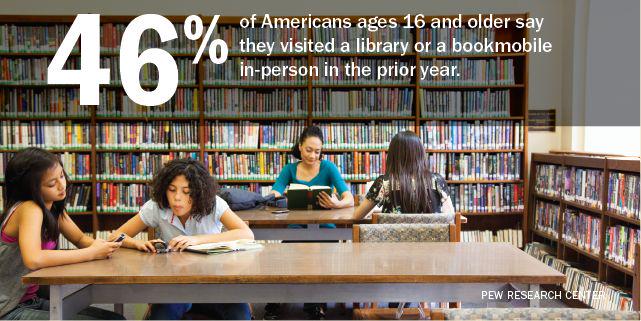
At the same time, the survey finds that the share of Americans who report using a library has ebbed somewhat over the past several years, though it is too early to identify a definitive national trend. Compared with Pew Research Center surveys from recent years, the current survey finds those 16 and older a bit less likely to say they have visited a library or bookmobile in-person in the past 12 months, visited a library website or used a library’s computers and internet access.
A trend in the other direction is that mobile access to library resources has taken on more prominence. Among those who have used a public library website, 50% accessed it in the Libraries at the Crossroads | Pew Research Center:


The return of Steinberg - Sacramento News & Review

Sacramento News & Review - The return of Steinberg - Feature Story - Local Stories - January 28, 2016:
The return of Steinberg
Respect, money, vision, likability—Darrell Steinberg’s candidacy has it all. But is the former state Senate pro tem really a lock to become Sacramento’s next mayor?


Darrell Steinberg darts across a quiet Tahoe Park street toward a woman standing in her doorway. “You’ve got my vote, Darrell, I just wanted to say hi,” she yells from her porch. “Can I get a lawn sign, too?” he asks, deferentially, like a kid wanting a cookie. She obliges. “Count it!” he shouts to his canvassing sidekick, a law student from his alma mater, UC Davis. It’s an overcast weekend morning in January before noon—and some six months until Sacramento’s primary election. Yet here’s Steinberg, the antithesis of Jeb Bush energy, already hustling for votes. A man in his late 40s thanks Steinberg for stopping by, for his time. “I know you’re famous,” the man says.

“I don’t know about that,” Steinberg replies. “I call it minicelebrity—with an emphasis on mini.”

Clearly Steinberg isn’t taking the mayor’s race for granted. When he’s not banging on doors each weekend, he’s meeting neighbors at coffeehouses or holding court at the farmers market. He seems to genuinely want to lead Sacramento. And experts say the mayor gig is Steinberg’s for the taking.

“It’s his to lose,” said local political strategist Steven Maviglio, who guided Mayor Kevin Johnson’s 2008 campaign. “He’s got money, he’s got message and he’s got name ID. Those are the three ingredients to success.”

He said the 56-year-old former state Senate leader is known around town as Mr. Nice Guy. “Darrell Steinberg doesn’t make enemies. That’s the key to his strength.”

But what’s that saying about nice guys finishing last? Local consultant Matt Rexroad attended the recent debate between Councilwoman Angelique Ashby and Steinberg earlier this month at the Crocker Art Museum. Afterward, Rexroad said he’s “not convinced that the average voter would have said [Steinberg] was the frontrunner.” He described Ashby as folksy and real, and says in contrast Steinberg came across as political royalty.

Esteem, money, vision—is Steinberg simply too qualified to be top boss of weak-mayor Sacramento?

The politician

Steinberg sits at a high table in the back of an East Sacramento coffeehouse. It's a few days before Christmas, a suit-but-not-tie day, and he's sipping a cappuccino. He refers to his accomplishment at the Capitol affectionately, like one might about one’s children—his “work,” as he calls bills passed and initiatives championed. It’s true that his was not the quotidian, boilerplate, here-you-go-constituents Sacramento News & Review - The return of Steinberg - Feature Story - Local Stories - January 28, 2016:


CURMUDGUCATION: Power and Order

CURMUDGUCATION: Power and Order:

Power and Order


 It's School Choice Week and all the usuals have to check in, and I've been trying to read the work of the more serious choice advocates. And that would have to include Andy Smarick.


Smarick's entry at the Rordhma Institute blog is School Choice: The end of the beginning in which he would like to suggest that charter-choice systems are a done deal, and he has a lesson from his years of pushing choice that he wants to share:

But probably the most important lesson I’ve learned over the last fifteen years—the reason why school choice progress moves so slowly—is this: An education system without school choice makes perfect sense from the point of view of central administrators.

Thas's probably true in the sense that it's true to say that I married my wife because she smells nice-- it's true, but a rather incomplete picture. Or to phrase Smarick's observation another way-- we have the traditional pubic system we have because the trained professionals who have devoted their adult live to working in the ed biz have, in their constant work at growing and testing and refining, have settled on several best practices. Smarick might as well complain that the only reason that surgeons like to operate on tables instead of floors is that it makes it easier to operate safely and accurately.

Smarick observes that a centralized authority for a large cityful of students (like most people in the ed debates, Smarick is really talking just about large urban school systems) is efficient and sensible, except when it isn't.

When there’s a single school operator, it’s a big problem if it’s not good at 
CURMUDGUCATION: Power and Order:

We Know How To Prepare “High Quality” New Teachers | DCGEducator: Doing The Right Thing

We Know How To Prepare “High Quality” New Teachers | DCGEducator: Doing The Right Thing:

We Know How To Prepare “High Quality” New Teachers


IMG_0268“Having taught four decades, and having had the privilege of working with so many talented and experienced educators throughout those four decades, I can say, beyond the shadow of a doubt, that becoming a good teacher takes time. Nor only do you need time to develop and hone your skills, you need time to learn about kids and “how they work.” You don’t develop these skills in a vacuum, but through the mentoring, assistance and wisdom of more experience people with years of experience, tired and true, proven methods, strategies, best practices and techniques.”
– Former colleague and old friend, Bernie Keller: Former Teacher of English for 40 years.
I graduated from Fordham University’s undergraduate School of Education in 1970 with Bernie’s older brother Harold who eventually joined Bernie and me at A.E. Stevenson High School in the Bronx, NY. Fordham undergraduate education was probably considered a 2nd tier University, yet it produced a large number of excellent teachers in and around NYC, and I will lay odds that it was better at producing high quality teachers than many a top tier university. The program no longer exists. It was merged into a graduate program.
Our four years included heavy academic work in our subject area, class work in pedagogy, and fieldwork in local neighborhood, afternoon centers. All of that was before you began a full-time, semester-long internship as a student teacher. The pedagogy classes weren’t worth much, but that’s true in all schools of education. That is because more are still taught by researchers or “higher “education professors and less by experienced public school teachers. I have always believed that more practical experience with great teachers beats theory taught in an ivory tower.
University education programs must get with the program. The ivory tower is too blinded by its own light. They must retool and develop more in-school mentor programs rather than rely on pedagogy classes that, well, for the most part, are less than helpful. They have to put more emphasis on fieldwork and internship work. If schools of education want to improve teaching they must make teaching training more similar to the other “life saving” professions, plumbing and medicine. They both include long periods of apprenticeships and ongoing certification before permanent licensing. As long as they think PhD academics are more important than teacher training, things won’t change much.
A major difference between my generation and present-day new teachers inWe Know How To Prepare “High Quality” New Teachers | DCGEducator: Doing The Right Thing: 

Inviting Policy Ideas for Democracy Schools - Bridging Differences - Education Week

Inviting Policy Ideas for Democracy Schools - Bridging Differences - Education Week:

Inviting Policy Ideas for Democracy Schools


Deborah Meier continues her conversation with Harry Boyte. To read their full exchange, please visit here.
Dear Harry and friends,
Speaking of Bernie Sanders, I just read a persuasively friendly piece in Bloomberg Businessweek (Jan. 7, 2016)! The author, Joel Stein, ends his piece with Sanders saying, in response to Killer Mike's fear of growing soft as he ages: "That's being human," said Sanders. "If you see stuff that's bad and you don't respond with—what did King call it?—'the urgency of the moment,' then you're not alive."
Well, he's got hold of something important even if, like me, his passions run along the lines of politics rather than ... music? Mountain climbing? Poetry? Democracy depends on passionate musicians, mountain climbers, poets, and inventors having some passion left over to fix the state of the world. If not 24/7, some of the time.
And yes, we need places—as you suggest—where people find it easy and enjoyable to come together to swap stories, plan adventures, and discuss and argue politics. (Democracy depends also on our getting accustomed to view the word politics itself in a different and more positive light. The way we use it now suggests that we're against it, which most oligarchs and dictators would be only too happy about.)
It's amazing how little we (me) know about prior attempts to do these things. I knew, vaguely, that there was something called the Farmer Labor Party in Wisconsin and Minnesota. But not much more. Your phrase—"organic intellectuals"—is a great term for what our schools should aim for. I'd like to replace the term "academics" with the word "intellectual"—a topic I took up in some detail in The Power of Their Ideas, and what Dewey and Ted Sizer called the "habits of mind" at the heart of good schooling. The switch from Latin to vernacular is an interesting example of the importance of the change in the "dialect" that became legitimated. 
But the habits of that help sustain democracy and the habits that assist oligarchy are different—in dialect and substance. The relationship between means and ends is one of those things that good schools should be exploring. The trade-offs. Add to that your quote from M. L. Wilson about the belief in the intellectual ability of "ordinary" people—of those thousands of ordinary people who you describe in your letter. 
The belief that "ordinary" human beings are extraordinary was reinforced for me when I became a mother and then taught 4- and 5-year-olds. We are born theorists working out how the world works, persevering even when our hypotheses so often turn out to be wrong. Rare is the infant who gives up easily. This belief is now, for me, a fact, not just a wish.
But sustaining this work—the work you describe in the agrarian Midwest. Did it end with a bang or a whimper? Many of the best school have died with a whimper; we barely notice it. Such was the case with CPESS. My friend Diane Suiter is the retired principal of an amazing teacher-, parent-, and student-led K-8 school in Middletown, Ohio. After a decade or more of development, its staff is hanging in without her, but a change in administration has surely made it harder to deepen the work. And then—I hope not—it begins to fade. At its heart, she saw it as a place where adults and young people learned together to use their voices effectively, to be learners with respect and empathy for others, and finally to discover what a community is and how to be a member of one. 
You and I are seeking new ways to imbed these ideas, reinventing communities, into the world of Inviting Policy Ideas for Democracy Schools - Bridging Differences - Education Week:

Christie: A fine sixth place showing everywhere | Bob Braun's Ledger

Christie: A fine sixth place showing everywhere | Bob Braun's Ledger:

Christie: A fine sixth place showing everywhere

What?
What?


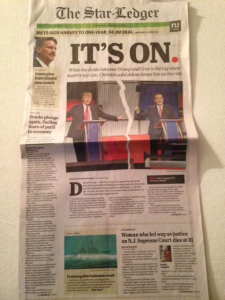
The headline in The Star-Ledger after the last Republican presidential debate was “IT’S ON.” in nearly two-inch high, all-capital letter,  headlines, followed–mercifully–not by an exclamation point but by a curious red dot.  While the headline was, at best, ambiguous, the subhead beneath it told the story, at least from the perspective of New Jersey’s largest newspaper: “While the divide between Trump and Cruz is the big news, experts say Gov. Christie’s solid debate keeps him on the rise.”
Well, no. It didn’t–and, in a moment, the figures that show the fallacy of the headline.
But, first, just a brief journey into the arcane world of journalism with this question: What in the world did that front page mean to say?
What’s on? If the Trump/Cruz “divide” is the “big news,” why does the state’s largest newspaper concentrate on something other than the “big news?” And the use of so-called “experts”–not just by the Ledger but by all sinking media outlets–is getting, well, tedious.
Back in the day when I worked for The Star-Ledger–and, still, today, but not so much–reporters were encouraged by their editors to keep dead stories alive by reaching out to a third party for a comment that could be magically converted into a news stories. This was especially true of investigative stories where a report has spent loads of time coming up with shady dealings by some political figure. The story is written–and the reaction is, well, zero.
Ah, those were the days. A front page with Christie's fave quotes from 2012
Ah, those were the days. A front page with Christie’s fave quotes from 2012
So what you do is this: You call some investigative agency. County prosecutor, say. Or state criminal justice division chief. The feds (Christie was good this way, although, often, he or one of his assistants was the source of the investigation in the first place, so the pump was primed). Most of the time, you’d get a comment like: “Well, of course, we’re interested in allegations that state Sen. Wetlands stole heron eggs and sold them on the open market in Secaucus–we’ll look into it.”
Bingo. The next day’s headline: “State to investigate Wetlands,” and the lead paragraph would contend the state is probing the allegations that “originally appearedChristie: A fine sixth place showing everywhere | Bob Braun's Ledger:

School Libraries Strive to Keep Pace with New Family Structures - NEA Today

School Libraries Strive to Keep Pace with New Family Structures - NEA Today:

School Libraries Strive to Keep Pace with New Family Structures

school libraries


 Some students at Beehive Elementary School in Kearns, Utah, come from families with a mother, a father and their biological children living together under one roof. Many will likely have a dog.

Others belong to families comprised of two Dads or two Moms, or one Mom who works and is single, or where both parents are unemployed and they do not have a roof because they are homeless.
“The majority of my students come from single parent households, or have been adopted by family members who are not their biological parents,” says Caren Burns, a teacher at Beehive. “Others have LGBTQ (lesbian, gay, bisexual, transgendered, questioning) parents, and some have parents who are incarcerated.”
As sweeping social changes redefine “family,” school librarians are frantically trying to stock shelves with progressive book collections to help serve diverse student populations. Stock characters of parents often featured in traditional literature are now viewed as in need of an overhaul.
“We need to find students books that will relate to their family situations and various backgrounds,” says Burns, a member of the Granite Education Association (GEA). “I think having a wider variety of family structures show up in the texts that our students are reading nationwide will increase literacy learning, help them work through tough family situations, and provide literature they can emotionally connect to.”
report by the Pew Research Center identified recent trends in family structures being comprised of more:
• Unmarried couples raising children.
• Gay and lesbian couples raising children.
• Single women having children without a male partner to help raise them.
• People living together without getting married.
• Mothers of young children working outside the home.
• People of different races marrying each other.
“Children who belong to non-traditional families often experience bullying, social School Libraries Strive to Keep Pace with New Family Structures - NEA Today:

With A Brooklyn Accent: The Untold Story: How Immigrants Have Helped Revitalize Bronx Neighborhoods

With A Brooklyn Accent: The Untold Story: How Immigrants Have Helped Revitalize Bronx Neighborhoods:

The Untold Story: How Immigrants Have Helped Revitalize Bronx Neighborhoods

Most Americans probably still think of the Bronx through metaphors of decline and decay, epitomized by the phrase, "the Bronx is Burning," but that phrase doesn't begin to describe what is happening in the borough today.. Yes, from the late 60's through the late 70's, large portions of the Bronx south of the Cross Bronx experienced disinvestment, arson and elimination of vital services, leaving vacant rubble filled lots that attracted huge media attention. But in the last 30 years, through the hard work of local residents and community organizations, almost all those vacant lots have been filled with one and two family homes, apartment buildings and shopping centers. In fact the Bronx has become a great American Success Story, perhaps the only large urban area in the nation ( and there are many) where neighborhoods ravaged by de-industrialization and disinvestment have been completely rebuilt. If you think I am exaggerating, go visit Buffalo, Camden, Detroit, Gary Indiana, Baltimore or Philadelphia and then drive around the Bronx. The contrast will make your head spin
One of the major factors contributing to the Bronx's revitalization, and one which is little discussed, has been immigration. Recent immigrants from West Africa, the Dominican Republic, the West Indies, Mexico and South Asia compose a sizable proportion of the people who have moved into the new housing placed on once vacant lots, and run many of the businesses serving the residents of those areas
If you want to see that influence brought to life, drive up the hill from Yankee Stadium to Highbridge and Morris Heights, two neighborhoods hard hit by the abandonment cycle in the 1970's. Not only will you see lots of newly built housing, if you observe the street traffic, and walk into neighborhood businesses, you notice the presence of the neighborhood's large West African and Dominican population. You will also, if you observe carefully, notice some mosques and Islamic centers, as most of the West African immigrants are Muslim. Their peaceful interaction with their neighbors has won them great respect and helped contribute to the neighborhoods revitalization.
If you go Southward and Eastward into Mott Haven and Morrisania, you will see similar immigrant influences, only in these communities the Mexican presence is stronger than the Dominican one. Once again, the business district is a key indicator as these neighborhoods contain a growing number of Mexican groceries and restaurants.

Cut Scores on Standardized Tests Are Arbitrary; Pearson’s GED Recalibration Proves It | janresseger

Cut Scores on Standardized Tests Are Arbitrary; Pearson’s GED Recalibration Proves It | janresseger:

Cut Scores on Standardized Tests Are Arbitrary; Pearson’s GED Recalibration Proves It

It is hard to remember that standardized test scores have no real, objective meaning.  How easily we forget this truth.
The standardized tests that are used to rate and rank public schools—the ones that became ubiquitous after the passage of No Child Left Behind, and which, by the way, the Every Student Succeeds Act will leave in place—are graded with cut scores.  Somebody in your state education department decides on a cut score that will mean “passing” and other cut scores that will mean “proficient” or “outstanding.”  The people who set those cut scores have a lot of power because the scores on the tests confer value judgments on children and on their teachers and on their schools. The scores can shape the self concept of a child or determine whether a teacher gets a raise or even whether a teacher gets fired. Even if a third grader, who began the school year as a non-reader, learns how to read and makes a lot of progress, that child and that child’s teacher won’t get a passing mark unless the child makes the 3rd grade reading proficiency cut score.
But the cut scores are relatively arbitrary.  And sometimes they even get changed.  Here is a commentary from US News and World Report about Ohio last November:  “Last month, Ohio released initial results from its PARCC test, a standardized test used by a group of states, showing that nearly 65 percent of students were proficient in math and English language arts. These numbers were a whole lot better than those of other states on the PARCC, so is Ohio leading the way? Politically, yes. Academically, no.  Ohio got these results by rejecting PARCC’s recommended cut scores to designate proficiency and adopting more generous ones. Ohio claims that 69 percent of its fourth graders are proficient in English, but if the state were using Cut Scores on Standardized Tests Are Arbitrary; Pearson’s GED Recalibration Proves It | janresseger:


Seattle Schools Community Forum: McCleary? Anybody? It's Crickets at the Legislature

Seattle Schools Community Forum: McCleary? Anybody? It's Crickets at the Legislature:

McCleary? Anybody? It's Crickets at the Legislature

WA GOP gut bipartisan education legislation
RELEASE: Jan. 27, 2016  (this came via Senator John McCoy but I'm not sure of its origins)


Senate Republicans gut bipartisan McCleary bill


OLYMPIA – A cornerstone bill to address Washington state’s education funding obligations is at risk of being made irrelevant by amendments that will be proposed by Senate Republicans in the Senate Early Learning & K-12 Education committee on Thursday, Jan. 28 at 8:00 a.m.

SB 6195 is the result of months long negotiations between both parties in the Senate and House as well as the governor’s office. Sen. Christine Rolfes, D-Kitsap County and Sen. Andy Billig, D-Spokane, were the lead negotiators for Senate Democrats.

“It is extremely disappointing that Senate Republicans will turn a bipartisan agreement into a partisan plan,” said Rolfes. “They commit only to addressing local levies, without a commitment to the state paying its fair share – which is the reason the state was sued in the first place. People following this issue thought the plan couldn’t get weaker. Unbelievably, the Senate Republicans have lowered the bar.”

“I’m disappointed that after participating in a productive bipartisan workgroup, the Senate Republicans have decided to abandon our agreement,” said Billig. “It is our constitutional duty to fully fund education and it’s frustrating that the Republicans don’t see this as an urgent issue, because our more than one million public school kids and their families surely do.”
  • Only commits to addressing local funding


1/28/2016 – The School Choice We Have Vs. The Choice We Want

1/28/2016 – The School Choice We Have Vs. The Choice We Want:

The School Choice We Have Vs. The Choice We Want


The School Choice We Have Vs. The Choice We Want

By Jeff Bryant

“It’s that time of year when National School Choice Week is staged by – well, we really don’t know who – to elevate ‘education options,’ primarily, charter schools and vouchers, for K-12 students … But this year’s celebration of ‘choice’ plays out against a more compelling national news story in Detroit, where teachers have been staging a series of ‘sickouts’ to protest the deplorable conditions in their public schools … What we see in Detroit is increasing evidence of the ‘school choice’ American communities really have, especially in low-income communities of color. What kind of ‘choice’ is this?”
Read more …

NEWS AND VIEWS

Spending In Nation’s Schools Falls Again, With Wide Variation Across States

The Washington Post

“The nation’s per-pupil spending on K-12 public schools dropped in 2013 for the third year in a row … It shows that, in many places, funding for public education has not rebounded as the economy recovered from the Great Recession. 20 states saw per-pupil spending decline by 1% or more in the 2012-2013 school year, and some saw much larger decreases … State funding accounts for about 45% of schools’ revenue, and it declined two-tenths of a percent in 2013 … Federal spending on education dropped more dramatically – by nearly 10% … Local governments ponied up nearly 1% more … But in most states, local governments depend on property taxes to raise money for education, which means that poor communities have less wherewithal than affluent ones to fill budget holes.”
Read more …

Sick of Inequality: The Case For The Detroit Teacher Strike

The Progressive

New York City school teacher Jose Luis Vilson writes, “National attention is focused on inhumane conditions in two Michigan cities: Flint’s lead-filled drinking water and Detroit’s rotten public schools. The former has garnered the attention … The crisis in Detroit’s public schools has a long history but has not gotten the attention it deserves. For years, teachers have been complaining about miserable learning conditions for students … Part of the lack of media attention to DPS may have to do with the narratives about Detroit public schools told by current education ‘reformers.’ Charter schools and free market choice advocates have capitalized on the discord and lack of resources in public schools to recruit students … To whom is it not obvious that schooling is as much a public good as safe drinking water?”
Read more …

Special Education Graduation Disparities Highlighted In New Report

Education Week

“Many states are still doing a dismal job in getting students with disabilities across the high school finish line on time with a standard diploma. Fewer than half of the students with disabilities in Alaska, the District of Columbia, Georgia, Louisiana, Nevada, Mississippi, and South Carolina graduated with a regular diploma … 33 states graduated fewer than 70% of their students with disabilities.”
Read more …

New Education Secretary To Teachers: Our Bad

US News And World Report

“Acting Education Secretary John King offered teachers an olive branch … acknowledging his department’s role in creating a politicized education environment … King … addressed the Education Department’s laser-like focus on getting states to adopt new teacher evaluations that take into account student test scores … The Obama administration’s hallmark competitive grant program, Race to the Top, and its offer of waivers from the then-federal education law, No Child Left Behind, both pushed states to adopt new evaluation systems … Despite his previous comments about not always being inclusive of teachers, King reiterated the Obama administration’s continued belief that students’ test scores should be part of an evaluation system.”
Read more …

Parents’ Financial Debt Linked To Behavioral Problems In Their Kids

Live Science

“Children whose parents have certain kinds of financial debt may be more likely to have behavioral problems, a new study suggests … Children in the study whose parents had ‘unsecured debt,’ such as credit card debt or unpaid medical bills, were more likely to experience behavioral difficulties than kids whose parents did not have this type of debt … This type of debt may trigger stress and anxiety in parents, which may affect their parenting and, in turn, their kids’ emotional well-being … The researchers found that, among the parents who had unsecured debt, the average amount of the debt was $10,000.”
Read more …
1/28/2016 – The School Choice We Have Vs. The Choice We Want: