Latest News and Comment from Education

Monday, January 18, 2016

PAA leaders walking the walk in 2016 | Parents Across America

PAA leaders walking the walk in 2016 | Parents Across America:

PAA leaders walking the walk in 2016 


 Several PAA leaders have been stepping up to the plate of public service lately, and we are SO proud!

PAA founding member Helen Gym has already taken office as councilwoman-at-large in Philadelphia.
Helen ran on a platform of support for well-funded, democratically-run public schools.
Can’t wait to see what she does!
Helen with new Phillly Mayor Jim Kenney
  • Former PAA Board of Directors member
    Dawn Collins is running for school board in East Baton Rouge, Louisiana, with this platform:
    • I support the expansion of sensible, research-based reforms that empower students, families and teachers.
    • We must incentivize the placement of highly qualified, experienced educators – especially in our most challenging classrooms.
    • All of our public schools should be diverse with well-rounded curriculum that challenge and engage our children while providing meaningful options to families – one-size-fits-all education does not work for our
- See more at: http://parentsacrossamerica.org/paa-leaders-walking-walk-2016/#sthash.8LGdt40t.dpuf

With A Brooklyn Accent: How Oakland Should Respond to the Closing of It's Wal-Mart- Guest Post By Brian Crowell

With A Brooklyn Accent: How Oakland Should Respond to the Closing of It's Wal-Mart- Guest Post By Brian Crowell:

How Oakland Should Respond to the Closing of It's Wal-Mart- Guest Post By Brian Crowell


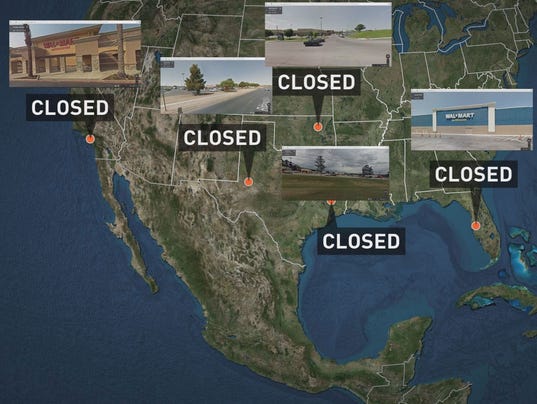
 With the closing of WalMart in Oakland, one must ask the question? Do we need WalMart in America at all. The WalMart in Oakland was always busy. The other Walmart in the area is literally 1.5 miles per way in the San Leandro Suburb neighboring Oakland. The WalMart in Oakland brought in 4,000 jobs. It was also in the top 25 for tax receipts for the City of Oakland.


So what was the problem? Was is the fact that the City of Oakland raised the minimum wage to over $12.00 per hour? How can a store that was profitable be a problem? Its part of WalMarts Macro Scheme to close 269 stores world wide.

What can Oakland do? Why use the empty space and open its own retail store? The City Manager could make the deal with the distributors and import the same products. We have the Port of Oakland in the same city where all the products came from China anyway. Oakland has population, tax receipts and demand so its not like true store would be any less empty. Also the City of Oakland could pay the employees MORE than the WalMart Employees were getting. We can call the store OakMart.

Oakland could probably undercut WalMart in its distribution and WalMart might cry bloody murder. If so, then Oakland could take WalMart to court for violating anti trust laws. City Municipalities don't have the profit mandate that corporate models necessitate. Its time for Government to serve its people and not these companies who cut and run when the numbers are bad for a quarter. Although I'm certain this was not the case in Oakland.

Brian Crowell

Is pulling A Birthday Cake for George Washington a victory for progressive educators? – @ THE CHALKFACE

Is pulling A Birthday Cake for George Washington a victory for progressive educators? – @ THE CHALKFACE:

Is pulling A Birthday Cake for George Washington a victory for progressive educators?

569cb1941f00005000216110


I’ve not had a physical copy of the book in my hands. But I agree with the analysis and portrayals of the book as depicting an oddly dewy-eyed representation of slavery, akin to those who think that slaves should have been at the very least “thankful” for jobs and roofs over their heads.
Very gross.
Since public outcry, which was swift and condemning of Scholastic and the author/illustrator, the book has been pulled from publication. 
I agree with the decision. Of all the books out there, published every day, this book doesn’t really need to be published. Nevertheless, as an educator, I always want to err on the side of keeping books available. Are these not the same tactics that bigots and homophobes use to ban books? Or is it different? Is it different to be offended by an inaccurate portrayal of slavery than it is to be religiously conservative and offended by what is perceived as promotion of the “homosexual lifestyle?”
Pulling the book, although ultimately necessary, is the easy way out, no? I mean, Scholastic already most likely lost money on it. But couldn’t it stand to lose more if it was made available, still, and remained on Is pulling A Birthday Cake for George Washington a victory for progressive educators? – @ THE CHALKFACE:

Yohuru Williams asks - What Would Dr. King Say About the Corporate Assault on Public Education? - Wait What?

Yohuru Williams asks - What Would Dr. King Say About the Corporate Assault on Public Education? - Wait What?:

Yohuru Williams asks – What Would Dr. King Say About the Corporate Assault on Public Education?

Dr. Yohuru Williams is one of my heroes, as well as a fellow education blogger and activist.  Dr. Williams is also a professor of history and a dean at Fairfield University in Connecticut.
This wise and powerful commentary piece first appeared in the Progressive on January 16, 2015.  It has since been reposted on many blogs.
What Would Martin Say?  (By Dr. Yohuru Williams)
This year marked the fiftieth anniversary of Mississippi Freedom Summer and the passage of the Civil Rights Act of 1964, one of the most important pieces of civil rights legislation in US history. It also has marked a renewed push by the proponents of corporate education reform to dismantle public education in what they persist in referring to as the great “civil rights issue of our time.” The leaders of this effort, including US Secretary of Education Arne Duncan, are fond of appropriating the language of the civil rights movement to justify their anti-union, anti-teacher, pro-testing privatization agenda. But they are not social justice advocates. And Arne Duncan is no Reverend King.
In a 2010 speech observing the forty-fifth anniversary of the Selma to Montgomery March, Duncan boldly invoked the words of John Kennedy: “Simple justice requires that public funds . . . not be spent in any fashion which encourages, subsidizes, or results in racial discrimination.” Duncan enjoined those in attendance, “Let me repeat that, President Kennedy said that no taxpayer dollars should be spent if they subsidize or result in racial discrimination.” Yet Duncan and the Obama Administration—through Race to the Top, a program similar to the Bush Administration’s No Child Left Behind
Yohuru Williams asks - What Would Dr. King Say About the Corporate Assault on Public Education? - Wait What?:


Dr. Yohuru R. Williams http://bit.ly/1SZahsk

Seattle Schools Community Forum: Times' Story on African-American Boys and SPS

Seattle Schools Community Forum: Times' Story on African-American Boys and SPS:

Times' Story on African-American Boys and SPS

The Times has an article about the district's move to shore up learning specifically for African-American boys.  One thing I didn't realize that's right in the headline is the district is considering a whole office/department for this effort.  (I also didn't know the district was piloting a program towards this effort at Aki Kurose.)  

Part of the push is to try to get more teachers of color in SPS.  From what I have heard and read, this will be a heavy lift.  One, the teacher corps in the U.S. is getting older AND not as many college students are looking to teaching.  (And who could blame them? Buffeted and criticized from all sides, it may not look very much like an appealing career.  Build in the costs of living in some areas and it probably shouldn't be a surprise that despite the need, there may not be enough good teachers of color.

I recall when there was finally something written by SPS about this effort because Wright, Blanford and Martin-Morris made repeated references to the work but nothing was ever published.   One issue was the concern that if this was not made a priority, along with continuing resources, that it would be a splashy headline and not a sustained effort.  I think many parents - in other programs - can relate to that. 

But I cannot see a whole department for one subset of children.  If a whole department needs to be created, they should make a department for ALL 


 Thank you, Dr. King


Once again, the words of Dr. King ring true, today more than ever.  It's amazing how he seemed to forecast what looks to be happening today in public education.  

The Purpose Of Education


by Dr. Martin Luther King Jr.,
Morehouse College Student Paper, The Maroon Tiger, in 1947


As I engage in the so-called "bull sessions" around and about the school, I too often find that most college men have a misconception of the purpose of education. Most of the "brethren" think that education should equip them with the proper instruments of exploitation so that they can forever trample over the masses. Still others think that education should furnish them with noble ends rather than means to an end. 

It seems to me that education has a two-fold function to perform in the life of man and in society: the one is utility and the other is culture. Education must enable a man to become more efficient, to achieve with increasing facility the ligitimate goals of his life.

Education must also train one for quick, resolute and effective thinking. To think incisively and to think for one's self is very difficult. We are prone to let our mental life become invaded by 
 Thank you, Dr. King

Beyond Capitalism – Albert Einstein, 1949 | Creative by Nature

Beyond Capitalism – Albert Einstein, 1949 | Creative by Nature:

Beyond Capitalism – Albert Einstein, 1949


Screen Shot 2016-01-18 at 10.28.05 PM


The following are excerpts from Albert Einstein’s essay “Why Socialism?” published in theMay 1949 issue of the Monthly Review. In this article Einstein describes the systemic problems with capitalism. How as wealth and power is concentrated in the hands of a few the elites form an oligarchy, gaining control of the media and able to sway politicians to make laws in their favor. In this way democracy is subverted…
~*~
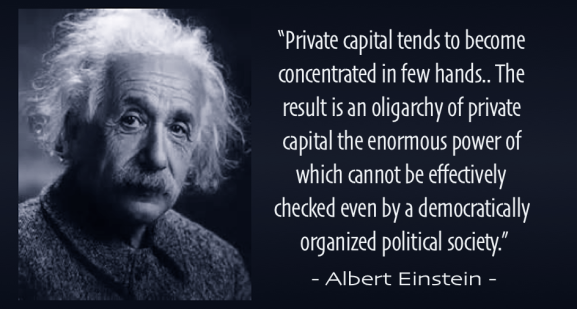
“Private capital tends to become concentrated in few hands, partly because of competition among the capitalists, and partly because technological development and the increasing division of labor encourage the formation of larger units of production at the expense of the smaller ones.
The result of these developments is an oligarchy of private capital the enormous power of which cannot be effectively checked even by a democratically organised political society.
This is true since the members of legislative bodies are selected by political parties, largely financed or otherwise influenced by private capitalists who, for all practical purposes, separate the electorate from the legislature. The consequence is that the representatives of the people do not in fact sufficiently protect the interests of the underprivileged sections of the population.
Moreover, under existing conditions, private capitalists inevitably control, directly or indirectly, the main sources of information (press, radio, education). It is thus extremely difficult, and indeed in most cases quite impossible, for the individual citizen to come to Beyond Capitalism – Albert Einstein, 1949 | Creative by Nature:

No Name-Calling Week 2016: January 18-22 | GLSEN

No Name-Calling Week 2016: January 18-22 | GLSEN:


No Name-Calling Week 2016: January 18-22

Celebrate Kindness!
We believe in celebrating kindness while working to create safe schools free of name-calling, bullying and bias.
Motivated by this simple, yet powerful, idea — and supported by over 60 national partner organizations — No Name-Calling Week is celebrated each year in schools across the nation.
We want to help you put a spotlight on name-calling and bullying in your school.
Be one of the brave, and join us in celebrating No Name-Calling Week January 18-22, 2016. Whether you’re a teacher, student, guidance counselor, coach, librarian or bus driver, show you care by organizing a week of activities at your school aimed at ending name-calling once and for all. Register to receive updates and offers!
Plan a week in your school.
Use our planning tools to help in your preparations.
Celebrate kindness through lessons and activities.
We have plans for elementarymiddle, or high schools.
 
Are you a middle or high school student? Check out GLSEN's eight ways to #CelebrateKindness throughout No Name-Calling Week. 
Show off!
Learn about and submit to the No Name-Calling Week Creative Expression Exhibit.
 
Check out some of our highlights from 2015's Creative Expression here.
From Fiction to Reality
No Name-Calling Week was inspired by the popular young adult novel entitled The Misfits by popular author James Howe. The book tells the story of four best friends trying to survive the seventh grade in the face of all too frequent taunts based on their weight, height, intelligence, and sexual orientation/gender expression. The friends create a new political party during student council elections and run on a platform aimed at wiping out name-calling of all kinds. The No-Name Party in the end, wins the support of the school's principal for their cause and their idea for a "No Name-Calling Day" at school.
Motivated by this simple, yet powerful, idea, the No Name-Calling Week Coalition created by GLSEN and Simon & Schuster Children's publishing, consisting of over 60 national partner organizations, organized an actual No Name-Calling Week in schools across the nation. Since then, No Name-Calling Week has been adopted by schools everywhere and has grown into one of the largest bullying-prevention initiatives in the country.
 No Name-Calling Week 2016: January 18-22 | GLSEN:

Before the Civil Rights Act the Green Book Helped Black Travelers Through Jim Crow - The Atlantic

Before the Civil Rights Act the Green Book Helped Black Travelers Through Jim Crow - The Atlantic:

Revisiting a Jim Crow-Era Guide for Traveling While Black

Which restaurants were safe? Which hotels?


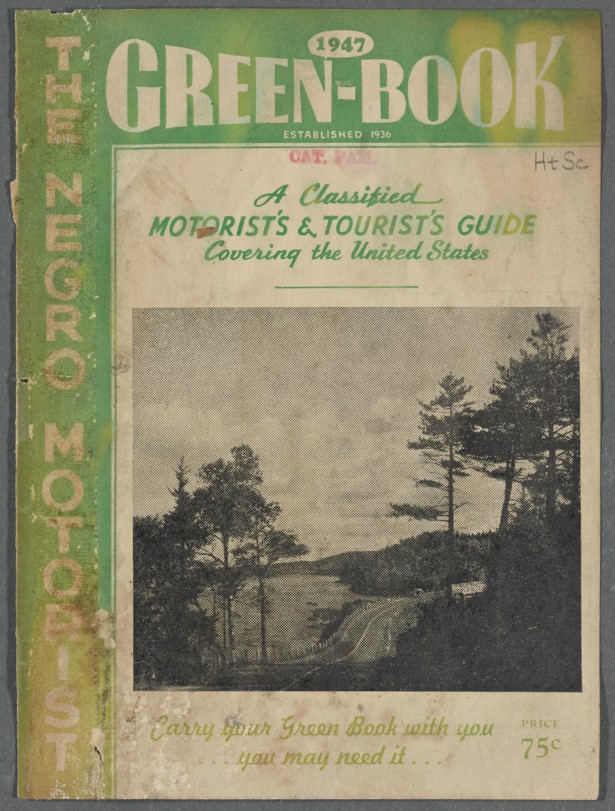
“The White traveler has had no difficulty in getting accommodations, but with the Negro, it has been different.” So reads the foreword of a series of travel guides called Green Books, created to help black Americans travel safely through a segregated and often unsafe country during the years of Jim Crow.
The Green Books are among a giant new free digital archive of over 187,000 historical documents including maps, postcards, photographs, and documents released by The New York Public Library and reported on recently by my colleague Adrienne LaFrance.
Named after its creator Victor H. Green, a postal worker in New York, the Green Books were published between the 1930s and the 1960s, halting when the Civil Rights Act finally ended the legal practice of segregation. In a 2010 interview with NPR, the civil-rights activist and the then-chairman of the NAACP Julian Bond recalled his family’s use of the travel guides during road trips. “My family had a ‘Green Book’ when I was young,” he said, “and used it to travel in the South to find out where we could stop to eat, where we could spend the night in a hotel or somebody’s home.”
Also in a 2010 interview with The New York Times, Lonnie Bunch, the director of the National Museum of African American History and Culture added his own memories. “The ‘Green Book’ tried to provide a tool to deal with those situations,” he said. “It also allowed families to protect their children, to help them ward off those horrible points at which they might be thrown out or not permitted to sit somewhere. It was both a defensive and a proactive mechanism.”
The original Green Book, published in 1937, is fairly limited, with only 16 pages. But by the 1960s the publication was around 100 pages filled with hotels, restaurants, attractions, and homes that black travelers could safely visit. And those listings weren’t solely black-owned businesses Jennifer Reut, a historian who has studied the contents of the Green Books notes. Reut’s project Mapping the Green Book, takes an in-depth look at individual establishments around the country and their history. As time went on, the books and their entries became more sophisticated and varied, with international listings that stretched into Canada, Mexico, and the West Indies. The official title also became swankier:The Negro Motorist Green Book: An International Travel Guide.
The most prolific listings are exactly where you’d expect them, cities like New York, Detroit, Chicago, and Washington, D.C., where there were thriving populations of black Americans and more progressive mindsets. Reut says that the Green Books and similar travel guides were perhaps more valuable for their listings outside of these metropolises, where friendly facilities were few and far between. She says that the race of the owners of the facilities that advertised in the guides ran the gamut, but were all welcoming to black residents.
Reut’s work traveling to the Green Book sites is a reminder that the the horror of Before the Civil Rights Act the Green Book Helped Black Travelers Through Jim Crow - The Atlantic:

Charter Schools: The End of Public Education As We Know It? - LA Progressive

Charter Schools: The End of Public Education As We Know It? - LA Progressive:

Charter Schools: The End of Public Education As We Know It?

Charter Schools Ending Public Education

Have you noticed the gradual creep of the charter school movement—the slippery slope meant to take over free public education as we know it and transform our schools to elitist institutions?
It touts itself as the best way to educate our children but it defies the principals upon which our public education system has been built (commencing all the way back to the early tradition of free public schools espoused by our leaders during the American Revolutionary period).
Sure, many charters boast high scores, but those results are often skewed because at-risk children, those with a variety of disabilities, many from dysfunctional backgrounds, and others are far too often not part of most charter programs—deliberate “exclusions” that at first blush help make the charters, particularly the independent ones, look so good.
Granada Hills Charter High School (GHCHS), near to where I live, opened several years ago with an atmosphere that reminded me of a police state–cameras and invasive ID cards everywhere (Big Brother constantly looking over everyone’s shoulder, including the teachers and other staff members). [I refer to GHCHS because what they do there seems emblematic of what transpires at so many other independent charters.]

Parents, blinded perhaps by the good grades that many of their children receive, seem unaware of the trend away from the long-held and cherished tenets of public education.

Many of my middle school students who went on to attend GHCHS would return to me to complain about the practices of what was then a new charter. These visits often reflected views from students representing a wide spectrum of abilities. A genuine feeling of despair seemed to emanate from many of these young people.
Yes, GHCHS has gone on to win the Academic Decathlon and that says a lot. At the same time, however, I would frequently hear of students not being accepted for enrollment in that charter because they were deemed by charter officials, often unfairly and for who knows what reasons, not to be assets to the GH concepts of academia—in an effort, perhaps, to skew testing results in the school’s favor in the future.
My question is, Where, then, do such students go who do not make GH enrollment? What will be Charter Schools: The End of Public Education As We Know It? - LA Progressive:


Louisiana Educator: Rampant Violations of State Law by Charter Schools. What Can We Do?

Louisiana Educator: Rampant Violations of State Law by Charter Schools. What Can We Do?:

Rampant Violations of State Law by Charter Schools. What Can We Do?


This excellent article in nola.com by Danielle Dreilinger exposes how charter schools continue to flaunt state law on open meetings and continue to pay extravagant salaries to administrators who have no direct education responsibilities.

Read on to find out that violations of the open meetings law is just one of the many violations of state law and BESE policy regularly perpetrated by charter operators.

Do you remember when we were assured that one of the benefits of charter schools was that they would eliminate wasteful central office bureaucracies and put more of our tax monies in the classroom? Well now we find that a charter school provider administering only 6 schools requires the funding of two bureaucracies! School taxes are used to fund the Algiers Charter Association central office staff plus the RSD central office that oversees the same charters. Is it no wonder that after all the hoopla about charters claiming to improve student performance, three of Algiers charter schools are seeing serious declines in school performance scores. One high school went from a "B" to a "D" when the charter group merged two schools.

In addition to wasting taxpayer dollars, the Algiers Charter Board found it convenient to violate the state open meetings law in neglecting to announce the move to fire and replace its top administrator. That position is paid more than most district superintendents who supervise many more times the number of students than the Algiers group.

Another example of misuse of school taxes is exemplified by the Louisiana online virtual school, Connections Academy. You may recall that State Superintendent John White phased out a highly cost effective and successful state-run virtual school to provide an automatic client base for two new for-profit virtual charter schools. Those schools are funded at 90% of the per pupil allocation of true public schools even though they have no buildings to build or maintain, no school lunches to provide, no libraries, no utilities, and much lower benefits for their teachers. This automatically frees up a huge windfall of funding for advertising and company profit. Even so, a recent study by The Center for Research on Education Outcomes (CREDO) from Stanford University found that nationwide, privately run virtual charter schools are some of the worst performing schools in the country. Specifically the two online charters in Louisiana are among the worst performing in that low performing category. According to CREDO, on average students in the Louisiana virtual charters actually fell behind by a whole year of instruction in each year compared to the real public schools!

So what is Connections Academy doing to improve their student 
Louisiana Educator: Rampant Violations of State Law by Charter Schools. What Can We Do?:

Lewis: If Chicago Teachers Laid Off, “We Intend To Take To The Streets” « CBS Chicago

Lewis: If Chicago Teachers Laid Off, “We Intend To Take To The Streets” « CBS Chicago:

Lewis: If Chicago Teachers Laid Off, “We Intend To Take To The Streets

(Credit: CBS)


CHICAGO (CBS) — A day after the Chicago Public Schools and its teachers began the final stage of contract talks, Chicago Teachers Union President Karen Lewis declined to predict whether teachers would strike, but said negotiations are not going well.
At a Martin Luther King breakfast hosted by CTU, Lewis said strikes are not decided by the teachers, they’re decided by the school board, and she accused the Chicago Board of Education of refusing teachers’ demands for things that cost no money.
Lewis made it clear the threat of massive layoffs is decisive.
“If any of our members are laid off, we intend to take to the streets. Remember, good working conditions are also good learning conditions for our students,” she said.
CPS Chief Executive Officer Forrest Claypool has said potentially thousands of teachers could be laid off if state lawmakers do not come up with some budget and pension relief for the district
For his part, Mayor Rahm Emanuel has said there are healthy ongoing discussions with the teachers on a regular and frequent basis.
On Thursday, CPS and CTU agreed to move to the final stage of negotiations, known as “fact finding,” beginning Feb. 1, if they can’t reach a deal on a new contract by then.
State law requires a 105-day “fact finding” stage before teachers can strike. If that process begins Feb. 1, the soonest teachers could Lewis: If Chicago Teachers Laid Off, “We Intend To Take To The Streets” « CBS Chicago:

Detroit teachers determined to continue fight - World Socialist Web Site

Detroit teachers determined to continue fight - World Socialist Web Site:

Detroit teachers determined to continue fight


Over the weekend, the World Socialist Web Site spoke to Detroit teachers about the issues in their struggle. Last week, teachers conducted three straight days of “sick out” protests that forced the closure of 92 of the district’s 97 schools.
Rank-and-file teachers organized the job actions independently of the Detroit Federation of Teachers to demand the removal of the state-appointed emergency manager and adequate staffing and resources to repair decaying school buildings, lower class sizes and provide social services to children facing chronically high levels of poverty. Teachers also insisted on the return of wage givebacks negotiated by the DFT and the protection of their health and pension benefits.
A young teacher who has been active in the protests told the WSWS, “With the sickouts and the social media coverage, there is now overwhelming support for teachers. It’s been kind of surreal. The dynamic has changed so much. The question now is how to use this attention effectively.
“Teachers are now on the front lines. We waited a long time for effective leadership. It was a debacle last year. But now members are finding their way to each other. They are realizing that it is not just this or that building. Some of the younger teachers had been involved in the Occupy protests and have experience with grassroots organizing.
“We posted the pictures of the buildings first. It was a smart move. Of course the photos were shocking and they’ve gone all over the Internet. It was like opening Pandora’s box. We’re trending on Facebook and Twitter.
“But now we’re concerned that the more serious issues are not getting the traction they deserve. We have huge class sizes, 40 plus, a teacher shortage running as many as 200 missing teachers, there is privatized staffing and Teach for America.
“But we fear that the legislation being introduced is an emergency manager system with a different name. We’re terrified of that. That includes the coded language promoted by the Coalition for the Future of Detroit Schoolchildren. Will there be a board that decides to open and close schools?
“Everyone has an agenda, an angle. How do we know who to trust? This is highly political and we’re not political ourselves.
“If the Detroit Federation of Teachers (DFT)/American Federation of Teachers (AFT) plan active events, we’ll participate. But if they don’t move forward, we will still organize and hope they support us. But we’re not waiting.
“Most of us have devoted ourselves to the kids and we don’t understand why our ‘allies’ have betrayed us. How can the union be allowing or even supporting charter schools?
“We are hopeful, we are strong, but are we strong enough to go against all the entities we are coming up against? It’s been shocking how deep the corruption goes, but things are becoming clear to us. Money talks. As for the Democrats and Republicans, I’m the third box ‘common sense.’ They’re not two parties, they’re one party and a lot of people feel that way.
“We need to align ourselves with everyone in this, with other workers. For example, the building engineers have told us there are unmanned boilers in the schools and the students are in danger.”
A veteran teacher with the Detroit Public Schools (DPS) also talked to the WSWS about the challenges teachers face and the political experiences they are making in the fight to defend public education.
“It’s horrendous what’s going on. They are not able to retain teachers. It’s not Detroit teachers determined to continue fight - World Socialist Web Site:


Democrats and unions scramble to contain Detroit teacher protests

By Nancy Hanover 
18 January 2016
The emergence last week of coordinated teacher protests in Detroit, organized independently of the Detroit Federation of Teachers (DFT), came as a shock to state and local authorities, the news media and the trade union apparatus. Having long relied on the DFT and other unions to suppress opposition to the decimation of public education and other essential services, there was a clear disorientation in the official response, which varied between denunciations and phony claims of sympathy.
Three straight days of “sick outs” led to the shutdown of 93 of the district’s 97 schools. Teachers used social media to expose the intolerable conditions in their decaying schools and to demand increased staffing and resources to lower class sizes, address chronic poverty among schoolchildren and recoup years of lost wages and benefits negotiated by the DFT.
Within leading corporate and political circles there was fear the spreading protests and open defiance by teachers of the union and legislators’ threats of fines and dismissal could become the catalyst for a far broader movement of the working class. Detroit has been the epicenter for the attacks on the working class, including the 2013-14 bankruptcy when both parties, with the full support of the unions, looted city worker pensions and public assets on behalf of Wall Street bondholders. In nearby Flint social anger is at a boiling point over the lead poisoning of the water supply—by the very same emergency manager overseeing the Detroit schools—and late last year thousands of autoworkers engaged in a near rebellion against the pro-company contracts pushed through by the United Auto Workers.
Every section of the political establishment—from Republican Governor Rick Snyder and the Republican-controlled state legislature, to the Democrats, including Detroit Mayor Mike Duggan, city and state officials, all the way up to President Obama—are hostile to the teachers’ demands. All of them defend the “right” of the banks, wealthy bondholders, and for-profit education 

Democrats and unions scramble to contain Detroit teacher protests

Jesse Jackson Calls Flint a “Disaster Zone” | Al Jazeera America

Jesse Jackson Calls Flint a “Disaster Zone” | Al Jazeera America:

Jesse Jackson calls Flint a “disaster zone,” says city has been betrayed
Speaking in Flint a day after federal emergency declared, Jackson compared city to Selma, Ala. in civil rights era


Rev. Jesse Jackson said on Sunday that Flint, Michigan is a "disaster zone" and could be the next epicenter in the fight for economic and social equality as the city struggles through a crisis with lead-contaminated drinking water.
Speaking at a church rally in Flint a day after President Obama declared a federal emergency, the prominent civil rights leader compared the city to Selma and Montgomery, Alabama, places where the civil rights movement in the 1960s unfolded.
"The people of Flint have been betrayed," he said. "This is the time for us to make a bigger statement than we have made in a long time. You can never tell when the spirit will strike and then it's time for everyone to move."
Flint, about 60 miles northwest of Detroit, returned to using that city's water supply in October after tests found elevated levels of lead in the water and in the blood of some children. Lead contamination can cause brain damage and other health problems when ingested.
Obama declared an emergency in Michigan on Saturday and ordered federal aid for state and local response efforts in Genesee County, where Flint, a city of just under 100,000 residents, is located.
The financially strapped city, where a majority of residents are African American, was under control of a state-appointed emergency manager when it switched its source of tap water from Detroit's system to the nearby Flint River in April 2014 in an effort to save money.
"We have been treated like we don't matter because we are from Flint," said Melissa Mays, a member of the Coalition for Clean Water during the rally. "It's our job to stand up and say, 'No, we're done. We're not going to put up with this anymore.'"
Republican Governor Rick Snyder has apologized for the state's handling of the crisis as calls for him to resign have grown louder over the last week.
The more corrosive water from the Flint River leached lead from the city pipes more than Detroit water did, leading Jesse Jackson Calls Flint a “Disaster Zone” | Al Jazeera America:
Big Education Ape: Flint water crisis: Michigan attorney general to investigate - CNN.com http://bit.ly/1P4s5Tg

Big Education Ape: A timeline of the water crisis in Flint, Michigan - The Washington Post http://bit.ly/1QdqVne

Big Education Ape: Emergency for Democracy: Unelected Manager Who Caused Flint Water Crisis Now Runs Detroit School... http://bit.ly/1ZDJgQy

Big Education Ape: CURMUDGUCATION: Meritocracy, Democracy, and Darnell Earley http://bit.ly/1ZDJuqC

Big Education Ape: The Truth About Flint, Water, and Oppression – from LaMar Lemmons | Poetic Justice http://bit.ly/1liD8dB

Big Education Ape: Detroit Teachers Want You to See These Disturbing Photos of Their Toxic Schools http://bit.ly/1n5ASrd

Big Education Ape: Obama Declares Emergency for Michigan City's Water http://bit.ly/1nrFPet


New Mexico charter schools cost more, perform same, says report | KRQE News 13

New Mexico charter schools cost more, perform same, says report | KRQE News 13:

New Mexico charter schools cost more, perform same, says report

SANTA FE, N.M. (AP) – An evaluation of student achievement at New Mexico charter schools finds higher spending per student with roughly the same academic results as traditional public schools.
The evaluation by New Mexico’s Legislative Finance Committee looked at six representative charter schools. The full report is being presented Monday to lawmakers in Santa Fe.
The state’s charter schools have received almost half of the new money available for public schools over the past seven years. Yet student achievement data for the past three years shows little difference in achievement between charter and traditional public schools.
Rapid growth of charter schools in New Mexico mimics a nationwide trend.
The evaluation also finds that charter schools authorized by local school districts perform below charter schools authorized by the state of New Mexico.New Mexico charter schools cost more, perform same, says report | KRQE News 13:


This Supreme Court Case Could Be Very Bad For Unions | The Nation

This Supreme Court Case Could Be Very Bad For Unions | The Nation:

This Supreme Court Case Could Be Very Bad For Unions

Friedrichs v. California Teachers Association could result in the defunding of public sector unions.


ack in the old days, unions could get crushed easily with police crackdowns and armed thugs. These days, business conducts its union-busting the civilized way, in court and at the bank. The question before the Supreme Court earlier this week in Friedrichs v. California Teachers Association wasn’t about free speech or workers’ rights on the job so much as it was about the right of unions to exist as financial and legal institutions.
The conflict before the court, according to conservatives, is a tale of Big Labor’s oppressive reign over civil servants: Rebecca Friedrichs, an ordinary California schoolteacher, says her union’s agenda is violating her First Amendment rights. But the case fundamentally has little to do with free expression, and lots to do with fair payment for a vital service. And paradoxically, a single teacher’s reluctance to pay her fair share to the organization that negotiates her job contract is silencing the voice all public-sector workers, as the court considers a policy that would defund their unions.
Yet the precedent that the Friedrichs case could overturn, Abood v. Detroit Board of Education, protects more than just the institutional role of unions. With a union membership rate of about one in three, public sector unionization is today much stronger than private sector union representation, which has dwindled to under 7 percent. Ensuring labor’s power in government agencies and public services is critical for ensuring equity in both the work that government does and the workforce that executes public policy. The pro-labor side would agree with the conservatives that constitutional rights are at issue—but not because unions threaten freedom expression, but because labor power is fundamental to democratic values. The increasing concentration of political power in the hands of a moneyed elite shows how democracy suffers in an intensely unequal society, and conversely, how economic justice, workplace justice and representative government are interlinked.
As Richard Kahlenberg of The Century Foundation writes,Friedrichs “pits the right of public employees to band together and form effective unions to pursue the common interests of workers against the free speech rights of dissenting public employees” who simply don’t agree with their union’s political stance and therefore feel justified in withholding funds from it.
Besides, labor advocates question the entire notion of equating agency fees with “speech,” since the funds in question are not even used to fund “political activity,” per se, but to support the basic “bread and butter” functions running a union and negotiating a contract. (The US Chamber of Commerce, by the way, represents many businesses but pursues an aggressive pro-corporate agenda that’s hardly free of controversy.) Under Abood, Kahlenberg argues, there’s a clear separation between the two functions and even on those day-to-day bargaining issues, the union still operates along democratic principles, so that “when a majority decides to take a position on collective bargaining on a given issue, the This Supreme Court Case Could Be Very Bad For Unions | The Nation:


Cerf, Newark teachers union spar over no-bid contract for politically connected firm | NJ.com

Cerf, Newark teachers union spar over no-bid contract for politically connected firm | NJ.com:

Cerf, Newark teachers union spar over no-bid contract for politically connected firm


NEWARK — The city's school district is facing criticism for unilaterally approving a no-bid health contract for a politically connected health insurance firm, though officials contend its dire financial position left it with little choice.
Last week, Superintendent Christopher Cerf signed off on the deal that on Feb. 1 will transfer prescription drug benefits for all school system employees to Benecard, a Lawrenceville-based company owned by former U.S. Senate and gubernatorial nominee Doug Forrester.
The switch, which officials say is expected to save the state-controlled district $1.1 million annually, came after an analysis of three providers performed by its insurance broker, Conner Strong & Buckelew. The firm is run by George Norcross, the South Jersey Democratic power broker and ally to Gov. Chris Christie, and has also served as broker for Benecard.
The move met with a strong reaction from the Newark Teachers Union, who accused Cerf of violating both its contract and pledges made when he arrived in Newark in July in order to curry favor with Trenton power players.
"He went on national television, local media, promising transparency and honesty," said union president John Abeigon. "If awarding a no-bid contract to a politically supported entity is part of that, well, at least he's transparent in that."
The district fired back, saying that in addition to the considerable annual savings, the switch away from the NTU's longtime provider, the self-funded General Prescription Plan would not require the district to pay all claims, and shift some Cerf, Newark teachers union spar over no-bid contract for politically connected firm | NJ.com:

Sunday, January 17, 2016

Valuing Public Education: A 50 State Report Card - Network For Public Education

Valuing Public Education: A 50 State Report Card - Network For Public Education:

Valuing Public Education: A 50 State Report Card

Report Card Meme for Website


The Network for Public Education has exciting news to share.


On February 2, 1:30 p.m., at the National Press Club in Washington, D.C., NPE President Diane Ravitch will release a major new report from the Network for Public Education that evaluates how well each of the 50 states and the District of Columbia support their public schools. Each state will be evaluated on six important criteria. Diane will present the key findings of the report and discuss specific policies that will help strengthen our nation’s public schools.
This special event and discussion will interest all policymakers, advocates, and educators committed to improving public schools. That same day we will release the report on this website, along with an interactive map, that shows each state’s grades.  We will also provide separate one page reports for every state.
Stay tuned for this very important event that will support the work of advocates across the nation.
 Valuing Public Education: A 50 State Report Card - Network For Public Education:

Detroit Public Schools: Beyond a State of Emergency | deutsch29

Detroit Public Schools: Beyond a State of Emergency | deutsch29:

Detroit Public Schools: Beyond a State of Emergency


Since 1999, the state has been “taking over” Detroit Public Schools. Since 2009, Detroit’s schools have been subject to a stream of emergency managers who move in for just under 18 months, do not answer to voters, and can basically do what they want without consequence.
The Detroit Public Schools state takeover is a dismal failure, as noted in this February 2015 Metro Times article:
The district’s struggles can be traced to a skein of historic factors, beginning with the city’s long-declining population, a trend that started in the 1950s and continues today.
Another major factor was the approval of 1994’s Proposal A in a statewide referendum that radically changed the way Michigan finances education, shifting from a primary reliance on local property taxes to a “per pupil” foundation grant provided by the state.
The two factors — the continued loss of students and the state funding that comes with them (currently $7,296) — combined with a host of other problems to throw the district into a long downward spiral.
In an attempt to reverse that trend, the state has tried twice in the last two decades to address the crisis — not by addressing the underlying structural issues, but by usurping the elected board’s power.
The most recent Detroit Public Schools emergency manager, Darnell Earley, is Detroit Public Schools: Beyond a State of Emergency | deutsch29: