Latest News and Comment from Education

Saturday, January 16, 2016

The Current State of Educational Blogging – The Edublogger

The Current State of Educational Blogging – The Edublogger:

THE CURRENT STATE OF EDUCATIONAL BLOGGING

Each year we conduct a survey on how educators are using blogs.  Our goal is to document the trends in educational blogging.
We started the annual survey because we’re frequently asked for detailed information to help educators:
  1. Convince school administrators to allow blogging.
  2. Understand the benefits of blogging and how blogs are used with students.
  3. Know more about which blogging platforms are commonly used by educators (and why).
Here’s what you told us in 2015!  You’ll find our survey questions for this year’s report here!

Click on a link below to go to the section you want to read:
  1. Key Findings
  2. About the survey
  3. Who are the respondents
  4. How blogs are used
  5. Benefits of blogging
  6. Blog platforms used

Key Findings

This is our fourth annual report of the state of educational blogging.
Device Usage
There has only been a slight increase in one to one devices in the 4 years we’ve surveyed educators (52% selected Yes in 2015 compared to 44% in 2014, 45% in 2013 and 41% in 2012).
35.9% of respondents with one to one device programs are BYOD and 25.7% of respondents with one to one device programs are provided by the school or school district.
PC laptops were the most commonly used devices (37.4%) in one to one device programs followed by iPads (35.4%), Mac Laptops (27.5%) and Chromebooks (26.3%).
The current trend in one to one programs appears to be an increased use of laptops (PC, Macs or Chromebooks) with a decreased usage of tablets.
Blog Usage
The majority of respondents told us they mainly used their blogs for class blogs (40.7%), class blogs with individual student blogs (20.2%) and for student blogs (14.9%) and many also had their own personal/personal blog (14.6%).
Based on student blog usage from Edublogs.org, 52.5% of student blogs are public and can be viewed by anyone and 47.5% of student blogs are private restricted to specific readers.
The ways respondents said they used the student blogs include for assignments/assessments (36.6%), reflective blogging (33.7%), collaboration / discussion (23.5% ), practice reading and writing skills (21.8%), encourage peer learning and support (19.3%) and digital citizenship skills (17.7%).
While most class blogs were used for: assignments and class news (48.4%); share information with families (40.3%);  and share links and resources (34.2%).
Blog Platform Used
Most respondents used Edublogs (60%), followed by Blogger (11%) and then WordPress.com (10%). Given that the survey was shared to all Edublogs users, we know this most likely doesn’t accurately reflect true usage statistics, but the survey was open to users of all platforms.
It’s quite common for educators to host their blogs on several different blog platforms.  Edublogs (21%) was the most common second main blog platform used, followed by Blogger (14%) and WordPress.com (12%).

About the Survey

This is our fourth annual report of the state of educational blogging.
This year’s survey was conducted from November 2 – December 31, 2015 and a total of 777 respondents took part in the survey.
The survey was promoted via Twitter, Facebook and through blog posts.  We encouraged replies from educators regardless of what blogging platform they used.
You can check out the questions we asked here.
YearNo. of Respondents Read Report
2015777State of Educational blogging 2015
2014587State of Educational blogging 2014
2013378State of Educational blogging 2013
2012259State of Educational blogging 2012

Who are the respondents?

We started with basic inquiries about our respondents’ background to learn more about their role and their educational institution.  Respondents were able to select more than The Current State of Educational Blogging – The Edublogger:

Emergency for Democracy: Unelected Manager Who Caused Flint Water Crisis Now Runs Detroit Schools | Democracy Now!

Emergency for Democracy: Unelected Manager Who Caused Flint Water Crisis Now Runs Detroit Schools | Democracy Now!:

Emergency for Democracy: Unelected Manager Who Caused Flint Water Crisis Now Runs Detroit Schools


Flint’s water contamination crisis began in April 2014 after Darnell Earley, an unelected emergency manager appointed by Snyder, switched Flint’s water source to the long-polluted and corrosive Flint River in a bid to save money. Earley is now the emergency manager of Detroit Public Schools. This week, Detroit’s teachers have staged a series of "sickouts" to protest the vast underfunding of the public schools, which have black mold, rat infestations, crumbling buildings and inadequate staffing. We are joined by Curt Guyette, an investigative reporter for the ACLU of Michigan whose work focuses on emergency management and open government. Michigan has the most sweeping emergency management laws in the country, which allow the governor to appoint a single person to run financially troubled cities.

TRANSCRIPT

This is a rush transcript. Copy may not be in its final form.
JUAN GONZÁLEZ: Well, we’re also joined by Curt Guyette, an investigative reporter for the ACLU of Michigan. His work focuses on emergency management and open government. Michigan has the most sweeping emergency management laws in the country, which allow the governor to appoint a single person to run financially troubled cities. Emergency Manager Darnell Earley, who presided over the Flint water switch, is now the emergency manager of the Detroit public school system. This week, Detroit’s teachers have staged a series of "sickouts" to protest the vast underfunding of the public schools, which have black mold, rat infestation, crumbling buildings and inadequate staffing. Detroit teachers say they have up to 45 or 50 students in some classrooms.
AMY GOODMAN: So, Curt Guyette, can you talk about how this man, who is the one who ultimately pushed the switch, relying on the—turning from the Detroit water system to Flint’s river, that has poisoned so many people, is now in charge of the Detroit Public Schools? And we’re hearing health problems, not to mention education problems.
CURT GUYETTE: Well, one of the things about the emergency manager law is that these managers were given extreme unchecked authority. And the thinking was, the reason for doing that is they were given the ability to come in, clean up the problems and get out. And so there was an 18-month time limit put on their terms. Except that this governor is exploiting what amounts to a loophole in that law. So what happens is that these emergency managers serve for 17 months and 29 days, and the day before their term expires, they resign. A new emergency manager is put in place, and the clock starts ticking all over again. And they just shuffle them from one place to another. So Earley goes from Flint to run DPS. And it just perpetuates this control. It can go on, really, forever, if they want it to, denying people of their democratically elected representation, because the school board, which has been fighting emergency management every step of the way, gets completely marginalized. They have zero authority whatsoever. And that goes to the heart of the problem of this law. It eliminates the democratic checks and balances that make a democracy functional.
And the other thing is, what we’re seeing here is really the imposition of austerity. This is what austerity looks like. So you have all the problems in these schools that you just reported on, because they’re treating it like a managerial problem rather than a structural problem. I’ve used before the analogy: It’s like being the captain of the Titanic, and you hit an iceberg. It doesn’t matter who’s at the helm; the ship is Emergency for Democracy: Unelected Manager Who Caused Flint Water Crisis Now Runs Detroit Schools | Democracy Now!:

Zombie Ideas Again: “The Learning Pyramid” | Larry Cuban on School Reform and Classroom Practice

Zombie Ideas Again: “The Learning Pyramid” | Larry Cuban on School Reform and Classroom Practice:

Zombie Ideas Again: “The Learning Pyramid”


Stories, ideas, and beliefs that have been disproved through scientific studies litter the mind. Professionals across-the-board in medicine, law, architecture, engineering, and business take-for-granted stories that have little to no basis in evidence. Yet they persist.
In earlier posts, I have identified such “zombie” ideas that have scientific-crafted shafts buried in their heart yet arise again and again (see here and here). I offer another one that a viewer of this blog (Pedro De Bruyckere, a teacher educator in Ghent, Belgium) suggested in a recent comment . He and colleagues have written a book about common myths that educators hold and he reminded about the “Learning Pyramid.”
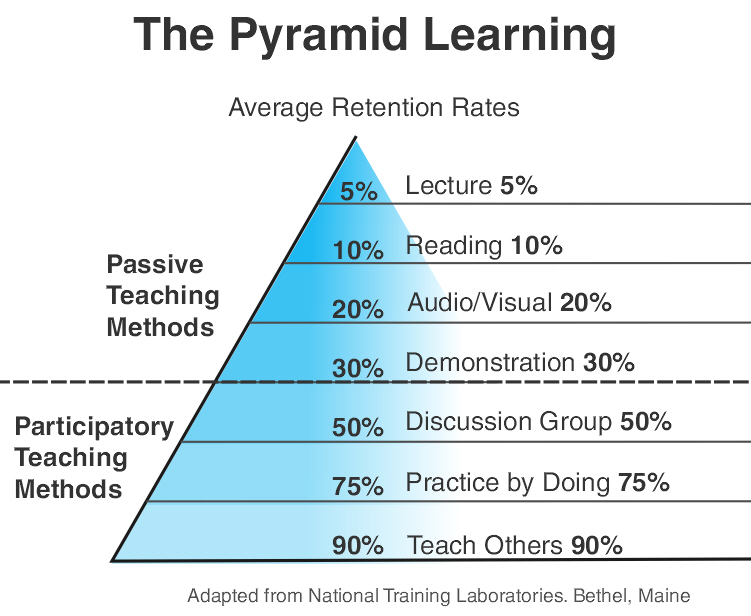
1374138536_1
A cottage industry of debunkers have pointed out many times over the past quarter-century that the “Pyramid” has no scientific standing and comes from unattributed sources mushed together in the 1960s and 1970s (see herehere, and here). Although it lives on, seldom, however, in official programs (there are exceptions, see here) the “Pyramid” resides quietly and strongly in the folk wisdom of those many practitioners who believe in their heart-of-hearts that active or experiential learning is far better (and more effective) than teachers talking, showing visuals, or demonstrating concepts. How come?
Such beliefs about knowledge retention exist in the minds of many college educators and practitioners across the professional spectrum–increased by the launching of lecture-dominated  MOOCs and surge in lecture-driven online courses–representing another instance of “confirmation bias.”
Why does the belief in the “Learning Pyramid” persist in the face of so much Zombie Ideas Again: “The Learning Pyramid” | Larry Cuban on School Reform and Classroom Practice:

With A Brooklyn Accent: Tragedies in Poor Communities which "School Reform" Strategies Make Worse

With A Brooklyn Accent: Tragedies in Poor Communities which "School Reform" Strategies Make Worse:

Tragedies in Poor Communities which "School Reform" Strategies Make Worse

In the nation's poor communities, we have an epidemic of homelessness and overcrowding ( New York); gun violence and police abuse (Chicago); collapse of basic infrastructures and public health emergencies ( Flint and Detroit)
In the face of these calamities, test based school reform and the teacher evaluation rubrics and school turnaround strategies that accompany them, all of which DESTABILIZE public schools and create a revolving door teacher force compound the tragedy
What children living in the midst of poverty and turmoil need above all is STABLE public schools; TEACHER MENTORS who nurture and protect them as well as teach them; and schools which are places where community residents can gather safely With A Brooklyn Accent: Tragedies in Poor Communities which "School Reform" Strategies Make Worse:


 Reflections on Dr King in a Difficult Time

The Dr King I love was a restless tortured soul, a brilliant man from a privileged Black family whose identification with the poor and the victimized was truly global in scope. Marked for death from an early age- he was only 26 when he was tapped to lead the Montgomery Bus Boycott-  he drew upon intellect, experience, and the prophetic traditions of his church to speak with unmatched eloquence on the issues of the day. Living with fear of assassination every day of his adult life, achingly aware of the tens of millions who looked to him for leadership, appalled by the cynicism and corruption of those who headed governments, he spoke from the heart on subjects many refused to touch and in the process gave courage to countless people. No person in modern history changed lives more with his speeches, both during his lifetime and after his death. He  Reflections on Dr King in a Difficult Time

More from the real MLK, Jr. | Bill Ayers

More from the real MLK, Jr. | Bill Ayers:

More from the real MLK, Jr.

Honoring Dr Du Bois


By Martin Luther King, Jr.

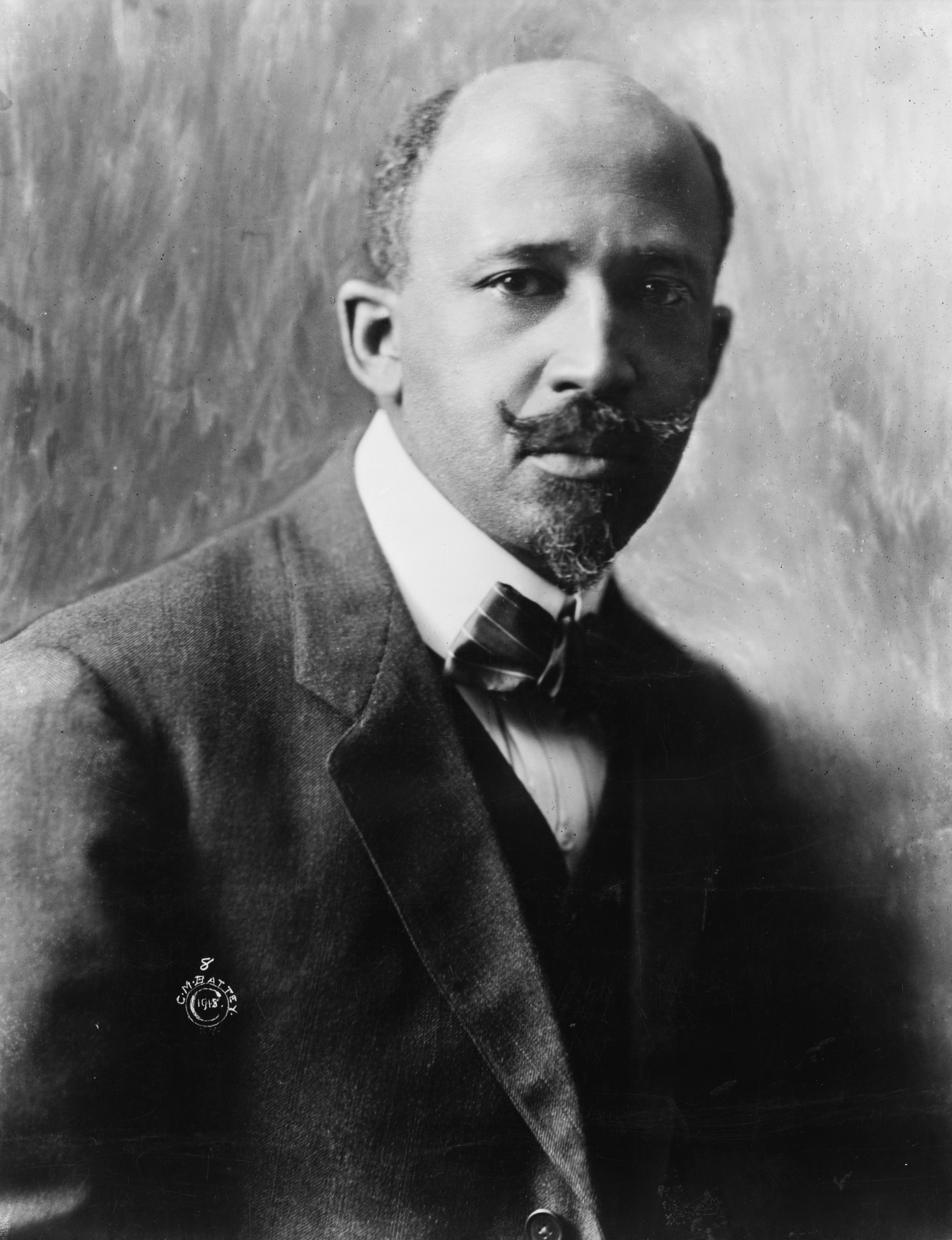
Tonight we assemble here to pay tribute to one of the most remarkable men of our time. Dr. Du Bois was not only an intellectual giant exploring the frontiers of knowledge, he was in the first place a teacher. He would have wanted his life to teach us something about our tasks of emancipation. One idea he insistently taught was that black people have been kept in oppression and deprivation by a poisonous fog of lies that depicted them as inferior, born deficient and deservedly doomed to servitude to the grave. So assiduously has this poison been injected into the mind of America that its disease has infected not only whites but many Negroes. So long as the lie was believed the brutality and criminality of conduct toward the Negro was easy for the conscience to bear. The twisted logic ran if the black man was inferior he was not oppressed-his place in society was appropriate to his meager talent and intellect. Dr. Du Bois recognized that the keystone in the arch of oppression was the myth of inferiority and he dedicated his brilliant talents to demolish it. There could scarcely be a more suitable person for such a monumental task. First of all he was himself unsurpassed as an intellect and he was a Negro. But beyond this he was passionately proud to be black and finally he had not only genius and pride but he had the indomitable fighting spirit of the valiant.
To pursue his mission, Dr. Du Bois gave up the substantial privileges a highly educated Negro enjoyed living in the North. Though he held degrees from Harvard and the University of Berlin, though he had more academic credentials than most Americans, black or white, he moved South where a majority of Negroes then lived. He deliberately chose to share their daily abuse and humiliation. He could have offered himself to the white rulers and exacted substantial tribute for selling his genius. There were few like him, Negro or white. He could have amassed riches and honors and lived in material splendor and applause from the powerful and important men of his time. Instead, he lived part of his creative life in the South-most of it in modest means and some of it in poverty, and he died in exile, praised sparingly and in many circles ignored.
But he was an exile only to the land of his birth. He died at home in Africa among his cherished ancestors, and he was ignored by a pathetically ignorant America but not by history.
History cannot ignore W. E. B. Du Bois. Because history has to reflect truth and Dr. Du Bois was a tireless explorer and a gifted discoverer of social truths. His singular greatness lay in his quest for truth about his own people. There were very few scholars who concerned themselves with honest study of the black man and he sought to fill this immense void. The degree to which he succeeded discloses the great dimensions of the man.
Yet he had more than a void to fill. He had to deal with the army of white propagandists – the myth-makers of Negro history. Dr. Du Bois took them all on in battle. It would be impossible to sketch the whole range of his intellectual contributions. Back in the nineteenth century he laid out a program of 100 years of study of problems affecting American Negroes and worked tirelessly to implement it.
Long before sociology was a science he was pioneering in the field of social study of Negro life and completed works on health, education, employment, urban conditions, and religion. This was at a time when scientific inquiry of Negro life was so unbelievably neglected that only a single university in the entire nation had such a program, and it was funded with $5,000 for a year’s work.
Against such odds Dr. Du Bois produced two enduring classics before the twentieth century. HisSuppression of the African Slave-Trade, written in 1896, is Volume I in the Harvard Historical Studies. His study The More from the real MLK, Jr. | Bill Ayers:


Relief from Outdated Federal Act - Year 2016 (CA Dept of Education)

Relief from Outdated Federal Act - Year 2016 (CA Dept of Education):

State Board of Education Votes to Seek Relief from Provisions of Outdated Federal No Child Left Behind Act


SACRAMENTO—The State Board of Education (SBE) today took the first step toward relieving school districts in California from complying with two key provisions of the outdated No Child Left Behind (NCLB) Act.
The board authorized two waiver requests for provisions involving Title I schools, which have high numbers and high percentages of students from low-income families. The waivers would give California districts more flexibility to use federal funding for programs and services they believe would best improve academic achievement
State Superintendent of Public Instruction Tom Torlakson strongly supports the action. "California districts should be given the flexibility contained in the new Every Student Succeeds Act without having to comply with burdensome provisions of No Child Left Behind," he said.
The first waiver, if granted by the federal government, would provide Title I districts with more flexibility to use funds that are now used for supplemental educational services on high-quality programs designed by districts to best suit the needs of academically struggling students. The current system, developed under NCLB regulations, relies largely on private providers to assist students at sites away from schools.
The waiver is needed during the transition because that provision of NCLB will still be in effect during the 2016–17 school year.
Last year, the California Department of Education sought a similar waiver, but it was denied by the U.S. Department of Education even though the department had granted waivers to 43 other states and eight large school districts within California.
Education leaders are hopeful that the waiver will be granted this year in light of the passage of Every Student Succeeds Act (ESSA), which President Obama signed in December 2015.
The SBE also voted to approve a waiver request for the Adequate Yearly Progress (AYP) provisions of NCLB so that the state does not need to identify new schools for Program Improvement. The waiver will be sought if those AYP provisions remain in effect during the 2016–17 school year.
Meanwhile, Torlakson and SBE President Michael Kirst are urging the U.S. Department of Education to write regulations implementing ESSA in a way that allows California the flexibility to continue developing its own coherent accountability system that will best suit the needs of California students, parents, and communities.
In a letter sent today, the two education leaders said giving states wide discretion will allow California to implement the dramatic positive changes underway in education, including a new funding system and a developing accountability system. The letter can be found at Every Student Succeeds Act page.
"Flexibility is paramount for states like ours that are already far along in redesigning our accountability system. Our goal is to ensure options are available to California as our new accountability system evolves," said SBE president Kirst.
Torlakson agreed. "I am pleased that the Every Student Succeeds Act contains more flexibility for states than No Child Left Behind did," he said. "I ask the federal Department of Education to continue following the principles of local control and discretion as it drafts regulations implementing the new federal law. Education decisions are best made at the state and local levels."
# # # #
Tom Torlakson — State Superintendent of Public Instruction
Communications Division, Room 5206, 916-319-0818, Fax 916-319-0100
Last Reviewed: Friday, January 15, 2016


What it’s like to teach at Detroit Public Schools

What it’s like to teach at Detroit Public Schools:

What it’s like to teach at Detroit Public Schools

In the wake of dozens of teacher sick-outs at Detroit Public Schools last week, here are two takes from teachers on the conditions at DPS and what they seek on the conditions at DPS and what teachers seek:
Detroit parents trust me every day with their children. I feel that I owe them an apology. I apologize because I should have stood up. I kept quiet as our schools were dismantled. I didn’t protest in the streets when they put our schools in state control. I said nothing when they took our democracy. I should be ashamed of myself. I won’t sit quiet any longer.
Parents heard in news about how I don’t care about the students, that taking days for sick-outs is selfish of teachers. I agree I have been selfish, but it was my inaction that was selfish. It was me sitting in my position of authority in the lives of children and doing nothing to protect them.
What makes me fighting mad is that our children are learning in an environment that is in total chaos. I am sending a message to Michigan politicians that they must sit at the table and legislate to come up with a solution to the financial crisis that they caused. I am fighting for supplies, art, music, gym, recess space, proper maintenance, clean buildings, safe buildings, interpreters, support staff, quality food programs, class size, democracy.
Sarah Jardine
Teacher of adapted physical education for students with autism at Detroit Public Schools
Recently, Detroit Public Schools emergency manager Darnell Early described the actions of protesting teachers as “unethical.” I’m curious, then, how he would characterize the learning conditions of the children in Detroit Public Schools that have existed for years. These deplorable learning conditions happen to also be the What it’s like to teach at Detroit Public Schools:


‘Enough is enough’ — thousands of Florida teachers protest - The Washington Post

‘Enough is enough’ — thousands of Florida teachers protest - The Washington Post:

‘Enough is enough’ — thousands of Florida teachers protest

Florida teachers protest in Tallahassee against state’s education policies. (Photo by Mike Archer, Used with permission)
“Enough is enough.” That was the chant during a protest by up to 3,000 teachers in Florida who traveled to Tallahassee, the state capital, to send their message to legislators that high-stakes testing, for-profit charter schools and other market-based reforms are hurting public education.
The Thursday rally — called by the Florida Education Association, the state’s largest teachers union — was held in a spot where lawmakers could hear the proceedings, which included speeches by educators who said it was past time for change.
Education battles have been escalating in Florida, with educators, parents and others opposing the state’s standardized test-based school accountability system. Not only did the state’s association of district school superintendents issue a statement in September saying members have “‘lost confidence” in the system, but the Sun-Sentinel in south Florida warned in an editorial that the accountability system could collapse under the weight of its own problems.
Florida’s superintendents have called for the state to suspend the accountability system for a year — meaning that the scores from this spring’s administration of the exams will not be used in evaluations — and a full review. Their September statement said in part:
In this high stakes environment, students, teachers and schools should not be impacted by a rushed and flawed administration of new, untried assessments. While direct negative consequences were avoided for students, the results of a flawed assessment will impact teacher evaluations (VAM) and be used to judge the quality of school
Here’s a speech delivered to the protesters Thursday by Wendy Bradshaw, who resigned last year as an educator in Florida’s Polk County who specializes in working with children — infants through fifth grade — living with disabilities to help improve their educational and life experiences.
Bradshaw, in an open resignation letter, said she loves to teach but she had reached a point where she could not tolerate working within an education ‘Enough is enough’ — thousands of Florida teachers protest - The Washington Post:


In San Francisco, City Schools Are Focusing on Students With Incarcerated Parents - Yahoo News

In San Francisco, City Schools Are Focusing on Students With Incarcerated Parents - Yahoo News:

In San Francisco, City Schools Are Focusing on Students With Incarcerated Parents


Teachers often ask kids in school what their parents do or to draw a picture of their family. It’s a curriculum that seems harmless enough, but for students with incarcerated parents, activities like these can cause a great deal of pain, without instructors even knowing it.
Matt Haney, president of the San Francisco Unified School District, recalled how one student was asked to write a story about his family and made it up instead of writing about his imprisoned father.
“Even with parent-teacher conferences, teachers will ask, ‘Where’s your parent?’ or ‘How come they’re not here?’ ” Haney told TakePart. “As a school district, we’re not really talking about it or how teachers need to handle those situations.”
This year, Haney says, the school board conducted its first training session for counselors and social workers working with students with incarcerated parents. Youths and older adults who had family members in correctional facilities led the training, talking about experiences they had in school and which ones increased feelings of anxiety or stigma—one example being when they were asked what their parents did for a living. The training was so well received by participants that the school board wanted to expand it, and with it came a new plan of action to help better the lives of those kids currently in school who had imprisoned parents.
Under the recently introduced plan, proposed by Haney and Shamann Walton, commissioner of the San Francisco Board of Education, the school board would create a series of programs, curricula, and training sessions focused on students with parents in prison.
On Tuesday, the two officials proposed a resolution aimed at expanding San Francisco school districts’ efforts to support youths with incarcerated parents, especially in schools with high concentrations of these students. 
Details of how city schools would go about connecting imprisoned parents with students and In San Francisco, City Schools Are Focusing on Students With Incarcerated Parents - Yahoo News:

North Carolina Teachers Told to Say 'Please' as Little as Possible - Yahoo

North Carolina Teachers Told to Say 'Please' as Little as Possible - Yahoo:

North Carolina Teachers Told to Say 'Please' as Little as Possible


 Though many young kids are taught "please" is "the magic word," one school in Charlotte, North Carolina, actually asks its teachers to use the word as little as possible.

The practice is part of Druid Hills Academy's newly implemented "No-Nonsense Nurturing Program."
No-nonsense nurturing is used by over 250 schools across the United States, according to Denise Watts, the learning community superintendent for Project LIFT, which oversees nine schools -- including Druid Hills Academy -- in the Charlotte-Mecklenberg School district.
The program aims to create a structured and consistent environment for students where teachers give them clear and specific directions about movement, volume and participation, Watts said.
"When a teacher is giving an expectation, the word please is not necessary," Watts told ABC News. "The best analogy I can use to describe my thinking about it is no one would say, 'Would you come to work today, please?'"
Florida Teacher Starts Each Day Complimenting Students One by One

Meet the 102-Year-Old Woman Still Teaching School

Some Schools in the US Are Banning Cupcakes

Watts added that no-nonsense nurturing is a “culture” in which teachers and school administrators create conditions to help students thrive by giving very specific directions, holding high expectations of students and, thus, building strong relationships with the students.
Though some teachers received "pushback" from students over the program at first, many students now love the program, according to Jonnecia Alford, a mathematics teacher at Druid Hills Academy.
"The students enjoy it," Alford told ABC News. "They enjoy the structure. They enjoy knowing exactly what you ask them to do. They also really enjoy the part where they get to build relationships with their teachers."
The math teacher added that since using no-nonsense nurturing, her students' test scores have increased and she now has 100 percent student participation.
"I have really strong relationships with my students," Alford said. "They typically say, 'We love Ms. Alford, but she doesn’t play. She has high expectations for us. She doesn’t let us get away with anything, but we love her.'"
But parents of kids at the school have mixed feelings about the new program and its advice to teachers to use the word please "sparingly.”
"I don’t agree with it point blank, period," parent Daren Guilford told ABC News. "What about manners? You ask us as parents to teach kids manners at home and you tell them to say 'please,' 'yes, ma'am,' 'yes, sir,' 'thank you, ma'am,' 'thank you, sir' and then you come to school and it's, 'You will pick the pencil up.' I mean, that’s not what I would call good communication skills with the kid."
Another parent, Jamal Gibbs, told ABC News the program "might be a good thing, considering that some kids need more stricter directions."
"Some kids don’t listen very well to politeness because of the things they’re going through in their homes, around where they live and where they’re growing up," Gibbs said.
Perhaps parents should wait to see how effective it is first, he added, "before we knock it."North Carolina Teachers Told to Say 'Please' as Little as Possible - Yahoo:

A better charter-school initiative - LA Times

A better charter-school initiative - LA Times:
A better charter-school initiative


The controversial Eli Broad-backed initiative that was designed to double charter-school attendance in the Los Angeles Unified School District has been shape-shifting ever since an early draft was leaked months ago. The goal of enrolling half of the district’s students in charter schools within eight years has been dropped. Now, those involved in the planning say, no specific enrollment goal will be included in the eventual plan. Seed money would be disbursed not just to open more charter schools, as originally intended, but to help fund new high-performing district schools of all types — including magnets, pilot schools and neighborhood schools — using successful existing schools as models.

If that’s how things actually work out, it would be a real improvement on the original concept. There are all kinds of excellent schools in L.A. Unified — just not enough of them, especially in neighborhoods where low-income students live. Instead of perpetuating the war between charters and “traditional” district public schools, and creating sharp division and bad feeling throughout the district, a more encompassing effort to open and support good schools of all sorts would offer parents a true choice.
Here’s another change in the plan: Although it is still well-funded, it apparently won’t be quite the half-a-billion-dollar effort originally envisioned. Donations haven’t been coming in at that level. Though fundraising will continue, the numbers being talked about now are more like two-thirds that amount.
That could be part of the reason for the avowed change of mission. The original draft was widely criticized after The Times reported on it, and the backlash didn’t come solely from the teachers unions and other typical charter-school opponents. Community leaders also were unhappy about deal developed in private that could potentially harm traditional district schools. They worried that the district would be unable to absorb the financial losses from the creation of that many charter schools, as state education funding followed students to their new schools. The new, softer approach came partly in response to the widespread criticism — but it also might make fundraising easier by creating a more politically palatable school-improvement plan.


The realities involved in staffing so many charter schools also played a part. The state is already struggling with shortages of teachers and principals; even charter-school supporters fretted that the initiative might collapse under its own weight in the rush to find enough educators to staff 260 new schools. That’s especially true given that teacher turnover tends to be high at charter schools.
The original critics of the plan — the teachers union and its supporters — remain suspicious. They worry that the nonprofit Great Public Schools Now, created to carry out the initiative, will still attempt to flood the district with new charter schools. The non-profit’s own leaders say that most of the money raised would still go still into creating charters — which are more expensive to create because they often need to pay for their own campuses — but that they are sincere about providing seed money for large numbers of traditional district schools as well.
The L.A. Unified school board voted Tuesday on a resolution opposing the Broad plan, though it’s language was vague and the initiative itself was not specifically mentioned. But that won’t help the situation, and besides, there’s little the board can do, under current A better charter-school initiative - LA Times:

What Next For TFA and Teacher Prep (7/15/2011) | DCGEducator: Doing The Right Thing

What Next For TFA and Teacher Prep (7/15/2011) | DCGEducator: Doing The Right Thing:

What Next For TFA and Teacher Prep (7/15/2011)

kretchsond-3
“This problem is so pervasive and so ingrained that we’ve stopped seeing it as a problem at all, and instead adjusted our values and beliefs to accommodate it. If we’re ever going to truly make progress, we have to be honest with ourselves and name injustice for what it is.” (Haycock, 2004, p. 36)
Introduction
TFA seems to be acceptable public and corporate policy. Media, corporations, State, and national policy makers present TFA, in its present format, not only as a viable program for teaching poor kids, but one to emulate and use as a model for all teacher training programs (Carver, 2007; Gates, 2011, Gerdes, 2007; Will, 2011; Wolfman, 2003). But unexamined assumptions embedded in mission statements, advertisements, slogans, color schemes and rhetoric are problematic (Affeldt 2010, Veltri, 2010).

TFA’s “mission” in poor urban and rural schools embraces a business model with a brand, image, and culture designed to attract candidates for a finite commitment. Some view TFA’s service agenda as one that lets others: policy makers, school districts, Corporate sponsors, politicians, TFA’s organization, and even university administration, “off the hook, both financially and socially, because of reasoning based on:
  1. “‘The Tinkerbelle Tenet of Teaching, where teachers and others believe that something will occur solely on the strength of that belief” (Hamilton, 1993, p. 206), and
  2. the “TINA Thesis: There Is No Alternative” (Saltman & Gabbard, 2003, p. 6). But there are alternatives. They are costly, not popular with those supporting TFA, and no aligned to the narrative and spin that’s out there in the public domain. (Veltri, Education and Urban Society, July 2008).

Programmatic Changes (Colleges of Education)
  1. Set up a program that supports TFA novices full-time during their 1st year What Next For TFA and Teacher Prep (7/15/2011) | DCGEducator: Doing The Right Thing:


A timeline of the water crisis in Flint, Michigan - The Washington Post

A timeline of the water crisis in Flint, Michigan - The Washington Post:

A timeline of the water crisis in Flint, Michigan


A look at some of the key events in the development of the Flint water crisis:
APRIL 2014: In an effort to save money, Flint begins drawing its water from the Flint River instead of relying on water from Detroit. The move is considered temporary while the city waits to connect to a new regional water system. Residents immediately complain about the smell, taste and appearance of the water. They also raise health concerns, reporting rashes, hair loss and other problems.
SUMMER 2014: Three boil-water advisories are issued in 22 days after positive tests for coliform bacteria.
OCTOBER 2014: A General Motors engine plant stops using Flint water, saying it rusts parts.
JANUARY 2015: Flint seeks an evaluation of its efforts to improve the water amid concerns that it contains potentially harmful levels of a disinfection byproduct. Detroit offers to reconnect Flint to its water system. Flint insists its water is safe.
JAN. 28: Flint residents snap up 200 cases of bottled water in 30 minutes in a giveaway program. More giveaways will follow in ensuing months.
FEB. 3: State officials pledge $2 million for Flint’s troubled water system.
FEBRUARY: A 40-member advisory committee is formed to address concerns over Flint’s water. Mayor Dayne Walling says the committee will ensure the community is involved in the issue.
MARCH 19: Flint promises to spend $2.24 million on immediate improvements to its water supply.
MARCH 27: Flint officials say the quality of its water has improved and that testing finds the water meets all state and federal standards for safety.
SEPT. 24: A group of doctors led by Dr. Mona Hanna-Attisha of Hurley Medical Center urges Flint to stop using the Flint River for water after finding high levels of lead in the blood of children. State regulators insist the water is safe.
SEPT. 29: Gov. Rick Snyder pledges to take action in response to the lead levels. It’s the first acknowledgment by the state that lead is a problem.
OCT. 2: Snyder announces that the state will spend $1 million to buy water filters and test water in Flint public schools.
OCT. 8: Snyder calls for Flint to go back to using water from Detroit’s system again.
OCT. 15: The Michigan Legislature and Snyder approve nearly $9.4 million in aid to Flint, including $6 million to help switch its drinking water back to A timeline of the water crisis in Flint, Michigan - The Washington Post:


Opinion: Foundation Influence in Education Policy Deserves Greater Scrutiny - The Chronicle of Philanthropy

Opinion: Foundation Influence in Education Policy Deserves Greater Scrutiny - The Chronicle of Philanthropy:
Foundation Influence in Education Policy Deserves Greater Scrutiny


Philanthropy today plays an outsized role in schooling and the efforts to improve America’s education system. Indeed, one can say that, in ways good and bad, the story of 21st-century school reform is in many ways a tale of education giving.
The Bill & Melinda Gates Foundation has pushed hotly debated reforms like Common Core and test-linked teacher evaluation. The Walton Family Foundation has been a crucial force in supporting the growth of charter schools. A leaked memo from the Eli & Edythe Broad Foundation suggesting that Los Angeles needs many more charter schools was enough to convulse that city’s politics. The experiences of Facebook’s co-founder, Mark Zuckerberg, in giving $100 million to Newark, N.J., attracted national attention — and the critiques of his work clearly influenced the plan he and his wife, Priscilla Chan, announced in December to devote 99 percent of his Facebook shares to good causes.
For all the commotion though, it’s striking how rarely the strategies, scope, and importance of education philanthropy are subjected to extended scrutiny and analysis. For all the ink devoted to high-profile foundation efforts, we know remarkably little about the patterns of giving and the accomplishments of these grant makers, and even less about how the patterns are changing.
To try to shed light on those patterns, we assembled a group of experts to contribute to our book, The New Education Philanthropy.
Just 15 years ago, there were concerns that the nation’s grant makers were retreating from elementary and secondary education. The $500 million Annenberg Challenge petered out on a disappointing note and major foundations were expressing second thoughts about whether their investments in elementary and secondary education were a good use of funds. Since then, philanthropy has roared back with a vengeance.
Grant makers have become more intentional in their strategies, more attentive to Opinion: Foundation Influence in Education Policy Deserves Greater Scrutiny - The Chronicle of Philanthropy: