Latest News and Comment from Education

Sunday, December 6, 2015

CURMUDGUCATION: ESSA: What Is a Teacher

CURMUDGUCATION: ESSA: What Is a Teacher:

ESSA: What Is a Teacher


We knew that a theme of the week would be teasing out the ugliest parts of the ESEA rewrite. Farewell, "No Child Left Behind." Hello, "Every Student Should Succeed in Serving Corporate Interests."

One element that has become evident is the ways in which ESSA works to gut the entire process of creating teachers, and consequently the profession itself. Just as reformsters have sought to redefine what it means to be an educated person (a person who performs well on standardized testing tasks), they have also sought to redefine what it means to be a teacher.

The assault on teaching has been bizarrely two-pronged. On the one hand, reformsters have tried to make it harder to become a teacher. On the state level, StudentsFirst and similar reformy astroturfers have been pushing longer and longer waiting periods for tenure, from two or three years up to three or four or five years-- and those years should be spent proving you can raise "student achievement" aka "get test scores up." And before you can even get to that point, some states want aspiring teachers to go through costly bogus licensing processes like edTPA. 

On the other hand, we've also seen a big push to make it easier to become a teacher. Reformsters have pushed for regulations that accept five weeks of Teach for America Summer Camp as perfectly 
CURMUDGUCATION: ESSA: What Is a Teacher:

Art Helps Students Become Whole - Living in Dialogue

Art Helps Students Become Whole - Living in Dialogue:

Art Helps Students Become Whole


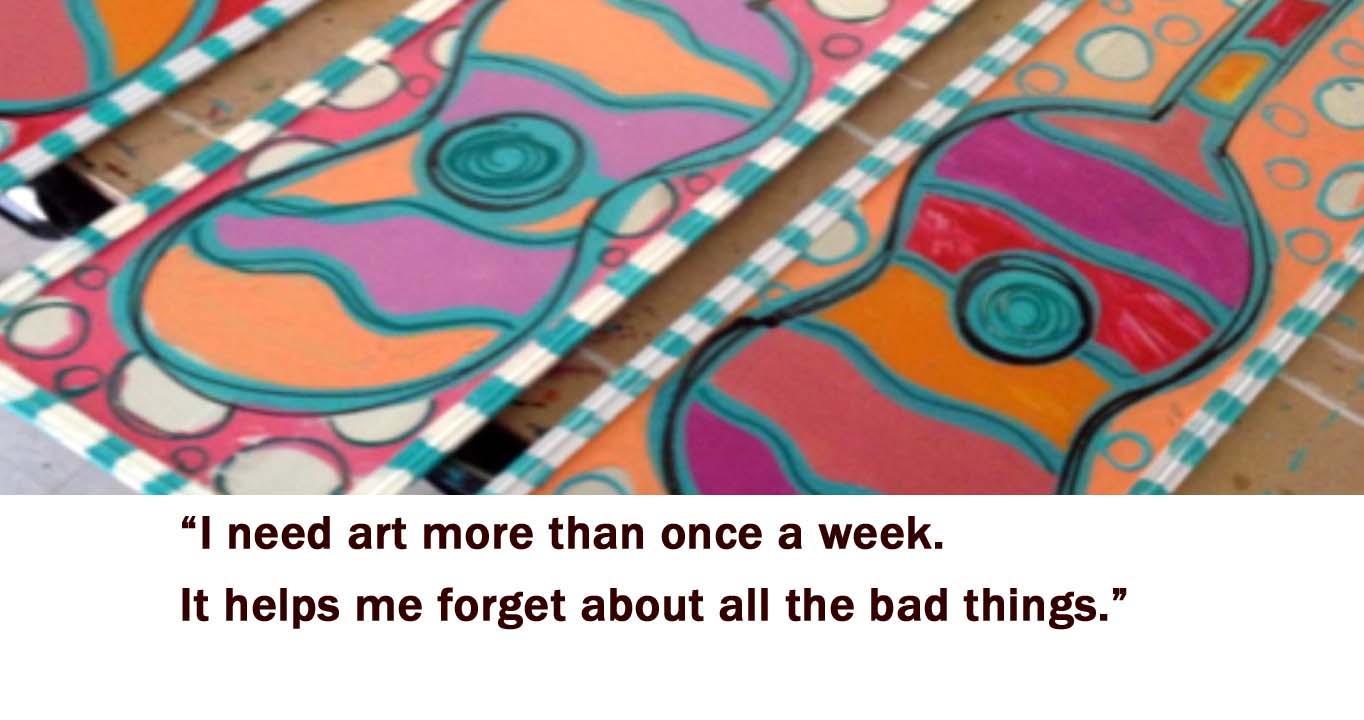
This is the fourth in a series of blog posts focused on the value of art in our lives, and the role art can play in resisting the test and punish model of education.  See the intro and links to other posts in the series here.
By Amanda Koonlaba.
I believe arts education is the antithesis of the corporate reform and privatization regime. I believe arts education is the best tool that schools have to reach all learners. I believe the arts belong in every school because they are important to our humanity. I believe all students deserve access to high-quality arts instruction. I also believe that the arts should be integrated with the traditional subjects of math, science, reading, etc.
You don’t have to take my word for it though. There is more than enough meritable research to back up my arts belief system. In fact, my school partners with the Whole Schools Initiative (WSI), which is a special project of the Mississippi Arts Commission (MAC). The MAC has conducted more than one research studythat shows the significant role the arts play in closing achievement gaps and creating a school culture that is most conducive to meeting the needs of the whole child.
This partnership began three years ago. I was asked by my administrators to write a grant to the Mississippi Arts Commission to fund the start of this partnership and to serve as the coordinator of the program. I was thrilled to do this. I had previously taught at two Model Schools for arts integration (both public schools) as a third and first grade teacher. Now, as the visual art teacher at my current school, I was so proud to be able to bring such an amazing opportunity to my new students.
So, the teachers at my school began attending professional development workshops on the arts and how to integrate the arts into instruction. These weren’t the typical, mundane workshops that come to mind when you think about CCSS and data analysis. These were fun workshops where teachers were able to participate in artistic processes and learn how to use those to integrate their instruction. They were engaging and worthwhile. The same as what we want for the instruction of our students.
We put a very concentrated effort into using this new partnership to change the image of our school within our community. Over time, our school began getting positive press which had been lacking for many years. The staff led students and the community in painting murals, revamping outdoor spaces, and hosting events to get all stakeholders into our school. This speaks to the cultural change we are experiencing as a result of our efforts.
I certainly feel happier at my job than I ever have in eleven years of teaching. Yes, we still have to test and we Art Helps Students Become Whole - Living in Dialogue:

Schools Matter: Hoosier School Heist Author Doug Martin on Real Accountability (and Federal Prison)

Schools Matter: Hoosier School Heist Author Doug Martin on Real Accountability (and Federal Prison):

Hoosier School Heist Author Doug Martin on Real Accountability (and Federal Prison)


Hoosier School Heist TV is Doug Martin's channel featuring videos of his book tour across Indiana speaking on the corporate takeover of public education. Order Hoosier School Heist at http://hoosierschoolheist.com/.
Follow Hoosier School Heist on Facebook: https://www.facebook.com/HoosierSchoolHeist
Tweet with Doug Martin at: https://twitter.com/DougMartinED


(Duration:  1 minute, 24 seconds)  Question and Answer session response concerning standardized testing, Colfax Auditorium, St. Joseph Public Library, Humanist Forum, South Bend, Indiana, December 3, 2015.


A national expert on the corporate and theocratic assault against public education, Doug Martin is the author of Hoosier School Heist, the book which exposes the corruption, scandals, and campaign financing behind so-called school reform in Indiana and elsewhere. Order Hoosier School Heist and get the facts.Schools Matter: Hoosier School Heist Author Doug Martin on Real Accountability (and Federal Prison):

Video: Seattle teachers talk about the Seattle Education Association strike at the NWTSJ conference | Seattle Education

Video: Seattle teachers talk about the Seattle Education Association strike at the NWTSJ conference | Seattle Education:

Video: Seattle teachers talk about the Seattle Education Association strike at the NWTSJ conference

blackstudentslivesstrike.png
For the first time in 30 years, Seattle educators went on strike for the schools Seattle students deserve and for the working conditions and compensation the teachers deserve. After five days on the picket lines, supported by close to 100 percent of SEA members, parents, families and community, including Seattle City Council, King County Labor Council and the NAACP, the tentative agreement was reached.
This panel of education activists discusses the organizing strategy, the groundswell of support, the gains and compromises made and next steps for educational justice at the Northwest Teachers for Social Justice conference in October, 2015.
I personally know most of the teachers on this panel and have found them to be dedicated, talented and always going the extra mile for their students.
Panelists:
Doug Edelstein teaches history at Nathan Hale High in Seattle. He is a member of the Seattle Education Association (SEA) Board of Directors, an active member of Social Equality Educators (SEE), and served as picket captain for his zone during the SEA strike this fall.
Kayla Barr Graham teaches ELL at Hamilton Middle School in Seattle. She is a SEA representative and was picket captain for her school during the strike. Eliza Rankin is a parent of a 1st grader in the Seattle Public Schools. She is a co-founder and active Video: Seattle teachers talk about the Seattle Education Association strike at the NWTSJ conference | Seattle Education:

Tell our United States Senators to vote no on the Common Core Testing Mania - Wait What?

Tell our United States Senators to vote no on the Common Core Testing Mania - Wait What?:

Tell our United States Senators to vote no on the Common Core Testing Mania


United States Senators need to stand up and protect our students and teachers!
From Connecticut educator and fellow education blogger Poetic Justice comes the following post,
Please Sign This United Opt Out petition to stop the Senate from passing the very flawed ESEA
Here is what United Opt Out has written in their petition to the US Senate.
“Since 2002 when No Child Left Behind became law, students, parents, and teachers have been subjected to a national education policy written to benefit the education testing industry and politicians out to privatize public education in America. As a result, schools have been turned into testing factories and thousands of low-scoring public schools that serve the poorest students have been closed and replaced by corporate charter schools that, on average, perform no better than the underfunded schools they replace. Those charters with high test scores most often exclude low-scoring and problem students, while subjecting their students to punishing discipline systems that middle class parents would never allow for their own children.
Next week the U. S. Senate will vote on a rewrite of No Child Left Behind that greatly expands the “No Excuses” charter school system that has gone from a few hundred to almost 7,000 schools during the past decade. If the new legislation becomes law, annual high stakes standardized testing in grades 3-12 will continue unabated, and the expansion of publicly funded and intensely segregated reform charter schools will intensify without the benefit of public oversight.
By signing the petition, you can let the U. S. Senate know to say NO to an ESEA reauthorization plan that, if passed, will set education policy back by over 50 years.
We can do better, and Congress must take the time to hear from parents, students, and teachers, whose voices have been silenced by organizations pretending to represent their interests.
Here is the link to the VOTE NO ON ESSA PETITION.
Tell the Senate that we say NO to a vision of 21st Century teaching and learning that treats our children like test scores and our teachers as automatons
Again, here is the PETITION.
Tell our United States Senators to vote no on the Common Core Testing Mania - Wait What?:


Poetic Justice web site

Diane E. Levin and Nancy Carlsson-Paige: Setting the record straight on early literacy instruction - The Washington Post

Setting the record straight on early literacy instruction - The Washington Post:

Setting the record straight on early literacy instruction


Earlier this year, the nonprofit organization Defending the Early Yearspublished a report saying that research does not support the Common Core requirement that all children must read with purpose and understanding by the end of kindergarten. The report was called “Reading Instruction in Kindergarten: Little to Gain and Much to Lose,” and it elicited tremendous interest — in the early childhood community and beyond.
Recently, Peter Gray, a research professor of psychology at Boston College, who regularly blogs at Psychology Today, posted to his Facebook page one of his columns, from 2013, on reading instruction. That post says in part:
Progressive educators have always believed that methods of classroom instruction should be based on children’s natural ways of learning, that is, on the ways that children learn in life outside of classrooms.  This has led to a variety of meaning-centered ways of teaching, which run counter to what we might call the process-centered ways of so-called traditional instruction.
Here is a response from Diane E. Levin and Nancy Carlsson-Paige, senior advisers to Defending the Early Years, which was first published on Susan Ochshorn’s ECE Policy Works blog.
Levin, a professor at Wheelock College, is the author of “Beyond Remote-Controlled Childhood,” and a founder of Teachers Resisting Unhealthy Children’s Entertainment.  Carlsson-Paige is a professor emerita at Lesley University, the recipient of numerous awards, and the author of “Taking Back Childhood.”

By Diane E. Levin and Nancy Carlsson-Paige
There has been much well-deserved criticism of the increase in direct instruction in reading skills to young children, resulting from the demands of the Common Core State Standards. However, when we and others argue for abandoning the current one-size-fits-all approach to early literacy, we are not proposing “natural learning environments,” where children learn to read on their own with little teacher intervention.
Yet this is the only alternative to direct, skills-based instruction that Peter Gray describes in “The Reading Wars: Why Natural Learning Fails in Classrooms,”  a 2013 post at Psychology Today that he recently published on his Facebook page.
In his essay, Gray argues that learning to read in and out of classrooms is different, by its very nature. This is true. But we do not agree with his Setting the record straight on early literacy instruction - The Washington Post:

Breaking News: Santa Claus Supports Opt-Out!!! | Exceptional Delaware

Breaking News: Santa Claus Supports Opt-Out!!! | Exceptional Delaware:

Breaking News: Santa Claus Supports Opt-Out!!!

SantaClausLetter


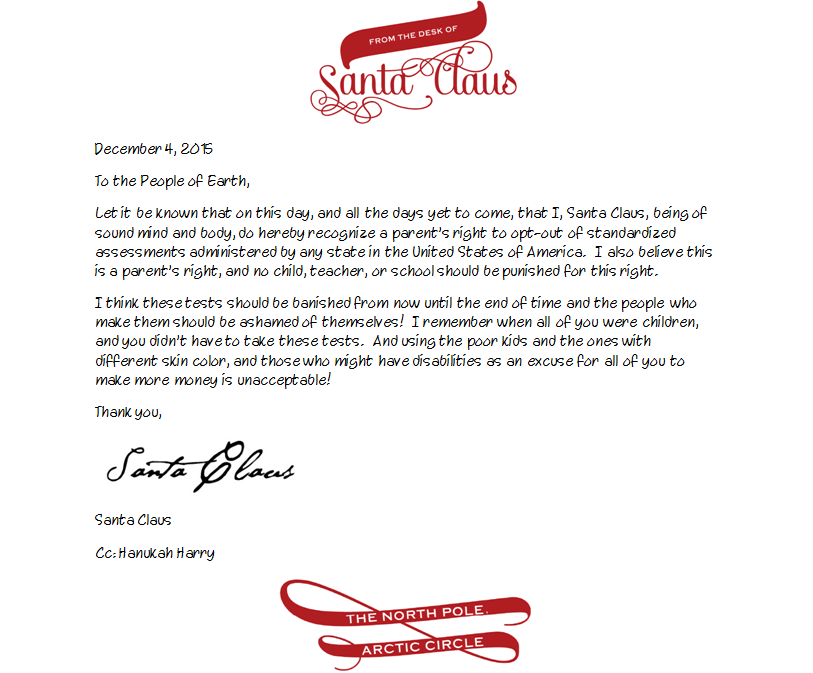
Santa Claus was getting pictures at the Dover Mall with young children.  He always asks the kids what they want for Christmas.  He acknowledged hearing very strange requests over the years.  But he reported to me recently about a very unusual request he got on Black Friday.  A little boy who was 8 years old told Santa he only wanted one thing for Christmas.  He wanted his mother to opt him out of the Smarter Balanced Assessment.
Santa had never heard of such an odd thing before, so he asked the boy what it was.  “I’m in 3rd grade Santa, and all they talk about is some test we have to take next Spring.  All my teachers talk about it.  And we have to take something called an intrum test after we come back from Christmas break.  Every day teachers say ‘this could be on the test.  Make sure you know it.’  I’m getting tired of it Santa.  Nobody cares about my actual grades, and I’m a smart kid Santa.”
Santa asked the boy what “opting out” means?  The boy said some parents actually told the school they didn’t want their kid taking the Smarter Balanced test.  The school gave them a rough time, but the parents fought back.  “If they can do it, can you make sure my mom does it too?”  Santa pondered this for a moment. “I think,” Santa said, “That would be up to your Mom.”  “Good, she is right over there,” the boy said and pointed to his mother.  “Mom, can you come over here?  Santa wants to ask you something!” the boy shouted.
The boy’s mother walked over and Santa said “Your son wants you to opt him out of the Smarter something test.  It’s all he wants for Christmas.”  The boy’s mother explained she had never heard of the test.  “That’s cause this is the first year we take it Mom.  I heard some teachers say it doesn’t actually mean anything and it only lets the state know how we are doing.  And I heard something about some evil Psycho Metric guy.”  The boy’s mother explained, “I will have to look into this.”  The boy shouted “But I want you to opt me out!”  The crowd heard the words “opt-out” and all of a sudden, parents were yelling “Opt him out! Opt him out!”  Santa explained how he had to Breaking News: Santa Claus Supports Opt-Out!!! | Exceptional Delaware:

Marie Corfield: Is the NJDOE protecting Gov. Christie's POTUS run?

Marie Corfield: Is the NJDOE protecting Gov. Christie's POTUS run?:

Is the NJDOE protecting Gov. Christie's POTUS run?


As those of us in NJ know, Gov. Christie will do anything and everything to side with the prevailing right-wing opinion-of-the-day. So, with his poll numbers in the toilet—not only for his job as governor, but for his POTUS run—is he pulling out all the stops to ensure he protects his image as an ed 'reformer' on the national stage?  


The front page of today's Star Ledger contains an article on NJs PARCC opt-out rates. The state has been less than forthcoming on releasing the numbers despite the fact that Colorado did so last month. And we still don't have that all-important data that's supposed to prep students for the March PARCC test "drive instruction" and magically make every single student "college and career ready" (whatever that means). 


The state DOE estimates that 15% of high school juniors, 7% of freshmen, and 4.6% of students in grades 3-8 refused to take the test. But based on anecdotal reporting and comparing '14-'15 enrollment numbers to the actual number of tests completed, NJEA and Save Our Schools NJ put those numbers at around 110,000—the second highest opt-out number in the nation in our first year of testing. New York was number one with 240,000.

But there is absolutely no reason for the delay. The state has the data. So, why have they not released it? Save Our Schools NJ speculates
Could they be protecting Governor Christie's presidential campaign from the embarrassment of NJ having the second highest opt out rates in the country?

Mike Klonsky's SmallTalk Blog: Whitenizing Chicago

Mike Klonsky's SmallTalk Blog: Whitenizing Chicago:

Whitenizing Chicago


The out-migration of African-Americans from the largest U.S. cities continues unabated, changing the face of urban politics, culture and education.

Greg Hinz at Crain's reports that the Chicago area is on track to become mostly people of color by 2020, a historic shift with major cultural, economic and political impact. But in Chicago proper, gentrification has created a different story --whitenization.


The shift is almost entirely concentrated in the suburbs, with, for instance, roughly one in three residents of Will, DuPage and Lake Counties now from minority groups, up from one (or fewer) in four in 2010. In suburban Cook County, the minority share of the total population has gone from 33 percent in 2010 to 45 percent.
But the story in the city is different.
In Chicago proper, where large numbers of high-income whites Mike Klonsky's SmallTalk Blog: Whitenizing Chicago:

Doubling Down (Again) by Reverting, Not Changing: The Exponential Failures of Education Legislation | the becoming radical

Doubling Down (Again) by Reverting, Not Changing: The Exponential Failures of Education Legislation | the becoming radical:

Doubling Down (Again) by Reverting, Not Changing: The Exponential Failures of Education Legislation


Political grandstanding about education and proposed as well as adopted education legislation make me feel trapped in something between a George Orwell dystopian novel(“WAR IS PEACE, FREEDOM IS SLAVERY, IGNORANCE IS STRENGTH) and a Firesign Theatre skit (“The Department of Redundancy Department”).
One of my most recent experiences with the political process exposed me to the horrors (real, not fictional or comical) of compromise while I witnessed people and organizations typically associated with being strong supporters of public education defer to what became the Read to Succeed act in South Carolina despite the addition of third-grade retention [1]; the justification was that the compromise brought more funding to reading in the state.
Political compromise for education legislation, I regret, results in more dystopian fiction:Ursula K. Le Guin’s allegory of privilege in which she illustrates how some prosper while knowingly sacrificing a child as the “other.”
Now after much sound and fury, public education is poised to be bludgeoned once again as the federal government has committed to doubling down (again) by reverting to state-based accountability and continuing its ominous tradition of Orwellian names for education legislation: the Every Student Succeeds Act [2].
A couple of decades of patchwork state-based accountability throughout the 1980s and 1990s convinced the feds that No Child Left Behind (NCLB) was the answer, and now about a decade and a half of NCLB-style federal accountability has failed just a miserably (mostly causing more harm than good); thus, as Alyson Klein reports, “The ESSA is in many ways a U-turn from the current, much-maligned version of the ESEA law, the No Child Left Behind Act.”
And just as I experienced in SC with Read to Succeed, those we would hope are on the right side of children, families, and public education are scrambling (as many of them did toembrace Common Core) to praise ESSA—although this newest iteration is “really about the same.”
At best, ESSA is a very slight shuffling of the test-mania element of the accountability era; however, this reverting to state-based accountability will guarantee another round of new standards and new tests—all of which will drain state and federal funding for processes that have never and will never achieve what they claim to achieve (Mathis, 2012).
ESSA will be another boondoggle for education-related corporations, but once again, that profit will be on the backs of children and underserved communities.
Yet, ESSA is not all U-turn since it has remnants of the nastiest elements of the snowballing accountability era; while some of the unsavory teacher-bashing is waning, ESSA nudges forward the dismantling of teacher education (a sneaky way to keep bashing teachers, by the way).
ESSA is finding oneself in a hole and continuing to dig. For those who jumped in, it is time to climb out. For those standing at the edge, back away.

Community-Based Reform and Accountability Measures for States and Communities | Cloaking Inequity

Community-Based Reform and Accountability Measures for States and Communities | Cloaking Inequity:

Community-Based Reform and Accountability Measures for States and Communities


The impending death of No Child Left Behind has the potential to create more space for community-based reform. As federal standardized tests have fallen out of favor, many states have explored alternative community-based measures to improve the success of schools, districts and students. For the past decade, the predominant NCLB-inspired educational policy discourse has focused on top-down policies. This webinar focused on introducing a set of community-based approaches for education reform.
Screen Shot 2015-12-04 at 7.45.04 PMDuring a recent Council of State Governments West eCademy webcast (available below), presenters reviewed alternative measures for school accountability, community schools, teacher quality assessment and student achievement assessment. A national cadre of experts discussed steps legislators and communities can take, from a policy standpoint, to encourage and support local assessment and accountability measures.
The facilitators of the discussion were:
Idaho Representative Wendy Horman, Chair, CSG West Education and Workforce Development Committee (welcome remarks and webinar background information)
New Mexico Senator William Soules, Vice Chair, CSG West Education and Workforce Development Committee (presentation of panelists)
Panelists:
Julian Vasquez Heilig, Ph.D., Professor of Educational Leadership and Policy Studies (School accountability)
Monty Neill, Ed.D., Executive Director, National Center for Fair & Open Testing (Fair Test) (Student assessments)
Cheryl Dultz, Teacher San Juan School District (Teacher evaluations – PAR)
Ken Zarifis, President, Education Austin (Community schools)
For more on community-based student assessment see EdWeek Series Beyond Rhetoric: If Not a Bunch of Tests… Then What Instead?
For more on Travis Heights and community-based charters see How to Create a Community-Based In-District Charter and Photo Essay: This Charter School is Lovely
For all posts on Community-Based (local) Accountability click here. Also read Accountability: Are you ready for a new idea? This was the first post where I publicly introduced the idea of bottom-up Local Accountability multiple-measure (dashboard) plans.
For more on evaluating teacher quality via Peer Assistance and Review check out Can we Evaluate #Teachers Without Using High-Stakes #Testing?
Please Facebook Like, Tweet, etc below and/or reblog to share this discussion with others.
Want to know about Cloaking Inequity’s freshly pressed conversations about educational policy? Click the “Follow blog by email” button on the home page.
Twitter: @ProfessorJVH
Click here for Vitae.
Community-Based Reform and Accountability Measures for States and Communities | Cloaking Inequity:

Google Spying on 40 Million K-12 Students, Privacy Advocates Call for Federal Sanctions | Alternet

Google Spying on 40 Million K-12 Students, Privacy Advocates Call for Federal Sanctions | Alternet:

Google Spying on 40 Million K-12 Students, Privacy Advocates Call for Federal Sanctions

The Electronic Frontier Foundation calls for federal sanctions.


Unlike its website declaration, Google’s “Apps for Education” isn’t a tool that “schools can trust,” because it is spying on 40 million K-12 students and compiling all their online activities even though it pledged not to do that, according to online privacy advocates.

“Google is violating the Student Privacy Pledge in three ways,” said the Electronic Frontier Foundation (EFF), in a complaint filed with the Federal Trade Commission. “First… student personal information in the form of data about their use of non-educational Google services is collected, maintained, and used by Google for its own benefit, unrelated to authorized educational or school purposes.”
“Second, the “Chrome Sync” feature of Google’s Chrome browser is turned on by default on all Google Chromebook laptops – including those sold to schools as part of Google for Education – thereby enabling Google to collect and use students’ entire browsing history and other data for its own benefit,” EFF continues. “And third, Google for Education’s Administrative settings, which enable a school administrator to control settings for all program Chromebooks, allow administrators to choose settings that share student personal information with Google and third-party websites.”
EFF’s complaint to the Federal Trade Commission urges it to open an investigation into the company’s violation of privacy pledge drafted by the Future of Privacy Forum and Software & Information Industry Association, which Google signed last January. EFF notes that the FTC takes industry-created privacy pledges seriously, and “has brought enforcement actions against companies that made privacy-related promises to their costumers and then violated those promises.”
In 2011, Google paid “a $22.5 million civil penalty to settle Federal Trade Commission charges that it misrepresented to users of Apple Inc.’s Safari Internet browser that it would not place tracking “cookies” or serve targeted ads to those users, violating an earlier privacy settlement between the company and the FTC,” the complaint said.
In public, Google claims to be a big privacy advocate. However, according to EFF, the 40 million K-12 students who use its laptops and software tools are unaware that it “collects, maintains, and uses records of essentially everything that student users of Google for Education do on Google services, while they are logged in to their Google accounts, regardless of which device or browser they use.” 
This may not be surprising to adults, who are used to Internet companies tracking their every search and move—mostly to analyze consumer preferences and target them for ads. But the privacy pledge that Google signed is supposed to protect the youths’ “personally identifiable information as well as other information when it is both collected and maintained on an individual level and is linked to personally identifiable information.” That includes all web searches, browsing, YouTube videos watched, all websites visited, other applications installed and passwords.
“Such data reveals highly personal information about students and is not necessary to deliver educational services,” EFF’s complaint said. “Google not only collects and stores the vast array of student data described above, but uses it for its own purposes such as improving Google products and serving targeted advertising (within non-Education Google services), as Google has represented to EFF.”
Google contends that it “anonymizes” this data—stripping off student identitiesGoogle Spying on 40 Million K-12 Students, Privacy Advocates Call for Federal Sanctions | Alternet:

Flea Flicker: Should state be able to approve charter schools in Virginia? - Daily Press

Should state be able to approve charter schools in Virginia? - Daily Press:

Should state be able to approve charter schools in Virginia?


The Charter School Approval Flea Flicker 
Should Virginia amend its constitution to allow the state — not just local school boards — the authority to establish charter schools?
That question could be before voters in a November 2016 referendum.
The issue has the potential to become a heated one in the upcoming General Assemblysession, pitting school boards and an education establishment who say they want to protect existing public schools against those who say they want to bring more options to parents.
Charter schools — which operate with public money but hold some autonomy from local school divisions — have grown in number across the country in recent years.
But while many states have hundreds of charter schools, Virginia has only nine — seven now operating and two on the way. That's less than 0.5 percent of the 1,823 schools statewide, 17 years after charter schools were first allowed in the Old Dominion.
That's a far lower rate than the national average.
In 2014, there were 6,440 charter schools in the United States, or 7.2 percent of the country's 89,775 public schools, according to the National Alliance for Public Charter Schools, an advocacy group. The majority of those, the alliance said, are operated by independent, locally led groups, while others are run by nonprofit organizations or for-profit companies.
A 'pro-kid' idea?
Sen. Mark Obenshain, R-Harrisonburg, Del. Robert B. Bell, R-Charlottesville, and Del. Charles Poindexter, R-Franklin County, are pushing the legislation to hold the referendum. They contend school boards have been unduly resistant to charter schools, and that a second approval route is needed.
The proposed constitutional amendment says the State Board of Education "shall have the authority to establish charter schools within the school divisions of the Commonwealth." That would be an alternative to the current system, in which school boards alone hold that power.
"This is all about kids and providing a high-quality education," Obenshain said. "When we get down to it, this is one avenue we have to improve the quality of the education that we are providing. … This is not a Republican idea. This is not a Democrat idea. This is a pro-kid, pro-family, and pro-teacher idea."
Though many schools do a good job, he said, "there are jurisdictions in Virginia where we are just failing our kids … and we have a screaming need for education reform. This drops a lifeline to parents and children, and frankly to a lot of teachers."
Opposition exists
Sen. John Miller, D-Newport News, for one, said he's opposed to the amendment, saying local school boards should retain control over the creation of charter schools within their jurisdictions.
"The operation of public schools is in the purview of the local school boards, not the state," Miller said. It's the elected local boards, he said, who know their communities' needs best.
The amendment, Miller added, would do "an end run around the localities," and runs counter to longstanding provisions of Virginia's constitution favoring local decision-making. "It is just not the direction that we need to go to improve public education in Virginia," he said.
The minuscule number of charter schools in Virginia, Miller said, "really speaks to how well public schools are doing" statewide. "There's not a demand for the charter schools Should state be able to approve charter schools in Virginia? - Daily Press:

Saturday, December 5, 2015

NCLB, ESSA, and “Highly Qualified” | deutsch29

NCLB, ESSA, and “Highly Qualified” | deutsch29:

NCLB, ESSA, and “Highly Qualified”

upside down house


In this post, I compare language regarding teacher certification in two documents, the No Child Left Behind Act of 2001 (NCLB) and what very likely will be the next Elementary and Secondary Education Act of 1965 (ESEA) reauthorization, the Every Student Succeeds Act of 2015 (ESSA).
I was particularly curious about the fate of the NCLB term, “highly qualified.”
Here we go:
In the 670-page No Child Left Behind Act of 2001 (NCLB), the term “highly qualified” appears 67 times excluding its usage as it is officially defined in NCLB as follows (page 535):
HIGHLY QUALIFIED.—The term ‘highly qualified’—
(A) when used with respect to any public elementary
school or secondary school teacher teaching in a State,
means that—
(i) the teacher has obtained full State certification
as a teacher (including certification obtained through
alternative routes to certification) or passed the State teacher licensing examination, and holds a license to teach in such State, except that when used with respect to any teacher teaching in a public charter school, the term means that the teacher meets the requirements set forth in the State’s public charter school law; and
(ii) the teacher has not had certification or licensure
requirements waived on an emergency, temporary,
or provisional basis;
(B) when used with
NCLB, ESSA, and “Highly Qualified” | deutsch29:

Close Reading: Myopia as a Virtue | gadflyonthewallblog

Close Reading: Myopia as a Virtue | gadflyonthewallblog:

Close Reading: Myopia as a Virtue

head in book


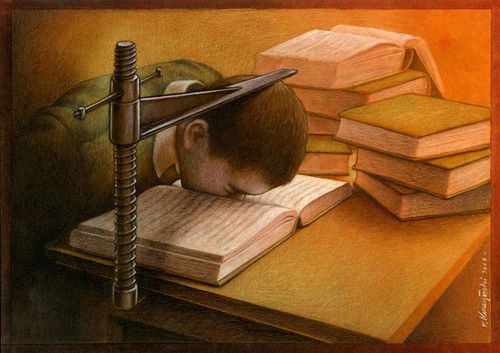
You are reading a text.
Yes. Right now.
Your eyes are scanning over symbols called letters. They are joined together into words and sentences and paragraphs to make up the total of this article.
Your brain is in the process of translating these symbols into sounds, meanings, concepts. And you are reacting to those concepts.
You’re having thoughts about what you’re reading. Maybe you’re reminded of a similar article you’ve read sometime in the past. Maybe you’re feeling a thrill of excitement at such an original introduction to an education article. Or perhaps you’re rolling your eyes and wondering why the author is such a doofus.
No matter how you look at it, reading involves complex processes. A whole bunch of stuff is going on to make it happen – all of it essential.
Yet when we evaluate reading comprehension these days, we put the focus squarely on one or two of those multifarious processes. It’s reductive, reactionary, and lame. It’s a dumbing down of the cognitive and metacognitive process. But it makes things easy to grade on a standardized test.
That’s what the fad of close reading is all about. It’s an attempt to make the mysterious and complex mind something that can easily be labeled right or wrong.
For the uninitiated, close reading is the careful, sustained interpretation of a brief passage of text in which great emphasis is put on individual words, syntax, and the order in which sentences and ideas unfold.
It’s not that close reading is unimportant. After all, it’s something good readers do. But an overemphasis on this aspect leaves out so much that is even more vital. It’s like saying the only significant part of the Hershey bar is the wrapper, or the only salient part of eating the Hershey bar is chewing. However, when I unwrap my dessert, there better be chocolate inside, and after I bite into it, I’d better not forget to swallow!
But education specialists with little to no actual classroom experience are making a Close Reading: Myopia as a Virtue | gadflyonthewallblog: