Latest News and Comment from Education

Thursday, December 3, 2015

‘It pains me to write this': Obama’s first summit on high schools was a big fail - The Washington Post

‘It pains me to write this': Obama’s first summit on high schools was a big fail - The Washington Post:

‘It pains me to write this': Obama’s first summit on high schools was a big fail



Ted Dintersmith is a venture capitalist and father of two who is now focused on education-related initiatives that call for a radical restructuring of what and how students learn. He organized, funded and produced the well-received documentary “Most Likely to Succeed,” and co-authored a book titled “Most Likely to Succeed:  Preparing Our Kids for the Innovation Era.”
Now on a 50-state tour to encourage communities to rethink the purpose of school, Dintersmith stopped in Washington last month to attend the first White House Summit on Next Generation High Schools, which the Obama administration said would “highlight new actions by philanthropy, industry, school leaders, and others, who are committed to re-thinking the way that high school education is delivered in this country.”
To make a long story short, Dintersmith was not impressed with the summit. In the following post, he explains what he saw and heard and why he was so sorely disappointed about the experience. Because a focus of his discussion involves high school math, it is worth noting that Dintersmith majored in physics and English as an undergraduate, with research in physics that led to publication. He earned a master’s degree in applied physics and a doctorate in engineering from Stanford University, with a concentration on mathematical modeling. He also taught a math-intensive course at Stanford on microeconomics, and he has worked with many top scientists and engineers in a 30-year business career. So it’s safe to say that Dintersmith approaches a discussion of high school math with context.
By Ted Dintersmith
It pains me to write this article. It really does.
You see, I was all-in as a volunteer for Barack Obama in 2007-2008. On the National Finance Committee from the beginning. Donated and raised money for him, twisting every arm I could find. Walked door-to-door in Iowa for 10 snowy days before the caucuses. Was part of the 2009 transition process. And was selected by the president to represent the United States at the 2012 United Nations General Assembly, where I focused on global education issues.
The Obama administration is staffed by talented people with the best of intentions. I respect their 100-hour workweeks and accomplishments. But when it comes to education, this administration has done more damage than George W. Bush and No Child Left Behind. And that was very hard to do.   While NCLB amplified the role of standardized testing in U.S. education, Race To The Top took it to the next unfortunate level. It bribed states to link student test performance to an accountability system for teachers, making test prep the all-consuming focus of school. These policies failed at their stated goal of improving test scores, while disengaging students, demoralizing teachers, and driving meaningful and engaged learning from our classrooms.
With the recent announcement that Education Secretary Arne Duncan is stepping down, and the president’s subsequent statement that we’ve gone overboard on standardized testing, I had hoped things in D.C. had taken a turn for the better. So when I was invited to last month’s White House Summit on Next Generation High Schools, I was excited. By the end of the summit, though, it was the words of George Bernard Shaw, not something from the summit, that ran through my mind:
“We are made wise not by the recollection of our past, but by the responsibility for our future.”
The lead figures for the day were people with impressive titles and resources, but underwhelming ideas. The opening speaker described his powerful personal story, and then addressed the serious issue of the 19 percent of our kids who don’t graduate from high school. He pointed to the need to give more kids access to courses like Algebra II and chemistry. I struggled to visualize bored students suddenly fired up and ready to go to school so they can memorize the periodic table. Frequently using the phrase “false ‘It pains me to write this': Obama’s first summit on high schools was a big fail - The Washington Post:

Victory in Court: Consequences Attached to VAMs Suspended Throughout New Mexico | VAMboozled!

Victory in Court: Consequences Attached to VAMs Suspended Throughout New Mexico | VAMboozled!:

Victory in Court: Consequences Attached to VAMs Suspended Throughout New Mexico


Great news for New Mexico and New Mexico’s approximately 23,000 teachers, and great news for states and teachers potentially elsewhere, in terms of setting precedent!
Late yesterday, state District Judge David K. Thomson, who presided over the ongoing teacher-evaluation lawsuit in New Mexico, granted a preliminary injunction preventing consequences from being attached to the state’s teacher evaluation data. More specifically, Judge Thomson ruled that the state can proceed with “developing” and “improving” its teacher evaluation system, but the state is not to make any consequential decisions about New Mexico’s teachers using the data the state collects until the state (and/or others external to the state) can evidence to the court during another trial (set for now, for April) that the system is reliable, valid, fair, uniform, and the like.
As you all likely recall, the American Federation of Teachers (AFT), joined by the Albuquerque Teachers Federation (ATF), last year, filed a “Lawsuit in New Mexico Challenging [the] State’s Teacher Evaluation System.” Plaintiffs charged that the state’s teacher evaluation system, imposed on the state in 2012 by the state’s current Public Education Department (PED) Secretary Hanna Skandera (with value-added counting for 50% of teachers’ evaluation scores), is unfair, error-ridden, spurious, harming teachers, and depriving students of high-quality educators, among other claims (see the actual lawsuit here).
Thereafter, one scheduled day of testimonies turned into five, in Santa Fe, that ran from the end of September through the beginning of October (each of which I covered here,hereherehere, and here). I served as the expert witness for the plaintiff’s side, along with other witnesses including lawmakers (e.g., a state senator) and educators (e.g., Victory in Court: Consequences Attached to VAMs Suspended Throughout New Mexico | VAMboozled!:

Rise to the Challenge - The Crucial VoiceThe Crucial Voice

Rise to the Challenge - The Crucial VoiceThe Crucial Voice:

Rise to the Challenge


When I last posted a blog, I was challenged. The challenge was to THINK…AND DO!
Screen Shot 2015-12-03 at 8.14.53 AMI responded…Screen Shot 2015-12-03 at 8.15.47 AMWell, life doesn’t lend itself well to being put on hold, but I did my best with the time I had and produced an alternative for Congress to consider. The problem is, Congress never wanted to consider any of the good ideas concerning No Child Left Behind that have been put before them over the last 15 years. My last attempt here, I’m calling the People’s Alternative.
AND I’m passing on Gloria’s challenge to all of you who will accept it – THINK and DO.
~~~~~~~~
The People’s Alternative turns back the clock to a time when ESEA was NOT an attempt to dictate an accountability system from the federal level.
The People’s Alternative offers a federal law that supports children in urban and rural slums in states unable to provide adequate educational resources.
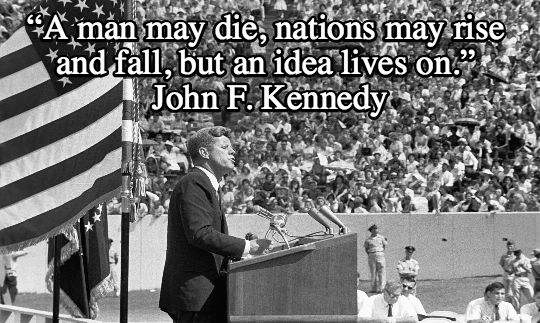
Through the people he brought to D.C., JFK kept alive ideas in a law that he didn't live to see. - ESEA Both NCLB & ESSA kill the ideas. Compare.
Through the people he brought to D.C., JFK kept ideas alive in a law that he didn’t live to see. – ESEA …Both NCLB & ESSA kill the ideas. Compare.
The People’s Alternative is based on the principles written into law by the architects of the 1965 Elementary and Secondary Education Act with the addition of successful practices from the decades that followed. The law then got RESULTS.
~~~~~~~~

CURMUDGUCATION: The New ESEA and Content

CURMUDGUCATION: The New ESEA and Content:

The New ESEA and Content


There's a huge amount of discussion about how the New ESEA will affect policy and the flow of money and the new ways that privateers can grub for that money and just how big a hash states will make out of education, anyway etc etc etc,

But over at the Fordham blog, Robert Pondiscio has put a bit of focus where focus ought to be-- the new bill's effect on content.

Pondiscio is a reform fan who has always been willing to see what we see in the classroom-- that anemphasis on high stakes reading tests is destructive to the teaching of reading. I've made the same argument. The current theories about reading embedded in both the Common Core and in Big Standardized Tests is that reading is a set of free-floating skills unrelated to content, prior knowledge, or the engagement of the reader. The BS Tests have focused on short excerpts specifically chosen to be boring and weirdly obscure so as to guarantee that students will have no prior knowledge and will not find the excerpts interesting. All this because some reformsters believe that reading is a set of skills that has nothing to do with content, which is kind of like trying to imagine waves that exist independent of any matter through which they move. As Pondiscio puts it:

Years of treating reading as a discrete subject or a skill—teaching it and testing it that way—havearguably set reading achievement in reverse. You don’t build strong readers by teaching children to “find the main idea,” “make inferences,” and “compare and contrast.” You do it by fixing a child’s gaze on the world outside the classroom window.

It has been, and continues to be, a dumb and counterproductive way to approach reading. For one thing, it means that the best way for me to increase student achievement would be to never teach anything but daily three-paragraph excerpts from anything at all. Throwing out my anthology of American literature and replacing it with daily newspaper clippings would be an excellent way to 

Charter group tells LAUSD board contribution process was lawful - LA School Report

Charter group tells LAUSD board contribution process was lawful - LA School Report:

Charter group tells LAUSD board contribution process was lawful 


The executive director of the state charter schoolspolitical action committee sent anemail to the LA Unified school board and other district officials yesterday, offering a sharp response to a storyin the Los Angeles Times that was highly critical of the group’s campaign finance reporting practices.
“I am reaching out to you to ensure that you have the facts, which are sadly neglected in this article,” wroteGary Borden, executive director of California Charter School Association Advocates. “Unfortunately, the Times has decided to turn common and fully legal electoral practice into ‘gotcha’ politics. The article simply does not reflect the reality or the integrity of our electoral practices.”
The article highlighted how donors to a political action committee who funneled millions of dollars into this year’s LA Unified school board races were “shielded” from having their identify revealed until after the May 19 election. The donors included high-profile charter school supporters, including Eli Broad, former New York City Mayor Michael Bloomberg and Carrie W. Penner of the Walton family.
At issue was the fact that donations were made to a Sacramento-based PAC, which then gave the money to a Los Angeles-based PAC that supported the election efforts of three CCSA-endorsed candidates. The article points out that if the contributions had been made directly to the local PAC, the donors’ names would have been revealed before the election.
The article stated that the practice “appears to be within the law” but quoted several officials and academics who were critical of the practice. Due to the multi-step process of moving the money from the Sacramento PAC to the local PAC, the donors’ names were not publicly revealed until September, when CCSA Advocates was required by law to disclose its contributors in a California campaign finance report.
Borden said this practice was nothing but routine.
“We are very proud of our compliance and transparency record. The Fair Political Practices Commission and our independent auditors have consistently found our reporting to be fully compliant,” he wrote. “In the case of the last school board elections here in Los Angeles, we formed a local entity to communicate with voters, which received funding from a statewide political action committee — which is routine in the world of modern political campaigning.”
The local PAC, named Parent Teacher Alliance in Support of Rodriguez, Galatzan, and Vladovic for School Board 2015, spent $2.7 million in supporting the reelection efforts of Tamar Galatzan and Richard Vladovic and for the election of Ref Rodriguez. The LA teachers union, UTLA, spent about $1.6 million supporting Scott Schmerelson, who defeated Galatzan, and former board member Bennett Kayser,who lost to Rodriguez.
Both UTLA and the CCSA Advocates supported Vladovic, who won reelection.
The Times article comes as the issue of charter schools — and their deep-pocketed supporters — is being raised to new heights in the district. In August, a $490 million charter school expansion plan backed by the Eli and Edythe Broad Foundation was publicly revealed. The stated goal of the plan was to eventually have half of all district students enrolled in charter schools, which immediately drew the ire of some board members and UTLA.
Charter schools are privately run, publicly funded institutions that typically employ non-union teachers. LA Unified already has more charter schools than any district in the nation, and since the plan would drain the district’s enrollment and reduce UTLA membership, it has been controversial.
Since the plan was revealed, a non-profit separate from the Broad Foundation wasformed to support the charter expansion plan, and the group has stated it will also fund traditional schools.Charter group tells LAUSD board contribution process was lawful - LA School Report:

Stefanie Fuhr, a Colorado Opt Out Leader, says: I Trust the Teachers - UNITED OPT OUT: The Movement to End Corporate Education Reform

Stefanie Fuhr, a Colorado Opt Out Leader, says: I Trust the Teachers - UNITED OPT OUT: The Movement to End Corporate Education Reform:

Stefanie Fuhr, a Colorado Opt Out Leader, says: I Trust the Teachers


Colorado is gearing up for mass Opt Out action via the informal RAVE caucus (Re-igniting Association Values for Educators).
Recently one of the founders of RAVE, Stefanie Fuhr, was interviewed on Channel 7 to share her thoughts on Opt Out.  Scroll to 1 min. 10 seconds to hear her speak. And keep updated on CO Opt Out news via RAVE FB page: https://www.facebook.com/groups/CORAVE/ . RAVE website coming soon – join their FB group page to stay updated!
Additional Colorado Opt Out information can be found on our website:

Mike Klonsky's SmallTalk Blog: We need an independent People's Task Force in Chicago

Mike Klonsky's SmallTalk Blog: We need an independent People's Task Force in Chicago:

We need an independent People's Task Force in Chicago

I'm all for the call by A.G. Lisa Madigan,  for a federal civil rights investigation of the Chicago PD and City Hall's ongoing cover-up of recent police killings. I'm glad to see that the call to bring in the feds is gaining broad support, including most recently from a group of retired African-American police officers and from (get this) Hillary Clinton.

The mayor's proposed Task Force is a farce and its members should be ashamed to have agreed to take part in this charade.

Even a federal investigation is not adequate. While Obama's Justice Dept. has stepped up investigations of big-city police departments -- at least, compared to Bush's DOJ -- results have been too slow in coming and there's little or no transparency in the process. 
The current ongoing federal investigation in Chicago of theLaquan McDonald murder has even been used by Anita Alvarez and Rahm Emanuelas an excuse for not releasing the video of the shooting. And for not telling us that officerJason Van Dykehad been accused of misconduct 18 times before he killed Laquan.

Plus, the feds have spent monthsin Ferguson as well as in 
Mike Klonsky's SmallTalk Blog: We need an independent People's Task Force in Chicago:

Education Votes: IDEA at 40: Has Congress abandoned the promise of the special education law? - Lily's Blackboard

Education Votes: IDEA at 40: Has Congress abandoned the promise of the special education law? - Lily's Blackboard:

Education Votes: IDEA at 40: Has Congress abandoned the promise of the special education law?

Featured on Education Votes:
Screen Shot 2015-12-03 at 1.19.40 PM
“When President Gerald Ford signed the law now known as the Individuals with Disabilities Education Act (IDEA) 40 years ago, he was committed to the law’s goals but deeply concerned about whether the federal government would fulfill its promise to fund 40 percent of the extra costs associated with educating special needs children.
His reservations were well-founded. Four decades later, the government has never met even half of its funding obligation and lawmakers regularly introduce bills aimed at fully funding IDEA, or at least taking steps in that direction.”


Education Votes: IDEA at 40: Has Congress abandoned the promise of the special education law? - Lily's Blackboard:

New Mexico judge hits pause on controversial test-based teacher evaluations - The Washington Post

New Mexico judge hits pause on controversial test-based teacher evaluations - The Washington Post:

New Mexico judge hits pause on controversial test-based teacher evaluations

American Federation of Teachers President Randi Weingarten testifies before Congress in 2008. REUTERS/Mitch Dumke
A New Mexico judge has temporarily barred schools from using the state’s controversial test-based teacher evaluations to make personnel decisions, finding that the system appears not to be objective and uniform as required by law.
The preliminary injunction means that for the time being, teachers cannot lose their licenses for low ratings, and nor can they receive merit wage increases for high ratings.
The injunction will remain in place until Judge David K. Thomson of Santa Fe’s district court can hear and decide the full case brought by the American Federation of Teachers, which argues that the evaluation system should be dismantled because it is arbitrary and unfair.
AFT President Randi Weingarten hailed the judge’s decision to grant a preliminary injunction, calling it a “decision that will resonate through communities across America.”
“Judge Thomson recognized that New Mexico’s teacher evaluation system is deeply flawed, and deprives students of the high-quality educators they deserve while also hurting and demoralizing teachers — the very people we rely on to help students,” Weingarten said in a statement.
New Mexico is among a growing number of states that use complex and controversial algorithms — called “value-added models” — to figure out how much of a student’s learning can be attributed to their teacher.
The theory appears to be valid, Thomson wrote Wednesday. But in practice, New Mexico’s program has been riddled with data errors, a lack of transparency and other problems, he wrote.
“The problem at this stage in the litigation is that New Mexico appears to be a Beta test where the teachers bear the burden for its consistent and uneven application,” Thomson wrote. He wrote that the union had showed a “substantial likelihood of success” in proving that the evaluations violate state law.
In New Mexico, up to 50 percent of teachers’ evaluation are based on test scores.
The teachers union had initially asked for a broader injunction that would have prohibited state and district officials from using the evaluation system at all. The union later narrowed its request, asking only that teachers be New Mexico judge hits pause on controversial test-based teacher evaluations - The Washington Post:

SFER - The $7 million+ “student run” Corporate Education Reform Industry Front Group - Wait What?

SFER - The $7 million+ “student run” Corporate Education Reform Industry Front Group - Wait What?:

SFER – The $7 million+ “student run” Corporate Education Reform Industry Front Group


An update on Students for Education Reform, Inc.
SFER is a model of how the Pro-Charter School and Corporate Education Reform Industry works to control the narrative surrounding public education while seeking to “win the hearts and minds of federal, state and local policymakers.
Dedicated to promoting the privatization of public education, more taxpayer funds for privately owned, but publicly funded charter schools, the Common Core, the Common Core testing scheme and a host of anti-teacher initiatives, Students for Education Reform, Inc. (SFER) was created in late 2009,  according to their narrative, by a couple of undergraduate students at Princeton University.
Claiming to have over 100 chapters across the country, the “student run” advocacy group has, as of late last summer, collected more than $7.3 million since its inception to fund their “education reform” activities.
According to the organization’s most recent Internal Revenue Service (IRS) 990 reports (2014), in addition to the $5.7 million that has flowed into SFER’s coffers as of September 1, 2014, an additional $1.6 million has been collected by a closely-related company called the SFER Action Network Inc. which appears to serve as the political arm of SFER and formed in 2013.
Although Students for Education Reform is “run” by students, the self-described “grassroots” group is governed by a Board of Directors that is made up of some of the biggest corporate executives and players associated with the Corporate Education Reform Industry.
SFER’s website reports that the present Students for Education Reform Board of Directorsincludes;
April Chou (Chair) – The Chief Growth Officer at the KIPP Bay Area Charter School chain.
Adam Cioth (Treasurer) – The founder of Rolling Hills Capital hedge fund and a major funder of the public school privatization movement.
Christy Chin – The Managing Director of the Draper Richards Kaplan Foundation, the philanthropy arm of the venture capital firm, Draper Richards.  The Foundation is one of SFER’s funders.
Stuart Cobert – The Deputy General Counsel at the Unilever Corporation.
Justin Cohen – The President of Mass Insight, a major Education Reform Consulting company.
Shavar Jeffries – Recently appointed President of Democrats for Education Reform (DFER), Jeffries was recently the unsuccessful “education reform” candidate for Mayor of Newark, New Jersey.
Nancy Poon Lue – A Partner in the Silicon Valley Social Venture Fund
And Chris Stewart, Director of Outreach and External Affairs for the Gates Foundation funded Pro-Corporate Education Reform Blog called Education Post.
Until recently the SFER Board also included acclaimed education reform financier SFER - The $7 million+ “student run” Corporate Education Reform Industry Front Group - Wait What?:

Some look Zuckerberg's gift horse in the mouth - POLITICO

Some look Zuckerberg's gift horse in the mouth - POLITICO:

Some look Zuckerberg's gift horse in the mouth

“If I was advising Zuckerberg, I think the question is: Is he searching for a silver-bullet solution?”


Facebook CEO Mark Zuckerberg plans to pour billions of dollars into a high-tech idea that has been billed as the future of learning, but which critics see as a half-baked notion that could jeopardize student privacy and spread ideas despised by public school advocates.
Zuckerberg and his wife, Priscilla Chan, announced Tuesday night that they’re pouring 99 percent of their Facebook shares into charity through their new Chan Zuckerberg Initiative. The shares are currently worth about $45 billion. One of the goals of that initiative, inspired by the birth of their daughter Max, is to advance “personalized learning," although it isn't clear how much of the money might be invested in that.


That approach to learning is generating lots of buzz — the Obama administration, for instance, has doled out tens of millions for efforts to use it across the country. But some say personalized learning is a fuzzy idea and there’s little research on its effectiveness — and what’s out there is mixed.
“Many believe in it and see the future in it,” said Douglas Levin, president of EdTech Strategies, LLC. “But we need to find proof points of where it’s working and then there’s the question of scaling it up.”
“If I was advising Zuckerberg, I think the question is: Is he searching for a silver-bullet solution?” Levin said.
Personalized learning involves using technology like computers and tablets — along with help from teachers — to shape instruction that responds to an individual student’s needs. The pace of instruction, the approach to teaching and even what’s taught are all adjusted to how students best learn as well as their interests.
That can mean collecting data on individual student performance, like how students tackle problems and answer questions, what gives them pause and what they’re able to breeze through.
Some worry that such large amounts of student data could be used to sell products and would be vulnerable to hackers. That data collection has “tremendous negative implications for privacy,” said Leonie Haimson, a parent and privacy advocate and the executive director of Class Size Matters.
For example, she said, parents worry about third parties and companies using student data to target ads at their children.
Critics are also concerned that Zuckerberg will join the ranks of reform-minded billionaires like Bill Gates, Michael Bloomberg and Eli Broad who want to shake up what they see as a failing public school system in ways that many teachers and parents may oppose.
That suspicion is heightened by the fact that the Chan Zuckerberg Initiative is an LLC, not a nonprofit, which some see as a sign that Zuckerberg may use the


Read more: http://www.politico.com/story/2015/12/mark-zuckerberg-facebook-216373#ixzz3tHPRsCoa


Judge suspends penalties linked to state’s teacher eval system - The Santa Fe New Mexican: Northern New Mexico Education

Judge suspends penalties linked to state’s teacher eval system - The Santa Fe New Mexican: Northern New Mexico Education:

Judge suspends penalties linked to state’s teacher eval system


A Santa Fe judge struck a blow against the state’s contentious teacher evaluation system Wednesday, temporarily halting provisions that would punish teachers for poor scores until a trial can determine whether the rating system is valid.
The 70-page ruling by state District Judge David Thomson focused primarily on the complicated combination of student test scores used to judge teachers. The ruling prevents the Public Education Department from denying teachers licensure advancement or renewal, and it strikes down a requirement that poorly performing teachers be placed on growth plans.
Local chapters of the American Federation of Teachers, individual educators and some Democratic legislators who filed the suit called the decision a win, while the Public Education Department stood by its teacher evaluation system.
The next round of teacher evaluations is set to be released in May.
Thomson said the teacher evaluation system varies from district to district, which goes against a state law calling for a consistent evaluation plan for all educators.
“The problem is that is not easy to pull back the curtain and the inner workings of the model are not easily understood, translated or made accessible,” the judge said.
Thomson’s ruling marks the first successful challenge of the teacher evaluation system instituted by state Secretary of Education Hanna Skandera in the 2013-14 school year. Similar lawsuits previously were dismissed in the state Court of Appeals and in a state District Court in Albuquerque.
The ruling came in a case that had stalled in Thomson’s courtroom for the past two months. What was supposed to be a single day of testimony in September stretched into five days of arguments and expert statements spread over the course of two weeks.
The union originally had asked Thomson to halt all teacher evaluations until an April hearing on whether to permanently put an end to the system. But during the final day of the hearing, union attorney Shane Youtz narrowed the original request, asking Thomson only to suspend a provision that called for placing low-performing teachers on improvement plans or other punitive measures. Youtz said districts can fire teachers who don’t improve, which is wrong if the teacher evaluation system is flawed.


No Child Left Behind replacement would give other states the freedom California has already claimed - LA Times

No Child Left Behind replacement would give other states the freedom California has already claimed - LA Times:

No Child Left Behind replacement would give other states the freedom California has already claimed


With No Child Left Behind one step closer to being a thing of the past, the governance of schools in other states is poised to look a lot more like California’s. 
On Wednesday afternoon, the House overwhelmingly passed the proposed Every Student Succeeds Act by 359 to 64. The Senate is expected to vote on the measure before year’s end, and the White House has signaled President Obama's willingness to sign it.
The bill would continue to require annual standardized testing in grades 3-8 and once in high school, and the results of different student groups will continue to be publicly reported. But for the most part, it will be up to states to determine what to do with those results.
The measure requires states to intervene in the bottom 5% of their schools, and in high schools with graduation rates below 67%, and where specific groups of students consistently underperform. For the most part, it will be up to states to determine how to identify those bottom-performing groups and how to intervene to make them better, as long as the interventions are “evidence-based." To make these designations, in addition to test scores, states must consider other factors — such as school engagement and climate — but will have more leeway over how to count each one in their overall rankings. 
California is already in the process of changing its school accountability system. As students prepared to take tests aligned with the Common Core this year, the state Board of Education voted to extend the suspension of California’s Academic Performance Index, a measure based on test scores. Instead, the board began devising a new system that includes factors such as attendance, how quickly students who don’t speak English are learning the language, college readiness, dropout rates and suspensions. By March, the state is slated to present a proposal to the Legislature about the new assessment system.
“California really has claimed the space that this bill now opens up,” said David Plank, aStanford University professor and executive director of Policy Analysis for California Education. “With the Local Control Funding Formula, with the changes that have been made and are in progress on accountability policy in California, and with the implementation of Common Core, we’re really where the federal government now says states can go.”
In other words, “it catches up to where California may have already gone,” said Linda Darling-Hammond, Charles E. Ducommun professor of education at the Stanford Graduate School of Education and a member of the state’s Advisory Task Force on Accountability and Continuous Improvement. “A lot of states are looking to California.”
The Every Student Succeeds Act would replace No Child Left Behind, the much-maligned 2001 George W. Bush bill that dramatically expanded the federal government’s footprint in schools by requiring regular standardized testing and tying consequences — such as restrictions on certain school funds — to results from those tests. No Child Left Behind also included a goal of 100% proficiency by 2014, which turned out to be unrealistic.
Instead of those consequences, the proposed new law would hand responsibility back to No Child Left Behind replacement would give other states the freedom California has already claimed - LA Times:

TeachStrong: Will New Campaign Undo Teacher Bashing and Sustain Those Called to Teach? | janresseger

TeachStrong: Will New Campaign Undo Teacher Bashing and Sustain Those Called to Teach? | janresseger:

TeachStrong: Will New Campaign Undo Teacher Bashing and Sustain Those Called to Teach?


Did you know there’s a brand new campaign to improve teaching, a campaign, according toLyndsey Layton of the Washington Post, that says its goal is “modernizing and elevating” the teaching profession?   This is a project of the Center for American Progress, the primarily Democratic Washington think tank that has ironically pushed far-right “corporate reform” in education. Valerie Strauss wonders if TeachStrong is a Gates-funded initiative, as the Bill and Melinda Gates Foundation granted $850,000 to the Center for American Progress this past summer.
As it launched TeachStrong, the Center for American Progress announced: “In order to ensure that all students are taught by excellent teachers, leaders must reimagine the systems and structure of the teacher career continuum. Yet the United States has never made a serious commitment to modernizing, elevating, and professionalizing the teaching pathway.”
Daniel Katz, a Seton Hall University professor of education who trains secondary teachers and secondary special education teachers, wonders at the coalition the Center for American Progress has pulled together for this new campaign: “Lyndsey Layton mentioned in theWashington Post that the coalition includes ‘some strange bedfellows,’ and she certainly was not kidding.” On the one hand are the traditional professional organizations representing teachers, school administrators, and colleges of education: the National Education Association, the American Federation of Teachers, the American Association of Colleges of Teacher Education, the Association for Supervision and Curriculum Development, the National Board for Professional Teaching Standards, the National Commission on Teaching and America’s Future, the National Center for Learning Disabilities, and the New Teacher Center.  Then there are the groups that want to disrupt the teaching profession: Teach for America, Educators 4 Excellence, Deans for Impact, Relay (online) Graduate School of Education, Education Post, and finally the National Council on Teacher Quality—which has taken it upon itself to rate colleges of education in a questionable system that merely looks at the courses listed in each program’s catalog—no visits, no observations.  Katz comments: “(I)f the Academy of Nutrition and Dietetics partnered with the Hormel corporation to design a school lunch program—you hope the more knowledgeable partner is guiding the work, but you strongly suspect that a lot of snouts and tails are going to get in there too.”
As a teacher educator, Katz worries about a “campaign (that) appears rooted in the notion that TeachStrong: Will New Campaign Undo Teacher Bashing and Sustain Those Called to Teach? | janresseger:
Embedded image permalink