Latest News and Comment from Education

Friday, November 27, 2015

CURMUDGUCATION: Is the Teacher Shortage Real?

CURMUDGUCATION: Is the Teacher Shortage Real?:

Is the Teacher Shortage Real?


We talk a lot about the current teacher shortage. I've posted about it numerous times. But the question remains-- is there really a teacher shortage?

A study released this month by the National Center for Educational Statistics suggests that everything we think we know about the Great Teacher Shortage is wrong. Or at least, it was wrong as of four years ago. The study is pretty straightforward, and it's worth making a note of.

The writers are Nat Malkus of the American Institutes of Research with Kathleen Mulvaney Hoyer and Dinah Sparks of Activate Research, Inc. AIR is also in the test manufacturing biz (SBA is their baby) and Activate is a "woman-owned small business" in the metro DC area focusing on research and policy. They created the report under the aegis of NCES, an arm of the USED Institute of Educational Sciences, so while none of these are without blemish, this is not another Gates-funded fake research project.

The report looks at four samples of data from the 1999-2000, 2003-2004, 2007-2008 and 2011-2012 school years, and it looked for answers to fairly straightforward questions:

1) What percentage of schools reported teaching vacancies or hard-to-fill spots?

2) What percentage of schools found these positions related to particular subject areas?

3) Did persistent hard-to-fill spots correlate to any school characteristics?

The report is easy to read through and contains lots of charts, but the answers reached by the 
CURMUDGUCATION: Is the Teacher Shortage Real?:

If you liked "Alice's Restaurant", you're gonna love...APPR in NY State


If you liked "Alice's Restaurant", you're gonna love...

A heart wrenching story from a teacher in Tennessee.  Could have been Connecticut or anywhere… - Wait What?

A heart wrenching story from a teacher in Tennessee.  Could have been Connecticut or anywhere… - Wait What?:

A heart wrenching story from a teacher in Tennessee.  Could have been Connecticut or anywhere…


Read the story posted by a Tennessee teacher yesterday.  Then convert what will undoubtedly be your sadness and anger into action.
Election Day 2016 is just over 11 months away.
This time, use your vote to slap back the testing mania and the unprecedented attack on our students, their teachers, the teaching profession and our public schools.
Before you vote, demand that every incumbent explain what they have done to push back the Corporate Education Reform Industry and the destructive agenda.
Before you vote, demand that every candidate outline what they will do to put the concept of “public” back into public education.
No votes until they reduce the use of inappropriate standardized testing, no votes until they ensure that teacher evaluation program don’t rely on the use of those unfair standardized test results and no votes for those who have become lackeys for the effort to privatize public education.
Voting is the ultimate weapon we have in a  stable democracy, use your vote with Maximum Force.
The Tennessee teacher’s powerful expose was re-posted by Connecticut educator and fellow bloggerPoetic Justice who is “A poetry teacher defending ALL students and their families.” You can find and comment on the original post at: A Not So Graceful Exit: Why I Left Teaching
A Not So Graceful Exit: Why I Left Teaching
Yesterday, I quit.  In the middle of the school year, I quit.  After fourteen 
A heart wrenching story from a teacher in Tennessee.  Could have been Connecticut or anywhere… - Wait What?:

Teach for America 2, Parents 4: A Tale of Two Elections | The Progressive

Teach for America 2, Parents 4: A Tale of Two Elections | The Progressive:

Teach for America 2, Parents 4: A Tale of Two Elections


Teach for America scored big in Minnesota recently, with an Election Day, under-the-radar purchase of two suburban Minneapolis school board seats.
Purchase might be a strong word, but Teach for America and its affiliates definitely threw moneyed support behind Richfield, Minnesota school board candidates Crystal Brakke and Paula Cole. Both Brakke and Cole have served as TFA alums, and Brakke has stayed with the organization in executive positions. Currently, she works as TFA’s ombudsperson, based in Minneapolis.
Campaign finance reports for both candidates reveal a surprising influx of out of state dollars, primarily for Brakke:

  • California-based venture capitalist Arthur Rock, who has become notorious as a funder of TFA-affiliated school board campaigns, gave both Brakke and Cole around $600.00 each. Rock is a TFA board member, an investor in KIPP charter schools, and has used his fortune to prop up the controversial Rocketship Charter School chain, which seeks to promote large class sizes with fewer teachers and more educational technology.
  • New York resident Michael Buman also gave $600 each to Brakke and Cole. Buman is the Executive Director of Leadership for Educational Equity, or LEE, which is Teach for America’s more overtly political, and famously secretive, spinoff. In a 2014 article, writer Stephen Sawchuck noted that, in the span of just a few years, LEE went from a tiny operation—with a handful of staffers—to a coordinated team of 60 people, managing a budget worth close to $4 million. LEE’s stated mission is to “develop leaders” while “growing a movement.” Important note: Arthur Rock has paid $500,000 to place TFA alum in policy positions on Capitol Hill.
  • Alex Johnston, another East Coast resident, donated a relatively modest amount--$100--to Brakke and Cole, but his education reform pedigree should not be underestimated. Johnston is the former CEO of “ConnCAN,” which is part of the hedge fund-supported
- See more at: http://www.progressive.org/news/2015/11/188411/teach-america-2-parents-4-tale-two-elections#sthash.LgvDohTs.dpuf


Geaux Teacher!: Wake Up Teachers! Your Profession is Being Made Redundant

Geaux Teacher!: Wake Up Teachers! Your Profession is Being Made Redundant:

Wake Up Teachers! Your Profession is Being Made Redundant

Wake up teachers. Your profession is being made redundant w discussions like this from Brookings. http://brook.gs/1jnE27B

More importantly, children are being left behind as "reform" addresses everything but learning! 

Once again yet another article focused on what matters least in a discussion about improving the teaching and learning of our K-12 students. At the same time that the discussion of pay (for performance) pretends to offer solutions to our dying public school system, cheap, temporary labor provided by and for billion$ of  non-profits like TFA, NSNO, charters and other privatization service providers are pushing out the K-12 teaching profession by facilitating its stagnation. 
Our very own La. State Board next week will approve two new charter authorizers to flood the Baton Rouge "region" with start up charters. Next will come John White's push for TAP in the guise of mentorship and pay incentives for "teacher leaders."  Just like Race to the Top which was sold as an option for those districts who wanted it, these two initiatives to privatize our schools devoid of local control and to further distract teachers from demanding real progress and innovation for improving teaching will quickly become mandatory statewide.  The only way you can stop it is to offer real solutions and demand your local school boards and administration to support them.  
Although teachers are human and would love to be paid high salaries at ANY point in their careers (which is why schemes like TAP and VAM to "reward" a very few teachers are enticing) they typically don't enter the teaching profession for the money. There is no denying that the end of career salary boost, that finally ensures a hard earned retirement benefit, keeps some teachers in the classroom longer than their capacity to endure the never-increasing level of respect along with the ever-increasing level of responsibilities would otherwise Geaux Teacher!: Wake Up Teachers! Your Profession is Being Made Redundant:

Past Chester Community Charter testing head disciplined in cheating scandal | Philadelphia Public School Notebook

Past Chester Community Charter testing head disciplined in cheating scandal | Philadelphia Public School Notebook:

Past Chester Community Charter testing head disciplined in cheating scandal

The state's largest bricks-and-mortar charter is operated for profit by a GOP power broker. Its test scores plunged in 2012 when security measures were tightened.


A former testing coordinator at Chester Community Charter School, the state’s largest bricks-and-mortar charter with more than 3,000 students, has been sanctioned by the state for “systemic violations of the security of the PSSA exams” over the five-year period between 2007 and 2011.
The school was under scrutiny for testing irregularities by the Pennsylvania Department of Education as part of a statewide cheating scandal that broke in 2011.
CCCS is operated for profit by a company owned by Vahan Gureghian, a major Republican donor and power broker who was among the largest individual contributors to former Gov. Tom Corbett’s campaign and a member of his education transition team. During his term, Corbett visited CCCS to tout it as an exemplar of high-quality education for low-income communities.
Now with two campuses, CCCS has drawn more than half the K-8 students who live in the Chester Upland School District. 
The state’s disciplinary action against the former coordinator, Patricia A. Sciamanna, was for violating testing rules during years that CCCS  was struggling to meet federal student proficiency targets used for critical decisions, including whether a charter should be renewed.
The Pennsylvania Professional Standards and Practices Commission (PSPC) suspended Sciamanna’s instructional and administrative licenses, as well as her eligibility to work in a charter or cyber charter, for two years.
It also banned her permanently from ever “participating in, proctoring, monitoring and/or overseeing the administration of the PSSAs.” Although the action was taken in April, it was only recently posted on the PSPC website that tracks disciplinary actions against educators.
An effort by the Notebook to reach Sciamanna through her Facebook page was unsuccessful.
CCCS spokesman A. Bruce Crawley issued a statement on the disciplinary action, saying it is against the school's policy to comment on “issues related to individual staff members.” He did not respond to a request to clarify when Sciamanna started working at the school, when she left, and what positions she held.
The school’s statement reiterated its longstanding position that PDE has made no determination against the school itself in regards to cheating. 
“The PDE closed its review of CCCS in September 2012, with no finding of wrongdoing by Past Chester Community Charter testing head disciplined in cheating scandal | Philadelphia Public School Notebook:

Louisiana Educator: Educators and Parents Thankful

Louisiana Educator: Educators and Parents Thankful:

Educators and Parents Thankful


Happy Thanksgiving! 

Many educators and parents I have spoken to recently are very thankful that we have a chance to restore sanity, dignity, professionalism, and a positive balanced curriculum in our public schools. 

The election of John Bel Edwards as our governor gives us a great opportunity to truly improve Louisiana public education

Edwards won't be able to do it alone. He will be faced with a Board of Elementary and Secondary Education that is mostly occupied by persons elected by a fanatic group of privatizers and public education haters. Many legislators have also received their bribe contributions from the out-of-state billionaires and LABI bosses who want to take over education. Our new governor will need the help of the real educators and the many parents who support public education to change the course and to put the emphasis on positive change instead of falsely claiming to be fixing "a broken system".

Public education is not broken, but it has been severely damaged by the attempt by misguided billionaires, greedy privatizers, and big business to blindly test and punish our students and our educators. Amazingly the schools and educators and students who needed the most support have been the most victimized by these so called education reforms and our true public schools have been bilked of needed school tax dollars.  After all this abuse, it is amazing that we still have so many educators and parents who have not ever given up on public education.

Governor elect Edwards has already demonstrated by his previous work in the legislature and by his very practical positions on key education issues that he will be just the Louisiana Educator: Educators and Parents Thankful:

NYC Educator: Why Is Reformy Andy Cuomo Backing Down on Junk Science?

NYC Educator: Why Is Reformy Andy Cuomo Backing Down on Junk Science?:

Why Is Reformy Andy Cuomo Backing Down on Junk Science?


Like everyone who pays attention, I was pretty amazed to read in the NY Times that Governor Andrew Cuomo is looking to tamp down his teacher evaluation mandate. After all, hadn't he said that the new system, the one he backed and pushed, was "baloney?" He was clearly upset that not enough public school teachers had been badly rated and fired. After all, the developmentally inappropriate tests he had mandated, with no preparation whatsoever, had managed to fail a large number of New York's children. Surely he could blame the public schools and turn them over to his wealthy BFFs. There were billions to be made.

But alas, there was pushback. The moms whose kids Arne Duncan insulted were not ready to throw in the towel. They were not prepared to label their children as dummies and turn over their schools to Cuomo's campaign contributors. Opt-out fever hit NY State widely, and grew in leaps and bounds. Cuomo, seen as invincible after his first run against some Buffalo lunatic, began to show chinks in his armor. And on education, his popularity fell into the toilet. Ever reformy MaryEllen Elia suggested that junk science should count for 20, rather than 50% of teacher ratings.

Diane Ravitch pointed to this piece as significant, but urged caution.


This may be a hoax, a temporary moratorium intended to deflate the Opt Out Movement and cause it to disappear. Do not rest until the law is changed to delink testing and teacher-principal evaluations. The new federal law–not yet enacted–eliminates the federal mandate that Duncan imposed without authorization by Congress. New York may now permanently eliminate this punitive, anti-educational requirement. 

New York parents: As Ronald Reagan said,  “Trust, but verify.” I suggest turning that saying around: “Verify, then trust.” Meanwhile, to quote an even older saying, keep your troops together and “keep your powder dry.”

Of course I agree. Trusting Andrew Cuomo is an egregious error. Punchy Mike Mulgrew trusted him when he opposed Bloomberg's LIFO-killing bill, but it was pretty clear Governor Andy thought his new junk-science APPR bill was gonna serve to fire those inconvenient unionized teachers. Punchy Mike trusted him so much he didn't bother to oppose Cuomo in primaries, let alone the general election. Cuomo thanked him by enacting the not only the most punitive and draconian teacher rating system I've ever seen, but also receivership that made collective bargaining agreements moot  (a system for which Punchy Mike thanked the Heavy Hearts Legislature).

Why would Governor Andy even pay lip service to reversing his reforminess? I have a theory. Perhaps he expects Friedrichs to win. Were that to happen, the inconvenient NYC Educator: Why Is Reformy Andy Cuomo Backing Down on Junk Science?:

When A 4-Day School Week Might Cost More Than It Saves : NPR Ed : NPR

When A 4-Day School Week Might Cost More Than It Saves : NPR Ed : NPR:

When A 4-Day School Week Might Cost More Than It Saves


Magician reaches into a hat and finds only a hole in the bottom


First thing Friday morning, Bill Florence is getting his two kids, Chloe, 11, and Austen, 8, ready to head out the door.

"Did you guys brush your teeth?" he asks. "Yes," they moan.

Monday through Thursday Chloe and Austen catch the bus to Peralta Trail Elementary School, but today, their dad scoots them into the family's silver Honda.

That's because Apache Junction Unified School District, just east of Phoenix, moved to a four-day week this year. With little else to cut out of its shrinking budget, it dropped Friday classes, adding an hour to class-time Monday through Thursday.

On the fifth day, Florence drops his kids off at a city-run daycare that costs the family more than $100 a month — a cost they don't have any other day of the week.

This year alone Bill and his wife, Jennifer Florence, will pay more than $1,500 in childcare because of the four-day schedule. "We are not happy with it. It isn't the ideal situation. We would rather have the kids in school on Friday," he says.

But something in the schools had to go. The district of 4,500 students says its bills are high, too. After closing schools, and growing class sizes, Apache Junction joined at least 41 other districts in Arizona already on the four-day schedule.

Superintendent Chad Wilson blames the state of Arizona. Parodying officials he says, "Pay your bills that cost what they cost in 2016 off of what you were making in 1987."

All across the country districts have tried cutting the fifth day to save money on things like gas for buses, heating and cooling bills and school lunches.

This year Apache Junction estimates it'll save less than one percent of the budget by dropping Friday classes. That's about $33 per student, per year.

Again, the Florences pay close to $30 every Friday for daycare. So, were there other reasons behind the move?

As Superintendent Wilson points out: Yes, teachers.

Third-grade teacher, Shana Myers, and her colleagues in Apache Junction make up to $10,000 less than surrounding districts. And when they leave, turnover is When A 4-Day School Week Might Cost More Than It Saves : NPR Ed : NPR:


Principal to N.Y. Gov. Cuomo: Stop spreading a false narrative about public education - The Washington Post

Principal to N.Y. Gov. Cuomo: Stop spreading a false narrative about public education - The Washington Post:

Principal to N.Y. Gov. Cuomo: Stop spreading a false narrative about public education


Jamaal Bowman is the principal of the Cornerstone Academy for Social Action Middle school in the Bronx.  The school’s website says that the mission of the school is to graduate “self-aware, hard-working and socially responsible 21st century learners.” Cornerstone Academy’s curriculum, based on the Common Core State State Standards, focuses on improving the “creative, critical, collaborative and higher-order thinking skills” of students, who take practice state assessments every six to eight weeks. Teachers and administrators look at the scores, the website says, and devise new instructional plans based on the results.
Bowman clearly believes in data-driven instruction, and that makes the following open letter he has written to New York Gov. Andrew Cuomo — which talks in part about the misuse of data in education — particularly interesting.
Implementation of the standards and aligned testing was widely described as a mess, and 20 percent of students across the state refused to take the Core tests this past spring as a protest. Cuomo took notice and in September, he created a task force to review the Common Core in his state. The New York Times just reported that Cuomo, a staunch advocate of making student standardized test scores up to 50 percent of teacher evaluations, may be ready to move away from that stance (which would be a significant change) and is awaiting the task force’s conclusions. (It could happen but don’t hold your breath.)
In any case, here’s Bowman’s open letter.

 Dear Governor Cuomo:
I hope this letter finds you and your family in good health and good spirits. I write not only to you, but also to those who share your view of public education.
I want to start by thanking you for creating a commission to review and “reboot” the Common Core standards. I agree, “the implementation of the Common Core just did not work,” and needs a “total overhaul.” By forming the commission, you have provided a platform for parents and educators to share their thinking regarding not just the common core, but public education in general. I am hopeful that the feedback you receive will make its way into our schools and begin a much needed student centered redesign of public education in New York State.
I also want to personally thank you for allowing me to provide testimony to the common core commission at the College of New Rochelle. It seems that my testimony went over pretty well as it has nearly 4,000 views on social media. Your commission has also chosen to make me one of their technical advisors, which 
Principal to N.Y. Gov. Cuomo: Stop spreading a false narrative about public education - The Washington Post:

Ranking Finland's Schools Proves That They're All Equal - The Atlantic

Ranking Finland's Schools Proves That They're All Equal - The Atlantic:

The Place Where Ranking Schools Proves They're Actually Equal

Why one journalist wanted to grade Finland’s schools


In Finland you’re not supposed to wonder—let alone ask out loud—if one school is better than another. That’s because all Finnish schools are designed to be equal.

We Finns are very proud of our equal education system. In fact, education is the one positive thing Finland is known for all around the world. Our results in global assessments of 15-year-olds have won us international attention a small nation rarely receives.

The strong ideology of equality doesn’t always make life easy for us Finnish education reporters. We feel, for example, we should rank the nation’s high schools even though the government doesn’t want us to.

All Finnish schools are designed to be equal.


In 2011, my boss asked me to help her create a more ambitious high-school ranking than anything Finland had ever seen. I had just been promoted from an education reporter to the editor of domestic news at the Finnish News Agency, which is like the Associated Press of Finland except on a smaller scale. (Since there are only 5 million Finns, all things Finnish are small scale.)

My boss, the editor in chief of news at the agency, is also a former education reporter. She had been dreaming of the new high-school ranking for a long time. The project sounded very interesting, but also very challenging.

In Finland, ranking schools is unthinkable to educators and education officials. Especially when it comes to elementary and middle schools, Finnish education officials have a clear stand: It’s always best for any child to go to the neighborhood school closest to their home.

The idea behind this policy is that if we started believing some schools were better than others, those schools would attract the best teachers and the most advantaged students. The rest of the schools would see their reputations decline and have a hard time keeping, and recruiting, good teachers. That, in turn, could harm the quality of many schools.

That’s why education officials in Finland believe that ranking schools would do more harm than good.

As a Finn, I feel very strongly that everyone should get equal opportunities in life. I believe one good way to try to accomplish that is to have equally good schools available for everyone, and to avoid letting some schools get a better reputation than others.

As a journalist, however, I’m not at all happy with the idea of officials telling me not to seek information. I find it essential that any question can be asked.

So when my boss asked for my help, I said yes.

Comparing high schools was not unheard of in Finland at the time we began our project. Some of the biggest newspapers published, twice a year, a simple ranking Ranking Finland's Schools Proves That They're All Equal - The Atlantic:


Thankful For You [Luz and Ale] | The Jose Vilson

Thankful For You [Luz and Ale] | The Jose Vilson:

Thankful For You [Luz and Ale]

IMG_20151107_194905


I don’t often speak about my personal life because, well, that’s not what I do. It’s weird. I teach. I speak. I write. I activate.
But I’m also a man with a family at home.
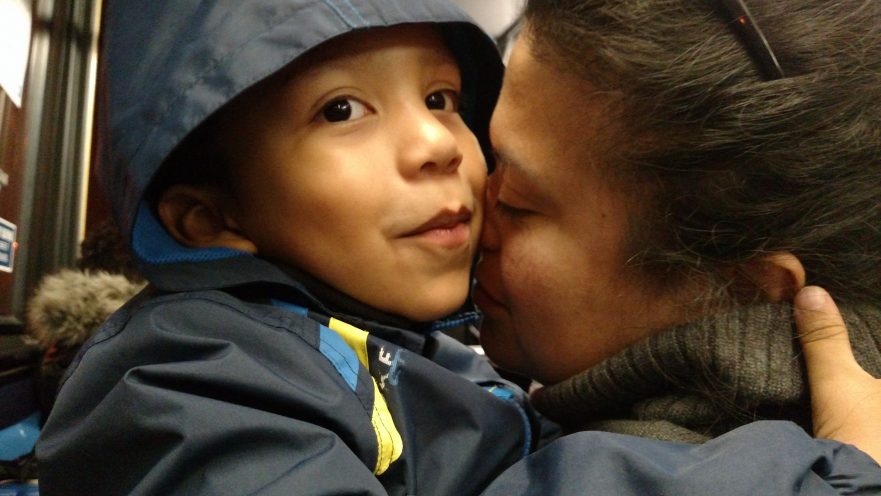
So this is a note to say that I’m thankful for my family we’ve made in Harlem. Luz and Alejandro are my life source. I do my best to not give off the impression that I have it all together. Far from. Yet, they make me want to do better for myself regularly. This past week, with her surgeries and rushes to the hospital, I’m calling myself out to do a better job of thanking them for their existences.
It’d be dishonest of me if I said I was a completely different man back before I swaddled Ale the newborn almost four years ago. For human beings, there’s no such thing as a tabula rasa. Yet, the spirits have summoned me to take on a challenge that’ll always challenge me, one that doesn’t keep score. On days when I don’t feel like I can arise to the challenge, looking at my family’s faces provides the source of life.
I stared at Luz and Ale at their lowest points. Her recovering after surgery. Him moaning, tossing, and heaving even after we went to the doctor. They reminded me of my calling to them. I embraced that. And them.

About Jose Vilson

José Luis Vilson is a math educator, blogger, speaker, and activist. For more of my writing, buy my book This Is Not A Test: A New Narrative on Race, Class, and Education, on sale now.

Read Me, Please! My favorites from 2015. - Lily's Blackboard

Read Me, Please! My favorites from 2015. - Lily's Blackboard:

Read Me, Please! My favorites from 2015.


If you’re like me, you have a small stack of magazines you’ve promise yourself you’ll get to…eventually. You just can’t seem to find the time to read the cover story that made you buy the magazine or the news article that piqued your interest or the webpage that you bookmarked.
And it’s understandable why the stack keeps growing. There is so much good stuff out there to read, it’s difficult to find the time to get to everything. But do not fear! I’ve done the work for you! By combing through thousands of pages of NEA Today, I have compiled the must-read list of 2015.
From closing the achievement gaps and charter schools to school privatization efforts and social justice, plus everything in between, these articles should not be missed. So whether you’re taking a plane, train or automobile back home from your Thanksgiving feast, make sure to read the amazing stories from the past year.

Achievement Gaps
Debate around the achievement gap is usually dominated by issues such as urban poverty, segregation, and school funding. These factors unquestionably have an enormous impact on student outcomes, but why do disparities persist at well-funded, diverse and high-achieving suburban schools? NEA Today sat down with the authors of a new eye-opening book on the topic to discuss their findings.

Charter Schools
There’s no denying the dramatic growth of charter schools—taxpayer-funded but privately-managed schools that are exempt from some of the rules governing traditional public schools. During the 2007-08, 1.3 million students attended 4,300 charters. By the 2013-14 school year, those numbers had shot up to 2.57 million students in 6,440 schools. In 2015, 600 new schools opened their doors.

College Debt
As states cut funding for public colleges, families are stuck with the bill. A moderate budget for a student attending an in-state, four-year public university was $23,410 last year, according to the College Board. That includes tuition, food, and textbooks, and adds up to nearly half the average U.S. household income. Many families borrow to pay. But that’s a familiar story by now: Student debt in the U.S. topped an absurd $1.29 billion this year.

Higher Education
Funding cuts also lead to program cuts—often in the kind of student services that boost graduation rates, like math assistance centers or academic advisors. Sometimes entire academic departments disappear. (Like, for instance, the 14 majors at the University of Southern Maine that suddenly ceased to exist this year, including geoscience and New England studies. Fifty faculty members—about one out of every five or six on campus—are gone too.)

Inspiring Educators
The 1950s brought 33 million teachers to the nation’s public schools. At age 22, Lillian Orlich was one of them. Recruited by Prince William County Virginia public school system, she took a train from Manhattan to Manassas, “I struck out on my own,” Orlich said. Now 87, this dedicated guidance counselor has helped generations of students find their way, and she has no plans to retire.

LGBT Issues
Students walking to class in corridor.
Most students are on autopilot when it comes to the daily routine of high school. They file into first period, go from class to class, banter in the hallway, eat lunch, and take the occasional bathroom break. The transitions are processes that for the most part require little thought. For James van Kuilenburg, it’s slightly different, as one of those transitions could very well be the most important decision he will make that day. What’s at stake? His safety.

Literacy
As classroom demographics continue to change dramatically—not only in terms of ethnic diversity, but also in linguistic diversity, sexual orientation and identification, and physical and learning disabilities—there is a growing need to diversify school and classroom book collections.

School Privatization
For schools, privatizing services means that trained, skilled and loyal ESPs would be replaced by workers with less experience, resulting in a lower quality of service. Even worse, students would be exposed to what Andrew Campbell, a custodian with the Waterford School District for 28 years, calls “stranger danger.”

Social Justice
In 2010, more than 3 million students were suspended from school, or double the level of suspensions in the 1970s. Meanwhile, more than a quarter-million were “referred” to police officers for misdemeanor tickets, very often for offenses that once would have elicited a stern talking-to.

Union Activism


Social justice activism isn’t new. Rank-and-file union activists have advocated for social justice for years and it’s based on the same principles organized labor has always championed: Solidarity, equality, democracy, and justice. But the country has entered a seminal moment, and this model of unionism could hold the key to preserving public education as a right for all Americans.


Read Me, Please! My favorites from 2015. - Lily's Blackboard:

Finding the sweet spot of reason in evaluating schools and teachers - LA Times

Finding the sweet spot of reason in evaluating schools and teachers - LA Times:

Finding the sweet spot of reason in evaluating schools and teachers

Interpretive dance
Third grade students at West Homer Elementary School in Homer, Alaska act out an interpretive dance to the sound of a storyteller and percussion on Nov. 13. (Annie Rosenthal / Associated Press)
The pendulum of American public education policy is swinging back, away from the stiff reform agenda of the past decade and a half. And the reformers themselves bear a share of the responsibility for the backlash. The No Child Left Behind Act, passed by Congress in 2001, will no doubt be remembered as one of the worst-constructed laws of the century. Instead of holding schools accountable by carefully measuring their improvement and creating mechanisms for change, it measured how many students had reached an arbitrary bar called academic "proficiency," which left many disadvantaged schools looking bad even when they were improving, and made many affluent schools look good even when their students stayed at about the same level.
The reform movement kicked into gear by the act scapegoated teachers and made teaching a less attractive career, just when the nation needed to attract more bright college students to the teaching profession. And it overemphasized high-stakes standardized testing in just two subjects, so that instruction and curriculum were narrowed to an unacceptable degree. Doing well on the largely fill-in-the-bubble tests was all that mattered.
Congress is finally near agreement on the rewrite of No Child Left Behind, which is now in conference committee. The anticipated new version would continue to require annual testing from third through eights grade, and once more in high school. But states would be left to set standards and to determine how to intervene at schools where students weren't achieving, as long as they at least took action to improve schools in the bottom 5% of their ratings and high schools where less than two-thirds of students were graduating. Under current law, schools failing to meet the standards face the possibility of mass firings, takeover by a charter school or, in California, "parent trigger" petitions.
The rewrite would also remove the federal government's power to pressure states to link teacher evaluations to student test scores, as the Obama administration has done. In fact, there might be no real consequences for schools where relatively few students take the test, which could give districts a perverse incentive to keep low achievers from bring counted.
In the eyes of some groups that decry the testing-and-accountability movement, this doesn't go far enough. Eliminate high-stakes standardized testing, they say, and return to a period when teachers taught without worrying about what test scores said.
Somewhere between rigid, punitive rules and the pre-accountability era is a sweet spot of reason that this nation has failed to reach. Standardized testing has a valid place in education, though it was endowed with too much importance as the only measure of a school's worth. Testing shows the sometimes yawning gaps between what schools say their students have learned and what they actually know. In particular, No Child Left Behind made the nation aware, as never before, of just how poorly students of color or with low incomes were faring.
Had it not been for the federal law, these students probably would have continued to be largely ignored. The "waltz of the lemons" would have played on as administrators transferred problematic teachers to schools in poor neighborhoods. It's less likely that Gov. Jerry Brown's new funding formula for schools, which directs the most money to the most disadvantaged students, would have come into existence. High schools in low-income areas of the city would still be devoid of the courses required to apply to a four-year college.
Cautious attempts to correct these abuses two decades ago were no match for indifference, inertia and the formidable political power of teachers' unions. Frustration led to the era of swifter reforms, some of which were helpful, such as charter schools and mandates that schools offer adequate courses. And some of them weren't, such as making a too-swift switch to the Common Core curriculum standards and creating unrealistic expectations for student achievement — along with harsh consequences for failing to meet them.
The solution working its way through Congress, though more reasonable than No Child Left Behind, threatens to leave many poor and minority students in schools that middle-class parents would never accept for their children. At minimum, the bottom 20% of schools in California and other states with comparatively poor student achievement need to take concrete steps toward improvement; the looming federal compromise would require intervention only at the lowest-performing 5%. That's unacceptable. And is this country honestly ready to allow high schools to continue graduating a mere 67% or 70% of their students, with no sense of public outrage?
The situation could end up worse in California, where ongoing attempts to reshape or replace the Academic Performance Index — those familiar annual school scores ranging from 200 to 1,000 — might result in no overall rating for individual schools. The idea was to provide a more rounded measurement of how schools were doing instead of solely test scores, which is laudable, but early indications are that the state might end up dumping out a hodgepodge of data for each school, with no overall sense of student performance. How will the state help its neediest schools if it Finding the sweet spot of reason in evaluating schools and teachers - LA Times:

Can Teachers Unions Help Online Charter Schools?

Can Teachers Unions Help Online Charter Schools?:
Can Teachers Unions Help Online Charter Schools?
After a lengthy battle, California teachers have won the right to form a union in their online charter school network.


In a major win for the movement to organize charter schools, a California state labor board recently ruled that teachers working for the state’s largest online charter network could form a union.
Teachers for the network, known as the California Virtual Academies, have been battling since April of 2014 with administration officials who refused to negotiate. That’s when more than two-thirds of the so-called CAVA network’s teachers voted in favor of unionizing.
Roughly 15,000 students attend CAVA’s 11 campuses across the state. CAVA administrators had argued that teachers at those disparate campuses should form their own individual unions instead of organizing a single union that would represent them all.
In a 77-page legal decision, the California Public Employment Relations Board (PERB) rejected this argument—setting the stage for CAVA teachers to move forward with their network-wide union. The California Teachers Association (CTA), a state affiliate of the National Education Association, will serve as their exclusive bargaining representative.
To teachers who have been agitating for a union, gaining the leverage to improve working conditions is a key first step to boosting student performance—something the online charter sector greatly needs. The teachers’ labor victory comes on the heels of several recent reports concluding that online charter schools are performing extremely poorly. Some 200,000 students take online classes through such institutions nationwide.
“Academic benefits from online charter schools are currently the exception rather than the rule,” stated researchers in a report released by the Center for Research on Academic Outcomes on October 27. It was one of three different research studiesreleased last month that arrived at similar conclusions.
Earlier this year, the progressive group In the Public Interest, which focuses on Can Teachers Unions Help Online Charter Schools?: