Latest News and Comment from Education

Thursday, March 19, 2015

Chicago’s veteran reformers praise Chuy Garcia on finances ‪#‎Chuy2015

Chicago’s veteran reformers praise Chuy Garcia on finances | Chicago Reporter:

Chicago’s veteran reformers praise Chuy Garcia on finances

Cook County Clerk David Orr, co-chair of Jesus "Chuy" Garcia's mayoral campaign and veteran political reformer, says Mayor Rahm Emanuel has "nearly bankrupted the city."


If the media are right when they insinuate that Chuy Garcia is so unprepared to deal with the city’s finances, why are so many veteran good-government reformers backing him?
For one thing, they remember how disastrous much of the media thought Harold Washington was going to be on finances when he ran for mayor in 1983 — he couldn’t even pay his own taxes on time! he was a criminal! — and how he went on to lead the most fiscally responsible administration in recent history.
But there’s much more.  “For me, it’s particularly important that we deal with [the budget crisis] in a way that involves citizens and is accountable to citizens rather than technocrats or backroom operators,” said former Ald. Dick Simpson, now a political science professor.  “There are going to be choices and sacrifices, and I think we as citizens need to have a voice in that.  We won’t under Rahm Emanuel and a rubber-stamp City Council.”
He recalled the budget hearings held in communities across the city by Washington, scaled back by Mayor Richard Daley and eliminated by Emanuel. “It was actually a process where you were heard and you were taken seriously,” Simpson said. “If we’re going to have to make some service cuts and have some tax increases, you want citizens to be part of the decision-making, because there will be choices and tradeoffs.”
Garcia has dealt with budgets at the city, county and state levels, said former City Clerk Miguel del Valle, who ran for mayor against Emanuel four years ago.
“He has an unblemished record as an elected official, and on top of that, he has a deep understanding of the city and its neighborhoods,” del Valle said. “He understands what it means to provide balanced development — as was done in the Harold Washington administration — with a balance between downtown and neighborhood development, to correct the inequities when it comes to distributing city resources.”
Those who herald Emanuel as a competent administrator ignore his record, while those who attack Garcia ignore the plan he’s put forward, said Cook County Clerk David Orr, who is co-chair of Garcia’s campaign.
“Rahm Emanuel has failed,” Orr said.  “He’s nearly bankrupted the city.
“I don’t know what tough decisions he’s made. He’s put off his school budget — his school board used 14 months for a 12-month budget.  He’s put off pension payments.  Sure, he passed four city budgets without property-tax increases — using hundreds of millions of dollars worth of fines and fees, red light cameras and speed cameras, and with $1.9 billion in expanded borrowing.  And of course his school board and Park District raised property taxes to the limit.”
Emanuel’s huge campaign war chest allows him to distort his record and evade accountability, Orr said.
“He blames everything under the sun on Daley — without mentioning his name — but his relationship with Daley is what got him where he is today.  Then he tries to tag Chuy with ‘the failed policies of the past,’ and Chuy, if anybody, has been fighting the machine since the day he stepped into City Hall.  He’s never been Chicago’s veteran reformers praise Chuy Garcia on finances | Chicago Reporter:

Saving Students From A Shattered System: A school without representation? A true story

Saving Students From A Shattered System: A school without representation? A true story:

A school without representation? A true story


While mentoring a first year, special education teacher, in Milwaukee’s Guadalupe middle school an incident happened that I will never forget.  The facts caught on video were told to me as follows. 

A teacher is walking down the hall and his leg thrusts backward and hits a female student.  The teacher turns around and laughs a little and moves on.  The video was picture only so they no one could hear what was said.

As told to me by the teacher, the girl complained to her mother that a teacher kicked her.  The mother complained to the principal and the teacher was brought into the office.  As there were no unions allowed in this charter school, he had no representation.  He was confronted with the video and told his side of the story.  He was told he was lying and that he could either resign or be fired.  He chose to resign.

Now his side of the story:  He was walking down the hall when he felt something stick on the bottom of his foot.  He lifted his leg backward to see what it was and inadvertently kicked the girl.  There was nothing in the video to discount what he said but he was asked to resign anyway.

And now the rest of the story:  The young man was Chinese and was born with a withered hand.  As his hand could not hold his foot if he lifted it forward, he lifted it backward instead thus inadvertently kicking the girl.  But why did he laugh?  There was no previous animosity between the teacher and the girl and she was not one of his students.  Well here is a quote from the Handbook of Cultural Psychiatry by Wen-Shing Tseng  2001 Academic Press  San Diego California  
  
“Nervous laughing…is one kind of coping mechanism commonly used by some Asian people.  When a person is nervous, particularly in an embarrassing situation, instead of manifesting feelings and gestures of nervousness or embarrassment he may laugh nervously.  By bursting into Saving Students From A Shattered System: A school without representation? A true story:


‘Wrapping Our Arms Around All Children’ | Oklahoma Observer

‘Wrapping Our Arms Around All Children’ | Oklahoma Observer:


‘WRAPPING OUR ARMS AROUND ALL CHILDREN’


BY JOHN THOMPSON
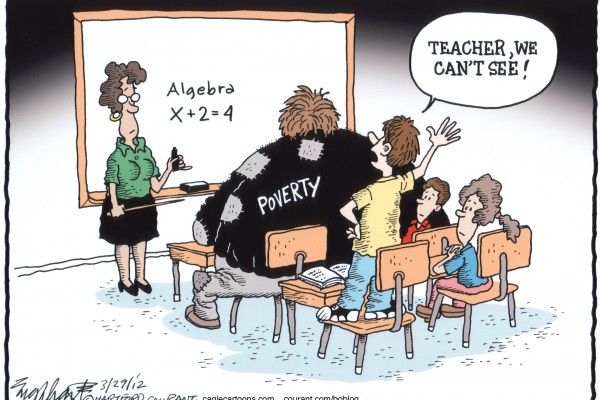
This is the third in the series about alternatives to the risky school choice experiment known as SB 68. This “under the radar” bill is the latest education gamble based on the idea that the stress of high stakes testing and extreme competition can overcome the educational legacies of the stress of poverty.
With spring comes familiar smells, sights, and emotions. Daffodils bloom, children ride bikes, play basketball, and explore. Many front and back yards in my neighborhood are now filled with neighbors conversing, relaxing and working on projects with each other. The once-beleaguered Central Park neighborhood currently feels like the Oklahoma City of my youth. But today there are two huge differences – both to the better.
Nowadays, Millennials walk, push their children’s strollers, and ride bikes and skateboards, and they don’t just drive everywhere. The new urbanism is based on the principle of “Placemaking,” and young citizens seek a sense of place within their community.
Vastly more important, all of this socializing is multi-cultural. We now have the ability to extend the opportunities that accompany great neighborhoods and schools to Oklahoma City residents of all races and nationalities.
It won’t be easy to create educational equality, but the United States of America has conquered far tougher challenges.
As the New York Times Magazine’s Paul Tough explains, school “reform” came from “liberal PTSD” from losing the War on Poverty. Even though we didn’t actually lose the war against inequity, a generation of reformers decided that fighting the legacies of poverty and Jim Crow was too difficult, so they adopted a supposedly cheap and easy shortcut.
To borrow from the great education historian, Larry Cuban, they “deputized” teachers as the agents for reversing the damage done by poverty. The result was scapegoating schools and educators who weren’t able to create a quick fix for intense concentrations of generational poverty and trauma from within the four walls of the classroom.
The defeatism known as school “reform” has been brazen in playing the “race card” but it has been shockingly oblivious to the conditions faced by our poorest children of color.
Moreover, it has been irresponsibly cavalier about the damage done by segregation. Since the U.S. Supreme Court has killed efforts to integrate schools based on race, reformers have ignored the damage done by sorting children by race and class. In fact, the market-driven reform movement has actually increased segregation.
While I must stress that reformers did not mean to do so, and they sincerely sought to help children, the unintended effect of competition-driven reform has been “neo-Plessyism.”
The answer to the “Big Sort,” or the self-segregation of contemporary America, is not the corporate reform policies of test, sort, reward, and punish. An overwhelming body of education research points to high-quality early education, full-service community schools, and socio-economic integration as the most effective school improvements.
The next post will address the potential for early education and full-service community schools to ‘Wrapping Our Arms Around All Children’ | Oklahoma Observer:


When Will "Progressives" Defend Public Education? - Living in Dialogue

When Will "Progressives" Defend Public Education? - Living in Dialogue:


When Will "Progressives" Defend Public Education?


 By Anthony Cody.

This morning I opened my email to find a message from “Bold Progressives,” who exist to rally support for Democratic Party candidates willing to fight for real change. The message was a survey from the “Progressive Change Campaign Committee,” asking if I thought Hillary Clinton should face a primary challenge. The second question is this:
Would you help press all Democratic candidates for president to run on bold progressive ideas?
I clicked “yes,” and the following option appeared:
Check this box to sign the pledge to urge candidates to campaign on bold progressive ideas.
We want the 2016 Democratic presidential nominee to campaign on big, bold, economic-populist ideas that tangibly improve the lives of millions of Americans.
We urge all candidates for president to campaign on big, bold ideas — such as establishing a national goal of debt-free college at all public colleges and universities, expanding Social Security benefits instead of cutting them, creating millions of clean-energy jobsreducing big money influence in politicsbreaking up the “too-big-to-fail” Wall Street banks that crashed our economy, and ensuring that working families share in the economic growth they help create.
Notice anything missing from this bold agenda?
There is no mention of K12 education. No mention of the issues confronting public schools, the attempts to privatize, voucherize and charterize our schools. No mention of school closures in African American and Latino neighborhoods. No mention of assaults on teacher unions and due process rights. No mention of the test obsession destroying the quality of education in our schools, leading students to walk out by the thousands.
Will we go through another election where Republicans rail at the public school monopoly, and Democrats say virtually nothing? Will the next administration continue the policies advanced by the Obama/Duncan administration, requiring the use of test scores in teacher evaluation, and promoting the expansion of charter schools and Teach for America? Will we continue to have an administration  that promotes an “accountability” system centered on high stakes tests, and promotes school closures and other disruptions to public schools?
Will groups like “Democrats for Education Reform” continue to funnel buckets of hedge fund cash to candidates willing to support charter schools and Teach For America?
Organizations such as the “Bold Progressives” — and potential candidates for office —  need to wake up to the movement of teachers, parents and students that is taking shape across the country. I, for one, am unwilling to support candidates who refuse to go on record in support of public schools.
In advance of Barack Obama’s 2012 re-election bid, the National Education Association made its endorsement more than a year ahead of the election. Teacher unions were “all in,” in their early public support of Obama, in spite of Race to the Top and other disastrous policies. I am not sure what we got for that support. Obama’s second term has brought more of the same. I hope our unions take a very different approach this time around, and demand that any candidate that receive our support reject high stakes testing and the use of tests in teacher evaluations, and truly support democratically controlled public schools.
The election race between Chuy Garcia and Rahm Emanuel is a bit of a preview of this, and could send a shock wave to Democrats who have gotten accustomed to ignoring their constituencies. Education is a huge issue in Chicago, and if Garcia wins on April 7, it will be because he had the full throated support of teachers — and the Chicago Teachers Union, out in the streets. Garcia has paid attention to education issues, and When Will "Progressives" Defend Public Education? - Living in Dialogue:


Test security now means checking social media for cheaters - Yahoo Finance

Test security now means checking social media for cheaters - Yahoo Finance:


Test security now means checking social media for cheaters

Standardized test security now means monitoring social media and some aren't OK with that


 For the organizations that give standardized tests, it's a common — and common-sense — security measure.

But to the growing number of critics of the exams, the practice of monitoring students' social media accounts against leaks of test questions is evidence that the tests and the companies that create them are too invasive.
The debate exploded last week in New Jersey when a school administrator emailed some colleagues about her district's experience. In the email, Watchung Hills Regional High School District Superintendent Elizabeth Jewett said the state Education Department contacted her district at a testing company's request at 10 p.m. one night last week with news of a possible test breach. A student apparently had posted a photo of a question from the Partnership for Assessment of Readiness for College and Careers test, or PARCC, on Twitter.
The state Education Department, she said in her note, was informed of the issue by Pearson, the London-based company that oversees the test developed by PARCC. It is being given in a dozen states this month.
"The DOE wanted us to issue discipline to the student," she wrote.
But, Jewett said in the March 10 email to leaders of other schools that was obtained by education blogger Bob Braun, it turned out that the student was merely complaining about a test question; there was no photo of the item itself. She said the student's tweet was removed.
Jewett released a statement confirming that the email was hers and asserting it was accurate, but she did not return an email seeking more details. The district also said she would not comment further.
PARCC, intended to measure how well students are learning what's required by the national Common Core curriculum standards, has many critics. Some students scattered across the country are protesting the exam and some parents organized through social media networks are boycotting it.
Their objections include that the exam itself is inappropriate, that it's part of a culture of testing that is taking away from real learning at school and that it's generally dehumanizing. They say the testing is more about consequences — as factors in determining which teachers could be fired; which schools may be closed for performing badly — than it is about learning. They also say they worry about the privacy of students' data.
At a legislative hearing on Thursday, the state Education Department said it would do a review to make sure students' privacy isn't compromised. Still, one lawmaker said he would introduce legislation to address the monitoring of social media.
"I just find this to be unacceptable," said Assemblyman Patrick Diegnan, the Democrat who is chairman of the Assembly's education committee.
In the testing world, there's nothing ominous about the monitoring. Pearson referred a reporter to a statement on its website that the company notifies education departments to any possible breaches.
"Copyright and test security are not new issues in testing. What's different is the social media aspect," said Luci Willits, deputy executive director of Smarter Balanced Assessment Consortium, which is giving Common Core-measuring exams in 18 states this spring. "You wouldn't approve of a student taking copies of the test and handing it out to friends or posting it on the locker."
Willits said her group uses student workers to do hashtag searches online to see if anyone is posting the test itself. Last year, when 4 million students took a trial run version of that test, she said about 75 breaches were discovered.
But the New Jersey incident gave opponents more not to like.
Save Our Schools NJ is calling for an investigation. "Posting a snarky comment about a stupid question hardly warrants the Department of Ed calling a superintendent," said Susan Cauldwell, an organizer of the parents group.
Randi Weingarten, national president of the American Federation for Teachers union, started a petition drive this week calling for Pearson to stop monitoring students' social media accounts.
In an interview, Weingarten compared the alleged snooping to tactics in the Soviet Union. "It's creepy for parents, creepy for students and creepy for teachers," she said.
New Jersey Assistant Education Commissioner Bari Erlichson said monitoring should be expected. "We should work to ensure that students and parents understand that statements that are posted publicly online are not private," she said.
Melissa Tomlinson, a middle school math specialist in New Jersey's Buena Township, said her objection was what the test company asked the state to follow up on.
"It was not a test question," she said. "It was not the big security breach that Pearson implied it to be."
Follow Mulvihill at http://www.twitter.com/geoffmulvihill


Cyber Schools Are Failing, So Why Are They Expanding? - NEA Today

Cyber Schools Are Failing, So Why Are They Expanding? - NEA Today:


Cyber Schools Are Failing, So Why Are They Expanding?


 One of the most frustrating characteristics of the education reform political climate is the correlation between a specific policy’s popularity and the absence of any reliable evidence supporting its effectiveness. Whether its overtesting, budget cuts, merit pay, or vouchers, it seems the weaker the case, the greater likelihood that idea proliferates.

Add cyber schools to the list. They’ve been around for a couple of decades, but it wasn’t until the past few years that more lawmakers increasingly looked to virtual schools as an attractive option to bricks-and-mortar public schools. Supporters argue that they provide students with a more flexible, individualized curriculum, are far less expensive than traditional schools, and can produce greater student achievement. The problem is that these are more assumptions than facts grounded in reliable data.
New study finds virtual schools continue to lag behind traditional public schools on grad rates, AYP, etc.

As a new study by the National Education Policy Center (NEPC) concludes, full-time virtual schools – many of them organized as charters – continue to lag behind traditional public schools on graduation rates, Adequate Yearly Progress (AYP), and state performance rankings.
“Despite the considerable enthusiasm for virtual education, there is little credible research to support virtual schools’ practices or to justify ongoing calls for ever greater expansion,” the report states.
The authors concede that the available data is limited, which may make their findings less than definitive – but “there is not a single positive sign from the empirical evidence presented here.”
Although they still represent a relatively small percentage of school choice options, cyber schools have grown steadily over the past decade. There are currently 400 full-time virtual schools operating in thirty states with a total student enrollment at around 260,000. Connections Academy and K12 Inc, two for-profit companies, account for 57 percent of these enrollments.
Estimated Enrollment Trends in Full-Time Virtual Schools. (National Education Policy Center)
This impressive growth, however, should not mask the fact that, whether its the lack of accountability structures, the difficulty in recruiting and training high quality teachers, concerns over curriculum, or the underrepresentation of minority students, cyber schools are facing major challenges.
Here’s what the available data tell us:
  • In 2013-14, of the 285 virtual schools that were rated by state performance measures, only 41 percent were deemed “academically acceptable.”
  • In 2011-12, virtual charter schools scored 22 percentage points lower on AYP than bricks-and-mortar public schools.
  • The on-time graduation rate for virtual school students in 2013-14 was barely half the national average.
  • The average student-to-teacher ratio is twice that of the nation’s public schools.
  •  Little progress has been made toward the development of requirements for the preparation, certification, and licensure of online teachers.
  • Virtual schools serve significantly fewer minority students, fewer lower income students, and fewer students with disabilities than traditional public schools.
Cyber schools growing steadily, but “not a single positive sign from the empirical evidence” in new study

According to the NEPC report, state laws governing the funding and accountability of cyber schools tend to be vaguely-worded, incomplete and are often not enforced when data is available that suggests a problem exists. The report points to examples in Michigan, Pennsylvania and Tennessee where aggressive lobbying by for-profit Cyber Schools Are Failing, So Why Are They Expanding? - NEA Today:


Big Education Ape: Corruption at Pennsylvania’s largest cyber-charter school as founder charged with funneling $8 m... http://bit.ly/1cdVK5d

Big Education Ape: Virtual Schools Remain Unproven | National Education Policy Center http://bit.ly/1BMvlss

Big Education Ape: Soon-to-open Flex Academy, with ties to for-profit K12, excites some, raises eyebrows in others ... http://bit.ly/1FJWWNH

Big Education Ape: Doubling Down On Risky Experiments | Oklahoma Observer http://bit.ly/1BMIeTs

Big Education Ape: Full-time cyber schools expanding despite no evidence of their effectiveness, new report finds #... http://bit.ly/1FJX8we

The teaching crisis that unions and school districts won't address - LA Times

The teaching crisis that unions and school districts won't address - LA Times:
The teaching crisis that unions and school districts won't address

A teaching career


High-stakes testing hasn't helped matters. Polling shows that 3 out of 4 teachers agree that continuous test-based monitoring of students takes too much classroom time away from actual teaching. Nearly 9 in 10 respondents feel that linking teacher evaluations to students' test scores is “unfair.”

 Los Angeles teachers and school district administrators are doing battle once again. Contract talks broke down last month after 18 rounds of negotiations on raises, healthcare costs, class size, employee evaluation and charter schools. Mediation begins next week. Strike language and recriminations grow louder.

Given the potential long-term impact of any settlement, it is a shame that a major stakeholder can't be at the negotiating table. Namely, college graduates considering whether to pursue a teaching career.

Rocio Garcia, 24, is one such person. She struggled in a Southeast Los Angeles high school known for its dropout rate and overcrowding, but surrounded herself with educators who recognized her academic potential. Guided by caring mentors, Garcia graduated with high honors, was named a finalist for the prestigious Gates Millennium scholarship, and was accepted to a top liberal arts college in Connecticut.

Shaped by these experiences, Garcia felt called to teaching. She made plans to return to Los Angeles after graduation and work in the city's most difficult schools. But after several classroom internship experiences, she is troubled.

“I feel a tug-of-war,” she said recently. “My background and education prepared me to be the kind of teacher who listens to students, hears their ideas and helps them become critical thinkers. But I keep meeting teachers who feel overwhelmed, have to follow a script and do so much testing. I don't even know if they are really teaching.”

Recent data suggest that detached teachers may be shortchanging our students. Lamenting “America's systemic shortage of inspiring teachers,” a 2015 Gallup poll shows that only 31% of K-12 public school teachers are engaged in their work.

Survey responses point toward a contradiction that may be keeping our best college students from considering the teaching profession. Historically, teachers are happier than other professionals. Teaching ranks high on measures that gauge an employee's sense of purpose and social impact. Like Garcia, many respondents view teaching as their calling. But this powerful incentive to join a field dedicated to public service is increasingly offset by other concerns.

Asked, for example, whether their “opinions seem to count” in the workplace, teachers ranked dead last among surveyed professions. Asked whether supervisors create a workplace that is “open and trusting,” teachers gave their field similarly low marks.

High-stakes testing hasn't helped matters. Polling shows that 3 out of 4 teachers agree that continuous test-based monitoring of students takes too much classroom time away from actual teaching. Nearly 9 in 10 respondents feel that linking teacher evaluations to students' test scores is “unfair.”

Career-minded college students are not oblivious to these developments. Since 2008, enrollment in teacher education programs in California is down 53%, and other bellwether states report a similar trend. Nationally, U.S. Department of Education statistics that include both traditional and alternative preparatory programs show that there were nearly 90,000 fewer teachers in training in 2012 than in 2008. Teach for America, which once celebrated 15 consecutive years of expansion, peaked in 2013. It is witnessing as much as a 25% drop in applications this year. Meanwhile, critics continually point toward a profession that draws disproportionately from the bottom third of all college graduates and fails to attract enough minorities.

To reverse these trends we need competitive salaries, benefits and better working conditions for teachers. But the profession is facing an identity crisis that goes much deeper. Neither union officials nor district administrators appear to be addressing this problem.

Our most promising educators crave work that honors their creativity and intellect. They are suspicious of easy answers. They need to hear more than the cliche that a great teacher can make a difference in a student's life. They want to know whether this profession will The teaching crisis that unions and school districts won't address - LA Times:

What this spring’s Common Core tests promised, and what they will actually deliver - The Hechinger Report

What this spring’s Common Core tests promised, and what they will actually deliver - The Hechinger Report:

What this spring’s Common Core tests promised, and what they will actually deliver

Four years and over $360 million later, new Common Core tests are here. What’s new and what isn’t

Muslim Alkurdi, 18, of Albuquerque High School, joins hundreds of classmates in Albuquerque, N.M, Monday, March 2, 2015, as students staged a walkout to protest a new standardized test they say isn't an accurate measurement of their education. Students frustrated over the new exam walked out of schools across the state Monday in protest as the new exam was being given. The backlash came as millions of U.S. students start taking more rigorous exams aligned with Common Core standards.
Muslim Alkurdi, 18, of Albuquerque High School, joins hundreds of classmates in Albuquerque, N.M, Monday, March 2, 2015, as students staged a walkout to protest a new standardized test they say isn’t an accurate measurement of their education. Students frustrated over the new exam walked out of schools across the state Monday in protest as the new exam was being given. The backlash came as millions of U.S. students start taking more rigorous exams aligned with Common Core standards. AP Photo/Russell Contreras


New Common Core tests are debuting on time this spring, but after years of bruising attacks from both left and right, the groups tapped by the federal government to build them are struggling to meet all the hype.

Back in 2010, the plans for the new exams were introduced with much fanfare and many promises: The exams would end the era of dumbed-down multiple-choice tests and the weeks of mindless prepping that precede them. They would force teachers to introduce more critical thinking and in-depth study. They would bring coherency to a mishmash of state tests and for the first time allow states to compare local students to their peers elsewhere in the U.S. And with their online format, the new tests would make testing more efficient, more accurate and more relevant to the digital age.
But a lot has changed since U.S. Secretary of Education Arne Duncan, heralding the arrival of “Assessments 2.0,” promised teachers the tests that many of them had “longed for.”

“One-shot, year-end bubble tests administered on a single day, too often lead to a dummying down of curriculum,” Duncan said of the old state tests. The new exams would test “critical thinking skills and complex student learning.”

The federal government invested $360 million on a grant competition to spur development of the new tests. Two coalitions of states — calling themselves the Partnership for Assessment of Readiness for College and Careers (PARCC) and the Smarter Balanced Assessment Consortium — won grants after agreeing to create tests aligned to the Common Core, a set of grade-level expectations in math and English adopted by over 40 states. States hurried to sign up after the U.S. Department of Education made college- and career-ready exams a condition for some federal funding.

Since then political battles over the Common Core have dampened enthusiasm for the tests. Some have cried foul over how the federal government incentivized the program, calling it federal overreach. Others have complained about how long these tests will take — Smarter Balanced will take eight and a half hours, while some PARCC tests will take over ten hours. Yet more critics have panned the tests because they will be used in some states to evaluate teachers.

This spring, of the original 26 states that signed up for PARCC, just 11 plus Washington, D.C. are giving the test. Of the original 31 signed up for Smarter Balanced, only 18 are still on board. (In the early years, some states were members of both coalitions.) Several of the states What this spring’s Common Core tests promised, and what they will actually deliver - The Hechinger Report:


Pearson Is Watching: What Test Security Means For Student Privacy - Forbes

Pearson Is Watching: What Test Security Means For Student Privacy - Forbes:

Pearson Is Watching: What Test Security Means For Student Privacy


Pssst…I know the answer to the first question on the third-grade PARCC math test. My inside source couldn’t wait to spill those beans as soon as he jumped into his mother’s mini-van in the pick-up line outside his New Jersey elementary school earlier this month.


Juicy inside information like that is churning the social-media waters and leading to a hearing before a New Jersey legislative committee as Pearson PLC, the designer and administrator of the new standardized tests, is fighting off charges that it’s “spying” on students who may be sharing test information online.  The London-based company acknowledges that it monitors Twitter and Facebook feeds in an attempt to discover security breaches by students taking the exams created for the Partnership for Assessment of Readiness for College and Careers consortium. In fact, Pearson says it is contractually required by the 12 member states and the District of Columbia to monitor social media to prevent anyone from compromising test questions.


The monitors may have noticed this tweet from Randi Weingarten, president of the American Federation of Teachers union. “OMG–Breaking: Pearson, spying on social media of NJ students taking PARCC tests.” And using the hashtag #pearsoniswatching, talk show host Montel Williams tweeted that it was the “creepiest story I’ve read in a month.”


Steve Addicott, vice president of Caveon Test Security, which has the contract to monitor the assessments, scoffs at the suggestion that the company is spying on teenagers. “By definition they want it public…it’s Twitter!” he tells FORBES.


Even a third-grader’s brag to Mom about getting a question right is a breach in test security, according to Pearson, which created the math and English tests for third through eleventh graders across the country to measure the results of the new Common Core curriculum standards.


“A breach includes any time someone shares information about a test outside of the classroom–from casual conversations to posts on social media,” Pearson says in a statement.
The New Jersey Department of Education backs up that sentiment. “These are public postings,” Michael Yaple, the director of public information, says in a statement. “When students circulate test questions online, it is akin to a handing out test questions on the steps of the school–except in this case it can be seen globally.”


When hasn’t there been a time when students have been warned to keep quiet about test questions for fear of forewarning the next class? But the evolution of online, high-stakes testing throughout school districts has moved the issue onto a higher level. New Jersey alone will pay Pearson $108 million over four years for testing services.


Says Yaple: “Students may not realize that each test item involves a substantial commitment of taxpayer expense and a great deal of time and effort of dozens of educators in New Jersey and across the consortium who review and design each test question–which is proprietary, copyrighted material.”Pearson Is Watching: What Test Security Means For Student Privacy - Forbes: