Latest News and Comment from Education

Tuesday, March 17, 2015

12 Things Teachers Think But Can't Always Say to Parents | Matthew Dicks

12 Things Teachers Think But Can't Always Say to Parents | Matthew Dicks:

12 Things Teachers Think But Can't Always Say to Parents

Image result for Teachers Parents


 1. I love your child just a notch below my own children.

Truly. And oddly, that love kicks in almost immediately, just like it did with my own kids.
2. I will miss your child for the rest of my life, even if your child was incredibly difficult and made my days long and exhausting.
3. When it comes to my job performance, you and your child are my primary concern.
If you're happy with my job performance, then my administrators will be satisfied as well. If they are not, something is seriously wrong with my administrators.
4. You are so very wrong if you view our relationship as adversarial in any way.
I only want to be your partner and friend.
5. When I ask you to call me by my first name, it's because I want to have the kind of relationship with you that requires first names.
There is no need for artificial barriers. We are both adults who love your child. Why would we not be on a first name basis?
6. Some of my closest friends (and the godparents of both of my children) are the parents of former students.
These relationships developed because we treated each other as equal partners in their child's education. If you and I are doing our jobs well, we should be friendly, if not actual friends, by the end of the school year.
7. There is nothing wrong with questioning my decisions.
I only ask that you don't question my intent or effort. Know that I am always trying to do my best on behalf of your child, and that despite my best intentions, I will undoubtedly make mistakes.
8. If I have done something that disappoints or upsets you, I hope that you will always come to me first.
You can't imagine how it much hurts to hear about your dissatisfaction secondhand, either from an administrator or (even worse) via the parent, teacher, or student rumor mill.
9. The single greatest lesson that I have learned in my 17 years of teaching is the importance of always following through with what I say every single time without exception.
Never make a threat or a promise that you cannot keep. I have applied this rule to the parenting of my children, too, and in both school and home, it has served me well. This is the one bit of parenting advice I pass onto you.
10. Please know that both legally and ethically, there are times when I want to say something or agree with you but cannot for a multitude of reasons, usually pertaining to the privacy of another student.
It can be frustrating for me, as I'm sure it is for you, but it's also my professional responsibility.
11. A lower-than-desired grade on a report card is only my honest assessment of your child's performance and not an indictment of your 12 Things Teachers Think But Can't Always Say to Parents | Matthew Dicks:

Obama says he's prepared to fight GOP over education - Yahoo News

Obama says he's prepared to fight GOP over education - Yahoo News:

Obama says he's prepared to fight GOP over education

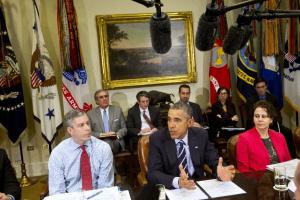
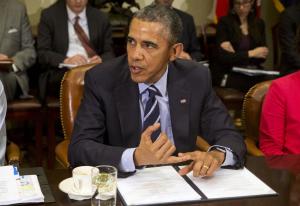
WASHINGTON (AP) — Pointing to increased high school graduation rates, President Barack Obama said Monday he's prepared to fight with Republicans for school funding and his education priorities rather than risk going backward.
The president said he hopes that Republican lawmakers focus on educating every child and not shifting money away from needy districts. He's also calling for a focus on low-performing schools, annual assessments and investments in special education and English-language learners.
Obama said if the Republican budget doesn't reflect those priorities, they will have "a major debate."
"We are making too much progress now in terms of graduation rates, improved reading scores, improved math scores, increasing standards, increasing access to the resources the kids need, for us to be going backwards now. And this is something worth fighting for," Obama said at a White House meeting with urban school leaders.
The Education Department said Monday that high school graduation rates for all racial groups have increased, according to data from the 2012-2013 school year. But black, Hispanic, and American Indian students still significantly lag behind their white and Asian/Pacific Islander counterparts.
Previously, the department said the graduation rate had reached a high of 81.4 percent. That means 1 in 5 students overall leaves high school without a diploma.
Among black students, the rate reported was 70.7 percent — up from 69 percent a year earlier.
Hispanic students had a rate of 75.2 percent, which was up from 73 percent a year earlier.
American Indian students had a rate of 69.7 percent — up from 67 percent.
Asian/Pacific Islander students had a rate of 88.7 percent, which was up from 88 percent.
White students had a rate of 86.6 percent, which was up from 86 percent.
The No Child Left Behind law, signed in 2002, has been credited with shining a light on the performance of poor, minority, disabled and non-English speaking students, but also has led to complaints from both Republicans and Democrats that the requirements were unworkable.
Lawmakers are working on a bipartisan effort to update the No Child Left Behind Act. Congress for years has been stymied on the best way to renew the much maligned law, and last month House Republican leaders abruptly canceled a vote on a GOP reform bill after conservative opposition made passage uncertain.
Lawmakers have grappled with such issues as whether federal law should continue to require annual reading and math testing in grades three to eight and again in high school. Much of the conflict focuses on how much of a federal role there should be in identifying and fixing failing schools.
___
AP Education Writer Kimberly Hefling contributed to this report.
Follow Nedra Pickler on Twitter at https://twitter.com/nedrapickler
Obama says he's prepared to fight GOP over education - Yahoo News:


'Sit and stare'? Parent protests District 97 standardized test policy - Oak Leaves

'Sit and stare'? Parent protests District 97 standardized test policy - Oak Leaves:

'Sit and stare'? Parent protests District 97 standardized test policy


Last year, when Karen Yarbrough lived in Chicago, she wrote a letter to her son's school principal saying he would not participate in standardized testing.

When the testing period arrived, her son and other students whose parents opted them out of testing were taken to another room where they could engage in educational activities, such as reading.

In early February, Yarbrough (no relation to the Cook County Recorder of Deeds of the same name) sent a similar letter to the principal at Oak Park's Henry Wadsworth Longfellow Elementary School. She didn't want her son to participate in the new federally required Partnership for the Assessment of Readiness for College and Career test the weeks of March 9 and 16.

After consulting with Oak Park Elementary School District 97 administrators, the principal said Yarbrough's son would need to sit in the testing room until the first child finishes their test. Then, he would be allowed to engage in non-disruptive activities, such as reading and drawing.

 That approach doesn't satisfy Yarbrough, who said children shouldn't be forced to "sit and stare" until someone else has completed the test.

"Put them in the library. I'm not asking for that much, you know," she said.

Of the 3,729 District 97 students expected to take the test, her son was one of about 70 whose parents elected to not take the PARCC test, which is supposed to align with the Common Core standards. District 97 students are among one million statewide taking the PARCC test.

District 97 officials report students test for 60 to 80 minutes a day and average about 30 minutes per test.

"As a result, the students who are not testing have had an average of 30 to 50 minutes of time to engage in non-disruptive activities," said Chris Jasculca, District 97's senior 'Sit and stare'? Parent protests District 97 standardized test policy - Oak Leaves:

A Month of Opting Out of Standardized Tests: Week 1 | Jason Endacott

A Month of Opting Out of Standardized Tests: Week 1 | Jason Endacott:

A Month of Opting Out of Standardized Tests: Week 1

Parents Can Opt Out - United Opt Out National

Click Here to go to United Opt Out National: 


Click Here to go to the WebsiteUnited Opt Out Team
Home
Click Here to go to the Website FairTest
 I get a lot of questions about education from friends, family, friends of family, family of friends and random people on the interwebs.  One of the most difficult questions I get is "Why did you choose to opt your kids out of standardized tests?".  This question isn't difficult because I don't know the answer.  It's difficult because they are looking for the short version of a very complex decision.  Last year I wrote about our decision to opt out of the state test in Arkansas.  This year is a bit different.  Partly because our reasons have evolved and partly because standardized testing will take an entire MONTH in 2015.  So I decided that I would tackle one reason per day during the month-long testing window of March 9 - April 10.  Including spring break, that's 20 school days of testing.  I'll post each reason separately and use this post as the master list.  So here you have it, the Endacott Family Top 20 Reasons we are opting out of PARCC in 2015:

Reason 1:  We trust teachers
Standardized tests have become the most important measure of educational quality in recent years.  As some of my later posts will explain, this is ridiculous.  You might have heard of Value Added Measurement (VAM)which is how test scores are used to determine teacher quality.  VAM requires a complicated statistical model that can be horribly erroneous when calculated by those without the right expertise.  Not only is VAM ripe for error, but the American Statistical Association has highlighted research that shows teachers account for only 1 percent-14 percent of the variance in student test scores. Very recent research has also demonstrated that there is no association between VAM test score data and other composite measures of effective teaching.  In other words, VAM is a problematic way to measure teacher quality that is also inconsistent with what we already know about good teaching.  Talk about throwing the baby out with the bathwater.
According to the most recent Phi Delta Kappa survey on public education, 72 percent of Americans have trust and confidence in their kids' teachers.  You can count us among their numbers.  Nobody knows what our children are capable of more than the teachers that see them every day.  Fifty-eight percent of Americans also oppose the use of standardized tests to evaluate teachers.  We are definitely among them as well, and as long as test scores are being used in this fashion, I hope they join us in opting out.
Reason 2: False Premises
If you listen to politicians and pundits (bad idea) then you'd think that poor standardized test scores are a danger to our national security and that boosting test scores can be the cure for everything from pervasive poverty to sustainable economic growth.  You'll even hear claims that closing the achievement gap will add trillions of dollars to our GDP.  While the U.S. census has shown that each additional year of schooling will lead to greater overall career earnings, there is no evidence that higher test scores will have that same relationship.  Economists make predictions with lots of assumptions, but there is one serious flaw to the argument that higher test scores equal greater economic success.
That flaw is that test scores are a symptom of poverty and economic success, not a cause.  There is a clear and undeniable link between socioeconomic status and test scores, but it is socioeconomic status that affects test scores, not the other way around.  Simply put, raising test scores will not reduce poverty -- reducing poverty will raise test scores.  We opt our children out of the test because we refuse to help A Month of Opting Out of Standardized Tests: Week 1 | Jason Endacott:

EPISD superintendent meets with Obama about No Child Left Behind | News - Home

EPISD superintendent meets with Obama about No Child Left Behind | News - Home:


EPISD superintendent meets with Obama about No Child Left Behind

The goal is to rewrite "No Child Left Behind" by April.


EL PASO, Texas -
The goal is to rewrite "no Child Left behind," by April. That's the 2002 law that mandates annual testing to monitor students' progress. As the Republican-led congress prepares to do this, President Obama is preparing to fight it, but first he wants to seek input from El Paso Independent School District Superintendent Juan Cabrera.
"We're example of what happens when testing is the only measure," Cabrera told ABC-7. "Not only did it partially cause the scandal. But it also doesn't make learning fun for kids and it doesn't make it fun for teachers."


While Cabrera said the hour long meeting between the Obama administration, eight superintendents and three board members, was intended to gauge what they felt worked under No Child Left Behind, Cabrera made clear that getting rid of the overwhelming amount of testing has got to be the goal as Congress rewrites the law.
"We want accountability," Cabrera said. "I'm not saying we don't need accountability, I understand that, Republicans would never let us have that. And that's fine I believe in that. We just need to find measures that aren't so taxing on people and don't take up so much of the year for our kids and teachers."
New proposed measures are murky at this point, although leaders of the Senate education committee say there is significant progress in the negotiations.
But the big worry is funding could be cut from the multi-billion dollar program because congress will keep the budget at sequester level funding.
"We would actually be spending less on pre-K through-12th in America's schools then we were back in 2000, and that's adjusted for inflation," Obama said at the meeting. 
"No Child Left Behind did a lot of things right," Cabrera said. "But I think we got into over-testing. And I think he [Obama] just wanted reinforcement that we supported him if he was going to try to veto that bill that would come from Congress."
Cabrera said he most likely will be called out to share his concerns before Congress in the coming EPISD superintendent meets with Obama about No Child Left Behind | News - Home:


WASHINGTON: Obama, California school officials talk education goals | Education | McClatchy DC

WASHINGTON: Obama, California school officials talk education goals | Education | McClatchy DC:

Obama, California school officials talk education goals


  — President Barack Obama on Monday found an ally in Fresno Unified School District Superintendent Michael Hanson.

During an hour-long meeting, Obama pitched his education priorities to Hanson and other superintendents. For the school leaders and administration officials now facing some high-stakes legislative struggles, the White House session came at a key time.
“We were reinforcing to him the importance of his continued support,” Hanson said, adding that Obama’s “articulated vision for what goes on in public schools gives us the room to do this very difficult work.”
Hanson is a member of the executive committee of the Council of Great City Schools, which represents 67 districts serving cities that include Sacramento, San Francisco and Los Angeles.
The late morning meeting in the White House’s Roosevelt Room came as part of the Council’s annual legislative conference, a four-day program that features speeches, receptions and briefings. Politically, the timing was apt, as the Republican-controlled Congress and the Democratic White House are now maneuvering for position across several fronts.
“This is a pretty polarized city,” Hanson said, standing on the driveway outside the West Wing of the White House. “You can feel it when you come here.”
This week, the polarization will intensify when House and Senate budget committees unveil budget resolutions that spell out Republican priorities on everything from education to defense. The House committee members include Rep. Tom McClintock, R-Calif., a staunch conservative whose district stretches from Fresno County in the south to Amador County in the north.
Separately, House GOP leaders have been struggling to pass a bill reauthorizing the Elementary and Secondary Education Act. The bill, dubbed the No Child Left Behind Act during the George W. Bush administration, has roiled conservatives critical of the federal government’s role in education, but it has also worried educators who fear funds will be diverted away from the neediest.
After failing to rally a majority on Feb. 27, Republican leaders pulled the bill from the House floor and have not yet rescheduled a vote. The Obama administration has warned that the president would veto the bill, now renamed the Student Success Act.
“We are making too much progress now in terms of graduation rates, improved reading scores, improved math scores, increasing standards, increasing access to the resources the kids need for us to be going backwards now,” Obama said following the meeting with superintendents.
Nationwide, high school graduation rates for African American, Hispanic and Native American students have increased during the past two years, Education Department records released Monday show. The nation’s overall high school graduation rate reached a record 81.4 percent during the 2012-2013 school year.
The Fresno district’s graduation rate of about 76 percent during that school year was somewhat lower than the national average. The other superintendents who met with Obama on Monday, serving cities like Kansas City, San Francisco and Washington, D.C., struggle with similar challenges.
“The students they work with are largely poor, and they’re largely people of color,” Education Secretary Arne Duncan said.
One specific sticking point between congressional Republicans and the White House involves the distribution of Title I funds, designed to help districts serve low-income students. The FresnoWASHINGTON: Obama, California school officials talk education goals | Education | McClatchy DC:

Read more here: http://www.mcclatchydc.com/2015/03/16/259904/obama-california-school-officials.html#storylink=cpy

California Education Board Chooses Common Core Over Academic Performance Index : Columns : ISchoolGuide

California Education Board Chooses Common Core Over Academic Performance Index : Columns : ISchoolGuide:


California Education Board Chooses Common Core Over Academic Performance Index

The California Board of Education has voted to suspend its school accountability system to pave way for the new Common Core standards. The board’s move is meant to give students and teachers ample time to adjust to the new standardized tests, which are aligned with the Common Core.

California's Education Board voted Wednesday at a meeting in Sacramento to suspend its Academic Performance Index for school year 2014-15. The decision, Christine Armario of The Huffington Post wrote, is meant to give students and teachers more time to adjust to the new standardized tests that are aligned with the Common Core.
The API used student test scores to rate schools and identify which of them require improvement. However, Board President Michael Kirst said it is important to ensure that student growth is also considered, and not just baseline performance, on the new tests.
The Common Core education standards are benchmarks developed by a group of states nationwide to help students become prepared for college and careers. The new standards have become controversial in recent years, criticized largely by conservatives who see them as the federal government's way to control local schools. To encourage states to adopt the federal academic standards, the U.S Education Department offered incentives like the Race to the Top.
In California, the new standards have been widely embraced by parents, unions, and district leaders. Kirst said that while the new test scores are not used on the state index, the results would still be reported at the state, district, and school level.
"They'll be held accountable to the public," said Kirst.
Many districts, such as the Los Angeles Unified, requested to exclude this year's results in the accountability process. They argued that students lack time to adjust to the new testing, and questioned the devices' reliability.
"We need that next year to look at this issue of growth," said LAUSD External Affairs Chief Edgar Zarzueta.
The Smarter Balanced tests are taken using a tablet or computer. The LAUSD has encountered several California Education Board Chooses Common Core Over Academic Performance Index : Columns : ISchoolGuide:

Hop: A Film About Reform And My Kid - Living in Dialogue

Hop: A Film About Reform And My Kid - Living in Dialogue:


Hop: A Film About Reform And My Kid


A few years ago I freaked out. Rigoberto Ruelas, an LAUSD teacher, jumped off a bridge on the Los Angeles Crest Highway after the LA Times published his unsatisfactory teacher rating. A teacher myself, his death cut to the quick, and I found myself protesting in front of the Times, running with Occupiers, learning to live stream and meeting a lot of other pissed off educators, the UOO folks first, then the NPE and Seattle BATS. I live streamed Diane Ravitch, Karen Lewis and countless other activists and bloggers, accumulating hours of footage I was foolish enough to try to cut together into a film. I even flew to Boston and interviewed Noam Chomsky, who had a big bag of baseballs in his MIT office he was in the process of autographing. When I finished the film, last summer, I freaked out again. How could I show anybody a movie about my son? Well, I’m finished freaking out. Here it is: https://vimeo.com/121553667  Hop: A Film About Reform And My Kid - Living in Dialogue:

How Sloppy Education Reporting Is Slowly Killing Our Schools | Alternet

How Sloppy Education Reporting Is Slowly Killing Our Schools | Alternet:


How Sloppy Education Reporting Is Slowly Killing Our Schools

Most of the news media have no idea how schools run, but they write about them like they do.


 Be afraid, be very afraid, any time you see a reporter in the business media turn his or her attention to education and public schools. What will likely follow is a string of truisms used to prop up a specious argument, steeped in biased notions that were themselves picked up from ill-informed conversations promoted by other clueless business news outlets.

All of this chatter would be something best to ignore were it not for the fact that reporters and pundits from these outlets are often raised to prominence, labeled as "experts," and lionized by political leaders and policy makers, while real authorities on education are overlooked or completely drowned out in the babble.
Exhibit A in the case against bad reporting on education is in the Feb. 14, 2015 issue of the Economist. An article titled "Pro Choice" highlights efforts to create new school voucher programs in many states and allow parents to take money meant for public education and use those tax payer dollars to enroll their children in schools of their choice, including private schools and charter schools.
This topic has been the subject of countless research studies and is a matter of ongoing examination by numerous authorities. Yet the writer barely skims the research and consults with a bare minimum of real experts on education policy.
Had the Economist made the effort to consult some real research and talk to bona fide experts, what they would have learned is there are some very big problems posed by school vouchers, and there are much better alternatives to improving schools.
It's important to call out this article and others like it, not only because it's an example of feckless journalism, but also because it exemplifies an all too common pattern when low-information reporters tackle stories about education.
When Education 'Experts' Aren't
At liberal-leaning watchdog group Media Matters for America,Hilary Toneclosely follows how journalists in major media outlets report on education. She unearths some startling revelations. One such discovery revealed that whenever cable news outlets such as CNN, Fox News, and MSNBC feature programming devoted to education, those segments hardly ever feature real educators.
Over all cable news channels, only 9 percent of guests in education segments were educators. This would be like CNBC reporting on the stock market and hardly ever consulting with experts on finance and investing or the CEOs of publically traded companies.

Test-fraud detectives drawing scrutiny | www.ajc.com

Test-fraud detectives drawing scrutiny | www.ajc.com:


Test-fraud detectives drawing scrutiny


 When Caveon Test Security began its statistical detective work in Atlanta, it promised swift, enlightening results.

“I’m good. I’m fast,” Caveon’s then-President John Fremer told the business and civic leaders who hired the private, for-profit consulting firm in March 2010 to look into cheating in Atlanta schools.
Caveon delivered quickly, but it met spectacular failure. Gov. Sonny Perdue rejected the firm’s findings last year and publicly accused it of seeking to “confine and constrain the damage” from rampant cheating. This July, state investigators who conducted a deep, 10-month examination of Atlanta schools said Caveon vastly underrepresented the extent of test-tampering.
Now, Caveon is defending its work in Washington, D.C., too. Authorities are re-investigating the district’s 2009 test scores despite a Caveon examination of eight schools that proclaimed no proof of cheating.
For years, the small Utah firm has been the go-to contractor for test-fraud detection. But Caveon’s work in Atlanta and D.C. suggests the company is gaining a reputation more for clearing schools than catching cheaters, an Atlanta Journal-Constitution investigation has found.
Caveon officials reject the suggestion they would minimize cheating to please clients.
“Our results are very, very solid,” Fremer said recently.
Caveon’s secrecy about its methods has elicited complaints, too.
The firm has staunchly resisted disclosing the inner workings of its test-data analyses, making it impossible for others in the field to validate or critique the results. Because Caveon’s approach is proprietary, public agencies that hire it can’t fully grasp how it reaches conclusions about who is or isn’t cheating.
The questions raised by Caveon’s work underscore the pitfalls that await school districts and state education departments that seek to combat fraud in their standardized test scores.
Most school systems and states perform few checks on the scores, despite a rash of cheating scandals nationwide and the rising importance of test scores as a measure of student and teacher performance.
Agencies that want to do validity reviews find that standard approaches are scarce, the work is highly technical and the federal government, which requires the tests, Test-fraud detectives drawing scrutiny | www.ajc.com:

Search for PARCC leaks raises new questions about test security measures | NJ.com

Search for PARCC leaks raises new questions about test security measures | NJ.com:


Search for PARCC leaks raises new questions about test security measures


When New Jersey switched to computerized standardized tests this school year it eliminated concerns about the security of test booklets and whether an erasure mark signified an honest mistake or an attempt to cheat.
But with new tests come new test security issues -- and new controversies.
Because New Jersey adopted the Partnership for Assessment of Readiness for College and Careers (PARCC) exams, its students are answering some of the same test questions as some students in 10 other states, and even students in the same state are taking the tests at a different time.
With a national testing window that began in mid-February ending in early April, PARCC questions could hit the internet weeks before a student's test, jeopardizing the integrity of the exam, said Gregory Cizek, a professor of educational measurement and evaluation at the University of North Carolina.
In response, New Jersey has continued many of the same security measures it implemented in the past, including an online monitoring program designed to spot any test questions or references to specific reading passages posted online, according to the state Department of Education.
Though not new or uncommon, according to testing experts, the online patrolling program has sparked more debate over the already polarizing PARCC tests.
The superintendent of Watchung Hills Regional High School called the online monitoring "disturbing" in a letter to other superintendents that was leaked online and went viral on social media. Some likened the program to spying and the national Parent Coalition for Student Privacy said it's a cover-up to protect a "a very, very shoddy product."
"We will never know how bad (PARCC) is unless students talk about it and teachers talk about it," said Leonie Haimson, the coalition's executive director.
Pearson, the international testing company that provides the online platform for PARCC, said in a statement it stands by the security program run by Caveon Test Security, a subcontractor based in Utah. PARCC and the New Jersey Department of Education defended the measure.
"When students circulate test questions online, it's akin to handing out test questions on the steps of the school -- except in this case it can be seen globally," Department of Education spokesman Michael Yaple said.

Protecting the test

Founded by testing industry veterans in 2003, Caveon has led cheating investigations in Atlanta and the District of Columbia and provided test security for graduate school admissions exams and licensure and certification assessments, Vice President Steve Addicott said.
The company offers clients five major services: consulting, data forensics, security investigations, test development and web patrol.
"We are a company that believes in quality testing and the importance of trustworthy test results," Addicott said.
Until recently, most of Caveon's web patrol clients were companies trying to protect Search for PARCC leaks raises new questions about test security measures | NJ.com:

Doubling Down On Risky Experiments | Oklahoma Observer

Doubling Down On Risky Experiments | Oklahoma Observer:

DOUBLING DOWN ON RISKY EXPERIMENTS


 BY JOHN THOMPSON

Oklahoma families and educators recently learned of Senate Bill 68 – the so-called “game changer” – which would empower the city of Oklahoma City to compete with the Oklahoma City Public Schools. This “under the radar” legislation would allow non-educators to authorize charter schools.
As OKCPS School Board member Phil Horning says, that would be like designating the school system to run fire stations.
SB 68 is an extreme version of choice that grew out of the claim by market-driven reformers that local school boards, teachers’ unions, and university education departments – i.e. the “status quo” – must be destroyed so that “disruptive innovation” can transform schools. In Oklahoma City, it could eventually become a mortal threat to the school system, as well as its teachers union.
If the majority of the City Council gains the power to compete with the OKCPS, SB 68 would allow them to set their own rules in doing so. Oklahoma City could then join the growing ranks of communities where traditional public schools are extinct or nearly all replaced by charters, including “virtual learning” online charters.
This extreme version of school choice is an example of how the contemporary school “reform” movement is in its death throes, and this desperation has led to a double-down on even more risky experiments. This accountability-driven reform movement may have produced the single biggest social policy debacle since Prohibition. Corporate reform failed by ignoring Harry Truman’s maxim, “Any jackass can kick down a barn. It takes a carpenter to build one.”
Perhaps the closest thing to a competition-driven “success” is New Orleans, a district that is now 90% charters. Secretary of Education Arne Duncan claimed that Hurricane Katrina was the best thing that had happened to New Orleans schools.
In fact, this hugely expensive gamble has produced modest, possibly fleeting gains, while doing the seemingly impossible for that city – increasing racial and economic segregation even more.
And even if the New Orleans record was not terribly exaggerated by true believers in choice, it has no relevance to Oklahoma City. If reformers get their wish, and a man-made Katrina were to blow up the OKCPS, could we expect an influx from across the nation of the mega-millions of dollars it would take to replace our schools?
That being said, I do not question the sincerity of local market-driven reformers; rarely do I see in Doubling Down On Risky Experiments | Oklahoma Observer:
Big Education Ape: Virtual Schools Remain Unproven | National Education Policy Center http://bit.ly/1BMvlss
Big Education Ape: Ohio’s First Public School Hundred-Millionaire: ECOT Founder William Lagerhttp://bit.ly/1ETIoe3
Big Education Ape: Charter spent $2.27M on advertising | The Columbus Dispatch http://bit.ly/1ETD7mt
Big Education Ape: Report Slams Virtual Charter Schools That Graduate Just 36% Of Students - BuzzFeed Newshttp://bit.ly/1AVX7nl