Latest News and Comment from Education

Tuesday, February 3, 2015

California Scorecard of Children's Well-Being tracks 29 key Education, Health, and Child Welfare and Economic in California

2014-15 California County Scorecard: Home:


2014-15 California County Scorecard


The 2014-15 California County Scorecard of Children's Well-Being tracks 29 key Education, Health, and Child Welfare and Economic Well-Being indicators in California, across 58 counties, over time, and by race and ethnicity.
By providing a robust snapshot of children’s well-being, the Scorecard encourages the discovery of best practices, fosters collaboration, and supports action by communities, policymakers, and advocates. http://scorecard.childrennow.org/2014/

View data by county


See how counties rank by indicator

EDUCATION


  1. Young children, ages 0-5, who are read to every day
  2. 3- and 4-year-olds who attend preschool
  3. 3rd graders who read at grade level
  4. 7th graders who meet or exceed state standards in math
  5. Students who are low income and have access to a state-funded afterschool program
  6. High school science classes that are taught by a highly qualified teacher
  7. Students who feel connected to their school
  8. Suspensions that are limited to serious offenses, not willful defiance
  9. Expulsions that are limited to serious offenses, not willful defiance
  10. Students who are ready or conditionally ready for college-level math courses
  11. 12th graders who graduate on time


From The Classroom To The Campaign Trail : NPR Ed : NPR

From The Classroom To The Campaign Trail : NPR Ed : NPR:


From The Classroom To The Campaign Trail

FEBRUARY 03, 2015 9:03 AM ET


Susan Sadlowski Garza, a counselor at Jane Addams Elementary, canvases with supporters on the south side of Chicago. Garza is running for Chicago's City Council.


 It's a frigid, 9-degree day and Susan Sadlowski Garza is trudging through fresh snow in Chicago's 10th Ward.

"Hi, good morning. How are you? My name is Sue Sadlowski Garza, I'm running for alderman," Garza says to a woman who has just cracked open her front door.
Garza is the only counselor at Jane Addams Elementary, a school of about 850 students on the far south side of Chicago. And she's one of five Chicago teachers running for city council.
The others are: Ed Hershey (25th), Tim Meegan (33rd), Tara Stamps (37th), and Dianne Daleiden (40th).
Garza, like a lot of Chicago teachers, is no fan Mayor Rahm Emanuel.
The mayor made enemies in the Chicago Teachers Union early in his first term. He refused to pay a 4 percent raise promised by the previous administration, then pushed to lengthen the school day by more than an hour. That drama ultimately led to the first schools strike in 25 years.
And Emanuel's decision to close 50 schools has caused even more dissent from teachers and communities.
The mayor, who's facing his own tough re-election challenge, has countered that the tough decisions, like closing 50 schools, were necessary to keep the city's finances under control.
Alderman John Pope is running for re-election against Garza in Ward 10. He says he's proud of the progress he's made to improve schools.
Doug Mcgoldrick/Courtesy of John Pope
These concerns are on Garza's mind when she heads out to talk with voters after school and on weekends.
"Ward by ward and everywhere we go, people have had it," she says. "People are really just standing up and saying we need to take back our city."
Ultimately, Chicago's City Council has little power over the public schools, which are controlled by the mayor and his hand-picked school board.
John Pope, the current 10th Ward Alderman, who's running against Garza, says that doesn't mean he's not involved with schools.
"Certainly, Chicago Public Schools is their own taxing body," Pope said. "But as an alderman, we're responsible for everything pretty much ... I'm certainly proud of the progress we've made in the 10th Ward with respect to schools."
Pope said that since taking office in 2000, he's helped open schools in the ward, not close them.
Garza counters that Pope's constant agreement with Emanuel is telling. City Councilrecords show he's voted with the mayor 100 percent of the time. If elected, Garza says she'll change that.
"Every month, I want to have an open door policy," Garza said. "Because of my From The Classroom To The Campaign Trail : NPR Ed : NPR:

So You Want Evidence of Choice and Charter Problems?

So You Want Evidence of Choice and Charter Problems?:


SO YOU WANT EVIDENCE OF CHOICE AND CHARTER PROBLEMS?


closed charter schools
This is from an auctioneer’s web site announcing a real treasure trove of bargain basement prices for equipment bought at full price by a charter school with state taxpayer’s money.

So, you think that you want to expand “school choice” for parents by passing proposed legislation that would allow charters and private schools to take tax money with little of the financial or quality safeguards that publicly controlled schools now have? 
And you want evidence that it’s bad? Well, the same model laws have been passed in about 40 states, some of them being on the books for about 10 years now.
There is plenty of evidence to how bad things can get with the same legislation models that are being proposed in the Oklahoma legislature right now.
The “few bad apples” argument just doesn’t hold with this much misbehavior in so many different parts of the country. The problem is with the system of unaccountable private charters that have been pushed through too many state legislatures lately.
Each of these cases are in states where the opening for these huge problems started with the exact same arguments that are being forwarded in Oklahoma and other states right now at the beginning of new legislative sessions.
This is how bad it can get.
Outright fraud
From January 23rd, we see a report from The Columbus Dispatch in Ohio about how a significant number of charters schools there have been caught in surprise inspections falsifying their attendance records to capture more tax money that the receive from the State of Ohio.
The State Auditor organized 30 surprise inspections of charter schools that receive state money per student to educate them. In just the first round, 16 of those 30 schools had discrepancies of more than 10% between how many were actually counted in the school that day and what the school was claiming as their enrollment.
The newspaper report relays this from the 56-page report:
The auditor’s report also critiqued some aspects of charter-school laws, arguing they lack segregation of duties and allow for conflicts of interest among charter-school boards, sponsors and So You Want Evidence of Choice and Charter Problems?:


Lawmakers To Discuss Giving Seattle Mayor Power To Appoint School Board Members | KPLU News for Seattle and the Northwest

Lawmakers To Discuss Giving Seattle Mayor Power To Appoint School Board Members | KPLU News for Seattle and the Northwest:


Lawmakers To Discuss Giving Seattle Mayor Power To Appoint School Board Members


 The role of Seattle's mayor in the city's education system will be up for debate in Olympia this week.

A House Education Committee will take public testimony at its meeting Tuesday ona bill that would give Seattle Mayor Ed Murray the power to appoint two of the seven members of the school board.
The suggestion has touched a nerve with a coalition of parents who've long distrusted the idea of city officials meddling in the school district's affairs. They say Rep. Eric Pettigrew's proposal undercuts the will of the voters and could give supporters of charter schools a foothold in the district.
But Pettigrew, D-Seattle, echoed a sentiment Mayor Ed Murray has also expressed: More people care about how well students do in school rather than about who governs the school district and how.
"The bottom line is: Are we educating kids?" Pettigrew said. "For a number years, consistently, for kids in my district, that hasn't been the case. So I'm looking for anything to shake things up to do things differently."
'We've Seen Very Little Change'
Lawmakers will consider Pettigrew's bill one week before they take up another proposal he's co-sponsoring — a bill that would split Seattle Public Schools into two districts — in hopes of shaking up the district.
"It may be a governance issue, it may be a money issue, it may be an administration issue, it may be a finance issue — I don't know," Pettigrew added. "All I know that is we've been doing the same things over and over again for 30 years, and have seen very little change."
While district officials point to improvements in test scores, particularly among vulnerable populations, superintendent Larry Nyland has also said as many as one-quarter of Seattle Public Schools' 51,000-plus students aren't yet mastering basic Lawmakers To Discuss Giving Seattle Mayor Power To Appoint School Board Members | KPLU News for Seattle and the Northwest:

Civil rights groups, education scholars join fight challenging North Carolina’s school voucher law | The Progressive Pulse

Civil rights groups, education scholars join fight challenging North Carolina’s school voucher law | The Progressive Pulse:

Civil rights groups, education scholars join fight challenging North Carolina’s school voucher law


Civil rights groups as well as a long list of academic scholars have joined the fight to end the state’s new school voucher law, which allows families to use taxpayer dollars to send their children to private schools over which the state exercises almost no oversight.
The opponents of school vouchers, who filed amicus briefs with the N.C. Supreme Court late last week and on Monday in support of the taxpayers and school boards that are suing to end the program, present arguments that range from school vouchers don’t help poor black children as they are intended to contesting the validity of using public dollars for private, religious education.
“The voucher plan will harm the great majority of children of color who will remain in the traditional public schools,” according to the NC NAACP’s amicus brief, filed Monday.
Further, the NAACP brief adds that “[the voucher plan] will undermine North Carolina’s public education system, not just by drawing resources away from the public schools, but also by turning those schools into “discard zones” where only the poorest children remain, and by subsidizing hypersegregated private schools that are at liberty to discriminate against at risk students.”
Duke University public policy professor Helen Ladd heads up a long list of education scholars as well as the Duke Children’s Law Clinic in their friend-of-the-court brief, filed Monday, asserting that a dedicated body of scholarly research indicates that school voucher programs do not produce positive educational outcomes for students.
“While it is possible to cherry-pick a few studies that show occasional modest benefits to students using vouchers – typically those done by advocacy groups rather than independent scholars – the overwhelming thrust of the evidence is that voucher programs do not foster academic gains for children,” asserted the scholars in their brief.
The ACLU along with Americans United for the Separation of Church and State argue in their amicus brief that the state’s voucher program violates the state constitution because no public purpose is served by funding with taxpayer dollars religious education at private schools that discriminate on the basis of religion.
The National Education Association, the nation’s largest teacher’s union, also filed an amicus brief late Monday opposing North Carolina’s voucher program.
- See more at: http://pulse.ncpolicywatch.org/2015/02/02/civil-rights-groups-education-scholars-join-fight-challenging-north-carolinas-school-voucher-law/#sthash.blYK4C1a.dpuf

Private School Vouchers? Thanks, But No Thanks

By Aleksandr Sverdlik, Program on Freedom of Religion and Belief at 3:10pm
Claiming that they merely want to improve students' educational options, "school choice" proponents observed "National School Choice Week" over the past seven days. "School choice" may sound innocuous, but more often than not, a cry for "school choice" is a cry for private school vouchers – a reckless scheme that results in neither quality education nor real choice.
That's why the ACLU joined with allies Friday to file a friend-of-the-court briefopposing a North Carolina voucher program. As we explain in the brief, vouchersundermine the separation of church and state. They do this by shifting millions of taxpayer dollars from public schools – which are open to all, regardless of faith – to private schools, the vast majority of which are religious. In turn, taxpayer funds directly support religious instruction – and not just in theology class, but in biology class, history class, and even math class.
In North Carolina, for example, private religious schools are not required to comply with the same academic standards applied to public schools, and many use Christian textbooks published by Bob Jones University Press and Accelerated Christian Education. These publishers have produced textbooks teaching, among other inaccurate lessons, that "[d]inosaurs and humans were definitely on the earth at the same time and may even have lived side by side within the past few thousand years." What's more, private religious schools can and do discriminate, for example by excluding students on the basis of religion, sexual orientation, or disability.
The principles of religious liberty undoubtedly mean that parents may choose to send https://www.aclu.org/blog/religion-belief/private-school-vouchers-thanks-no-thanks

What Would It Mean to 'Fix' No Child Left Behind? - Room for Debate - NYTimes.com

What Would It Mean to 'Fix' No Child Left Behind? - Room for Debate - NYTimes.com:


What Would It Mean to ‘Fix’ No Child Left Behind?


INTRODUCTION

RFD No Child Left Behind

Evan McGlinn for The New York Times
The Elementary and Secondary Education Act is up for reauthorization, and Congress is busyreviewing the federal education law, which since 2001 is often referred as No Child Left Behind. At issue are fundamental issues like whether the federal government can direct states on how to hold schools accountable.
What would it mean to “fix” the legislation?
READ THE DISCUSSION »


DEBATERS


Monday, February 2, 2015

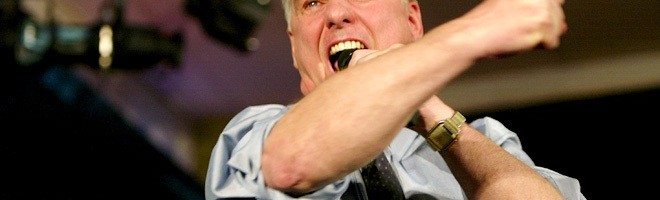
How “Yeee Haw” Howard Dean is Way off Base Concerning Teach for America

How “Yeee Haw” Howard Dean is Way off Base Concerning Teach for America:


Howard-Dean-Joe-Raedle-Getty-Images-72350864

How “Yeee Haw” Howard Dean is Way off Base Concerning Teach for America


How many times were we subjected to Howard Dean’s Yee Haw speech on the news? And how much will the media debate Dean’s words about Teach for America (TFA)? I am guessing, probably not at all, but his words are out there now, with his Saloninterview, and he is mistaken when it comes to TFA.
Many years ago I heard Howard Dean as Governor of Vermont speak about public schools in a good way. It was on NPR, I believe, as I was driving to work as a teacher. I remembered those words and I liked him when he later ran for president. He seemed a refreshing candidate, and it was painful to watch his decline in that race.
But I couldn’t disagree with Dean more now on his stance for Teach for America. And while you may not pay much attention to Dean, he is, of course, a voice for Democrats, and I think quite revealing of what they are about when it comes to school reform.
Like Dean, I know others too, who have adult children, who have joined TFA. I will never say that young people who enter TFA are not good and decent, filled with the desire to help children, but Teach for America, as an organization, is out to destroy professional teaching, and Dean either doesn’t know that, or he too close to it because of his son’s involvement.  Perhaps he is a privatizer like many Republicans and Democrats. Wherever he gets his ideas, mixing up the neoliberal message here is mistaken.
Dean, like many in both parties, blurs the line between real teacher education and Teach for America, and that is dangerous. It confuses people, leading them to think TFA is the answer to the problems involving teaching and poverty. But TFA, in reality,is much of the problem with what is happening to teacher education today.
He does not seem to understand that it is probably no coincidence that TFA was started in the early 90s. So were many other so-called school reforms, put into place to privatize public schools. Budget cuts meant the deterioration of school programs that parents loved. Poor schools were hit hardest. Parents, who could, ran with their children to the nearest private school.
If leaders really cared about schools and children, they would have enhanced the real teacher education programs, making a teaching degree more valuable…examining teacher education programs that already worked well in this country. Instead, How “Yeee Haw” Howard Dean is Way off Base Concerning Teach for America: