Latest News and Comment from Education

Tuesday, October 18, 2011

What “no excuses” model really teaches us about reform - The Answer Sheet - The Washington Post

What “no excuses” model really teaches us about reform - The Answer Sheet - The Washington Post:

What “no excuses” model really teaches us about reform

This was written by Matthew Di Carlo, senior fellow at the non-profit Albert Shanker Institute, located in Washington, D.C. This post originally appeared on the institute’s blog.

By Matthew Di Carlo

“Apollo 20” is a Houston pilot program in which a group of low-performing regular public schools are implementing the so-called “no excuses” education model common among high-profile charter schools such as KIPP. (I discussed it in a previous post, here.) In the Houston implementation, “no excuses” consists of five basic policies: a longer day and year, resulting in 21 percent more school time; different human capital policies, including performance bonuses and firing and selectively rehiring all principals and half of teachers (the latter is one of the “turnaround models” being pushed by the Obama administration); extensive 2-on-1 tutoring; regular assessments and data analysis; and “high expectations” for behavior and achievement, including parental contracts.

Read full article >>

National discussion on Civil War led by Virginia scholar begins

A national reading and discussion program on the Civil War has just begun at 65 community libraries across the country — including some in Virginia and Maryland — to better understand the conflict’s impact on modern Amerian culture.

The effort, called “Let’s Talk About It: Making Sense of the American Civil War,” was organized by the American Library Association and funded by the National Endowment for the Humanities. It is being led by University of Richmond President Edward L. Ayers, a leading scholar on the conflict.

Read full article >>

Dead last in digital ed | Thoughts on Public Education

Dead last in digital ed | Thoughts on Public Education:

Dead last in digital ed

State rating points out weaknesses, overstates others
By John Fensterwald - Educated Guess

California is a backwater for K-12 online learning, according to a new analysis of states’ policies toward virtual education. Other states are clearing away obstacles and adopting innovative strategies, such as allowing middle school students to take high school courses online and letting students start online courses anytime and complete them whenever they show competency. California is stuck in the past, imposing the standard calendar and student-teacher ratios on a virtual world.

At least that’s the implication of Digital Learning Now! – a project of the Foundation for Excellence in Education, headed by former Florida Gov. Jeb Bush, and the Alliance for Excellent Education, a nonprofit headed by former Democratic Gov. Bob Wise of Wes

The Educated Reporter: New York Needs Money to Catch Test Cheaters

The Educated Reporter: New York Needs Money to Catch Test Cheaters:

New York Needs Money to Catch Test Cheaters

A story in the Wall Street Journal over the weekend caught my eye. Education officials in New York are asking for state funds to examine student score sheets for evidence of cheating.

The story is notable for several reasons. First, it's an example of yet another state where -- surprisingly -- this type of post-test monitoring isn't already in place. Second, the story points out that of the $2.1 million the officials say is needed, $1 million would be used to look for what's known as erasure anomalies -- evidence that that an incorrect answer was erased and the correct answer put in its place.

Last year, I interviewed an Atlanta Public Schools spokesman in the wake of the cheating scandal that had swept through his district.

I asked him about a report that had found significant evidence of erasure anomalies. The spokesman told me that nearly 80 percent of Atlanta's K-12 students qualified for free and reduced-price meals, and that many of them

Jersey Jazzman: "Reformy" Reporting

Jersey Jazzman: "Reformy" Reporting:

"Reformy" Reporting

I'd like to point out once again that NBC's Brian Williams is accepting an award from a "reformy" group - the Center For Education Reform - that is pro-charter, anti-grass roots, anti-union, and anti-local control. They regularly critique the media, looking for pro-reformy reporting and criticizing anything that may possibly give voice to a push back of their agenda.


Why are they honoring Williams?
Brian Williams – Special Media Award
As the nation’s most well-respected and influential journalist, Brian Williams has thrust the need for education reform into the homes and minds of millions of Americans.
The work of NBC, particularly Williams’ contributions to Education Nation, have made a

Mike Klonsky's SmallTalk Blog: Times slings the manure on New Orleans charters

Mike Klonsky's SmallTalk Blog: Times slings the manure on New Orleans charters:

Times slings the manure on New Orleans charters

Echoing Duncan's comments on Katrina

Not since Arne Duncan claimed that Hurricane Katrina was "the best thing that happened to the education system in New Orleans" have I heard more b.s. about charter schools in the Big Easy. The latest to sling the manure is the N.Y. Times editorial board.

An October 15th editorial, Lessons From New Orleans, takes Duncan's crude comment and runs with it, hailing, "the structural changes [that] occurred because the hurricane essentially destroyed the old system, allowing the city to

Schooling in the Ownership Society: Baton Rouge billionaire Grigsby wants to take the "public" out of education

Schooling in the Ownership Society: Baton Rouge billionaire Grigsby wants to take the "public" out of education:

Baton Rouge billionaire Grigsby wants to take the "public" out of education

Grigsby
Right-wing Baton Rouge businessman Lane Grigsby has decided that public education is the "root cause" of all the state's problems -- even "the traffic that strangles the interstate around Baton Rouge during the weekday commute."

So while he opposes "throwing any more money" into public education, he's created his own PAC so he can put millions of tax-free dollars behind conservative, anti-union candidates for the state school board.

He says he's focused on injecting "free-market principles" into what was once a "state monopoly" over public education.
Grigsby refers to his favored candidates for the school board as "progressives,"

Monday, October 17, 2011

Ms. Jablonski's Class Blog: Kids These Days.....Occupy!

Ms. Jablonski's Class Blog: Kids These Days.....Occupy!:

Kids These Days.....Occupy!

The Occupy movement continues to grow...globally! Here in Sacramento, Cesar Chavez Park remains the center of Occupy activity, with protesters saying they will stay at the park indefinitely.

A perspective I really like on the Occupy Movement is one written by Armando Llorens, also known as Big Tent Democrat, a prominent litigation attorney and blogger, who writes at Talk Left. Big Tent Dem had been pretty ambivalent about Occupy, that is until his 17-year-old daughter became an supporter. His interview with her is included here.

This is a thoughtful young woman as the snippet below reveals. Her observations in many ways reflect those of many of my students. Please read this. And whatever you think of Occupy at this point in time, be sure that

All Education Matters: Docs About All Education for Occupiers at #OWS protests

All Education Matters: Docs About All Education for Occupiers at #OWS protests:

Docs About All Education for Occupiers at #OWS protests

A lot of folks have asked me for fliers that describe the work of All Education Matters. I already have a doc that describes the history of AEM, which, by the way, will turn a year in 1- days - can you believe it? I can't! It's amazing to think that I was in S. Korea when I incorporated. It wouldn't have been possible without your generous donations.

In any event, I have also created another doc. There is also a flier that is called "The Voices of the Indentured Educated Class." This document was created after a long-time supporter and friend of mine, Reid, asked me to draft something that personalizes the crisis. Reid, by the way, is doing amazing, amazing work for #OccupyPortland. He makes me proud to be part of the 99%, and he - like all of you - remind me why I'm

Jersey Jazzman: NJ Ed Commish LOVES Small Class Sizes!

Jersey Jazzman: NJ Ed Commish LOVES Small Class Sizes!:

NJ Ed Commish LOVES Small Class Sizes!

We all know that the current political crew in NJ loves them some reformy-type reforms: charters, merit pay, vouchers, bubble testing, and whatnot.

We also know they ignore all the evidence that this nonsense will not work. But what happens when they are confronted with evidence of what actually could bring real reform? What do they say when confronted with reality?
In Freehold the talk was a little more frank about the space problem, where Superintendent of Schools Elizabeth O’Connell detailed how the student population is growing annually, but the district has no room for the additional students and can’t finance upgrading the schools to meet

Are You a 1%er or a 99%er in the #OccupyTheClassroom Movement? | The Jose Vilson

Are You a 1%er or a 99%er in the #OccupyTheClassroom Movement? | The Jose Vilson:

Are You a 1%er or a 99%er in the #OccupyTheClassroom Movement?

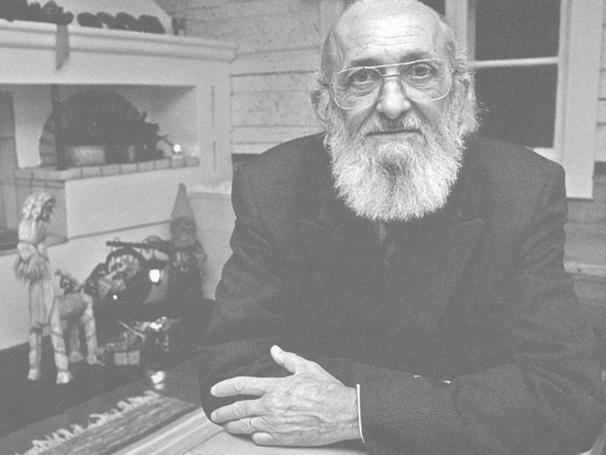
Paulo Freire

Good friend Stephen Lazar hit an essay out of the park yesterday (which he published early this morning). It’s worth the read because the rest of what I’m about to say is going to stir a bit of conversation around what’s what. First, a quote:

I think we, the teachers, have to bare some blame for setting the conditions that led to the Occupy

Jersey Jazzman: When Public Education's Leaders Hate Public Education #edreform

Jersey Jazzman: When Public Education's Leaders Hate Public Education:

When Public Education's Leaders Hate Public Education

Oh, dear:
Andy Smarick, the deputy education commissioner, is now a member of the governing board of a private advocacy organization seeking to bring its version of education reform — including expansion of charter schools and stricter teacher evaluation — to all 50 states, including New Jersey.
Just a case of the exercise of his First Amendment right in a field Smarick knows well? Or is it a government regulator using his position to promote his viewpoint?
David Sciarra, executive director of the Education Law Center in Newark, called

Reforming NCLB Requires Flexibility and Accountability | ED.gov Blog #edreform

Reforming NCLB Requires Flexibility and Accountability | ED.gov Blog:


Reforming NCLB Requires Flexibility and Accountability


Fixing No Child Left Behind (NCLB) is four years overdue. In March of 2010, the Administration unveiled its Blueprint for Reform. Since then we’ve worked on a bipartisan basis to craft a comprehensive reform bill that would help give our children the world-class education they need and deserve. Today marks an important step forward.

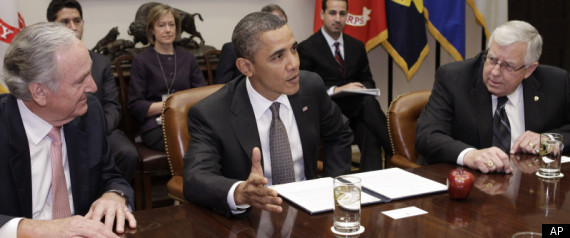
Senator Tom Harkin and Senator Mike Enzi — Chairman and Ranking Member respectively of the Senate Health, Education, Labor and Pensions Committee — introduced a bipartisan bill to officially overhaul NCLB. I deeply appreciate the efforts of Senators Harkin and Enzi to build in more flexibility for states and districts, and focus on the goal of building a world-class education system that prepares all students for college and careers. Increased flexibility at the state and local level is consistent with the administration’s policy on waivers and our Blueprint for Reform.

However, it is equally important that we maintain a strong commitment to accountability for the success of all students, and I am concerned that the Senate bill does not go far enough. Parents, teachers, and state leaders across the country understand that in order to prepare all of our young people to compete in the global economy, we must hold ourselves and each other accountable at every level of the education system– from the classroom to the school district, and state as well as the federal government. In addition, I am concerned the Senate bill lacks a comprehensive evaluation and support system to guide teachers and principals in continuing to improve their practice.

America cannot retreat from reform. We must ensure that every classroom in every school is a place of high expectations and high performance. The fact that we have a bipartisan bill in the Senate is an important and positive development, but it’s only a beginning. I look forward to working with Congress in the weeks and months ahead to advance this bipartisan effort, address these and other concerns and build a world-class education system that strengthens America’s economy and secures America’s future.
Arne Duncan is the U.S. Secretary of Education

Harkin's No Child Left Behind Bill No Longer Mandates Teacher Evaluations

Harkin's No Child Left Behind Bill No Longer Mandates Teacher Evaluations:

Harkin's No Child Left Behind Bill No Longer Mandates Teacher Evaluations

Harkin Enzi No Child Left Behind

Posted: 10/17/11 07:49 PM ET


Sen. Tom Harkin (D-Iowa) shifted a major teacher evaluation requirement out of his rewrite of the Elementary and Secondary Education Act -- known as No Child Left Behind -- over the weekend, shifting the dynamics of the debate over the bill's passage.

The initial sweeping education law called the Elementary and Secondary Education Act was enacted in 1965, and a 2001 reauthorization under George W. Bush took on the name, "No Child Left Behind." The law has been up for reauthorization since 2007. Harkin's rewrite, the first comprehensive reform to the legislation, came out of negotiations with Sen. Mike Enzi (R-Wyo.), ranking member of the Senate Health, Education, Labor, & Pensions committee that Harkin chairs.

Harkin released a draft of the bill last week that required school districts and states which receive educator development funding to create teacher evaluation systems that would take student performance into account. But changes over the weekend through a manager's amendment removed the requirement from the bill, instead shifting the teacher evaluation component to a competitive grant program called the Teacher Incentive Fund.

A Harkin staffer told The Huffington Post that the changes resulted from conversations with teachers, teachers' unions, and HELP committee members. Harkin reluctantly shifted the language in search

Best Questions: Professional Learning Communities « Whole Child Education

The Whole Child Blog « Whole Child Education:

Best Questions: Professional Learning Communities

Despite the rumors, school improvement is hard. It’s not about a single passionate leader. It’s not about “fixing” teachers and teaching or parents and parenting. It’s not about poverty. It’s not about money. And it’s not about standards. It’s about all of them. And more.

In this column, I’ll take on the real deal of school improvement—for all schools, not just certain kinds. And for all kids. Because it’s not about quick fixes or checking off the instant strategy of the moment. It’s about saying, “Yes, and…” not “Yes, but…” no matter what our circumstances. It’s about asking ourselves the best questions.

“Lifelong learners” is at best a description of a healthy, dynamic culture; at worst, an overused cliché running