A Conversation with Howard Zinn
Daily Journal (Opinion), Education, Media, War and PeaceJan 9, 2011
A classic interview with Dr. Howard Zinn from the archives of Your World News Media:

A classic interview with Dr. Howard Zinn from the archives of Your World News Media:



Rich Uncle Pennybags
First, I’d like to say that writing for Huffington Post has been a mixed bag of treats. For the most part, I’ve enjoyed writing unique, policy-driven perspectives there alongside the likes of Mike Klonsky, Kenneth Bernstein, and Diane Ravitch. For the most part, the comments have leaned towards rational and focused on the topic at hand rather than the trolling murkiness of other online news hubs. Then, I get comments from people who get on the comment box just to contradict for the sake of contradiction, a complete waste of time. I’ve seen a couple of commenters who appear in all the essays where actual teachers write and find them conveniently making


In spring 2005, Death Valley, California, experienced unprecedented rainfall. This resulted in an explosion of colour as dormant wildflower seeds burst to life across the normally barren landscape. "Desert Gold" cc by ChuckThePhotographer on flickr
In addition to my duties as vice principal, I teach the Writer’s Workshop to Grade 8 students a
In a letter in the South Florida Sun Sentinel, a supporter of vouchers uses all the tired excuses about public schools in that state. Schools are “dangerous and destructive,” “unequal,” and “unfair.” Further, they violate Florida’s mandate to provide fair and equal education.
Well, after pillorying the Democratic Party, teachers, and unions, this writer goes on to claim teachers must be lousy because home-schooled, and
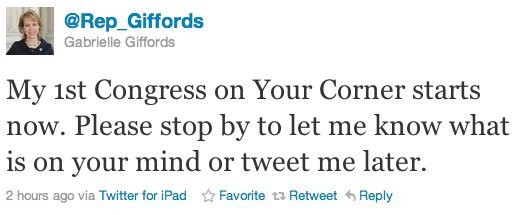
It was with an unbelievable sense of shock and sadness that the California Council for the Social Studies Board of Directors, of which I am a part, received information about the shooting of Congresswoman Gabrielle Giffords while conducting business in its January board meeting. Our business was being conducted in the historic courthouse in Ontario, CA, in a building over 100 years old. That morning, Social Studies leaders from all over the state flew in to participate in the democratic process of leading, guiding and debating the issues pertaining to our discipline, as time-consuming and grinding as the process can sometimes be.
Due to the age of the building, we were not connected to wireless internet during the all-day meeting, but reports of the tragedy soon trickled in via Blackberries and iPads. Stunned silence followed the news announcement by CCSS President Greg Spielman, followed by cries of disbelief and shock. How could this be possible?
As social scientists, it is in our nature to place events on a timeline of a history, to look for patterns or changes

 In my own effort to lead a 21st century school, I am finding no issue more difficult than determining the appropriate role of the AP exam and AP exam preparation curriculum.
It cannot be ignored that the AP is an important symbol and signifier to many families of a high caliber academic college prep secondary curriculum, and I can’t simply ignore or override the priority and value current and prospective families may place on an AP program. To its credit, over a period of several decades, the College Board’s AP curriculum did indeed assist valuably in raising the rigor and academic standards of many unfortunately academically mediocre high schools across the nation.
The AP provides a tremendous challenge to many high school students, and I use that term, challenge, in