Latest News and Comment from Education

Wednesday, April 3, 2019

NYC Should Fund Class Size Reduction Now! | Class Size Matters

NYC Should Fund Class Size Reduction Now! | Class Size Matters NYC Should Fund Class Size Reduction Now! | A clearinghouse for information on class size & the proven benefits of smaller classes

NYC Should Fund Class Size Reduction Now!


Class Size Matters is proposing that the NYC Council allocate $200 million to be targeted to reducing class size, starting first in the early grades and in struggling schools.
That amount would pay for the salaries of about 2,000 new teachers, which could reduce class size in as many as 8,000 classrooms – as adding a new teacher at a grade level lowers class size for all the other students in that same grade in the school.
These funds would represent less than one percent of the $26.9 billion dollars that will be spent by DOE next year.
Research on class size reduction shows a narrowing of achievement gap and eventual cost savings
As research shows, smaller classes lead to significant improvements in learning, as well as student engagement, disciplinary referrals, teacher attrition, and high school graduation rates, particularly for disadvantaged students. [1]   Economists have estimated that smaller classes have economic benefits about twice the costs, especially for low-income students and children of color, who make up the majority of students in NYC public schools. [2]  This is why class size reduction has been identified as not only boosting achievement for all students, but also is one of only a handful of reforms shown to narrow the achievement gap between economic and racial groups.[3]
Since Mayor de Blasio took office, student achievement has been flat or declining, as measured on the NAEP exams, the most reliable national assessments, and the achievement gap between students of different economic and racial groups has widened.[4]
Smaller classes will also likely lead to substantial cost savings in terms of lowering special education referrals, raising four year graduation rates as students move through the system more quickly, reducing grade retention rates and lessening teacher training costs, as teacher attrition rates decrease.[5]
While the Mayor has focused most of his efforts on expanding preK and now 3K, a letter sent by over 70 professors of education and psychology to then-Chancellor Farina in 2014 emphasized that any gains from preK would likely be undermined without concurrent effort to reduce class size in grades K-3.[6]  The most authoritative large-scale randomized experiment ever done in preK by Vanderbilt University, the gold standard in research, found no academic benefits from the program once students entered third grade.[7]
As Dale Farran, one of the Vanderbilt lead researchers said, “Too much has been promised from one year of preschool intervention without the attention needed to the quality of experiences children have and what happens to them in K-12.” [8]  As both Farran and the other lead researcher, Mark Lipsey concluded:
 “The income-related achievement gap … does not exist solely because children do not have a pre-K experience or even a “high quality” pre-K experience. There are other important factors at play including increasing income segregation in the public schools and the low quality of schools serving the poor.” [9]

History of class size trends in NYC and popular support
In the landmark Campaign for Fiscal Equity case, the state’s highest court concluded in 2003 that smaller classes were needed for NYC students to receive their constitutional right to a sound basic education.  Yet class sizes are even larger now, particularly in the early grades. Since 2007, average NYC class sizes have increased sharply and continue to be 13-30% larger than class sizes in the rest of the state.  This fall, there are more than 336,000 students in classes of thirty or more.[10]
The increase in class size in the early grades has been particularly sharp.  Until about 2011, the DOE abided by a side agreement to cap class sizes at 28 students per class in grades 1-3, under an initiative that was originally established by the City Council when Peter Vallone was Speaker.[11] After 2011, the DOE refused to abide by those caps, which has led to the number of students in classes of thirty or more in these grades surging by nearly 3,000%.
In a UFT teacher survey from 2014 – the most recent survey publicly available – 99% NYC teachers responded that class size reduction would be an effective reform to improve NYC schools.  About 90% of teachers said that this would be a “very effective” reform – far outstripping any other proposal.[12]
According to the DOE’s school environment surveys, smaller classes has been the highest or second highest priority of parents out of nine choices when asked what changes they would like to see in their children’s schools. [13]
What about space?
In about half the school districts, there is space to lower class size now. In some overcrowded districts, preK students could be moved into CBOs, many of which are under-enrolled and in danger of closing.  Kindergarten students could also be placed in DOE preK centers where they could be provided with smaller classes and less chaotic conditions. DOE could also choose to move out co-located charter schools.
Overall, there does need to be an expedited capital plan.  The proposed five-year capital plan as currently designed is both underfunded and excessively backloaded, with 50,000 of the 57,000 new school seats not completed until 2024 or later.  Another $100 million in upfront costs amortized over time would fund more than 21,000 additional seats, given the current 50% state reimbursement for capital expenses. And as shown in the preK program, where there is political leadership, space can be found.  The same can happen with a coordinated and prioritized class size reduction plan.

Below are budget comparisons to put the proposed $200 million for class size reduction in perspective:
DOE spending in FY 2019 Education Budget: [14]
  • $89 million for 2nd grade Literacy coaches (without any positive results so far.)[15]
  • $125 million: Increase in fair student funding, without an appreciable impact on class size.[16]
  • $136 million: Absent Teacher Reserve.[17]
  • $192 million per year: Renewal program to turn around struggling schools (without clear evidence of systemwide academic improvement – except for schools that did lower class size.)[18]
  • $195 million for Community Schools. (Results not yet released from RAND evaluation.)
  • $325 million: Tuition reimbursement for private schools for students with IEPs.[19]
  • $878 million for Universal preK.
For FY 2020, the Mayor has proposed:
  • $9.3 million for a new K-8 science curriculum
  • $109 million more for 3K expansion
  • $300 million in projected increases for special education services
Overall NYC DOE budget:
  • Spending on central admin increased by 22% between 2016 – 2018 (by $38.3 M)
  • School support organizations – increased by 30% since 2016 (by $76.6 M)
  • General ed instruction – increased by 10% since 2016 (by $604 M –much of this for preK)

Prepared by Leonie Haimson, Class Size Matters, April 2, 2019
[14] Much of the data for FY 2019 is from May 2018 NYC Council finance committee report  https://council.nyc.gov/budget/wp-content/uploads/sites/54/2018/05/040-DOE.pdf
NYC Should Fund Class Size Reduction Now! | Class Size Matters NYC Should Fund Class Size Reduction Now! | A clearinghouse for information on class size & the proven benefits of smaller classes

Tuesday, April 2, 2019

CURMUDGUCATION: MT: Meat Widgets And Personalized Learning

CURMUDGUCATION: MT: Meat Widgets And Personalized Learning

Meat Widgets And Personalized Learning


In Montana, the connection between Personalized [sic] Learning and vocational training has been made pretty explicit.

There, some leaders are throwing support to PL not because it would be good for students or would solve educational problems, but because it would solve workforce development problems.


Solving workforce shortages one widget at a time.
State Rep. Llew Jones, R-Conrad, recently showed off one of the state's PL systems to fellow legislators:

“We know in the state we have a huge shortage in the workforce. We have a hole, both in meeting our workforce needs and in servicing our students,” Jones said. “We have about 12,000 kids graduate per year. About 7,000 of them go onto a four-year college — and we have good four year programs — but 5,000 are where? We can’t tell you. Schools can’t tell you.”

Ten-- count 'em, ten-- bills have been introduced to push the model across the state. Legislators are also "aiming to remove barriers in the public school system in order to encourage students to seek professional opportunities while they’re in school and to fill community worker needs."

This focus on "advanced opportunities" is a big part of the push, and the PL being emphasized here speaks very little about personalizing to the student's style or interests, and seems mostly focused on letting students set their own pace so that they can rip right through what passes for their education so they can get right out there and start being somebody's useful meat widget as soon as CONTINUE READING: 
CURMUDGUCATION: MT: Meat Widgets And Personalized Learning


Failing Charter Schools and a School Board’s Choice

Failing Charter Schools and a School Board’s Choice

Failing Charter Schools and a School Board’s Choice


Photo by Ben White on Unsplash
Data doesn’t close opportunity gaps. People have to do that, so we now need people to take action.
- Carrie Hahnel, EdTrust-West
It is easy to blame a public school for failing to successfully educate a child. Teachers and schools make easy scapegoats in a society that consistently fails at addressing generational poverty, fails to support children with disabilities, and fails at balancing the need to nurture children with the necessity of putting food on the table. In California, we defunded our schools with Proposition 13 and are still wondering why these same schools are not educating children to our expectations.
Instead of addressing the root cause of failure, the education “reform” movement held up privatization as the solution. The charter school industry was created, resulting in even more money being diverted from public schools. Lacking proper oversight, these schools provided an environment where the health and safety of students could be endangered, funds could be diverted into the pockets of administrators and the parents of poor children could be taken advantage of. Education “reformers” treated these conditions as acceptable prices to pay for better educational opportunities for our children, or at least those without special education needs.
Predictably, it turns out that the charterization of the Los Angeles Unified School District (LAUSD) did not provide the miracle that was promised. The District has the highest number of charter schools in the country, with approximately 18% of its students in these publicly funded private schools. In the just-released list of 110 underperforming schools in the LAUSD, 20%were independent charter schools. Are we diverting $591.7 million from our CONTINUE READING: Failing Charter Schools and a School Board’s Choice


Truth For America: Why was Republican Legislator and TFA alum punished? | Cloaking Inequity

Truth For America: Why was Republican Legislator and TFA alum punished? | Cloaking Inequity

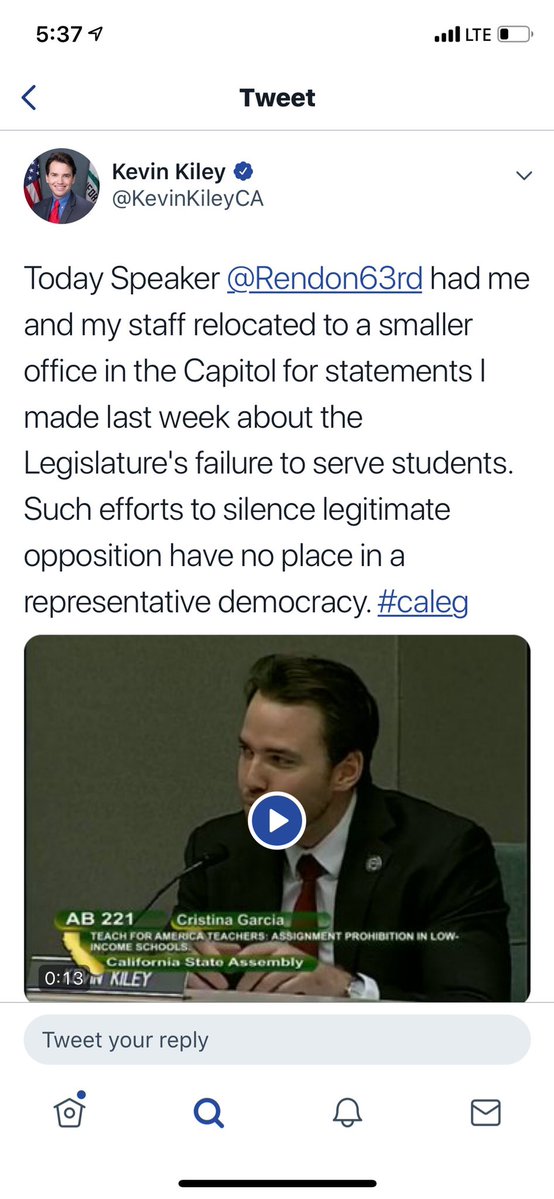
TRUTH FOR AMERICA: WHY WAS REPUBLICAN LEGISLATOR AND TFA ALUM PUNISHED?


Why did this happen to ? A republican and  alum who sits on the California Assembly Education committee?
D3HtmicX0AARz94
Listen to the latest episode of Truth For America podcast to find out why…
See all of Cloaking Inequity’s posts about Teach For America here.
Please Facebook Like, Tweet, etc below and/or reblog to share this discussion with others.
Check out and follow my YouTube channel here.
Twitter: @ProfessorJVH
Click here for Vitae.

With business groups allied against it, L.A. parcel tax faces big hurdle | EdSource

With business groups allied against it, L.A. parcel tax faces big hurdle | EdSource

With business groups allied against it, L.A. parcel tax faces big hurdle
They sign ballot argument and plan $4 million campaign to kill it in June.


Three Los Angeles area business associations have signed the official ballot argument opposing L.A. Unified’s sizable 12-year parcel tax on the June 4 ballot — compounding the district’s challenge of getting a two-thirds majority required to pass it. The opponents include the influential Los Angeles Area Chamber of Commerce.

Parcel tax backers had hoped that business community leaders would take no position, if they couldn’t support a parcel tax. Instead, opponents are promising a vigorous $4 million campaign to defeat Measure EE, said Stuart Waldman, president of the Valley Industry and Commerce Association, based in the San Fernando Valley.
Waldman, L.A. chamber President and CEO Maria Salinas and Tracy Hernandez, founding CEO of the Los Angeles County Business Federation, also signed the ballot statement, along with Jon Coupal, president of the anti-tax Howard Jarvis Taxpayers Association, and former South Gate Mayor Bill DeWitt.
The chamber initially said it would support a standard parcel tax, charging every property owner in the district the same dollar amount. But the organization has followed through with its threat to oppose what the school board adopted: a parcel tax based on the square footage of buildings on a property – an approach that would substantially shift the tax burden from homeowners to commercial properties, large CONTINUE READING: With business groups allied against it, L.A. parcel tax faces big hurdle | EdSource

California Kids Are Falling Behind in Education and More. What Is the State Doing to Help? | Starting Blocks | The California Report | KQED News

California Kids Are Falling Behind in Education and More. What Is the State Doing to Help? | Starting Blocks | The California Report | KQED News

California Kids Are Falling Behind in Education and More. What Is the State Doing to Help?


In KQED’s new series, Starting Blocks, we’ll look more closely at why California has failed to gain traction on addressing the needs of kids and what it will take to change that.
From his first minutes as governor, Gavin Newsom made it clear helping children was going to be a big part of his administration when his two-year-old son, Dutch, walked onto the stage during his inaugural address. Newsom scooped him up and kept talking.
“My wife Jennifer and I have four children," he said. "There’s nothing more important, I hope you can tell, than giving them a good and happy life.”
But in that same speech, Newsom made clear he realizes not all kids are as lucky as his own. He listed some of the issues California has to deal with to improve the lives of kids.
“An achievement gap in our schools and a readiness gap that holds back millions of our kids. And too many of our children know the ache of chronic hunger," he said.


About 20 percent of California children live in poverty — that number is higher for black and Latino kids. And, depending on their grade, nearly 60 percent of school children aren’t proficient in reading or math.
“Kids in California are not faring well and there's really no excuse for that," said Ted Lempert, president of Children Now, a California advocacy group.
“We're obviously a strong economy. We're relatively high in taxes. We're a progressive state," CONTINUE READING: California Kids Are Falling Behind in Education and More. What Is the State Doing to Help? | Starting Blocks | The California Report | KQED News

Expanding School Choice: Making Education More Accessible or Bureaucratic Boondoggle?

Expanding School Choice: Making Education More Accessible or Bureaucratic Boondoggle?

Expanding School Choice: Making Education More Accessible or Bureaucratic Boondoggle?
The Trump administration’s proposal would make Catholic schooling more accessible, but it raises concerns about federal overreach.


WASHINGTON — Education Secretary Betsy DeVos introduced a proposal last month, aimed at expanding school choice, that would provide “a $5-billion annual federal tax credit for voluntary donations to state-based scholarship programs.”

While some groups welcome the proposal as a way to help make Catholic and private schools more accessible to lower-income families, others have raised questions about its long-term effects on the federal government’s influence on education.

The “Education Freedom Scholarships” plan has been introduced in both the House and Senate by Rep. Bradley Byrne, R-Ala., and Sen. Ted Cruz, R-Texas. The Department of Education (DOE) explained that these scholarships “will be funded through taxpayers’ voluntary contributions to state‐identified Scholarship-Granting Organizations (SGOs),” and the taxpayers who contribute will get a “non‐refundable, dollar‐for‐dollar federal tax credit.”

They emphasized that the scholarship program “will not create a new federal education program” but “instead will allow states to decide whether to participate and how to select eligible students, education providers and allowable education expenses.”

“The key element of the proposal is freedom for all involved,” DeVos said in a statement announcing the program. “Students, families, teachers, schools, states — all can participate, if they choose, and do so in the ways that work best for them. The major shift is that a student’s needs and preferences, not their address or family income, will determine the type and quality of education they can pursue.”

According to the DOE, states could put the program funding toward an array of educational opportunities for students, including private and home education, special-education services and therapies, summer and after-school education programs, and tutoring for students in low-performing schools.

However, several prominent organizations that advocate for school choice have come out in opposition to the proposal, raising concerns over the consequences of this kind of federal involvement in state school-choice programs.


Constitutional and State Concerns

Lindsey Burke, the director of the Center for Education Policy at the Heritage Foundation, told the Register that, while the Trump administration’s support for school choice is welcome, “establishing a nationwide federal tax credit scholarship program goes in the wrong direction: It would grow, rather than shrink, federal intervention in K-12 education.”

Burke explained that the tax credit could incentivize a certain kind of giving that could hurt state programs.

“A dollar-for-dollar tax credit at the federal level could also mean donors give first to the more generous federal program (most state programs are not dollar-for-dollar),” she said, “and then, if they still have funding available, contribute to their state program. That CONTINUE READING: Expanding School Choice: Making Education More Accessible or Bureaucratic Boondoggle?


Ed Notes Online: NYSAPE Final Press Release - NYS Education Commissioner Mary Ellen Elia Creates a Culture of Fear, Intimidation, and Misinformation in our Schools

Ed Notes Online: NYSAPE Final Press Release - NYS Education Commissioner Mary Ellen Elia Creates a Culture of Fear, Intimidation, and Misinformation in our Schools

NYSAPE Final Press Release - NYS Education Commissioner Mary Ellen Elia Creates a Culture of Fear, Intimidation, and Misinformation in our Schools


Today's straw man:
Old UFT/AFT buddy Mary Ellen Elia under attack. Anti-Opt- out is a UFT signature- and a vote for Unity is a vote for supporting Elia and high stakes testing.


It's Monday, April 1st and it is no April fool’s joke of what’s going on around the state. Please share widely, here’s the link to share all over social media:

FOR IMMEDIATE RELEASE: April 1, 2019
More information contact
Jeanette Deutermann  
nys.allies@gmail.com
Kemala Karmen  nys.allies@gmail.com
NYS Allies for Public Education - 
NYSAPE


NYS Education Commissioner Mary Ellen Elia Creates a Culture of Fear, Intimidation, and Misinformation in our Schools

The Every Student Succeeds Act (the federal law known as ESSA) gives states authority to design their own unique accountability plan regarding the state tests. Unfortunately, Commissioner Elia has used that authority to misinterpret ESSA, and has used ESSA as an opportunity to impose a culture of fear on our administrators and teachers, and our children.  Under Commissioner Elia’s direction, the State Education Department (SED) at best turns a blind eye to, and at worst encourages, school districts to bribe, coerce, manipulate, and threaten students and parents into complying with a broken assessment system.
As we head into the first round of 2019 grades 3-8 state testing, NYSAPE is receiving an unprecedented number of reports from parents statewide about morally objectionable, educationally unsound, and in some cases, illegal policies and tactics that local schools and districts are using in attempts to suppress test refusal. Parents are reporting bribery with prizes, parties, and exemptions from district course finals. Students CONTINUE READING: Ed Notes Online: NYSAPE Final Press Release - NYS Education Commissioner Mary Ellen Elia Creates a Culture of Fear, Intimidation, and Misinformation in our Schools


CHARTERS: NJ press–finally–smells rot, but proposes reforms that continue racist policy |

CHARTERS: NJ press–finally–smells rot, but proposes reforms that continue racist policy |

CHARTERS: NJ press–finally–smells rot, but proposes reforms that continue racist policy


Deseret Segura, 16, comforts her grandmother, Deseret Richardson, 83. The older woman was weeping her granddaughter would be transferred to a school far from home they shared because of the so-called “One Newark” enrollment plan. It was designed by Christie administration to ensure charter school enrollment growth. It continues today despite promises by Mayor Ras Baraka to end it. ( 2014 Photo by Bob Braun)

A recent series of articles in The Record of North Jersey described how the “flawed experiment” of charter schools cost the state millions in public dollars. While it is gratifying that—finally— a major mainstream news outlet in New Jersey noticed the corruption inherent in publicly-funded but privately-operated  charter schools,  this eureka moment  not only comes late—about five years after it was originally exposed in these pages—but it also skips over the human casualties caused by the corrupt and racist spread of charter schools in New Jersey’s cities.
And, in the end, the series teaches the absolutely wrong lesson and promotes the absolutely wrong solution—that, if only the Legislature can change the laws governing the construction of privatized schools, everything will be fine. The series, far from calling for an end to the theft of public school funds to finance charter expansion, calls for so-called “reforms” that would make it easier for charters to expand—and further degrade  public schools.  
“Just introduce legislation,” The series quotes former Assembly Speaker Joseph Doria, a long-time champion of charter schools, someone frequently mentioned in the series. The articles also frequently cite the vies of wother charter proponents.
No. No. No. No. That’s wrong.
Wrong because, the basic, irrefutable truth about charter schools is this:
They take away money from public schools—especially in New Jersey’s largest cities where resources are scarce. They are replacing public schools with money that should be used to repair public schools.
They are replacing regular public schools and that was never the intent.
Following the series’ suggestions would mean more charter schools, less money for public schools, and a continuation–even enhancement–of the racism that propels public education policy in New Jersey’s cities.
 The truth about privately operated charters and how they are built and operated with public funds  has been glaringly obvious for years—but few in the CONTINUE READING: CHARTERS: NJ press–finally–smells rot, but proposes reforms that continue racist policy |

New Jersey Expose, Part 4: Cashing in on Real Estate Deals in the Charter Market | Diane Ravitch's blog

New Jersey Expose, Part 4: Cashing in on Real Estate Deals in the Charter Market | Diane Ravitch's blog

New Jersey Expose, Part 4: Cashing in on Real Estate Deals in the Charter Market


This post is part 4 of a series published by northjersey.com and USA Today New Jersey. Written by Jean Rimbach and Abbott Koloff, it is called “Cashing in on Charter Schools.” It explores the many ways that charter operators exploit taxpayers.
Interest-only mortgages with rates that grow each year. Multimillion dollar fees for paying off loans early. Property that quickly doubles in price. And buildings sold with markups as high as 70 percent.
“Deals like these inked by New Jersey charter schools — or the private groups that support them — highlight how tax dollars meant for public education can reap profits for investors.
“But they also illustrate the lack of options some charter schools face when trying to find and finance facilities — and an absence of state oversight in the process.
“State education officials say they have no authority to review financing or lease agreements struck by charter schools before they are signed. And they don’t police the private organizations, often called “Friends of” groups, that are created to support charter schools by owning or financing their real estate and, in many cases, enter into contracts on a school’s behalf.
“That includes groups like the Friends of Marion P. Thomas Charter School, which agreed to buy two former Newark public school buildings and paid a deposit but said they couldn’t get financing to complete the purchase. So the group struck a deal with a developer who bought CONTINUE READING: New Jersey Expose, Part 4: Cashing in on Real Estate Deals in the Charter Market | Diane Ravitch's blog