In my four decades of teaching, I went through a strike twice--once as a first year teacher, and once as the president of the local union. Writing about education, I have followed dozens more. No matter what kind of public support a strike is getting, there are always some familiar tunes you can expect to hear played in opposition to a teacher walkout. Here's your guide to all the classics. Don't
An Iowa state senator has caught on to one of the problematic side effects of many choice programs-- disenfranchised taxpayers. Or, as somebody put it a while ago, taxation without representation. Iowa has long allowed open enrollment; an Iowa family can enroll their student in any public school district, whether they live there or not. Currently the full per-pupil expenditure follows the student-
It's a phenomenon noted in many urban education-scapes. The leaders (CEO, Education Visionary, Grand High Muckity Muck, whatever) of a charter operation makes far more money than a) the local public school superintendent responsible for far more students and b) the teachers who work within the charter. But a recent Washington City Paper article by Rachel Cohen lays out some stark examples. The art
I'm asked from time to time (mostly, I think, because some people are curious but reluctant to ask) what it's like to be in my particular spot in life. Retired from teaching, sixty-one years old, raising two babies about thirty years after I raised two other babies-- as my wife and I have said at various times over the last decade, we are kind of off the map here. So my honest answer is that I'm f
One of the issues that was hanging over the Los Angeles teacher strike is the idea of portfolio management; the UTLA asserts that Superintendent Austin Beutner already has a plan prepared for converting the LAUSD to a multi-portfolio model. In Denver, the model has already been rolled out, to less than stellar result . It's a challenging issue to discuss because so few people understand exactly h
The headline says " Kindergarten classes are getting more academic. New research says the kids are all right. " The news is that a big shiny new study shows that the increasingly academic approach to kindergarten is okee dokee. The quick take is that the study followed 20,000 kindergarten students and found that they both achieved academically and their social and emotional development was just fi
So we just froze our way through School Choice Week, the annual PR blitz in favor of privatizing public education, and I find myself troubled and annoyed by the word "choice." See, I favor choice. In all my years at our tiny small town/rural high school, we'v e graduated students who went on to become doctors, artists, teachers, welders, construction workers, lawyers, telephone linemen, and jobs y
Was it the cold? Did we all just have more time to wander the internet? I don't know, but it's a huge list this week. Remember to share-- that's how the word gets out. LA Strike: Charters Are An Existential Threat To Public Education The LA strike was extraordinary in that it addressed so much more than wages and benefits, but also addressed policy as well. Here's a good look at where the LA chart
Two items tossed my feed this week that underline contrasting ideas about what constitutes success in education. First, let's go to the Jackson-Madison County school system of Tennessee. At JMCSS folks are pretty excited because they've made such strides with the addition of a unified curriculum. They know this worked because they have all sorts of growth data, much of it exceeding expectations. N
Part of the impetus behind modern education reform is the idea that more of the education system should be operated by businesses. Many merits and drawbacks of that approach continue to be debated, but one aspect is rarely discussed. Modern business is multinational, so we need to ask--how much control of our educational system do we want to send outside of U.S. borders? Charter schools have been
What Rydell High School Can Teach Us about the LA Teachers Strike As teachers in Denver and Oakland head toward their own strikes, it’s worth doubling down on the lessons from LA.
arly on the morning of January 10, the sun bathed Venice High School—famous for its appearance as Rydell High in the film version of Grease—in a cinematic glow of light and mist, a statue of Myrna Loy providing a dramatic backdrop for the teachers, parents, and students who had shown up with hand-painted signs. The crowd had gathered for what was supposed to have been the first day of the United Teachers Los Angeles (UTLA) strike but, after the strike was pushed back, turned out instead to be a thrilling preview. “I don’t know, but it’s been said, billionaires run the Board of Ed!” the people in the crowd chanted. A student took the microphone and declared support for the teachers. Homemade signs proclaimed: “You can’t put kids first if we put teachers last” and “‘Random’ searches criminalize students of color.”
Longtime educator Monica Studer carried a sign that read: “I walked the line in 1989.” That was the year of the last UTLA strike, and Studer still wore buttons from that struggle—“I don’t want to strike but… I will!” and “1989 we walked, we won, WE’RE STILL NOT DONE 1991”—on a lanyard around her neck. Back then, Studer said, the issues were similar to the ones pushing UTLA toward the picket lines today—wages and teacher input on how schools were run—but there were no charter schools in the picture. “Charter schools are underregulated, and the district charges them the minimum amount that they can to be on our campuses,” she said.
Back then, the classes were smaller, too. These days, Studer told me, the teachers at Venice High regularly have as many as 44 students in a room built for a class half that size. “There is no more room in a classroom for desks,” she added—let alone the additional time necessary to read and assess the work of each student. “Because of the large class sizes, that allows students to slip through the cracks, which should not happen.” CONTINUE READING: What Rydell High School Can Teach Us about the LA Teachers Strike | The Nation
Cory Booker has launched his campaign for the Democratic presidential nomination. The stories in the mainstream media focus on his charm, his charisma, his theme of “love” and bipartisanship.
For close to two decades, Cory Booker has been at the forefront of a nationwide push to dismantle public education.
According to Booker, the education system is the main cause of our society’s fundamental problems, rather than, say, inequality and unchecked corporate power. As he explained in a 2011 speech, “disparities in income in America are not because of some ‘greedy capitalist’ — no! It’s because of a failing education system.”
Public schools, Booker continued, are also responsible for mass incarceration and racial injustice. To combat such evils, Booker has openly praised Republican leader Betsy DeVos’s organization American Federation for Children for fighting to win the final battle of the civil rights’ movement.
Scapegoating underfunded public schools for deeply rooted racial and economic problems makes little sense. But it’s been a ticket to the top for Cory Booker. In fact, it was by hitching his star to the corporate-backed “education reform” movement that Booker first rose to prominence.
The son of wealthy parents who were among IBM’s first black executives, Booker’s big political break came in September 2000, when he was tapped to give a keynote speech to the archconservative Manhattan Institute. Calling the Newark school system “repugnant,” Booker claimed there was “great evidence” that large groups of children “cannot succeed in the public school system.”
Yet rather than improving this system by increasing school funding or building public “community schools,”Booker made a hard case for charter schools as well as school vouchers, i.e., state funding for parents to pay for private schools. To give this pitch a social justice veneer, he quoted Frederick Douglas — “power concedes nothing without force” — and steeped his arguments in the language of racial justice.
Booker’s eloquent advocacy of corporate antiracismquickly caught the eye of wealthy hedge-fund investorsinterested in pushing privatization. In Dale Russakoff’s The Prize, a detailed account of philanthropic efforts to reform Newark’s public schools, Booker notes that though he “became a pariah in Democratic circles for taking on the Party orthodoxy on education,” his 2002 mayoral bid was boosted by “all these Republican donors and donors from outside Newark, many of them motivated because we have an African-American urban Democrat telling the truth about education.”
One of Booker’s main financial backers, Whitney Tilson, was honest about the profit motivations for large hedge-fund investors like himself. Charter schools, he explainedto the New York Times, are the ideal philanthropic opportunity for such business leaders because “[h]edge funds are always looking for ways to turn a small amount of capital into a large amount of capital.”
While the over $3 million in campaign contributions Booker received from his school reform sponsors was not quite enough to buy him the 2002 election, Booker’s 2006 mayoral bid was victorious. Due in large part to his zealous commitment to privatization, Newark has gone from having less than 10 percent of students in charters in 2008, to over 33 percent today; by 2022, 44 percent of the city’s students are set to be schooled in these publicly financed but privately run institutions.
If you blame public schools for all of the ills of our unjust society, Cory Booker is your guy.
I read with humor that PolitiFact found that Mayor Michael Bloomberg's educational record of improvement was mostly true. However, a closer look at the data finds that Mr. Bloomberg's education policy was a failure.
The only real improvement was the bogus graduation rate. However, every educator knows that the improved graduation rates were because of "credit recovery" courses, administrative pressure to pass failing students, scholarship requirements, and linking teacher tenure to student grades. This is known as academic fraud.
Moreover, the Bloomberg claim that he reduced the racial/income achievement gap is bogus, even PolitiFact questioned the claim.
What PolitiFact failed to investigate was the increasing class sizesunder Michael Bloomberg, the bloated DOE Bureaucracy, the underfunded public school budgets, where most schools received only 82% to 86% of fair funding and the rise of charter schools at the expense of the public schools.
Schools are increasingly relying on technology for teaching, learning, and school operations. What do we know about the cybersecurity risks this may introduce?
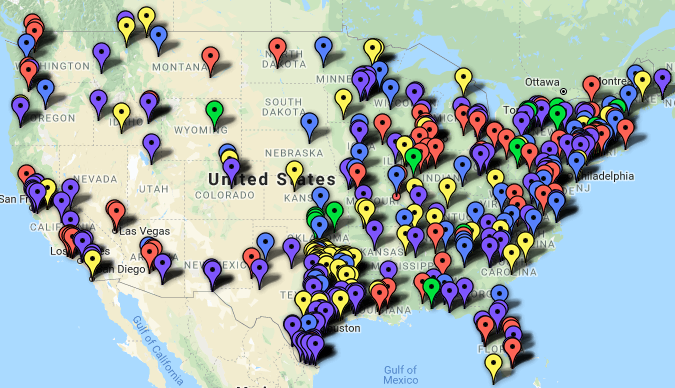
A first-of-its-kind report on cyber incidents affecting U.S. public elementary and secondary (K-12) education institutions during 2018:
An abridged version of the report is also available for direct download.
Suggested citation:
Levin, Douglas A. (2019). “The State of K-12 Cybersecurity: 2018 Year in Review.” Arlington, VA: EdTech Strategies, LLC/The K-12 Cybersecurity Resource Center. Available online at: https://k12cybersecure.com/year-in-review/
The number of cybersecurity-related incidents involving U.S. public schools since 2016.
K-12 Cybersecurity In the News:
NEW REPORT CARD GRADING EACH STATE ON HOW WELL IT PROTECTS STUDENT PRIVACY
In the first of its kind, the Parent Coalition for Student Privacy and the Network for Public Education have released a report card that grades all fifty states on how well their laws protect student privacy.
The State Student Privacy Report Card analyses 99 laws passed in 39 states plus DC between 2013 and 2018, and awards points in each of the following five categories, aligned with the core principlesput forward by PCSP: Transparency; Parental and Student Rights; Limitations on Commercial Use of Data; Data Security Requirements; and Oversight, Enforcement, and Penalties for Violations.
Two more categories were added to the evaluation: Parties Covered and Regulated and Other, a catch-all for provisions that did not fit into any of the above categories, such as prohibiting school employees from receiving compensation for recommending the use of specific technology products and services in their schools.
No state earned an “A” overall, as no state sufficiently protects student privacy to the degree necessary in each of these areas. Colorado earned the highest average grade of “B.” Three states – New York, Tennessee and New Hampshire– received the second highest average grade of “B-“. Eleven states received the lowest grades of “F” because they have no laws protecting student privacy: Alabama, Alaska, Massachusetts, Minnesota, Mississippi, Montana, New Jersey, New Mexico, South Carolina, Vermont and Wisconsin.
The report tracks specific versions of state laws over time. For example, many of the state privacy laws enacted since 2013 were modeled after the California’s 2014 law known as the Student Online Personal Information Protection Act (SOPIPA). While California barred all school vendors from selling student data, eight states subsequently passed laws that allowed the College Board and the ACT to do so. Laws with specific loopholes to allow these companies to sell student data were enacted in Arizona, Colorado, District of Columbia, Nebraska, North Carolina, Texas, Utah and Virginia –presumably because of lobbying efforts.
The issue of data security is also critical. The primary federal student privacy law known as FERPA requires no specific protections against data breaches and hacking, nor does it require families be notified when inadvertent disclosures occur. In recent years, the number of data breaches from schools and vendors have skyrocketed, and some districts have even been targeted by hackers with attempted blackmail and extortion. A recent report rated the education industry last in terms of cybersecurity compared to all other major industries. As a result, this fall the FBI put out an advisory, warning of the risks represented by the rapid growth of education tech tools and their collection of sensitive student data, saying that this could “result in social engineering, bullying, tracking, identity theft, or other means for targeting children.”
“The inBloom debacle in 2013 exposed the longstanding culture of fast and loose student data sharing among government agencies, schools and companies,” said Rachael Stickland, co-chair of the Parent Coalition for Student Privacy, parent of two public school children in Colorado and the primary author of the report. “Consequently, parents across the nation began urging their state legislators to address the problem, resulting in a complex web of state privacy laws that are difficult to untangle and understand. Our hope is to bring attention to state laws that make a reasonable effort to protect student privacy and identify those that need improvement. Parents and advocacy groups can use our findings to advocate for even stronger measures to protect their children.”
NPE Executive Director Carol Burris noted, “This report card provides not only critical information regarding the existing laws, but also serves a blueprint for parents to use for lobbying for better protections for their children.”
As Leonie Haimson, co-chair of the Parent Coalition for Student Privacy, pointed out, “FERPA was passed over forty-five years ago and has been weakened by regulation over time to allow for the sharing of personal student data by schools and vendors without parent knowledge or consent. State legislators have stepped up to the plate to try to fill in some of its many gaps and to require more transparency, security protections, enforcement, and the ability of parents and students to control their own data. Yet none of these laws are robust enough in each of these areas. Congress must strengthen and update FERPA, but meanwhile, this report card can serve as a guide to parents and advocates as to which state laws should be strengthened and in which specific ways.”
Oakland Teachers Are on the Verge of a Strike After two wildcat strikes in recent months, Oakland teachers are now on the verge of a district-wide strike. Like other recent teacher walkouts, Oakland educators are up against a school-reform agenda pushed by billionaires.
Wherever there’s a battle over public education lately, a billionaire is somehow involved. Los Angeles, Newark, the “education reform” project as a whole — the ultrarich always have their hands in efforts to antagonize teachers.
One city they’ve now set their sights on: Oakland, where teachers are in the middle of union contract negotiations and just authorized a strike. Some teachers stayed out of school in one-day wildcat strikes in December and January, joined by many of their students. According to posts circulating on Facebook and Instagram, Oakland students have planned to call out sick in solidarity with teachers today.
Just like other teachers’ union battles these days, the contract fight pits students and working people against billionaire pro-corporate school reformers and the politicians backing them.
The superintendent of the Oakland Unified School District (OUSD), Kyla Johnson-Trammell, wants to cut teachers’ already low pay and expand class sizes. Independent of the contract fight, she also intends to replace public schools with more unaccountable charter schools.
Johnson-Trammell claims a budget crisis is forcing these moves. But the district’s “crisis,” like so many other claimed budgetary crises around the country, comes after school privatization advocates helped drain the district’s funds through previous charter expansions; their allies in the superintendent’s seat and on the school board have overspent wildly on administrative salaries and corporate consultants.
Charter schools are the thin wedge of the privatization movement. They open opportunities for profiteering, weaken teachers’ unions, and expand the control of the wealthy over the public school system. The superintendent’s plan to further expand charter enrollment would drain more resources from Oakland public schools, which would be used to justify more privatization. But the Oakland Education Association (OEA), the teachers’ union, is demanding that the district adequately fund its schools. They are asking for higher teacher pay, smaller class sizes, and lower workloads for staff.
Who caused OUSD’s budget woes? What political circumstances have enabled the school privatization movement to flourish in Oakland? And why do billionaires care so much about charter schools?
The OEA Contract Fight and the OUSD Budget
Oakland schools are currently experiencing a series of crises. OUSD has a severe problem keeping teachers in classrooms: about one in five teachers leave the district each year. High teacher turnover results in disruptions to student learning and a reliance on untrained teachers with emergency credentials. (In 2017–18, at least 15 percent of new OUSD teachers had emergency credentials, and at least 30 percent of teacher applicants did.)