Latest News and Comment from Education

Saturday, September 8, 2018

Union Membership Narrows the Racial Wealth Gap for Families of Color - Center for American Progress

Union Membership Narrows the Racial Wealth Gap for Families of Color - Center for American Progress

Union Membership Narrows the Racial Wealth Gap for Families of Color
Union activists and supporters rally against the U.S. Supreme Court's ruling in <em>Janus v. AFSCME</em>, in Foley Square in Lower Manhattan, June 27, 2018, in New York City.


Download the PDF here.
Wealth is critical to families’ immediate and long-term economic well-being. It helps families pay their bills if their income drops due to unforeseen events such as a layoff or medical emergency. It also allows them to invest in their future by sending their children to college; moving to a desirable neighborhood due to, for instance, better schools; switching jobs; or starting a business. Yet wealth is highly unequally distributed in the United States—particularly by race and ethnicity. (see Appendix for more information) White families, for instance, have significantly more wealth than nonwhite families.1 There are a few institutions that help shrink this systematic divide; unions are one such institution.
Unions help increase the wealth for all workers. Indeed, previous Center for American Progress Action Fund research showed that a typical worker covered by a union contract has roughly twice the wealth of a typical nonunion worker.2 And new Center for American Progress analysis shows that unions boost wealth the most for those who are nonwhite.

A note on the data

The analysis in this brief combines data for families where the heads of household identify as a race/ethnicity other than white into the single category of nonwhite families. These additional categories include African Americans; Latino/Hispanic people; and Others, including but not limited to Asian Americans. The underlying data set—the Federal Reserve’s Survey of Consumer Finances—does not publish detailed information on those self-identifying as Other. The analysis in this brief uses combined data for African American, Latino/Hispanic, and Other families to ensure sufficiently large sample sizes. The conclusions are not materially affected by combining data for families that do not identify as white. That is, the general conclusion that nonwhite households benefit more from union membership than whites holds for all groups, but the size of the effect may differ between nonwhite groups. The difference in wealth for union members, for instance, is greater than for nonmembers among African Americans, Latino/Hispanic people, and Others than for whites.3 (see Figure 1)
Being a union member creates a number of venues for workers to build more wealth than would be available for nonunion members.4 Union members bargain collectively for wages, benefits, and procedures that affect their employment, such as when and how an employer can fire an employee. As a result of being covered by a collective bargaining agreement—the contract that employers and unions regularly sign and that governs these employment-related issues—union members have higher wages, on average; more benefits; and more stable employment than is the case for nonunion members.
Higher wages then translate into more savings in absolute terms, as well as more tax incentives to save.5 Furthermore, more job-related benefits—such as health insurance, defined benefit plans, and life insurance—mean that union members need to spend less money than do nonunion members to protect their families against future income losses. Therefore, they can save more money to pursue their own goals, such as paying for their children’s college education.6 Lastly, union membership leads to greater employment stability and job protections that translate into longer tenures with one employer.7 This employment stability translates into more savings, as union members are more likely to be eligible for key benefits such as retirement savings and can better plan for their futures.8
This issue brief considers the relevant data broken down by union membership separately for whites and nonwhites. The data show that:Union Membership Narrows the Racial Wealth Gap for Families of Color - Center for American Progress


Torlakson’s California Charter Law ‘Action Team’ Has a Troubling Tilt

Torlakson’s California Charter Law ‘Action Team’ Has a Troubling Tilt

Torlakson’s California Charter Law ‘Action Team’ Has a Troubling Tilt


Thomas Ultican / Tultican
California’s lame-duck Superintendent of Public Instruction, Tom Torlakson, has formed an Action Team to review laws governing charter schools. Six of the thirteen Action Team members work for the destroy public education (DPE) movement. Ninety percent of the state’s students attend public schools yet 23% of the Action Team are charter school management executives. Also, 23% of the team are graduates of Eli Broad’s unaccredited school administrators’ academy.
“In the past few years, we have updated virtually our entire K–12 education system. Now it’s time to look at the key laws governing charter schools, which have not been significantly changed in 26 years, to see how they can be modernized to better meet the needs of all public school students, including those who attend charter schools.”
This statement is malarkey. The original 1992 law capped charters growth at 100 schools statewide with no more than 10 in any one district. In 1998, Assembly Bill (AB) 544 expanded the statewide cap to 250 and allowed for an additional 100 charters each year thereafter. In 2000, Proposition 39, which was advertised as a means to pass school bonds, had a little-noticed provision that mandated charter school co-location with public schools. Legislation enacted in 2002 created the Charter Schools Facilities Program, which authorizes bond financing for new charter school buildings. A 2004 EdSource paper stated, “Since the passage of Senate Bill 1448—the Charter Schools Act of 1992—more than 30 other laws have addressed the operation, oversight, or funding of charter schools.”

“Aren’t charter schools better quality than public schools?”

I have often heard this question from many otherwise well-informed people. It indicates a victory for marketing when this destructive myth persists.
The Executive Director of Network for Public Education (NPE), Carol Burris, spent a year studying California’s charter schools. In her 50-page finalized report called “CHARTERS AND CONSEQUENCES: An Investigative Series,” she wrote,
“The majority of charter vs public studies indicate that overall achievement of charter schools is the same Continue reading: Torlakson’s California Charter Law ‘Action Team’ Has a Troubling Tilt

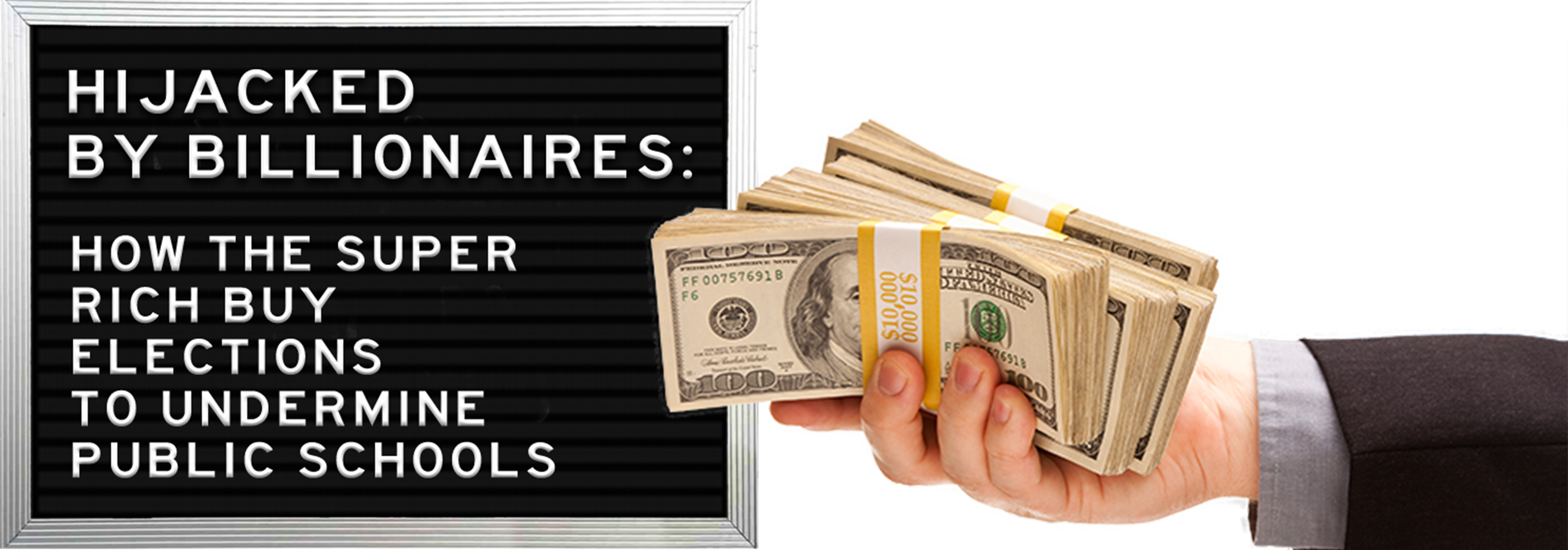
Hijacked by Billionaires: How the Super Rich Buy Elections to Undermine Public Schools - NPE Action

Hijacked by Billionaires: How the Super Rich Buy Elections to Undermine Public Schools - NPE Action

Hijacked by Billionaires: How the Super Rich Buy Elections to Undermine Public Schools


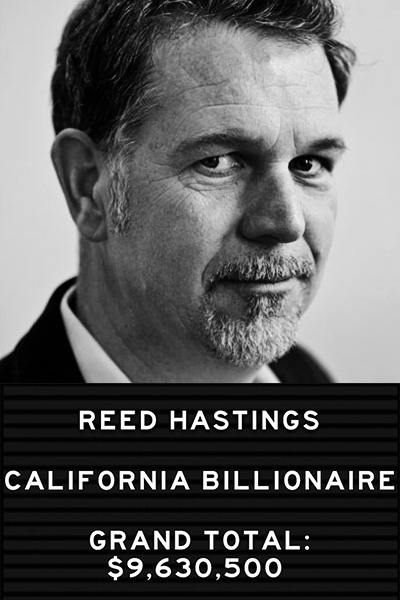
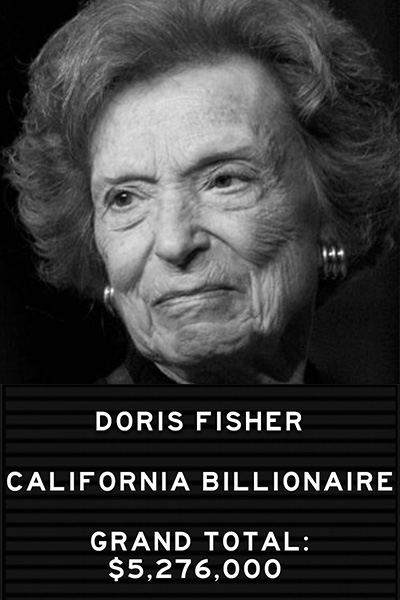
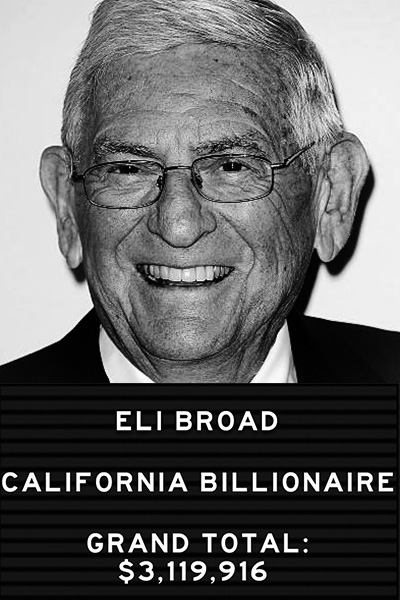
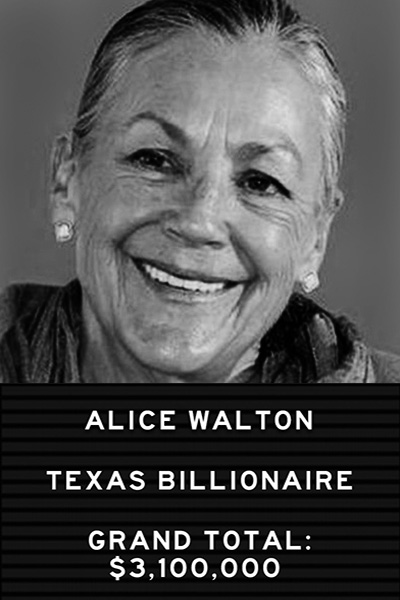
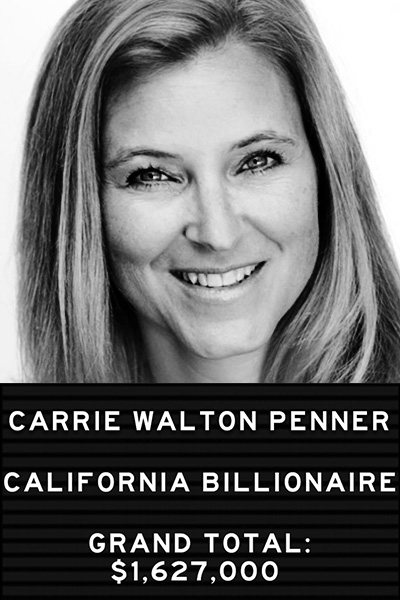
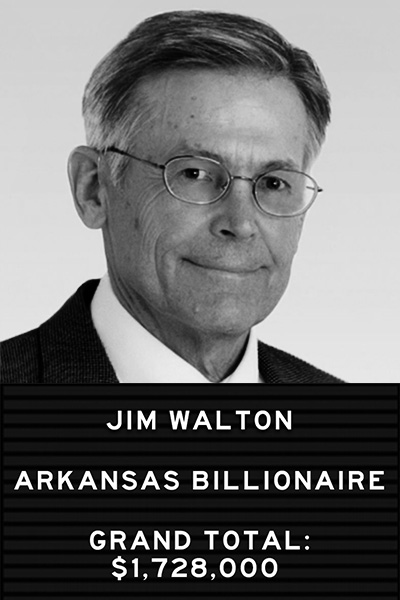
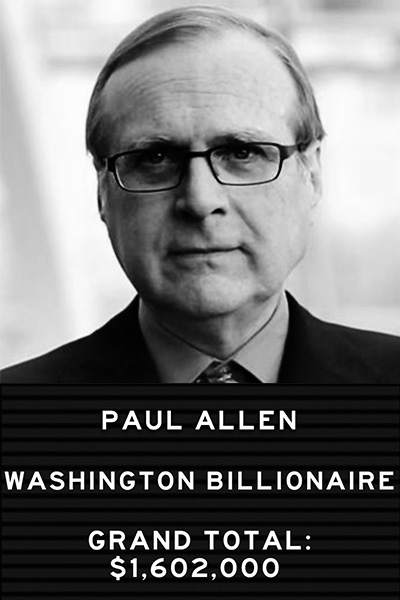
HERE'S HOW MUCH THE TOP TEN BILLIONAIRES SPENT ON RACES IN THIS REPORT

REED HASTINGS APPEARS IN THE FOLLOWING CASE STUDIES:
WASHINGTON
LOS ANGELES, CA
LOUISIANA
DORIS FISHER APPEARS IN THE FOLLOWING CASE STUDIES:
LOS ANGELES, CA
NEWARK, NJ
WASHINGTON
LOUISIANA
MICHAEL BLOOMBERG APPEARS IN THE FOLLOWING CASE STUDIES:
NEWARK, NJ
LOS ANGELES, CA
LOUISIANA
RHODE ISLAND
MINNEAPOLIS, MN
DENVER, CO
BILL & MELINDA GATES APPEAR IN THE FOLLOWING CASE STUDIES:
WASHINGTON
ELI BROAD APPEARS IN THE FOLLOWING CASE STUDIES:
LOS ANGELES, CA
RHODE ISLAND
WASHINGTON
LOUISIANA
ALICE WALTON APPEARS IN THE FOLLOWING CASE STUDIES:
WASHINGTON
LOS ANGELES, CA
LOUISIANA
DENVER, CO
JOHN & LAURA ARNOLD APPEAR IN THE FOLLOWING CASE STUDIES:
LOS ANGELES, CA
LOUISIANA
RHODE ISLAND
CARRIE WALTON PENNER APPEARS IN THE FOLLOWING CASE STUDIES:
LOS ANGELES, CA
LOUISIANA
RHODE ISLAND
JIM WALTON APPEARS IN THE FOLLOWING CASE STUDIES:
LOS ANGELES, CA
LOUISIANA
DENVER, CO
PAUL ALLEN APPEARS IN THE FOLLOWING CASE STUDIES:
WASHINGTON

CLICK ON THE IMAGES BELOW TO VIEW THE INTERACTIVE MAPS THAT ACCOMPANY EACH CASE STUDY

(Maps are best viewed on a laptop or desktop)


NPE Action - Political Endorsements - http://npeaction.org/ on @NPEaction


California Gives For-Profit Charters the Boot, K12 Inc. Largely the Reason | deutsch29

California Gives For-Profit Charters the Boot, K12 Inc. Largely the Reason | deutsch29

California Gives For-Profit Charters the Boot, K12 Inc. Largely the Reason


On September 07, 2018, California Governor Jerry Brown signed into law a bill authored by Assemblyman Kevin McCarthy prohibiting for-profit charter schools in California, effective July 01, 2019. From the bill:
On and after July 1, 2019, a petitioner that submits a charter petition or a charter school that submits a charter renewal or material revision application shall not operate as, or be operated by, a for-profit corporation, a for-profit educational management organization, or a for-profit charter management organization. For purposes of this section, a for-profit educational management organization and a for-profit charter management organization are entities that manage or operate a charter school.
For-profit charter schools currently operating in California must convert to non-profit management prior to each school’s renewal deadline.
For-profit virtual charter operator, K12, has a shady, self-serving history in California, including draining a school of funding and presenting the appearance of no debt (and, therefore, the appearance of a successful school) by washing the school’s books via a creation called a “balanced budget credit.” Though in July 2016, California Attorney General Kamala Harris charged that K12 funneled $168.5M via the “balanced budget credits” game, K12 settled (without admitting guilt) for $8.5M– and was still allowed to operate in California.
McCarthy’s bill prohibiting for-profit charter schools in California was first introduced in February 2017; the first analysis of the bill (California Assembly, May 09, 2017) focuses on K12’s profiteering as justification for the legislation:
Appropriate use of taxpayer dollars? While current law explicitly authorizes a charter school to operate as a nonprofit corporation, statute is silent on whether a charter school is permitted to operate as a for-profit corporation. Because of the permissive nature of the Education Code and absent a clear prohibition, several charter schools are currently operating as for-profit corporations.
The California Charter School Association indicates there are six for-profit charter schools in California. California Virtual Academies (CAVA) is California’s largest provider of online public K-12 education and a public charter school network that exists entirely online. Students take classes Continue reading: California Gives For-Profit Charters the Boot, K12 Inc. Largely the Reason | deutsch29


Friday, September 7, 2018

"We as students get to tell our story" — at the Premiere of "Personal Statement" | Schott Foundation for Public Education

"We as students get to tell our story" — at the Premiere of "Personal Statement" | Schott Foundation for Public Education

"We as students get to tell our story" — at the Premiere of "Personal Statement"


I recently had the honor of attending the premiere of Personal Statement, a film by Julie Dressner and co-directed by Edwin Martinez that follows three high school seniors who were trained to support their peers through the college application process — while applying to college themselves. Listening to the film’s protagonists speak about the power of a youth-led model to address inequity in college access, I could not help but think about all of the youth organizers from the Urban Youth Collaborative. Since 2005, UYC has been fighting to develop and get funding for a youth-led college access model as a part of their College Pathways campaign. More than 13 years ago, those youth organizers explained their motivations:
We realized that, in many of our communities, students were being pushed into GED programs and into the military, rather than being helped to realize their dreams for college. We believe that every NYC high school student has the fundamental right to obtain the counseling and academic support necessary for him or her to succeed in high school and go to college.
They advocated for Student Success Centers*, which would train high school students to work in partnership with adult counselors to support students through the college search, application, and decision-making process. Their efforts resulted in funding for Make the Road NY to open New York City’s first Student Success Center on the Bushwick Campus in November 2007 and then for Cypress Hills LDC to open the second on the Franklin K. Lane Campus in January 2008. Personal Statementfeatures these two Student Success Centers, alongside one of the many others that have been established since then in NYC. College Access: Research & Action (CARA) works with these Student Success Centers, providing 70+ hours of training for youth leaders to develop the knowledge and skills they need to do their work, and supporting their supervisors to establish needed structures and supports for effective programming.
Personal Statement shines a critical light on the complexity and challenges of the college process for low-income students, the gross inequity in available resources, and the power of young people to support their peers in realizing their college Continue reading: "We as students get to tell our story" — at the Premiere of "Personal Statement" | Schott Foundation for Public Education

Teachers Leave For-Profit Charter Schools at Alarming Rates, Report Says

Teachers Leave For-Profit Charter Schools at Alarming Rates, Report Says

Teachers Leave For-Profit Charter Schools at Alarming Rates, Report Says


Students attending many of the nation’s 6,900 public charter schools may see unfamiliar faces as they head back to school this year.
Public schools already experience high levels of turnover among educators, but school teachers are leaving charter schools managed by private, for-profit groups at an “alarming” rate, according to a new study published in The Social Science Journal.
Charter schools run by nonprofit groups also have higher turnover rates than regular charter schools, which tend to be run by local school officials and parents rather than “management organizations” that can operate several schools at once.
Public charter schools are publicly funded, but they are run by private or nonprofit groups under a contract or “charter” with a state government or local school district that holds them accountable to certain standards. From 2000 to 2016, the number of public schools operated under charter agreements nationwide increased from 2 to 7 percent, according to the National Center for Education Statistics.
Previous research has shown that teachers tend to leave their jobs at traditional public schools at lower rates than charters, and the study examines how working conditions at different types of charter schools lead to higher rates of teacher turnover. This matters because the financial cost of turnovers to schools is high, and inconsistency among educators can dampen the quality of the education that students receive.
Christine Roch, an associate professor of public management and co-author of the study, said teachers take their knowledge about students and their families, as well as expertise in working within the school’s curriculum and practices with them when they leave. This means that inconsistency among educators can have negative impacts on academic Continue reading: Teachers Leave For-Profit Charter Schools at Alarming Rates, Report Says


The fight continues: which states will teachers strike in next? | US news | The Guardian

The fight continues: which states will teachers strike in next? | US news | The Guardian

The fight continues: which states will teachers strike in next?
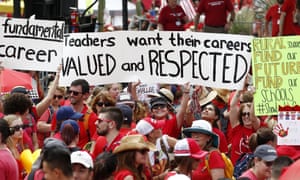
Thousands protest at the Arizona capitol for higher teacher pay and school funding on 26 April.


Last spring, a wave of teachers strikes across the United States helped spur mass support for educators – and wage raises – after decades of cuts and demonization by both Republicans and Democrats alike. As schools start again, teachers are determined to keep fighting.
As a new school year begins, teachers in California, Colorado and Illinois, among other states, are determined to continue the fight for better pay and school funding

One major union is asking its member to strike this fall: the 34,000 members of the United Teachers of Los Angeles (UTLA). On 30 August, 98% of teachers voted to authorize a strike at the nation’s second largest school district.

While the strike in the spring focused on Republican states, a strike in Los Angeles would be the first to target Democrats, who have also promoted schemes to bust teachers’ unions and open non-union charter schools that divert funding away from unionized public schools.
“California is a Democratic state, yet we have the highest number of unregulated charter schools in the nation. And we are 43rd in the nation in terms of per pupil spending when we are the fifth largest economy in the world,” said UTLA bargaining chair Arlene Inouye.
Teachers in Washington state’s Vancouver and Ridgefield have already taken votes to authorize a strike if they can not agree a pay rise. At the end of August, teachers in Longview, Washington, walked out after decisively rejecting a 6.9% average pay raise. More strikes are being considered in Colorado and Winnebago, Illinois.
The teacher action looks sure to spread as the school year marches on. Continue reading: The fight continues: which states will teachers strike in next? | US news | The Guardian

Could Weighted Education Funding Campaigns Be Advancing An ALEC-Backed Agenda? – Wrench in the Gears

Could Weighted Education Funding Campaigns Be Advancing An ALEC-Backed Agenda? – Wrench in the Gears
Could Weighted Education Funding Campaigns Be Advancing An ALEC-Backed Agenda?

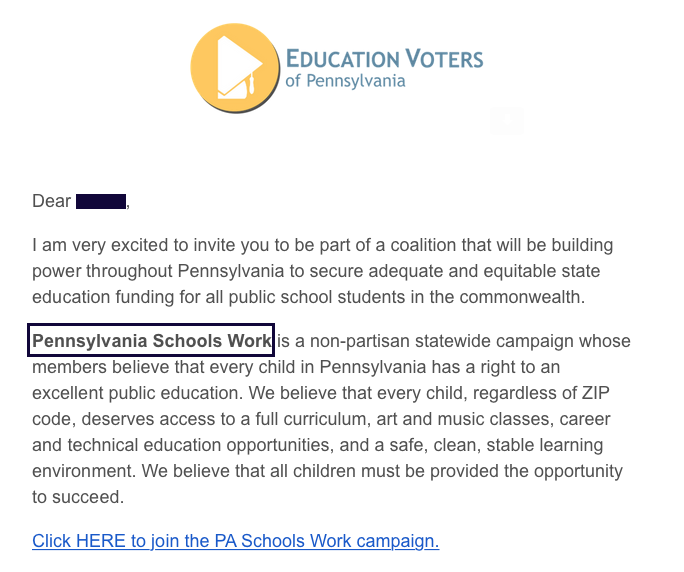
Campaigns have been launched across the nation to document and address chronic deficits in state-level education funding. Undoubtedly, the intentional underfunding of our public schools is a serious concern. One such campaign was recently announced in my home state, PA Schools Work. According to their website, the coalition, which includes a number of union and child and education advocacy groups, builds upon previous work done around Pennsylvania’s 2016 Campaign for Fair Education Funding.
What immediately jumped out at me when I received the August 8 email inviting me to join was the use the word “Work” in the campaign name. What I’ve come to realize is that the ed-reform landscape can often be deciphered if you understand the language they’re using. Once you unravel that code, you can figure out where things are headed.
PA Schools Work
There is tremendous pressure now to align curriculum to the needs of industry, and the research I have been conducting around outcomes-based contracting indicates that “Work” often equates to data-driven metrics tied to outsourced public services. See Bloomberg Philanthropies’ “What Works Cities” for example. In education this is increasingly manifested in the adoption of ed-tech “solutions.” So, for me at least, “Work” in this context becomes an extremely loaded term. As a parent, I can think of many other words I’d prefer to see used to describe an optimally funded K12 education. Pennsylvania schools could just as easily empower, nurture, sustain, excite, imagine, or create. Work? There’s plenty of time in post-secondary education, once children are old enough to make informed decisions about their futures, before that word needs to take center stage.
It’s also important to note that since last fall Pennsylvania has been battling legislation aimed at creating Education Savings Accounts. Senate Bill 2, not yet passed, would establish a program run through Pennsylvania’s Department of the Treasury that would award quarterly payments to families of children enrolled in (or in the catchment of if a kindergarten student or first grader) schools documented as “low-achieving.” Schools Continue reading: Could Weighted Education Funding Campaigns Be Advancing An ALEC-Backed Agenda? – Wrench in the Gears


What Spurred a 98% Strike Vote by LA Teachers? Plutocrats Pushing Charter Schools

What Spurred a 98% Strike Vote by LA Teachers? Plutocrats Pushing Charter Schools

What Spurred a 98% Strike Vote by LA Teachers? Plutocrats Pushing Charter Schools


Public school teachers in Los Angeles voted overwhelmingly in late August to authorize a strike over stalled contract negotiations, but the issues really energizing the union membership go far beyond a new contract. Instead, say union leaders and rank-and-file members, the teachers are growing increasingly alarmed at a small clique of billionaires that has won considerable sway over the L.A. school board and is aggressively promoting charter schools as a replacement for public education.
In a stunning display of solidarity, 98 percent of some 28,000 union members voted to authorize strike action. Arlene Inouye, co-chair of the contract bargaining committee of United Teachers of Los Angeles (UTLA) union, tells In These Times that the vote reflects the dismay of the teachers and other education professionals at the actions of the school board.
For many teachers, the focus right now is on Austin Beutner, the new schools superintendent chosen by the board of Los Angeles Unified School District (LAUSD) earlier this year. Beutner is a former investment banker with no experience running public schools who replaced a former teacher as superintendent. The appointment was “a scandal,” says Inouye, at the time tipping the board to a 4-3 majority that favored charter schools over traditional public schools. One of Beutner’s first moves in his new job was to lead the LAUSD into an impasse with the union over the new contract.

The Beutner appointment is merely the tip of the iceberg as far the union is concerned, Inouye continues, noting that teachers and other educators were “outraged” last month to see school board member Ref Rodriguez plead guilty to Continue reading: What Spurred a 98% Strike Vote by LA Teachers? Plutocrats Pushing Charter Schools


Criminalizing Childhood: School Safety Measures Aren’t Making the Schools Any Safer | Dissident Voice

Criminalizing Childhood: School Safety Measures Aren’t Making the Schools Any Safer | Dissident Voice

Criminalizing Childhood: School Safety Measures Aren’t Making the Schools Any Safer


Every day in communities across the United States, children and adolescents spend the majority of their waking hours in schools that have increasingly come to resemble places of detention more than places of learning. From metal detectors to drug tests, from increased policing to all-seeing electronic surveillance, the public schools of the twenty-first century reflect a society that has become fixated on crime, security and violence.
— Annette Fuentes, Investigative Journalist, Lockdown High: When the Schoolhouse becomes a Jailhouse, February 12, 2013
It used to be that if you talked back to a teacher, or played a prank on a classmate, or just failed to do your homework, you might find yourself in detention or doing an extra writing assignment after school.
Of course, that was before school shootings became a part of our national lexicon.
Nowadays, as a result of the government’s profit-driven campaign to keep the nation “safe” from drugs, weapons and terrorism, students are not only punished for minor transgressions such as playing cops and robbers on the playground, bringing LEGOs to school, or having a food fight, but they are being punished with suspension, expulsion, and even arrest.
Welcome to Compliance 101: the police state’s primer in how to churn out compliant citizens and transform the nation’s school’s into quasi-prisons through the use of surveillance cameras, metal detectors, police patrols, zero tolerance policies, lock downs, drug sniffing dogs, strip searches and active shooter drills.
If you were wondering, these police state tactics have not made the schools any safer.
Rather, they’ve turned the schools into authoritarian microcosms of the police state, containing almost every aspect of the militarized, intolerant, senseless, overcriminalized, legalistic, surveillance-riddled, totalitarian landscape that plagues those of us on the “outside.”
If your child is fortunate enough to survive his encounter with the public schools, you should count yourself fortunate.
Most students are not so lucky.
From the moment a child enters one of the nation’s 98,000 public schools to the moment he or she graduates, they will be exposed to a steady diet of draconian zero tolerance policies that criminalize childish behavior, overreaching anti-bullying statutes that criminalize speech, school resource officers (police) tasked with disciplining and/or arresting so-called “disorderly” students, standardized testing that emphasizes rote answers over critical thinking, politically correct mindsets that teach young people to censor themselves and those around them, and extensive biometric and surveillance systems that, coupled with the rest, acclimate young people to a world in which they have no freedom of thought, speech or movement.
By the time the average young person in America finishes their public school education, nearly one out of every three of them will have been arrested.
More than 3 million students are suspended or expelled from schools every year, often for minor misbehavior, such as “disruptive behavior” or “insubordination.”


Support The Student Gun Violence Summit | Guns Down America - https://gunsdownamerica.org/campaign/student_summit/