Latest News and Comment from Education

Wednesday, June 21, 2017

Trumped Up Diane Ravitch's blog | A site to discuss better education for all

Diane Ravitch's blog | A site to discuss better education for all:

Trumped Up Diane Ravitch's blog
A site to discuss better education for all


Here is Andrew Coulson Series on Virtues of Privatization

Watch libertarian Andrew Coulson’s film, now showing on some, not all, PBS stations around the nation. It was paid for by libertarian foundations that support privatization. The lead funder–the Rose-Mary and Jack Anderson 

Florida: Charter Operator Charged with Theft, Fraud

When will the citizens of Florida say “Enough is enough”? When will taxpayers stop subsidizing frauds who open charter schools? The founder of a charter chain in Florida was charged with racketeering and fraud The founder of a 

Ohio: Vouchers Are Failing to Help Kids, but Legislature Wants to Expand Them

Stephen Dyer of Innovation Ohio writes here that vouchers cost Ohio taxpayers hundreds of millions of dollars every year, yet voucher students are performing worse than their peers in public schools. I don’t like writing these things. I really 

D.C.: Whether Public or Charter, Teachers Are Leaving at High Rates

Thanks to G.F. Brandenburg for pointing me to this important post about teacher attrition rates in D.C. by Valerie Jablow. D.C., lest we forget, is one of the epicenters of corporate reform. In 2007, D.C. established mayoral control of the schools. Mayor Adrian Fenty hired Michelle Rhee and gave her full authority to remake the schools. Rhee stayed until Fenty was defeated at the next election in
Maurice Cunningham: Dark Money Combines to Privatize Public Schools: PLEASE READ THIS!

This may be the most important post you read today. Maurice Cunningham, a professor of political science at the University of Massachusetts, began investigating the millions of dollars pouring into the state during the referendum on charter schools last fall. He wondered why so many billionaires from other states wanted to expand the number of charter schools in Massachusetts. He continued his in
Nancy Flanagan: The War on the Teaching Profession Is No Longer Covert

In 2010, the corporate reform movement emerged as a national phenomenon. “Waiting for Superman” was the rage that fall, aided by a massive Gates-funded PR program, asserting that bad schools were caused by lazy, greedy teachers. Suddenly, the push for privately managed charter schools and attacks on teachers merged as a coherent “reform movement,” helped along by $5 billion in Race to the Top fed

YESTERDAY

Mike Klonsky: Rahm Emanuel Going to D.C. to Boast of His “Success” as a “Reformer”

Mike Klonsky writes that it was another horrendous weekend of youth violence and murder in Chicago. And Rahm Emanuel, the mayor who will go down in history for closing 50 public schools in one day, is going to speak at the National Pres Clob about his punitive plan to withhold high school diplomas from students who can’t produce evidence of college acceptance or a job or enlistment in the militar
Help is On the Way! Education Law Center Launches “Voucher Watch”

Legal teams will track voucher plans and file lawsuits against them. No public finds for private and religious schools. No public funds for private security forces, private firefighters, private swimming pools, private beaches, private parks. Public means public! Under democratic control. Open meetings. Financial transparency. Open to the public. VOUCHER WATCH LAUNCHED TO COMBAT USE OF PUBLIC FUN
Steve Zimmer Reflects on the Los Angeles School Board Election, the Most Expensive in American History

Steve Zimmer has been on the Los Angeles Unified School Board for eight years. This spring he ran for re-election. He came close to the 50% mark in the first round, but didn’t cross it. In the runoff, turnout was very low (less than 10%), and he was beaten by Nick Melvoin, who was funded by the Billionaire Boys Club. He wrote these reflections on his defeat: Friends, It has been a month since the
Lubienskis: Why is Betsy DeVos Pushing Vouchers When Research Shows They Don’t Work?

Christopher Lubienski and Sarah Lubienski are among the nation’s leading researchers on the subject of school choice. Their book, “The Public School Advantage: Why Public Schools Outperform Private Schools” is must reading. Christopher Lubienski is professor of education policy at Indiana University. Sarah Theule Lubienski is a professor of mathematics education at the University of Illinois at U
Duane Swacker Makes His Mark in Australia!

Phil Cullen is a blogger in Australia, whose blog “The Treehorn Express” eloquently savages national standards and testing. Cullen discovered our reader Duane Swacker, who teaches in Missouri. Duane regularly lectures us on Noel Wilson’s devastating critique of standardized testing. I am happy to point out that Phil Cullen discovered Duane Swacker and introduced Noel Wilson’s thinking to many Aus
Carpe Diem Charter Schools, Once Lauded, Now Sinking

The Carpe Diem charter chain started in Arizona in 2012. Google the chain, and you will find articles praising the promise of this school where students sat in cubicles with a computer, looking like a call-center. Flash forward to 2017, and it turns out that students don’t want to be taught in a call-center. The Hechinger Report, which wrote about the promise of the charter when it opened, discov


Marc Tucker: Trump’s Budget Takes from the Poor to Give to the Rich

Marc Tucker says that Trump’s budget will not make America great again. It is a reverse Robin Hood plan, taking from the poor and giving to the rich. “The first reaction is all gut. The budget, on its face, would represent a gigantic 
 Diane Ravitch's blog | A site to discuss better education for all:

Parents, educators, neighbors unite behind two ESP unions bargaining a new, delayed contract.

Parents, educators, neighbors unite behind two ESP unions bargaining a new, delayed contract.:

Solidarity, Activism Wins the Day

Selah support employees march from the district office through downtown Selah after the district moved a 7 p.m. meeting to 7 a.m. to avoid the employee rally.
Photo by Dale Folkerts (c) WEA 2017


It was three days before Thursday’s regular 7:00 p.m. board meeting in the Selah School District (SSD) of Washington state. People in this close-knit community near Yakima can set their watches by this long-standing meeting.
On that Monday morning, April 24, members of the Selah Education Support Personnel (SESP) and Selah Educational Office Personnel (SEOP) posted fliers on union bulletin boards at five schools and the administration office announcing their Rally for Respect starting at 5:30 p.m. on the day of the meeting.
“They Can Run But They Can’t Hide,” the fliers stated.
Tensions were high that week as both unions and SSD had been bargaining a joint contract for 18 months. Notices of the rally strained relations further since it called for protesters to assemble just outside the board room building.
“We wanted board members to see all the support we had as they entered the parking lot,” says Cindy Huntamer, SEOP president. “We made signs and buttons … ordered pizza and sodas. We were excited.”
The board room, however, was empty at 7:00 p.m. that Thursday.
School administrators decided to move the meeting up by 12 hours to 7:00 a.m.
Stay the Course
“District officials claimed the decision was made the week before, but they didn’t announce it until the day before,” says Huntamer, a federal programs secretary at the district’s early learning center. District officials had apparently ignored a Washington state law requiring state agencies to provide 20 days notice to change a regularly scheduled meeting of this type.
“We found out by email,” Huntamer adds. “We were not pleased over the sudden change or that the meeting was now at a time when most people are at work.”
Unfazed, some members attended the early part of the meeting before checking in Parents, educators, neighbors unite behind two ESP unions bargaining a new, delayed contract.:

Washington Grabs Power=Dog Bites Man | The Merrow Report

Washington Grabs Power=Dog Bites Man | The Merrow Report:

Washington Grabs Power=Dog Bites Man
Big surprise: Washington ain’t letting go of its authority to run public education!  That’s the gist of news about Education Secretary Betsy DeVos and the Department of Education that she now runs. Here’s the lede from one story, this one by Tom Chorneau of Cabinet Report:
“(District of Columbia) In a muddled if not contrarian response to a state plan for implementing the Every Student Succeeds Act, the U.S. Department of Education has suggested, among other things, that student performance can only be measured by math and reading scores. (emphasis added)
The surprise pronouncement, included as part of the department’s review of Delaware’s plan for meeting ESSA requirements, stands in stark contrast to what architects of the law said were two key goals—giving states the freedom and the responsibility for designing their own accountability systems; and removing the federal government as arbiter over school performance.”
Now, remember that Donald Trump promised to give control of education back to local communities, and Secretary DeVos often speaks about her commitment to giving families choices and the importance of freeing states and communities from the heavy hand of Washington.  Now, however, we see that her vision closely Washington Grabs Power=Dog Bites Man | The Merrow Report:


Marie Corfield: Where Have All the Democrats Gone? Part I

Marie Corfield: Where Have All the Democrats Gone? Part I:

Where Have All the Democrats Gone? Part I

Image result for Where Have All the Democrats Gone

This post is the start of a series. I don't know how many parts it will eventually be. Guess that depends on how long Democratic elected officials at the state and federal levels continue to make bone-headed moves like this...


Guest post by Susan Cauldwell Carlsson of Save Our Schools NJ

Image may contain: one or more people, suit, wedding and indoorThe NJ Senate Judiciary Committee, headed by Senator Nick Scutari (pictured with Senate President Steve Sweeney), conducted two very shady hearings on Governor Christie’s nominees to the State BOE. These hearings exposed how broken our legislative process is, and how power is concentrated in just a few legislators, like the Senate President. The public, rank and file legislators, and democracy are the losers in Trenton. Accountability and transparency are nearly non-existent.
On May 25th, the Judiciary Committee, upon the recommendation of the Governor, voted to remove State Board President Mark Biedron, and State Board VP Joe Fisicaro. Their replacements are the Governor’s former law partner, who has no background in public education, and a Moorestown BOE member, an ally of the Senate president. This nominee apparently did not understand that she could not keep her local board seat while serving on the State BOE! A third member, former teacher Edie Fulton, was also scheduled to be removed, but an incredibly sloppy background check on her replacement scuttled that for now. To date, no explanation has been given for their removal. We can only posit that this is retribution for these members' independent actions, that have obviously not pleased the Governor and/or Senate President.
Three SOSNJ members questioned the timing of these actions, given that the very Marie Corfield: Where Have All the Democrats Gone? Part I:


Audio: New research: student well-being higher in diverse schools | 89.3 KPCC

Audio: New research: student well-being higher in diverse schools | 89.3 KPCC:

New research: student well-being higher in diverse schools

Image result for Character Counts program


A study by University of California Los Angeles researchers published in the journal Child Development on Tuesday finds that students who attend more racially- and ethnically-diverse schools report less vulnerability, loneliness, insecurity and bullying.


“There’s more of a balance of power in these diverse schools,” said report co-author Sandra Graham.
The study polled nearly 6,000 sixth graders in 26 middle schools, mostly in Los Angeles County. The student population of 11 of the schools was dominated by one ethnic or racial group. In nine of the schools, two ethnic or racial groups made up most of the student body, and in six of the schools the student population was composed of several ethnic or racial groups in roughly equal proportions.
In the more diverse schools, “kids have more opportunity to have cross-race friendships and then they become protective," Graham said. "So if you’re in a diverse school and you’ve made friends with people from different racial and ethnic groups then they help protect you, they help introduce you to kids in their ethnic, racial group, there’s more opportunities to find your niche and fit in."
Student populations in schools, she said, are becoming more racially and ethnically segregated while California’s population is becoming more diverse.
The students at Arcadia High School are 64 percent Asian, for example, while 79 percent of students at Corona del Mar High School are white. At Huntington Park High School, 97 percent of students are Latino.
The study’s findings shed light on the potentially harmful effect that disconnect may be having on students and the shock that some students in less diverse schools may face when they move to more diverse places and enter a workplace with diversity very unlike their schools.
Some schools with lopsided ethnic and racial enrollments are using character education and other methods to prepare students for the diversity they’ll encounter after they receive their high school diploma.
“Our 'Character Counts' program has probably prepared our students more than anything for their life, because it’s a life skill to have good character, showing respect,” said Rani Bertsch, principal of Griffiths Middle School in Downey. Student Audio: New research: student well-being higher in diverse schools | 89.3 KPCC:

We Can Only Wish that Politicians Would Learn a Lesson from Sam Brownback’s Failed Tax Cutting | janresseger

We Can Only Wish that Politicians Would Learn a Lesson from Sam Brownback’s Failed Tax Cutting | janresseger:

We Can Only Wish that Politicians Would Learn a Lesson from Sam Brownback’s Failed Tax Cutting

Image result for Brownback’s Failed Tax Cutting


It’s budget season. At the federal level, Congress will soon consider the President’s proposed 2018 budget. And many states are up against a June 30th deadline: the end of Fiscal Year 2017 and the deadline for approving a new budget. Yesterday’s post examined the catastrophic programmatic implications of President Trump’s federal budget proposal. Today the focus will be a little different— taxing policy at the state, not the federal level, and the tax slashing that continues to underpin much budgeting in 2017. Please continue reading; I promise this post will not be overly technical.
Much of the talk about state taxing policy these days relates to what just happened in Kansas. Both houses of the Kansas Legislature had voted to overturn several years of Governor Sam Brownback’s tax cutting and at the same time to eliminate a special taxing innovation that reduced business taxes on pass-through income. Governor Brownback, whose dedication to tax cutting is undeterred, vetoed the Legislature’s big tax increase. But two weeks ago, the Legislature—both houses dominated by Republicans—overrode Governor Brownback’s veto. Since Gov. Brownback initiated his experiment with tax cutting, Kansas has fallen into a fiscal crisis, and its public schools had suffered from lack of funding. Earlier this spring, the state’s supreme court had presented an ultimatum to the Legislature: improve school funding by June 30, or school will not open in September.
Brownback has called his tax cuts a real life experiment in supply-side economics. His hypothesis? That the state’s economy would thrive because everybody would be drawn to low-tax-Kansas to open businesses. Explosive economic growth, he predicted, would follow the tax cuts.  Here is Michael Tomasky, writing for the NY Times about how the experiment turned out: “Kansas, under Gov. Sam Brownback, has come as close as we’ve ever gotten in the United States to conducting a perfect experiment in supply-side economics. The conservative governor, working with a conservative State Legislature, in the home state of the conservative Koch brothers, took office in 2011 vowing sharp cuts in taxes and state spending…. The taxes were cut, and by a lot. The cumulative cut was forecast to be $3.9 billion by 2019… The cuts came. But the growth never did… The experiment has been a disaster… Finally, even the Republican Kansas Legislature faced reality.”
Tomasky traces some of this back to Grover Norquist: “Republicans are not supposed to raise We Can Only Wish that Politicians Would Learn a Lesson from Sam Brownback’s Failed Tax Cutting | janresseger:
 Image result for Brownback’s Failed Tax Cutting


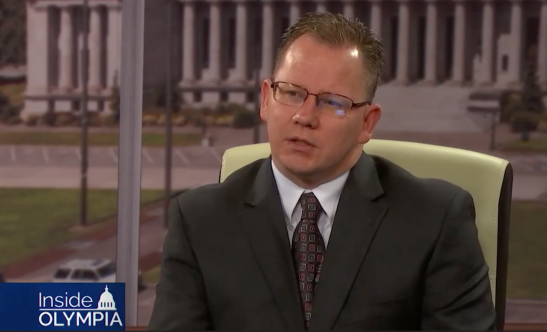
State Superintendent Chris Reykdal’s Interview with Inside Olympia | Seattle Education

State Superintendent Chris Reykdal’s Interview with Inside Olympia | Seattle Education:

State Superintendent Chris Reykdal’s Interview with Inside Olympia

Screen Shot 2017-06-20 at 9.16.34 PM


Editor’s Note: This is an important interview which slipped under the radar of many parents and educations.
In it, State Superintendent Chris Reykdal, talks about McCleary and education funding, Plus, Reykdal explains parts of his plan to redesign K-12 education and the importance of technology to his vision.  
Please take the time to read the transcript and share your thoughts in the comment section. I think there’s a lot to talk about.  
The interview can be seen here. Below is a transcript of the interview. 
-Carolyn Leith
Well a couple things. On the political front I would say, look at our levy passage rate around the state, folks in our state love their schools, they trust their local schools, which is why as much of this has to be in local controls hands as possible. The the further you get from people on the ground the more skeptical they get. So they’ll tolerate a package in Olympia that supports schools but gives their districts the ability to have some flexibility. The further up you go the less they’re gonna trust that for one. The other thing is we’re doing things very differently in this state. I I mean I wish we could spend an hour on your show going through twenty years of education reform to talk about what we’re doing: more math, more science, more English language arts, more rigor in the curriculum, more expectation of teachers, a better evaluation system, a school rating system, our achievement index. All of that by the way is getting reimagined right now because we owe a consolidated accountability report if you will to the federal government by September. And we’re writing that plan now. You’re gonna see variables in that achievement index where we, where we look at schools way beyond test scores, which we oversimplified. You’re gonna see things like chronic absenteeism and whether or not they’re at this critical benchmark, 9th grade success…and whether they’re getting dual credit for courses in the 11th and 12th grade. We are doing things very differently in public schools. I would argue a little humorously, most of the cynics of reform have not stepped in a classroom. If you go into a classroom today and see what’s happening, from a, from a third grade teacher, all the way to a high school science teacher, you would see a very different experience than when you went to school.
-Chris Reykdal
Inside Olympia, April 27th 2017
Washington State Superintendent of Public Instruction Chris Reykdal with Austin Jenkins.
Jenkins:  As you complete your first 100 days, a former state lawmaker yourself, what are your, there’s a little bit of déjà vu no doubt going on, but what is your thought, as we State Superintendent Chris Reykdal’s Interview with Inside Olympia | Seattle Education:

I Enrolled in the Success Academy Ed Institute | deutsch29

I Enrolled in the Success Academy Ed Institute | deutsch29:

I Enrolled in the Success Academy Ed Institute


On June 19, 2017, education historian Diane Ravitch posted that New York’s Success Academies (SA) now has an “education institute” available to the public.
So, I signed up– which I was surprised to be allowed to do since I am a traditional public school teacher and decided supporter of traditional public schools.
I also signed up for the new-content alerts.
My initial intention in accessing the SA institute link was to examine the fees associated with SA’s institute. Yet there are no fees.
There are, however, the terms and conditions to which I had to agree. These include not “publishing the content in any media,” which could make it difficult to utilize the curriculum offerings (a principal point of the institute, or so it seems).
I agreed to not copy and post content (including videos) from the site. I do plan to comment on the content, a practice that might also get me canned if my commentary is perceived as “damaging to the website.”
I will try to play nice because I would like to see where this SA institute is headed. So far, it includes a K-4 literacy curriculum as well as school design articles and videos for elementary and middle schools, with the promise of school design info for high school set to arrive in December 2017.
I did watch a few of the literacy videos. In each one that I saw, all students sat obediently with their hands clasped as they tracked the teacher the entire time with their eyes. When given a partner discussion task, the students all began precisely when told and appeared to all be on task during the expected time.
In the videos I viewed, student behavior was perfect.
I question exactly how emotionally healthy such an atmosphere is for children and whether such training exploits a child’s desire to please adults. Frankly, I find the student behavior homogeneity in the SA instructional videos unsettling.
The atmosphere is too controlled… which begs a question:
If SA is using its institute as a means of publicizing its success and sharing tips with others on how to be as successful, what evidence is there that the SA model can work I Enrolled in the Success Academy Ed Institute | deutsch29:

San Diego Schools Embrace Untested “Depersonalized” Learning | tultican

San Diego Schools Embrace Untested “Depersonalized” Learning | tultican:

San Diego Schools Embrace Untested “Depersonalized” Learning


San Diego Unified School District (SDUSD) is spending lavishly on technology despite their budgets being decimated by California’s unaccountable charter school industry. During the 2016-17 school year, SDUSD bought digital badging and 16,000 new Chromebooks.
“The district is struggling with a projected $124 million shortfall to its $1.4 billion budget, and have issued in the neighborhood of 1,500 layoff notices to full and part-time employees” reports the San Diego Union.
This kind of insanity seems to be a national movement. There is almost no evidence supporting these new theories of technology driven education. Yet, the leaders of financially strapped SDUSD are spending to have their students become experimental subjects for learning products produced by technology companies.
recent article in the NY Times by Natasha Singer describes how DreamBox (a widely distributed math learning program) is popular with children but not for doing the math but for doing things like spending points to customize their avatar. Singer writes,
“So far there is little proof that such technologies significantly improve achievement. Adaptive learning courseware, for instance, generally did not improve college students’ grades or their likelihood of completing a course, according to a 2016 report on some of these programs by the S.R.I. Education research group.”
“Badges, We Don’t Need No Stinking Badges”
My friend, Tim, graduated for University City High School this year and invited San Diego Schools Embrace Untested “Depersonalized” Learning | tultican:


TENNESSEE EDUCATION VOICES: Wendy Tucker « Dad Gone Wild

TENNESSEE EDUCATION VOICES: Wendy Tucker « Dad Gone Wild:

TENNESSEE EDUCATION VOICES: WENDY TUCKER


I started this series of interviews in order to get a better understanding of the people who shape education in Tennessee. In order to get a robust picture, it is important to talk with people with disparate views from my own. Wendy Tucker is a parent, advocate, adviser to former Nashville Mayor Karl Dean, and current member of the Tennessee State Board of Education. Over the years, we’ve often found ourselves on opposite sides of education policy debates, and it hasn’t always been civil. A couple weeks ago, Wendy said enough was enough and how about we sit down and have a coffee. I agreed, and the result was an interesting conversation. I’m not sure that the conversation led to a change in belief for either of us, but we both gained a greater understanding of each other’s motivations, experiences, and intentions on which those beliefs were forged. Hopefully we also found out we were both a little more multi-dimensional then previously thought.
Dad Gone Wild: I’m always interested in people’s stories and how they came to be involved in public education. So how about a little bit of your history and how did you arrive where you are now? You’re not from Tennessee, are you?
Wendy Tucker: I’m not. I am from a small south Louisiana town, Hammond, Louisiana. Probably never heard of it. I am the youngest of four, raised by a divorced single mother. And I am the first in my family to ever graduate from college. That happened mainly as a result of a very persistent parent and two amazing teachers who didn’t take no for an answer because where I come from at that time, college in my hometown wasn’t really necessarily an automatic part of the equation. I was able to get a scholarship and go to Tulane, where I went to law school as well. After that, I came to Nashville and became a public defender. It was impossible to miss the connection between our young clients and the fact that TENNESSEE EDUCATION VOICES: Wendy Tucker « Dad Gone Wild:

What Philando Castile Taught Me About Fatherhood [Medium] | The Jose Vilson

What Philando Castile Taught Me About Fatherhood [Medium] | The Jose Vilson:

WHAT PHILANDO CASTILE TAUGHT ME ABOUT FATHERHOOD [MEDIUM]

Image result for WHAT PHILANDO CASTILE TAUGHT ME ABOUT FATHERHOOD [MEDIUM]


Recently, I put a post on Medium about Philando Castile and Father’s Day, which I think will be useful for any day:
“Castile’s name comes to me every so often in the quietest moments. Before I became a father, I knew I had internal work to do before taking on the gift and the burden of another life. My father showed up once or twice a year, and I begrudged him for it for decades. My stepfather was mentally and physically abusive, and I learned to create my own version of manhood from that. The various men in my life, from the priests and professors who dropped gems of wisdom to the celebrities and activists I admired from afar, couldn’t teach me how to be a better man for myself, much less for others.
Teaching over a thousand students over the course of 12 years gave me glimpses of how deep I would have to love a child, whether they excelled in class or not. Even when some have called me like a “father,” I knew it was only a sample of the joy and rapture I wanted to feel as I held my son.”
For more, please read the Medium article. Share. Let me know what you think. Thanks!
 What Philando Castile Taught Me About Fatherhood [Medium] | The Jose Vilson:

How Can We Stand By? Josh Hickey, NY Teacher Badass Teachers Association

Badass Teachers Association:

How Can We Stand By?  

By:  Josh Hickey, NY Teacher  


The day after the announcement that I won my first unopposed election for building representative almost ten years ago, a colleague approached me in the main office just outside of the mail room and said they saw the election results and were happy with the outcome, and how they voted for me.  A lot of different things to say raced through my head but in the end, all I said was “Thanks.”  I felt weird about the election being uncontested, and on top of that, I have a tendency to be terrible at small talk.  On the other hand, if I’m asked a direct question, particularly about something about which I have a strong opinion, I can talk at length.  Since I seem to have plenty of strong opinions, I can be a real hit at parties if you don’t mind skipping past the part where I’m awkwardly fumbling for something to say.

A situation similar to the scenario I described above happened over Memorial Day weekend; and I’ll skip past all the awkward parts, and paraphrase the real substance of the conversation I had.  We were talking about an article that had been shared over Twitter, and someone asked me if the increasing percentage of students in “low-income households” in public schools in the United States today was due to the expansion of voucher programs, knowing as we do that the majority of the students taking advantage of these programs are suburban children, or if these alarming conditions were the result of a greater percentage of the population experiencing poverty overall. I felt that the conversation that followed was an important one because the path it took intersects so intimately with many different aspects of our modern and professional lives as teachers; including socio-economic status and its impact on student achievement, attacks on education and education policy in general, state tax codes and their impact on schools and society in general, the role of unions in terms of class, and also the parallel decline of unions and the middle class in the United States.

Yes, it is true that since 2013, the majority (51%) of students attending public schools in this country experience the condition we call poverty.  Just in case you think that our state is an exception to this trend, New York stood at 48% in the study conducted by the Southern 
Badass Teachers Association: