Latest News and Comment from Education

Wednesday, February 1, 2017

Special Nite Cap: Catch Up on Today's Post 2/1/17


Special Nite Cap: Catch Up on Today's Post 2/1/17

Featured Post

Betsy DeVos’ Response to Senator Patty Murray’s Question about Virtual Schools | deutsch29


California One System Serving the Whole Child - Applications for Summer Food Service Program (CA Dept of Education)
California One System Serving the Whole Child - Initiatives & Programs (CA Dept of Education) : State Schools Chief Tom Torlakson Announces Applications for Summer Food Service Program SACRAMENTO—State Superintendent of Public Instruction Tom Torlakson today announced that applications are available for the Summer Food Service Program, a federally funded, state-administered program that serves me
All Things Education: Why DeVos Might Lose
All Things Education: Why DeVos Might Lose : Why DeVos Might Lose So far, Betsy DeVos, Donald Trump's nominee for U.S. Secretary of Education, seems to be one of the most, if not the most, unpopular of all of the cabinet nominees. That's not to say that she won't be confirmed. But as of my writing this, she has not been confirmed and only one more vote from the Republicans is needed to deny her t
Betsy DeVos Likely To Spread Quack Science Instead Of Teaching The Real Thing
Betsy DeVos Likely To Spread Quack Science Instead Of Teaching The Real Thing : Betsy DeVos Likely To Spread Quack Science Instead Of Teaching The Real Thing After a rocky confirmation hearing in Senate committee, Betsy DeVos, Trump’s nominee for Secretary of Education, cleared to the full Senate on a vote that strictly followed party lines. But now, two Republican Senators who voted DeVos out of
NJ: Highest court saves schools from Christie bullying and spineless lawyering. For now. |
NJ: Highest court saves schools from Christie bullying and spineless lawyering. For now. | : NJ: Highest court saves schools from Christie bullying and spineless lawyering. For now. New Jersey’s highest court has turned back an effort by Gov. Chris Christie and his team of compliant and spineless lawyers to convert the judicial tribunal into an unelected mini-Legislature willing to scrap both equ
President Trump and the nature of intelligence — by the father of ‘multiple intelligences’ theory - The Washington Post
President Trump and the nature of intelligence — by the father of ‘multiple intelligences’ theory - The Washington Post : President Trump and the nature of intelligence — by the father of ‘multiple intelligences’ theory President Trump once famously said, “I’m one of the smartest people anywhere in the world.” He also said, “ I love the poorly educated .” How Trump views the nature of intelligenc
BREAKING: Republican Senator Susan Collins (ME) “Leaning” No On Betsy DeVos For Education Secretary. Updated Decision Desk HQ 49-49 1 Undecided UPDATED: COLLINS And Murkowski Are NOs.
BREAKING: Republican Senator Susan Collins (ME) “Leaning” No On Betsy DeVos For Education Secretary. Updated Decision Desk HQ 49-49 1 Undecided UPDATED: COLLINS And Murkowski Are NOs. – Decision Desk HQ Election 2016 : BREAKING: Republican Senator Susan Collins (ME) “Leaning” No On Betsy DeVos For Education Secretary. Updated Decision Desk HQ 49-49 1 Undecided UPDATED: COLLINS And Murkowski Are N
'Freedom in Congo Square' Celebrates the Dominance of Spirit Over Suffering
'Freedom in Congo Square' Celebrates the Dominance of Spirit Over Suffering : ‘Freedom in Congo Square’ Celebrates the Dominance of Spirit Over Suffering Down in swampy, sultry Louisiana in the 19th century, slaves toiled in the fields from sunup to sundown every day of the week. The only exception was Sunday, when they had half a day in the afternoon to gather in New Orleans’ Congo Square – an o
Dallas charter that took kids from Deion Sanders’ failed school faces shutdown | Education | Dallas News
Dallas charter that took kids from Deion Sanders’ failed school faces shutdown | Education | Dallas News : Dallas charter that took kids from Deion Sanders’ failed school faces shutdown For three straight years, Focus Academies in southwest Dallas has failed to pass academic muster. Under a “three strikes” law, state officials say the charter school must close at the end of this school year. Scho
John Dillon protests Betsy. | Fred Klonsky
John Dillon protests Betsy. | Fred Klonsky : John Dillon protests Betsy. By John Dillon. John blogs at Pension Vocabulary. When my brother and I traveled down to the “Say No to Betsy DeVos” protest at the Federal Building in Chicago this afternoon, we wondered whether we’d see anyone dressed in a large Grizzly costume. In fact, we scoured a few blocks on the way to find a costume shop. You might
Billionaire Blunders: Appointing Education Chiefs Who Know Little about Public Schools | Larry Cuban on School Reform and Classroom Practice
Billionaire Blunders: Appointing Education Chiefs Who Know Little about Public Schools | Larry Cuban on School Reform and Classroom Practice : Billionaire Blunders: Appointing Education Chiefs Who Know Little about Public Schools Anyone remember Cathy Black? Don’t think so. In 2011, Michael Bloomberg, billionaire and New York City Mayor appointed the 66 year-old head of the Hearst magazine chain–
Not All Fun And Games: New Guidelines Urge Schools To Rethink Recess : NPR Ed : NPR
Not All Fun And Games: New Guidelines Urge Schools To Rethink Recess : NPR Ed : NPR : Not All Fun And Games: New Guidelines Urge Schools To Rethink Recess What's the best time for students to have recess? Before lunch, or after? What happens if it rains? If students are misbehaving, is it a good idea to punish them by making them sit out recess? Those are just a few of the issues addressed in new
The dangerous rise of privatization and corporate education reform - Wait What?
The dangerous rise of privatization and corporate education reform - Wait What? : The dangerous rise of privatization and corporate education reform The charter school industry and their allies in the corporate education reform movement are making unprecedented gains in their effort to privatize public education in the United States. With Betsy DeVos on the verge of becoming the United States Sec
Court ruling will hinder some charter schools’ right to cross district borders | EdSource
Court ruling will hinder some charter schools’ right to cross district borders | EdSource : Court ruling will hinder some charter schools' right to cross district borders e California Supreme Court has let stand a 2016 appeals court decision that will restrict some charter schools’ ability to expand and jeopardize the status of an estimated 38,000 students studying under charter school arrangemen
Department of Education Releases Guide to Diversifying Schools - Education Law Prof Blog
Education Law Prof Blog : Department of Education Releases Guide to Diversifying Schools Former Secretary of Education John King said the Department would work until the last moment, as it had important work still to do. January 19th, 2017 did not disappoint. The Department released a guide for improving diversity in public schools. The introduction states: This brief provides information to supp
HELP Committee Sends DeVos Confirmation to Full Senate; Possible Cracks Open in Republican Support | janresseger
HELP Committee Sends DeVos Confirmation to Full Senate; Possible Cracks Open in Republican Support | janresseger : HELP Committee Sends DeVos Confirmation to Full Senate; Possible Cracks Open in Republican Support Yesterday, the Senate Health, Education, Labor and Pensions (HELP) Committee held its vote on President Trump’s nomination of Betsy DeVos as the next U.S. Secretary of Education. The me
Judge Gorsuch’s dissent in the case of a 13-year-old arrested for making fake burps in class - The Washington Post
Judge Gorsuch’s dissent in the case of a 13-year-old arrested for making fake burps in class - The Washington Post : Judge Gorsuch’s dissent in the case of a 13-year-old arrested for making fake burps in class President Trump on Tuesday night nominated the ultraconservative Colorado federal appeals court judge Neil Gorsuch for the Supreme Court to fill the vacancy left by the 2016 death of Justic
Corporate Ed Reform Strikes Again: Seattle Schools Community Forum: Going on a Hiatus
Seattle Schools Community Forum: Going on a Hiatus : Going on a Hiatus Readers, For both personal and professional reasons, the blog is going on a hiatus. Charlie and I will try to get up a Tuesday and Friday Open Thread and perhaps breaking news. I'll be honest; some of this is a combination of exasperation with the district and just plain exhaustion. I'm finding it less and less worth my time t
Betsy DeVos’ Response to Senator Patty Murray’s Question about Virtual Schools | deutsch29
Betsy DeVos’ Response to Senator Patty Murray’s Question about Virtual Schools | deutsch29 : Betsy DeVos’ Response to Senator Patty Murray’s Question about Virtual Schools I have been reading Michigan billionaire school choice champ and US ed sec nominee Betsy DeVos’ written responses to the 139 follow-up questions asked by Senate Health, Education, Labor and pensions (HELP) Committee member, Pat
Testimony Before the NYC Panel for Educational Policy (PEP) - Badass Teachers Association
Badass Teachers Association : Testimony Before the NYC Panel for Educational Policy (PEP) By: Kemala Karmen, Deputy Director, Co-Founder NYCpublic.org Ladies and gentlemen of the PEP, I thank you for calling a special session to consider passing a resolution against the nomination of Betsy DeVos. My suspicion is that you would not have called this session unless you were already inclined to pass

YESTERDAY

You Have Been Gone A Week But I Missed You on the First Day
Special Nite Cap: Catch Up on Today's Post 1/31/17
Special Nite Cap: Catch Up on Today's Post 1/31/17 Featured Post Senate committee approves DeVos nomination | TheHill Senate committee approves Betsy DeVos, “Thoughtless proponent of the privatization of American education” - The Hechinger Report by mike simpson / 6min Senate com

Top Posts This Week


California One System Serving the Whole Child - Applications for Summer Food Service Program (CA Dept of Education)

California One System Serving the Whole Child - Initiatives & Programs (CA Dept of Education):

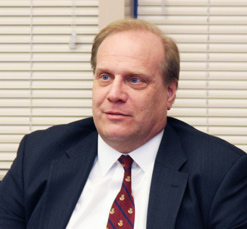
State Schools Chief Tom Torlakson Announces Applications for Summer Food Service Program

Image result for State Schools Chief Tom Torlakson Announces Applications for Summer Food Service Program

SACRAMENTO—State Superintendent of Public Instruction Tom Torlakson today announced that applications are available for the Summer Food Service Program, a federally funded, state-administered program that serves meals to California’s low-income children.
"Providing nutritious meals to students during the school year helps students stay alert and focused in class,” Torlakson said. “Making sure children have access to healthy food during the summer is just as critical. Those students will return to school in the fall ready to learn.”
The Summer Food Service Program reimburses participating organizations that provide free meals to children 18 and younger when students are on summer vacation or when those students who attend year-round schools are out of school for 15 or more consecutive school days.
Summer Food Service sponsors may prepare meals or obtain meals from another sponsor, public or commercial food vendor, or a school food service department. All meals must meet U.S. Department of Agriculture requirements. Sponsors serve meals and snacks to children at state-approved locations where at least 50 percent of the children qualify for free or reduced-price school meals during the school year.
Organizations eligible to apply include schools, camps, nonprofits, tribal governments, and government agencies. Applications are due by June 1, 2017.
For more information, visit the California Department of Education Summer Food Service Program Information Web page.
# # # #
Tom Torlakson — State Superintendent of Public Instruction
Communications Division, Room 5206, 916-319-0818, Fax 916-319-0100

Applications for Summer Food Service Program - Year 2017 (CA Dept of Education) - http://www.cde.ca.gov/nr/ne/yr17/yr17rel10.asp


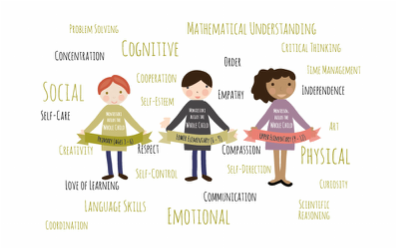
California One System Serving the Whole Child

Supporting and scaling up an aligned system of supports serving the whole child.
Image result for Whole Child


The California Department of Education (CDE) is committed to aligning a system of supports to better meet the needs of the whole child (from cradle to career). Within CDE, we have created a One System Action Team (OSAT) made up of CDE division representatives to support and continue to build the basis for “whole child” support systems and drive the CDE-wide integration of the “one system” concept. The OSAT is prioritizing supports for CDE-led initiatives that provide internal CDE collaboration towards aligned initiatives, resources, and field support. The OSAT will provide the internal mechanism to ensure a collaborative, department-wide focus on supporting and building the capacity of LEA’s to implement proven or promising research-based programs and practices, specifically targeted at one system serving the whole child.

Key CDE and Local Educational Agencies-Led Initiatives

Initiative/Report
Brief Summary
In 2015, SPI, Tom Torlakson, introduced A Blueprint for Great Schools 2.0   building on the 2011 report A Blueprint for Great Schools which helped guide in a new era in California schools that has included major increases in funding, more rigorous state academic standards, online student assessment testing, and greater support for the students and schools with the most needs.
A Blueprint for Great Schools 2.0’s recommendations were made by a team of 29 education leaders and experts, and details next steps in five identified strategic priorities:
  1. California Standards
  2. Teaching and Leading Excellence
  3. Student Success
  4. Systems Change and Supports for Strategic Priorities
  5. Continuous Improvement and Accountability Systems
These five key recommendations are the basis for further strategic planning by CDE.
Reference:
The LCFF was enacted in 2013–14, and it replaced the previous kindergarten through grade 12 (K–12) finance system which had been in existence for roughly 40 years. For school districts and charter schools, the LCFF establishes base, supplemental, and concentration grants in place of the myriad of previously existing K–12 funding streams, including revenue limits, general purpose block grants, and most of the 50-plus state categorical programs that existed at the time. For County Offices of Education (COEs), the LCFF establishes separate funding streams for oversight activities and instructional programs.
The CDE has created a LCFF system of supports and an internal team made of division representatives to aid school districts, COEs, and charter schools in developing, adopting, and annually updating a required three-year LCAP.  The LCFF team supports the SBE in adopting an evaluation rubric to assist LEAs and oversight entities in evaluating strengths, weaknesses, areas that require improvement, technical assistance needs, and possible interventions.
In addition to the LCFF team and supports, the CCEE was established by the Governor and State Legislature to advise and assist school districts, county superintendents, and charter schools in achieving the goals set forth in their LCAPs adopted under the provisions of the LCFF legislation. The formation of the agency reflects a shift in California’s approach to improving student academic achievement—from the more punitive and compliance-based approach of the federal No Child Left Behind Act to directing focus on control and accountability on a local level. Guided by the five-member board that began meeting in February 2015, the CCEE will play a key role in supporting and assisting school districts with achieving their goals.
On December 10, 2015, President Obama signed the ESSA, reauthorizing the federal ESEA and replacing the NCLB, the 2001 reauthorization of ESEA. As part of California’s transition to ESSA, California must submit an ESSA State Plan to the U.S. Department of Education. The State Plan will describe the State’s implementation of standards, assessment, accountability, and assistance programs and will move us toward California’s goal of having a single, coherent local, state, and federal education system. The CDE is committed to ensuring a transparent transition to the new law and developing an ESSA State Plan that is informed by the voices of diverse Californians.

The ACITF, consisting of a team of education leaders, was convened to advise the SPI, Tom Torlakson, on his recommendations for a new California system of public education accountability and continuous improvement to the State Board of Education and the state legislature. The Task Force began meeting regularly in September 2015 with 25 SPI appointed key education leaders from throughout California to serve on the task force. After five in-person meetings as well as additional virtual meetings and small group work sessions, the Task Force completed their final report: Preparing All Students for College, Career, Life, and Leadership in the 21st Century.
SPI, Tom Torlakson, Transition Advisory Team included “providing comprehensive support for the development of the whole child” in the concepts of several key recommendations in Blueprint for Great Schools 1.0. The Blueprint also linked the whole child approach and community schools, noting that “Full-service community schools are one tested approach to addressing the achievement gap.” 
In 2013, The California Endowment provided funding to support the CDE to create a Whole Child Integrated Action Team (WCIAT) and plan for the integration of whole child and community schools approaches as part of the CDE’s service and support to the state’s education system. The WCIAT was comprised of Branch Deputies, Division Directors, and staff from across the CDE. During the planning process, the team sought feedback on the plan from the CDE Executive Team and the Leadership Team, representing 20 divisions throughout the CDE.
In 2015, the CDE WCCS Strategic Plan was published by the CDE’s WCIAT. The CDE WCCS Strategic Plan represents the completion of the WCIAT’s work in creating a multi-year WCCS strategic plan that includes overarching goals and objectives.
The ELA/ELD Framework provides guidance to educators to help build this new depth of knowledge on a range of topics. It includes strategies to strengthen learning for every student, both in the English language arts classroom and in classrooms where students learn other academic content. It contains information on the qualities of effective professional development, strategies for incorporating technology into the classroom, and effective examples of using formative assessment to guide instruction. The ELA/ELD Framework also features helpful figures and descriptive snapshots that frame new ideas and practices for integrating the literacy demands of both the English language arts and discipline-specific classrooms, offering support to students who come to those classrooms with a wide range of language development needs.
In June 2010, the State of California replaced its existing mathematics standards by adopting the CA Common Core State Standards (CCSSM) for Mathematics. In January 2013, in accordance with Senate Bill 1200, the California State Board of Education adopted modifications to the CA CCSSM, which included organizing the standards into model courses for higher mathematics. California’s new standards define what students should understand and be able to do in the study of mathematics.
In 2011, a group of 48 California's leading education experts formed by SPI, Tom Torlakson, called for sweeping improvements to the way teachers are recruited, trained, brought into the profession, mentored, and evaluated. The Task Force was formed to address fundamental questions about the education profession: how to recruit the best people into the profession, how to develop their skills before they begin work and throughout their careers, and how to provide useful feedback, including using measurements of learning to improve teaching.
In 2012, the Greatness by Design: Supporting Outstanding Teaching to Sustain a Golden State Report was released and addresses the recruitment of new teachers, including the need to develop a diverse, high-quality workforce of teachers and principals. It also examines quality induction programs that can help teachers improve early in their careers—often the key to keeping promising new teachers in the classroom. The report thoroughly examines how to provide a career development framework that fosters growth and leadership opportunities for teachers throughout their careers. It also takes a close look at how to improve the evaluation process, including how to collaborate with teachers and incorporate valid measures of student learning.
In 2013, the SSETF was formed and charged with examining California’s complex systems for serving all students including students with disabilities and forwarding recommendations to the SBE, the CDE, and the California CTC for consideration. Members of the task force represented parents and advocates, teachers, administrators, and experts with deep knowledge of the issues. Convened by California SBE President Michael Kirst and California CTC Chair Linda Darling-Hammond, the task force evaluated the status of general and special education in the state, examined best practices here and across the country, and proposed recommendations for strengthening the educational system.
In March 2015, the SSETF presented the findings and recommendations to the SBE and the SPI, Tom Torlakson. The bold ideas and recommendations in this report contribute to California's expanded educational mission for high-quality teaching and learning in every classroom. The overarching theme identified by the SSETF stressed the need for one unified system, grounded in expertise, responsive to students’ needs, and focused on results where all children, including students with disabilities, are considered general education students first and foremost. The SSETF report envisions general education and special education working seamlessly together as one system designed to address the needs of all students as soon as those needs are apparent, from the time they are born, through preschool, and until they reach the age of 22.
In 2015, the CDE’s Executive Team called for the creation of a Special Ed Task Force Recommendations Internal Ad Hoc Work Group (Work Group) to:
  • Analyze the current status of Statewide Special Education Task Force (Task Force) Report Recommendations relative to the work of the CDE;
  • Discuss how CDE, as a whole, could support implementation of the recommendations; and
  • Better support a unified education system in which all children, including students with disabilities, are considered general education students first.
On March 11, 2016, the Work Group comprised of 16 division representatives met to continue building the basis for: “one” coherent system, “whole child” support systems, and CDE-wide integration of the “one system” concept. Meeting objectives included:
  • Build increased understanding of the one system concept;
  • Discuss the Task Force Report Recommendations:  what (under CDE purview) has been completed, what is currently being undertaken, and what are the highest priorities for future action;
  • Generate the basis for a summary memo/update report to the State Board of Education (SBE), the Task Force, and the CDE; and
  • Propose next steps.
The group’s final report frames the Work Group’s primary recommendations, provides an overview of the current status of Task Force Recommendations relative to the work of the CDE, offers a LCFF/LCAP Priority and Special Education Indicator(s) Comparison, and compares Task Force and Blueprint 2.0 recommendations. The key recommendation is to form the One System Team to identify CDE-led initiatives, support internal CDE collaboration towards aligning initiatives and resources, and to provide field support.
DEVELOPING, ALIGNING, AND IMPROVING SYSTEM OF ACADEMIC AND BEHAVIORAL SUPPORTS: The national transition from the No Child Left Behind legislation to the Every Student Succeeds Act (ESSA) provides the context for weaving together multiple initiatives into a comprehensive Multi-Tiered System of Support (MTSS) framework to improve student outcomes. This unification effort will address barriers to learning and re-engage disconnected students by creating a culture of collaboration among marginalized and fragmented support systems. The road to every child succeeding involves a statewide transformation that: 1) enhances equitable access to opportunity; 2) develops the whole child; and 3) closes the achievement gap for all students.
To fulfill the California Department of Education’s (CDE) vision of “one coherent system of education”, SUMS will create a universal process for MTSS implementation. California’s vast and complex PreK-12 educational system requires a multi-faceted approach that is scalable and sustainable. By using the principles of Implementation Science, Universal Design for Learning (UDL), and the Whole Child approach, the California SUMS Initiative will build the foundation for such a statewide infrastructure.
State Systemic Improvement Plan (SSIP)
References:
The SSIP contains broad strategies with detailed improvement activities related to data analysis, identification of areas for improvement, and infrastructure to support improvement and build capacity. It addresses plans for increasing student academic performance over a six-year period from fiscal year 2013-14 through 2018-19, as required by the US Department of Education Office of Special Programs (OSEP).  The SSIP is to be developed in three phases over a three year period, with specific sections required to be completed in each year. Phase I was presented and approved at the March 2015 SBE meeting. On March 9, 2016, the SBE approved the Phase II SSIP proposal which contains specific plans for meeting the OSEP requirements and to begin aligning special education accountability with general education efforts.
Phase 2 involves planning and bringing to scale a tiered system of strategically designed and researched-based technical assistance and supports for all districts—those that want to improve their currently successful programs and services and those that the evaluation process ultimately shows need help to meet their measurable targets. The Special Education Division (SED) is creating a robust, tiered system of technical assistance to contribute to the state’s overall system of continuous improvement. Much of what the state is doing to develop the SSIP complements and enhances the larger work of implementing the LCFF and LCAP. The CDE is developing an extensive tiered system of information, supports, and services to help LEAs improve the outcomes of all students.
The CCELP provides key direction for the State in the development of a high-quality birth-to-age-five system that provides all children with the knowledge and skills they need to achieve long-term success. The Plan is based on extensive research and stakeholder engagement, and it suggests changes that, if implemented, would make California’s early learning system more coherent and effective.
Reference:
The overarching goal of the CRI is to build and sustain robust partnerships between employers, schools, and community colleges in order to better prepare students for the 21st century workplace and improve student transition into postsecondary education, training, and employment.

Resources

ASCD's® Whole Child External link opens in new window or tab. approach is an effort to transition from a focus on narrowly defined academic achievement to one that promotes the long-term development and success of all children.
Questions:   One System Action Team | OneSystem@cde.ca.gov | 916-445-1064
 California One System Serving the Whole Child - Initiatives & Programs (CA Dept of Education):

All Things Education: Why DeVos Might Lose

All Things Education: Why DeVos Might Lose:

Why DeVos Might Lose

Image result for devos out of touch

So far, Betsy DeVos, Donald Trump's nominee for U.S. Secretary of Education, seems to be one of the most, if not the most, unpopular of all of the cabinet nominees. That's not to say that she won't be confirmed. But as of my writing this, she has not been confirmed and only one more vote from the Republicans is needed to deny her the appointment.

Why is this? Well, just as there was bi-partisan unpopularity (aside from GOP establishment types) of Eric Cantor in Virginia's 7th district (my old district) during the 2014 elections, there is bi-partisan unpopularity of Betsy DeVos. 

1. She is a blatant pay-to-play actor. She bought the Michigan legislature. She has given tens of thousands of dollars to several Senate Education Committee members. The way Cantor thought he was above members of the public, she operates in a way that shows she believes she is above members of public. On this point, this ad by End Citizens United is particularly devastating:


2. Besides purchasing pet education policies, Betsy Devos has no experience in education at all. Proposing someone to be U.S. Secretary of Education who has no experience in education at all is a slap in the face to all educators. Public school teachers and educators are tiring of getting crapped on and they are tired of people with little to no experience in education telling them what to do. Teachers got crapped on by the Bush administration and then the Obama administration and they are tired of it. Kind of like no one outside of the GOP establishment liked Cantor, most people who actually worked in public schools or had children in them liked Obama's education policies. Mostly insulated centrist Democratic and moderate Republican DC wonks and education reform-types liked Obama's education policies. Many of the policies that DeVos advocates for, including the Common Core, are part of the bi-partisan education reform regime that we have all been suffering through.


3. I live in a very conservative area of Virginia where public schools are very popular. In fact, public schools are very popular in many conservative areas in Virginia. 53% of white women voted for Trump. Public school teachers are 82% white and 76% female. Of the American Federation of Teachers (AFT) members who voted, roughly one in five of them voted for Trump.  Among National Education Association (NEA) member voters, more than one in three likely voted for Trump.

Basically, there is bi-partisan support of public schools. A small majority of white women voted for Trump. A large majority of teachers are white women.  They might have voted for Trump (and I don't have time right now to get into how messed up that is) but that doesn't mean they take kindly to being insulted by the nomination of someone who has no experience in education and who doesn't support the work they do anyway.


4.  Parents of students with disabilities are Republicans and they are Democrats and they are Independents. Disabilities do not manifest themselves in children according to the political party of their parents. These parents are very organized and they are very big advocates for their children and their groups are very powerful. I see this where I live, too. I also have a child with a (medical) disability. Except in extreme cases, because of IDEA, a child with disabilities has a better chance of being accommodated, served, and better educated in public schools than in private schools, let alone religious schools. The idea that a child with disabilities is to be protected and equitably educated is largely a 
All Things Education: Why DeVos Might Lose:


Betsy DeVos Likely To Spread Quack Science Instead Of Teaching The Real Thing

Betsy DeVos Likely To Spread Quack Science Instead Of Teaching The Real Thing:

Betsy DeVos Likely To Spread Quack Science Instead Of Teaching The Real Thing


After a rocky confirmation hearing in Senate committee, Betsy DeVos, Trump’s nominee for Secretary of Education, cleared to the full Senate on a vote that strictly followed party lines. But now, two Republican Senators who voted DeVos out of committee, Susan Collins of Maine and Lisa Murkowski of Alaska,  say they can’t back DeVos in a full Senate vote. Education Week reporters say a final vote has been called for next week, so her nomination is still up in the air.
Senators, including the two maverick Republicans, who say they will vote no on DeVos most often say their opposition comes from her lack of qualifications and her poor grasp of policy issues. But there’s lots more to DeVos’s whacky views of education.
Much has been written about DeVos’s deep ties to evangelical Christianity and her commitment to push an education agenda to “advance God’s Kingdom.” But supporters of DeVos insist her religious devotion reflects concerns about children and what’s best for the public and not an intention to “focus on curriculum issues like evolution and creationism,” according to this story in the Washington Post.
But recent revelations in major news outlets should raise alarms about DeVos’s views on science and how they may influence her decision-making on national education policy.
In her charitable giving, her financial investments, and the rhetoric she uses to express her intentions as secretary, DeVos has exhibited a propensity to favor beliefs ground in quack science over the real thing.
Christian-Based ‘Critical Thinking’
One of those concerns is the affinity DeVos has long had for organizations that push “intelligent design,” an idea linked to creationist beliefs that the universe and life must have been created by a superior intelligence.
As Annie Waldman reports for independent news outlet Propublica, DeVos and her family donated more than a $1 million to The Thomas More Law Center, a Michigan-based Christian legal group that represented a school district being sued because its conservative school board insisted ninth-grade students be taught “the theory of evolution was flawed and that intelligent design was an alternative.”
Waldman also notes donations the DeVos family has made to Focus on Betsy DeVos Likely To Spread Quack Science Instead Of Teaching The Real Thing:


NJ: Highest court saves schools from Christie bullying and spineless lawyering. For now. |

NJ: Highest court saves schools from Christie bullying and spineless lawyering. For now. |:
NJ: Highest court saves schools from Christie bullying and spineless lawyering. For now.


New Jersey’s highest court has turned back an effort by Gov. Chris Christie and his team of compliant and spineless lawyers to convert the judicial tribunal into an unelected  mini-Legislature willing to scrap both equitable school funding and protections for school employees.
The court’s reaction was based on established legal reasoning–the concept of “original jurisdiction”–that is about as dull as law gets but, in a world turned upside down by the seizure of power in Washington by right-wing crazies, reason and dullness are precious gifts to us all.
Because the alternative–what we’re seeing now in the attempted conversion of the United State Supreme Court into a cog in the white nationalist wheels of government–is law based on alt-right ideology and its close companion, the raw opportunism of cowardly Republicans and other fellow-travelers.
Here’s what happened in New Jersey: Christie didn’t want to go through the cumbersome process of changing the school aid formula by making his case to the Legislature. The New Jersey Supreme Court already upheld the aid law. So, after packing the court–he appointed four of the seven members–the governor asked the court to overturn its earlier decision so he could do something crazy: Ignore the needs of urban and other poor children by giving out aid based on an equal amount for every child, no matter what his or her circumstances.
Insanely–there’s a lot of that Orwellian stuff going around now–Christie called it a “fairness formula.”
But, more than that, he wanted to use the state’s highest court as a club against the public employees he hates so much. Christie wanted the court to invalidate teacher tenure, seniority, and collective bargaining statutes so urban districts would be free to fire whomever they wanted for whatever reason they wanted.
Those of us who remember the sane times that preceded Christie and his idol, Donald Trump, will recall that politicians simply cannot force their will on the instruments of government without due process of law.

David Hespe–did they teach about original jurisdiction in your law school?

But this is a new day and people don’t act the way they once did–especially people who suck up to power and make money from it. Take David Hespe, for example. He’s a lawyer who was Christie’s education commissioner. To do his boss’s bidding, this cowardly lap-dog signed an affidavit supporting Christie’s effort–knowing damn well it flew in the face of established procedure.
Because Hespe knew he was asking the court to do what violated clearly NJ: Highest court saves schools from Christie bullying and spineless lawyering. For now. |:


President Trump and the nature of intelligence — by the father of ‘multiple intelligences’ theory - The Washington Post

President Trump and the nature of intelligence — by the father of ‘multiple intelligences’ theory - The Washington Post:

President Trump and the nature of intelligence — by the father of ‘multiple intelligences’ theory


President Trump once famously said, “I’m one of the smartest people anywhere in the world.” He also said, “I love the poorly educated.”
How Trump views the nature of intelligence through these statements is not clear — but in this post, Harvard University’s Howard Gardner attempts to unpack the issue, bringing his unique understanding as a researcher who revolutionized the fields of psychology and education with his “theory of multiple intelligences.”
Gardner is the Hobbs Professor of Cognition and Education at Harvard University’s Graduate School of Education. His seminal work is his 1983 book, “Frames of Mind: The Theory of Multiple Intelligences.” It details a new model of human intelligence that went beyond the traditional view that there was a single kind that could be measured by standardized tests. The theory initially listed seven intelligences that work together: linguistic, logical-mathematical, musical, bodily-kinesthetic, spatial, interpersonal and intrapersonal; he later added an eighth, naturalist intelligence and says there may be a few more.
Gardner holds positions as adjunct professor of psychology at Harvard University and senior director of Harvard Project Zero, an educational research group composed of multiple, independently sponsored research projects with the aim of understanding and enhancing high-level thinking and learning across disciplines. Gardner has received a MacArthur Prize Fellowship (1981), the University of Louisville’s Grawemeyer Award in Education (1990), the Prince of Asturias Award for Social Sciences (2011) and the Brock International Prize in Education (2015).
He has twice been selected by Foreign Policy and Prospect magazines as one of the 100 most influential public intellectuals in the world.
Here’s Gardner’s take on Trump and intelligence.
By Howard Gardner
Google “Donald Trump Smart” — and you get a whole set of quotations over the last year:
“I’m smart.”
“I’m like a really smart person.”
“I’m one of the smartest people anywhere in the world.”
Trump likes to surround himself with people whom he considers intelligent. Recently, in a highly quoted brag, the president declared, “We have by far the highest IQ of any Cabinet ever assembled.” And he seems to favor a genetic theory of intelligence. “My uncle was a great President Trump and the nature of intelligence — by the father of ‘multiple intelligences’ theory - The Washington Post: