Latest News and Comment from Education

Monday, November 21, 2016

Get to Know Donald Trump's Education Transition Team - Politics K-12 - Education Week

Get to Know Donald Trump's Education Transition Team - Politics K-12 - Education Week:

Get to Know Donald Trump's Education Transition Team

Image result for four horsemen

The folks on President-elect Donald Trump's education transition team will help set the policy course—and likely, even appoint key personnel—for the new administration. Their backgrounds could provide clues on the direction the Trump administration wants to go on K-12. Here's a look:

James Manning

Trump's transition team told reporters Monday that Manning will be a part of the "landing team" at the U.S. Department of Education; the transition team said his name would be sent to President Barack Obama's administration at noon on Monday.
Manning worked on higher education issues at the department under President George W. Bush. Read testimony Manning gave to the House foreign affairs committee in 2007 about postsecondary issues here. "America must remain the primary destination for international students. We must work together to make sure our nation's institutions of higher education continue to be open to students from around the globe," Manning said.

Williamson "Bill" Evers

Williamson-Evers-280.jpgEvers' name is probably familiar with long-time Education Week readers, in fact we profiled him back in 2007. He served as assistant secretary for planning, evaluation, and policy development under President George W. Bush.
He was a veteran of the so-called "math wars" in California. In helping to write standards and curriculum for the state, he championed a strong foundation of core content, particularly in the early grades. He's also no fan of the Common Core State Standards. In fact, he wrote a commentary opposing the standards for Education Week, which you can read here.
And as a school board member in Santa Clara, Calif., Evers supported a ballot resolution that would have made it easier to fire tenured teachers.
Evers also served as an education adviser to President Bush in Iraq, and sought to ensure that standardized testing could continue despite widespread violence after the U.S. invasion in 2003.
"Iraqi parents love standardized testing and were fervently concerned not to let either the war in March and April [2003], or the subsequent guerrilla skirmishes, interfere with the nationwide testing program," Evers wrote in a 2004 essay published in the Wall Street Journal.
And also relevant to current education debates, Evers is skeptical of "dashboards" that get at students' opportunity to learn. (More in this Education Week commentary he wrote with Ze'ev Wurman, another one-time Bush advisor.) He's a fan of holding schools accountable for a single data point. But that's exactly what some states, including California, want to avoid under the Every Student Succeeds Act.

Gerard Robinson

Robinson is the former state chief in Virginia and Florida, and was a member of the "education reform" group Chiefs for Change. CLARIFICATION: In Virginia, Robinson was secretary of education under GOP Gov. Bob McDonnell, a cabinet position—the state superintendent during Robinson's time in that post was Pat Wright. 
He only served for a short time as state chief in the Florida, working for just one year and leaving in 2014. Right before he left, the state rushed to change the passing score on the state's writing test because so many students had performed poorly. That was partly because, before Robinson took office, the state legislature directed the department to come up with tougher standards. And Robinson sought to respond to the score drop, launching a townhall type tour reassure parents, and devoting a section of the state department's website to parent outreach. More in this story from the Andrew half.
Robinson also faced criticism for how he factored English-language learners into Florida's A-F school grades.

Townsend McNitt 

Other transition staffers include Townsend McNitt, another Education Department official under Bush who served as deputy chief of staff there from 2005 to 2007. In that role, she helped implement the No Child Left Behind Act, according to this bio from the Center for Public Justice, a Christian think tank. Before working at the department, McNitt was the staff director of the Senate education committee. Since 2007, McNitt has been working as a "strategic consultant" according to this online resume.
One Republican and former Education Department official described McNitt as a strong behind-the-scences player. She's "serious, capable, dilligent, gets done stuff done," the official said. Get to Know Donald Trump's Education Transition Team - Politics K-12 - Education Week:

Don't miss another Politics K-12 post. Sign up here to get news alerts in your email inbox.
Follow us on Twitter at @PoliticsK12.


Is California headed for a showdown with President Trump over immigration? | 89.3 KPCC

Is California headed for a showdown with President Trump over immigration? | 89.3 KPCC:

Is California headed for a showdown with President Trump over immigration?

Image result for California President Trump  immigration?

California law lets college students without legal immigration status pay in-state tuition, just as legal California residents do. Another recently-enacted law provides state-funded health insurance for unauthorized immigrant youths under 19. And Los Angeles police have a longstanding policy that prevents cops from questioning people for the purpose of determining their immigration status.
These and other policies run counter to the views embraced by president-elect Donald Trump during his campaign. Trump vowed to deport unauthorized immigrants, and has said he will pull federal funding from so-called “sanctuary cities,” a term that's loosely applied to municipalities that have immigrant-friendly policies.
Since Trump's victory Nov. 8, several California agencies have stated that they'll hold firm to their policies regarding immigrants and won't aid in deportations:
  • Los Angeles Police Chief Charlie Beck has said he will not change policies governing how the department handles unauthorized immigrants. As he told KPCC's AirTalk: "I depend on them to be witnesses to crime, I depend on them to report crime, I depend on them to support the police department," Beck said on Airtalk, "and none of that is as likely to happen if we become an arm of immigration enforcement."
  • The board of the Los Angeles Unified School District has stated that the district will resist any request from the federal government to release students' information for immigration enforcement purposes “to the fullest extent provided by the law.”
  • California State University Chancellor Timothy P. White has said that campus police won't honor federal requests for deportation holds, and that the university system would not voluntarily enter into immigration enforcement agreementswith federal or other law enforcement agencies.
  • Los Angeles City Council President Herb Wesson is proposing that the city hire an "immigrant advocate" to help the city navigate anticipated changes in federal immigration policies and maintain federal funding under a Trump presidency. The city currently receives about $506 million a year in federal grants that help pay for services like affordable housing, public safety, transit programs and port security. The city council could vote on the motion Tuesday.
Some anticipate potential clashes between state and local governments and a Trump administration, depending on which immigration policies the incoming administration pursues.
"Even though federal authorities have paramount authority in immigration, it is going to be difficult for them to implement any policy without at least some cooperation from local governments and local law enforcement," said Raphael Sonenshein, a political scientist at Cal State Los Angeles.
"So this could become a real struggle," he said, "a real political and fiscal struggle.”
Experts say that struggle could lead to lawsuits flying in both directions, from a Is California headed for a showdown with President Trump over immigration? | 89.3 KPCC:

New Mexico schools aim to ease immigrant student nerves :: SI&A Cabinet Report

New Mexico schools aim to ease immigrant student nerves :: SI&A Cabinet Report :: The Essential Resource for Superintendents and the Cabinet:

New Mexico schools aim to ease immigrant student nerves


(N.M.) As schools across the country report increases in bullying and harassment based on immigration status, Santa Fe Public Schools has announced a Student Support Helpline where families can access resources.
The hotline is just one part of a list of services district officials announced last week, and will allow students or parents to report bullying and harassment, as well as find information about counseling, behavioral health and other community services that can benefit vulnerable students.
Veronica Garcia, superintendent of Santa Fe Public Schools, noted that the district cannot provide legal advice, but can help direct families toward such information.
“For many, the 2016 election has been an extraordinarily emotional experience–people across our country and the world are excited about the presidential outcome, while others are feeling anxiety and fear,” Garcia wrote in a letter to parents and other stakeholders. “As a district we believe there is no place for hate and we will firmly discipline those who seek to intimidate, bully, harass, or create a school environment which might cause any student, employee or group to feel intimidated or ill-treated.”
Many who work with immigrant families have reported increased anxiety and fear among communities following the election of Donald Trump this month whose message calling for tougher immigration policies, including the construction of a wall on the country’s southern border, and mass deportation of those in the country illegally resonated with nearly half of voters.
Garcia explained that while there have been no reports of incidents of harassment in the schools in Santa Fe–one of a handful of sanctuary cities across the country–accounts of violence, discrimination and bullying against immigrants elsewhere prompted the district to roll out its own framework for a districtwide plan to ensure students feel safe and welcome.
She also reaffirmed that the district will not collect information regarding student immigration status or allow unlawful access to the students in the schools.
In addition to the student helpline, teachers and staff will receive professional development to help facilitate respectful conversations about highly emotionally charged issues, and the district will collaborate with community partners to create a weekly support group for immigrant students, their families and advocates to meet and share information.
The district will also form a Superintendent’s Equity Advisory Council to address issues faced by immigrants, as well as lesbian, gay, bisexual and transgender kids, Native Americans and special education students.
Also included in the plan is a possible reallocation of resources to provide an immigrant student support ombudsman for the district, as well as a call for principals to create ways for students to report issues of bullying or harassment in a manner that protects their own personal safety.
In a press conference Wednesday, Garcia said she hopes the community will be able to come together and find common ground – noting that the district will continue to celebrate its diverse student body.
“It is my belief that the institution of public education is the bedrock of our Democracy,” Garcia said. “I have every confidence that our school district and our community will demonstrate to our Nation that our diversity is our strength and it is our diversity that makes the United States of America one of the greatest nations in the world.”New Mexico schools aim to ease immigrant student nerves :: SI&A Cabinet Report :: The Essential Resource for Superintendents and the Cabinet:

Five things to understand about LA Unified's stand for undocumented immigrant students | 89.3 KPCC

Five things to understand about LA Unified's stand for undocumented immigrant students | 89.3 KPCC:

Five things to understand about LA Unified's stand for undocumented immigrant students

Image result for LA Unified undocumented immigrant students

For the estimated 13 percent of the kids in California public schools who has at least one parent who's an undocumented immigrant — and the more than 245,000 children in the state who are undocumented themselves — President-elect Donald Trump's victory has raised big questions and stoked fears.
Trump has indicated he will take a harder line on illegal immigration, promising to step up deportations and cancel federal funding for sanctuary cities. There are few indications the new administration intends to bring this toughened immigration stance to public school campuses.
Board members approved a resolution that vows the district will guard students' data against "any future policies or executive action" Trump might take "to the fullest extent provided by the law." It also reaffirmed the district's declaration that L.A. Unified campuses are "safe zones" off-limits to immigration enforcement agents.
But will the resolution have any real impact? And could L.A. Unified's stand for undocumented students put the district's own federal funding at risk? Here are five factors to consider:

First, some really important background: U.S. public schools cannot turn away students because of their immigration status. 

That's because of the U.S. Supreme Court's 1982 decision in Plyler v. Doe, in which justices ruled that denying undocumented students access to K-12 schools "imposes a lifetime hardship on a discrete class of children not accountable for their disabling status."
It's a mandate that comes at a cost. The Federation for American Immigration Reform (FAIR), an advocacy group favoring stepped-up immigration enforcement, has estimated that teaching undocumented students costs California schools more than $3.3 billion annually; educating children whose parents are undocumented — a much larger group — costs billions more.

The federal government has tried to stop districts from discouraging undocumented students from enrolling in public schools. Will it stay that way? 

In 2014, the Obama administration sought to tamp down "student enrollment practices that may chill or discourage" undocumented kids from signing up for school. For instance, undocumented parents may not understand their child does not need a U.S. birth certificate to enroll in school or that schools cannot turn them away if they produce records showing their child wasn't born in the U.S.
But that's not red-letter law; it's just the current federal guidance, attorney Victor Leung of the ACLU of Southern California noted. "It's less than clear what the new administration's stance is going to be on those kinds of issues," Leung said.

L.A. Unified does not collect data on citizenship status — but the district does collect data that could be useful to immigration enforcement. 

For instance, the district's enrollment form asks for the child's country of birth. Even a students' English Learner status could be a tip-off, Leung said.
Enter the L.A. Unified school board's resolution. "We are not going to cooperate," said school board president Steve Zimmer in an interview Friday, "with federal immigration authorities who attempt in any way shape or form to use a school site as part of their enforcement activities."
Zimmer did hedge that answer in a few ways: he said the district would not obstruct Five things to understand about LA Unified's stand for undocumented immigrant students | 89.3 KPCC:

Trump and Potential Education Secretaries Talked Choice, Common Core - Politics K-12 - Education Week

Trump and Potential Education Secretaries Talked Choice, Common Core - Politics K-12 - Education Week:
Trump and Potential Education Secretaries Talked Choice, Common Core 


President-elect Donald Trump Saturday met with two education leaders rumored to be under consideration to serve as his education secreary Saturday: former Washington, D.C. schools chancellor Michelle Rhee and Betsy DeVos, the chairwoman of the American Federation for Children, a school choice advocacy group.
So what did they talk about? According to a statement from the transition team Trump and Rhee, "enjoyed an in-depth discussion about the future of education in our country. This included the possibility of increasing competition through charter and choice schools. They also brought up the idea of merit pay for teachers going above and beyond in their classrooms." 
Meanwhile, the conversation with DeVos, a former Michigan Republican Party chairwoman, was "focused on the Common Core mission, and setting higher national standards and promoting the growth of school choice across the nation," the transition team said.
It's unclear if Rhee, whose husband, Kevin Johnson, is the outgoing Democratic mayor of Sacremento, would serve in a Trump administration. Democrats for Education Reform, a political action committee that supports ideas like merit pay and charters, has urged Democrats not to work for the president-elect because his campaign rhetoric gave "both tacit and express endorsement to a dangerous set of racial, ethnic, religious, and gender stereotypes that assault the basic dignity of children, causing incalculable harm not only to their sense of self but to also to their sense of belonging as accepted members of school communities and neighborhoods."
Johnson also attended the meeting, but it was unclear if he is under consideration for a gig giving his views, or just along for the ride.
And as recently as 2013 Rhee wrote an editorial in Politico supporting the Common Core State Standards, which Trump has said he wants to end. (In order to do that, he'd have to amend the Every Student Succeeds Act.) Rhee's selection as education secretary, may not sit well with some conservative parent activists who sent a letter to Trump asking him to pick a common-core foeas his secretary last week.
The American Federation for Children, the group where DeVos is chairomwan, promotes choice, including vouchers and tax-credit scholarships. She's also a member of the board of the Foundation for Excellence in Education, started by former Florida Gov. Jeb Bush, a fan of the common core. 
In fact, DeVos has also championed some ideas closely associated with Bush, including A through F grading systems. In fact, back in 2013, she wrote this editorial with former New York chancellor Joel Klein promoting them. A-F accountability models were popular back in 2013, but some states have begun to back away from them.
And others have chaffed at a requirement in the Obama administration's ESSA accountability regulations that calls for schools to be given an overall "summative rating" such as a letter grade. 
Photos from top: President-elect Donald Trump shakes hands with Michelle Rhee, a former chancellor of Washington, D.C., schools, and her husband, former NBA basketball player Kevin Johnson, left, as they leave Trump National Golf Club Bedminster clubhouse in Bedminster, N.J., on Nov. 19. (Carolyn Kaster/AP); President-elect Donald Trump calls out to the media as he and Betsy DeVos pose for photographs at Trump National Golf Club Bedminster clubhouse in Bedminster, N.J., after meeting on Nov. 19. (Carolyn Kaster/AP)Trump and Potential Education Secretaries Talked Choice, Common Core - Politics K-12 - Education Week:

Don't miss another Politics K-12 post. Sign up here to get news alerts in your email inbox.
Follow us on Twitter at @PoliticsK12.


Arrogance and Hubris at the University of Connecticut - Wait What?

Arrogance and Hubris at the University of Connecticut - Wait What?:

Arrogance and Hubris at the University of Connecticut

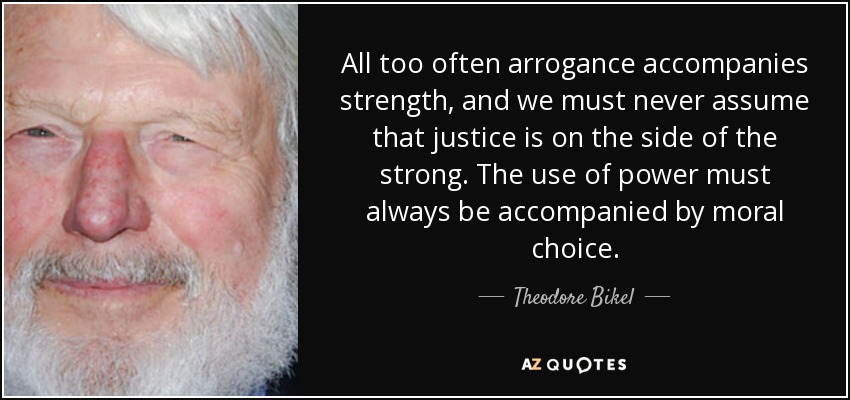
Image result for All too often arrogance accompanies strength, and we must never assume that justice is on the side of the strong. The use of power must always be accompanied by moral choice.


The great actor and musician Theodore Bikel once said;
All too often arrogance accompanies strength, and we must never assume that justice is on the side of the strong. The use of power must always be accompanied by moral choice.
As if to prove the point, in recent years, the administration of the University of Connecticut saw fit to destroy the historic and respected non-profit UConn Co-op bookstore…because it wasn’t profitable enough.
It also destroyed the university’s age-old alumni association…because it was deemed too independent and perceived not to be loyal enough when it came to meeting the administration’s demands.
And now, despite more than 30 years of work and a state law anointing UConn’s Museum of Natural History as Connecticut’s official State Museum of Natural History, the UConn administration has unilaterally closed the important facility…because even the law isn’t enough to limit UConn’s hubris.
UConn’s student newspaper, the Daily Campus, reports on the latest development in an article entitled, Former Connecticut lawmaker: UConn broke law in museum relocation.  Student reporter, Marlese Lessing explains;
The University of Connecticut has violated the law in its recent relocation of the Connecticut State Museum of Natural History, said Jonathan Pelto, who co-sponsored the Senate Bill establishing the museum in 1985.
The museum, which was relocated from its former home on Hillside Road Arrogance and Hubris at the University of Connecticut - Wait What?:


Everybody Should Read This New Policy Brief: Lessons from NCLB for ESSA | janresseger

Everybody Should Read This New Policy Brief: Lessons from NCLB for ESSA | janresseger:

Everybody Should Read This New Policy Brief: Lessons from NCLB for ESSA

Image result for big education ape Lessons from NCLB for ESSA


In the context of President-elect Donald Trump’s promise that his education plan will be based on the ideology of increased privatization, it is refreshing and instructive to read the new research-based (seven and a half pages of footnotes for a 15 page paper) policy brief from the National Education Policy Center on Lessons from NCLB for the Every Student Succeeds Act.  The style is charming and the paper non-technical.  Anybody who cares about the role of the federal government in education ought to read it. It could profitably be the basis of conversation in a community group or a PTA.
Here is how its authors, Bill Mathis and Tina Trujillo begin: “If Lyndon Johnson were alive today, he would undoubtedly be discouraged to see what has become of the original Elementary and Secondary Education Act (ESEA) that he signed into law fifty years ago as part of the War on Poverty… (O)ur lawmakers have largely eroded ESEA’s original intent.  Moving from assistance to ever-increasing regulation…. (a)t each step, our educational policies became more test-based, top-down, prescriptive, narrow and punitive, and federal support to build the most struggling schools’ capacity for improvement faded.”
How does the new version of the federal law, the Every Student Succeeds Act (passed last December) compare to its No Child Left Behind predecessor?  “(A)t its core, ESSA is still a primarily test-based educational regime. Annual standardized testing in reading and math is still mandated in grades 3-8 and once in high school. Science testing at benchmark levels of schooling remains. The criteria for requiring schools to write improvement plans have been revised, yet standardized test scores continue to comprise the largest share of these criteria. Identification of schools in need of improvement continues to depend mostly on scores, but now also includes one or more other academic and quality indicators. Formerly rigid prescriptions for school reforms have been relegated to districts and states, although the expanded range of potential reforms still encourages and funds charter schools and requires other NCLB-like ‘corrective actions.’  State accountability systems must be federally approved and mechanisms such as turnaround-driven layoffs, conversions to charter schools, and school closures are likely to continue even though they have not been proven to consistently improve schools in struggling communities. Punishments for continued low test-performance persist. The most substantial difference is that the power to decide which test-based consequences for under-performing schools resides once again in the states, not the federal government.”
After an introduction, the short brief is organized into five sections: NCLB and ESSA: Commonalities and Contrasts—First-Order Lessons for ESSA—Lessons for State Accountability Systems—Recommendations for Policymakers and School Practice—and The Moral Imperative: Adequate Inputs and the Opportunity Gap.  Whether you are a parent, a citizen, a Everybody Should Read This New Policy Brief: Lessons from NCLB for ESSA | janresseger:
 Image result for big education ape Lessons from NCLB
Image result for big education ape NCLB

Mike Klonsky's SmallTalk Blog: WEEKEND QUOTABLES

Mike Klonsky's SmallTalk Blog: WEEKEND QUOTABLES:

 WEEKEND QUOTABLES


Brandon Victor Dixon (Aaron Burr)
“We, sir, we are the diverse America who are alarmed and anxious that your new administration will not protect us, our planet, our children, our parents, or defend us and uphold our inalienable rights, sir." --  Hamilton cast to Mike Pence
Alt-Right leader, Richard B. Spencer

“I do think we have a psychic connection, or you can say a deeper connection, with Donald Trump in a way that we simply do not have with most Republicans.” -- New York Times
Ta-Nehisi Coates on Trump election

"This is who we are. If you understand the history of this country, this is nothing new so we should not be shocked. If we look at 250 years of slavery, you look at Frederick Douglas during reconstruction seeing it overturned, you look at Ida B Wells going south to document lynching, and all the violence we always suffer. Then you would know it is the same country and we just need go get up in the morning and get ready to fight.” -- At NCTE
John McCain (Store this one away for future reference)
 “I don’t give a damn what the president of the United States wants to do or Mike Klonsky's SmallTalk Blog: WEEKEND QUOTABLES:

The story behind the Staples boycott, teachers, postal workers and my drawing for a Facebook page. | Fred Klonsky

The story behind the Staples boycott, teachers, postal workers and my drawing for a Facebook page. | Fred Klonsky:

The story behind the Staples boycott, teachers, postal workers and my drawing for a Facebook page

15181247_1146201555415371_2645205776941600280_n


I received a text from my New York friend Dennis, an activist with the postal workers union and the New York Stop Staples campaign.
“I have a proposition for you. An art commission. And by commission,” says Dennis, “I mean we can’t pay you anything.”
“Perfect,” I say. “I’m retired. I don’t work for money.”
“Can you give us a drawing for our Facebook page showing the unity of teachers and postal workers? Oh, and the postal worker shouldn’t look like one of those guys in a children’s book. Y’know. ‘Mailman Bob Delivers Your Mail.'”
Damn. That was just what I had in mind.
In the fall of 2013, the Postal Service and Staples implemented a pilot program that established knock-off post offices in 82 Staples stores. The postal counters are staffed with low-wage Staples employees rather than highly-trained USPS employees.
In July, after the union launched a ‘Don’t Buy Staples’ campaign, the USPS and Staples discontinued the trial, but replaced it with a modified version of the program, which it plans to expand to all 1,500 U.S. Staples stores.
The APWU objects to the deal because it privatizes the retail operations of the public Postal Service; transfers living-wage, union jobs to low-wage jobs, and compromises the safety and security of the mail.
The ‘Don’t Buy Staples’ campaign has been endorsed by the AFL-CIO, American Federation of Teachers, National Education Association, AFSCME, SEIU, the International Association of Firefighters, the Coalition of Black Trade Unionists, our sister postal unions and many other labor organizations.
This graphic was commissioned by the Stop Staples NYC  crew to represent the solidarity of postal workers and teachers! It was done by retired Chicago teacher and education activist Fred Klonsky who has been an evangelist for the Stop Staples campaign among his fellow teachers.
In truth, the joyous determination Fred captures here makes it an illustration of the kind of solidarity we will all need in the difficult times ahead of us.
The story behind the Staples boycott, teachers, postal workers and my drawing for a Facebook page. | Fred Klonsky:
 For more information, visit www.StopStaples.com.

Why Students Can’t Google Their Way to the Truth (Sam Wineburg and Sarah McGrew) | Larry Cuban on School Reform and Classroom Practice

Why Students Can’t Google Their Way to the Truth (Sam Wineburg and Sarah McGrew) | Larry Cuban on School Reform and Classroom Practice:

Why Students Can’t Google Their Way to the Truth (Sam Wineburg and Sarah McGrew)

Image result for Google the Truth

Sam Wineburg is a professor in the Stanford University Graduate School of Education. Sarah McGrew is pursuing her doctorate in curriculum and teacher education at Stanford.
This commentary  appeared in Education Week, November 1, 2016.
Did Donald Trump support the Iraq War? Hillary Clinton says yes. He says no. Who’s right?
In search of answers, many of us ask our kids to “Google” something. These so-called digital natives, who’ve never known a world without screens, are the household’s resident fact-checkers. If anyone can find the truth, we assume, they can.
Don’t be so sure.
True, many of our kids can flit between Facebook and Twitter while uploading a selfie to Instagram and texting a friend. But when it comes to using the Internet to get to the bottom of things, Junior’s no better than the rest of us. Often he’s worse.
In a study conducted by Eszter Hargittai and her colleagues at Northwestern University, 102 college students went online to answer questions about things that matter to them—like how to advise a female friend who’s desperate to prevent pregnancy after her boyfriend’s condom broke. How did students decide what to believe? One factor loomed largest: a site’s placement in the search results. Students ignored the sponsoring organization and the article’s author, blindly trusting the search engine to put the most reliable results first.
Research we’ve conducted at Stanford University supports these findings. Over the past 18 months, we administered assessments that tap young people’s ability to judge online information. We analyzed over 7,804 responses from students in middle school through college. At every level, we were taken aback by students’ lack of preparation: middle school students unable to tell the difference between an advertisement and a news story; high school students taking at face value a cooked-up chart from the Minnesota Gun Owners Political Action Committee; college students credulously accepting a .org top-level domain name as if it were a Good Housekeeping seal.
One task asked students to determine the trustworthiness of material on the websites of two organizations: the 66,000 member American Academy of Pediatrics, established in 1930 and publisher of the journal Pediatrics, vs. the American College of Pediatricians, a fringe group that broke with the main organization in 2002 over its stance on adoption by same-sex couples. We asked 25 undergraduates at Stanford—the most selective college in the country, which rejected 95 percent of its applicants last year—to spend up to 10 minutes examining content on both sites. Students could stay on the initial web page, click on links, Google something else—anything they would normally do to reach a judgment.
More than half concluded that the article from the American College of Pediatricians, an organization that ties homosexuality to pedophilia and which the Southern Poverty Law Center labeled a hate group, was “more reliable.” Even students who preferred the entry from the American Academy of Pediatrics never uncovered the differences between the two groups. Instead, they saw the two organizations as equivalent and focused their evaluations on surface features of the websites. As one student put it: “They seemed equally reliable to me. … They are both from academies or institutions that deal with this stuff every day.”
Ironically, many students learned so little because they spent most of their time reading the articles on each organization’s site. But masking true intentions and ownership on the web has grown so sophisticated that to rely on the same set of skills one uses for print reading is naive. Parsing digital information before one knows if a site can be trusted is a colossal waste of time and energy.
This became clear to us when we gave our tasks to professional fact-checkers. Three strategies separate checkers from the rest of us:
  • Landing on an unfamiliar site, the first thing checkers did was to leave it. If undergraduates read vertically, evaluating online articles as if they were printed news stories, fact-checkers read laterally, jumping off the original page, opening up a new tab, Googling the name of the organization or its president. Dropped in the middle of a forest, hikers know they can’t divine their way out by looking at the ground. They use a compass. Similarly, fact-checkers use the vast resources of the Internet to determine where information is coming from before they read it.
  • Second, fact-checkers know it’s not about “About.” They don’t evaluate a site based solely on the description it provides about itself. If a site can masquerade as a nonpartisan think tank when funded by corporate interests and created by a Washington public relations firm, it can surely pull the wool over our eyes with a concocted “About” page.
  • Third, fact-checkers look past the order of search results. Instead of trusting Google to sort pages by reliability (which reveals a fundamental misunderstanding of how Google works), the checkers mined URLs and abstracts for clues. They regularly scrolled down to the bottom of the search results page in their quest to make an informed decision about where to click first.
None of this is rocket science. But it’s often not taught in school. In fact, some schools have special filters that direct students to already vetted sites, effectively creating a generation of bubble children who never develop the immunities needed to ward off the toxins that float across their Facebook feeds, where students most often get their news. This approach protects young people from the real world rather than preparing them to deal with it.
After the vice presidential debate, Hillary Clinton’s campaign tweeted, “Unfortunately for Mike Pence and Donald Trump, Google exists (and we aren’t stupid).” Yes, Google puts vast quantities of information at our fingertips. But it also puts the onus for fact-checking on us. For every political question swirling in this election, there are countless websites vying for our attention—front groups and fake news sites right next to legitimate and reliable sources.
We agree with the tweet from the Clinton campaign. We’re not stupid. But when we turn to our screens for information and answers, we need to get a lot smarter about how we decide what’s true and what’s not.Why Students Can’t Google Their Way to the Truth (Sam Wineburg and Sarah McGrew) | Larry Cuban on School Reform and Classroom Practice:


Trump Time Capsule #2: Eliminating “gun-free zones” in schools |

Trump Time Capsule #2: Eliminating “gun-free zones” in schools |:

Trump Time Capsule #2: Eliminating “gun-free zones” in schools

Newtown victims

Editor’s Note: In the spring of 2016, James Fallows, the senior editor of The Atlantic Monthly magazine, began what he called a series of “time capsules” that could, in the future, provide a key as to what Americans were thinking during the election campaign–as Trump began his march to the presidency. He finished with 152 of the “time capsules” just before the vote. This site will publish one of the capsules every week or so and that should bring us to the doorstep of the 2020 election. 
What follows is the second “time capsule.” All the material shown, except my introduction, is copyrighted by The Atlantic Monthly and there is no intention here to claim editorial credit for any of it. If you wish to read the entire series in one sitting, go to http://www.theatlantic.com/notes/all/2016/05/the-daily-trump/484064/

Daily Trump #2: May 20, 2016, No gun-free zones. Here is Trump’s appearance this year at the NRA convention.  He says that Hillary Clinton “wants to abolish the Second Amendment — we’re not talking about changing it, she wants to abolish it.” That is bullshit. She’s in favor of tighter background checks for purchasers, liability provisions for gun manufacturers and sellers, and other restrictions. You can disagree with her or argue, as the NRA does, that these are the first steps in a dangerous direction, but you can’t sanely say that this means abolishing the Second Amendment.
Through the speech Trump repeats a cleaned-up version of the claim he made earlier this year in Vermont: “I will get rid of gun-free zones on schools… My first day, it gets signed, O.K.? My first day. There’s no more gun-free zones.”
Stated that way, the claim is crazy. No president signs legislation on his first day. A president could sign an executive order on his first day, but gun-free zones, including those set up by cities or states, are not subject to simple executive order. Now he’s just saying “we’ll get rid of them” without specifying day one, which is not as provably false but is something that no one who understood government would say.Trump Time Capsule #2: Eliminating “gun-free zones” in schools |:
James Fallows of The Atlantic Monthly
***

Sunday, November 20, 2016

Another Excerpt from Demand the Impossible! A Radical Manifesto | Bill Ayers

Another Excerpt from Demand the Impossible! A Radical Manifesto | Bill Ayers:

Another Excerpt from Demand the Impossible! A Radical Manifesto

Image result for DEMAND the IMPOSSIBLE! bill ayers
Bill Ayers -- Demand the Impossible!: A Radical Manifesto | Haymarket Books -http://www.haymarketbooks.org/pb/Demand-the-Impossible

[DEMAND the IMPOSSIBLE! is available from Haymarket Books or any local bookstore. I thought I was finished a month ago posting excerpts from the book, but when I read to students and comrades this week in Roma, Bologna, Napoli, and Milano, Italy, and when the talked turned inevitably to the rise of a fascist movement, I felt compelled to share the following. Thank you.]

Here, then, is a partial diagram of the known world, a rough sketch of what is, but certainly not a picture of what could be or should be:

*  An empire unapologetically resurrected in a cauldron of deliberately constructed fear, and in the name of renewed patriotic nationalism. 

*  Unprecedented military expansion, a state of permanent war and the creation of a war culture, a gulag that stretches the length and breadth of the country, where mass incarceration is a defining characteristic in the “land of the free,” and white supremacy reigns triumphant in the “home of the brave.”

*  Militarized police forces acting as aggressive occupying armies in poor communities, and the never-ending serial shootings of Black citizens. 

*  The identification of opaque and ill-defined enemies—“illegal” immigrants, border violators, Muslims, Arabs, foreigners, queers, Black people, independent women, terrorists—as a unifying cause. 

*  A panopticon-like existence in which we are all aware of being under constant surveillance—cameras everywhere, mountains of data from our purchase and travel patterns to reading and information preferences Another Excerpt from Demand the Impossible! A Radical Manifesto | Bill Ayers:


Councilwoman Gym’s statement on the Board of Ethics Settlement with Mastery Charter | Parents United for Public Education

Councilwoman Gym’s statement on the Board of Ethics Settlement with Mastery Charter | Parents United for Public Education:

Councilwoman Gym’s statement on the Board of Ethics Settlement with Mastery Charter


“Last school year, the School Reform Commission approved Mastery’s bid to take over the Wister School in an unprecedented 11th hour move that went against the recommendation of Superintendent Hite.
Now we know that Mastery engaged in an expensive lobbying campaign to ensure that result, in the process tearing apart a community and subjecting school students and families to the kind of disruption and churn that inflicts lasting harm. School improvement must be based on best practices that benefit students, not who has the most lobbying dollars to spend.
In past years, the School District limited lobbying by entities who are competing to obtain lucrative contracts to manage schools through the Renaissance process. However, last year no such rules were in place, resulting in an explosion of lobbying activity, much of it directly aimed at parents and community members.
We will never have a full picture of how many thousands of dollars Mastery spent to lobby the District, though the expense reports they must now file will detail what outside services they hired. Allied organizations such as Philadelphia School Partnership and its affiliate Philadelphia School Advocacy Partners appeared to be actively working on behalf of this takeover as well, but their actions and expenditures have still not been evaluated publicly.
The Renaissance process for school turnarounds, which has been put on hold as the District undertakes a full review, is untenable. It has degenerated into costly and divisive campaigns that cause lasting damage to school communities and distract us all from our more fundamental mission: to build a system of public schools that increase equity and educate all children.
In addition, this entire ugly process underscores the need for an end to the School Reform Commission, as well as the adoption of clear and robust rules on ethics and conflict of interest.”
Councilwoman Gym’s statement on the Board of Ethics Settlement with Mastery Charter | Parents United for Public Education:

Trump opposes federal involvement in education. But do his plans ensure a ‘Race to the Bank’? - The Washington Post

Trump opposes federal involvement in education. But do his plans ensure a ‘Race to the Bank’? - The Washington Post:

Trump opposes federal involvement in education. But do his plans ensure a ‘Race to the Bank’?


President-elect Donald Trump has said repeatedly that he doesn’t suppose a strong federal involvement in public education. It’s a district and state responsibility, he says, and that’s how it should be. But what will the upcoming Trump administration actually do to ensure that this vision is implemented?
In this post, Carol Burris, a former New York high school principal who is executive director of the nonprofit Network for Public Education, looks at the signs that Trump and his allies have been waving about his education reform priorities and paints a disturbing picture of where the education world may be headed.
Burris was named the 2010 Educator of the Year by the School Administrators Association of New York State, and the same organization named her the New York State High School Principal of the Year in 2013. She recently wrote a series on California charters, which you can find hereherehere and here.
By Carol Burris
Donald Trump had little to say about education during the campaign, but that does not mean that he and those who surround him do not have a plan. There are clear indications that President Obama’s Race to the Top will be replaced with something that could be called “Race to the Bank,” as the movement to privatize education seems certain to accelerate under an administration run by Trump and his vice president, Mike Pence.
Trump’s disdain for public schools is apparent. The Trump/Pence website uses the adjective “government” instead of  “public” when referring to community schools. It claims that school choice is “the civil rights issue of our time.”
Donald Trump Jr. used the convention as an opportunity to denigrate public schools by comparing them to “Soviet-era department stores that are run for the benefit of the clerks and not the customers.” Trump Jr.’s rhetoric belongs to a long-standing, right-wing belief that public education is a socialist institution and that schools should be run by the private sector.
Let’s stop for a moment and think about the “government” that runs public schools. It is not, as the slogan implies, a Washington cabal. Except in those cases where mayors have grabbed control, public schools are governed by locally elected school boards. The origin of the school board dates to 1647, when the Massachusetts Bay Colony required every town to establish a public school. Committees of school governance sprang up, becoming autonomous, local governing boards as early as the 1820s.
Nearly all school board members serve without pay. Most are dedicated, locally elected community servants who must abide by strict laws regarding conflict of interest — laws from which many corporate charter boards are exempt. Yet school boards are viewed as an Trump opposes federal involvement in education. But do his plans ensure a ‘Race to the Bank’? - The Washington Post: