Latest News and Comment from Education

Wednesday, September 28, 2016

Massachusetts Question 2 to Multiply Charter Schools: Driven by Dark Money Astroturf Campaign | janresseger

Massachusetts Question 2 to Multiply Charter Schools: Driven by Dark Money Astroturf Campaign | janresseger:

Massachusetts Question 2 to Multiply Charter Schools: Driven by Dark Money Astroturf Campaign


Astroturf lobbying refers to political organizations or campaigns that appear to be made up of grassroots activists but are actually organized and run by corporate interests seeking to further their own agendas. Such groups are often typified by innocent-sounding names that have been chosen specifically to disguise the group's true backers


Public schools serve the 99 Percent, but in too many places these days, the powerful forces that drive education policy are the One Percent.
The campaign for Question 2, on the ballot this fall in Massachusetts, is a case in point.  If Question 2 passes, it will lift a legislative cap on the number of new charter schools that can be started up each year.  As Charles Pierce explains, in a critique for Esquire, “If Massachusetts has done charters better than, say, Ohio or Florida, it is because the state has exercised… excellent rigorous oversight… and the cap has been an essential part of that oversight.  The current campaign to eliminate the cap is not being done to benefit poor children.  It is being waged to benefit the charter school industry, which wants to demolish… excellent, rigorous oversight….”
When Families for Excellent Schools (FES), an example of the new kind of IRS-defined “social welfare agency,” came to Massachusetts from New York in 2014, Jobs with Justice Massachusetts explained: “Unfortunately, we may never know exactly how much money Wall Street is pumping into FES.  By taking advantage of its dual 501(c)(3) and 501(c)(4) structure, FES skirts political lobbying disclosure laws to ensure its donors remain largely anonymous.” Families for Excellent Schools is one of those “dark money” groups that wield enormous political power while claiming to promote social welfare. It began as a promoter of charter schools in New York City but has now expanded into New England.
Investment to promote Question 2 is lavish. Jonathan Pelto, a Connecticut blogger, reports that “the charter school industry is on track to dump up to $18 million into a record breaking campaign….” The Boston Globe identifies five organizations underwriting it.  None of them is required transparently to list its donors:
  • Families for Excellent Schools Advocacy is chaired by Paul Applebaum, principal of Rock Ventures LLC, an investment firm in New York.
  • Education Reform Now Advocacy is an arm of Education Reform Now, a national organization that promotes charter schools. According to 2014 tax records, the most recent available, the president is Joe Williams, a former director of Democrats for Education Reform, and the policy director is Charles Barone, another staffer at that organization.
  • Strong Economy for Growth has been active in Republican politics.
  • Great Schools for Massachusetts‘ president is Jon Clark, codirector of operations of the Brooke Charter School network; the treasure is Christopher W. Collins, a cofounder of First Atlantic Capital….
  • Expanding Education Opportunities was set up July 1 by Bryan Jamele and Valerie Boyns, two employees oft the Massachusetts Competitive Partnership, which is regarded as the state’s most powerful private business group.”
Big Education Ape: Donald Trump Dances to His Billionaire Backers’ Tune on School Choice - The Daily Beast - http://bigeducationape.blogspot.com/2016/09/donald-trump-dances-to-his-billionaire.html

Big Education Ape: Gap Co-Founder Doris Fisher Is Bankrolling the Charter School Agenda – And Pouring Dark Money Into CA Politics – Capital & Main - http://bigeducationape.blogspot.com/2016/09/gap-co-founder-doris-fisher-is.html

Photo via iStock/Kenneth Wiedemann
Big Education Ape: Elizabeth Warren Won't Support Charter School Expansion - http://bigeducationape.blogspot.com/2016/09/elizabeth-warren-wont-support-charter.html


Image result for ‘no’ on Question 2

BRIDGEGATE TRIAL–The six big holes in Wildstein’s testimony |

BRIDGEGATE TRIAL–The six big holes in Wildstein’s testimony |:

BRIDGEGATE TRIAL–The six big holes in Wildstein’s testimony

From BlueJersey.Com


David Wildstein, as expected, testified in federal court Tuesday that Gov. Chris Christie knew about and, at least, condoned the disruption of traffic across the George Washington Bridge for four days in September, 2013, to punish the mayor of Fort Lee who refused to endorse Christie for re-election. And, as expected, Christie repeated his denials. Now the question is will Wildstein’s tale survive what is expected to be a withering cross-examination by  lawyers representing the two defendants in the trial, Bill Baroni and Bridget Anne Kelly.
Those lawyers—Michael Critchley for Kelly and Michael Baldassare for Baroni—have no real interest in Christie or his political fate. They want their clients acquitted and there is only one way to do that— destroy utterly the credibility of David Wildstein, a nerdy and admittedly nasty political trickster who somehow parlayed a political blog into a $150,000 a year job at the Port Authority of New York and New Jersey, a bistate agency that, it seems, became, under Christie, a political patronage mill and a source of easy money for Christie’s political allies.
Just how the fates of Christie and Kelly, a former top aide to Christie, and Bill Baroni, a former Republican state senator who became the top Jersey executive at the PA, will intersect isn’t clear. Kelly and Baroni could be either acquitted or convicted without implicating Christie. Acquitted—if the jury believes Wildstein himself was the sole force behind the traffic jams. Convicted—if it believes the prosecution’s contention that the three of them conspired to pull off what seems more like a school boy prank than political intrigue.
Christie himself, of course, has not been charged.
That he has not been charged creates a strange set of circumstances. Christie cannot cross-examine. He has to hope lawyers for Kelly and Baroni—people he might well have thrown under the bus—will destroy Wildstein for him.
And they just might. Because here are Wildstein’s vulnerabilities. Here are his weaknesses on cross-examination and the holes in his story:
Wildstein is an admitted liar.
Sitting only a few feet away from the jurors, he was led by prosecutors through a series of stories that show Wildstein often had only a mild regard for truth. The worst—he lied on his application for the PA job by saying he had a degree from BRIDGEGATE TRIAL–The six big holes in Wildstein’s testimony |:


Round 2 in Washington State over charter schools | Seattle Education

Round 2 in Washington State over charter schools | Seattle Education:

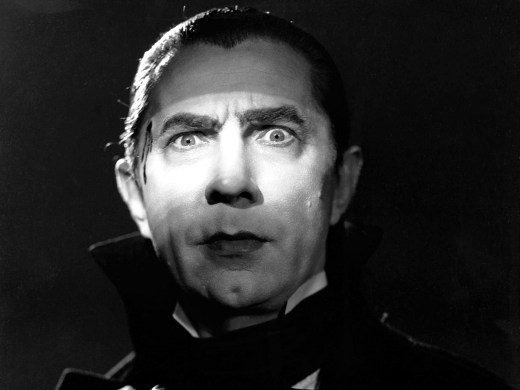
To Kill a Vampire: The Continued Resurrection of Charter Schools in Washington State

Dracula-1.jpg

Washington state residents have voted charter schools down three times.
Twice, initiatives were placed on a statewide ballot—once in 1996 and then in 2000—and both were defeated. The same happened with a referendum in 2004. In 2012, charter school proponents were able to place initiative 1240, which is based on a model bill provided by theAmerican Legislative Exchange Council, on a statewide ballot.
The very wealthy—although very few—proponents of the initiative spent a whopping $10.9 million to promote the bill, making it the third most expensive initiative campaign in state history. Six “individuals” collectively spending more than $9 million included the Bill and Melinda Gates Foundation, the Eli and Edythe Broad Foundation, and the Walton Family Foundation. Opponents of the measure raised about $700,000. The initiative passed by a 50.69 percent majority vote,the slim victory exposing the lack of support for charter schools in the state.
After the charter school initiative became law, an organized group of residents filed a lawsuit claiming that the state’s charter schools were unconstitutional. On September 4, 2015, the Washington State Supreme Court ruled that charter schools are not “common schools” per the state constitution, and therefore cannot be funded by common school funds. The judges noted that charter schools are not publicly governed, subject to local accountability, or under the authority of democratically elected school boards.
But the charter champions weren’t done.
After the court’s ruling, the Washington Charter Association revealed that it had secured $14 million in private funds to keep charter schools open. At the time, there were approximately 800 students enrolled in charter schools throughout the state. Behind the scenes, Bill Gates, via the Office of the Superintendent of Public Instruction and the Mary Walker School District, approached a rural school district to take on the charter schools through the remainder of the school year. The Mary Walker School District, in the northeast corner of the state, has an enrollment of 508 students. In a letter dated December 9, 2015, the district Superintendent Kevin Jacka announced that his district would be taking on the charter schools scattered around the state (even though this was against the court ruling).
The Washington Charter Association approached Jacka about placing the state’s charters under the umbrella of his district’s Alternative Learning Experience (ALE) program. This state program was set up primarily for public school students who for various reasons need to study at home with a student learning plan. In a deal made at a local Starbucks, representatives from the Gates Foundation, the Washington Charter Association, and the Mary Walker School District agreed to terms where the Mary Walker School District would oversee the charter schools and receive $3 million in grants. Representatives from the Gates Foundation wrote the initial grant to be submitted by the Mary Walker School District and had Jacka approve it before it was submitted to the Bill and Melinda Gates Round 2 in Washington State over charter schools | Seattle Education:


Just 'A Teacher': What I Learned About Perception And The Power Of Words On LinkedIn | Huffington Post

Just 'A Teacher': What I Learned About Perception And The Power Of Words On LinkedIn | Huffington Post:

Just ‘A Teacher’: What I Learned About Perception And The Power Of Words On LinkedIn

The sad truth is that teaching is not as respected as other professions.


Like millions of people exploring career opportunities, I have spent an inordinate amount of time on LinkedIn in recent years. I have a modest yet carefully curated network in place. I have fine-tuned my profile diligently to stand out from the pack (although according to the bots, I am only in the top 35 percent of my network). I have sifted through job prospects, clicked on applications, liked comments, and even dabbled with my own posts. Yet, after a year of this LinkedIn madness I have come to a dire conclusion that may lay at the heart of the current teacher shortage crisis: Being a K-12 educator, especially a teacher, gets little to no respect in the new LinkedIn culture.

“Just” A Teacher

In a recent conversation with a close friend, himself a former teacher pivoting to a career in higher education, we both lamented this teacher status quandary. We agreed that in order to be taken seriously, especially from private industry, we had to embellish our K-12 years. Not embellish as in lie, but as in make fancy. Mentions of “learners” or “lesson plans,” for example, were not in line with the job market. Inserting words like “managed,” “developed,” “coordinated” or even “mentored” were much better.
As for job titles, identifying as just “a teacher” was a non-starter—even for positions in school-related nonprofit work, educational leadership, or instruction at the higher education levels. Like it or not, we had to adapt to a new LinkedIn culture obsessed with trendy titles, reform-focused hyperbole, and “transformative” practice—not in schools but preferably in the private sector. “Strategic,” “Consulting,” “Directing,” “Diversity,” and “Engaging” are in; “Counseling,“ “Classroom,” “Students,” and just plain “Teaching” are out.
The irony of this predicament is that virtually every job description we compared called precisely for the skills gained from combined decades working in the classroom. These are the same skills millions of teachers exhibit every single day across the country ― skills that would no doubt transfer to other sectors. “The ability to relate to multiple stakeholders” or “develop dynamic plans for reaching diverse audiences” could hardly be more implicit in a teacher’s job description.
And yet, we both shared uneasiness in placing any word associated with K-12 teaching in our profile. It turns out we were not alone. A passing survey of close teacher friends revealed the same concerns: almost all educators with whom we spoke felt as if their skills in the classroom carried little or no weight in the private sector, even in cases where the job called for their specific areas of expertise.
Even worse, many experienced teachers felt it would be a hindrance to mention their K-12 chops for a role with education-related organizations, many in the Just 'A Teacher': What I Learned About Perception And The Power Of Words On LinkedIn | Huffington Post:


Bias Isn't Just A Police Problem, It's A Preschool Problem : NPR Ed : NPR

Bias Isn't Just A Police Problem, It's A Preschool Problem : NPR Ed : NPR:

Bias Isn't Just A Police Problem, It's A Preschool Problem

A new study out of Yale found that pre-K teachers, white and black alike, spend more time watching black boys, expecting trouble. LA Johnson/NPR


First, a story:
Late one night, a man searches for something in a parking lot. On his hands and knees, he crawls around a bright circle of light created by a streetlamp overhead.
A woman passes, stops, takes in the scene.
"What are you looking for? Can I help?"
"My car keys. Any chance you've seen them?"
"You dropped them right around here?"
"Oh, no. I dropped them way over there," he says, gesturing vaguely to some faraway spot on the other side of the lot.
"Then why are you looking here?"
The man pauses to consider the question.
"Because this is where the light is."
New research from the Yale Child Study Center suggests that many preschool teachers look for disruptive behavior in much the same way: in just one place, waiting for it to appear.
The problem with this strategy (besides it being inefficient), is that, because of implicit bias, teachers are spending too much time watching black boys and expecting the worst.
The study
Lead researcher Walter Gilliam knew that to get an accurate measure of implicit bias among preschool teachers, he couldn't be fully transparent with his subjects about what, exactly, he was trying to study.
Implicit biases are just that — subtle, often subconscious stereotypes that guide our expectations and interactions with people.
"We all have them," Gilliam says. "Implicit biases are a natural process by which we take information, and we judge people on the basis of generalizations regarding that information. We all do it."
Even the most well-meaning teacher can harbor deep-seated biases, whether she knows it or not. So Gilliam and his team devised a remarkable — and remarkably deceptive — experiment.
At a big, annual conference for pre-K teachers, Gilliam and his team recruited 135 Bias Isn't Just A Police Problem, It's A Preschool Problem : NPR Ed : NPR:

State education commissioner talks opt-outs, revised Common Core standards | poststar.

State education commissioner talks opt-outs, revised Common Core standards | Local | poststar.com:

State education commissioner talks opt-outs, revised Common Core standards


SARATOGA SPRINGS — State Education Commissioner MaryEllen Elia told superintendents Tuesday that everyone needs to do a better job communicating the changes to the state tests to decrease the number of student opt-outs and move forward with rewriting its standards.
The tests, which are required in English and math for students in grades three through eight, were shortened this year and students were given unlimited time.
She said the fact that the percentage of parents opting out their children from taking the test held steady at 20 percent this year is a positive — despite all rhetoric and misinformation.
“If we hadn’t done some of the things we’ve done, we may have been in worse shape,” she said during the closing keynote address of the New York State Council of School Superintendents Fall Leadership Summit. The event was held at The Hilton in Saratoga Springs.
Teachers also had more input into the development of the tests, according to Elia.
“We asked teachers to come in and review every question that was on the assessments. If they didn’t like them, they were pulled out,” she said.
In addition, the state in June released 75 percent of the test questions online, which allows teachers to review them and talk with their colleagues about what material was missed by students.
The state also put a moratorium on using student performance on the tests in grading teachers. She said she understands the frustration. The tests scores accounted for a certain percentage of the teacher evaluation and then it more than doubled. At the same time, the standards changed.
“We were doing things at such a fast pace relative to standards, curriculum and assessments that people just couldn’t handle it anymore,” she said.
It is important to communicate the changes that have been made. Elia cited an incident when she State education commissioner talks opt-outs, revised Common Core standards | Local | poststar.com:


Segregation driving ‘school choice’ charade - WacoTrib

Charles Luke, guest columnist: Segregation driving ‘school choice’ charade - WacoTrib.com: Guest Columns:

Charles Luke, guest columnist: Segregation driving ‘school choice’ charade

Image result for Segregation driving ‘school choice’ charade
We all know that many politicians are prone to exaggeration. Texas Lt. Gov. Dan Patrick’s recent statement that private school vouchers, or “school choice” as he puts it, is a civil rights issue is just such an exaggeration. In fact, Patrick’s costly voucher schemes could drain billions from local schools and deny many students their right to receive a quality education.
The history of vouchers actually suggests that they were a way to avoid granting civil rights to others. Vouchers were developed in response to the U.S. Supreme Court’s Brown v. Board of Education ruling in 1954 that schools integrate and end the charade of “separate but equal” treatment of students. For at least a decade, some states simply ignored the ruling, but with passage of the Civil Rights Act of 1964 states began to implement “freedom of choice” programs that would allow white parents to take their child to a select school and thereby leave segregation patterns untouched. Mississippi even had “segregation academies” that only white children could attend.
No voucher plan introduced in Texas to date has provided adequate accountability for taxpayer dollars. Other states have seen dire results when state funds are handed to individuals and organizations without state accountability for quality of education. Storefront schools with improper supervision that endanger the lives and education of students spring up with investors concerned only about profit and not the future and well-being of children.
Any serious plan would hold the recipients of state funds to the same curriculum and accountability standards as public schools. This must be done to ensure the welfare of our children.
It is not enough to separate our children from the public schoolhouse and then simply treat them “equally.” All students are not the same and often must be treated differently. My child with spina bifida requires a different level of treatment in the educational environment than another child. A weighted public education funding system ensures that he receives every opportunity to learn — something that voucher plans typically omit. Under the Americans With Disabilities Act (ADA), he receives facilities accommodations that are not readily available in most private organizations.
If we’re concerned with civil rights, any voucher must come with the requirement the receiving institution comply with all federal codes affecting those with disabilities.
Historically, transportation has not been fully covered in any voucher bill. A civil rights approach would demand that transportation costs to any school the child wanted to attend be included. Otherwise, poor kids stay on the poor side of town and rich kids stay on the rich side and de facto segregation results. Besides, the current transportation allotment for public schools is woefully inadequate and has not been updated for more than 20 years. It’s doubtful the state will find new money to transport children with vouchers.
Any plan truly concerned with civil rights would meet the requirements I have outlined. Over the past few years, I have seen a growing number of parents, community members, ministers, businessmen and stakeholders in education join the ranks of those who oppose vouchers for a variety of reasons. There is history to show that vouchers disguised as “school choice” have repeatedly been used to further segregation around both race and income, and there is ample case law to show that civil rights advocates have fought long and hard to ensure quality educational opportunities for all children.
To call vouchers a “civil rights issue” denies their history and denigrates a hard-fought battle to ensure a free and appropriate public education for all children.


Sociologists examine shift from 'No Child Left Behind' to 'children left behind': IU Bloomington Newsroom

Sociologists examine shift from 'No Child Left Behind' to 'children left behind': IU Bloomington Newsroom: Indiana University Bloomington:

Sociologists examine shift from 'No Child Left Behind' to 'children left behind'


BLOOMINGTON, Ind. -- When students across the country returned to school this fall, they did so under the Every Student Succeeds Act, which rolls back the style of accountability emphasized in the previous federal education law, the No Child Left Behind Act.
No Child Left Behind was passed with overwhelming support in 2001 and looked to be headed to easy reauthorization six years later. But the bipartisan consensus behind education accountability broke down, with no agreement on how to move forward.
What happened in 2007? Indiana University sociologists Tim Hallett and Emily Meanwell turn back the clock to understand. Analyzing transcripts from congressional hearings during the failed reauthorization attempt, they focus on social interactions that promoted an alternative meaning for the law's title:
"NCLB means children left behind."
"This was an important moment in time," Hallett said. "The law had support from both Republicans and Democrats. It had support from the Bush administration. And yet, through this process, its meaning started to get inverted, and people began to interpret it in different ways."
Hallett and Meanwell published their findings in the article "Accountability as an Inhabited Institution: Contested Meanings and the Symbolic Politics of Reform" in the journal Symbolic Interaction. Hallett is an associate professor in the Department of Sociology in the College of Arts and Sciences. Meanwell is director of the Social Science Research Commons.
The paper draws on an approach called inhabited institutionalism to examine how participants in the hearings created "problem-meaning packages" that upended the understanding of No Child Left Behind. Applying a lens of sociological analysis to the process of making policy, the authors argue that understanding these dynamics requires paying attention to social interaction and the symbolic politics of reform.
The shift in accepted views of educational accountability that appeared in 2007 eventually culminated in the December 2015 passage of the Every Student Succeeds Act, which gives states and local school districts more flexibility to create their own forms of accountability, a system resembling the one in place in the 1990s under President Bill Clinton.
"We thought there was something missing in understanding the arc of accountability," Hallett said. "If we want to understand this circling back of reform, it helps to look at these congressional interactions and meanings."
The researchers analyzed and coded 1,790 pages of single-spaced text in the transcripts of 20 congressional hearings on reauthorization held in 2007. A consistent theme, they said, was that a law intended to serve all children had the perverse effect of causing some children to be left behind.
They identified problem-meaning packages that clustered around four issues:
  • The requirement that schools show Adequate Yearly Progress by getting a fixed number of students to pass standardized tests caused schools to focus on students who were close to passing. Higher- and lower-achieving students got less attention.
  • The law's focus on test scores resulted in an overemphasis on teaching basic math and reading skills. A congresswoman argued that "we leave the whole child often behind" as a result.
  • Schools were gaming the system by "pushing out" students who were unlikely to pass required tests. States gamed the system by setting standards low so more students would pass. Both tactics left children behind.
  • Hearing participants disagreed on whether there should be loose or tight coupling between federal policies and local school practices. There was no consensus on whether school districts should have flexibility to set their own standards, or if that would leave some children behind.
The split over how strong a role the federal government should have "created strange bedfellows," Hallett said. Among traditionally Democratic constituent groups, civil rights organizations favored a strong federal role and teachers' unions opposed it. Among Republican-aligned groups, business organizations favored accountability and states' rights advocates opposed it.
With critics pointing out ways in which children were left behind, the effort to reauthorize the law didn't succeed. "It just sort of fizzled out," Meanwell said.
The failed reauthorization in 2007 meant the existing No Child Left Behind law remained in effect but became untenable until it was replaced this year with the Every Student Succeeds Act, reflecting a revised policy paradigm on school accountability.Sociologists examine shift from 'No Child Left Behind' to 'children left behind': IU Bloomington Newsroom: Indiana University Bloomington:

Teachers' union leader praises KC early education program | The Kansas City Star

Teachers' union leader praises KC early education program | The Kansas City Star:

Teachers union leader visits KC, praises early childhood learning program

A pre-kindergarten program (seen in a file photo) operates at Woodland Early Learning Community School, 711 Woodland Ave. in Kansas City.

Randi Weingarten, the national president of the American Federation of Teachers, spent Monday night listening to presidential candidates Hillary Clinton and Donald Trump debate what’s best for the country.
She was disappointed that early childhood education never came up.
But it should have, she said Tuesday, because “early childhood education is important economically, socially for the entire country. Things like this have to be funded for the public good, the national good.”
Weingarten, in Kansas City for a federation meeting, stopped by the Kansas City Public Schools’ Woodland Early Learning Community School for a tour.
“I was bowled over by it,” Weingarten said of the school at 711 Woodland Ave. “Here you have this beautiful building that has the grandness of the old buildings that signals that school is important. And then Kansas City retrofitted the building to insure that every child 3 and 4 years of age who wants a head start, can have it.”
Only Kansas City and New York City, she said, are funding all-day public early childhood education for all children.
Recently on his first day on the job, Kansas City Public Schools Superintendent Mark Bedellwas at Woodland to announce a seven-hour pre-kindergarten day at no cost for 1,100 Kansas City children. It’s a program made possible because of Missouri legislation that allows the district to collect per-pupil state funding for some pre-K students, combined with federal Head Start dollars and local aid.
The program exists in two schools — Woodland and Richardson Early Learning — and may grow into a third next year.
Weingarten called Woodland Early Learning “the potential and promise of public education.”
Weingarten said she was happy to know “that a city would say to all of its kids ‘we know that leveling the playing field and having early childhood education and finding ways to create positive learning environments ... is really important so we are going to make sure that we fund it.’ 
She said, “The issue confronting American education is that half the kids in public education are poor. The last recession put a lot of kids in poverty.”
All-day pre-kindergarten, Weingarten said, starts children off ready for kindergarten and sets them up to graduate from high school, for post secondary education and a path out of poverty.
A study published by the nonpartisan Economic Policy Institute said investment in high-quality pre-kindergarten programs generates billions of dollars in economic and other benefits for the federal and state governments.
While Weingarten didn’t hear candidates talking about early childhood education at Monday night’s debate, she said, both candidates do have an education platform.
They are, she said, “as different as day and night.” One candidate, she said, “envisions doing something like what we have here at Woodland for the entire country, and another candidate has a child-care proposal that disproportionately helps the wealthy.”
She said: “Clinton has spent her entire political life fighting for education for families and putting early childhood education on the map. Donald Trump doesn’t even talk about it, and when he talks about education he talks about taking money away from it.”
No so, said Todd Abrajano, spokesman for Trump’s campaign in Missouri, who said: “The truth is Mr. Trump’s plan helps millions of hard-working American families especially at the lower end of the income scale by providing relief for every working and middle-income earner with child-care expenses.”


ESSA: Education Department Releases Guidance on Teachers - Politics K-12 - Education Week

ESSA: Education Department Releases Guidance on Teachers - Politics K-12 - Education Week:

ESSA: Education Department Releases Guidance on Teachers

ESSA_900x500.jpg


The U.S. Department of Education Tuesday released a blueprint to help states and districts make the most of out of more than $2 billion in federal money for teacher support, preparation, training, and more.
The new federal guidance also walks states and districts through changes to this pot of money—known as Title II—under the brand new Every Student Succeeds Act. (More on the changes to teacher quality in ESSA here.) 
The department recommends that states and districts use the funds to make sure that teachers are supported from the time they enter educator training programs, through their early years of teaching, and as they take on leadership positions, including the principalship.
And, the guidance reminds states and districts that they have to reach out to teachers, support personnel, community partners, and others when figuring out how to use their Title II funding. 
"Educators play a critical role in securing our nation's economic future and preserving the promise of an excellent education for all children, especially those who have been historically underserved," said U.S. Secretary of John B. King, Jr., in a statement. "We don't just want educators to be part of the change; we need them to lead it."

Teachers and Equity

The guidance encourages states and districts to use Title II funds to make sure that all kids have access to an effective teacher, and to make sure teachers in high-needs schools get access to extra supports.
For instance, states and districts could use the money to:
  • Give bonuses, pay raises, and other perks to attract excellent teachers to high-needs schools.
  • Offer extra pay to teachers who teach in high needs subjects, or teach special populations, such as English-language learners.
  • Create "co-teaching" classrooms in high-needs schools, where beginning teachers work alongside a more experienced educator.
  • Address working conditions in high-needs schools, or give teachers who work in them extra time to plan and collaborate.
Many school districts use their Title II money to cut down on class size. That's allowable under ESSA, the department says, as long as there is evidence to back up the approach. 

Educator Development 

School districts across the country are trying to create so-called "career ladders" for teachers, and the department has some suggestions on how to use Title II money to make that happen. For instance, states and districts can:
  • Use federal teacher quality funds to support preparation programs at traditional universities, but also for alternative-preparation programs, and teacher residency programs.
  • Create or choose "academies" to prepare teachers, using funding under ESSA. (More on that below). States that want to go that route must first choose an "authorizer" that will supervise the academies and hold them accountable.
  • Create mentorship programs for new teachers
  • Hire or support "principal supervisors" to help school leaders in their work
  • Train principals, including giving them time to learn from each other.

Teacher Evaluation 

States and districts can also use their money to create teacher-evaluation systems, but perhaps just as important, they don't have to do that. Teacher evaluations based on student outcomes were a huge priority for the Obama administration during its first six or so years in office. It championed the policy through Race to the Top and No Child Left Behind waivers. Under ESSA, states don't have to create teacher-evaluation systems that rely in part on student test scores, but they can if they want, or they can use their federal teacher quality money to craft other types of evaluation systems.
The department recommends creating evaluation systems that take into account multiple measures, including student academic growth, but also observations, and parent/student surveys. Evaluations should also be valid and reliable, and teachers should be clear on what they are being measured on, and get to see their entire evaluation, not just the overall rating.

Funding Changes

There are some changes to the way Title II money flows under ESSA. For instance, states can now reserve up to 2 percent of their total Title II funding at the state level to help prepare teachers and principals to work in high-needs schools. And they can reserve up to 3 percent of districts' allocation for principal support. This chart, included with the guidance, illustrates the breakdown of the funding. 
Title II snip.PNG
Importantly, states and districts may not have as much Title II money to play around with during the 2017-18 school year, the first year of ESSA implementation, as they do right now. The program is currently getting about $2.3 billion, but spending bills pending in the House and Senate seek to cut it down, from just over $2 billion to $1.9 billion, respectively.
Of course, Title II isn't the only pot of federal money for teacher quality. In fact, the department doled out $5.1 in Teacher Quality Partnership grants to teacher-preparation programs that use a "residency model"—where prospective teachers take courses but also teach alongside a veteran educator—and other programs with a strong, "hands-on" focus.
The winners this year included a cadre of rural programs: Coppin State University, North Carolina Agricultural and Technical State University, the University of New Hampshire, and the University of West Alabama.
Want more? U.S. Secretary of Education John B. King, Jr., is hosting a live video chat with educators on Tuesday night to talk about educator support. You can check it out here.
ESSA: Education Department Releases Guidance on Teachers - Politics K-12 - Education Week:

California Comeback: For Teachers, Invisible Scars and Wary Hopes - LA Progressive

California Comeback: For Teachers, Invisible Scars and Wary Hopes - LA Progressive:

California Comeback: For Teachers, Invisible Scars and Wary Hopes


California Teaching Careers
Long Beach teacher Sherri Gonser
“Ihad known it was coming,” remembers Alan Underwood.
In the spring of 2008, Underwood was an eager and popular young assistant band director at a high school in Moreno Valley, a suburban enclave in Riverside County, but the first clouds of what would soon be called the Great Recession were gathering in far off New York — and were clearly visible to Underwood. The music teacher, only four years out of college, decided to check in at the Val Verde Unified School District offices for reassurance.
 “They’re like, ‘Hey, you have a job for as long as you want in the district,’’’ he says in a phone call.
By October, however, the Dow Jones Industrial Average had plunged 18 percent in a single week, and California’s nearly 300,000 public school teachers found themselves in the full fury of a financial storm that saw the state teetering on the precipice of a record $28.1 billion deficit. It would get far worse.
“It started to become a little bit clearer that things weren’t great,” Underwood dryly recalls. “I wore a pink shirt the day they were handing out the first round of pink slips. This was just the reality: They were going to have to cut somewhere, and they weren’t going to cut English and math teachers.”
Underwood was right. He, along with every music teacher in Val Verde Unified except for one was pink-slipped — three high school teachers, six middle school and 13 elementary school teachers. The entire elementary school music program was eliminated and middle school music electives were cut back to one.

Throw a dart at a California Department of Education map and it will be impossible to hit a school and not hear similar stories. Until 2008 most California teachers believed teaching was recession-proof when they chose to enter the profession.

Throw a dart at a California Department of Education map and it will be impossible to hit a school and not hear similar stories. Until 2008 most California teachers believed teaching was recession-proof when they chose to enter the profession.
But by 2012, the state’s general fund revenues had plummeted by more than $40 billion. That resulted in a debilitating 14 percent cut at the district level and, according to the Census Bureau’s Survey of Public Employment, 70,787 (or 7.9 percent) fewer people working in the state’s K-12 schools in 2011 than in 2006, including 38,703 fewer teachers.
And by the end of the 2011-12 school year, 2.6 million California children were attending schools in a record 188 districts that were on the point of collapse. Another $6 billion education shortfall in the 2012-13 budget loomed.
In November of 2012, however, California voters came to the rescue with Proposition 30, the temporary tax measure that dramatically pulled state public schools from the brink. The initiative, which raised the state sales tax rate by one-quarter cent through 2016, California Comeback: For Teachers, Invisible Scars and Wary Hopes - LA Progressive: