Latest News and Comment from Education

Saturday, September 10, 2016

John Thompson: The Price Exacted from Students for the Test-and-Punish Regime of Accountability | Diane Ravitch's blog

John Thompson: The Price Exacted from Students for the Test-and-Punish Regime of Accountability | Diane Ravitch's blog:

John Thompson: The Price Exacted from Students for the Test-and-Punish Regime of Accountability

Image result for Test-and-Punish Regime of Accountability


 John Thompson, teacher and historian in Oklahoma, is a frequent contributor to the blog.

Diane Ravitch publicized an educator’s concise and astute critique of Florida’s standards of instruction where “The FLDOE has absolutely no clue on how long it takes to teach each standard effectively.” An educational software company “looked at the standards that a fifth grade teacher is required to teach effectively and stopped counting when we found it would take a minimum of at least 300 school days to teach the standards to an effective level.” The obvious problem is that covering the tested standards would take 2/3rds of a school year more than the time students are in class – even if there were no disruptions of learning ranging from assemblies and class disruptions to the time wasted on benchmark and other form of testing.
Moreover, even a Florida true believer in test-driven, competition-driven reform should understand “that these tests are not built to test your child’s learning knowledge, they are built to evaluate the schools and teachers on their effectiveness on teaching the standards.” Consequently, “In order for a teacher or school to score effectively on these tests you have to hope that the students that are coming into your classroom have at least some prior knowledge of the standards.” That, of course, helps explain why the contemporary reform movement, which was designed to help poor children of color, has inflicted the most damage on the kids that it was supposed to help.
We need far more press coverage of the absurdities fostered by high stakes testing. To know about the real-world effects of corporate school reform is to recognize why it should be ridiculed to death. We must also explain, however, that teaching and testing to a standards regime that is disconnected to reality is more than a farce. It is a tragedy. For our poorest children of color, the test, sort, reward, and punish path to school improvement has been especially cruel. And, don’t even get me started about the damage done to our society’s education values by bubble-in accountability.
In Oklahoma City, before NCLB, administrators would grin when they passed out aligned and paced curriculum guides. All types of educators were mostly amused that anyone would seriously contemplate such a guide for our Standards of Instruction as anything more than some silly paperwork to be filed away and forgotten. The time it took for students to master material obviously was the time it took to master material. There was no possible way that the rate of learning could be predetermined John Thompson: The Price Exacted from Students for the Test-and-Punish Regime of Accountability | Diane Ravitch's blog:

Your Human Capital (Child) and Tracking Its Virtual Health (Mental & Physical) in School. What Could Go Wrong? – Missouri Education Watchdog

Your Human Capital (Child) and Tracking Its Virtual Health (Mental & Physical) in School. What Could Go Wrong? – Missouri Education Watchdog:

Your Human Capital (Child) and Tracking Its Virtual Health (Mental & Physical) in School. What Could Go Wrong?

 telehealth
MEW recently wrote about Telehealth (virtual health services) in Missouri and a school program in Indiana using virtual doctors to assess students’ health.  Concerns about Telehealth in schools were:
According to the PresenceLearning press release celebrating the passage of MO SB579 (Medicaid reimbursement for related services to students provided by virtual medical services), the legislation will allow access to special needs students who may not have had Your Human Capital (Child) and Tracking Its Virtual Health (Mental & Physical) in School. What Could Go Wrong? – Missouri Education Watchdog:

Newsletter: Charter Report and Grassroots Grow - Network For Public Education

Newsletter: Charter Report and Grassroots Grow - Network For Public Education:

Newsletter: Charter Report and Grassroots Grow


 The Network for Public Education will publish a major report on charter schools in the spring of 2017 entitled, Charters and Consequences.The report will provide an in-depth examination of the problems that have resulted from the rapid expansion of charter schools in the United States. We are working with activists and experts in states including California, Texas, Pennsylvania and Illinois to produce this important report.

Even as we write the report, we will publish stories of what we find. Our first stop was California, a state in which a lack of regulation has produced fraud, corruption, as well as storefront charters in malls, church basements and even former liquor stores.
If you do not live in the Golden State, it is still an important read. The billionaires who are behind the unregulated growth of charters do not limit their reach. Carrie Walton Penner, of the Walmart fortune, is now funding a super PAC in New York.
You can read Part 1 of our California series in Valerie Strauss’ Answersheet:
https://www.washingtonpost.com/news/answer-sheet/wp/2016/09/09/how-messed-up-is-californias-charter-school-sector-you-wont-believe-how-much/
or on our website here:

Charter Schools Gone Wild in California
<![CDATA[//><!]]>
-->

Please read it and share it on social media.
This month we also published our first Grassroots newsletter
We’re excited to announce the official launch of the Network for Public Education’s Grassroots Education Network! We currently have 6 national organizations and 58 state and local organizations working in 25 states participating in the network, and this is just the beginning. We hope you’ll take some time to check out the organizations that have joined.
We have also started a closed Facebook group for members of the Grassroots Education Network. We envision it as a place where leaders and members of the organizations in the network can gather to share resources, ask questions and learn from each other.
And finally, don’t miss the first edition of the Grassroots Education Network Report. We have three reports for you this month from network members in FloridaGeorgia and New York, and you won’t want to miss them. These groups are doing amazing work that we can all learn from.
You can find a link to all three here.
Thank you for all that you do and have a great school year,
Carol Burris, Executive Director of NPE
The Network for Public Education is a 501 (c)(3) organization. You can make a tax deductible donation here.
Please follow us on twitter and like us on Facebook.
Newsletter: Charter Report and Grassroots Grow - Network For Public Education:

Keeping retirement weird. 500 broken treaties. | Fred Klonsky

Keeping retirement weird. 500 broken treaties. | Fred Klonsky:

Keeping retirement weird. 500 broken treaties.


At a little after 4PM yesterday I joined several hundred Native people and supporters gathered in a circle below the Chicago Picasso and took part in a Lakota prayer.
Over the past several days, rallies in support of the encampment at Standing  Rock have taken place in cities across the country.
We had heard that a judge had ruled against the protesters who want the pipeline construction halted that will move North Dakota oil across four states – North and South Dakota, Iowa and Illinois – and under two major rivers. It is a huge environmental threat to millions of people.
I am not a religious person. But as I joined in the Lakota prayer I had no doubt that we are on the side of the angels. There is no moral middle ground on this one. There is right and there is wrong.
It is not for me to say how the Lakota leaders – who have welcomed thousands to Standing Rock – should respond to the Obama action.
We do not have a good track record on promises to Native people in this country.
It is said that over 500 treaties were made with Native nations, primarily for land cessations, but 500 treaties were also broken, changed or nullified when it served the government’s interests.
Following the federal government’s announcement, I read this on the Standing Rock Facebook page:
Let’s be cautious about celebrating this.  On one hand it seems clear that our pressure is having an effect.   Let’s keep it up.
But we have seen time and time again a consistent strategy from the State in these situations: string out the process, break it to us gradually to avoid a big confrontation, present the illusion of careful thoughtful review of the case, tempt us with promises of modest Keeping retirement weird. 500 broken treaties. | Fred Klonsky:

SKrashen: California's Multilingual Education Act (Proposition 58)

SKrashen: California's Multilingual Education Act (Proposition 58):

California's Multilingual Education Act (Proposition 58)

Image result for California Multilingual Education Act (Proposition 58)


California's Multilingual Education Act:  What it would change and how it would improve our educational system.
Stephen Krashen
Language Magazine 15 (11): 25-26, 2016.
Available at languagemagazine.com

If the Multilingual Education Act passes in California, it will be much easier to set up bilingual education programs, programs that use the child's first language to accelerate the development of academic English. I will try to explain why and how these programs work, and briefly discuss what the research says.

Why bilingual education works

Bilingual education helps students develop academic English in two ways. The first is teaching subject matter using the students' first language. Studying subject matter in a language the student understands leads to more mastery of subject matter. This in turn means more comprehension when subject matter is presented in English and thus more English language acquisition.

The second way is by providing literacy development in the first language, a short cut to English literacy. It is much easier to learn to read in a language you understand, and once you can read, this ability transfers across languages, even when the writing systems are different. There is strong evidence that better reading in the first language is associated with better development of reading in English. Studies have confirmed this for speakers of Spanish, Japanese, Vienamese, and Chinese, as well as for other first and second languages.
Properly organized bilingual programs also provide exposure to comprehensible English from the very first day, and introduce subject matter teaching in English as soon as it can be made comprehensible.
How it is done
Programs typically begin with academic subjects taught in the first language, along with ESL classes.  When students have enough English competence, those subjects that are the easiest to understand with the help of context (math, science) are taught in relatively simple, slow English ("sheltered") while more abstract subjects  (social studies, language arts) remain in the primary language. 
After more English academic proficiency is developed, students study math and science in regular classes with native speakers of English, and subjects such as social studies are taught in comprehensible, sheltered English.
Finally all core subjects are done in the "mainstream" and students can continue to develop their first language in special heritage langage classes.
The sheltered classes help students acquire a significant amount of the specialized language of subject matter classes.  Both sheltered classes and classes taught in the first language provide subject matter knowledge, which helps students understand mainstream classes.
This "gradual exit" model is presented below. It is called a gradual exit program because students are not placed in the mainstream all at once, but gradually, as subjects become comprehensible.
The gradual exit model

mainstream
ESL/sheltered
first language
Beginning
art, music, PE
ESL
all core subjects
Intermediate
art, music, PE
ESL, math, science
social studies


language arts
Advanced
art, music, PE
ESL
language arts

math, science
social studies

Mainstream
All

heritage language
Mainstream = all students together

The research

After reviewing all available comparisons of bilingual education and English immersion, McField and McField (2014) concluded that when programs provided subject matter instruction and literacy development in the first language and comprehensible input in SKrashen: California's Multilingual Education Act (Proposition 58):
 Image result for California Multilingual Education Act (Proposition 58)

Seattle Schools Community Forum: Protecting Your Child's Privacy Rights This School Year

Seattle Schools Community Forum: Protecting Your Child's Privacy Rights This School Year:

Protecting Your Child's Privacy Rights This School Year


Going thru all those forms in your student's take-home packet?  Consider the following:

- the FERPA form - you have quite the dilemma.  If you do not approve allowing your student's data to go out, you risk your child not being in the yearbook.  (I find this all pretty silly but I believe this is done to get that data.) 

A better directory opt-out form (and one I would have used.)  I think the district could challenge you on this but I think if it's what you submit, well, then you are on record.

Here's what they do in one district in Colorado.   I like this one.

Also on FERPA, it was amended (by our friend, Arne Duncan) to allow districts and other educational entities to allow any group/person with a "legitimate education interest" access to student data.  Here's something to consider;


In CA, the law requires this disclosure proactively by the Districts to parents each year.  (CA Ed Code  49063)
(d) The criteria to be used by the district in defining "school officials and employees" and in determining "legitimate educational interest" as used in Section 49064 and paragraph (1) of subdivision
Actually via FERPA:

Schools/districts must provide parents with an annual notification of their FERPA rights, including the following:

"1. A school and/or LEA must:

a. Establish criteria in the annual notification of FERPA rights about who is a “school official” and what constitutes a “legitimate educational interest”;

b. Determine that the disclosure is to a school official who has a legitimate educational interest in the education records; and

c. Use reasonable methods to ensure that school officials obtain access to only those education records in which they have a 
Seattle Schools Community Forum: Protecting Your Child's Privacy Rights This School Year:


Schools Matter: Understanding KIPP Model Charter Schools: Part 8

Schools Matter: Understanding KIPP Model Charter Schools: Part 8:

Understanding KIPP Model Charter Schools: Part 8

Get 20% Off w/code: RLEGEN16


In this chapter, KIPP Model teachers talk about what it was like to teach in a No Excuses charter school. 

You may find earlier chapters by googling on the blog post title above. You may preview a copy here, or you may purchase a copy of Work Hard, Be Hard: Journeys through "No Excuses" Teaching at any online book store or from Rowman & Littlefield Publishers.


Chapter 8
What Was It Like to Teach at KIPP?
I just feel like KIPP has left this doubt that no matter what I do, I’m just not good enough. (1183)
Most former KIPP teachers expressed grave reservations about recommending KIPP to others as a place to teach. The question I asked all teachers was a variant of this one:  If I were a friend interested in applying for a teaching job at KIPP, and I asked you, ‘what was it like there,’ what would you tell me? One teacher told me that he loved “the people there,” but he did not love the KIPP system that made life hard: 
Ten-hour days with students is definitely taxing on the teacher.  You have no life.  KIPP is your life. Even when you are done with the children at 5:00, you might have [students] after school or at the same time you are definitely developing lesson plans. . . .Because the way they have it set up, we didn’t really get time to plan our formal lessons; we were hired in June, and I started in June.  I didn’t really get the time to really plan any kind of lessons at all . . . we had a week’s worth of planning but that first week before school started we went to a KIPP Summit. 
You really don’t have a life at all; that is what I would definitely tell them.  It’s easy for you to get a job with them because you don’t have to have education as your major, so I would tell them yes, that’s a positive about it and yes you do get paid more than you would in the [public] school system, but it’s still a lot of work, a lot of work.
         Other teachers were more graphic in their response to the question.  A teacher who remained under the care of a therapist when I talked with her, said this:
I would say that working at KIPP was the most horrible experience of my life. I would tell people that, I would tell a friend especially, that the message is good with KIPP, that you want to send all kids to and through college, but it is at such great personal sacrifice that it’s—it crushed me. I would encourage anyone else to just stop. It wasn’t even getting fired that was the worst thing for me. It Schools Matter: Understanding KIPP Model Charter Schools: Part 8:

Dana Goldstein: A teacher’s grinding, sometimes stultifying, life in a public school classroom - The Washington Post

A teacher’s grinding, sometimes stultifying, life in a public school classroom - The Washington Post:

A teacher’s grinding, sometimes stultifying, life in a public school classroom

"Substitute: Going to School With a Thousand Kids" by Nicholson Baker (Blue Rider)


Dana Goldstein is a journalist and author of “The Teacher Wars: A History of America’s Most Embattled Profession.”
‘Substitute,” by the prolific novelist and essayist Nicholson Baker, is an odd book. More than 700 pages long, it covers just 28 days in Baker’s life, during which he worked as a substitute teacher in Maine public schools.
Baker is an award-winning author who has taught college. To become a substitute, he was asked to produce merely a high school diploma and a clean criminal record. He earned $70 per day. Baker doesn’t tell us much about why he embarked on this experiment, other than (presumably) to write about it.
He mentions only in passing that his own children attended public school and that, in 1967, he was one of the first white students in Rochester, N.Y., to participate in a voluntary racial integration program. In a single paragraph, Baker fondly recalls Mr. Toole, his eighth-grade English teacher, who assigned Homer’s “Iliad” and suggested that Baker write his own epic poem. That teacher “changed my life,” he writes. Yet as a narrator, Baker rarely reflects explicitly as a former student, a father or even as a professional writer. “I sought out the teaching job because I wanted to know what life in classrooms was really like,” he writes. “There are many books of educational advice, of theory, of hagiography, of gloomy prognosis — what’s missing is a lived-through experience of how busy and complicated and weird and long every school day is.”
Baker has succeeded in filling this void. “Substitute” faithfully re-creates the grinding, sometimes stultifying routines of classroom life, from shushing the class to cleaning the dry-erase board. Unfortunately, this comes at considerable expense for readers. Baker does not explain his reportorial methods, but the way the book is written, as a series of dialogue-driven vignettes, suggests he tape-recorded each of his days as a substitute. The resulting book too often reads like a transcript, albeit one that highlights both the tedium and charm of teaching school. For example, here is part of a scene from a middle-school classroom:
“ ‘Carry on guys,’ I said, ‘I want to see real math happening.’
“ ‘I feel laughy today,’ said Serena.
“Waylon and Roan signed into Fast Math on their computers. ‘Would that be thirty-six?’ asked Waylon slowly.
“I said four times eight was not thirty-six. ‘It’s close to thirty-six.’ ”
Each of these scenes stretches over multiple pages, quotes stacked upon quotes. If there is an upside to plowing through them, it is that Baker has, like an investigative reporter, revealed much of the educational malpractice A teacher’s grinding, sometimes stultifying, life in a public school classroom - The Washington Post:

A Connecticut Judge Reaches Too Far - Bloomberg View

A Connecticut Judge Reaches Too Far - Bloomberg View:

A Connecticut Judge Reaches Too Far


A Superior Court judge just took over Connecticut's education system, ordering state officials to undertake major reforms of funding, teacher evaluation and graduation standards. The impulse to improve education is admirable, but the judge wildly overreached his authority.
The Sept. 7 decision is an object lesson in what happens when judicial restraint is ignored. Judges are poorly placed to compel and supervise detailed policy reforms, and they’re less expert on the subject than state officials who are responsible to the electorate.
To put the Connecticut decision in context, it’s worth noting that lots of state courts in recent years have demanded greater equality in distributing public-school dollars. That’s reasonable enough. The courts generally rely on a combination of state constitutional provisions that guarantee public education and equal protection of the laws.
The federal Constitution hasn’t been interpreted this way, though the Supreme Court came close in 1973. But if getting an education is the basic tool to achieve success in a modern economy, it makes sense for states to deliver this basic good on an equal basis, rather than letting rich kids in rich neighborhoods get a better-funded education than their poor counterparts in poor neighborhoods.
The Connecticut constitution says simply that “there shall always be free public elementary and secondary schools in the state.” In 1977, the state supreme court said that meant public education was a fundamental right for Connecticut residents. And in 2010, the state supreme court allowed a far-reaching challenge to Connecticut's educational system to go forward on the theory that the state constitution requires the system to be minimally adequate.
That led to a trial held before Superior Court Judge Thomas Moukawsher -- and to his 90-page decision, followed by 154 pages of appendices drawing factual conclusions from the record.
Moukawsher did demand greater equality in state spending, noting that cuts in recent years had hit schools in places such as New Haven and Bridgeport much harder than schools in better-off suburbs such as Greenwich and New Canaan.
But his decision went much further. Starting with the premise that the state’s educational system must be “rational,” Moukawsher went on to reject a range of policy choices as fundamentally irrational, and A Connecticut Judge Reaches Too Far - Bloomberg View:


Time to assess Indiana’s education voucher system – Daily Reporter

Time to assess Indiana’s education voucher system – Daily Reporter:

Time to assess Indiana’s education voucher system


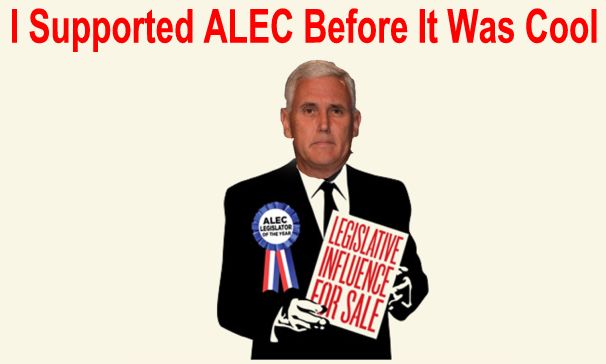
Gov. Mike Pence likes to brag that Indiana has the largest education voucher program in the country. Usually that boast ignites a debate about the desirability of such school choice programs. The claim itself is taken at face value.
But now that Pence is Donald Trump’s GOP vice presidential running mate, his declarations are getting more scrutiny. The Washington Post has researched his “largest program” claim and found it not quite accurate.
It is true that Indiana has the single largest education voucher program of any state, with 32,695 students participating. But some other states have multiple smaller voucher programs instead of one large one. Ohio, for example, has four programs, with a total enrollment of 45,459 students, which gives it the largest participation rate in the nation. Wisconsin ranks just behind Indiana with 31,295 students in three programs, and a fourth program now accepting enrollees.
Furthermore, Indiana’s voucher program is different from those in most other states because it is designed much more broadly.
In Ohio, for example, the Post reports, three of the four programs are limited to specific groups of students, either by their disability status or by their school district. Ohio has a statewide voucher program, but it is limited to students in chronically low-performing public schools, also called “failing” schools. Ten percent of Ohio’s K-12 students are eligible for this program.
In comparison, the Post reports, 59 percent of K-12 students in Indiana’s statewide school voucher program are eligible, and over 50 percent of recipients never attended public school prior to getting a voucher.
Just 2 percent of children in Indiana’s program come from “failing” schools, data from the Indiana Department of Education show. There is no cap on the number of vouchers in Indiana’s program, unlike programs in most other states.
Indiana’s program has grown much more quickly than originally planned and moved far beyond the original scope of giving the poorest students in the worst districts the kind of education choices the well-off have always had. It is time for officials to take a pause and assess what vouchers are supposed to accomplish and whether the current criteria are the right ones.
There are now 26 voucher programs in 15 states, so there is a lot for us to study. That’s what federalism’s vision for states as “the laboratories of democracy” is all about. Let’s not boast that we have the biggest voucher program but the best one.
This was distributed by Hoosier State Press Association. Send comments to dr-editorial@greenfield reporter.com.Time to assess Indiana’s education voucher system – Daily Reporter:


Hoosier School Heist TV is Doug Martin's channel featuring videos of his book tour across Indiana speaking on the corporate takeover of public education. Order Hoosier School Heist at http://hoosierschoolheist.com/.
Follow Hoosier School Heist on Facebook: https://www.facebook.com/HoosierSchoolHeist
Tweet with Doug Martin at: https://twitter.com/DougMartinED


Public school students that received vouchers to attend private schools subsequently scored lower on reading and math tests compared to similar students that remained in public schools. The magnitudes of the negative impacts were large.

— BROOKINGS INSTITUTION REPORT ON VOUCHERS IN INDIANA AND LOUISIANA

Experts Aren't Giving Trump's Education Policy a Vote of Confidence – InsideSources

Experts Aren't Giving Trump's Education Policy a Vote of Confidence – InsideSources:

Experts Aren’t Giving Trump’s Education Policy a Vote of Confidence


Donald Trump’s education policy speech continued to draw reaction from experts on Friday, with responses ranging from highly qualified support on the right to outright contempt on the left.
Trump, the Republican presidential nominee, spoke Thursday at a charter school in Cleveland, where he pledged $20 billion in federal school choice grants if he wins the White House. The money would come in the form of block grants to states.
Superficially, these policies should appeal to conservatives. Writing Friday for Education Week, American Enterprise Institute scholar Rick Hess was pleased to hear what little substance Trump offered. However, he wrote, “there’s no point in putting a lot of stock in his speeches and utterances. Trump says stuff. It’s mostly performance art. He’s changed his mind many times on questions big and small.”
Hess’s commentary got tougher from there. “A speech like this is where Trump’s lack of thoughtfulness or a meaningful policy operation really comes into play,” he wrote. “If a Jeb Bush, Ted Cruz, or John Kasich gave this speech, I’d have some confidence that they’d thought about what this would really look like. With Trump, it’s hard to have any such confidence.”
Ultimately, the scholar concluded that Trump’s education policy could hinge hugely on his appointments in this policy area.
Reaction to Trump’s speech on the left, meanwhile, was strongly negative.
“Unrestricted block grants have been a longstanding dream of Republicans as a way to advance school choice and the free market that will magically ‘save’ all children everywhere,” Diane Ravitch, an education historian and research professor at New York University, wrote on her personal blog. “The absence of any evidence for the superiority of charter schools, online schools, and vouchers is irrelevant.”
American Federation of Teachers president Randi Weingarten issued an even more outraged statement:
As far as we can tell, Trump never bothered talking to educators to find out what support they need in order to give every kid a great education. Instead, he shows his usual obeisance to the idea of making public education a market rather than a public trust, to blaming rather than respecting educators, and to ideas that have failed to help children everywhere they’ve been tried but instead, in their wake, have hurt kids by leaving public schools destabilized and their budgets drained.
As InsideSources previously reported, Democratic presidential nominee Hillary Clinton has the enthusiastic support of teacher’s unions. She is planning a break from President Barack Obama on education policy, voicing greater skepticism of teacher evaluations based on test scores and charter schools.
Image result for Trump’s bankrupt

Friday, September 9, 2016

If You’re Not a Feminist – What the Hell is Wrong with You!!? | gadflyonthewallblog

If You’re Not a Feminist – What the Hell is Wrong with You!!? | gadflyonthewallblog:

If You’re Not a Feminist – What the Hell is Wrong with You!!?

feminist-man
I am a male human being.
And you’d better believe I’m a feminist.
I wear that label proudly.
The other day a friend of mine heard one of my articles was published in Everyday Feminism. And he said, “Kind of a backhanded compliment. Isn’t it?”
Hell no!
What does that mean? Would someone suppose that a man being considered a feminist somehow made him less of a man?
On the contrary. I think it makes him more of one. It makes him a decent freakin’ person.
I just don’t understand this ridicule and fear of being called a feminist. I see it in both men and women.
The other day a co-worker said she’s all for the idea that men and women deserve equal pay for the same job, but she doesn’t consider herself a feminist.
Why the Hell not? That is a distinctly feminist point of view.
There seems to be this stigma about the term as if being a feminist was tantamount If You’re Not a Feminist – What the Hell is Wrong with You!!? | gadflyonthewallblog: