Latest News and Comment from Education

Monday, August 22, 2016

Without local school boards, parents in poor communities lose their vote
Without local school boards, parents in poor communities lose their vote:

Without local school boards, parents in poor communities lose their vote

ing Wars,” an investigation of voting rights and election participation, is the 2016 project of the Carnegie-Knight News21 program, a national multimedia, investigative reporting project produced by the nation’s top journalism students and graduates. Each year, students selected into the program report in-depth on a topic of national importance. This story was reprinted with permission.
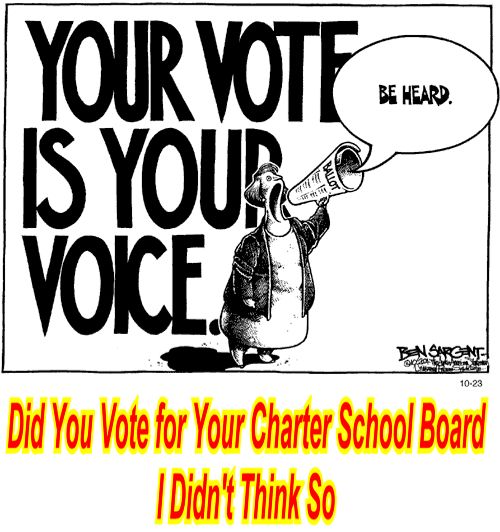
In at least 20 states, lawmakers have stripped locally elected school board members of their power in impoverished, mostly minority communities, leaving parents without a voice – or a vote – in their children’s education, according to a News21 state-by-state analysis of school takeovers.
More than 5.6 million people live in places where state officials took over entire districts or individual schools in the past six years, according to News21 data collected from state government agencies. About 43 percent are African-American and around 20 percent are Hispanic. On average 29.2 percent of people in those areas are living below the poverty level. The U.S. average is 15.5 percent.
In Highland Park, Michigan, where grass grows knee-high around decaying, long-abandoned schools, the state turned the troubled suburban district over to a private company and shut down the city’s only high school.
“As a voter, what do you do when they stole your vote?” said Danielle Floyd, a mother in Highland Park. “I can’t say that we can go out and vote. Because we’ve done that. And it didn’t work.”
In the Delta town of Drew, Mississippi, education advocates say there aren’t enough books to go around four years after state legislators consolidated the small school system into a countywide district.
In Little Rock, Arkansas – a historic symbol of school desegregation – black parents worry that the city’s schools once again are becoming segregated. They say their concerns have fallen on the deaf ears of the state, which removed the city’s school board more than a year ago.
And in New Orleans, the majority of the public schools are under the jurisdiction of the state, but charter companies make most of the educational decisions, a trend that was further accelerated after Hurricane Katrina in 2005. Charter schools are tuition-free, independently operated public schools.
Typically in a school takeover – sometimes referred to as “intervention” – a state will assume broad authority over a district, dramatically reducing and sometimes eliminating the power of a local school board, elected by community constituents.
“It feels like we don’t have much control over our kids education and how they’re being educated,” said Lashanda Mayberry, another Without local school boards, parents in poor communities lose their vote:


Big Education Ape: New Orleans tries to mix charter schools with democracy: Is this the district of the future? - The Washington Post -http://bigeducationape.blogspot.com/2016/05/new-orleans-tries-to-mix-charter.html

BREAKING: CA Supreme Court Will NOT Review Vergara Ruling | deutsch29

BREAKING: CA Supreme Court Will NOT Review Vergara Ruling | deutsch29:

BREAKING: CA Supreme Court Will NOT Review Vergara Ruling


The case of Beatriz Vergara et al. vs. the State of California et al. has been working its way though the courts for over four years now, since May 14, 2012.
The journey is over. Petition denied:
The petition for review is denied. Chin, Liu and CuƩllar, JJ., are of the opinion the petition should be granted. STATEMENT by Cantil-Sakauye, C. J. The court, recently having resumed issuing, from time to time, statements by one or more justices dissenting from the denial of a petition for review, has adopted a policy that such statements, when they pertain to an appellate court opinion that has been published in the Official Reports, will also be published, appended to the original appellate court opinion in the Official Reports. With these policies now in place, separate statements will afford members of the court an opportunity to express their views regarding the denial of a petition for review, but of course any separate statement represents the views solely of the authoring justice or any justice signing the statement. In addition, it remains the case that an order denying review does not reflect the views of the justices voting to deny review concerning the merits of the decision below. Rather, an order denying review represents only a determination that, for whatever reason, a grant of review is not appropriate at the time of the order. (See People v. Davis (1905) 147 Cal. 346, 349-350; see also, e.g., People v. Triggs (1973) 8 Cal.3d 884, 890-891.) Similarly, that a justice has not prepared, responded to, or joined a separate statement should not be read as reflecting the views of that justice concerning any separate statement that has been filed by any other justice. Werdegar, Chin, Corrigan, Liu, CuƩllar and Kruger, JJ., concur.
DISSENTING STATEMENT by Liu, J. This case concerns the constitutionality of California’s statutes on teacher tenure, retention, and dismissal. The plaintiffs are nine schoolchildren – Beatriz Vergara, Elizabeth Vergara, Clara Grace Campbell, Brandon Debose, Jr., Kate Elliott, Herschel Liss, Julia Macias, Daniella Martinez, and Raylene Monterroza – who attend California public schools. They allege that these statutes lead to the hiring and retention of what they call “grossly ineffective teachers” (i.e., teachers in the bottom 5 percent of competence) and that being assigned to a grossly ineffective teacher causes significant educational harm. Plaintiffs further allege that they have suffered or are at risk of suffering these harms and that the harms fall disproportionately on minority and low-income students. After hearing eight weeks of evidence, the trial court ruled that the challenged statutes violate the equal protection clause of the California Constitution (Cal. Const., art. I, § 7, subd. (a)), noting that the evidence of detrimental effects that grossly ineffective teachers have on their students “is compelling” and “shocks the conscience.” The Court of Appeal reversed, holding that plaintiffs failed to establish a viable equal protection claim. (Vergara v. State of California (2016) 246 Cal.App.4th 619 (Vergara).) Plaintiffs now seek this court’s review. One of our criteria for review is whether we are being asked “to settle an important question of law.” (Cal. Rules of Court, rule 8.500(b)(1).) Under any ordinary understanding of that criterion, our review is warranted in this case. As the trial court observed: “All sides to this litigation agree that competent teachers are a critical, if not the most important, component of success of a child’s in-school educational experience. All sides also agree 
BREAKING: CA Supreme Court Will NOT Review Vergara Ruling | deutsch29:
 Image result for big education ape Vergara


State Supreme Court declines to take up Vergara case, which targeted teacher job protections | 89.3 KPCC - http://www.scpr.org/news/2016/08/22/63829/state-supreme-court-declines-to-take-up-vergara-ca/


Julian Vasquez Heilig Debates Howard Fuller about School Choice | Diane Ravitch's blog

Julian Vasquez Heilig Debates Howard Fuller about School Choice | Diane Ravitch's blog:

Julian Vasquez Heilig Debates Howard Fuller about School Choice


Julian Vasquez Heilig, professor at Sacramento State, researcher, and prominent blogger, debates Howard Fuller, leader of BAEO (Black Advocates for Educational Opportunity). BAEO is funded by the Walton Family Foundation, the Bradley Foundation, and other rightwing foundations.
The debate focuses on the recent decision by the NAACP annual conference and by Black Lives Matter to call for a moratorium on new charters, because of the harm done to black communities.
Julian, a leader of the NAACP education division in California, is highly critical of charter schools because of their lack of accountability and their private management; Fuller supports school choice as the best way to help all black children.

“COMMON” Goal: Corporate Ownership Of Public Education…Part II | PopularResistance.Org

“COMMON” Goal: Corporate Ownership Of Public Education…Part II | PopularResistance.Org:

“COMMON” Goal: Corporate Ownership Of Public Education…Part II


 Common Goal. Part II.

Recap from Part I: 
Lamar Alexander and Patti Murray didn’t write the new Every Child Succeeds Act (ESSA). The Business Roundtable did. They crafted their own draft called “Principles for Reauthorization of the Elementary and Secondary Education Act.”
Let me break this down for you. By now, those of us who are fighting for public schools are pretty aware of how the Common Core standards were crafted behind the scenes by corporate interests (via ALEC and The Business Roundtable [BRT]).
The final culmination of all their efforts is the control of both the content (what is taught) and method (how it’s delivered).
It started (circa 1984 with UNESCO first coining term Common Core) and will end (post 2016) with the “disruptive, innovative, personalized, career and college ready” ELIMINATION of public education. The passing of ESSA has delivered everything the Business Roundtable wanted on a silver platter: Control of educational content, methods of privatization (charters and outsourcing services) and alternative assessments for teacher and teacher education “accountability.” They say this in their own wordsOne Business Roundtable (BRT) spokesperson says: “We are particularly pleased that the final legislation includes challenging academic standards; annual testing; increased transparency of school performance through state, district and school report cards; required state action to improve low performing schools; and enhanced support for public school choice and charter schools.” 
Method (aka HOW education content is delivered and evaluated)
While the idea of creating a set of national (0r international) standards has been in the works since UNESCO uttered the term Common Core in 1984, and the rocket fuel propelling it forward was provided by the growing influence that corporations and ALEC had on the international body of UNESCO through the 1990’s until present day. But it’s the advent of the technology industry that has really signaled the end of public education. Now corporate moguls (who largely hail from the tech industry since our post industrial economy is driven by technology innovations) can fulfill their ideological dream of privatizing public education as well. Here again Common Core played a fundamental role in this process. One report writes, “For states that have voluntarily adopted the Common Core State Standards, there are more than 100 direct mentions of technology expectations, and similar expectations exist in states adopting other college- and career-ready standards.”
Within the body of the ESSA bill lies the seeds of privatization.
By opening the flood gates of funding for alternative methods of instruction and charter schools, the K12 online corporations can insert themselves into the system as providers. The creation a common set of standards formed the modular template upon which competency-based education (CBE) could be written and with CBE, online education is golden.  21st century technology enables corporate education reformers to make this possible in ways that were not feasible mere decades ago. Just look at the two examples here
  • In 2012 UNESCO and Brookings Center for Universal Education (CUE) joined efforts to convene a Learning Metrics Task Force that will investigate the feasibility of learning goals and targets to inform the post-2015 global development policy discourse”. There were three co-chairs representing the UN, the private sector and civil society including Sir Michael Barber, Chief Education Advisor at Pearson. The report claims that, “Exploring whether there is a discrete set of common learning goals that can be universally reached is an important step in shifting the education discourse toward access plus learning.
  •  According to a promotional flyer created by the Bill and Melinda Gates Foundation:
“Education leaders have long talked about setting rigorous standards and allowing students more or less time as needed to demonstrate mastery of subjects and skills. This has been more a promise than a reality, but we believe it’s possible with the convergence of the “COMMON” Goal: Corporate Ownership Of Public Education…Part II | PopularResistance.Org:

Julian Vasquez Heilig Spars with Steve Perry over Charters and Privatization | Diane Ravitch's blog

Julian Vasquez Heilig Spars with Steve Perry over Charters and Privatization | Diane Ravitch's blog:

Julian Vasquez Heilig Spars with Steve Perry over Charters and Privatization


 This video shows a panel discussion at the meeting of the National Urban League’s annual meeting.

There are four members of the panel, but the fireworks happen between Julian Vasquez Heilig, a noted scholar, and Steve Perry, who calls himself “America’s Most Trusted Educator.” Perry is opening a charter school in Harlem this fall. He has run a magnet school in Hartford, Connecticut.
Of course, Julian has the advantage in that he is deeply knowledgable about research and has a strong philosophical commitment to democratic governance and social justice. In addition to being a researcher, a professor, and a member of the board of the Network for Public Education, he is education chair of the NAACP in California.

School takeovers leave parents without a voice in education - Voting Wars: Rights | Power | Privilege

School takeovers leave parents without a voice in education - Voting Wars: Rights | Power | Privilege:

School takeovers leave parents without a voice in education
HIGHLAND PARK, Mich. — In at least 20 states, lawmakers have stripped locally elected school board members of their power in impoverished, mostly minority communities, leaving parents without a voice — or a vote — in their children’s education, according to a News21 state-by-state analysis of school takeovers.
More than 5.6 million people live in places where state officials took over entire districts or individual schools in the past six years, according to News21 data collected from state government agencies. About 43 percent are African-American and around 20 percent are Hispanic. On average 29.2 percent of people in those areas are living below the poverty level. The U.S. average is 15.5 percent.
In Highland Park, Michigan, where grass grows knee-high around decaying, long-abandoned schools, the state turned the troubled suburban district over to a private company and shut down the city’s only high school.
“As a voter, what do you do when they stole your vote?” said Danielle Floyd, a mother in Highland Park. “I can’t say that we can go out and vote. Because we’ve done that. And it didn’t work.”
In the Delta town of Drew, Mississippi, education advocates say there aren’t enough books to go around four years after state legislators consolidated the small school system into a countywide district.
In Little Rock, Arkansas — a historic symbol of school desegregation — black parents worry that the city’s schools once again are becoming segregated. They say their concerns have fallen on the deaf ears of the state, which removed the city’s school board more than a year ago.
And in New Orleans, the majority of the public schools are under the jurisdiction of the state, but charter companies make most of the educational decisions, a trend that was further accelerated after Hurricane Katrina in 2005. Charter schools are tuition-free, independently operated public schools.
Typically in a school takeover — sometimes referred to as “intervention” — a state will assume broad authority over a district, dramatically reducing and sometimes eliminating the power of a local school board, elected by community constituents.
“It feels like we don’t have much control over our kids’ education and how they’re being educated,” said Lashanda Mayberry, another Highland Park mother, sitting on her front porch just 400 feet from Northpointe Academy, the public school her children used to attend before the building was closed down two years ago.
“One of the big downsides of takeovers is that communities feel and, in some cases, are substantially disenfranchised,” said Kristi Bowman, an associate dean School takeovers leave parents without a voice in education - Voting Wars: Rights | Power | Privilege:

Jersey Jazzman: John Oliver on Charter Schools: A Supplement

Jersey Jazzman: John Oliver on Charter Schools: A Supplement:

John Oliver on Charter Schools: A Supplement


John Oliver's piece last night on charter schools is getting a good bit of attention in the education policy bloggosphere:


I may have some more to say about it later, but I thought some of you might enjoy some further reading about some of the issues Oliver brought up.

- Pitbull and Charter Schools:

Charter Schools, Pitbull, & Money, Money, Money

Make Big Money Building Charter Schools: Joe Bruno Shows You How!


Pitbull Speech at Ntl Charter Schools Convention - The Remix (this remains a personal favorite if only because it was one time I let my snark run truly free)

- KIPP and its "Success" in Context:

The KIPP Propaganda Machine and Its Willing Saps In the Media

The Public School "Jewels" The Media Ignores

Charter Schools, An Exchange: Part II (skip to the "KIPP" section)

And it's worth pointing out once again that KIPP, no matter what you think about their "successes," is a tiny part of the entire charter sector:


- The CREDO Studies (which Oliver cites to claim charters and public schools are about even in performance):

Charter Schools, An Exchange: Part II (skip to "CREDO" section). This is how charter effects, as reported in the CREDO studies, compare to the effects of economic inequality:


- General Charter School Myth Busting: 


Our Children @ Risk: PAA reports detail the dangers of EdTech | Parents Across America

Our Children @ Risk: PAA reports detail the dangers of EdTech | Parents Across America:

Our Children @ Risk: PAA reports detail the dangers of EdTech


PAA has spent extensive time looking into quantities of writing and research that raise red flags about the impact of the EdTech explosion on our children. This high-pressure movement has brought a mishmash of digital devices and online and other pre-packaged programs into our schools, where they are promoted as “personalized,” “competency-based,” “student-centered,” or “self-directed” learning, terms which we refer to together as EdTech.
What we have found out about the EdTech push alarms us, and should alarm any parent. First of all, there is actually very little research addressing the many news ways that EdTech is being used in our schools — our children are truly being used as guinea pigs. What we do know about children and screen time is based in part on new studies and in part on previous research into children’s use of television, video games and computers, which can help us anticipate some of EdTech’s health effects. And EdTech teaching and learning track record is not positive. Yet corporate reformers and the new federa education law, the Every Student Succeeds Act (ESSA) are investing heavily in EdTech and putting enormous pressure on districts and schools to increase its use.
PAA recognizes that technology has many benefits, and that our children must master technology. But until our concerns about the misuse and overuse of EdTech in schools are addressed, we must and will speak out against policies and practices that may be harming our children.
Below are links to the reports we have prepared on many of the proven and potential problematic effects of EdTech. Our 35-page paper listing the research and other background information we used to compile these reports is here.
Many, many thanks to our EdTech Committee, PAA leaders Laura Bowman, Danielle Arnold-Schwartz, Heather Hicks, and Julie Woestehoff, for their countless hours of research, reading, and reporting out which Our Children @ Risk: PAA reports detail the dangers of EdTech | Parents Across America:


The corporate education reform industry "thinking" behind privitization - Wait What?

The corporate education reform industry "thinking" behind privitization - Wait What?:

The corporate education reform industry “thinking” behind privitization

Privitization Infor #1


 The corporate education reform industry "thinking" behind privitization - Wait What?:

Summer is Over, School Begins in August | Larry Cuban on School Reform and Classroom Practice

Summer is Over, School Begins in August | Larry Cuban on School Reform and Classroom Practice:

Summer is Over, School Begins in August


At this time of year, journalists and bloggers write about the new fact of schools starting before the first weekend of September, the traditional start time for U.S. schools for nearly a century.  A few writers (and parents also)  ask why the date for the end of summer vacation keeps creeping backward into August (see here,here, and here). Answers include increased teacher efficiency  (more time to prepare students for standardized tests), catering to students and families (smoother closing of first semester before Xmas and getting out of school in late May which reduces graduating seniors’ shenanigans in last few weeks of school), while preserving other vacations during school year such as in February and April.
Current talk about shorter summers, however, is empty of the highly-charged, crisis-ridden vocabulary of 30 years ago about U.S. students spending far less time in schools than international peers who were beating the pants off Americans on tests.  In the 1980s, the short school year of 180 days was believed to be the cause of U.S. students’ mediocre showing on international tests. Recommendations for a longer school year (up to 220 days) came from A Nation at Risk (1983) and Prisoners of Time (1994) plus scores of other commissions and experts. In 2008, a foundation-funded report, A Stagnant Nation: Why American Students Are Still at Risk, found that the 180-day school year was intact across the nation. The length of the school year even with current earlier starts in August today remains around 180 days of school.
What about year-round schools?  There is a homespun myth, treated as fact, that the annual school calendar, with three months off for both teachers and students, is based on the rhythm of 19th-century farm life, which dictated when school was in session. Thus, planting and harvesting chores accounted for long summer breaks, an artifact of agrarian America. Not so.
Actually, summer vacations grew out of early 20th- century urban middle-class parents (and later lobbyists for camps and the tourist industry) pressing school boards to release children to be with their families for four to eight weeks or Summer is Over, School Begins in August | Larry Cuban on School Reform and Classroom Practice:

The Displacement of School #1 Children in Rochester: A Parent’s Story Badass Teachers Association

Badass Teachers Association:

The Displacement of School #1 Children in Rochester:  A Parent’s Story

By: Walida Monroe-Sims


Please support the Parents and Students of School #1 by signing and sharing this petition https://www.change.org/p/rochester-city-school-district-stop-the-displacement-of-martin-b-anderson-school-1

Back in June 2016, a teacher of #1 school in Rochester, NY  saw an article in the newspaper regarding the school's displacement. There was no communication with staff, principal, parents or students.  Soon after Michael Schimtz, the director of Facilities, Operations, and Maintenance, came to school #1 to explain what was going on.  He shared the "Master Plan" and advised parents to go to the next school board meeting.  He answered questions from parents and staff, and also shared that the school board was waiting on a decision from legislative to move forward.  The bill to renovate was passed 3 days later.

Parents, teachers, students and staff went to the school board meeting to express their concerns.  There was word that the school board met with #15 prior to school #1 families.  Mr. Schmidt did state during the June meeting that the decision to bring School 15 was approved at a board meeting in March. The only decision that was left to be made was if school 1 students would be phased into other schools being that there was no identified location for the school to be housed.  After the board meeting parents were interviewed and our interview was aired on the 6 o'clock news. 

Here is my statement for the Board: My purpose for addressing the school board is to express my concern regarding the displacement of school #1.  As a parent of four children; 3 of which graduated from #1 school and 1 child still currently attending; I am quite disappointed that the parents of # 1 school students were not informed of the changes that will be occurring.  I feel that our right to advocate for our children was taken away; and has now caused my trust in the city school district board to decline. We see the School Board when it is time for election; however there has been no communication once in office.  #1 school has provided a secure foundation for our children; and has prepared them for life. Teaching them to be well rounded, non-judgmental, accountable, studious, reliable and resilient.  The School Board has not taken into consideration how the displacement will affect our children, parents and staff.  School #1 provides a safe learning environment for all their students which include children with social emotional challenges, children that are deaf, and children who are autistic. Up routing children without taking their needs into consideration will cause their learning process to decline; this displacement plan will definitely interfere with their learning process and education growth.

My son was diagnosed with ADHD at 6 years old during this time he was in the 1st grade and attending #1 school.  It was very challenging for him and myself ,as he was having difficulty transitioning, focusing, and positively expressing himself; which in turn  caused him to display behaviors; however school #1 staff never gave up on my son and displayed a strong interest and concern for my son’s wellbeing and education. Upon graduation Principal Dr. Harris worked above and beyond making sure I placed my son in a learning environment that would secure is success and meets him where he was at; as school #1 did.  Today, my son is in the 8th grade at Leadership Academy for Young Men, and an “A” student with no referrals to the principal.   I also have a 21 year old daughter who graduated from School #1 who is in school studying Child Psychology along with providing services for special needs children and adults.  School #1  has also open doors for my 16 year old daughter who is currently a Junior at SOTA majoring in Creative Arts.   Also, I currently have a 4th grader at #1 School who does not Badass Teachers Association:

Segregation Permeates Chicago's South Side, But Change Is Possible - The Atlantic

Segregation Permeates Chicago's South Side, But Change Is Possible - The Atlantic:

Chicago's Inescapable Segregation

The racial separation that permeates nearly every aspect of life in the Windy City is inexcusable.

Woods Elementary Math & Science Academy, located on Chicago's Woods Elementary Math & Science Academy, located on Chicago's South Side, is permanently closedSouth Side, is permanently closed


Chicago is a city with a rich black heritage. And the South Side, fondly dubbed the “heart of black America,” is where much of the city’s cherished history emanates. Comprising a mix of poverty-stricken, working-class, and upper-income black residents, the South Side can lay claim to the country’s first black woman senator, the nation’s first black president, and various black elites. Chicago also holds theinglorious distinction of being one of the country’s most segregated cities. This is also the South Side’s legacy—and it encompasses its public schools. 

With the return of Chicago public-school students to school just two weeks away, nearly 1,000 teachers and support staff received layoff notices earlier this month. Among the schools hardest hit: the South Side’s Bradwell School of Excellence and Harlan Community Academy, an elementary school and high school, respectively, with staff cuts in the double digits. The most recent layoffs continue an alarming pattern of racial inequality that was documented following Chicago’s mass school closings in 2013. As reported by The American Prospect, “While black students were 40 percent of Chicago’s school district population … they made up 88 percent of those affected by the [public-school] closures.” 

The stain of segregation bleeds into the most basic elements of black lives—fromhousing and health to food equality and educational opportunity—and no area exemplifies this like the neighborhoods that make up the South Side of Chicago. Natalie Y. Moore, a South Side native and public-radio journalist who covers the region, explores the systems and sentiments that keep Chicago segregation intact in The South Side: A Portrait of Chicago and American Segregation, a newly published combination of personal memoir and historical narrative. She recently shared some thoughts and reflections on her hometown. The interview that follows has been lightly edited for brevity and clarity.

Melinda D. Anderson: In Beverly, a South-Side neighborhood of Chicago, something remarkable was nurtured and grown: The community stands out for its ability to counter white flight in the 1970s and today remains a racially diverse area with some integrated schools—a glaring anomaly in the city of Chicago. Are there lessons to be gleaned from how this community has maintained its racial and ethnic diversity?

Natalie Y. Moore: Integration has to be deliberate and intentional. It doesn’t always just happen or maintain itself. One of the culprits [in advancing] integration has historically been the real-estate industry, which encouraged blockbusting and panic peddling. In the 1970s, Beverly leaders fought back through lawsuits and organizing, such as banning for-sale lawn signs in front of Segregation Permeates Chicago's South Side, But Change Is Possible - The Atlantic: