Latest News and Comment from Education

Saturday, July 23, 2016

CURMUDGUCATION: What David Coleman Doesn't Know

CURMUDGUCATION: David Coleman (7/23):

David Coleman


I am on a two-week vacation, driving cross-country with my wife to spend time with family in Seattle. In my absence, I have dug into the archives and pulled up some reruns for you. Though what I most suggest is that you check out the blogroll on the right side of the page. There are some outstanding bloggers, and if there are some folks you've never sampled, there's no day like today.

Why is Coleman one of my least favorite reformsters? It could be that it's my subject area that he saw fit to clobber with his big fat amateur hands. It could be his astonishing hubris; not many people feel entitled to rewrite an entire nation's education system (even though nobody asked them to) and to do it without ever acknowledging anyone else's work. Or the way he's taken the SAT and made it even worse. Of course, nobody really gives a shit what I think anyway.

David Coleman Is Superman

Coleman goes to Aspen to explain how awesome he is!

What David Coleman Doesn't Know About Literature

In his essay "Cultivating Wonder," Coleman provides some terrible advice and examples for actual teachers of literature.

David Coleman To Fix Inequality in America

That time Coleman announced that he would use his gig as big boss of the College Board to end social injustice, because he's just that good (and not because he's marketing a test).

Coleman's Double Disconnect

Getting at what exactly seems so off about Coleman's approach to ELA

Coleman's Master Plan

In a 2011 speech, Coleman laid out where he thought he was headed with all this reform stuff.

Coleman's CCSS Writing Style

Coleman explains how to write. It's not pretty.

David Coleman Speaks Out (sort of)

When launching his new SAT, Coleman did plenty of press, so I thought it would be fun to just hear him explain the whole mess himself. Well, almost his own voice. I might have paraphrased a little.


CURMUDGUCATION: David Coleman (7/23):


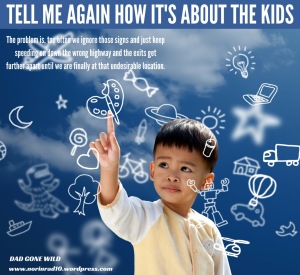
TELL ME AGAIN HOW IT’S ABOUT THE KIDS – Dad Gone Wild

TELL ME AGAIN HOW IT’S ABOUT THE KIDS – Dad Gone Wild:

TELL ME AGAIN HOW IT’S ABOUT THE KIDS

FullSizeRender
Nashville has, for the last several years, been an under-the-radar playground for the education reform movement. People may be familiar with the stories of New OrleansNewarkLos Angeles, and lately, Denver, but the battles have been just as fierce in Nashville. Things ratcheted up in 2008 when Karl Dean was elected mayor. Dean fancied himself as a bit of the next coming of Michael Bloomberg when he opened up the doors wide to the education reform movement and invited them in with open arms.
Those were the salad days for the reform movement in Nashville. Nobody could really predict the unintended consequences of many of the policies, and they all sounded so great, there was little opposition. Teach for America was invited to town with full mayoral support along with the New Teacher Project. Dean set up the Charter Incubator, which was designed to help grow more charters faster. Next thing you know, Ravi Gupta and Todd Dickson showed up in town to great fanfare with their charter school models. Life was good for the reformers. Then came the overreach.
In 2012, Great Hearts Academy was invited by a group of wealthy charter school advocates to open a charter school in Nashville. One that would be located in an affluent part of town but wouldn’t offer a transportation plan. The proposed school was also lacking a diversity plan. That’s when the battle lines began to be drawn. Previously, charter schools were something that happened to those “other people,” but now they were coming to middle class neighborhoods and people were starting to question why. Great Hearts’ application was denied TELL ME AGAIN HOW IT’S ABOUT THE KIDS – Dad Gone Wild:

The Test Made For White Kids, Not Black Kids – Exceptional Delaware

The Test Made For White Kids, Not Black Kids – Exceptional Delaware:

The Test Made For White Kids, Not Black Kids

I get it now.  A few months ago I was discussing parent opt out with an African-American friend of mine.  He explained to me that African-American students don’t do well on standardized tests because they’re written for white kids.  I disagreed with him.  I couldn’t grasp what was right before my eyes.
The Smarter Balanced Assessment was made for white kids.  Civil rights groups, usually backed by the Gates Foundation and other corporate education reformers, claim high-stakes standardized tests are important.  They say they need to understand where African-American students rank compared to their peers.  This only perpetuates the myth that these tests are necessary.  These groups vehemently opposed parents opting out of these tests because they claimed it would only continue pathways to discrimination.  Instead, the reality is staring them right in the face.  Standardized tests do show achievement gaps.  But not because they offer any solutions on how to close those gaps, but because they were written for a specific audience.
These tests fail to understand different minorities or cultures.  They were created from a white culture perspective.  They ask students to push themselves based on standards that don’t address poverty, low-income, special needs, violent environments, discrimination, segregation, or equity.  Even for white students, many who also deal with issues of low-income in our country, don’t perform well on these tests unless they are from more affluent areas.
DECharterAfrAmerVsSBACProf
Charter Schools were supposed to be the savior of education.  They were supposed to offer unique new ways of educating students and be models of innovation.  Instead, at least in Delaware, they have served as incubators of discrimination, segregation, and racism.  We can’t ignore this fact any longer.  We have to address this as a state, head-on.
DESchoolDistrAfrAmerVsSBACProf2016
In all likelihood, our charters are merely copying what happens in our regular districts.  We see that African-Americans in our traditional school districts do not fare any better on these tests.  Charter schools and districts with higher populations of white students do better on standardized tests.  This fact hasn’t escaped those who create these tests.  They know this.  Our politicians and The Test Made For White Kids, Not Black Kids – Exceptional Delaware:

AFT BAT Caucus and NEA BAT Caucus Support Florida Parent Lawsuit Against 3rd Grade Retention Badass Teachers Association

Badass Teachers Association:

AFT BAT Caucus and NEA BAT Caucus Support Florida Parent Lawsuit Against 3rd Grade Retention


The members of the AFT BAT Caucus and NEA BAT Caucus would like to express their solidarity with the Opt Out Florida Network and the brave parents who are filing a lawsuit on against the Florida Department of Education. The families of third grade students in several Florida counties have received notice that their children will be retained, based not upon past classroom performance, but solely because they opted these students out of the Florida Standards Assessment. The ultimate goal of this lawsuit is to have the statute that claims 3rd grade retention is allowable under these circumstances deemed unconstitutional and unenforceable.

From Opt Out Florida Network:

Accepted research has shown that:

  • Retention is one of the most powerful predictors of high school dropout.
  • Retained students are 2 to 11 times more likely to drop out of high school than peers.
  • Retained students have lower levels of achievement in 11th grade.
  • Retained youth receive lower educational and employment status ratings.
  • Retained students are paid less per hour at age 20.
  • Retention may cause permanent or long-term psychological harm.
  • Short-term improvements in test scores following retention are outstripped by long-term damage from ensuing deficits resulting from retention.
  • The cost of retaining a single third grade student in Florida is $11,000 in tax dollars.
We stand in solidarity with The Opt Out Florida Network and the brave parents who are standing up for their children.  We strongly support their efforts and will be donating to their cause.  Please join us in doing the same. You can donate here https://www.gofundme.com/StopGr3Retention

Becca Ritchie, Chair NEA BAT Caucus

Marla Kilfoyle, Chair AFT BAT Caucus


BATs Recommendations to USDOE on ESSA Accountability Regulations Badass Teachers Association

Badass Teachers Association:

BATs Recommendations to USDOE on ESSA Accountability Regulations


The Every Student Succeeds Act was written with the intent to recognize that the Federal Government has had a recent history of overstepping their authority in regard to the oversight of public education.  The spirit and intent of ESSA is to return control of education BACK to the states because they know what is best for the children in their care.  

It is the job of the USDOE and Sec. John King to implement and write regulations that meet the spirit of the law.  As we suspected, Sec. King is doing just the opposite with some of the regulations.  The USDOE is taking public recommendations on the regulations they plan to write according to ESSA.  We have done the best we can, as public school teachers, to go through these regulations and advise what WE should recommend.  

YOU NEED TO SEND IN YOUR COMMENTS TODAY (They are due August 1). Go to this website https://www.regulations.gov/comment?D=ED-2016-OESE-0032-0001    You can copy and paste our suggestions below on a word document (the box only allows 5000 characters so use an upload document).  After you are done attaching your document, fill out your info, press continue, and submit.  We will guarantee you that all the corporate reform organizations have submitted their comments that seek to dismantle public education and deprofessionalize the teaching profession.

After you submit your comments to the USDOE you can also submit comments to NEA about how they should frame their response to the Department of Education.  http://www.nea.org/essabegins

Here are the USDOE regulations recommendations if you would like to read them

We also invite you to use the recommendations of NPE here http://networkforpubliceducation.org/2016/06/6576/

Our HUGE concerns are:  Punishing districts that have HIGH opt out rates, making sure that teachers/states understand CLEARLY that test scores DO NOT have to be used for rating teachers, massive over-identification of schools by the USDOE, the USDOE is rushing this and needs to slow down, and the USDOE is not holding to the spirit of ESSA which is to return education BACK to the states.    


HERE ARE OUR RECOMMENDATIONS YOU CAN COPY AND PASTE ONTO A WORD DOCUMENT. If you see anything we missed or did not clarify ADD IT TO YOUR DOCUMENT! Save the document and upload for submission. Once again go here to submit your recommendations https://www.regulations.gov/comment?D=ED-2016-OESE-0032-0001

RECOMMENDATIONS ARE DUE AUGUST 1ST!!!

Elimination of § 200.7.  We feel this will  take away the ability of the states to individually identify the subgroup size for identified students. The removal of such ability neglects the fact that our state's deal with different populations of students and a norm subgroup size should not be arbitrarily assigned for all states.

Recommendation:  Do not eliminate § 200.7.  States deal with different populations of students and the federal government should not arbitrarily assign one for all states.

§ 200.12
These proposed changes deny the responsibility that a school has towards responding to the needs of all students in areas other than academic achievement.

Recommendation: This regulation needs to be amended. Regulatory language needs to include language that incorporates all subject areas.

§ 200.13
The proposed interim progress requirements for all subgroups of students indicate a reporting of progress in the academic areas of mathematics and language arts. This language needs to be removed and other areas of academic learning need to be included in reporting. Emphasis on only two academic areas will create a system in which it no longer becomes feasible for all students to have access to all learning, especially the arts and music. The result of such a narrowing of focus will not assist schools with the well-rounded development of children. Proposed recommendations also include the provision that identified subgroups are expected to show growth improvement at a greater percentage relative to all students over that time frame. This narrative negates the fact that education is not a cure for a disability or that all students progress at individual learning rates.

Recommendation: This recommendation should be amended. Reporting systems for academic areas that incorporate subject areas other than just language arts and math should be included. Growth percentage rates for identified subgroups should not have the expectation of being higher than any other subgroup.

GOALS FOR PROGRESS IN ACHIEVING ENGLISH LANGUAGE PROFICIENCY
§ 200.13

Recommendation: This recommendation should be amended. Timelines for goals for English Language Learners need to be extended to accommodate the validated length of time necessary for mastery of a language, seven years at a minimum and up to ten years at maximum.   

GOALS FOR ACADEMIC ACHIEVEMENT AND GRADUATION RATES
§ 200.13

Proposed recommendations speak about reporting of students performance at grade level indicators. We maintain that all children learn at different rates and a better indicator should be inserted instead of grade-level. The individual growth rate of a student is a better measure and helps schools identify what areas need to be addressed with a holistic whole-child approach. Additionally the use of graduation rates as a cut-off limits the responsibility that a school needs to develop towards implementing programs that work towards a student’s ability to remain in college or career training beyond the first year.

Recommendation: This recommendation should be amended. The use of grade-level indicators should be substituted with growth indicators that remain consistent at an individual level to accommodate learning needs. A recommendation for states to implement programs that build a student’s ability to remain in a college or career training program should be made for states.

§ 200.14
SCHOOL QUALITY OR STUDENT SUCCESS INDICATORS
The proposed regulatory changes lack mention of holding schools accountable for providing access to programs that address additional needs of students, access to creative arts programs, music, and World Language programs. The proposed amendment mandates a specific number of indicators that must be measured, once again overstepping the authority of the federal government.

Recommendation: This regulation needs to be amended. The USDOE needs to include language that will hold states accountable for including accountability language that will hold schools accountable for providing access to services to improve whole child development.

§200.15
States should not be held accountable to the 95% participation rate as directed by proposal  Parents have the right to refuse the test for their children, as directed by the 14th amendment. To punish schools that do not meet this participation rate is to deny the rights of parents as well as falsely hold accountable schools that have no right to dictate these choices. Furthermore, language that emphasizes the push for improved academic achievement neglects the responsibilities that schools have to facilitate and coordinate services that will work towards meeting the needs of students and families in other areas. Once again, this will strengthen the current test and punishment system that governs our schools today. The system that the intent of ESSA sought to condone.The statutory requirement that outlines the provision that public charter schools will be governed under state charter school law upholds the segregation that is occurring with our charter school systems and does nothing to call for the equality in transparency and accountability that is necessary to ensure that charter schools become responsible for educating all students.

Recommendation: The USDOE allows states to determine their own system for informing parents of their right to refuse the test for their children and how those students will be provided with alternative educational opportunities.  This regulations should be deleted.

§ 200.18
Proposed regulatory changes overemphasize the use of academic measures that will again force schools to allocate resources to subject areas that are measured by the testing accountability system.

Recommendation:  This recommendation needs to be amended to include all subject areas; including the arts.


§ 200.34
The proposal to standardize criteria for children with disabilities, English Language Learners, Homeless children, and children within foster care. These subgroups of students all deal with individual circumstances that prevails over the application of any standardization. To ignore that fact negates the intent of IDEA as well as denies research that shows how trauma can impact learning.

Recommendation:  This recommendation needs to be amended so that it recognizes the individual nature of children, their circumstances, and respects the intent of IDEA   


 Badass Teachers Association:

Clinton-Kaine: Allies in the White House - Lily's Blackboard

Clinton-Kaine: Allies in the White House - Lily's Blackboard:

Clinton-Kaine: Allies in the White House

27827157650_aa3e1c4eb3_z
Hillary Clinton has made her pick for vice president: Tim Kaine, a U.S. Senator who has been a city councilmember, mayor, lieutenant governor, governor, fair housing lawyer, part-time college teacher and – for a brief time – a principal.

Clinton’s choice for running mate tells us her administration will be about bringing Americans together and giving educators a seat at the table. That’s a far cry from the divisiveness and exclusion we can expect fromDonald Trump and Indiana Gov. Mike Pence, and an education agenda that will focus on expanding voucher programs and charter schools.
NEA members are with Hillary because she’s devoted her career to advocating for children and public education. With Kaine as her vice president, we know that when it comes to decisions about what’s best for our students, our experience and perspectives will matter.
Who is Tim Kaine? First of all, he’s someone with a long and consistent record as a champion for public schools.Kaine fights for the principle that all students, regardless of ZIP code, deserve the opportunity for a great education. He says our focus on testing has taken precious time away from teaching and student learning.
“I often wonder whether testing is really about kids or about the testing companies’ bottom line,” he wrote in Education Week a few years ago. In another interview he said: “I think too much of K-12 education has been about standardized testing. The test is a means to an end, not the end in itself.”
Here are some highlights from his time so far in the U.S. Senate:
  • He voted for the Every Student Succeeds Act, writing that reauthorization of the Elementary and Secondary Education Act “must recognize the leading role of teachers, school leaders, parents and local districts” in preparing children for the 21st century.
  • He insisted that the ESSA include ongoing professional development opportunities for educators and invest in services, such as health and nutrition, to meet students’ needs both inside and outside of the classroom.
  • He founded and co-chairs the Senate’s bipartisan Career and Technical Education (CTE) Caucus to promote integrating CTE into the academic track and to raise its profile among lawmakers.
  • He introduced the Middle School Technical Education Program Act to provide introductory courses and hands-on opportunities in CTE to students before high school.
  • He cosponsored the Voting Rights Advancement Act of 2015 to protect and broaden the right to vote.
  • He’s called for an end to the immigration raids targeting families and unaccompanied minors; Mike Pence, on the other hand, joins Trump in calling for an immigration ban.
Kaine shares our belief that a good education should inspire students and provide them with the tools to reach their full potential. As governor, Kaine expanded pre-kindergarten because he believes that investing in young children is the smartest thing we can do. He also started the Governor’s Career and Technical Academies (now STEM Academies), partnerships bringing together schools, employers and postsecondary institutions to prepare Clinton-Kaine: Allies in the White House - Lily's Blackboard:

Genetic Analysis Predicts Academic Achievement For The First Time

Genetic Analysis Predicts Academic Achievement For The First Time:

Genetic Analysis Predicts Academic Achievement For The First Time
Don’t worry, we’re not on our way to a “Gattaca”-style society.


Teachers and parents may one day be able to use a genetic test to predict whether or not a child will excel at or struggle with academics in the future, based on new research pioneered by scientists at King’s College London.
While the prospect may present a frightening vision of a future in which ability and potential will be determined by one’s genetic makeup, and indeed is tainted by a history of eugenics and racist science, the researchers say the tests will help identify, early on, the children who are at risk academically and help educators create special interventions for them.
Saskia Selzam, lead author of the study, explains more in the video above.
“By using these polygenic scores, it is actually possible to identify those for example who are maybe at heightened risk for a learning disability, for example,” she said. “So imagine a scenario where we could use a polygenic score very early on to give us information about whether someone might have some learning problems later on.”
But other experts who have also mined genetic testing to predict behavioral outcomes warn that we have a long way to go before genetic testing can predict individual educational achievement, and that research is the genetic tool’s primary utility. 

How genetic scoring tool works

Scientists use a special kind of DNA analysis called a genome-wide polygenic score. It aggregates the tiny effects of hundreds of thousands of genetic variants to create the scale that can predict academic achievement. In this case, the researchers from King’s College London borrowed the formula for a polygenic score that others had already used to predict academic attainment (the number of years of formal education a person completes).
They then applied the polygenic score to a population of 5,825 unrelated children to see if they could predict how those kids would score on tests.  
The King’s College researchers looked back at students’ academic scores at ages 7, 12 and 16 and found that genes alone accounted for a growing variance in grades that grew as the kids got older. At age 7, genes accounted for about 3 percent of grade differences. By age 12, the number was up to about 5 percent. By Genetic Analysis Predicts Academic Achievement For The First Time:


K12 ACCUSED OF LYING ABOUT THE SUCCESS RATE OF ITS STUDENTS | Robbins Arroyo LLP

K12, Inc. | Robbins Arroyo LLP:

K12 ACCUSED OF LYING ABOUT THE SUCCESS RATE OF ITS STUDENTS

K12, INC.

ROBBINS ARROYO LLP: K12, INC. (LRN) MISLED SHAREHOLDERS ACCORDING TO A RECENTLY FILED CLASS ACTION

Robbins Arroyo LLP announces that a class action complaint was filed against K12, Inc. (NYSE: LRN) in the U.S. District Court for the Northern District of California. The complaint is brought on behalf of all purchasers of K12 securities between November 7, 2013 and October 27, 2015, for alleged violations of the Securities Exchange Act of 1934 by K12′s officers and directors. K12 Inc., a technology-based education company, offers proprietary curriculum, software systems, and educational services to facilitate individualized learning for students primarily in kindergarten through 12th grade.

K12 ACCUSED OF LYING ABOUT THE SUCCESS RATE OF ITS STUDENTS

According to the complaint, throughout the class period, K12 filed several press releases and submitted multiple filings with the U.S. Securities and Exchange Commission touting the company’s business prospects. The company issued a press release on February 4, 2014, stating, “Our Managed Schools are now…using many of the new educational programs we put in place this year which we believe will improve educational outcomes for all engaged families.” The company further emphasized that improving academic outcomes is its number one priority and that it would invest in new systems to drive further improvements for its students. However, the complaint alleges that K12 officials failed to disclose that: (1) K12 was publishing misleading advertisements about students’ academic progress, parent satisfaction, their graduates’ eligibility for University of California and California State University admission, class sizes, the individualized and flexible nature of K12′s instruction, hidden costs, and the quality of the materials provided to students; (2) K12 submitted inflated student attendance numbers to the California Department of Education in order to collect additional funding; (3) as a result, K12 was open to potential civil and criminal liability; and (4) the company would likely be forced to end these practices, which would have a negative impact on K12′s operations and prospects.
On October 27, 2015, Stanford’s Center for Research on Education Outcomes published a study and a related press release about online charter schools, including K12, stating, “Innovative new research suggests that students of online charter schools had significantly weaker academic performance in math and reading, compared with their counterparts in conventional schools.” On the same day, K12 reported disappointing first quarter 2016 financial results compared to the same quarter in fiscal year 2015, including revenues of $221.2 million compared to $236.7 million, Earnings Before Interest, Taxes, Depreciation and Amortization of negative $3.9 million compared to $3.7 million, and an operating loss of $20.5 million compared to an operating loss of $13.2 million. On October 27, 2015, K12 disclosed in its Form 10-Q that it received a subpoena from the Attorney General of the State of California, Bureau of Children’s Justice in connection with an investigation known as “In the Matter of the Investigation of: For-Profit Virtual Schools.” On this news, K12 stock fell over 20% to close at $9.71 per share on October 30, 2015.

K12 SHAREHOLDERS HAVE LEGAL OPTIONS

Concerned shareholders who would like more information about their rights and potential remedies can contact attorney Darnell R. Donahue at (800) 350-6003, or you can complete the form below and we will contact you directly.K12, Inc. | Robbins Arroyo LLP:
 

Big Education Ape: Teachers at Online School Say It Abused Student Privacy and Misused Funds - Bloomberg Business - http://bigeducationape.blogspot.com/2015/06/teachers-atonline-schoolsay-it-abused.html

Big Education Ape: Assembly Member, Parents and Virtual Educators Charge that For-profit Charters are Failing Students, Violating Law - http://bigeducationape.blogspot.com/2015/06/assembly-member-parents-and-virtual.html

Big Education Ape: A Teachable Moment: Frustrated California Online Charter Teachers Educate Shareholders of Controversial K12 Inc - http://bigeducationape.blogspot.com/2015/12/a-teachable-moment-frustrated.html

Big Education Ape: Facing tough questions from Calif. officials, virtual charter school operator settles with attorney general | 89.3 KPCC - http://bigeducationape.blogspot.com/2016/07/facing-tough-questions-from-calif.html

Big Education Ape: California Reaches Settlement With K12 Over False Claims Allegations - WSJ - http://bigeducationape.blogspot.com/2016/07/california-reaches-settlement-with-k12.html

Big Education Ape: Audit of California Virtual Academies - Year 2016 (CA Dept of Education) - http://bigeducationape.blogspot.com/2016/06/audit-of-california-virtual-academies.html

Big Education Ape: Failing the Test: A New Series Examines Charter Schools- CAPITAL & MAIN - http://bigeducationape.blogspot.com/2016/06/failing-test-new-series-examines_3.html


Bill Richardson: Education policy represents a top issue for Latino voters | MSNBC

Op-ed: Education policy represents a top issue for Latino voters | MSNBC:

Education policy represents a top issue for Latino voters
High school students protest in downtown Portland, Ore., on May 23, 2016. (Photo by Alex Milan Tracy/AP)

 One of the few areas in which Donald Trump’s views have remained consistent is in the creation of barriers to Hispanics. There is, of course, the “wall” meant to keep us out of the U.S. But he doesn’t seem content with physical barriers. Importantly, for Hispanic parents across the nation, he also rails against high academic standards for all students. The standards in question — the Common Core — help to ensure that students are prepared to succeed in college, regardless of their zip code.

Presidential campaigns are a conversation about America’s future and by the sheer force of numbers, 2016 presidential candidates ignore the concerns of Hispanic voters at their own peril. Think about it: Within our children’s lifetimes, the United States is expected to become a majority-minority nation with Hispanics making up a full quarter of the population.

WEEKENDS WITH ALEX WITT, 3/5/16, 1:37 PM ET

Fmr. NM Gov. on Hispanic voters

Too often a conversation about “Hispanic” issues start and end with reforming our immigration system. To be sure, this is an issue that impacts many of us in highly personal ways. This election also happens to offer a stark contrast between one presidential candidate, Secretary Clinton, who embraces the Hispanic community as valuable members of an America made stronger by its diversity, and another who promises to build walls and weed us out.
To be clear, Hispanics are not one-issue voters. We are concerned about our children’s future. We care about access to health care, affordable housing, quality schools for our children, and good jobs. We want the same thing everyone else wants: A piece of the American Dream.  We work very hard to earn it.  And, in the eyes of Hispanic parents, the key to the American Dream is a college education. In fact, Hispanic parents are more likely than white parents to say it’s essential that their children earn a college degree.
Unfortunately, for years, students were held to low, inadequate academic standards. For Hispanic students, that meant too many not getting into college and for those that do, they don’t complete their degree. Students graduated from a public education system that told them they were ready for college, only to be told once they got there that they needed to spend more time and money on classes and content they should have learned in high school.
That has finally started to change thanks to more than 40 states across the country implementing the Common Core State Standards. These standards equip students with the critical thinking and problem solving skills that are essential to success in the 21st century economy. As a result, growing up in a Hispanic community hasn’t meant going to school where someone has already decided for you that you’re not going to be held to high enough standards to succeed in life.
A recent study from the Leadership Conference on Civil and Human Rights found, an overwhelming majority of Hispanic parents believe all students should be held to high expectations and standards. That may surprise Mr. Trump, but not those of us who recognize that high academic standards and Op-ed: Education policy represents a top issue for Latino voters | MSNBC:

EveryLibrary, Rosen Publishing Team Up to Help School Libraries with ESSA Implementation

EveryLibrary, Rosen Publishing Team Up to Help School Libraries with ESSA Implementation:

EveryLibrary, Rosen Publishing Team Up to Help School Libraries with ESSA Implementation

President Obama Signs ESSA (the Every Student Succeeds Act) into Law on December 10, 2015.

When President Obama signed ESSA (the Every Student Succeeds Act) into law last December, it was a hailed as big win for libraries—after years of advocacy work by various library groups, the new federal education law includes significant (and long absent) support for school libraries. But with the library community's successful advocacy effort over, the hard work of implementing ESSA has begun—and for school librarians hoping to take full advantage of the law's new provisions, the clock is ticking.

That's why library advocacy group EveryLibrary—with substantial support from Rosen Publishing—this week rolled out plans to provide state school library associations and stakeholder groups with "pro-bono advising and consulting” on how to lobby their states for a successful ESSA implementation.
“The success that the ALA (American Library Assocation) and AASL (American Association of School Librarians) had in Washington getting school library issues into [ESSA] was a singular achievement,” said Roger Rosen, President of Rosen Publishing, noting that the new law offers “tremendous new opportunities for states to put effective school library programs to work for their students.” Indeed, ESSA includes a range of school library-friendly “authorizing provisions” missing for more than a decade, since the passage of No Child Left Behind.
But the heavy lifting did not end with ESSA’s passage, Rosen notes. Each state must now submit an ESSA Implementation Plan to the U.S. Department of Education by April 2017 (for the school year beginning August 2017). And in order for school libraries to gain the full benefit of federal funding available under ESSA, each state will have to modify their existing education laws, administrative codes, and other rules and regulations to make them “ESSA-compliant and grant-ready."
That will be no easy feat, explains EveryLibrary executive director John Chrastka, given that many state and Local Education Agencies (LEA) currently lack legislative language pertaining to school library programs or positions, after so many years of getting no federal support. Complicating matters, Chrastka adds, the timelines for each state are “incredibly compressed and unusually fast.”
With ESSA planning now getting underway in each state, Chrastka says it is “absolutely critical” that library supporters raise their game, and work to ensure that ESSA Implementation Plans in every state include "the positive changes for school library programs and school librarian positions" that were lobbied hard for and won by ALA and AASL—whether that means getting school library advocates on ESSA state task forces themselves, submitting public comments, or opening effective dialogues with ESSA committees.
In some states, the planning process is already underway and "a tactical discussion" about how to insert library advocates into the process is needed, Chrastka says. In other states, the process is still being developed and library supporters have "a singular opportunity to be at the table at the beginning.” (A comprehensive calendar of dates and deadlines for the ESSA Implementation Planning Processes in each state is posted on EveryLibrary’s web site).
With significant experience helping library ballot measures succeed at the local level, EveryLibrary (working with a range of library organizations) is uniquely prepared to help with ESSA Implementation, offering state-specific, proven tactics for lobbying success—and, Chrastka stresses, the assistance is completely free to library supporters. “Because of Rosen Publishing’s support, we have capacity to help your state,” Chrastka states—all library administrators and supporters need to do is get in touch.
But don’t delay, Chrastka warns. Action is needed immediately. With ESSA deadlines coming up fast, state administrators will not "pause to wait for [libraries]," nor will they "double back to make sure [libraries] are catching up.”EveryLibrary, Rosen Publishing Team Up to Help School Libraries with ESSA Implementation:

How Billionaires Are Successfully Fooling Us Into Destroying Public Education—and Why Privatization Is a Terrible Idea | Alternet

How Billionaires Are Successfully Fooling Us Into Destroying Public Education—and Why Privatization Is a Terrible Idea | Alternet:

How Billionaires Are Successfully Fooling Us Into Destroying Public Education—and Why Privatization Is a Terrible Idea

The billionaire-backed privatization movement is stealthily advancing an undemocratic agenda, cloaked in deceptive rhetoric, that the public is not aware of and does not understand.


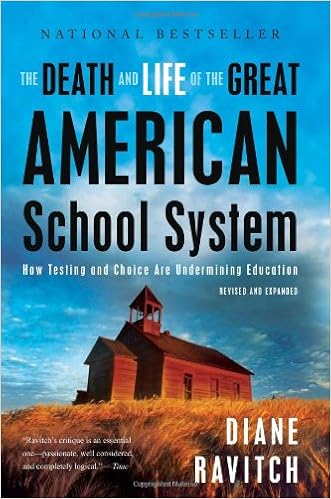
 The following is an excerpt from the new, expanded edition of  The Death and Life of the Great American School System by Diane Ravitch (Basic Books, 2016): 

Something unprecedented is happening to American public education. A powerful, well-funded, well-organized movement is seeking to privatize significant numbers of public schools and destroy the teaching profession. This movement is not a conspiracy; it operates in the open. But its goals are masked by deceptive rhetoric. It calls itself a “reform” movement, but its true goal is privatization.
This movement has had strange bedfellows. Some of its funders and promoters on the far right of the political spectrum are motivated by ideological contempt for the public sector; others earnestly believe they are providing better choices for poor children “trapped in failing schools.” Still others believe that elected local school boards are incompetent and should be replaced by private management, or that the private sector is inherently more innovative and effective than the public sector. And some are motivated by greed, while others are motivated by religious conviction. These strange bedfellows have included the US Department of Education (during the administrations of George W. Bush and Barack Obama); major foundations and think tanks, both conservative and centrist; billionaires committed to free-market solutions—and certain they know what is best because they are so rich; entrepreneurs hoping to make money from school privatization or by selling technology to replace teachers; the far-right American Legisla­tive Exchange Council (ALEC), which has drafted model legislation to promote corporate interests and to expand the privatization of almost all government services, including education; and numerous governors and legislators (mostly but not exclusively Republicans) who want schools to operate in a free-market system of school choice.
The privatization movement pretends that it is bravely fighting "the status quo," but having captured policymakers at both the federal and state levels, as well as think tanks, the nation's wealthiest foundations, a coterie of billionaires, and major editorial boards, this movement is the status quo. It is stealthily advancing an undemocratic agenda, cloaked in deceptive rhetoric, that the public is not aware of and does not understand.
This combination of money and political power has been potent in advancing school vouchers, which were once considered a cranky right­ wing extremist idea, but have recently been enacted in a score of states. Vouchers are seldom now called vouchers, because voters have consis­tently rejected them: in 2007, vouchers were defeated by a margin of 62-38 in the red state of Utah, and Florida turned them down in 2012 by 58-42. Thus, the promoters of vouchers How Billionaires Are Successfully Fooling Us Into Destroying Public Education—and Why Privatization Is a Terrible Idea | Alternet: