Latest News and Comment from Education

Wednesday, July 20, 2016

Susan Ohanian - Schools Matter: Classroom Edition: Dumb-Ass Fiddling with a Smart-Ass Book

Schools Matter: Classroom Edition: Dumb-Ass Fiddling with a Smart-Ass Book:

Classroom Edition: Dumb-Ass Fiddling with a Smart-Ass Book

Susan Ohanian

Emery and Ohanian
Emery and Ohanian

When I received a promo piece announcing the Penguin/Random House publication of a Classroom Edition of Andy Weir’s The Martian,with “classroom-appropriate language and discussion questions and activities,” I immediately ordered the book. A Wall Street Journalreviewer had already called the regular text “Brilliant. . . a celebration of human ingenuity (and) the purest example of real-science sci-fi for many years. . . utterly compelling.” complete with “classroom appropriate language,” so why, I asked myself, was a classroom edition needed.

Of course if I’d read the original book, I wouldn't have asked the question. Here’s how The Martian opens:


                                               The Book                                            Classroom Edition    
                                               I’m pretty much fucked                        I’m pretty much screwed.

In the Q &A in the Classroom Edition of the The Martian, Andy Weir is asked if he has “anything in common with your wise-cracking hero Mark Watney.” Weir replies, “I’m the same level of smart-ass as he is. It was a really easy book to write; I just had him say what I would say. Thus, the expression smart-ass appears on page 377 of a book sanitized for classroom use, a book  that relentlessly excises ‘ass’ from the preceding pages. Editors fiddling to make the bestseller suitable for student eyes insist that the hero gets his ‘”butt” out of bed, not his “ass.” The editors do allow the hero to refer to himself once as “such a dumb-ass” and “long-ass trips” stays intact, but “We’d look like assholes” becomes “like jackasses” and “my half-assed handiwork” becomes “incompetent handiwork.”

Andy Weir's use of “fuck” as a very deliberate stylistic device throughout the text puts editorial refiners into overdrive. Substituting “screwed” for “fucked” continues apace along with some elegant variation.

    profound desire to just fucking die                                      profound desire to just die
    So yeah, I’m fucked                                                             So yeah. I’m screwed.
    Fuck that.                                                                            That would be a bad idea.
    I’m fucked, and I’m gonna die.                                            I’m screwed, and I’m gonna die.
    I’m really fucking sick of being in this rover                       I’m really really sick of being in this rover. 
    What the fuck is wrong with you?                                      What is wrong with you?
    fucked with                                                                          tinkered with
    heavy motherfuckers                                                            insanely heavy
    What the fuck                                                                       What the hell
    Go fuck yourself                                                                   Bite me
    Fuck me raw                                                                         Whoa. . . okay
    Fuck                                                                                      Crap

And so on and so on. The F-Word isn’t the only one mashed up by editorial fiddling. Here’s a sample of a few of the other 
Schools Matter: Classroom Edition: Dumb-Ass Fiddling with a Smart-Ass Book:

Request for donations to Pelto 2016 for Congress - Wait What?

Request for donations to Pelto 2016 for Congress - Wait What?:

Request for donations to Pelto 2016 for Congress 


As a Green Party candidate for Congress in the 2nd Congressional District of Connecticut, I’m asking for your financial support so we can ramp up our efforts to educate, persuade and mobilize people to stand up and speak out about the challenges and problems that face our nation, state and communities, not to mention our world.
In these dark times, change will not come easily.
However, by rising up and combining our voices … We can not only be heard, but can have a real impact on the course of affairs.
Please give what you can to Pelto 2016.  Your financial support is needed and appreciated,
Jonathan Pelto
On-line donation capability is coming, but for now, please print off and send the following form with your check to Pelto 2016, PO Box 400, Storrs, CT. 06268

Pelto 2016 Campaign Contribution Form

First Name:                                                   Last Name:
Address:
City:                                          State:                              Zipcode:

Employer:
Occupation:

Checks should be made out to Pelto 2016 and sent to:
Pelto 2016
PO Box 400
Storrs, CT. 06268
By sending a check, I certify that:
  1. I am a U.S. citizen or lawfully admitted permanent resident of the U.S.
  2. I am making this contribution on a personal card with my own personal funds, not those of another person or entity.
  3. I am not a federal contractor.
  4. I am at least 18 years old.
An individual may contribute up to $2,700 per election
Federal law requires us to use our best efforts to collect and report the name, mailing address, occupation and name of employer of individuals whose contributions exceed $200 in an election cycle.
Contributions are not tax deductible.
 

Big Education Ape: Pelto Slams Every Student Succeeds Act - Calls on Obama and Congress to postpone adoption of ESSA Regulations - Wait What? - http://bigeducationape.blogspot.com/2016/07/pelto-slams-every-student-succeeds-act.html

Big Education Ape: News Flash - Pelto to run under Green Party Banner for 2nd Congressional District Seat - Wait What? - http://bigeducationape.blogspot.com/2016/07/news-flash-pelto-to-run-under-green.html

Big Education Ape: Again with the absurd complaint that a third candidate is – by definition – a spoiler - Wait What? - http://bigeducationape.blogspot.com/2016/06/again-with-absurd-complaint-that-third.html

Big Education Ape: NEWS FLASH - Common Core PARCC tests gets an “F” for Failure - Wait What? - http://bigeducationape.blogspot.com/2016/05/news-flash-common-core-parcc-tests-gets.html

Paul Tough Turns Away from Punitive Education Reforms - Living in Dialogue

Paul Tough Turns Away from Punitive Education Reforms - Living in Dialogue:

Paul Tough Turns Away from Punitive Education Reforms

By John Thompson.
Paul Tough’s Helping Children Succeed is a great corrective to the hubris that undermined the contemporary school reform movement.  Tough volunteers a modest statement about his methodology, and in doing so he offers an alternative to corporate reform and its grand vision of “disruptive innovation” to blow up the education “status quo,” in order to produce “transformational” change.
Tough explains that he is a journalist who describes particular interventions, pedagogies, and/or programs that may be representative of larger dynamics. The sensitive use of these human scale case studies, informed by social science research, can provide broader insights into causal relationships in terms of what works in a sustainable manner for entire school systems. This process is similar to what philanthropists and foundations try to do; “They look for programs that work and try to replicate them, scale them up to reach as broad an audience as possible.” One problem has been that “scaling up doesn’t work as well in social service and education as it does in the tech world.”
Tough’s premise “is that no program or school is perfect, but that each successful intervention contains some clues about how and why it works that can inform the rest of the field.” Rather than discover a technocratic silver bullet, his goal is “to extract and explain the core principles of each program I write about and look for common threads running through them.”
Many reformers are dismayed by the meager gains produced by their top-down mandates, and upset by the fervent pushback by educators and patrons that they prompted. Some reformers seem willing to consider new ideas, such as better early education, but others remained determined to double down on their politics of destruction, using mass school closures to break the backs of the teachers’ and unions’ resistance. I didn’t imagine that output-driven reformers will be satisfied with Tough’s failure to articulate a concise accountability regime to replace their commitment to test, sort, reward, and punish, and sure enough, here’s an example.
Even as Tough’s eclecticism and incrementalism will disappoint market-driven reformers, his extremely diplomatic approach to critiquing reform will annoy many teachers.  For instance, both sides of our Paul Tough Turns Away from Punitive Education Reforms - Living in Dialogue:

Historian reacts to that weird thing Rep. Steve King said about whites and ‘subgroups’ - The Washington Post

Historian reacts to that weird thing Rep. Steve King said about whites and ‘subgroups’ - The Washington Post:

Historian reacts to that weird thing Rep. Steve King said about whites and ‘subgroups’

Rep. Steve King (R-Iowa) speaks during an Iowa Faith and Freedom Coalition banquet in Des Moines in November 2013. (Justin Hayworth/AP)

A historian has a lesson for Rep. Steve King.
King, a Republican from Iowa, was on an MSNBC panel Monday night talking about the Republican presidential convention. Here, according to this story by my colleague Philip Bump, is how part of the conversation went:
The group, led by Chris Hayes, was discussing the first day of the Republican national convention and Donald Trump’s history of racially loaded comments and behavior. King told Hayes that he thought Trump had “modified” his behavior in that regard, but Esquire’s Charlie Pierce said he didn’t see much diversity reflected in the gathering itself.
“If you’re really optimistic, you can say that this is the last time that old white people will command the Republican Party’s attention, its platform, its public face,” Pierce said. “That hall is wired,” he continued. “That hall is wired by loud, unhappy, dissatisfied white people.”
King objected.
“This ‘old white people’ business does get a little tired, Charlie,” King said. “I’d ask you to go back through history and figure out, where are these contributions that have been made by these other categories of people that you’re talking about, where did any other subgroup of people contribute more to civilization?”
“Than white people?” Hayes asked, clearly amazed.
“Than, than Western civilization itself,” King replied. “It’s rooted in Western Europe, Eastern Europe and the United States of America and every place where the footprint of Christianity settled the world. That’s all of Western civilization.”
Here’s a response from one renowned historian:
Charles S. MaierLeverett Saltonstall Professor of History
Harvard University
The appropriate reaction to Congressman King is not to engage in a competitive tally of the achievements of Western civilization vs. the contributions of other cultures. Keeping that sort of score has little to do with the issue of whether the GOP is open or closed to the contemporary pluralism of American society. Of 
Historian reacts to that weird thing Rep. Steve King said about whites and ‘subgroups’ - The Washington Post:

Unelected charter school boards control millions of public dollars in North Carolina and Charlotte but may lack skills to run a school, a consultant says. | The Charlotte Observer

Unelected charter school boards control millions of public dollars in North Carolina and Charlotte but may lack skills to run a school, a consultant says. | The Charlotte Observer:
The school boards you never see face big challenges in North Carolina


These days the school boards that make headlines in North Carolina are often made up of people you’ve never seen on a ballot.
They’re the all-volunteer, self-selected panels that run the state’s 167 charter schools. In the last five years, their role in public education has mushroomed. They’ve created new opportunities for students, and they’ve spawned some troubling tales of failure.
“They’re in charge of a multi-million investment of public money, and for the most part they don’t have the skill set,” Tom Miller told me recently.
I got to know Miller as one of the state Office of Charter Schools staff charged with reviewing a flood of applications after the state lifted its 100-school cap in 2011.
But like many in the charter school world, Miller has stepped in and out of various roles: He was once a charter school teacher and principal. After leaving the state job last year, he started a consulting firm that counts two troubled Charlotte schools among its clients. He heads the Charter School Accelerator program for Parents for Educational Freedom in North Carolina. And he’s a parent and board member at The Exploris School in Raleigh.
Miller shared some interesting numbers while I was reporting on state scrutiny of Thunderbird Preparatory School in Cornelius, one of his new clients. Thunderbird recently hired its third principal in as many years, and the process was so divisive that more than half the board resigned.
That may be extreme, but Miller says leadership turmoil is common in new schools. Of the 68 North Carolina charter schools that have opened since 2012, Miller says, only 35 still have their founding principals. Five closed in their first year – three of them in Charlotte – and several others continue to struggle with leadership, money and academics.
I’M ACTUALLY SORT OF STUNNED THAT MORE DON’T FAIL QUICKER. ... IT’S THE HARDEST THING IN THE WORLD TO DO.
Charter pioneer Richard Vinroot
Miller outlined a start-up scenario that I’ve seen play out repeatedly: A charter board gets approval to open, but runs into trouble getting a building ready. As costs mount and uncertainty about the location drags on, enrollment falls short – by Miller’s tally, only 24 of those 68 new schools opened at full projected enrollment.
Fewer kids mean a smaller budget. The school’s debt escalates. And if the board can’t handle the strain, and/or the founding principal turns out to be a bad match, the school finds itself in a hole that’s tough to dig out of.
At that point, the skilled volunteers who could save the school often become wary of signing on, Miller says.
Richard Vinroot, a lawyer and a pioneer in North Carolina’s charter movement, agrees that today’s challenges are daunting.
“I’m actually sort of stunned that more (schools) don’t fail quicker. They really are sort of winging it,” he said. “They’re all well-meaning. The problem is it’s the hardest thing in the world to do.”
He should know: He was a founder of Charlotte’s Sugar Creek Charter School, which came close to being shut down after it opened in 1999.
Some would say the lesson is clear: North Carolina created this problem by approving too many schools too fast. Competition for students, board members and administrators is especially fierce in the Charlotte region, where several new schools have opened each year.
THEY GET SO STUCK IN THE MUCK THEY MAKE BAD DECISIONS. A LOT OF THESE SCHOOLS DON’T HAVE GOALS.
Charter school consultant Tom Miller
Miller, of course, wouldn’t go there. But he says the increase in schools – and therefore, charter school boards – boosts the importance of getting governance right, as quickly as possible.
For the growing number of people who care whether charter schools thrive or fail, here’s what Miller, Vinroot and others with charter board experience say it takes.

Recruit the right mix


Gulen Movement’s Charter Schools May Be Caught Up in Turkey-U.S. Standoff - WSJ

Gulen Movement’s Charter Schools May Be Caught Up in Turkey-U.S. Standoff - WSJ:

Gulen Movement’s Charter Schools May Be Caught Up in Turkey-U.S. Standoff


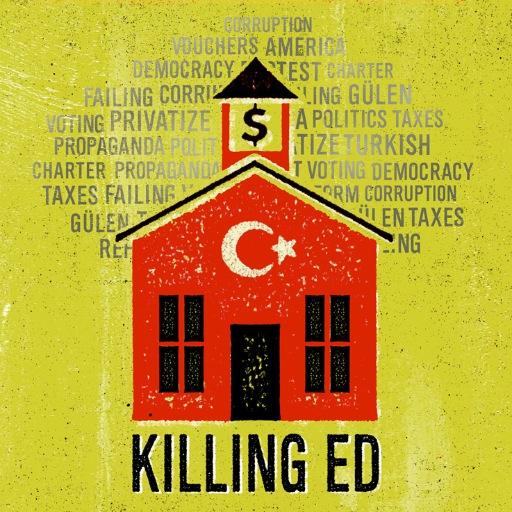
Big Education Ape: KILLING ED: 120 American Charter Schools and One Secretive Turkish Cleric -http://bigeducationape.blogspot.com/2016/01/killing-ed-120-american-charter-schools.html

Scores of U.S. charter schools run by Turkish-Americans risk getting caught up in the political fallout between the U.S. and Turkey over a cleric living in the U.S. but accused of orchestrating Friday’s failed coup in Istanbul.
The Turkish government has threatened to make the U.S. an enemy if it does not turn over Fethullah Gulen, who has lived a reclusive life of self-imposed exile in a compound in Saylorsburg, Pa., about 90 miles north of Philadelphia, for nearly two decades.
Mr. Gulen denies having any role in the military’s attempt to unseat democratically elected President Recep Tayyip Erdogan last week. Instead, Mr. Gulen accuses Mr. Erdogan himself of orchestrating the coup to legitimize his own rule.
The cleric’s international following, known as the Gulen movement, is said to be tied to around 150 U.S. charter schools, ranging from networks in Texas, Illinois and Florida to stand-alone academies in Maryland, said Joshua Hendrick, an assistant professor of sociology and global studies at Loyola University Maryland, who studies the Gulen movement.
The political controversy won’t have any immediate effect on the schools, since Mr. Gulen does not have a direct hand in operating them, and many of the schools dispute any connection to the cleric, Mr. Hendrick said.
But in the long term, the accusations against Mr. Gulen and tension between the U.S. and Turkey could affect new schools and charters up for renewal that are run by Turkish-Americans and are said to be connected with the cleric, Mr. Hendrick said.
“Charters are decided by school boards and school boards are driven by American political culture,” said Mr. Hendrick. “That’s going to directly affect the political perspective of the people voting for a charter school proposal or renewal.”
Local school boards may be hesitant to approve schools affiliated with a man who is accused of trying to overthrow a foreign government, especially if Mr. Gulen is extradited, said Mr. Hendrick.
While most of the schools deny any connection to the cleric, some common elements include an emphasis on math and science education, Turkish language classes and sponsored trips to Turkey. Still, the schools serve the same populations typically served Gulen Movement’s Charter Schools May Be Caught Up in Turkey-U.S. Standoff - WSJ:

The Man Accused of Inspiring Turkey’s Coup Is Behind the Largest Charter-School Chain in America | The Nation

The Man Accused of Inspiring Turkey’s Coup Is Behind the Largest Charter-School Chain in America | The Nation:

The Man Accused of Inspiring Turkey’s Coup Is Behind the Largest Charter-School Chain in America

The schools have been investigated for corruption.


Until last Friday, most Americans had probably never heard of Fethullah Gülen—the controversial Sunni cleric now accused of fomenting a coup attempt in Turkey. But the aged cleric, currently exiled in the Poconos, Pennsylvania, has far greater influence on US society than most realize.
Since 2002, Gülen-affiliated foundations have quietly built up the largest charter-school network in America, with over 130 schools in 26 different states nationwide. This rapid buildup is troubling, however, since financial records suggest the cleric’s charter-school network has routinely funneled public-education dollars to its own members, often with unclear benefit to students.
The last time the Gülen movement made national news was in the summer of 2014, after the FBI raided the offices of a Gülen-linked charter operator, Concept Schools, seeking information about companies it had contracted with under the federal E-Rate program for its schools across the Midwest.
The charter operator’s disbursal of E-Rate dollars for school-technology installation was highly suspect, since the service provider in question, Core Group, had E-rate contracts, amounting to over $2.87 million, only from these Gülen-linked charter schools. According to the Chicago Sun-Times, Department of Education investigators claimed that the Gülen charter operator, Concept Schools, had violated government bidding rules, funneling over $5 million in E-Rate funds to firms with ties to the operator.
The last time the Gülen movement made national news was the 2014 FBI raid of a Gülen-linked charter school operator. 
FBI investigation notwithstanding, an analysis of E-Rate records suggests that similar funneling schemes continue to to this day in Gülen-linked schools across the country.
Between 2012 and 2015, Apex Educational Services, Inc. applied for 18 E-Rate contracts. All were from Gülen-linked charter-school chains in California andColorado. While Apex Educational Services, Inc.presents itself as an independent education-technology firm, according to a 2013 IRS filing, Apex is listed as a property of the Gülen-affiliated Sonoran Science Academy in Chandler, Arizona. Furthermore, the contact provided for Apex Educational Services, according to the USAC federal contract database, is Nuriles Sopolov, a former IT manager at another Gülen-linked charter school in Las Vegas.
Similarly, between 2010 to 2014 Brighten Technologies earned roughly $670,000 from 23 E-Rate contracts from the Gülen-linked Texas charter chain Harmony Public Schools. Founded and staffed by former Harmony computer-science teachers, 94 percent of Brighten Technologies’ E-Rate applications were for Harmony Public Schools’ contracts, as of 2014. And across the country, tech and construction firms tied to the Gülen movementhave made millions from contracts from the generous contracts of Gülen-The Man Accused of Inspiring Turkey’s Coup Is Behind the Largest Charter-School Chain in America | The Nation:


Big Education Ape: What Do the Corporate Reformers and Campbell Brown Have to Say about The Gulen Charter School Scandal - http://bigeducationape.blogspot.com/2016/07/what-do-corporate-reformers-and.html

Big Education Ape: Turkish exile sparks questions about Congress travel, charter schools - http://bigeducationape.blogspot.com/2016/07/turkish-exile-sparks-questions-about.html
Big Education Ape: Turkey widens post-coup purge, demands Washington hand over cleric | Reuters -http://bigeducationape.blogspot.com/2016/07/turkey-widens-post-coup-purge-demands.html

Big Education Ape: Fethullah Gulen Should Not Be Operating American Charter Schools. | deutsch29 -http://bigeducationape.blogspot.com/2016/07/fethullah-gulen-should-not-be-operating.html
Big Education Ape: Reclusive Muslim cleric Fethullah Gulen, who lives in Pennsylvania, blamed for failed coup in Turkey - LA Times -http://bigeducationape.blogspot.com/2016/07/reclusive-muslim-cleric-fethullah-gulen.html

Big Education Ape: US would consider extradition request for exiled cleric -http://bigeducationape.blogspot.com/2016/07/us-would-consider-extradition-request.html

 Big Education Ape: Fethullah Gulen: The Islamic scholar Turkey blames for the failed coup - The Washington Post - http://bigeducationape.blogspot.com/2016/07/fethullah-gulen-islamic-scholar-turkey.html

Big Education Ape: Jersey Jazzman: What We Don't Know About Gulen-Linked Charter Schools, And Why That's a Problem - http://bigeducationape.blogspot.com/2016/07/jersey-jazzman-what-we-dont-know-about.html

Big Education Ape: Coup in Turkey: Is Fetullah Gulen Behind It? | Diane Ravitch's blog - http://bigeducationape.blogspot.com/2016/07/coup-in-turkey-is-fetullah-gulen-behind.html

Big Education Ape: KILLING ED: 120 American Charter Schools and One Secretive Turkish Cleric -http://bigeducationape.blogspot.com/2016/01/killing-ed-120-american-charter-schools.html

 Big Education Ape: Update: Gulen Harmony charter school network accused of bias and self-dealing Dallas Morning News - http://go.shr.lc/1qV85Hm

Big Education Ape: Turkey Links Texas Charter Schools to Dissident - WSJ - http://go.shr.lc/1OW1ZfV
Big Education Ape: Magnolia Science Academy - A Gulen Charter School: Gulen Magnolia Science Academy links discussed at LAUSD board meeting -http://bigeducationape.blogspot.com/2016/06/magnolia-science-academy-gulen-charter.html

Charter Schools and the Waltons Take Little Rock Back to its Segregated Past | Alternet

Charter Schools and the Waltons Take Little Rock Back to its Segregated Past | Alternet:

Charter Schools and the Waltons Take Little Rock Back to its Segregated Past

In many ways, it's 1957 all over again.

Stories about historic efforts to address racial segregation in American public education often start with Central High School in Little Rock, Arkansas in 1957. But the story of Little Rock and segregation badly needs updating.
Central High became one of the first practical tests of principles established in Brown v. Board of Education, the Supreme Court ruling that overturned racially separate public schools. When nine black students showed up for opening day of the historically all-white school, Arkansas Governor Orval Faubus called in the National Guard to prevent them from entering. President Dwight Eisenhower responded by calling in federal troops to escort the students into the school, and Faubus eventually backed down.
But the story of racial integration in Little Rock shouldn't be confined to Central High. The same year Central was integrated, another school, Hall High, opened in the all-white part of town with an all white student body. Hall would not integrate until 1959 (Faubus closed all Little Rock high schools in school year 1958-59 to protest federal intervention), when three black girls were allowed to attend.
By the late 1960s, through busing and other efforts, Hall had been transformed into a much more racially diverse school, according to Kathy Webb, who graduated from Hall in 1967. Webb, who is white, currently represents Ward 3 on the Little Rock City Board and has served in the Arkansas state legislature.
In a phone conversation, Webb tells me that she remembers Hall High as a racially diverse school with an academically solid reputation and a relatively high graduation rate. But then, she notes, something happened: Hall High underwent a profound change.
By 2002, when Webb returned to live in Little Rock after decades away, Hall looked more like a school from the segregationist past than the model of Charter Schools and the Waltons Take Little Rock Back to its Segregated Past | Alternet:
 

Tuesday, July 19, 2016

Hillary Clinton and Charter School Myths

Hillary Clinton and Charter School Myths:

Hillary Clinton and Charter School Myths

cloud of words or tags related to myth and reality, fiction and facts
Last night the report from the AFT convention was that Hillary Clinton once again spoke about how charter schools provided traditional public schools with innovation. This is a recurring theme with her—one that has already drawn boos from teachers in the NEA. As one teacher put it last night, is she tone deaf?
Charter schools are responsible for shutting down hundreds of schools. They don’t do anything particularly innovative, or if they do it is because they are given the luxury of having smaller classes or special circumstances which are not afforded real public schools. But charter chains often don’t do better on tests than traditional public schools.
And I know of nothing unique that charter schools do that would qualify as innovative.
So many educators and parents know this that it is an embarrassment, really, that Clinton still clings to this mantra of charter innovation. Is it because of her connection Hillary Clinton and Charter School Myths:


What If Everything You Thought You Knew About Teachers Unions Turned Out to be Wrong? – EduShyster

What If Everything You Thought You Knew About Teachers Unions Turned Out to be Wrong? – EduShyster:

What If Everything You Thought You Knew About Teachers Unions Turned Out to be Wrong?

An economist finds that teachers unions raise teacher quality and increase kids’ educational attainment… 
EduShyster: It’s a well-known true fact that teachers unions make it much harder to get rid of bad teachers. But you conducted a study for the National Bureau of Economic Research that purports to find the opposite. In fact, you titled your study The Myth of Unions’ Overprotection of Bad Teachers. Tell us about what you found.
Eunice Han: What I found is that the facts are the opposite of what people think: that highly unionized districts actually fire more bad teachers.
EduShyster: That sound you just heard was of jaws collectively dropping. While we give readers a chance to re-combombulate themselves (and arm themselves anew with anecdotes), can you walk us through your argument? And feel free to use a formula. 
Han: It’s pretty simple, really. By demanding higher salaries for teachers, unions give school districts a strong incentive to dismiss ineffective teachers before they get tenure. Highly unionized districts dismiss more bad teachers because it costs more to keep them. Using three different kinds of survey data from the National Center for Education Statistics, I confirmed that unionized districts dismiss more low-quality teachers than those with weak unions formula2or no unions. Unionized districts also retain more high-quality teachers relative to district with weak unionism. No matter how and when I measured unionism I found that unions What If Everything You Thought You Knew About Teachers Unions Turned Out to be Wrong? – EduShyster:

With A Brooklyn Accent: We Have Seen This Bitterness Before: Reflections on 1968 and Now

With A Brooklyn Accent: We Have Seen This Bitterness Before: Reflections on 1968 and Now:

We Have Seen This Bitterness Before: Reflections on 1968 and Now

I have many friends, most of them younger than me, who are terrified by the divisions in the country, by the violent acts that periodically add to the tension, and by an election which brings out a level of fear and anger they have never seen before.
Unfortunately, this is not new to me. I have vivid memories of the year 1968 and that Presidential election. We had a terrible war. Assasinations. Riots in every major city. Campus take overs. And a country divided down the middle over race and politics
I will give you snippets of this to put things in perspective. Race was a huge divider. There was bitter white resentment of Black urban uprisings and campus protests, fueled by a third party candidate named George Wallace, and used as a political platform in somewhat less visceral ways by the Republican candidate Richard Nixon. You could feel the tension on the streets, especially in neighborhoods which were undergoing rapid racial change. I vividly remember signs along the Cross Bronx Expressway which said "This is Wallace Country" as the line separating whites from Blacks and Latinos quickly moved from Tremont Avenue to Fordham Road. It also divided families. I was basically kicked out of my family for falling in love with a Black woman and adopted by her extended family, which had a base in the Bronx. Walking hand in hand through the city was like maneuvering a minefield. You never knew who was going to blow up at us
But it wasn't just race. It was the war, drugs and the "hippie youth culture too." I vividly remember driving through the With A Brooklyn Accent: We Have Seen This Bitterness Before: Reflections on 1968 and Now: