Latest News and Comment from Education

Monday, July 18, 2016

Healthy Kids Survey for 2014–15 School Year - Year 2016 (CA Dept of Education)

Healthy Kids Survey for 2014–15 School Year - Year 2016 (CA Dept of Education):

State Schools Superintendent Tom Torlakson Announces 
Healthy Kids Survey for 2014–15 School Year


SACRAMENTO—Drug and alcohol use dropped among students and school safety increased, State Superintendent of Public Instruction Tom Torlakson announced today, according to the new California Healthy Kids Survey.
The survey evaluates how well schools met students’ needs for school safety, drug and alcohol prevention, mental health, and other factors that influence learning.
Conducted every two years since 1985, the survey provides insights for educators and health professionals about how to improve services for students.
The California Department of Education and the California Department of Health Care Services (DHCS) coordinated the report, which takes a random sample of seventh, ninth, and eleventh graders statewide.
"This is the largest statewide survey in the nation and increases our understanding of how students feel about school and how they rank their school environment," Torlakson said. "The more we can meet the needs of the whole child, including their social and emotional health, the more we can help them succeed on their way to 21st century careers and college."
DHCS Director Jennifer Kent added, "The California Healthy Kids Survey helps behavioral health agencies, school-based health programs, and community organizations harness support for youth prevention programs and helps to justify the sustainability of these programs over time by showing real prevention successes to funders and stakeholders."
The survey data also helps local school districts prepare their Local Control and Accountability Plan (LCAPs). The LCAPs are a critical part of California’s new school Local Control Funding Formula (LCFF).
The survey results indicate decreases in alcohol and marijuana use since the previous survey in 2011–13, particularly among eleventh graders. For example, current use of alcohol, binge drinking, and marijuana use among eleventh graders decreased by four points. Lifetime marijuana use dropped by seven points. 
The results also show improvements in school safety. Seeing someone carrying a weapon on school property is down in all grades, ranging from four to eight points.
Participation in a physical fight decreased in all grades by four to five points, and indicators of physical victimization generally decreased by two to six points.
Many of the findings underscore the need for educators, prevention specialists, youth service providers, and health agencies to focus more attention on better meeting the needs of youth and helping them thrive.
For example, two indicators of depression risk showed little change since the last survey. Feelings of incapacitating, chronic sadness or hopelessness were reported by 26 percent of seventh graders and around one-third of ninth and eleventh graders. Survey results are available at the 15th Biennial Statewide Survey (PDF) Web site.
# # # #
Tom Torlakson — State Superintendent of Public Instruction
Communications Division, Room 5206, 916-319-0818, Fax 916-319-0100
Last Reviewed: Monday, July 18, 2016
Healthy Kids Survey for 2014–15 School Year - Year 2016 (CA Dept of Education):

Turkish exile sparks questions about Congress travel, charter schools

Turkish exile sparks questions about Congress travel, charter schools:

Turkish exile sparks questions about Congress travel, charter schools


Big Education Ape: KILLING ED: 120 American Charter Schools and One Secretive Turkish Cleric -http://bigeducationape.blogspot.com/2016/01/killing-ed-120-american-charter-schools.html

WASHINGTON – The Muslim cleric who is accused of organizing the attempted coup in Turkey also has sparked questions about the motivation behind congressional travel and charter schools in the U.S.
Fethullah Gulen, 75, lives in exile in rural Pennsylvania. But Turkey’s President Recep Tayyip ErdoÄŸan contends Gulen was behind the attempted coup Friday that left hundreds dead and 6,000 detained, and has demanded Gulen’s extradition.
Gulen has denied organizing or knowing about the coup attempt. U.S. Secretary of State John Kerry told CNN Sunday Turkey must file a formal request and provide evidence to justify extradition that will hold up in court.
"Let's have an international committee investigate this matter," Gulen told reporters.
Gulen’s activities already have drawn attention in America. The House Ethics Committee asked the Justice Department a year ago to begin a criminal investigation of several Turkish cultural organizations that the panel said misled Congress about who paid for travel by lawmakers and staffers.
The question was whether Turkish groups had taken money from other organizations to pay for congressional travel rather than funding the trips entirely themselves. USA TODAY found about 200 trips that appeared to be improperly funded.
The groups — including the Turkic American Alliance, the Council of Turkic American Associations, the Turkic American Federation of the Midwest, the Turkic American Federation of the Southeast and the Turquoise Council — each is affiliated with a Muslim movement named for Gulen.
Members of Congress haven’t taken privately funded trips to Turkey since May 2015, according to a June review by USA TODAY, with the exception of one trip in August 2015 paid by a Norwegian group.
Congressional watchdogs said press attention dampened enthusiasm for the trips. A spokesman for the Turkish embassy said trips paid by Congress have increased while privately paid trips have declined.
Charter schools in the U.S. also have raised questions about possible ties to Gulen. A loosely affiliated group of Turkish educators organized about 100 publicly funded schools in 25 states with as many as 35,000 students, according to a 2010 investigation by USA TODAY. The schools have recruited thousands of teachers from Turkey.
School administrators said they had no official ties with Gulen. And Gulen denied any connection to the schools.
But public documents said the schools operated within Gulen-inspired “dialogue” Turkish exile sparks questions about Congress travel, charter schools:


What Everyone Else is Saying 


Big Education Ape: Turkey widens post-coup purge, demands Washington hand over cleric | Reuters -http://bigeducationape.blogspot.com/2016/07/turkey-widens-post-coup-purge-demands.html

Big Education Ape: Fethullah Gulen Should Not Be Operating American Charter Schools. | deutsch29 -http://bigeducationape.blogspot.com/2016/07/fethullah-gulen-should-not-be-operating.html
Big Education Ape: Reclusive Muslim cleric Fethullah Gulen, who lives in Pennsylvania, blamed for failed coup in Turkey - LA Times -http://bigeducationape.blogspot.com/2016/07/reclusive-muslim-cleric-fethullah-gulen.html

Big Education Ape: US would consider extradition request for exiled cleric -http://bigeducationape.blogspot.com/2016/07/us-would-consider-extradition-request.html


 Big Education Ape: Fethullah Gulen: The Islamic scholar Turkey blames for the failed coup - The Washington Post - http://bigeducationape.blogspot.com/2016/07/fethullah-gulen-islamic-scholar-turkey.html

Big Education Ape: Jersey Jazzman: What We Don't Know About Gulen-Linked Charter Schools, And Why That's a Problem - http://bigeducationape.blogspot.com/2016/07/jersey-jazzman-what-we-dont-know-about.html

Big Education Ape: Coup in Turkey: Is Fetullah Gulen Behind It? | Diane Ravitch's blog - http://bigeducationape.blogspot.com/2016/07/coup-in-turkey-is-fetullah-gulen-behind.html

Big Education Ape: KILLING ED: 120 American Charter Schools and One Secretive Turkish Cleric -http://bigeducationape.blogspot.com/2016/01/killing-ed-120-american-charter-schools.html

 Big Education Ape: Update: Gulen Harmony charter school network accused of bias and self-dealing Dallas Morning News - http://go.shr.lc/1qV85Hm

Big Education Ape: Turkey Links Texas Charter Schools to Dissident - WSJ - http://go.shr.lc/1OW1ZfV
Big Education Ape: Magnolia Science Academy - A Gulen Charter School: Gulen Magnolia Science Academy links discussed at LAUSD board meeting -http://bigeducationape.blogspot.com/2016/06/magnolia-science-academy-gulen-charter.html

The Black Panthers: Portraits from an Unfinished Revolution

Nonfiction Book Review: The Black Panthers: Portraits from an Unfinished Revolution by Edited by Bryan Shih and Yohuru Williams. Nation, $24.99 (288p) ISBN 978-1-56858-555-0:

The Black Panthers: Portraits from an Unfinished Revolution

Edited by Bryan Shih and Yohuru Williams. Nation, $24.99 (288p) ISBN 978-1-56858-555-0


With a splendid assemblage of pictures and interviews, photographer Shih and historian Williams shine fresh light on the people in and the diverse activities of the Black Panther Party (BPP) on the 50th anniversary of its founding. Shih’s photographs of the 45 interviewees have the vibrancy and immediacy of treasured family portraits. The interviewees’ compelling recollections are buttressed by succinct but substantive essays from other contributors, including Alondra Nelson and Rhonda Y. Williams. Though iconic figures (Eldridge Cleaver, Huey Newton, Bobby Seale) haunt the book, the voices here are those of little-known grassroots members. Five broad themes organize the work: BPP history from its California roots to its spread through American cities; BPP’s impact on other movements throughout the world and in the U.S.; the role of women in the group; BPP’s free community services, such as neighborhood health clinics and give-away breakfasts; and Cointelpro, the FBI’s secret campaign against the BPP and other radical organizations. Appendices include the “Panther Ten-Point Platform and Program” and a dismaying selection of Cointelpro documents. The special virtue of this book is as bottom-up, rather than top-down, history—an illuminating view of the everyday aspects of “one of the most misunderstood organizations of the 20th century.” (Sept.)Nonfiction Book Review: The Black Panthers: Portraits from an Unfinished Revolution by Edited by Bryan Shih and Yohuru Williams. Nation, $24.99 (288p) ISBN 978-1-56858-555-0:

What Do the Corporate Reformers and Campbell Brown Have to Say about The Gulen Charter School Scandal


What Do the Corporate Reformers and Campbell Brown Have to Say about The Gulen Charter School Scandal 

What Everyone Else is Saying 


Big Education Ape: Turkey widens post-coup purge, demands Washington hand over cleric | Reuters - http://bigeducationape.blogspot.com/2016/07/turkey-widens-post-coup-purge-demands.html

Big Education Ape: Fethullah Gulen Should Not Be Operating American Charter Schools. | deutsch29 -http://bigeducationape.blogspot.com/2016/07/fethullah-gulen-should-not-be-operating.html
Big Education Ape: Reclusive Muslim cleric Fethullah Gulen, who lives in Pennsylvania, blamed for failed coup in Turkey - LA Times -http://bigeducationape.blogspot.com/2016/07/reclusive-muslim-cleric-fethullah-gulen.html

Big Education Ape: US would consider extradition request for exiled cleric -http://bigeducationape.blogspot.com/2016/07/us-would-consider-extradition-request.html


 Big Education Ape: Fethullah Gulen: The Islamic scholar Turkey blames for the failed coup - The Washington Post - http://bigeducationape.blogspot.com/2016/07/fethullah-gulen-islamic-scholar-turkey.html

Big Education Ape: Jersey Jazzman: What We Don't Know About Gulen-Linked Charter Schools, And Why That's a Problem - http://bigeducationape.blogspot.com/2016/07/jersey-jazzman-what-we-dont-know-about.html

Big Education Ape: Coup in Turkey: Is Fetullah Gulen Behind It? | Diane Ravitch's blog - http://bigeducationape.blogspot.com/2016/07/coup-in-turkey-is-fetullah-gulen-behind.html

Big Education Ape: KILLING ED: 120 American Charter Schools and One Secretive Turkish Cleric -http://bigeducationape.blogspot.com/2016/01/killing-ed-120-american-charter-schools.html

 Big Education Ape: Update: Gulen Harmony charter school network accused of bias and self-dealing Dallas Morning News - http://go.shr.lc/1qV85Hm

Big Education Ape: Turkey Links Texas Charter Schools to Dissident - WSJ - http://go.shr.lc/1OW1ZfV


Big Education Ape: Magnolia Science Academy - A Gulen Charter School: Gulen Magnolia Science Academy links discussed at LAUSD board meeting -http://bigeducationape.blogspot.com/2016/06/magnolia-science-academy-gulen-charter.html

What's Gone Wrong – and Right – at San Diego High - Voice of San Diego

What's Gone Wrong – and Right – at San Diego High - Voice of San Diego:

What’s Gone Wrong – and Right – at San Diego High

The best case for what’s gone right at San Diego High is the School of International Studies. That school continues to act as a magnet for high-performing students in central San Diego neighborhoods. But the thing that’s gone right at San Diego High is directly related to what’s gone wrong


Big changes might be coming to San Diego High, San Diego’s oldest school. In front of voters this November could be a proposal to extend the high school’s lease or boot it from the location it’s had since 1882.
The school’s location might have been a constant for the past 134 years. But educationally, the school has been radically restructured, and restructured again, just in the past 15 years.
About 10 years ago, incentivized by funding from the Gates Foundation, district officials divided the campus into six small schools. It was part of a larger movement driven by the belief that breaking large high schools into smaller, autonomous ones – the so-called school-within-a-school model – would create more effective, personalized learning environments.
Learning Curve-sq-01San Diego High accepted the challenge, along with Kearny and Crawford highs. Those experiments had very mixed results in San Diego. Of the three, Kearny has made the most convincing case the model can work. One of Kearny’s small schools, the School of International Business, has been particularly effective for English-learners who often struggle at other schools. Crawford dropped the idea altogether in 2012 and returned to a traditional school.
All three schools faced serious challenges, namely, how to support the small-school model financially when Gates’ funding ran out.
For San Diego High, the main problem has been how to deal with the common but rarely discussed problem of inter-school segregation.
“The challenge at San Diego High has really been an equity challenge,” said Richard Barrera, a San Diego Unified school board trustee. “How do we have high expectations for everyone at the school?”
San Diego High’s School of International Studies offers an International Baccalaureate program, a rigorous curriculum that attracts high-performing students. In 2014, the School of International Studies was named the 22nd best high school in California and one of the top 200 in the nation.
But that success hasn’t been shared by other programs on campus. Due to lagging enrollment and underperformance, three of the six original programs have been shuttered.
One parent, whose son thrived within the small school model, wants to know what happened at San Diego High.
QuestionWhat has gone wrong, and what has gone right at San Diego High in the past 15 years? (I paraphrased this question.)  – Laurie Black, reader
The best case for what’s gone right at San Diego High is the School of International Studies. That school continues to act as a magnet for high-performing students in central San Diego neighborhoods. For years, more students wanted into the school than it had seats.
If students earn an IB diploma – which not everyone does, because it’s very challenging – they can enter universities with college credits already in the bag.
But the thing that’s gone right at San Diego High is directly related to what’s gone wrong.
That is, while the high-performing students opt into the School of International Studies, other schools on the campus have higher concentrations of students from low-income families, students of color and English-learners. And for several years there wasn’t much collaboration between the schools, even though they shared the same campus.
“The other schools on the campus are not high-performing schools, it’s true, but they have nothing to do with our school. They may as well be miles away from School of International Studies at San Diego High. You should no more lump our school in with those than with any other school in San Diego County – they have nothing to do with one another,” one mother wrote last year.
Barrera said this is the result of a kind of self-selected segregation, one that had been reinforced by the structure of the school.
Students choose which school they’ll enter as incoming freshmen. Students from upper-income families – or those coming out of elementary and middle schools with IB programs – might see the School of International Studies as a welcome challenge. Students from low-income families, on the other hand, might assume they’re not smart enough for IB, and select one of the less rigorous schools.
The most extreme example of racial isolation might be the School of Communications, which was envisioned as a program that would improve language skills for students who were still learning English. Over time, though, the school grew increasingly segregated. In other words, a school that started as a school for English-learners became a school of English-learners – and a severely underperforming one at that.
“It was a school that was designed to fail,” Barrera said in 2011, not long before it was closed. Since then, two others have also been shut down.
Tensions also rose from the simple fact multiple schools had to compete for resources. In 2011, then-Superintendent Bill Kowba sent word down that four of the schools would have to share a principal. The School of International Studies, however, got its own.
“If they deserve one principal, so do we,” one student at the School of Science and Technology said at the time.
Today, a major piece of the work taking place on campus is undoing the results of the past inequities and creating a single identity for San Diego High.
Last year, Superintendent Cindy Marten tasked Carmen Garcia, a former principal of Roosevelt Middle School, with leading the work at the three remaining schools on campus. Instead of three principals operating autonomously, Garcia is now the head principal who oversees the work of three vice principals on campus.
In the past year, Garcia has expanded access to the School of International Studies so more students could get in. That’s made the School of International Studies a little more ethnically and socioeconomically diverse. She’s also focused on what she calls a kind of “cross pollination” that allows students to take courses in other schools.
She’s expanded access to AVID, an in-school preparatory program for college-bound students. In What's Gone Wrong – and Right – at San Diego High - Voice of San Diego:

Schools Matter: Understanding KIPP Model Charter Schools, Part 1

Schools Matter: Understanding KIPP Model Charter Schools, Part 1:

Understanding KIPP Model Charter Schools, Part 1


In March I posted some disturbing new research findings on the caustic disciplining of students within corporate charter schools. With that new information, I also posted the Preface of my book, Work Hard, Be Hard..., which provides an insider's perspective and accompanying analysis of the KIPP Model charter school phenomenon that has been responsible for the most profitable educational eugenics program in American history.

In the coming weeks I will be posting chapters from the book.  Today I offer the Introduction and Chapter 1. 

If you are considering a job in a charter school, or if you know someone who is considering working in a charter school, or if you are thinking about enrolling a child in a charter school, please read and share before making that decision.

Introduction: “Negro Problems” and Philanthropic Solutions

The past is never dead.  It’s not even past.  –William Faulkner (1951)

Shortly after the end the Civil War, a decommissioned Yankee general who was also the son of a former missionary superintendent for the Hawaiian plantation schools, opened the Hampton Normal and Agricultural Institute in Hampton, Virginia.  When named as Hampton's first superintendent in 1868, Samuel Chapman Armstrong’s mission was to rigorously indoctrinate young freedmen to become workers and teachers who would fan out across the South to teach basic literacy to black children and to instill a lifelong devotion to the “dignity of labor” (Anderson, 1988, p. 34).
Armstrong, along with a couple of male assistant administrators and a faculty comprised of white Schools Matter: Understanding KIPP Model Charter Schools, Part 1:

Mike Pence supports bill that threatens school lunch quality | Rethinking Education

Mike Pence supports bill that threatens school lunch quality | Rethinking Education:

Mike Pence supports bill that threatens school lunch quality


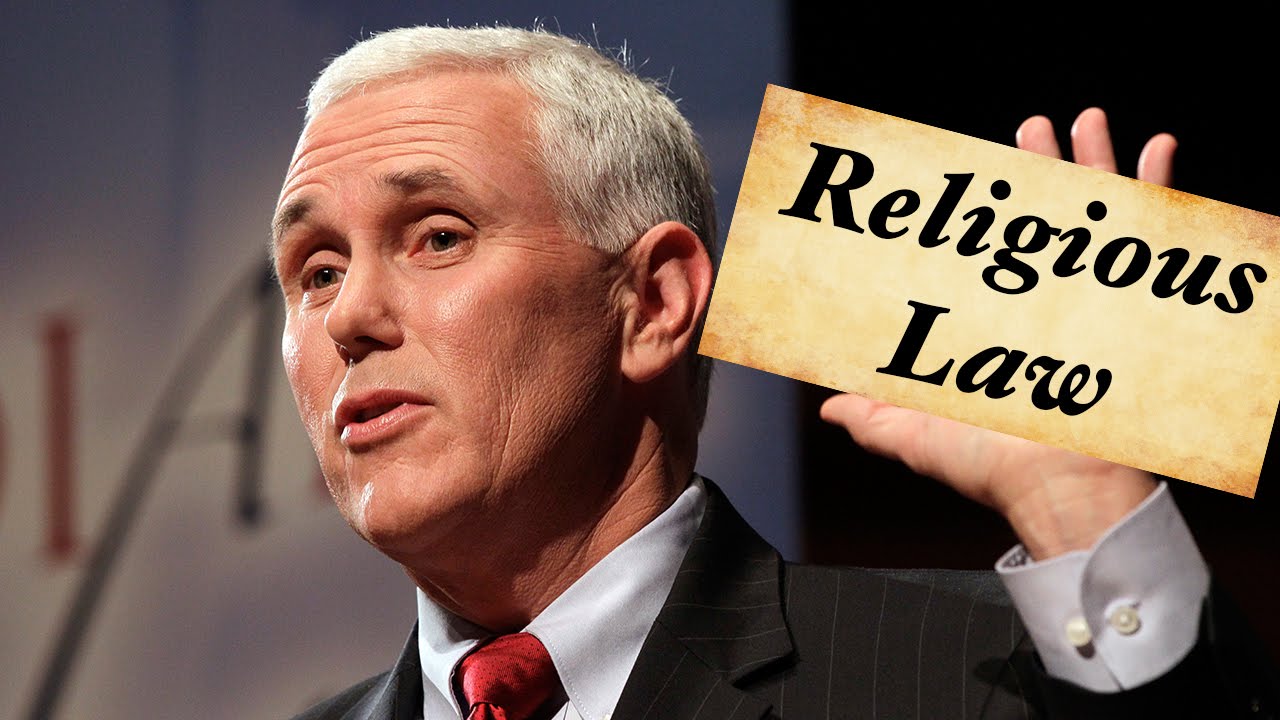
Donald Trump’s Vice Presidential candidate Mike Pence favors passage of a bill that would make it harder for poor children in the USA to receive school lunches and would allow all children in school to make nutritionally questionable decisions.
The bill, sponsored by U.S. Rep. Todd Rokita (R-IN), and known as the “Improving Child Nutrition and Education Act of 2016” (H.R. 5003) is intended to save the government money. It would do so on the backs of poor children and would undermine recent gains in the nutritional value of school lunches.
The bill would allow children to substitute chips and sugary gummy fruit snacks for fresh fruit. The American Academy of Pediatrics opposes the bill, as passage would reverse gains in fighting childhood obesity. In 2010 the government passed a bill that required schools to restrict the sale of junk food. This new bill would make it possible for schools to once again provide junk food.
The bill would also require that schools have 60% of children receiving government assistance of some kind – instead of the current 40% – in order for the school to qualify for free lunch for all students. Schools that did not qualify would require needy students to apply for free school lunches. This penalizes poor children, many of whom prefer eating nothing to exposing themselves to ridicule in front of their peers.
This bill, H.R. 5003, is harmful to children, yet it is supported by Mike Pence. Please think carefully before you vote for a ticket that would even consider sacrificing the health of children.Mike Pence supports bill that threatens school lunch quality | Rethinking Education:

Progress on SWD outcomes – half full or half empty? :: SI&A Cabinet Report

Progress on SWD outcomes – half full or half empty? :: SI&A Cabinet Report :: The Essential Resource for Superintendents and the Cabinet:

Progress on SWD outcomes – half full or half empty?

Progress on SWD outcomes – half full or half empty?


(District of Columbia) The performance of students with disabilities is improving in more parts of the country than in previous years although about half of all states are still left failing to meet federal requirements for special education.
Annual determination letters on state implementation of the Individuals with Disabilities Education Act were issued last week. This is the third time letters have been released since 2014 when student performance was considered with equal weight as compliance.
Historically, when states were only required to demonstrate compliance with IDEA, far more were deemed to have met their obligations, even if students were not improving.
“Focusing on compliance does not guarantee good outcomes for our students with disabilities,” John Riley, senior policy analyst for the National Education Association, said in an interview. “Instead of over emphasizing compliance timelines, let’s focus on how well these students are actually doing.”
Although IDEA was signed into law in 1990, it wasn’t until 2004 that the law was amended to require states begin developing performance plans and produce annual performance reports.
The 2014 determination letters marked the first time after that amendment that the U.S. Department of Education began to equally weigh student performance with compliance factors, which include sending parent notifications out on time or holding annual Individual Education Program meetings with all required members present.
Upon first glance, the latest determination letters appear to shed a positive light on outcomes for students age 3 through 21. Now, 26 states are meeting requirements under Part B of IDEA compared to 18 that met those requirements in 2014.
Part C, which covers infants through age 2, did not include performance until last year, during which time only 22 states met the requirements. This year, 30 states fulfilled their obligations.
Still, despite the fact that states have only recently had to prove that students with disabilities are making strides, IDEA has been the law of the land for almost 30 years – longer if you include its earliest form, the Education for All Handicapped Children Act, enacted in 1975.
According to Diana Autin, executive co-director of the Statewide Parent Advocacy Network, which provides technical assistance to federally-funded parent training and information centers for students with disabilities, there are a handful of factors that could still be holding schools back from meeting these requirements.
“Compliance with the requirements in IDEA requires that all school and district staff understand the requirements, know how to implement them and have the resources they need to do so,” Autin said in an interview. “There are many barriers, including staff and administrator turnover, failure at all levels to allocate sufficient resources to both the procedural and substantive provisions of the law, failure of our educator and administrator preparation systems to adequately prepare them to know how to implement the procedural and substantive provisions of the law, and lack of will to do so.
“And there is another contributing factor–there are no meaningful consequences for failure to implement IDEA,” she said.
If a state does not meet the requirements and is placed into the “needs assistance” category for two Progress on SWD outcomes – half full or half empty? :: SI&A Cabinet Report :: The Essential Resource for Superintendents and the Cabinet:

Facebook blames its lack of diversity on America's lackluster public education system - SFGate

Facebook blames its lack of diversity on America's lackluster public education system - SFGate:

Facebook blames its lack of diversity on America's lackluster public education system


Facebook blames its lack of diversity on the scarcity of quality computer science instruction in American public schools. 
An annual diversity report released Thursday revealed the social media giant is still staffed with a lot of white men. The numbers indicate only 2 percent of its U.S. workforce is black and 4 percent hispanic, and when looking at technical staff, 1 percent is black and 3 percent hispanic. These figures have remained the same since 2014. Women make up 33 percent of the U.S. workforce; and 17 percent of technical staff.
In a blog post on the data, Maxine Williams, Facebook's global head of diversity, said the company's diversity problem was due to a lack of available talent and the public education system's failure to provide computer science classes. 
"It has become clear that at the most fundamental level, appropriate representation in technology or any other industry will depend upon more people having the opportunity to gain necessary skills through the public education system," Williams wrote. "Currently, only 1 in 4 US high schools teach computer science."
Williams goes on to share the low number of diverse students taking the Advanced Placement Computer Science exam, stating that in 2015 seven states had fewer than 10 girls take the test, and no girls took it in three. 
She adds, "No Black people took the exam in nine states including Mississippi where about 50% of high school graduates are Black, and 18 states had fewer than 10 Hispanics take the exam with another five states having no Hispanic AP Computer Science (CS) test takers. This has to change."
What's Facebook going to do about this?
The company, which has a history with investing in public education, promised $15 million to Code.org toward computer science education over the next five years. 
"Facebook's five-year commitment will help Code.org to drive the development of curricula, public school teacher-training and student skills-building, particularly among traditionally underrepresented populations in engineering and computer science," Williams wrote. "It will give thousands of students across the country the access to computer science they deserve."
Many observers are criticizing the company's response, saying the pipeline argument is a weak excuse.
"There are a ton of opportunities to increase demographic representation in tech companies with the people that already exist in the workforce," Joelle Emerson, chief executive of Paradigm, a diversity consultancy that works with many Silicon Valley firms, told the Wall Street Journal.
In an interview with the Huffington Post, Leslie Miley, director of engineering at Slack and an advocate of diversity in Silicon Valley, called Facebook's statement a "f------ insult."
Facebook may still lack diversity, but this year's numbers did show some promise. While current representation in U.S. senior leadership is 3 percent black, 3 percent hispanic and 27 percent women, 9 percent of new senior leadership hires in the U.S. are black, 5 percent hispanic and 29 percent women, Williams wrote. What's more, Asians represent 38 percent of Facebook's U.S. workforce and this number has increased by 2 percent each year.Facebook blames its lack of diversity on America's lackluster public education system - SFGate:

Standing up for Ethnic Studies – Cloaking Inequity

Standing up for Ethnic Studies – Cloaking Inequity:

Standing up for Ethnic Studies


I was asked by a student on Friday at my Mi Familia Vota lecture at Rice University how Texas is different from California. Or why is California different from any other state for that matter?
Well, California is debating a History-Social Science Framework’s (HSSFW) Ethnic Studies elective course. In Texas, the standards have essentially erased and marginalized communities of color in many ways. We discussed this problem in our Harvard Education Review article a few years ago (This was one of my first posts. So you can see how far this blog has come since then).
On July 14, the California State Board of Education heard testimony on the proposed elective course. Hundreds of people showed up to testify— probably 300 or so. A member of the CSBE comment that the amount of testimony set some kind of record. You view here (9 hours) public comment and the meeting. There was quite a bit of controversy about the representation of Hinduism.
Here is the video from my testimony— I hyperlinked sources. I follow with the text.

My name is Dr. Julian Vasquez Heilig
I am currently a California State University Sacramento Professor of Educational Leadership and Policy Studies and Director of the Doctorate in Educational Leadership
I blog on education and social justice at Cloaking Inequity.
I also serve as the elected Education Chair of the California NAACP. I am authorized to say that the California NAACP unequivocally supports ethnic studies in our state.
The California NAACP has actively worked with Assemblyperson Shirley N. Weber and others to support ethnic studies in our legislature.
Why? California’s students, educators, and other stakeholders have provided many examples and reasons in their testimony today to support ethnic studies.
We have demonstrated in our research in the Harvard Educational Review that communities of color have been historically excluded and misrepresented in our curriculum… purposefully and insidiously.
This has been a travesty.
Peer reviewed Stanford research recently found that ethnic studies students not only made gains in attendance and grades, they also increased the number of course credits they earned to graduate.
I also personally speak in favor of the four imperative recommendations submitted by the ETHNIC STUDIES NOW COALITION.
Thank you for your service to our state.Standing up for Ethnic Studies – Cloaking Inequity:
Please Facebook Like, Tweet, etc below and/or reblog to share this discussion with others.
Want to know about Cloaking Inequity’s freshly pressed conversations about educational policy? Click the “Follow blog by email” button on the home page.
Twitter: @ProfessorJVH
Follow my YouTube channel here.


PCAPS Community Schools Task Force Celebrates the Announcement of The First Cohort of Philadelphia Community Schools | WeArePCAPS

PCAPS Community Schools Task Force Celebrates the Announcement of The First Cohort of Philadelphia Community Schools | WeArePCAPS:

PCAPS Community Schools Task Force Celebrates the Announcement of The First Cohort of Philadelphia Community Schools

741893496212432191-rally-kenney.full
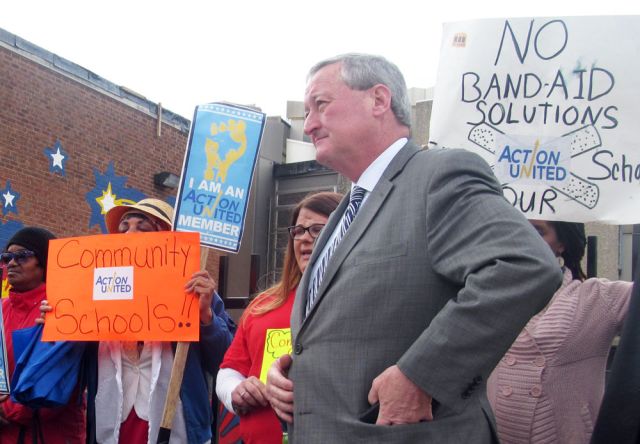
photo credit: Craig Robbins.  Then candidate Jim Kenney at an ACTION United, PCAPS rally at Comegys Elementary in April last year announcing his committment to 25 community schools in his first term.

As the outgrowth of a coalition that has advocated for community schools for over four years, we are gratified to see that idea now becoming a reality in our city with the Mayor announcing the first cohort of nine community schools. We congratulate the Mayor’s office for it’s work over the last six months that has brought us to this point.
There has been an ambitious program of community engagement in which the community school strategy, its implementation, and criteria for selecting schools, have been widely shared and discussed. The fruit of that process is reflected in the plan announced today.
We are excited that the selection process emphasized schools that have developed a collaborative leadership and culture, thus maximizing the likelihood that these schools will implement this strategy successfully.
We also think the first cohort of schools gets high marks for balancing the need for geographic diversity, with a focus on communities of high need.
City Council deserves recognition as well, both for providing the funding in the form of the sugary drink tax, and for supporting a selection process in which political calculation was subordinate to getting the right mix of schools.
We plan to continue to work with school communities to advocate, from the ground up, PCAPS Community Schools Task Force Celebrates the Announcement of The First Cohort of Philadelphia Community Schools | WeArePCAPS: