Latest News and Comment from Education

Monday, June 13, 2016

Crowded field for Washington schools chief race | KOMO
Crowded field for Washington schools chief race | KOMO:

Crowded field for Washington schools chief race 

160612_dorn'.jpg
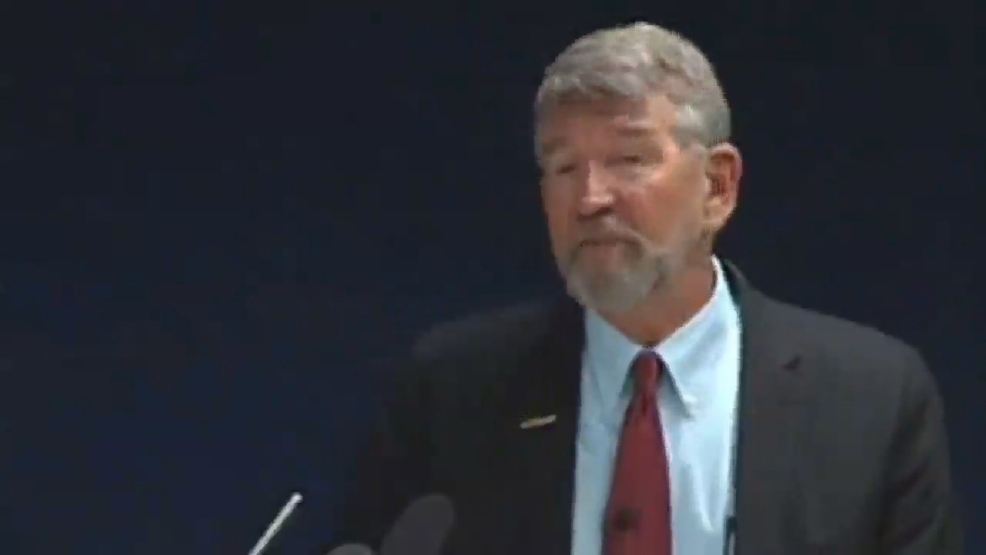
SEATTLE -- There's a crowded field of candidates vying to be Washington's next superintendent of public instruction, but the three top candidates all bring something new to the contest.
The list includes a lawmaker and community college administrator, an award-winning teacher and administrator, a school nurse who runs the school health program across the state, and six others who mostly want to have their voices heard.
Incumbent Randy Dorn has decided not to seek re-election, leading several candidates to enter the field.
Chris Reykdal, who has represented Tumwater in the state Legislature for five years, would be the first superintendent in recent history with children in public school if elected.
Erin Jones, who works for the Tacoma School District as a teaching coach and program administrator, is the first African-American woman to run for statewide office in Washington state.
Robin Fleming, who runs Office of Superintendent of Public Instruction's health services program, would be the first nurse to become superintendent of public instruction.
Only Reykdal, Jones and Fleming have raised more than a few hundred dollars for their campaigns, according to the state Public Disclosure Commission, although a fourth candidate who dropped out of the race also had raised thousands of dollars.
The field will be narrowed in the Aug. 2 state primary. The top two candidates will advance to the Nov. 8 general election.
The three leading candidates bring different approaches to the job held by Dorn for the past eight years. Dorn, a former lawmaker and union official, was hard to miss in Olympia and made sure his views were heard by lawmakers and the Washington Supreme Court, which decided in 2012 that the way the state pays for public schools was unconstitutional.
Fleming says she would leave the work of how to finish answering the Supreme Court's so-called McCleary decision up to lawmakers and would not follow Dorn's more bombastic Crowded field for Washington schools chief race | KOMO:


We Can Recover From The School Choice Movement | Dr. Edward F. Berger

We Can Recover From The School Choice Movement | Dr. Edward F. Berger:

We Can Recover From The School Choice Movement


We have over 20 years of data about charter schools (partial schools) and how they have benefited or damaged public education and children. Originally, the purpose of charter schools was to free educators with new insights and give them the support they needed to create education programs that would improve our public schools. Many effective educators believed they could demonstrate ways to break out of the old top-down coercive systems (the factory system) and make our public schools more effective. Now, after 20+ years of experimenting, we must identify the effective charter schools and make certain that what they have learned and demonstrated is integrated into our comprehensive schools.
“Choice” is a marketplace idea wrongly applied to education. The assumption that most parents have the information they need to make intelligent decisions about the education their children need, and the education children need to be effective citizens, has been proven wrong. School choice has failed to improve our schools. In fact, choice has created a chaos of confusion for parents who have risked (gambled) on moving their children out of comprehensive education programs to place them in partial education programs. The costs of these misguided experiments is evident in high dropout rates, incomplete educations, and damaged children. Criminal activities created by intentional lack of accountability and unfettered access to our public tax dollars is horrendous. In addition, the experiment has resulted in massive duplication of services that sap money needed for our children and increase the cost of education for no valid reasons.
Politicians, ideologues, so-called libertarians, and crooks attracted by profit motives, took over the charter school experiment. They decided, with no educational data to back their decisions, that charter schools, regardless of whether they worked for children or not, whether they served America’s need for an educated populous or not, would become stand-alone schools that could be run with little accountability, certification, or even democratically elected boards. Now, tax money is often used to create private Real Estate empires. Our tax dollars that we pay for children and their education are siphoned off to individuals, corporations, and companies that contract with charters to provide “services.” Is it any wonder that hedge fund operators and the self-appointed reformers see charter schools and outfits like K-12 as income generators? Is it any wonder that the FBI and other law enforcement agencies cannot keep up with the criminal activities of those milking the system? These thefts are criminal even if approved by legislatures. Are you surprised that the largest Charter School operator in America is a We Can Recover From The School Choice Movement | Dr. Edward F. Berger:


A void in oversight of charter schools (By Wendy Lecker) - Wait What?

A void in oversight of charter schools (By Wendy Lecker) - Wait What?:

A void in oversight of charter schools (By Wendy Lecker)


Surprise!  Connecticut taxpayers are giving privately owned and operated charter schools more than $110 million a year, with little to no oversight.  Meanwhile, Connecticut Governor Dannel Malloy and the Democratic controlled state legislature are implementing the deepest cuts in state history to Connecticut’s public schools.  The budget cuts, along with the inadequate funding allocated for public schools mean Connecticut’s public school students will be getting less, while local property taxpayers will be charged even more.
In another MUST READ piece, public education advocate and columnist Wendy Lecker reports on the void in oversight of Connecticut’s charter schools.
Wendy Lecker writes;
One would think that after the scandals involving Connecticut’s two large charter chains, Jumoke and Achievement First, Connecticut’s education officials would finally exert some meaningful oversight over Connecticut’s charter sector.
One would be wrong.
This week the Connecticut Mirror reported that Education Commissioner Dianna Wentzell dismissed a complaint against Bridgeport Achievement First, for using uncertified teachers for 47 percent of its staff, in violation of Connecticut statute. Wentzell unilaterally decided that the law allowing complaints against public schools does not apply to charters; despite the fact that charters receive more than $100 million each year in public taxpayer dollars.
Wentzell disregarded the data showing Achievement First’s misdeeds, claiming the State Department of Education (SDE) will wait until the charter 
A void in oversight of charter schools (By Wendy Lecker) - Wait What?:


CURMUDGUCATION: An Educated Person

CURMUDGUCATION: An Educated Person:

An Educated Person


A while back, blogger Starr Sackstein took a whack a two part question-- has the definition of an educated person changed, and should our education delivery system change with it. My gut reaction, my visceral answer, is "Not really, and not really." But I didn't really have anything to back up my gut, so I've been mulling over this for a while. What were my viscera thinking when they passed along this answer.

Part of my reaction is to some embedded assumptions that Sackstein includes in the question. She contemplates the twelve years of education in various disciplines, and then pivots to larger questions:

Upon successful completion of high school, being "educated" meant a student went to a college of his/her choosing to major in a subject area that would yield a respectable job and potentially go on to higher education to ensure relevancy in his/her career path.  

Students in my generation and earlier generations did this dutifully, if being "educated" was a value they or their families' held.

I'm not sure I buy this narrative, particularly if we go back a few generations. High schools only really caught on during the period between 1910 and 1940 (ish). You can find a variety of numbers, but the basic pattern is evident-- in 1910 only about 20% of US teens were enrolled in high school, and only about half of those finished. The Depression kicked the crap out of high school education, with teachers widely unemployed and many school districts simply shutting down. By 1940, high school attendance was still far, far short of 100%.

And if we're talking about college education, while it's stylistically appropriate for Sackstein to use "his/her," in 1947 barely half a million women went to college. In 1970, roughly a third of all 
CURMUDGUCATION: An Educated Person:

Tough Spells Out What Kids Need: Does Any Reformer Care? - Living in Dialogue

Tough Spells Out What Kids Need: Does Any Reformer Care? - Living in Dialogue:

Tough Spells Out What Kids Need: Does Any Reformer Care?

By John Thompson.
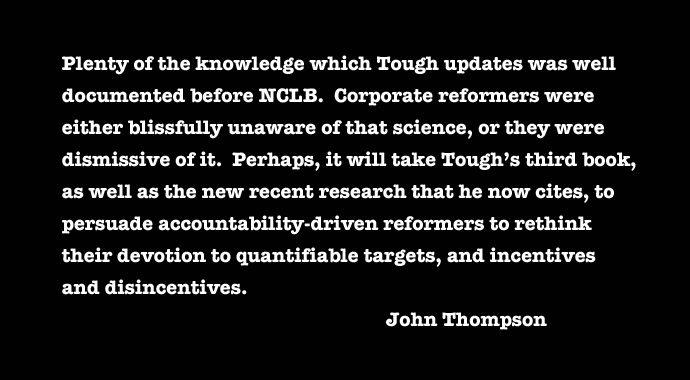
A first post summarized the way that Paul Tough’s new article, previewing his new Helping Children Succeed,explains why we must celebrate the fact that “the much-criticized No Child Left Behind Act, which dominated federal education policy for the past decade and a half, was finally euthanized.” I had hoped that Tough’s previous masterpiece, How Children Succeed, would convince corporate reformers to pull the plug on test-driven, competition-driven mandates. This second post explains why I fear that the Billionaires Boys Club will spin his new work as a justification for their test, sort, reward, and punish approach to school improvement.
Tough’s conclusion is unambiguously great:
Here’s a hopeful thought: Perhaps with the demise of the law, the education debates that raged so furiously during the No Child Left Behind era—on charter schools and Common Core, teacher contracts and standardized testing—might now give way to more-productive discussions about what low-income children need to succeed. We know a lot more than we did when the law was passed about the powerful environmental forces that are acting on many low-income children, beginning in infancy. And we know a lot more than we used to about what interventions and strategies—both at home and in the classroom—most effectively help these young people thrive in school and beyond. A national conversation that starts from this growing scientific consensus and moves forward into policy might be our best chance to improve the lives of the 51 percent of American public-school students who most need our help.
But, then comes the following:
This article is adapted from Paul Tough’s new book, Helping Children Succeed: 
Tough Spells Out What Kids Need: Does Any Reformer Care? - Living in Dialogue:


The Washington Teacher: No WTU Elections For You: Teachers' Ballots ARE NOT IN THE MAIL!!!

The Washington Teacher: No WTU Elections For You: Teachers' Ballots ARE NOT IN THE MAIL!!!:

No WTU Elections For You: Teachers' Ballots ARE NOT IN THE MAIL!!!


By Candi Peterson, WTU General Vice President

Statements or expressions of opinions herein 'do not' represent the views or official positions of DCPS, AFT, Washington Teachers' Union (WTU) or its members. Views are my own.

Disclaimer: I am not a member of the WTU Contract Negotiations team.

Washington Teachers’ Union (WTU) officer elections have been marred with confusion and delays under the helm of President Liz Davis and her Chief of Staff due to failure to submit a union membership list to TrueBallot according to a schedule established in May by the duly elected elections committee.

TrueBallot is the company selected several months ago as the lowest bidder to hold WTU's election in May 2016. Only one other time in the union’s history have officer elections been delayed. In 2006, American Federation of Teachers' (AFT), WTU’s parent organization assumed a "limited administratorship" to take over elections when the then-president Parker failed to hold elections according to schedule.

WTU Officers and the Board are elected to a term of three years. That term will soon expire on June 30, 2016.

Many teachers have been asking the obvious question; where is my ballot? Certainly, it’s not in the mail.

In their efforts to facilitate a timely election, the WTU Elections Committee, an independent elected body responsible for creating an election schedule and  overseeing union elections in May of the final year of current leadership term (2016), has been thwarted at every turn by President Liz Davis and Chief of Staff Dorothy Egbufor.

WTU Executive Board members voted unanimously on June 4th at their final meeting, for WTU Chief of Staff Egbufor to send the union membership list to TrueBallot by June 6th at 12 noon and offer an apology for defamatory statements and a threat from Egbufor to withhold payment to TrueBallot. While the membership list was finally mailed to TrueBallot by Egbufor on June 6th, she failed to provide the required apology as voted on by the Executive Board.

Further, the Executive Board, also voted unanimously for President Davis to offer TrueBallot an assurance on June 4th that their contract with WTU would be honored. While President Davis finally sent an email several days later on June 6th to TrueBallot's representative, however, he considered it more of an excuse than an The Washington Teacher: No WTU Elections For You: Teachers' Ballots ARE NOT IN THE MAIL!!!


New Scholarship on Discipline in Charter Schools - Education Law Prof Blog

Education Law Prof Blog:

New Scholarship on Discipline in Charter Schools


Susan DeJarnatt, Kerrin C. Wolf, and Mary Kate Kalinich have posted their new paper, Charting School Discipline, on ssrn.  It focuses on discipline in charter schools and their potentially distinct approaches.  As recent civil rights complaints in New Orleans and due process litigation in California have shown, charter school discipline is of growing importance to the overall conversation regarding necessary reforms to school discipline.  DeJarnatt and her colleagues offers this abstract:
Exclusionary school discipline can steer students away from educational opportunities and towards the juvenile and criminal justice systems. As many public school systems have turned to exclusionary school discipline practices over the past two decades, they have also increasingly adopted charter schools as alternatives to traditional public schools. This research is examines the student codes of conduct for the charter schools in the School District of Philadelphia to consider the role of their disciplinary practices and the potential effects on charter students.
We analyzed every disciplinary code provided to the Philadelphia School District by charter schools within Philadelphia during the 2014-2015 school year. Our goal was to examine the provisions relating to detention, suspension, and expulsion, along with other disciplinary responses, to determine what conduct can result in disciplinary consequences, what responses are available for various types of misbehavior, and whether the code language is clear or ambiguous or even accessible to students or potential students and their parents or caregivers. We conclude that too many of the codes are not well drafted, and too many follow models of punitive discipline that can be used to push out non-compliant or challenging students. Some codes grant almost complete discretion to school administrators to impose punitive discipline for any behavior the administrator deems problematic.
We hope that this work will spur future research on implementation of charter school discipline policies to illustrate how charter schools are using their codes. Further, we hope to see the charter sector develop model disciplinary codes that move away from a zero tolerance punitive model towards disciplinary systems based on restorative principles.

Hate Kills. Again. #OrlandoUnited - Lily's Blackboard

Hate Kills. Again. #OrlandoUnited - Lily's Blackboard:

Hate Kills. Again. #OrlandoUnited

Screen Shot 2016-06-13 at 11.25.25 AM

June 17, 2015. One year ago. Almost to the day.  A shooter sat in silence for an hour listening to a Bible class being taught at Mother Emanuel AME church in Charleston, South Carolina. He stood up and began shooting without mercy, executing nine innocent people.
June 12, 2016. Yesterday. A shooter walked into a crowded gay nightclub in Orlando. He began shooting without mercy, killing 49 innocent people and wounding 53 others.
According to the news, in South Carolina the shooter was an American white man born in Columbia, S.C. Twenty-two years old. He was listed on the roles of a local Lutheran congregation. He had sympathies with white supremacist groups. The shooting followed a horrific year of unarmed young black men and boys being killed by police officers and contentious debates about the appropriateness of the Confederate battle flag as an official state symbol throughout the South. The shooter targeted African Americans.
epa05360127 People stamp their painted hands in a banner made by the ChicagoĆ¢€™s artist, Greg Marchuk, supporting the victims of the shooting at Pulse nightclub in Orlando, Florida, USA, 12 June 2016. At least 50 people were killed and many others injured in a mass shooting at an LGBT club in the early hours of 12 June, according to media reports. The shooter was killed in the police operation that followed. EPA/CRISTOBAL HERRERA

This time, according to the news in Orlando, the shooter was an American of Afghan descent. Twenty-nine years old. He was Muslim. He had sympathies with terrorist groups.
The shooting followed a year when the Supreme Court declared that gay marriage was protected by the Constitution, and at least seven states immediately turned their attention, as if simultaneously choreographed, to the transgender community and contentious debates on legislation to require them to use the restroom that corresponds to their birth certificates instead of the one that corresponded to their outward appearance and internal identity. The shooter targeted LGBT people.
Donald Trump issued an instant I Told You So tweet: “Appreciate the congrats for being right on radical Islamic terrorism, I don’t want congrats, I want toughness & vigilance. We must be smart!”
Right? Smart? From a man who defines narrow-minded ignorance? He implies that he is “right” in that the Orlando tragedy occurred because there are Muslims in our country. His “smart” plan is to ban all Hate Kills. Again. #OrlandoUnited - Lily's Blackboard:
How to Talk to Students About the Mass Shooting in Orlando


mass shooting in orlando
In the wake of the largest mass shooting in U.S. history, it’s inevitable that school kids of all ages will hear snippets of the news and be confused and even afraid. At least 49 people are dead and 53 are wounded after a lone gunman, identified as Omar Sassiqui Mateen, targeted the LGBTQ community when he opened fire at a popular Orlando gay nightclub. The shooting is being investigated as a terror attack and analysis and reactions to the attack are dominating headlines.
“Although it’s still early in the investigation, we know enough to say that this was an act of terror and an act of hate,” President Obama said in a statement. “And as Americans, we are united in grief, in outrage, and in resolve to defend our people.”
Mass shootings are no longer rare occurrences and it’s understandable that children will be worried that something might happen to them or to those they love. They will have questions and it’s important that trusted adults like parents and educators address their concerns rather than trying to shelter them.
It’s also important to emphasize that no group of people should be feared because of the act of one person. The responsibility of educators includes battling hate and teaching tolerance and understanding of all people, especially in the aftermath of a horrific attack like the one in Orlando.
“Good people are dead again because of easy hate and easy guns. You cannot build a wall to protect against that. You have to fight it from within and speak the truth, standing up to those to teach hate and those who learn hate,” said NEA President Lily Eskelsen GarcĆ­a. “Orlando, we are holding you in love. In a thousand ways, we will turn our powerful love into powerful actions and stand against the hate that was unleashed against you.  Hate cannot stand against the love we hold within our universal humanity.”
The National Association of School Psychologists offers the following tips for talking to your students about mass shootings and other national tragedies:
Reassure children that they are safe. Emphasize that schools are very safe. Validate their feelings. Explain that all feelings are okay when a tragedy occurs. Let http://neatoday.org/2016/06/13/talking-to-students-about-mass-shooting-in-orlando/

The Fiscal Abandonment of Chicago Public Schools: What it Says about our Nation

The Fiscal Abandonment of Chicago Public Schools: What it Says about our Nation:

The Fiscal Abandonment of Chicago Public Schools: What it Says about our Nation

Big Education Ape: Mindless Underfunding Of Schools Continues, Doing Irreparable Harm To Kids - http://bigeducationape.blogspot.com/2016/06/mindless-underfunding-of-schools.html


By Gina Caneva
Recently, principals across CPS notified their staff to brace themselves for a 40% budget cut, delivering a further devastating blow to our students and to educational equity. In Springfield, lawmakers remain at odds in deciding on a budget and have entered into a special session, leaving our students and schools in jeopardy. Governor Rauner has pushed the burden of funding back on the city of Chicago by proposing over $70 million less funding to CPS. Nationally, lawmakers in Washington D.C. have done little to ensure that pre-K through 12 education is equally funded. CPS has become an orphaned district that is a microcosm of what’s wrong with the funding of our nation’s public schools.
Decisions at the local level are as difficult to come by as those at the state legislature. In our most desperate of times, the city of Chicago has not diverted TIF money to CPS; rather, in recent years, Mayor Emanuel has pushed our city to invest TIF funds to promote tourism in odd ways. The basketball stadium in the South Loop which is supposed to support DePaul’s Basketball programs, comes to mind as DePaul is located on the north side of Chicago and is a privately funded university. These types of initiatives are taking precedence over the use of additional funding for our schools.
The majority of U.S. school funding comes at the state and local levels which can vary from state-to-state and district-to-district. Yet we are often taken aback when we see data that shows American students falling behind their peers academically when compared to students in foreign countries. According to the Pew Research Center, American 15-year-olds rank 35th out of 64 countries in math and 27th out of 64 countries in science. Might this be because we are fiscally abandoning students in our poorest communities locally, regionally, and nationally as we continue to hold them to international standards? Why aren’t we leveling the playing field by providing all American students with equal funding across the nation?
This year marks the 62nd anniversary of Brown v. the Board of Education, which declared that “separate educational facilities” are “inherently unequal.” This was a case based on race, but it now resonates with socioeconomic class as students in poverty are receiving separate funding and often educational facilities of lower quality than their peers in the middle and upper classes. According to a recent report from NPR, school districts and/or parents are suing thirteen states across the The Fiscal Abandonment of Chicago Public Schools: What it Says about our Nation:
 Big Education Ape: CPS Budget lies and budget liars - Substance News - http://bigeducationape.blogspot.com/2014/07/cps-budget-lies-and-budget-liars.html

Less test-iness over L.A. teacher evaluations - LA Times

Less test-iness over L.A. teacher evaluations - LA Times:

Less test-iness over L.A. teacher evaluations


Sebastian, who goes by one name, takes issue with the new teacher evaluation system in Los Angeles. Her rating has declined, unfairly in her view.
The San Pedro High teacher is hardly the only one with concerns.
Some see the observation-based system — negotiated by the district and unions  — as too friendly toward teachers. Others say it's too cumbersome or too reliant on principals with limited expertise.
Supporters see the district’s approach as breaking ground, even leading the nation. Critics say the kind of political compromise it was born of inevitably promotes mediocrity and fails to help students.
The latest revisions to the one-year-old system are expected to win formal approval at Tuesday's Board of Education meeting. The pact was achieved with far less acrimony than usually has accompanied efforts here and elsewhere to overhaul how teachers are assessed.
But, said Dan Goldhaber, a professor at the University of Washington with extensive experience in teacher-evaluation research, “The ultimate test is: Is this having positive, measurable effects on teachers and students?”
In L.A., it’s still too early to say, even more than six years into a sweeping endeavor to revamp how instruction is measured and improved. 
Notably missing in the latest system is any direct reliance on student standardized test scores to determine whether teachers keep their jobs. Test scores now are to be used instead for analyzing student needs, setting goals and reviewing progress toward achieving them.
Until recently, the Obama administration pushed hard for test-based evaluations, as did well-heeled foundations with an outsize influence on the nation’s education policy. But opponents called them inconsistent and unfair.
Across the country, aligning against them along with teachers were many parents, who  Less test-iness over L.A. teacher evaluations - LA Times:

California and proposed federal regulations at odds on how to rate schools | EdSource

California and proposed federal regulations at odds on how to rate schools | EdSource:

California and proposed federal regulations at odds on how to rate schools


Despite close parallels between California’s school reforms and those called for in the new federal law signed by President Barack Obama last December, California and the U.S. Department of Education appear to be on a collision course regarding the rating systems each wants to put in place to measure success or failure of the state’s schools.
Led by Gov. Jerry Brown and the State Board of Education, California is moving away from a single index, score or number to rank schools and districts.
In its place, California is trying to create a system to assess school performance based on “multiple measures” to give a more three-dimensional view of how schools and students are doing.
However, in the draft regulations published by the U.S. Department of Education in the Federal Register on May 31 to implement the new Every Students Succeeds Act, states would be required to assign a “single rating” to each of their schools, even though the law itself does not call for it.
The department explained its reasoning as follows:


Charter Schools at 25 - Education Week

Charter Schools at 25 - Education Week:

Gene V Glass: Education in Two Worlds: Education Week: Fair and Balanced - http://ed2worlds.blogspot.com/2016/06/education-week-fair-and-balanced.html


Charter Schools at 25

By Arianna Prothero

Twenty-five years ago this month, Minnesota passed the country’s first charter school law. Since then, the charter sector has expanded exponentially to include dozens of states, thousands of schools, and millions of students. While the charter movement has benefited significantly from wealthy funders—which have been crucial in fueling its growth—it still faces a litany of criticisms. Among the most persistent: Charter schools have a harmful lack of diversity.

The Evolution of the ‘Chartered School’

Charters have evolved from the original idea to allow parents and teachers to create new kinds of public schools into a powerful movement—driven, to a large extent, by private philanthropy.READ MORE >

Data and the Debate Over Diversity in Charters

Charter schools have long been criticized for a lack of diversity, but a national analysis reveals a varied demographic profile.READ MORE >

Video: A Tale of Two Charter Schools

Step inside the Avalon School in St. Paul, Minn., and the Alliance Collins Family College-Ready High School in Los Angeles, to see how the charter movement has changed over the last 25 years.READ MORE >


Charter Schools at 25 - Education Week:

Charter Schools - Dividing Communities since 1991

The NAEP proficiency myth | Brookings Institution

The NAEP proficiency myth | Brookings Institution:

The NAEP proficiency myth


On May 16, I got into a Twitter argument with Campbell Brown of The 74, an education website.  She released a video on Slate giving advice to the next president.  The video begins: “Without question, to me, the issue is education. Two out of three eighth graders in this country cannot read or do math at grade level.”  I study student achievement and was curious.  I know of no valid evidence to make the claim that two out of three eighth graders are below grade level in reading and math.  No evidence was cited in the video.  I asked Brown for the evidentiary basis of the assertion.  She cited the National Assessment of Educational Progress (NAEP).
NAEP does not report the percentage of students performing at grade level.  NAEP reports the percentage of students reaching a “proficient” level of performance.  Here’s the problem. That’s not grade level. 
In this post, I hope to convince readers of two things:
1.  Proficient on NAEP does not mean grade level performance.  It’s significantly above that.
2.  Using NAEP’s proficient level as a basis for education policy is a bad idea.
Before going any further, let’s look at some history.

NAEP history 

NAEP was launched nearly five decades ago.  The first NAEP test was given in science in 1969, followed by a reading test in 1971 and math in 1973.  For the first time, Americans were able to track the academic progress of the nation’s students.  That set of assessments, which periodically tests students 9, 13, and 17 years old and was last given in 2012, is now known known as the Long Term Trend (LTT) NAEP. 
It was joined by another set of NAEP tests in the 1990s.  The Main NAEP assesses students by grade level (fourth, eighth, and twelfth) and, unlike the LTT, produces not only national but also state scores.  The two tests, LTT and main, continue on parallel tracks today, and they are often confounded by casual NAEP observers.  The main NAEP, which was last administered in 2015, is the test relevant to this post and will be the only one discussed hereafter.  The NAEP governing board was concerned that the conventional metric for reporting results (scale scores) was meaningless to the public, so achievement standards (also known as performance standards) were introduced.  The percentage of students scoring at advanced, proficient, basic, and below basic levels are reported each time the main NAEP is given.

Does NAEP proficient mean grade level? 

The National Center for Education Statistics (NCES) states emphatically, “Proficient is not synonymous with grade level performance.” The National Assessment Governing Board has a brochure with information on NAEP, including a section devoted to myths and facts.  There, you will find this:
Myth: The NAEP Proficient level is like being on grade level.

Fact: Proficient on NAEP means competency over challenging subject matter.  This is not the same thing as being “on grade level,” which refers to performance on local curriculum and standards. NAEP is a general assessment of knowledge and skills in a particular subject.
Equating NAEP proficiency with grade level is bogus.  Indeed, the validity of the achievement levels themselves is questionable.  They immediately came under fire in reviews by the U.S. The NAEP proficiency myth | Brookings Institution:
 

Big Education Ape: If NAEP “Proficient” Means “Grade Level Proficiency,” Then America’s Private Schools Are in Trouble | deutsch29 - http://bigeducationape.blogspot.com/2016/05/if-naep-proficient-means-grade-level.html

Big Education Ape: The Arrogant Ignorance of Campbell Brown: Education Journalism in Decline | gadflyonthewallblog - http://bigeducationape.blogspot.com/2016/05/the-arrogant-ignorance-of-campbell.html

Big Education Ape: “Telegenic” Is Not a Sexist Term | deutsch29 - http://bigeducationape.blogspot.com/2016/05/telegenic-is-not-sexist-term-deutsch29.html

Big Education Ape: Campbell Brown’s Bizarre NAEP Response in the Washington Post | deutsch29 - http://bigeducationape.blogspot.com/2016/05/campbell-browns-bizarre-naep-response.html

Big Education Ape: Why a social media fight between Campbell Brown and her critics matters - The Washington Post - http://bigeducationape.blogspot.com/2016/05/why-social-media-fight-between-campbell.html

Big Education Ape: Education Expert Campbell Brown Offers Advice to the Next President | Diane Ravitch's blog - http://bigeducationape.blogspot.com/2016/05/education-expert-campbell-brown-offers.html


Education Imperialism in Africa Turns Nasty - Uganda Police Harass Researcher Investigating Schools with Ties to Gates, Zuckerberg, and Pearson

Education Imperialism in Africa Turns Nasty - Uganda Police Harass Researcher Investigating Schools with Ties to Gates, Zuckerberg, and Pearson:

Education Imperialism in Africa Turns Nasty - Uganda Police Harass Researcher Investigating Schools with Ties to Gates, Zuckerberg, and Pearson


European exploitation of Africa started with the trans-Atlantic slave trade in the 16th century. It continued with colonization and imperialism in the 19th and 20th centuries and is primarily economic in the current era of globalization. European, American, and now Asian capitalists smell profit and move in. Sometimes they claim to bring benefits such as civilization, Christianity, philanthropy, and development, but their goal is always how much money they can make. The latest missionaries in Africa are tech and education companies, and like their slave-trading and imperialist predecessors, they do not hesitate to play dirty.
Last week, tech and education companies held a self-congratulatory marketing conference in Nairobi, Kenya called Education Innovation Africa 2016. Its official purpose was to “seek” ways “to deliver transformational and sustainable education businesses as well as collaborative approaches with African governments.” The event was held in Africa, but it was not an “African” event. Of the fifty-one speakerspictured on the website thirty-two appear to be were of European background and many of the non-Europeans were also not sub-Sahara Africans.
The conference was also not an “education” event. This year’s theme was “Driving Impact in Private, Social and PPP Education Projects in Africa.” Organizers want to “unite key education leaders at Ministries, Educators, Programmes and Edtech companies, together with Capital Providers at PE, VC, Impact, Development Banks and Corporate Programmes” to expand public-private partnerships, the PPPs. Only two of the listed speakers were from academia. Forty-four of the fifty-one represented corporations of non-governmental agencies, and five were government officials.
Advertised speakers included Gregg Alpert of Pearson Affordable Learning Fund, Biju Mohandas of the International Finance Corporation, Vineet Bewtra of Omidyar Network, Julia Moffett, Director of Innovation at Equity Group Foundation, Kenyan education investors Ayisi Makatyani of Fanisi Capital and Anthony Wahome of AG Education Imperialism in Africa Turns Nasty - Uganda Police Harass Researcher Investigating Schools with Ties to Gates, Zuckerberg, and Pearson:

Diane Ravitch to Obama: ‘I will never understand why you decided to align your education policy with that of George W. Bush’ - The Washington Post

Diane Ravitch to Obama: ‘I will never understand why you decided to align your education policy with that of George W. Bush’ - The Washington Post:

Diane Ravitch to Obama: ‘I will never understand why you decided to align your education policy with that of George W. Bush’

Diane Ravitch speaks at the Education on the Edge Lecture Series at California State University Northridge on Oct. 2, 2013. (Michael Buckner/Getty Images)


Diane Ravitch has been the titular leader of the grass-roots movement against corporate school reform since 2010, when her book, “The Death and Life of the Great American School System,” was published and quickly became a bestseller. (In fact, readers of the the pro-reform journal Education Next named it the most important book of the first decade of the 2000s.) In the book, she explained why she dropped her support for No Child Left Behind, the chief education initiative of former president George W. Bush and standardized test-based school reform. Now she has updated the book and explained why she has again changed her view on at least one important issue. This post is a Q&A I had with Ravitch about her book and the state of the public education.
The reason Ravitch’s change of position mattered was because of her position in the education world. A well-respected education historian and author, she worked from 1991 to 1993 as assistant secretary in charge of research and improvement in the Education Department of President George H.W. Bush and served as counsel to then-Education Secretary Lamar Alexander (who is now the chairman of the Senate education committee). She was a supporter of No Child Left Behind, the chief education initiative of President George W. Bush, and was at the White House as part of a select group when Bush first outlined No Child Left Behind, a moment that at the time made her “excited and optimistic” about the future of public education.
But her opinion changed as NCLB was implemented, and she heard from teachers about the negative effects it was having on teaching and learning. She began to research the law’s effects and concluded that it had led to a serious narrowing of curriculum that reduced or eliminated science, the arts and other subjects; an obsession with test prep and testing; and plunging morale among teachers. In 2013, she formed an advocacy group called the Network for Public Education as a counter to Michelle Rhee’s then-influential StudentsFirst and like-minded organizations that were pushing the privatization of public education and test-based “accountability.”
She became a fierce critic of President Obama’s education policies and his chief education initiative, Race to the Top, which was a multi-billion-dollar competition in which states (and later districts) could win federal funds by promising to adopt controversial reforms, including the Common Core State Standards, charter schools and systems that evaluated teachers by student test scores.
Today she is a senior research scholar at New York University, and she blogs daily here.