Latest News and Comment from Education

Monday, May 30, 2016

Letter: Hedge fund billionaires 'endanger' world finances - NonDoc

Letter: Hedge fund billionaires 'endanger' world finances - NonDoc:

Letter: Hedge fund billionaires ‘endanger’ world finances

Hedge funds
(Morguefile.com)
(Editor’s Note: NonDoc believes in creating a responsible forum for the rational and respectful discussion of topics and ideas. As such, we run Letters to the Editors of 300 words and reserve the right to edit lightly for style and grammar. To submit a letter for publication, please write to letters@nondoc.com. We simply require your name, the town in which you live and your contact information.)
To the editors,
Hedge funds are one of many types of speculative trading that endanger the worldwide financial system.
A hedge fund is a private-investment vehicle, operating as a limited partnership, that invests in debt, complex derivatives, stocks, bonds, options and commodities.
Hedge fund managers often enjoy astonishing payouts, some in excess of a billion dollars in a year.
But just how much is a billion dollars, and does this investment practice have an undesirable effect on our society?
One billion expressed numerically is 1,000,000,000. A billion is one thousand times larger than a million.
We can factor the product of one billion into two interesting numbers that, when multiplied together, make one billion.
Fifty-thousand times 20,000 equals 1 billion (or 50,000 X 20,000 = 1,000,000,000).
If we put a dollar sign on the 50,000, it equals about the average annual salary in the U.S. We can now see that 20,000 workers making $50,000 per year make a total of $1 billion, an amount similar to the yearly take of some hedge fund managers.
In 2015, some actual hedge fund managers made the amounts shown in the table below. As a group in 2015, the top-25 hedge fund managers made a total of $12.94 billion!

2015 hedge fund managers’ earnings

RANKNAMEFIRM2015 EARNINGSEQUIVALENT NUMBER OF JOBS THAT CONTRIBUTE TO SOCIETY*
1Ken GriffinCitadel$1.7B34,000
1James SimonsRenaissance Technologies$1.7B34,000
3Raymond DalioBridgewater Associates$1.4B28,000
3David TepperAppaloosa Management$1.4B28,000
5Israel EnglanderMillennium Management$1.1523,000
——————Top 25 Hedge Fund Managers$12.94B258,800
(*”Jobs” defined as making $50,000 per year and adding value with a useful product or service. “Equivalent number of jobs” per year calculated by dividing 2015 hedge fund earnings above by $50,000; source)
The table illustrates how these kinds of financial transactions can take a heavy toll on overall Letter: Hedge fund billionaires 'endanger' world finances - NonDoc:


Image result for big education ape  hedge funds

What One District's Data Mining Did For Chronic Absence : NPR Ed : NPR

What One District's Data Mining Did For Chronic Absence : NPR Ed : NPR:

What One District's Data Mining Did For Chronic Absence

Mel Atkins grew up in Grand Rapids and worked as a teacher and principal in the western Michigan city. He's now the  executive director of community and students for the Grand Rapids Public Schools.
Mel Atkins grew up in Grand Rapids and worked as a teacher and principal in the western Michigan city. He's now the executive director of community and students for the Grand Rapids Public Schools.
Brittney Lohmiller for NPR

Mel Atkins has spent most of his life with Grand Rapids Public Schools in Michigan. He graduated from Ottawa Hills High, where he played baseball. But his real love was bowling. He says he's bowled 22 perfect games.
He's been a teacher and principal in the city's public schools. And now he works for the district, overseeing just about everything related to students.
One more thing you need to know about him: Mel Atkins is a number-cruncher.
Three years ago, the superintendent came to him with a question: Does Grand Rapids have an issue with chronic absenteeism?
"I don't think I'd even heard of the definition at the time," Atkins recalls. He looked it up.
Chronic absence is defined as a student missing more than 10 percent of the school year — which works out to just two days a month.
Research shows that such students are way more likely to fall behind and, eventually, drop out. In other words, you can't teach kids when they don't show up for school.
Chronic absence is not just skipping school — it's more likely a mix of truancy entangled with illnesses and family problems. And it's a big problem in the U.S.: It's estimated that more than 5 million students a year are chronically absent.
"It was pretty apparent, once we put our data in, that yes, there is a problem," says Atkins.
A big problem. Of 17,000 kids in the district, nearly 7,000 were missing a month or What One District's Data Mining Did For Chronic Absence : NPR Ed : NPR:


CURMUDGUCATION: HYH: Student Voices and Lawrence, Mass

CURMUDGUCATION: HYH: Student Voices and Lawrence, Mass:

HYH: Student Voices and Lawrence, Mass


The fourth episode of the podcast Have You Heard has been out for a while, and as usual I am way behind because I can read or type under almost any circumstances, but listening is a Whole Other Thing. So here we go, theoretically better late than never.

The episode features Jennifer Berkshire and Aaron French on their first road trip, for which they head to Lawrence, Massachusetts. Berkshire notes that while the ed debates are "all about the kids," it's rare that the kids' voices are actually heard. And Lawrence makes an interesting destination because the state took over the schools about five years ago.

We find our intrepid podcasters in the Boys and Girls Club of Lawrence, surrounded by students who are writing responses to the question, "What is education?"

But what they're really talking about is finding a voice, and expressing that voice through writing. "I was angry about a lot of things," says one student, in particular noting "decisions that were made for me" without ever involving her in the process. This is a student-run workshop, even though there are some adults present.

"You don't get many opportunities to experience something bigger than yourself," says one writer in reference to an open-mic night at a local spot, and that really hits me as I listen, because school really ought to provide many of the Bigger Than Yourself opportunities. This is one of the less-often-mentioned aspects of test-driven standards-centered ed reform-- the whole education process has been shrunk down from the business of finding things in the world that are bigger than yourself to a tiny, cramped activity that isn't bigger than anybody.

I'm also struck by how specific this is. Students are largely Dominican immigrants who find CURMUDGUCATION: HYH: Student Voices and Lawrence, Mass:


Education Policy's Roost (On Social Justice Warriors) | The Jose Vilson

Education Policy's Roost (On Social Justice Warriors) | The Jose Vilson:

Education Policy’s Roost (On Social Justice Warriors)

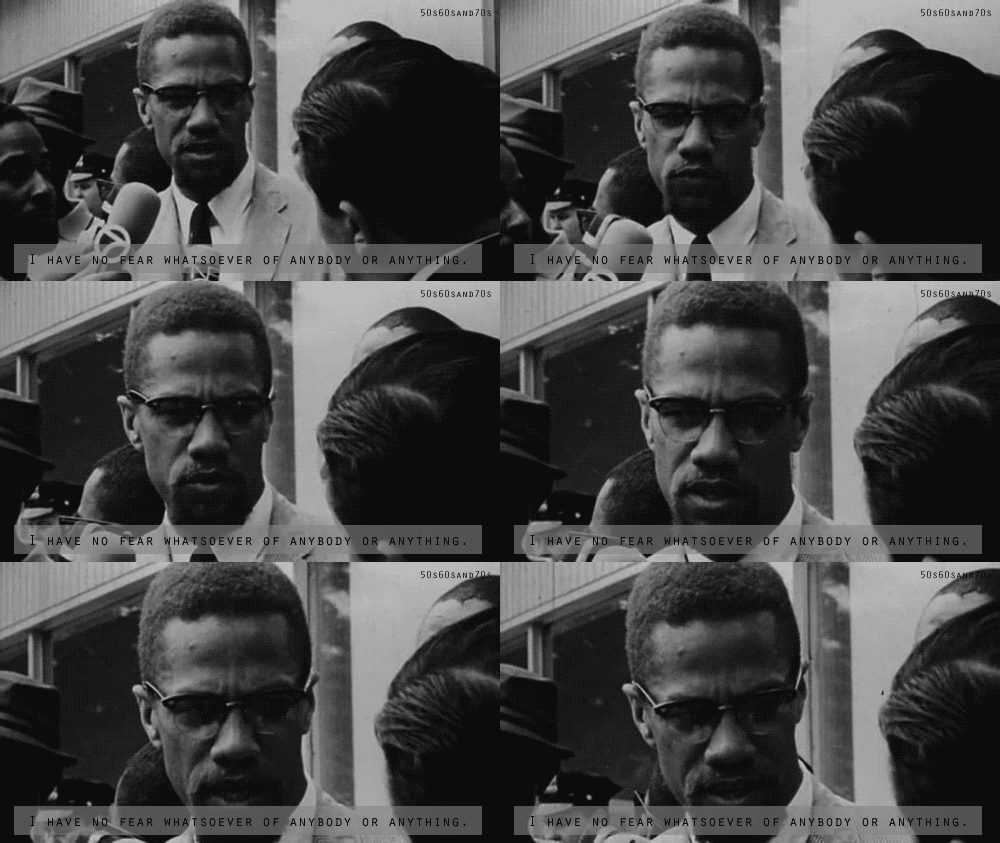
MalcolmXNoFear
Less than a year ago, I was in a heated conversation (we’ll call it that) where a few folks who disagreed on education policy brought their frustrations to full display. Unbeknownst to the folks who I agreed with, the conservative dissenters are encouraged to engage with, start sh*t, and frustrate folks like us. At one point, after one of the folks in “my” group decided she couldn’t take the direction of the conversation, a dissenter promptly called her a Nazi. Observers from afar thought that the argument between the two groups would have cut across color lines, but not necessarily. At the point where one dissenter called one of my people a Nazi, no one in the dissenter clique decided to call him in, even the people of color. In fact, they cheered the use of Nazi actively, flooding her mentions and getting favorites and retweets for engaging in kind.
It reminded me of two lessons: 1) not all my skinfolk are kinfolk and 2) sometimes, to many people, the side of the debate you’re on is stronger than the principle of social justice you supposedly espouse.
After I rebuked this dissenter for analogizing simple disagreement with outright fascism, I too found myself in a conundrum. For those who follow me on social media and beyond, they’ve seen my Education Policy's Roost (On Social Justice Warriors) | The Jose Vilson:

Sunday, May 29, 2016

2nd Banana - Most Popular Post This Week


2nd Banana - Most Popular Post This Week 


Big Education Ape: Teachers Still Haven’t Forgiven Michelle Rhee -- NYMag - http://go.shr.lc/1OW1Mt7


Big Education Ape: Turkey Links Texas Charter Schools to Dissident - WSJ - http://go.shr.lc/1OW1ZfV

Big Education Ape: What if... | A letter from the CEO of the Bill & Melinda Gates Foundation | Impatient Optimists - http://go.shr.lc/1qV6T6P

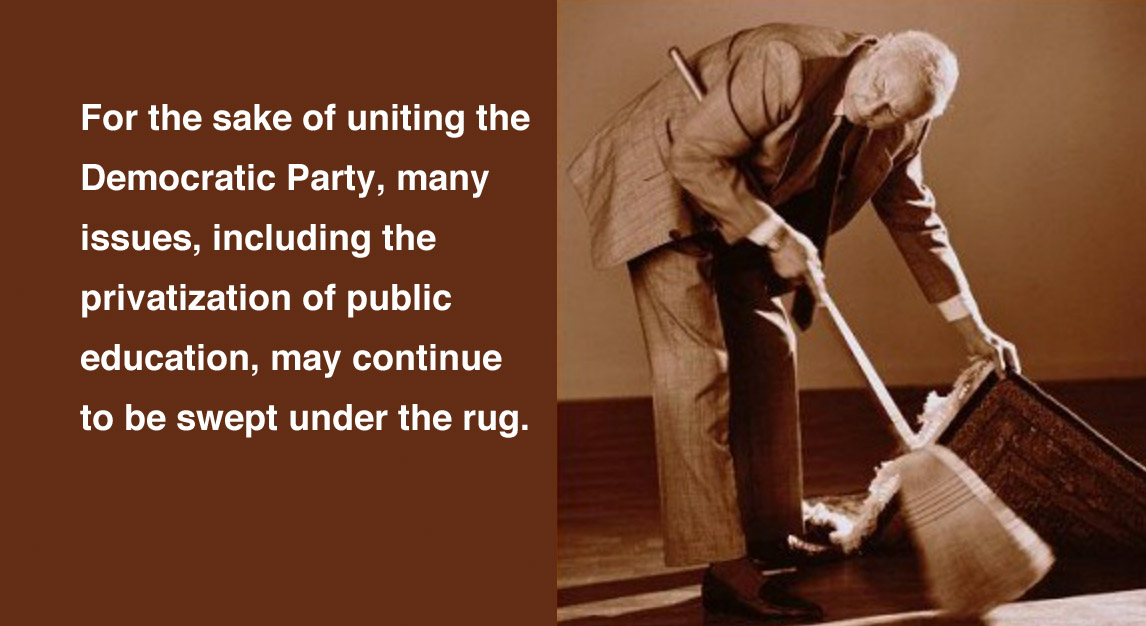
Big Education Ape: Will Democrats Sacrifice Public Education for the Sake of Party Unity? - Living in Dialogue - http://go.shr.lc/1OW26Iv

Big Education Ape: Reformers Now Attack Reformers with the Same Venom They Used on Teachers - http://go.shr.lc/27Y3eHh

Big Education Ape: Update: Gulen Harmony charter school network accused of bias and self-dealing Dallas Morning News - http://go.shr.lc/1qV85Hm


Big Education Ape: Getting Derailed Parent-Teacher Relationships Back on Track - http://go.shr.lc/1OW2Fls
building better teacher-parent relationships

Big Education Ape: Alice in PARCCland: Does ‘validity study’ really prove the Common Core test is valid? - The Washington Post - http://go.shr.lc/1sVZ6Yk

Big Education Ape: On negative effects of vouchers | Brookings Institution - http://go.shr.lc/1sVZg27

Big Education Ape: Edvoice pumps cash into Assembly campaign | News | Palo Alto Online | - http://go.shr.lc/1qV87PH


Editorial: Charter-school profiteers | The Salt Lake Tribune

Editorial: Charter-school profiteers | The Salt Lake Tribune:
Charter-school profiteers


A handful of private companies have banked more than $68 million from Utah taxpayers over the past three years. The money is delivered through no-bid contracts by people who don't work for government, but the companies are often connected to political officials.
An extensive examination of charter school spending by Salt Lake Tribune reporter Benjamin Wood shows several companies that exist only to contract with charter schools. While public schools have always contracted for some services, many charters go so far as to contract for their principals and teachers, providing undisclosed profits to the companies while shielding financial information from the public.
Under state law, the schools must be operated as non-profits, presumably to avoid people profiteering on public education. Charters that contract with for-profit companies for their largest expenses effectively circumvent that requirement. There is no way for Utahns to know how many of their education dollars are ending up as someone's salary or profits.
In the meantime, charters are slowly losing one of their most persuasive arguments: that they can educate students for less money than traditional public schools.
According to a report from the Utah Foundation released last month, Utah charters collect about 10 percent less per student than regular public schools, but they have cost advantages, too. They have fewer non-English speakers and economically-disadvantaged students. Add in the public schools' requirements to provide busing, to build inefficient rural schools and to provide such things as gang-prevention services, and the cost difference virtually disappears. Looking at test scores, charters track pretty closely to public schools on average.
In other words, there is no evidence the free-market capitalism allowed in Utah's charter school system is providing better results for students.
But it clearly is producing winners. One company that received more than $4 million last year is headed by the sister of the president of the state charter school board. Another company ($1 million from charters last year) is operated by a state legislator, and two others ($4.7 million and $4.5 million last year) are run by relatives of legislators. (Surprise! All three voted in favor of increasing charter school funding by $20 million last session.)
One of those relatives promised, "We keep it pretty separate."
How many charters operate this way? Hard to say, but it's not all of them. This isn't an argument for ending charter schools, Editorial: Charter-school profiteers | The Salt Lake Tribune:


Sabrina Joy Stevens - Does School Choice Help Close the Graduation Gap? | The Progressive

Does School Choice Help Close the Graduation Gap? | The Progressive:

Does School Choice Help Close the Graduation Gap?


Image by geralt
Over a decade of aggressive “school choice” policies for New York City high school students haven’t closed the gap in graduation rates between students from wealthy families and students living in poverty.
“The well-known link between a student’s neighborhood conditions and educational outcomes is as strong as ever,” said Sarah Burd-Sharps of Measure of America, which conducted the analysis.
For the past twelve years, New York City eighth graders have had no assigned high school. Instead of relying on established feeder patterns and neighborhood-based assignments, students enter into a city-wide ‘choice’ process, where they are placed by lottery (or by application, for the selective high schools) into one of up to twelve schools that interest them.
It’s all well and good for families to be able to choose a specific type of educational experience. But it's unclear why some policymakers and advocates believe that the simple act of being able to choose will somehow improve all schools—or help students overcome myriad disadvantages that have nothing to do with their schools.
Even if “choice” could make that difference, it's highly unlikely that the neediest students would get the most benefit. Parents who work one or more hourly-wage jobs will have less time to attend multiple open houses, set up interviews, and everything else helps people make the most informed choice.
There’s also the issue of fatigue—both in the selection process and in the day-to-day routine. Once again, parents who work multiple jobs, as well as students who have jobs or care for
- See more at: http://www.progressive.org/pss/does-school-choice-help-close-graduation-gap#sthash.dmDAmVwc.hodDSgoo.dpuf

Strategies for teaching the Common Core — no matter what you think about the standards - The Washington Post

Strategies for teaching the Common Core — no matter what you think about the standards - The Washington Post:

Strategies for teaching the Common Core — no matter what you think about the standards

ellcommoncore-1cw29sdfff-19u0v08
Many of the posts I publish about the Common Core are about the federally funded tests aligned to the standards. Here’s a different one, about a new book by Larry Ferlazzo and Katie Hull Sypnieski “to maximize whatever opportunities the Common Core might offer” to English Language Learners — and, for that matter, to all students. Ferlazzo and Sypnieski are veteran teachers who have written a new book about how to teach “to maximize whatever opportunities the Common Core might offer” to English Language Learners — and, for that matter, all students. Ferlazzo has taught English and social studies to English Language Learners and mainstream students at Luther Burbank High School in Sacramento, California, for years. He has written numerous books on education, writes a teacher advice blog for Education Week Teacher and has his own popular resource-sharing blog. Sypnieski has worked with English Language Learners at the secondary level for 20 years and has taught English and English Language Development at Luther Burbank High School for the last 13 years.
This is an excerpt from “Navigating The Common Core With English Language Learners,” by Ferlazzo and Sypnieski.

We don’t believe that a set of new standards is high on the list of our students’ needs.  However, since we live in the world as it is, and not the one we would like it to be, we felt a need to write about how to maximize whatever opportunities the Common Core might offer to our students.  In addition,  though we have concerns about how some are manipulating Social Emotional Learning, we felt that its positive aspects needed to be re-emphasized.
 Farmers and gardeners know you cannot make a plant grow…What you do is provide the conditions for growth.
 — Sir Ken Robinson
 This quotation illustrates the important role that Social Emotional Skills (also known as non-cognitive skills, along with many other labels) can play in students learning the academic skills listed in the Common Core Standards. It’s important to note that this notion is not one that is just coming out of our heads.  In fact, it’s being promoted by the originators of the Common Core Standards and education researchers.
The Council of Chief State School Officers (CCSSO), one of the author’s of the Common Core standards, says:
 Along with mastery and application of essential content as typically 
Strategies for teaching the Common Core — no matter what you think about the standards - The Washington Post:

CURMUDGUCATION: ICYMI: Goodbye, May!

CURMUDGUCATION: ICYMI: Goodbye, May!:
ICYMI: Goodbye, May!


It's that time of year, so I'm going to start with a non-education recommendation. If it's useful to you or someone you love, pass it on. If not, skip ahead to the education readings for the week.


My daughter has extensively researched and researched, looking for resources that are both eco-friendly and are made in the USA, and she recently gathered all her research about wedding-related stuff in one post. If you want to be a more responsible consumer, but can't find the time to look everything up, her blog is loaded with resources and links to help you.  

Charter-Choice-- A Closer Look

God bless Roxana Marachi, who has used scoopit to collect a ton of reading about charters and choice. I probably should have put this last, because it's a whole day's worth of reading all by itself.

Another Brick in the Data Wall

If you are not a regular Nancy Flanagan reader, you should fix that. Teacher in a Strange Land is a reliable source of sensible writing about education (don't be put off by the Education Week address).I love the opening of this one:

"To the man who only has a hammer, everything he encounters begins to look like a nail." (Abraham Maslow)
And to the man who has a computer, everything he encounters begins to look like data.

Alice in PARCCland: Does validity study really prove the Common Core is valid? 

Education Next trotted out a "validity study" from last fall, and William Mathis at the National Education Policy Center did a fine take down. I refer you to Valerie Strauss's coverage instead of the original NEPC post, because Strauss also has the response from the researchers.

Does School Choice Help Close the Graduation Gap"

Sabrina Joy Stevens addresses one of the big claims of choice fans. Yet another good piece of work from the Progressive Education Fellows (full disclosure-- I'm one of them, but it's an otherwise very reputable group).

Response to Chait

Perhaps you saw Jonathan Chait's piece this week in which he tried to argue that She Who Will Not Be Named, former education queen on DC, was actually a rousing success. Here the Daily Howler shows how full of it Chait is (with data, too).

Confronting the Parasite Economy
This piece is long, but it's the best thing I've read for explaining why an economy resting on minimum wage working poor people is no good for anyone-- and it does it without resorting to anything except cold, hard, self-interested economics. CURMUDGUCATION: ICYMI: Goodbye, May!:


HAL Wants To Pick Your Teacher
Are you responsible for hiring teachers in your district? Do you hate all the mess and bother of actually interviewing other carbon based life forms?Well, meet TeacherMatch. If  you are a teacher, TeacherMatch will help you find work, and if you are a hiring department, TeacherMatch can perform flat out magic through the power of Predictive Analytics. From the TeacherMatch blog...Previously, schoo
ICYMI: Goodbye, May!
It's that time of year, so I'm going to start with a non-education recommendation. If it's useful to you or someone you love, pass it on. If not, skip ahead to the education readings for the week.The 2016 Earth-Friendly and Made in America Wedding RegistryMy daughter has extensively researched and researched, looking for resources that are both eco-friendly and are made in the USA, and she recentl
3M Dance Party
Yesterday, views on this blog passed the three million mark.It's kind of amazing and definitely humbling. But mostly what it tells me is that the issues I vent about here are important to a lot of people. As I said a million hits ago, those hits don't mean I'm an important guy-- they mean I'm writing about important stuff.The fact that I have an audience is a testament to the connectedness of thos

YESTERDAY

FL: District Officials Lose Their Damned Minds
School district officials in Sarasota and Manatee counties have completely lost any sense of what they're supposed to be doing.There are areas of policy and practice in the education debates where reasonable people can reach different conclusions about what might be best. This is not one of those times. Some Florida school districts have simply and completely lost the thread.The issue is simple. I
ESSA: Regulatory Baloney
Legislators write and pass laws. But the laws they create are sometimes vague and sometimes contradictory, a weird quilt of intentions and tissue. So it falls to other parts of the government to turn laws into regulations. And that's where we are now with the Every Student Succeeds Act (the latest version of the Big Bunch O'Federal Education Laws, the sequel to No Child Left Behind).Many eyes (not
CURMUDGUCATION: ICYMI: Goodbye, May!:

New Orleans: How Exclusive Charter Schools Select Their Enrollments | Diane Ravitch's blog

New Orleans: How Exclusive Charter Schools Select Their Enrollments | Diane Ravitch's blog:

New Orleans: How Exclusive Charter Schools Select Their Enrollments


Danielle Dreilinger, a reporter in New Orleans, describes the mechanisms used by three high-performing charter schools in New Orleans to separate the wheat from the chaff and get the students they want.
These three charters have figured out how to remain high-performing.
For example,
Each deploys a unique set of requirements so complicated that parents have made spreadsheets to keep track of the steps, which, as per the schools’ websites and extensive conversations with staff, include some combination of:
Parent attendance at a meeting
A questionnaire filled out by the parent showing they understand the school’s curriculum
An application hand-delivered to the school during business hours
A portfolio of the student’s work
The child’s school attendance record
Scores from a single sitting of a standardized exam, with no retests allowed
Within these details are more details. Lusher applicants, for example, must submit a profile detailing the student’s experience and interests in New Orleans: How Exclusive Charter Schools Select Their Enrollments | Diane Ravitch's blog:

The Benefits of Dual-Language Immersion Education - The Atlantic

The Benefits of Dual-Language Immersion Education - The Atlantic:

The Benefits of Teaching in Two Languages

Bilingual education facilitates connections beyond the confines of a classroom.


Lea esta reportaje en español.

From New York to Utah, U.S. schools have seen a steady rise in bilingual education. Dual-language immersion programs first appeared in the U.S. in the 1960s to serve Spanish-speaking students in Florida. Since then, the demand—and controversy—surrounding these programs has been widespread, and they now address the needs of more than 5 million students who are English-language learners in the country’s public-school system.

Teresa Chávez has been a teacher for almost 20 years, and is currently the lead teacher for Little Canada Elementary's Dual Language Immersion program in Minneapolis, Minnesota. I spoke to Chávez about the implementation of the Spanish-language program and how bilingual education facilitates connections beyond the confines of a classroom. A lightly edited transcript of our conversation follows.

* * *
Valeria Pelet: How did you get into teaching?

Teresa Chávez: My first passion was poetry. When I was in college, I was also working as a teacher, but as a volunteer. After that, since I was trying to improve my Spanish and I was also clinging to the idea of studying the humanities, I decided to move to Costa Rica. I began to teach, and then I taught in Lima, in Peru, and then in Minneapolis. It was quite a long process to discover that I liked the field of teaching and education.
Pelet: Why do you think bilingual education is important?

Chávez: I believe that it’s important because we are more connected than before.There are many places in the world where people have to speak at the very least two languages. I think that it’s wonderful to learn how to express oneself in more than one language, to be able to travel, work, have friends … I believe that it’s important for children, for example, in the United States, because many families that speak English at home have not thought about the importance of [speaking Spanish]. The ones that speak Spanish at home sometimes want to The Benefits of Dual-Language Immersion Education - The Atlantic: