Latest News and Comment from Education

Tuesday, February 2, 2016

Scott Schmerelson, Steve Zimmer and George McKenna: Our children are not commodities | EdSource

Our children are not commodities | EdSource:

Our children are not commodities

In their first meeting of the new year, the Los Angeles Unified School District Board of Education set a strong new direction for the district by adopting the “Excellent Public Education for Every Student” resolution. The board’s unanimous approval of this action made it clear that the district would no longer be doing business as usual and would stand together to counter efforts to move more than 250,000 students from LAUSD public schools to privately operated charter schools.
The new initiative by the Los Angeles Unified board “affirms and publicly commits to making every possible effort to attract and retain students and parents by engaging with all stakeholders to develop a framework for excellent public schools, and improved outcomes, for every student….” The board directed the new superintendent to analyze how a proposal to reduce the number of students in district schools would impact the district’s ability to provide an outstanding public education for all students.
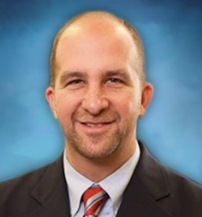
Steve Zimmer
Steve Zimmer
The unanimous adoption of the new initiative demonstrated the ability of the board members to work together on their shared mission. The resolution was crafted over several months, attracted significant public input and had the collaborative support of all board members.
Board members clearly stated their opposition to internal and external initiatives that view our communities as a public education marketplace and our children as commodities; it is a strong rebuttal to the Great Public Schools Now plan commissioned and funded by the Eli and Edythe Broad Foundation.
Over the past 20 years, the Los Angeles Unified board has clearly shown their support for charter schools. Los Angeles Unified has more charter schools than any other school district in the country. More than 236 privately operated charter schools have been approved and are in place. Board members have historically believed that charter schools provide options for parents and students and have looked favorably on this school model originally conceived to develop new approaches to education.
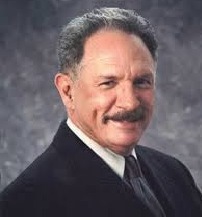
George McKenna
George McKenna
But charter proponents referring to our community as an educational marketplace and using the terms of battle, weapons and war when promoting the benefits of competition is inappropriate when referring to the universal right of every child to a public education. The constant banter of the claimed failure of the teachers, school site staff, and students who attend Los Angeles Unified neighborhood schools is demoralizing to those who have devoted their lives to benefit the children of our community. All board members acknowledge that our schools should be constantly and consistently improving, but all also recognize the multitude of stellar and successful schools and programs within the district.
In our role as policymakers, this resolution also provides a roadmap – a plan that reiterates that we will not be satisfied until Our children are not commodities | EdSource:

The Seventy Four, founded by controversial advocate, takes over LA School Report - LA Times

The Seventy Four, founded by controversial advocate, takes over LA School Report - LA Times:
The Seventy Four, founded by controversial advocate, takes over LA School Report


The Seventy Four, an organization whose co-founder is a controversial education advocate, has taken over LA School Report, a website that has focused on covering the Los Angeles Unified School District.
The name is a reference to 74 million students attending public schools in the United States. The site was founded by former CNN anchor Campbell Brown, who is part of a lawsuit seeking to overturn tenure protections for teachers in New York.
The group’s entry into Los Angeles has alarmed union leaders and some supporters of traditional public education. They say it could undermine trust in the reporting of education controversies.
The Seventy Four, based in New York City, describes itself as a nonpartisan news site with the mission of exposing an education system “in crisis…to challenge the status quo, expose corruption and inequality, and champion the heroes who bring positive change to our schools.”


The group's funders include a roster of charter school supporters, such as the Walton Family Foundation, the Doris & Donald Fisher Fund and Bloomberg Philanthropies.
Critics call the Seventy Four an advocacy effort on behalf of a pro-charter school, anti-union agenda. The organization, critics say, uses opinion pieces and reported stories to promote charter schools and to find fault with traditional campuses and teachers unions.
Not so, said co-founder and Chief Executive Romy Drucker.
“We try to highlight what’s working,” Drucker said. “Part of the mission also is highlighting what’s broken and needs to be fixed and highlighting the solutions.”
No type of effective school is favored; no type of ineffective school is spared, said Drucker, who had been a top New York City schools official under former Chancellor Joel Klein.
Klein is closely associated with what critics call “corporate reformers,” meaning they believe that school systems should be run more like successful businesses.
Charters are independently operated and exempt from some rules that govern traditional schools. Most are nonunion.
Charter school growth has become a flash point in Los Angeles, which has the most students enrolled in charters, about 101,000, of any school system in the nation.
A confidential document, obtained last year by The Times, laid out a plan, spearheaded by the Broad Foundation, to more than double the number of local charters, pulling in half the district enrollment over the next eight years. Potential funders included the Walton Family Foundation, which was set up by the heirs to the Walmart fortune.
That plan, were it to go forward, could push the nation’s second-largest school system into insolvency, according to an independent panel of experts.
“Is there a connection between the Seventy Four’s takeover of LA School Report and the Broad-Walmart plan to privatize LAUSD schools? Of course there is,” said Alex Caputo-Pearl, president of the local teachers union, United Teachers Los Angeles.
Broad is not listed as a funder on the Seventy Four's website.
“Campbell Brown is not about fair coverage," Caputo-Pearl said. "She is about ‘reform,’ which is often a code word for criticizing teachers and advocating that public schools get turned into charter corporations.”
Drucker, of the Seventy Four, said that its news stories are fair and fully reported and should not be confused with opinion pieces, including those by Brown.
LA School Report was launched three years ago during the run-up to school board elections. It was greeted with some skepticism because owner and founder Jamie Alter Lynton had been a large campaign contributor to a slate of candidates backed by corporate-style reform advocates.
She said she directed her editors to play no favorites.
“From the beginning there was a lot of hand-wringing about whether my personal views The Seventy Four, founded by controversial advocate, takes over LA School Report - LA Times:


CURMUDGUCATION: NPE: National Public Ed Report Card

CURMUDGUCATION: NPE: National Public Ed Report Card:

NPE: National Public Ed Report Card


Every reformy group in the country regularly issues "report cards" about how well states are pursuing one reformster policy or another. We have been long overdue for a report card for how well states are defending and supporting the public education system that is one of the pillars of democracy. Now that wait is over.

The Network for Public Education today releases its 50 State Report Card, providing a quick, clear, simple look at how the various states are doing when it comes to supporting public education.

NPE has developed the grade based on six criteria; the actual research and point breakdown were done with the assistance of Francesca Lopez, Ph. D. and a research team at the University of Arizona. And yes, NPE is aware of the irony of using letter grades, a rather odious tool of reformsters.

As a matter of principle, NPE does not believe in assigning a single letter grade for evaluation purposes. We are opposed to such simplistic methods when used, for example, to evaluate schools. In this case, our letter grades carry no stakes. No states will be rewarded or punished as a result of our judgment about their support or lack of support for public education.

States ended up with a GPA based on the six factors. The top state score was a 2.5 (Iowa, Nebraska, 
CURMUDGUCATION: NPE: National Public Ed Report Card:

Mike Klonsky's SmallTalk Blog: Clinton, Trump burned in Iowa. CTU says no to Rahm's contract offer

Mike Klonsky's SmallTalk Blog: Clinton, Trump burned in Iowa. CTU says no to Rahm's contract offer:

Clinton, Trump burned in Iowa. CTU says no to Rahm's contract offer

The voters sent a clear message that income inequality weighed on their minds, with more than one in four Democratic voters saying the issue was the most important facing the nation, according to surveys of voters leaving the polls. -- New York Times
Impressive win for Bernie... He's finished dead-even in Iowa. Split the delegates. 6 coin flips was Clinton's margin of victory. Did somebody check the coin?


A SmallTalk Salute goes out to Bernie's campaign field workers and organizers, many who drove out from Chicago, who out-organized Clinton's team. I don't know this, but I'm guessing there were lots of teachers doing Bernie's door-knocking and caucus debating despite premature Clinton endorsements by AFT and NEA.

Yesterday marked significant losses for Wall Street-backed Clinton and Trump. Imagine if there were no Citizens United or SuperPACs. Sanders would have Mike Klonsky's SmallTalk Blog: Clinton, Trump burned in Iowa. CTU says no to Rahm's contract offer:


Four Billion More for Computers While School Buildings Rot

Four Billion More for Computers While School Buildings Rot:

Four Billion More for Computers While School Buildings Rot

Computer Lab,Neatly placed rows of computer.
President Obama is calling for four billion more in funding for computers,while the public school infrastructure in Detroit and around the country remain in terrible condition. The administration also wants an additional $100 million to fund a competitive grant program to reach students who are underrepresented in computer science classes.
The initiative includes partnerships with Apple, the Cartoon Network, Microsoft and others who will push for more computer science, which most likely means more Competency-Based Education.
Yet, our schools are crumbling and technology doesn’t seem to be working well. A lot of money, including tax dollars, has also been wasted on computers.
I’d like to hear about an initiative to improve public school facilities and institute more oversight on the computers already in place.
When the President first took office, he seemed to understand that school buildings needed help. He had visited Ty’sheoma Bethea’s rundown school in South Carolina’s Corridor of Shame—even invited her to his first State of the Union Four Billion More for Computers While School Buildings Rot

How Much Money is the Federal Government ‘Giving’ Your State for Federal Control of Education? You Might Be Surprised. – Missouri Education Watchdog

How Much Money is the Federal Government ‘Giving’ Your State for Federal Control of Education? You Might Be Surprised. – Missouri Education Watchdog:

How Much Money is the Federal Government ‘Giving’ Your State for Federal Control of Education? You Might Be Surprised.


Questions were asked at a recent conference of education ‘de-form’ activists (those researchers not receiving Bill Gates et al funding):
  • What percentage of your state’s total education revenue comes from federal sources?
  • Should the federal government have power over state agencies and local districts with such small contributions?
Richard Innes of The Bluegrass Institute was intrigued with this question and developed a table and ranked each state’s federal percentage contribution to that state’s total revenue.  From http://www.bipps.org/education-feeding-at-the-federal-trough/:
As you can see, Kentucky isn’t the largest “wallower” in federal education dollars, but we do grab the cash – as a proportion of our total spending – at well above average rates. A bit over 12 percent of all of Kentucky’s education revenue in the federal government’s Fiscal Year 2013 period came from federal sources.
Of course, this federal money is far from “free.” In exchange for the dollars, Kentucky has been forced to agree to all sorts of federal demands. Some have been OK, others are terrible. But, all result in a dilution of state and local control of education without any really dramatic evidence that the feds know better than we do.
Furthermore, this is being driven by a relatively small total contribution from the federal government in comparison to a rather massive amount of state and local education dollars. (MEW bolded)
Folks in other states are starting to ask if the federal money is really worth the hassle. Even though Kentucky gets a bit more than its fair share from the feds, maybe Kentuckians also need to start asking if the real benefits from the federal cash outweigh all the costs and liabilities that this money brings to our state. Should we allow the feds so much control when they only contribute a bit more than one in ten dollars that Kentucky spends on education?
You can find your state to determine the percentage the Federal Government contributes aka redistributes to states to implement the Federal How Much Money is the Federal Government ‘Giving’ Your State for Federal Control of Education? You Might Be Surprised. – Missouri Education Watchdog:

The Greater Good Campaign - WASHINGTON’S PUBLIC EDUCATION IS AT A CROSSROADS

The Greater Good Campaign:

F IS FOR FUNDING

F_85x85
Washington state is failing at funding basic education. Our state constitution says “It is the paramount duty of the state to make ample provision for the education of all children residing within its borders” – yet the Supreme Court ruled that Washington has completely failed in this duty by consistently falling short of funding the actual cost of the basic education program.Learn what this means for public school students and what you can do about it.

44% OF WASHINGTON STUDENTS ARE FAILING MATH

Failing_Math_85x85
Only 56 percent of Washington 8th graders passed the Math Measurement of Student Progress in 2014. Washington’s education priorities don’t add up to success for our students or STEM-focused local jobs.

SEATTLE SCHOOLS HAVE ONE OF NATION’S LARGEST EQUITY GAPS

A new study says Seattle Public Schools have some of the widest racial and income-based opportunity gaps in the country, second only to Miami among major cities.

LAWMAKERS LIKELY WON’T FIGURE OUT EDUCATION FUNDING THIS YEAR

lawmakers_85x85
Legislative leaders said it’s a priority, but they still haven’t resolved where to find the money to reform the way the state pays for education, and likely won’t get there until the 2017 Legislature, The Seattle Times reports.

WHAT’S TAKING STATE EDUCATION FUNDING SO LONG?

takingsolong_85x85
The Seattle Times editorial board says Washington state legislative leaders are taking too long to study the state’s education crisis — it’s time to find a solution. Legislators on both sides of the aisle now say they need another year, another task force and pricey consultants to assess funding in its 295 school districts — five months after being fined $100,000-per-day by the state Supreme Court for repeatedly failing to present a plan to fix the funding mess, as required by its 2012 McCleary ruling.


DPS EM Earley to announce today he’ll step down

DPS EM Earley to announce today he’ll step down:

DPS EM Earley to announce today he’ll step down


The increasingly controversial emergency manager of Detroit Public Schools is expected today to make the announcement he is stepping down from his post.
Darnell Earley will be leaving the district Feb. 29, according to sources in Lansing.
He has served as the manager of Detroit schools since January 2015. His term, under the law, is up in June, but his position at the district has become a major impediment to Gov. Rick Snyder’s plans to financial stabilize the troubled school district. That legislation has been introduced and is awaiting a hearing on Thursday.
Earley has come under intense criticism in recent weeks for his tenure as emergency manager of Flint when the city moved from the Detroit water system to the Flint River.
In addition, teacher sickouts this year have raised awareness of potentially unsafe and and unsanitary conditions at many buildings within the district, which is on the brink of insolvency.
Until now, both Snyder and Earley had maintained he would stay in office through the end of the term. But there has been growing pushback about how the Flint water crisis was handled.DPS EM Earley to announce today he’ll step down:


CHARLIE MITCHELL: The issue is whether charter schools can do it better - Daily Journal

CHARLIE MITCHELL: The issue is whether charter schools can do it better - Daily Journal:

CHARLIE MITCHELL: The issue is whether charter schools can do it better


The premise of an offer to operate a charter school is, “Hey, we can do it better than you.”
In last week’s State of the State speech, Gov. Phil Bryant repeated a call he also included when being inaugurated for his second term. He invited parents to “imagine a Mississippi where schools competed for students.”
Indeed, a baseline for all things Republican and conservative, which Bryant certainly is, is that competition is the holy grail. It makes all things better.
That may not be far from true.
A problem, though, is that when it comes to a market-based approach to education, the experience across America during the era of charters and vouchers and choice has been mixed, at best.
The image of a charter school is a group of dedicated parents banding together. They are determined to have nothing but the best K-12 experience for their children, so they become a board of directors. Infused with public money, they hire high-energy teachers to work in state-of-the-art classrooms. Friendly, open, sunshine and rainbows. Clean and pristine. Little Bobby and Little Sue master calculus in the fourth grade and love doing so. Little Mary writes a book of poetry while in the eighth.
An alternate image – and perhaps more prevalent – is Education Inc. taking the reins.
As with so many other government functions that have been handed over to the private sector, Education Inc. is willing to do the job, but its priority is the bucks.
It’s the same conflict seen in many settings. Watch a medical show on TV. The tension point will CHARLIE MITCHELL: The issue is whether charter schools can do it better - Daily Journal:

A new paradigm to support teachers | TheHill

A new paradigm to support teachers | TheHill:
A new paradigm to support teachers


 Regardless of how you word it, most states have now undergone the process of adopting new education standards that more accurately reflect what students need to know and be able to do in the 21st century economy. While the politics of the Common Core State Standards (CCSS) have sucked most of the air out of the room, school and district practitioners know that politics aside, CCSS has created the opportunity to focus on the most important question: what do students need to know and be able to do?

As a former teacher, central office leader and superintendent, I believe that everything in a school system needs to be organized around teaching and learning, and equity. Both require highly trained professional educators and a cohesive system that creates the right conditions for success. TheTeachStrong campaign highlights the key principles of ensuring that teachers today are prepared to meet the needs of tomorrow’s students.
The TeachStrong principles reflect some key ideas about how to elevate the profession, such as paying teachers more. In PDK International’s 2015 poll of the U.S. public’s attitudes towards public education, 58 percent of respondents overall and 66 percent of parents believe that teacher salaries are too low. Teachers make 60 percent of the salaries of other college-educated professionals.
Another critical piece of the TeachStrong campaign is improving teacher preparation; again, something that the American public supports. In fact, nearly three-quarters of respondents to the PDK International poll want to see prospective teachers pass an entry exam similar to that of doctors and lawyers.
Yet, better preparing teachers will not be enough alone to improve opportunities and outcomes for children. We need to have a commensurate focus on the various elements of school systems that support great teaching and learning. I believe that school district leaders need to design such A new paradigm to support teachers | TheHill:

Ed Dept. Gives States Ways to Cut Standardized Testing - ABC News

Ed Dept. Gives States Ways to Cut Standardized Testing - ABC News:

Ed Dept. Gives States Ways to Cut Standardized Testing


The Obama administration is offering states and local school districts a lesson plan of sorts to cut the amount of time that students spend on those fill-in-the-bubble and other standardized tests.
The Education Department released guidance Tuesday to states and local school districts outlining different ways they can use existing federal money to reduce testing in the nation's public schools. It follows a call by President Barack Obama last October to cap standardized testing and complaints by teachers, parents and others that that too many hours are spent "teaching to the test."
In a letter to state school officials, the department details how certain federal money can be used to cut tests. States and districts, for example, could use federal education dollars intended for the development of state assessments to instead conduct audits of their tests to see if they have redundant assessments or low-quality ones that could be eliminated.
States also could use federal dollars to develop strategies to improve the quality of current tests or decrease the time students spend taking them, the letter said.
"High-quality assessments give parents, educators and students useful information about whether students are developing the critical thinking and problem solving skills they need," Acting Education Secretary John King Jr. said. "But there has to be a balance, and despite good intentions, there are too many places around the country where the balance still isn't quite right."
The goal isn't to do away with standardized tests. Obama, in October, said smart, strategic tests are needed to measure students' learning and performance in school. But, he said, "we're going to work with states, school districts, teachers and parents to make sure that we're not obsessing about testing."
Students spend about 20 to 25 hours a school year taking standardized tests, according to a study last year of the nation's 66 largest school districts by the Council of the Great City Schools.
In all, between pre-K and 12th grade, students take about 112 standardized exams. The council said the testing amounts to 2.3 percent of classroom time for the average 8th grader. Obama has encouraged states to cap testing at 2 percent of classroom time.
The 2002 No Child Left Behind education law ushered in a new era of testing in public schools. It required annual testing in reading and math in grades three to eight, and once in high school.
Those tests would still be required under a new education law signed by Obama late last year, but states now have more flexibility on how best to assess teachers, schools and students — with measures that consider other factors beyond the test scores.
The Education Department highlighted two areas where standardized testing has been eased in schools.
In Tulsa, Oklahoma, the district has dramatically cut the overall time spent on district-mandated testing by reducing the frequency of some tests, eliminating one test entirely, and removing district requirements to implement others. Third-graders, for example, had been spending about 1,240 minutes on district-required tests and now will spend 660 minutes on such tests, the department said. Tennessee also is in the process of streamlining some of its state-mandated tests.
The new guidance from the department was released via social media, on YouTube at:https://www.youtube.com/watch?v=IYetlSQEBxw .
 Ed Dept. Gives States Ways to Cut Standardized Testing - ABC News:

Finally, California can spend millions in federal dollars on something other than ineffective tutors - LA Times

Finally, California can spend millions in federal dollars on something other than ineffective tutors - LA Times:

Finally, California can spend millions in federal dollars on something other than ineffective tutors


 arting next year, California and seven other states will have more control over how they spend the millions of federal dollars tied to a questionable tutoring program.

Under the George W. Bush administration's No Child Left Behind law, schools that serve high concentrations of poor students and were rated as underperforming for several years were required to set aside money for tutoring, known as “supplemental education services.”
Between 2011 and 2014, California spent $507 million on these programs. But the California Department of Education routinely received complaints alleging that the tutoring companies provided little feedback on students’ academic progress, fabricated invoices and lied about enrollment and attendance information.
"We had very few criteria we could use to deny people who applied to do tutoring," recalled California Board of Education President Mike Kirst. "We couldn’t do any evaluation of their effectiveness."
States now will have more leeway in how to use that tutoring money, according to guidance the federal government sent last week.
The windfall in California will come out to about $233 million for the 2016-2017 school year — this year, the state spent $222 million on the tutoring programs, and $11 million on transportation to get students Finally, California can spend millions in federal dollars on something other than ineffective tutors - LA Times:
Big Education Ape: Flexibility in Spending $233 Million for Students - Year 2016 (CA Dept of Education) http://bit.ly/1TydjUF

University of California: campus monitoring concerns raised | Times Higher Education (THE)

University of California: campus monitoring concerns raised | Times Higher Education (THE):

University of California: campus monitoring concerns raised

New system that has ability to monitor emails and use of computer networks on campus raises eyebrows

“Secret monitoring is ongoing.”
Those ominous words captured the attention of many faculty members at the University of California, Berkeley's College of Natural Resources when they received an email message from a colleague telling them that a new system to monitor computer networks had been secretly installed on all University of California campuses months ago, without letting any but a few people know about it.
“The intrusive device is capable of capturing and analyzing all network traffic to and from the Berkeley campus, and has enough local storage to save over 30 days of *all* this data ('full packet capture'). This can be presumed to include your email, all the websites you visit, all the data you receive from off campus or data you send off campus,” said the email from Ethan Ligon, associate professor of agricultural and resource economics. He is one of six members of the Academic Senate-Administration Joint Committee on Campus Information Technology.
Ligon went on to say that UC system officials asked the members of the committee to keep this information to themselves. But, Ligon added, he and other tenured faculty members decided that “continued silence on our part would make us complicit in what we view as a serious violation of shared governance and a serious threat to the academic freedoms that the Berkeley campus has long cherished”.
The professor provided a copy of his email to Inside Higher Ed after The San Francisco Chroniclereported on the controversy over the new monitoring.
The university system is defending the new monitoring as necessary, and says that it is not routinely reviewing anyone's email. While some faculty leaders may yet be convinced about the need for the system, many are speaking out against the secretive way that it was deployed without going through standard faculty committees that in the past have had the chance to be briefed on technology security measures.
Rachael Nava, executive vice-president of the UC system, sent a letter to faculty leaders in January after some expressed concern about the new monitoring system.
Her letter does not provide many details on the new security system, but said that the changes were prompted by “a serious cyber attack” against the University of California, Los Angeles that involved the records of up to 4.5 million patients who used UCLA medical systems. After UCLA informed those patients, 17 lawsuits – all still pending – were filed against the university, Nava's letter said. She said that those lawsuits limited what the university could say about security at UCLA and elsewhere in the system.
But Nava noted that “a recent report from Verizon described educational institutions as experiencing ‘near-pervasive infections across the majority of underlying organizations’, and observed that educational institutions have, on average, more than twice the number of malware attacks than the financial and retail sectors combined”.
The letter went on to say that the university is working to improve computer security, is collaborating with faculty committees on how to do so and respects faculty members' privacy, but the vulnerability of university networks to cyberattacks is itself a danger to privacy. "Privacy perishes in the absence of security," she wrote.
The university's Electronic Communications Policy says that while it “establishes an expectation University of California: campus monitoring concerns raised | Times Higher Education (THE):


Monday, February 1, 2016

Flexibility in Spending $233 Million for Students - Year 2016 (CA Dept of Education)

Flexibility in Spending $233 Million for Students - Year 2016 (CA Dept of Education):

Federal Government Allows California Districts Flexibility in Spending About $233 Million to Help Students


 SACRAMENTO—State Superintendent of Public Instruction Tom Torlakson announced today that the federal government has granted California flexibility on rules regarding Supplemental Educational Services (SES) for the 2016–17 school year, the last year those rules would have been in effect.

SES funds are used to provide tutoring or other academic instruction outside the regular school day for academically deficient students at certain Title I schools, which have high numbers and high percentages of low-income students. Programs are often away from school grounds and require travel.
The decision, contained in a letter from the U.S. Department of Education last week, allows California school districts to have the flexibility to make their own decisions about how to spend an estimated $233 million in SES and transportation funds for public school choice. The estimate is based on the amount of funding allocated by California districts this year: $222 million for SES and $11 million for transportation.
Eight large California districts had already received flexibility on SES funds from the federal government.
"This decision is a big win for our most vulnerable students. It will improve learning and teaching by allowing districts to more easily set up tutoring and academic intervention programs that are more effective and more accessible," said Torlakson. "It recognizes that a one-size-fits-all approach doesn't work. Districts know best how to serve their own students."
Torlakson also said that the SES rules set up by the federal government under NCLB "tied the hands" of California and its districts and set up a system dominated by private providers that led to high per-pupil costs and little evidence of academic improvement. In the three school years, 2011–14, California spent about $507 million combined on SES.
Under the federal system, providers—certified by the California Department of Education—marketed their services to parents. Districts then had to contract with chosen providers.
The California Department of Education carries out its role in approving providers vigorously but has received numerous complaints from parents, educators, and provider employees alleging questionable marketing practices; failure to deliver services, and falsifying enrollment, attendance, and invoice documents. Investigating complaints and terminating providers often took months—and sometimes years.
The SES program is not contained in the new federal Every Student Succeeds Act (ESSA), which follows California's lead in emphasizing local decision-making and allowing accountability systems that look at multiple measures of success rather than relying so heavily on test scores.
But until this federal guidance, states that had not been granted waivers by the federal government had to adhere to the SES rules for the 2016–17 school year.
Torlakson thanked the U.S. Department of Education for providing this guidance and said he looks forward to working with the federal government on implementing ESSA. "We are very appreciative of the U.S. Department of Education's efforts to support some of California's most vulnerable students," he said.
The U.S. Department of Education is going to require California to have a one-year transition plan. Details are not yet known, but the plan will give districts flexibility as long as they spend the money to improve academic performance of academically deficient students in designated Title I schools.
With this new flexibility, districts can design their own tutoring or expanded learning programs on their own school sites, making them more accessible to more students. It will also allow teachers and administrators to participate, facilitate, and monitor the programs. .
California was just one of eight states that did not have flexibility in spending SES funds. Last year, California's request for flexibility was turned down by the U.S. Department of Education.
# # # #
Tom Torlakson — State Superintendent of Public Instruction
Communications Division, Room 5206, 916-319-0818, Fax 916-319-0100
Last Reviewed: Monday, February 1, 2016

Big Education Ape: CA schools freed from costly after-school tutoring mandate | 89.3 KPCC http://bit.ly/1SoQ1S8