Latest News and Comment from Education

Sunday, January 31, 2016

My Criteria for a Model School by Mark Naison | Poetic Justice

My Criteria for a Model School by Mark Naison | Poetic Justice:

My Criteria for a Model School by Mark Naison

reach.final_
1. Children are loved and walk around the school with smiles on their faces.
2. Teachers are respected and stay in their jobs for a long time.
3. Parents are welcome in the school and are made to feel an integral part of the culture of the school.
4. The culture and history of the community the school is located is honored in displays and in what is taught in classes.
5. Arts, physical education, recess and sports are NEVER sacrificed for higher test scores.
6. ELL and Special Needs students are treated with
My Criteria for a Model School by Mark Naison | Poetic Justice:

Education reform billionaire Paul Allen's Yacht destroys vital coral reef in Cayman Islands - Wait What?

Education reform billionaire Paul Allen's Yacht destroys vital coral reef in Cayman Islands - Wait What?:
Education reform billionaire Paul Allen’s Yacht destroys vital coral reef in Cayman Islands


 Billionaire, Microsoft founder, college drop-out and charter school champion Paul Allen’s yacht, the MV Tatoosh, severely damaged 14,000 square feet of coral reef in the Cayman Island’s Coral Replenishment Zone earlier this month.  Local officials have reported that, “about 80% of the reef, situated in a protected area, was destroyed by the ship’s chain.”

A spokesman for Allen initially claimed that published reports were exaggerated and that it was the Cayman Islands’ harbor master’s fault for mooring the boat in that location.  Now, faced with a possible $600,000 fine, Allen has apparently dispatched a team to help deal with the damage his yacht did to the coral reef.
Paul Allen, who is worth $18 Billion, sits at the #27 spot on Forbes’ list of American billionaires and #51 on list of all the billionaires in the world.  Allen, a childhood friend of Bill Gates, drop-out from Washington State University and formed Microsoft with Gates after Gates dropped out of Harvard.
In the small world department, Donald Trump purchased Paul Allen’s Boeing 757-200 in 2011.  Now called “Trump Force One,” the plane serves as the visual backdrop for many of Trump’s photo ops.  The plane, retrofitted toTrump’s demands includes, “A master bath with 24-karat gold fixtures… In fact, virtually every fixture in the plane is 24-karat gold plated! Even the seat belts!”
But back to Paul Allen…
Widely recognized for his philanthropic generosity of conservation projects and programs to improve health care and educational opportunities for girls in the 3rd world, Allen won acclaim in December 2013 when he sold his private island in Washington State and Education reform billionaire Paul Allen's Yacht destroys vital coral reef in Cayman Islands - Wait What?:

CURMUDGUCATION: Detroit: Snitch or Be Fired

CURMUDGUCATION: Detroit: Snitch or Be Fired:
Detroit: Snitch or Be Fired


Detroit Public Schools Emergency Manager Darnell Earley (already famous as the emergency manager who poisoned the Flint water supply) has a problem on his hands.

Well, actually, he has several problems, including crumbling, disgusting, unsafe schools. That's not the problem he's concerned about-- he's concerned about the teacher sick-outs. Michigan teachers are not legally permitted to strike-- but they can call in sick. And like any manager whose people are desperately going to great lengths to let him know there's a problem, Earley has sat down with them to talk and try to get to the root of the issue so that the school system can better meet the needs of the students and community. Ha! Just kidding. Earley has tried to cudgel the teachers back into line.

He's tried a court injunction against the union. Twice. The court has correctly noted that there's no evidence that the union is behind the sick-outs.

So last week, teachers reportedly became aware that there was a new policy document on the DPS website.

You can see the document here.

The first sections are old news. Employees may not strike. Supervisors may not encourage a strike.

Then we get to the snitching portion.

"Each and every employee" who becomes aware of any plan for a strike or work stoppage must 
CURMUDGUCATION: Detroit: Snitch or Be Fired:


ICYMI: Browsing the edu-info


Here's just a bit of what's happening out there. As always, I highly recommend that you look down the right-hand sidebar, which is probably the best part of this blog!

Star Wars and Education Reform

Yes, Andy Smarick is part of the Bellwether-Fordham axis of reforminess. But he has a history of carefully considering the implications of ed reform and the unrestrained impulse to just throw out everything old. This quick take raises some useful questions. Also, Star Wars.

Common Core Can't sped Up Child Development


From last summer, this piece lays out the problem with the Core versus the development of small children.

The Blasphemy of School Vouchers

It's voucher-pushing time in Tennessee again. A perspective from a parent whose child attends one of those "failing" schools, and who does his homework on the larger issues.

The School Choice We Have vs The School Choice We Want

A good look at the joyous PR of Choice Week held up against the backdrop of Detroit, courtesy of edu-journalist Jeff Bryant

Have You Heard

Jennifer Berkshire (Edushyster) has entered the world of podcasting, and the world of podcasting is better for it.

Higher Education Is More Than Workforce Development 

Tom Eblen gives a brief history of higher education in Kentucky and looks at how the new governor is poised to screw it up.

New Mexico to Change its Teacher Evaluation System, But Not Really | VAMboozled!

New Mexico to Change its Teacher Evaluation System, But Not Really | VAMboozled!:
New Mexico to Change its Teacher Evaluation System, But Not Really


As you all likely recall, the American Federation of Teachers (AFT), joined by the Albuquerque Teachers Federation (ATF), last year, filed a “Lawsuit in New Mexico Challenging [the] State’s Teacher Evaluation System.” In December 2015, state District Judge David K. Thomson granted a preliminary injunction preventing consequences from being attached to the state’s teacher evaluation data. More specifically, Judge Thomson ruled that the state can proceed with “developing” and “improving” its teacher evaluation system, but the state is not to make any consequential decisions about New Mexico’s teachers using the data the state collects until the state (and/or others external to the state) can evidence to the court that the system is reliable, valid, fair, uniform, and the like (see prior post on this ruling here).
Late Friday afternoon, New Mexico’s Public Education Department (PED) announced that they are accordingly changing their NMTEACH teacher evaluation system, and they will be issuing new regulations. Their primary goal is as follows: To (1) “Address major liabilities resulting from litigation” as these liabilities specifically pertain to the former NMTEACH system’s (a) Uniformity, (b) Transparency, and (c) Clarity. On the surface level, this is gratifying to the extent that the state is attempting to, at least theoretically, please the court. But we, and especially those in New Mexico, might refrain from celebrating too soon…given when one reads the PED announcement here, one will see this is yet another example of the state’s futile attempts to keep with a very top-down teacher evaluation system. Note, however, that a uniform teacher evaluation system is also required under state law, although the governor has the right to change state statute should those at the state (including the governor, state superintendent, and PED) decide New Mexico to Change its Teacher Evaluation System, But Not Really | VAMboozled!:


*Will Donald Trump Deport Me?* And Other Questions from My Nine-Year-Old Students | EduShyster

*Will Donald Trump Deport Me?* And Other Questions from My Nine-Year-Old Students | EduShyster:

*Will Donald Trump Deport Me?* And Other Questions from My Nine-Year-Old Students

A student teacher reflects on what her fourth grade students are learning from Donald Trump…

Trump


By Mary Sypek

 *Ms. Sypek, what do you think of Donald Trump?* Karim asks. I quickly scramble around in my mind, trying to think of an answer that’s both diplomatic and clear. *I don’t really like Donald Trump,* is what I decide to say, to which he promptly responds, *I don’t like Donald Trump either.* I exhale, hoping I have managed to escape the topic of Trump without too much of a hassle. I am wrong.

It’s literacy time in Ms. Smith’s fourth grade classroom. Students are working wih partners and in small groups to read nonfiction books about the US government, and I am working with four struggling readers in our classroom. I am a student teacher at an urban public school in one of the most diverse cities in Massachusetts. In our classroom of 26, we represent 22 countries.
Our short nonfiction piece is from a book called Meet the United States Democracy, and *Will Donald Trump Deport Me?* And Other Questions from My Nine-Year-Old Students | EduShyster:

Lois Weiner: Will Friedrichs derail teacher unions? | New Politics

Will Friedrichs derail teacher unions? | New Politics:

Will Friedrichs derail teacher unions?

Image

Much has been written about the harm the Supreme Court will wreak on US labor if it overturns the right of public sector unions to charge nonmembers a fee equal to the cost of the union’s expenses in representing them. Pundits on the left and the right have predicted a cataclysm. Will it “decimate” labor? Is it likely a “killing field for unions.” Ironically, Supreme Court Justice Scalia (as David Moberg noted) is one of the few people who has identified how unions are actually weakened by representing “free riders,” workers who haven’t been persuaded that they should join the union.  It’s significant that Friedrichs targets the California Teachers Association because the case continues the intense teacher and teacher-union bashing that has characterized political rhetoric and policy about education reform in California, across the US and globally, from Democrats and Republicans. The Right has demonized teachers unions because they can be formidable opponents. Teachers and their unions are the best organized, most stable opponents of policies privatizing public education.  As was evident from the 2012 strike of the Chicago Teachers Union, teachers unions that adopt a “social justice” orientation and are committed to building the union at the workplace (school site) can challenge the political status quo in ways other unions have not been able to do for many years. 
         However, despite - and because of - the ferocity of the attacks on teachers’ wages, benefits and professional autonomy, teacher unionism is being reborn. Activist teachers are growing reform caucuses committed to transforming their unions in almost every major US city. From Philadelphia to Seattle, Boston to San Francisco, Massachusetts to Los Angeles, a new generation of teacher union activists is taking on - and down - the old guard.
         The reformers’ contestation is a serious challenge to the current union leaders, who must balance their self-conception as power brokers, nipping at the edges of the reforms pushed for public education (more privatization; standardized testing used to control what is taught and how; loss of due process protections for teachers), with members’ increasing militancy. Increasing numbers of teachers don’t want a “seat at the table” because they see their jobs threatened, schools closed, kids hurt by seemingly Will Friedrichs derail teacher unions? | New Politics:


This Week in Education Organizing - Jan. 29, 2016 | Alliance to Reclaim Our Schools

This Week in Education Organizing - Jan. 29, 2016 | Alliance to Reclaim Our Schools:

This Week in Education Organizing - Jan. 29, 2016


 The Alliance to Reclaim Our Schools Newsletter

  January 29, 2016
Welcome to our January 29 newsletter! As always, share the latest stories from your city or state with us on Twitter and Facebook. Don't forget to tell your friends and colleagues to sign up for our newsletterhere.

Milwaukee Walk In
More than 100 schools in Milwaukee will
join the national walk-ins on Feb. 17!
Picture via @NoMPSTakeover.
NATIONWIDE WALK-INS ON FEB. 17
Organizers in 30 cities are gearing up for the first-ever nationally coordinated Walk-Ins for the Schools All Our Children Deserve. On February 17, parents, teachers and students across the country will participate in "walk-ins" in more than 800 schools!
Want to get your school or district involved? The Alliance to Reclaim Our Schools has developed a toolkit of materials to support walk-in organizers, including posters and a shareable social media graphic. For some inspiration, check out how United Teachers Los Angeles is promoting their walk-in event here. Also, our friends in Milwaukee have been sharing some school-specific sign up forms and promotional pictures like the one above over social media.
AROS will be hosting a webinar on February 4 focused on social media and messaging tactics. If you’re interested in attending the webinar, please email Ldingerson@gmail.com.
We'll be using #ReclaimOurSchools to share updates and pictures on Twitter and Facebook - so stay tuned and we hope to see you on Feb. 17!
TAKING ON TAKEOVERS
Education Week published a powerful op-ed this week highlighting the failure of state takeovers as a reform option for struggling schools. In the column, Kent McGuire and Katherine Dunn of the Southern Education Foundation (SEF) and Kate Shaw and Adam Schott of Research for Action tease out school funding inequities as one of the major forces undermining public schools. Both a recent report from SEF and the Annenberg Institute for School Reform as well as another report by the Alliance to Reclaim Our Schools have shown that state take-overs aren't an effective reform strategy. Instead, the op-ed authors argue for fixing funding inequities and pursuing the community school model, which provides wraparound academic, social and health supports for students and their families. Read the op-ed here.
THE STATE OF NEW YORK SCHOOLS
New York Governor Andrew Cuomo's proposed state budget is "woefully inadequate" when it comes to education funding. Analyzing the governor's State of the State Address, the Alliance for Quality Education finds that Cuomo's proposal falls almost $2 billion short of what the state's public schools need and it underinvests in the expansion of pre-k and community schools. The governor's budget also promotes a tax credit that would use state money to reimburse wealthy donors for their contributions to private schools. Read AQE's press release here and their budget analysis here.

UPCOMING EVENTS
NATIONAL
Feb. 17:
 Join parents, students and teachers in over 25 cities and "walk-in" for the schools all our children deserve! Details here.
Follow the Alliance to Reclaim our Schools on Facebook and Twitter and learn more atwww.reclaimourschools.org.

The testing opt-out movement is growing, despite government efforts to kill it - The Washington Post

The testing opt-out movement is growing, despite government efforts to kill it - The Washington Post:
The testing opt-out movement is growing, despite government efforts to kill it


The U.S. Education Department is warning states that they could be sanctioned if their public schools can’t force at least 95 percent of their students to take mandated standardized tests for “accountability” purposes. The warnings became necessary because of a growing testing “opt out” movement around the country that stemmed from the Obama administration’s push to use standardized test scores to evaluate students and teachers in unprecedented ways, using methods that assessment experts say are not valid for that purpose.
The movement was strongest in New York, where some 20 percent of students last spring refused to take the state’s “accountability” test, but it was just one of more than a dozen states that received letters from the Education Department warning them of trouble over the 95 percent threshold. All states received a letter in December from the department reminding them of the 95 percent rule and warning that funds could be withheld from states that don’t comply. The letter offered suggestions for how the states could sanction local school districts for failure to succeed, including withholding funds and/or lowering a local education agency or school’s rating in the state’s accountability system.
Education officials say that parents can’t pick and choose the exams that their children take and that these tests are important for “accountability” purposes. Education activists say parents have the right to allow their children to refuse to take a test that they believe is poorly designed and whose scores are being misused. And they say that threats from the government or schools won’t stop them.
Here’s a post on the current state of the movement by Carol Burris,  a former New York high school principal who is now executive director of the nonprofit Network for Public Education Fund. A frequent contributor to The Answer Sheet, she was named the 2010 Educator of the Year by the School Administrators Association of New York State, and in 2013, the same organization named her the New York State High School Principal of the Year.
By Carol Burris
The testing “opt out” movement is gaining momentum, even as efforts to derail it ramp up. Despite the passage of the Every Student Succeeds Act (ESSA) and threats of financial sanctions for states whose testing rates fall below 95 percent, it is clear that more students will be opting out of testing in the spring of 2016.
Opt out is mainstream. The Ohio legislature is considering a bill that would take opt out students out of accountability reporting (presently their scores The testing opt-out movement is growing, despite government efforts to kill it - The Washington Post:

Teach Your Children | Johnathan Chase | LinkedIn

Teach Your Children | Johnathan Chase | LinkedIn:

Teach Your Children


The opening of Graham Nash's 1970 song, "Teach Your Children" reminds the listener of the critical role of character development in K-12 education programs and the importance of acquiring a moral compass that will support and guide every learner during their self-directed academic, social, and emotional journey to adulthood.
"You, who are on the road must have a code that you can live by.
And so become yourself because the past is just a good bye."
Education programs should provide countless opportunities for students to discover their talents and pursue their passions, instead of being an obligation and competition to be “ready” for college and careers.
Schooling should be about students learning to love, being loved, and cultivating a love of learning, rather than students learning primarily for assessment.
"We always find time for what we truly love, one way or another.
Suppose further that love, being an inclusive spirit, refused to choose between Shakespeare and Toni Morrison (or Tony Bennett, for that matter), and we located our bliss in the unstable relationship between the two, rattling from book to book, looking for connections and grandly unconcerned about whether we’ve read “enough,” as long as we read what we read with love…
The whole world’s a classroom, and to really make it one, the first thing is to believe it is.
We need to take seriously the proposition that reflection and knowledge born Teach Your Children | Johnathan Chase | LinkedIn:

My Views about ESSA: The Good, the Bad, and the Ugly | Diane Ravitch's blog

My Views about ESSA: The Good, the Bad, and the Ugly | Diane Ravitch's blog:

My Views about ESSA: The Good, the Bad, and the Ugly

It was difficult for Congress to agree on a replacement for the failed No Child Left Behind. NCLB was supposed to be reauthorized in 2007, but it took eight long years to finally reach a bipartisan agreement.
The good part about the Every Child Succeeds Act is that it spells the end of federal punishment for schools, principals, and teachers whose students have low test scores, and it restricts the ability of the U.S. Department of Education (ED) to dictate how schools should reform. There is no more AYP (adequate yearly progress); there is no more deadline of 2014 by which time every student everywhere will be proficient, which was always a hoax that no one believed in.
The bad part about ESSA is that it preserves the mindset of NCLB, a mindset that says that standards, testing and accountability are the keys to student success. They are not. NCLB proved they are not. Since “A Nation at Risk” in 1983, policymakers have been in love with the idea that this combination will cause a dramatic rise in test scores and close the achievement gap among different groups. It has done neither, yet ESSA continues the fable.
At the outset of the Senate deliberations, Senator Lamar Alexander offered a choice between annual testing, as in NCLB, and grade-span testing (e.g., grades 4, 8, 12). A group of civil rights organizations issued a statement saying that annual testing guaranteed the civil rights of disadvantaged minorities. This sealed the deal; most other organizations and the Democratic majority fell in line behind the civil rights groups. In my view, annual testing does nothing to advance civil rights; to the contrary, it labels children based on test scores and disproportionately and adversely harms children of color and children with disabilities and English language learners. These groups should have been fighting for measures other than standardized tests, but they did not.
And so the children of American remain saddled with annual testing, and states remain saddled with the enormous expense of annual testing.
My view: The federal government should not dictate any testing. The decision to test or not should be left to every state. Contrary to the belief promoted by ex-Secretary Duncan, NAEP testing gives us all the information we need based on sampling about performance in math and reading, by race, language, gender, poverty status, disability status, and also achievement gaps. Annual tests of every child are a waste of instructional time and money. They provide no useful information.
I am disappointed, though not surprised, that the law encourages more My Views about ESSA: The Good, the Bad, and the Ugly | Diane Ravitch's blog:


Here Are All the Links on ESSA Series: Ask Your Own Questions

Here are the links to each of the posts written by Senator Lamar Alexander’s staff.

How to Become a “Good Teacher” – the becoming radical

How to Become a “Good Teacher” – the becoming radical:

How to Become a “Good Teacher”


Being me, it will not be white.
But it will be
a part of you, instructor.
You are white—
yet a part of me, as I am a part of you.
For a very long time in the U.S., the conventional wisdom has been that good schools were the key to just about everything—each child’s future, the nation’s economic survival, you name it.
More recently, that fantasy has narrowed to good teachers as the the “most important thing [fill in the blank].” And as I have examined, moving legislatively from NCLB to ESSA is unlikely to change that mantra, as delusional as it is.
So, if you began reading this in hopes of my analyzing why or why not to use VAM or any other myriad of teacher evaluation instruments, I must gently recommend your time may be better spent reading a volume of Harry Potter or Lord of the Rings fantasies, or take a stab an Ursula K. Le Guin.
Instead, this is a story, a true story about yesterday morning, a true story about yesterday morning and every year leading up to that during my 30-plus-years teaching career.
There is a powerful symbiotic relationship between being a teacher and a writer. Having justblogged about turning 55—using Sandra Cisneros’s “Eleven” to help me wrestle with aging—my mind was primed for attending the 2016 South Carolina Council of Teachers of English annual conference with three of my four students currently certifying to teach high school English.
This was the first professional conference and presentation for the three candidates, and it How to Become a “Good Teacher” – the becoming radical:

The hairy hand of the SAT reaches far into your future - The Washington Post

The hairy hand of the SAT reaches far into your future - The Washington Post:

The hairy hand of the SAT reaches far into your future


Test scores have consequences, some more than others. College admissions test scores are more far-reaching than many students might know.
In Florida, for example, legislators have been spending millions of dollars to fund a program that gives bonuses to teachers with high SAT and ACT scores and high evaluations. The tests could have been taken decades ago. Meanwhile, some companies ask applicants for their SAT/ACT scores, apparently thinking they are predictive of something.
Here’s a post about the long reach of these scores by Colette Marie Bennett, the coordinator for Language Arts, Social Studies, Library Media, and Testing for the West Haven School District in Connecticut. She is also a certified Literacy Specialist (K-12). She has over 23 years of experience in the classroom grades 6-12. She has presented how she uses technology in the classroom to improve reading and writing skills at the Computer Educators of Connecticut Conference, the National Council of Teachers of English, the Council on English Leadership, the Advanced Placement Conference, the International Conference for Teaching Language, and the Literacy for All Conference.
Bennett wrote this in 2013, but I just came across it and thought it was as fresh today as it was then. This appeared on The Educators Room website, and I am publishing it with permission.
Bennett’s strategy:  “I write to know what I think.”

By Colette Marie Bennett
Many of my students fret about their SAT scores. I wish I could tell them to relax, that the score is just a score, and that they will never have to hear the words SAT again, but that would not be telling them the truth. The hairy hand of the SAT can reach far forward into their future. An SAT score is a brand, locking academic potential in a data point where we are forever 17 years old.
When I took the test, it was known as the Scholastic Aptitude Test, and that was before it became known as the Scholastic Assessment Test. At that time, the top score was a 1600, and there was no writing section. There were no pre-tutoring sessions from pricey tutors available after school or on Saturdays The hairy hand of the SAT reaches far into your future - The Washington Post:

My readers respond to NEA/IEA Mark Kirk love. | Fred Klonsky

My readers respond to NEA/IEA Mark Kirk love. | Fred Klonsky:

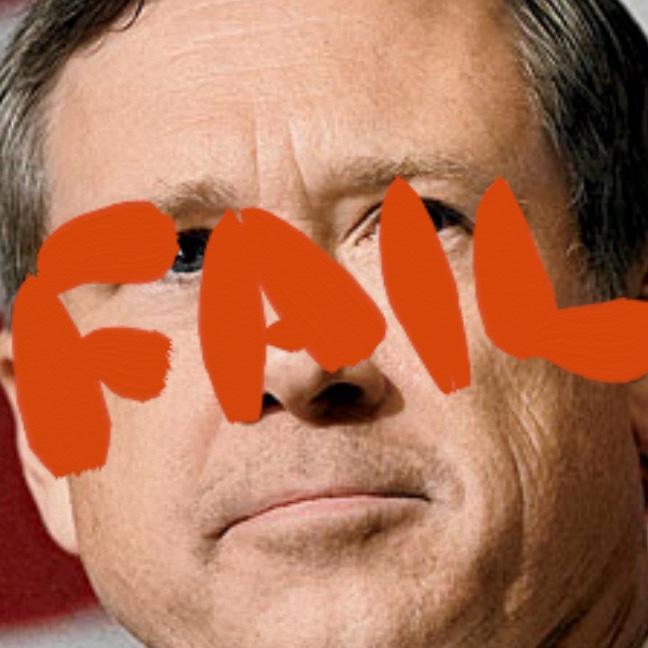
My readers respond to NEA/IEA Mark Kirk love.

fail


 We learned Friday that the National Education Association and the Illinois Education Association awarded Illinois Republican Senator Mark Kirk an “A” grade.

I expressed my disagreement, of course.

As did many of this blog’s readers.

A sample:

Tim Furman wrote, “Kirk got the “Charter School Champion” award from the charter school lobby in 2014. (Durbin got it the year before.) The method of assigning grades based on key votes is absurd; it misses the major themes behind the work these people are actually doing. Mark Kirk is hardly the worst Republican, but any system that assigns an “A” to someone who is actively trying to privatize public education is missing some fundamental internal checks. You’ve already written about the bizarre, full-of-internal-contradiction IEA endorsements of Mark Kirk; this dumb grading system seems to be more of the same muddled thinking.”

Joan O’Malley. “Fred. The NEA & IEA sure didn’t ask my opinion. Kirk is the worst Senator in Illinois and he has been in power too long. His total conservative voting record shows no thought as to serving the people of Illinois. I hope Tammy Duckworth defeats him this time. His handicap is unfortunate but that is no reason to vote him into office again. I think he is a destructive influence in Congress.”

Anonymous. “Kirk also came out supporting Rauner and Rauner’s plan to destroy SEIU and AFSCME in negotiations with state employees. There seems to be 2 sides to the NEA, the “union” side and the “we are not a union, we are an association” side. This comes from many decades of teachers not being allowed collective bargaining in most states. In some states, it is still a criminal offence for a teacher to go on strike. If a teacher strikes, they are not only fired, they lose their certification and My readers respond to NEA/IEA Mark Kirk love. | Fred Klonsky:

The Opt-In Letter | lacetothetop

The Opt-In Letter | lacetothetop:

The Opt-In Letter


 Dear Teacher,

Take this damn letter and make damn sure that my child, _________, will opt-in to unlimited, rigorous testing. 
After reading Newsday, I know the only way to receive a high quality education is through more testing. Teachers, like you, are the morons who created the so-called “opt-out movement” to meet your union’s demands to keep teachers unaccountable. I trust 18 hours of testing will benefit my child more than 180 days of your “teaching.”
High stakes state tests will ensure my _____ year old is college and career ready. If someone takes something from my child, I’m going to grab it right back out of their cold, twisted, sick hands and say it is his! You do not take what is his! And then I’ll punch them in the face and kick them in the dirt because bubble tests matter.
I have attached all of my child’s data including report cards, medical records, gamer profile for XBox, as well as the Youtube videos he recorded while playing Minecraft. Bill Gates only asked for 10 years of my child’s life. Let’s give him the full 30 and keep all that data safely stored by a reputable company such as, InBloom. If you’re not doing anything wrong, then you should have nothing to hide.
I fully subscribe to the methodology used by the New York State Education The Opt-In Letter | lacetothetop:

Sen. Hughes outraged at crumbling city schools

Sen. Hughes outraged at crumbling city schools:

Sen. Hughes outraged at crumbling city schools

(ALEJANDRO A. ALVAREZ / STAFF PHOTOGRAPHER)
Pennsylvania state Sen. Vincent Hughes (center) tours Locke Elementary at 4550 Haverford Ave., Philadelphia on Friday morning, Jan. 29, 2016. He is looking into conditions of Philadelphia public school buildings. Also shown are principal Katherine Carter, (left) and Jerry Jordan, president of the Philadelphia Federation of Teachers.

 State lawmakers want to hold hearings on the physical condition of Pennsylvania's schools, State Sen. Vincent J. Hughes announced Friday at Locke Elementary, which lost heat last week, sending students home for the day.


The legislator also asked the state Education Department to audit the Philadelphia School District.
Hughes' announcement was, in part, a response to a boiler explosion this month at Edmonds Elementary School in East Mount Airy, which left a maintenance employee critically injured.
"That was a very serious situation, and it could have been a whole lot worse," said Hughes, the Democratic Chair of the Senate Appropriations Committee. He said he'd like for hearings to be held next week.
Hughes said the budget impasse in Harrisburg is hampering efforts to maintain conditions in public schools across the state. The School District estimated several years ago that it would cost $4 billion to repair all of the structural problems at the city's more than 200 public schools.
"We're about to lose a full year of any additional money coming to school districts in Pennsylvania," he said. "We are in a situation where we are not in a position to provide a 21st-century educational environment."
Hughes; Jerry Jordan, teachers union president; and Otis Hackney, the education officer for Mayor Kenney, inspected a couple of classrooms at Locke Elementary, where heat still had not been completely restored, as well as the basement boiler. Hughes' mother worked at the West Philadelphia school decades ago.
Jordan said it would be a mistake to think that students don't recognize the deteriorating physical conditions of their schools.
"Don't think for one second that children don't understand what we're saying to them when we allow these conditions to exist," he said.
Hughes, whose district includes parts of Philadelphia and Montgomery County, said he was outraged at the funding discrepancy between city and suburban schools. A recent report by the Pew Charitable Trusts found that the city district spends $12,570 per student. Hughes said some suburban districts spend twice that amount.
Hughes said he wants to encourage Gov. Wolf to continue pushing for more education funding in the budget battle. "We're going to say, 'Don't compromise on the education of our children,' " Hughes said.
215-854-2771@JackTomczuk
Staff writer Kristen Graham contributed to this article.
Read more at http://www.philly.com/philly/news/politics/20160130_Sen__Hughes_outraged_at_crumbling_city_schools.html#ciIvhOciZRTJVzAC.99

Schools Enjoy Funding Boost, But Long-Term Costs and Recession Worries Loom | The California Report | KQED News

Schools Enjoy Funding Boost, But Long-Term Costs and Recession Worries Loom | The California Report | KQED News:

Schools Enjoy Funding Boost, But Long-Term Costs and Recession Worries Loom

Gov. Brown’s proposed $71.6 billion education budget for the next fiscal year is up more than 50 percent since 2011.
Vallejo High School teacher Lewis Brown starts his morning government class with a question of the day that takes advantage of newly assigned iPads.

“Today is the one-year anniversary of the French magazine terrorist assassination,” Brown says. “What was the name of the magazine?”

The seniors type on their tablets. In seconds, 17-year-old SioFilisi Anitoni answers from the back row, “Mr. Brown, Charlie Hebdo.”

Vallejo City Unified School District is using increased state funds to assign iPads to each of its roughly 1,000 high school students. The district, in a working-class community along the north San Francisco Bay, is also hoping to improve classroom learning by raising teacher salaries and spending more than $2.5 million on new computer and science labs.

Up and down California, public schools are enjoying a rapid rise in state funding. With the state’s economic gains and a temporary tax increase approved by voters in 2012, Gov. Jerry Brown’s proposed $71.6 billion education budget for the next fiscal year is up more than 50 percent since 2011. Spending per student has increased more than $3,800 to a projected $14,550 this year.

Schools that handed out tens of thousands of pink slips in the depths of the recession are now scrambling to find qualified teachers, a problem driven in part by low recruitment and high turnover. Teachers are receiving raises and schools are offering signing bonuses. Counselors, librarians and other support staff are being added, along with new Schools Enjoy Funding Boost, But Long-Term Costs and Recession Worries Loom | The California Report | KQED News: